If you've spent any time in EV forums or heavy-duty trucking circles, you've probably seen the term Godzilla Supercharger tossed around. It sounds like a marketing stunt, but it points to a very real shift in charging infrastructure: megawatt-class DC fast charging designed primarily for electric semi-trucks and commercial fleet vehicles. For passenger EV owners, understanding where this technology fits — and how it compares to the Level 2 and DC fast chargers you actually use — is essential for making smart charging and purchasing decisions.
This guide breaks down what the Godzilla Supercharger concept actually means, walks through every charging level available to consumer EVs in 2026, and gives you the exact numbers on installation costs, charging speeds, connector compatibility, and per-mile costs you need to plan your setup.
What Is the Godzilla Supercharger, Exactly?
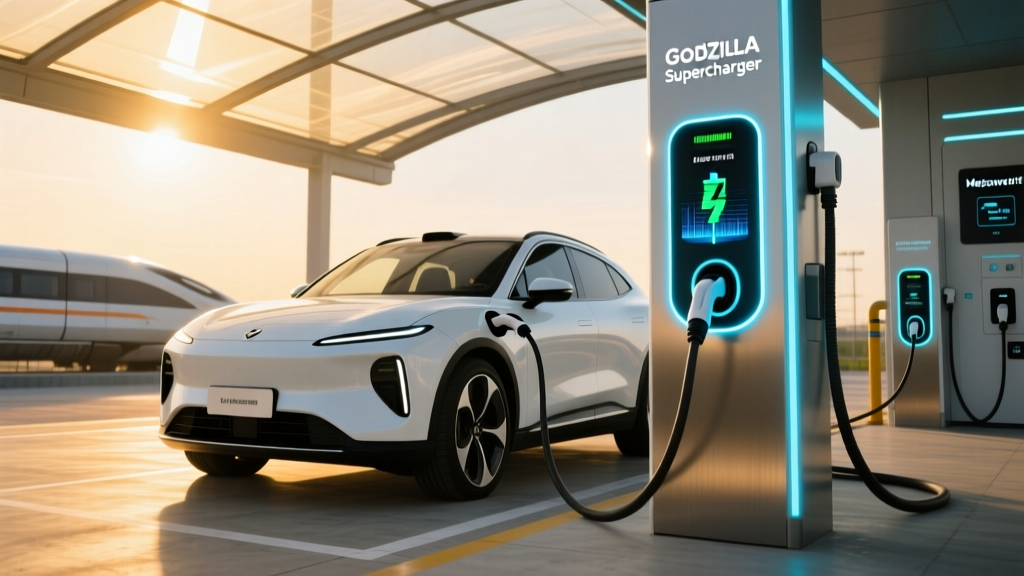
The "Godzilla Supercharger" is an informal, community-coined label for megawatt-scale DC fast charging stations — chargers capable of delivering 1 MW (1,000 kW) or more to a single vehicle. The term gained traction alongside the development of the Megawatt Charging System (MCS) standard, led by the industry group CharIN and adopted by manufacturers of electric Class 8 trucks like the Tesla Semi, Freightliner eCascadia, and Volvo VNR Electric.
To put that in perspective: a 1,000 kW charger delivers roughly four times the peak power of the fastest consumer DC fast chargers available in 2026 (which top out around 250–350 kW for passenger vehicles). The MCS connector itself is physically larger than NACS or CCS1, designed for the massive battery packs (typically 400–900 kWh) in commercial trucks that need to add hundreds of miles of range during a driver's mandatory 30-minute rest break.
Charging Levels Explained: Speeds, Power, and Real-World Range Gains
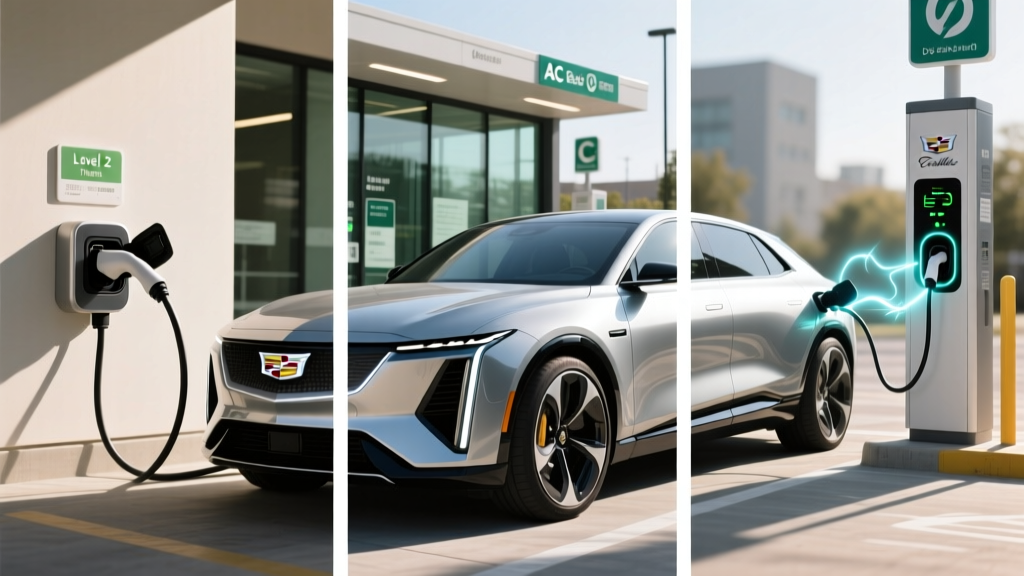
Before comparing equipment or calculating costs, you need a firm handle on the three charging levels available to passenger EVs. The distinction between kW (power — how fast energy flows) and kWh (energy — how much the battery stores) is critical here. Think of kW as the width of a hose and kWh as the size of the bucket.
| Level | Voltage / Phase | Power (kW) | Miles of Range / Hour | Best For |
|---|---|---|---|---|
| Level 1 | 120V / 1-phase | 1.0–1.9 kW | 3–5 mi/hr | Overnight top-ups, PHEVs, low-mileage drivers |
| Level 2 | 240V / 1-phase | 3.3–19.2 kW | 12–75 mi/hr | Daily home charging, workplace, destinations |
| DC Fast | 400–800V DC | 50–350 kW | 150–1,200+ mi/hr (peak) | Road trips, corridor charging, fleet depots |
A few real-world notes that spec sheets often bury:
- DC fast charging is never sustained at peak kW. A charger rated for 250 kW may only deliver that rate between roughly 10–40% State of Charge (SoC). Above 80%, the charge curve tapers sharply to protect battery chemistry. This is why manufacturers quote "10–80%" times rather than 0–100%.
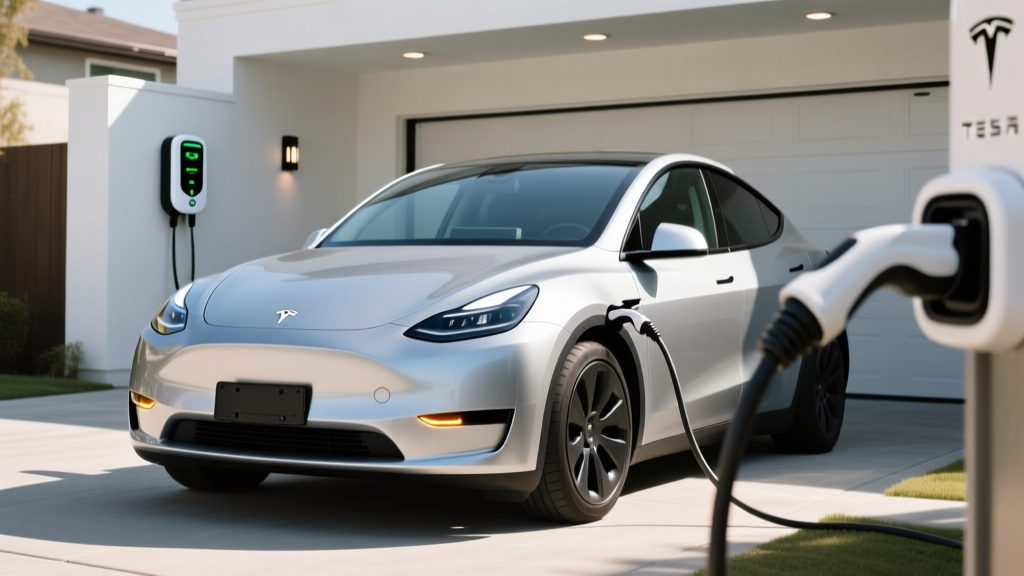
- Level 2 at 48A (11.5 kW on a 60A circuit) is the practical sweet spot for most homes — it adds enough range overnight for any daily commute while avoiding the cost of a panel upgrade in many cases.
- Level 1 is not useless. Plug-in hybrids with 25–45 miles of electric range (like the 2026 Toyota RAV4 Prime or Jeep Wrangler 4xe) can fully recharge overnight on a standard 120V outlet.
Home Charger Installation: Electrical Requirements and Real Costs
The single biggest variable in home EV charging setup is whether your electrical panel can handle the added load. Here's what's involved and what it costs.
Electrical Requirements for Level 2 Home Charging
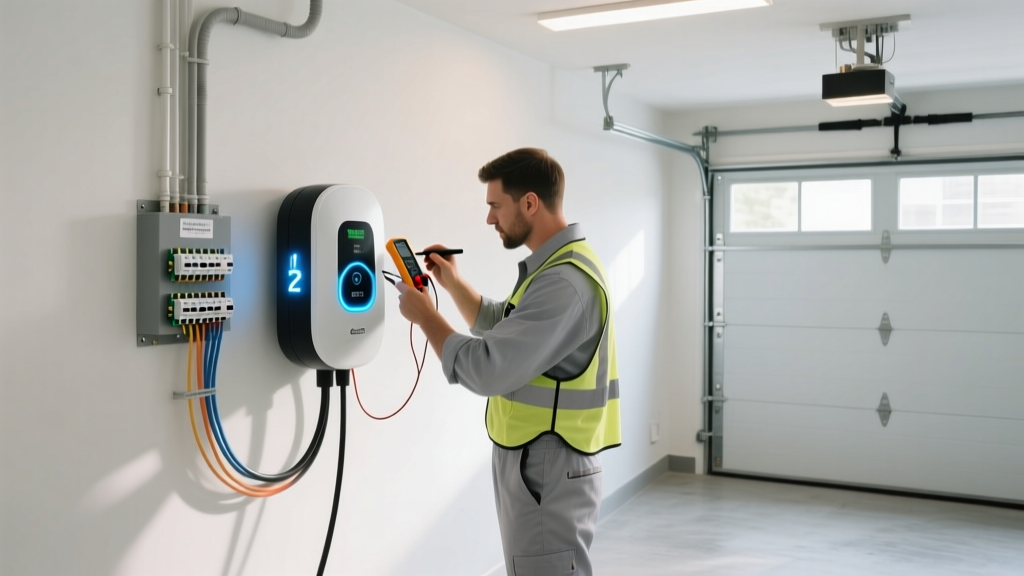
A typical Level 2 home charger requires a dedicated 240V circuit — the same voltage your electric dryer or oven uses. The amperage of that circuit determines your charging speed:
- 20A circuit → 16A continuous → 3.8 kW → ~14 mi/hr
- 30A circuit → 24A continuous → 5.8 kW → ~21 mi/hr
- 40A circuit → 32A continuous → 7.7 kW → ~28 mi/hr
- 50A circuit → 40A continuous → 9.6 kW → ~35 mi/hr
- 60A circuit → 48A continuous → 11.5 kW → ~42 mi/hr
- 100A circuit → 80A continuous → 19.2 kW → ~70 mi/hr (requires significant panel capacity)
EVs follow the NEC 80% rule: continuous loads (like EV charging) can only use 80% of a circuit's rated amperage. A "40A charger" needs a 50A breaker.
Do You Need a Panel Upgrade?
Most homes built after 1990 have a 200A main service panel. If your panel is already near capacity (running electric heat, an electric water heater, a dryer, and an oven simultaneously), adding a 40–60A EV circuit may push you over. Signs you may need an upgrade:
- Your panel is 100A or 150A (common in homes built before the 1980s)
- Your panel has no open breaker slots
- Your utility service drop is undersized
- You already have multiple high-draw 240V appliances
A panel upgrade from 100A to 200A typically runs $2,000–$4,500 depending on your region, utility requirements, and whether a new service drop from the utility pole is needed. This is the cost that catches many homeowners off guard — always get a load calculation from a licensed electrician before committing to a charger install.
Installation Cost Breakdown
| Component | Simple Install (panel nearby) | Complex Install (long run, conduit) |
|---|---|---|
| Level 2 Charger (hardware) | $300–$700 | $300–$700 |
| Electrician labor (2–4 hrs simple / 6–10 hrs complex) | $300–$800 | $800–$2,500 |
| Materials (conduit, wire, breaker) | $50–$150 | $200–$600 |
| Permit & inspection | $50–$200 | $50–$350 |
| Panel upgrade (if needed) | $0 | $2,000–$4,500 |
| TOTAL | $700–$1,850 | $3,350–$8,650 |
The IRS §30C Alternative Fuel Vehicle Refueling Property Credit may cover up to 30% of home charger installation costs (capped at $1,000), subject to income limits and census-tract eligibility. Check irs.gov for current-year qualification rules before filing.
Connector Compatibility: NACS, CCS1, CHAdeMO, and MCS
The connector landscape in North America has consolidated significantly since 2023, when Ford, GM, Rivian, and most major automakers committed to adopting Tesla's North American Charging Standard (NACS). Here's where things stand in 2026:
| Connector | Brands Using It (Native) | Adapter Needed? | Max DC Fast Power |
|---|---|---|---|
| NACS (J3400) | Tesla, Ford, GM, Rivian, Volvo, Polestar, Nissan (2025+), Hyundai/Kia (2025+), BMW, Mercedes | CCS→NACS adapter for legacy CCS stations ($100–$250) | Up to 350 kW |
| CCS1 | Legacy: pre-2025 VW ID.4, Hyundai Ioniq 5, Kia EV6, older BMW iX | NACS→CCS adapter for Tesla Superchargers ($100–$200) | Up to 350 kW |
| CHAdeMO | Nissan Leaf (discontinued), Mitsubishi Outlander PHEV (older) | Limited adapter options; network shrinking | Up to 100 kW |
| MCS (Megawatt) | Tesla Semi, Freightliner eCascadia, Volvo VNR Electric | Not compatible with passenger vehicles | 750 kW–3.75 MW |
If you're buying a new EV in 2026, NACS is the default connector on nearly every model. The only reason to worry about CCS compatibility is if you're purchasing a used EV from the 2021–2024 model years that shipped with CCS1 natively — in which case, an adapter is a worthwhile $150 investment for Supercharger access.
Charging Time Examples: 10–80% for Common Battery Sizes
Charging time depends on three factors: your battery's usable capacity (kWh), the charger's power output (kW), and your vehicle's maximum charge acceptance rate. Here's how common 2026 models perform at different charger types:
| Vehicle (2026 MY) | Usable Battery | Level 2 (11.5 kW) | DC Fast (150 kW peak) | DC Fast (250 kW peak) |
|---|---|---|---|---|
| Tesla Model Y LR (NMC) | 75 kWh | ~4.5 hrs (10–80%) | ~28 min | ~18 min |
| Hyundai Ioniq 5 (84 kWh, NMC) | 84 kWh | ~5 hrs | ~32 min | ~18 min (800V arch) |
| Ford F-150 Lightning Ext. (131 kWh) | 131 kWh | ~8 hrs | ~50 min | ~35 min |
| Chevrolet Equinox EV (85 kWh, NMC) | 85 kWh | ~5.2 hrs | ~35 min | ~22 min |
| Tesla Semi (est. 900 kWh, LFP/NMC) | ~900 kWh | Not practical | Not practical | ~30 min (MCS, 1 MW+) |
That last row is where the Godzilla Supercharger concept earns its name. Charging a 900 kWh battery pack from 10–80% requires pushing roughly 630 kWh into the pack. At 250 kW, that would take over 2.5 hours. At 1 MW+ (megawatt-class MCS), it drops to approximately 30 minutes — matching a truck driver's federally mandated rest break.
Cost to Charge: Home vs. Public vs. DC Fast (Per-Mile Breakdown)
The economics of EV charging vary enormously depending on where and when you plug in. Here's a realistic comparison using national averages as of early 2026:
| Scenario | Avg. $/kWh | Cost/Mile (at 3.5 mi/kWh)* | Annual Cost (12,000 mi) |
|---|---|---|---|
| Home, off-peak utility rate | $0.09–$0.14 | $0.026–$0.040 | $310–$480 |
| Home, standard rate | $0.14–$0.20 | $0.040–$0.057 | $480–$685 |
| Public Level 2 (workplace, mall) | $0.20–$0.35 | $0.057–$0.100 | $685–$1,200 |
| DC Fast (Electrify America, EVgo, Tesla) | $0.30–$0.55 | $0.086–$0.157 | $1,030–$1,885 |
| *Based on an average EV efficiency of 3.5 miles per kWh (~28.5 kWh/100mi). Gasoline baseline: $3.40/gal at 28 MPG = $0.121/mile, $1,457/year. | |||
The takeaway: home charging on an off-peak rate is roughly 3–5× cheaper per mile than gasoline. But if you rely exclusively on DC fast charging at $0.45–$0.55/kWh, your per-mile cost approaches or even exceeds that of a fuel-efficient gas car. This is why home Level 2 access is the single most important factor in EV ownership economics.
Equipment Recommendations: Level 2 Chargers Worth Buying in 2026
Here are four well-regarded Level 2 home chargers across different budgets, all hardwired or NEMA 14-50 plug-in compatible:
ChargePoint Home Flex (NACS)
Power: Up to 11.5 kW (48A, 60A circuit)
Cable: 23 ft
Smart features: Wi-Fi, app scheduling, Alexa, energy dashboard
Connector: NACS (native), CCS adapter available
Price: ~$599
Best for: Most homeowners wanting reliable smart scheduling
Tesla Wall Connector (Gen 4)
Power: Up to 11.5 kW (48A, 60A circuit)
Cable: 24 ft
Smart features: Wi-Fi, OTA updates, Powerwall integration, load sharing
Connector: NACS (native); J3400-compliant
Price: ~$475
Best for: Tesla owners or households with multiple NACS vehicles
Emporia Vue Level 2 Charger
Power: Up to 11.5 kW (48A, 60A circuit)
Cable: 24 ft
Smart features: Energy monitoring, solar integration, scheduling
Connector: NACS or J1772 (configurable)
Price: ~$399
Best for: Budget-conscious buyers who want energy monitoring
Grizzl-E Smart (United Chargers)
Power: Up to 10 kW (40A, 50A circuit)
Cable: 24 ft
Smart features: OCPP-compatible, app control, adjustable amperage
Connector: NACS or J1772
Price: ~$449
Best for: Cold-climate durability (rated to -40°F), outdoor installs
For homes where a 60A circuit isn't feasible, most of these chargers allow dip-switch or app-based amperage adjustment down to 32A or 24A to match your available circuit. Always set the charger to 80% of your breaker rating — this is a code requirement, not a suggestion.
Safety, Code, and Outdoor Installation Considerations
Level 2 EV charging is a continuous load under the National Electrical Code (NEC Article 625), which triggers specific requirements:
- Dedicated circuit: Your EV charger must have its own breaker — no sharing with other outlets or appliances.
- GFCI protection: NEC 2020 and later require GFCI protection for all 240V EV charging outlets (hardwired installations may be exempt in some jurisdictions).
- NEMA 14-50 receptacle orientation: If using a plug-in charger rather than hardwired, the receptacle must be installed with the ground pin orientation specified by your local inspector — some jurisdictions require the ground pin on top.
- Outdoor rating: If your charger is mounted outside, it must carry a NEMA 4 or NEMA 4X rating for weather resistance. All four chargers recommended above meet this standard.
- Permit and inspection: Virtually every jurisdiction requires an electrical permit for a new 240V circuit. Skipping this voids your homeowner's insurance coverage for any electrical fire originating from the unpermitted work.
Frequently Asked Questions
How much does it cost to install a home EV charger?
A straightforward Level 2 installation (panel nearby, short wire run, no upgrade) typically costs $700–$1,850 including the charger hardware, electrician labor, materials, and permit. Complex installations requiring long conduit runs, trenching, or a panel upgrade can reach $3,350–$8,650. The IRS §30C credit may offset up to $1,000 (30%) of qualifying installation costs.
How fast will each charging level add range?
Level 1 (120V) adds roughly 3–5 miles per hour. Level 2 (240V) at 48A adds approximately 35–42 miles per hour depending on vehicle efficiency. DC fast charging at 150 kW can add 150+ miles in 15 minutes, though this rate tapers significantly above 80% SoC. Megawatt-class "Godzilla" chargers (1,000+ kW) are designed for semi-truck batteries and are not compatible with passenger vehicles.
Which connector/charger is compatible with my EV?
For 2026 model-year vehicles, the vast majority use the NACS (J3400) connector natively — including all Tesla, Ford, GM, Rivian, Hyundai, Kia, and Volvo models. If you own a 2021–2024 vehicle with a CCS1 port, you'll need a NACS-to-CCS adapter (~$100–$250) for Tesla Supercharger access. CHAdeMO is effectively discontinued for new vehicles. The MCS megawatt connector is exclusive to commercial trucks.
How much does charging cost per mile vs gas?
Home charging at off-peak rates ($0.09–$0.14/kWh) costs roughly $0.03–$0.04 per mile — about 3–4× cheaper than gasoline at $3.40/gallon in a 28 MPG vehicle ($0.12/mile). Public DC fast charging at $0.40–$0.55/kWh costs $0.11–$0.16 per mile, which can approach or exceed gasoline costs. The economic advantage of EV ownership depends heavily on home charging access.
What electrical upgrades might I need?
If your home has a 200A panel with available breaker slots and moderate existing load, you likely won't need an upgrade for a 40–60A EV circuit. Homes with 100A or 150A service, no open slots, or heavy existing 240V appliance usage may need a panel upgrade ($2,000–$4,500) or a smart load management system. Always have a licensed electrician perform a load calculation before purchasing equipment.