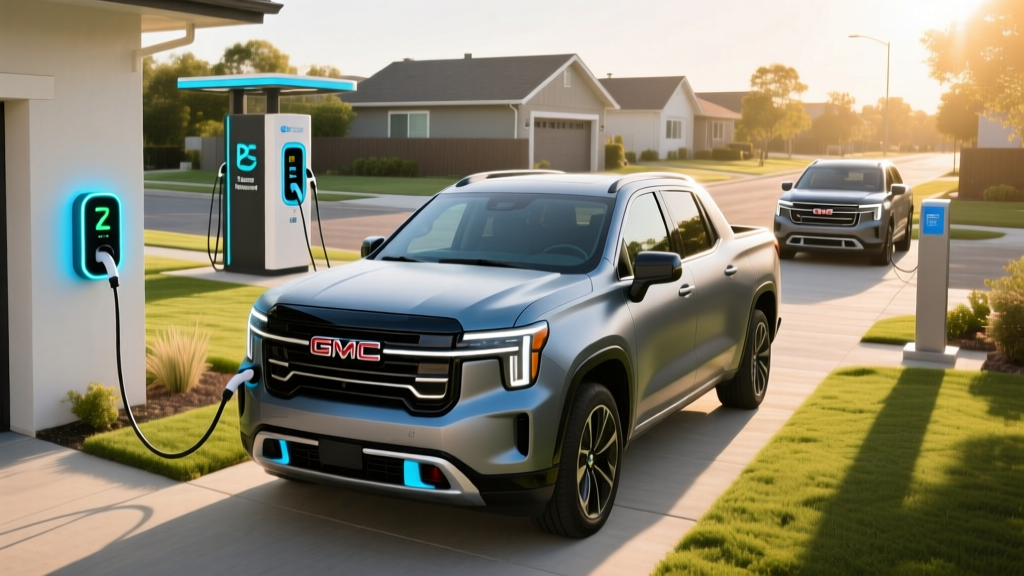
The GMC Sierra EV Extended Range pairs a massive battery with serious truck capability — but extracting maximum value from that battery means understanding exactly how, where, and how fast you can charge it. Whether you're planning a home Level 2 installation or mapping out DC fast-charging road trips, this guide covers the real numbers: kW charge rates, kWh battery capacity, installation costs, and what you'll actually pay per mile compared to a gas truck.
GMC Sierra EV Extended Range: Battery and Charging Specs at a Glance
Before selecting equipment or scheduling an electrician, you need the Sierra EV's core energy figures. The Extended Range variant uses a large Ultium-based lithium-ion (NMC chemistry) battery pack. Here are the key specifications that dictate your charging strategy:
| Specification | Value |
|---|---|
| Battery capacity (usable) | ~200 kWh (estimated) |
| Battery chemistry | NMC (Nickel Manganese Cobalt) — Ultium platform |
| EPA range (Extended Range) | ~390 miles (est.) |
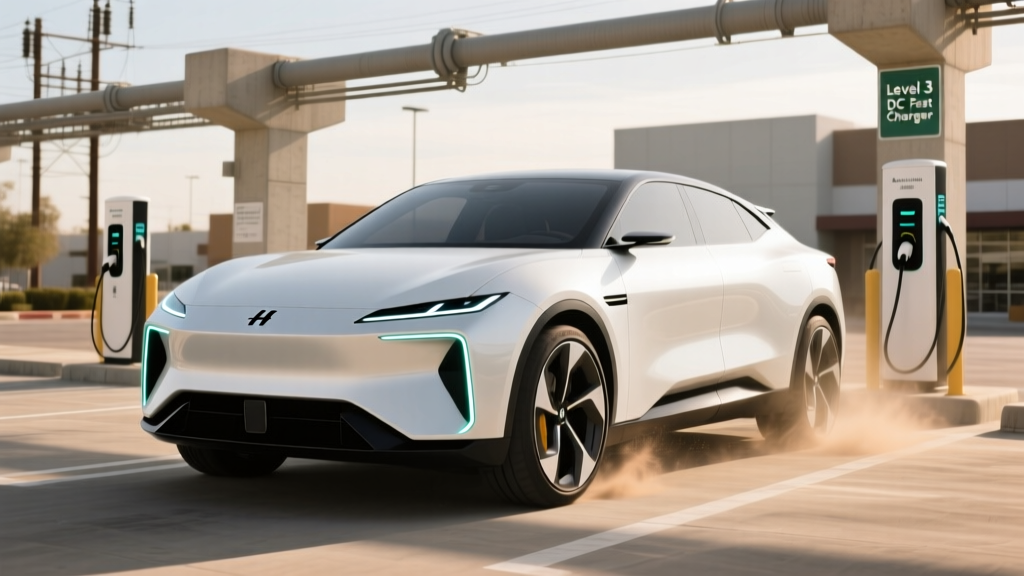
| Max DC fast-charge rate | ~350 kW peak |
| 10–80% DC fast charge time | ~30–35 minutes (at 350 kW-capable station) |
| Onboard AC charger (Level 2) | 19.2 kW max (80A capable) |
| Level 2 charge time (0–100%) | ~10–11 hours at 19.2 kW |
| Charging port / connector | NACS (native Tesla Supercharger compatible) |
| Battery/powertrain warranty | 8 years / 100,000 miles (capacity retention threshold ~70%) |
| Base MSRP (Extended Range) | ~$72,000 (trim-dependent) |
Charging Levels Explained: Speeds, kW Rates, and Miles Per Hour
EV charging happens at three distinct levels. The critical distinction: kW (kilowatts) measures the rate of power delivery — how fast energy flows into the battery. kWh (kilowatt-hours) measures total energy stored — the battery's capacity. Think of kW as the flow rate of a hose and kWh as the size of the tank.
| Level | Voltage | Max Power (kW) | Miles of Range Added Per Hour | Best For |
|---|---|---|---|---|
| Level 1 (120V household) | 120V AC | 1.4 kW | ~3–5 mi/hr | Emergency/trickle only on a 200 kWh pack |
| Level 2 (240V home/public) | 240V AC | 7.7–19.2 kW | ~22–55 mi/hr | Daily home charging; overnight full replenishment |
| DC Fast Charging | 400–800V DC | 50–350 kW | ~150–700+ mi/hr (peak) | Road trips; quick 10–80% top-ups |
For the Sierra EV Extended Range's ~200 kWh battery, Level 1 charging is impractical as a daily strategy — it would take well over 100 hours for a full charge. Level 2 at the truck's maximum 19.2 kW AC rate is the realistic home standard, fully replenishing the pack overnight in roughly 10–11 hours. DC fast charging at a 350 kW station delivers the fastest turnaround, though sustained rates taper as the battery fills (more on charge curves below).
Home Level 2 Charger Installation: Electrical Requirements and Costs
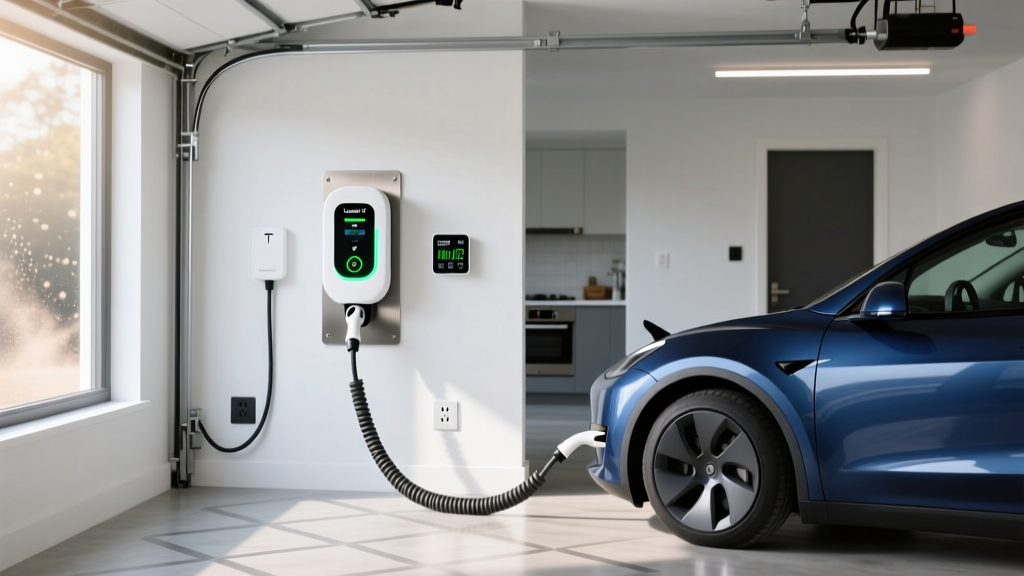
The Sierra EV's 19.2 kW onboard charger is among the most powerful in any production EV. To actually deliver 19.2 kW, your home charger must output at least 80 amps on a 240V circuit. This is a significant electrical requirement — most older homes will need a panel assessment and potentially an upgrade.
Electrical Requirements for 19.2 kW Home Charging
- Circuit: Dedicated 100A breaker (NEC requires circuits rated at 125% of continuous load — 80A continuous draw requires a 100A breaker)
- Wire gauge: 3 AWG copper or 1 AWG aluminum (varies by run length and local code)
- Service panel capacity: Minimum 200A main panel recommended; many homes with existing 100A or 150A panels will need an upgrade to 200A or 400A
- Permit: Required in virtually all jurisdictions; electrical inspector will verify code compliance
- GFCI protection: NEC 2020+ requires GFCI protection for EV charging circuits in garages
Panel Upgrade: The Hidden Cost
If your home has a 100A or 150A main service panel, adding a 100A dedicated EV circuit may exceed available capacity — especially if you also run electric HVAC, a dryer, an oven, and a water heater. A panel upgrade to 200A or 400A typically costs $1,500–$4,500 depending on your utility, local labor rates, and whether a new meter or service drop is needed. Some utilities offer rebates for panel upgrades tied to EV adoption — check with your provider.
Lower-Amperage Alternative
If a 100A circuit isn't feasible, a 48A charger on a 60A breaker delivers 11.5 kW — still enough to add roughly 33 miles of range per hour and fully charge the Sierra EV Extended Range in about 17 hours. For owners who drive less than 150 miles daily and charge nightly, this is a practical compromise that avoids panel upgrades in most homes.
| Cost Component | 48A Charger (60A Circuit) | 80A Charger (100A Circuit) |
|---|---|---|
| Charger hardware | $500–$750 | $700–$1,200 |
| Electrician labor (install) | $600–$1,500 | $1,000–$2,500 |
| Electrical materials (wire, conduit, breaker) | $200–$500 | $400–$900 |
| Permit and inspection | $100–$300 | $150–$400 |
| Panel upgrade (if needed) | $0 (usually not required) | $1,500–$4,500 |
| Total estimated cost | $1,400–$3,050 | $2,250–$9,500 |
These are national ranges. Urban areas with higher labor costs (California, Northeast) skew toward the upper end; rural and Sun Belt regions tend toward the lower. Always get at least two quotes from licensed electricians and confirm they pull permits — unpermitted work can void homeowner's insurance claims.
Connector Compatibility: NACS, CCS, and Adapter Considerations
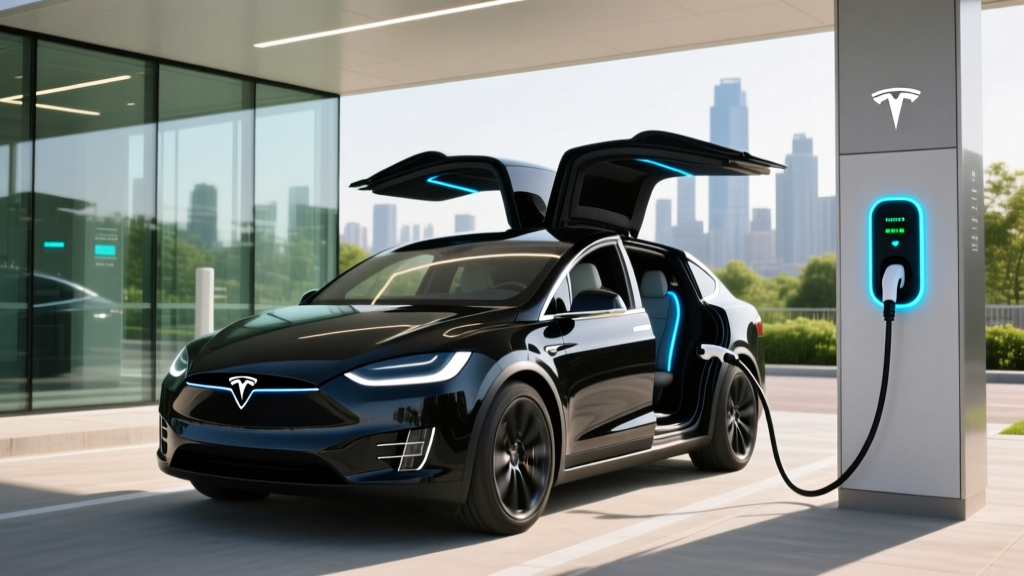
GM has adopted the NACS (North American Charging Standard) connector across its EV lineup, including the Sierra EV. This means native compatibility with Tesla Superchargers (V3 and V4) — the largest DC fast-charging network in North America — without an adapter.
| Connector | Sierra EV Compatibility | Network Access | Notes |
|---|---|---|---|
| NACS (Tesla) | Native — built-in | Tesla Supercharger, Electrify America (NACS stalls), Rivian Adventure Network | Primary connector for DC fast and Level 2 |
| CCS1 | Via adapter (GM provides or sells NACS-to-CCS adapter) | Legacy Electrify America, EVgo, ChargePoint DC stalls | Needed for older CCS-only public chargers |
| CHAdeMO | Not supported (no adapter available) | Nissan Leaf-era chargers | Effectively obsolete for new EVs; skip |
| J1772 (Level 2 public) | Via NACS-to-J1772 adapter | Public Level 2 chargers at malls, workplaces, hotels | Most home chargers now ship with NACS; some older public L2 stations still use J1772 |
The Sierra EV should ship with a NACS-to-CCS adapter (or one available at minimal cost from GM). Keep this adapter in the truck at all times — it's your bridge to any legacy CCS-only DC fast charger you encounter. For home charging, most new Level 2 wall connectors now ship with NACS connectors natively.
Cost to Charge: Home vs. Public vs. Gas Comparison
One of the Sierra EV's strongest ownership arguments is per-mile energy cost — but only if you charge smartly. Public DC fast charging can approach or exceed gasoline costs per mile, while off-peak home charging delivers dramatic savings.
| Scenario | Cost per kWh | Cost to Add 200 Miles | Cost Per Mile |
|---|---|---|---|
| Home (off-peak utility rate) | $0.08–$0.13 | $8.00–$13.00 | $0.04–$0.065 |
| Home (standard residential rate) | $0.14–$0.18 | $14.00–$18.00 | $0.07–$0.09 |
| Public Level 2 (network pricing) | $0.25–$0.49 | $25.00–$49.00 | $0.125–$0.245 |
| DC Fast Charge (Tesla Supercharger avg.) | $0.28–$0.40 | $28.00–$40.00 | $0.14–$0.20 |
| DC Fast Charge (Electrify America / EVgo) | $0.36–$0.56 | $36.00–$56.00 | $0.18–$0.28 |
| Gas truck equivalent (20 MPG, $3.40/gal) | — | $34.00 | $0.17 |
At the Sierra EV Extended Range's estimated efficiency of roughly 2.0–2.2 kWh/mile (a large, heavy truck moving a lot of mass), home off-peak charging costs roughly one-third to one-quarter what a comparable gas truck costs per mile. Even at standard residential rates, home charging saves $0.08–$0.10 per mile. But exclusive reliance on premium-priced DC fast chargers can erode those savings — a key reason home Level 2 installation is practically mandatory for cost-effective EV truck ownership.
Home Charger Equipment Picks for the Sierra EV Extended Range
To take advantage of the Sierra EV's 19.2 kW onboard charger, you need an 80A-capable wall connector. Not all chargers support this — many top out at 48A (11.5 kW). Here are recommended units matched to this truck's capabilities:
Tesla Wall Connector (NACS)
- Max output: 48A (11.5 kW) on a 60A circuit
- Connector: NACS native
- Cable length: 24 ft
- Smart features: Wi-Fi, OTA updates, power sharing between two units, load management
- Price: ~$475
- Verdict: Reliable and affordable, but limited to 48A — won't max out the Sierra EV's 19.2 kW capability
Grizzl-E Smart (80A capable)
- Max output: 80A (19.2 kW) on a 100A circuit
- Connector: NACS available
- Cable length: 24 ft
- Smart features: OCPP-compatible, app scheduling, adjustable amperage
- Price: ~$700–$850
- Verdict: One of the few 80A residential chargers; fully exploits the Sierra EV's onboard charger
ChargePoint Home Flex (NACS)
- Max output: 50A (12 kW) on a 60A circuit (NACS version)
- Connector: NACS native (2025+ models)
- Cable length: 24 ft
- Smart features: App-based scheduling, Alexa integration, detailed session data
- Price: ~$600–$700
- Verdict: Strong app ecosystem and build quality; 50A is a good middle ground
Emporia Level 2 Charger
- Max output: 48A (11.5 kW) on a 60A circuit
- Connector: NACS and J1772 versions available
- Cable length: 24 ft
- Smart features: Energy monitoring, solar integration, time-of-use scheduling
- Price: ~$400–$500
- Verdict: Best budget option with energy-monitoring features; great for solar-home owners
If your electrical panel supports a 100A circuit and you want the fastest possible home charge, the Grizzl-E at 80A is the clear choice — it shaves roughly 6 hours off a full charge compared to a 48A unit. For most daily-driving owners who plug in overnight and need 100–200 miles of replenishment, a 48A charger is entirely sufficient and avoids the panel-upgrade cost.
DC Fast Charging on the Road: Charge Curves and Network Reality
The Sierra EV Extended Range's ~350 kW peak DC fast-charge capability is impressive on paper — but no EV sustains peak rate for the entire session. Understanding the charge curve is essential for realistic trip planning.
Typical charge curve behavior for a large NMC pack like the Sierra EV's:
- 10–30% SoC: Near-peak rate (~300–350 kW) — fastest charging window
- 30–55% SoC: Sustained high rate (~250–300 kW)
- 55–80% SoC: Gradual taper (~150–220 kW) — thermal management limits increase
- 80–100% SoC: Significant taper (~50–80 kW) — charging above 80% is slow; avoid unless necessary for trip range
This is why manufacturers quote 10–80% times (~30–35 minutes) rather than 0–100%. For road trips, the optimal strategy is to arrive at chargers at 10–15% SoC and depart at 75–80% — this keeps you in the fastest portion of the curve. Plan charging stops around 200–250 miles apart to maintain this rhythm.
Preconditioning matters. If your Sierra EV's navigation routes you to a DC fast charger, the battery thermal management system will pre-warm or pre-cool the pack to optimize charge acceptance. Arriving at a 350 kW charger with a cold, un-preconditioned battery in winter can cut your peak rate by 30–50% for the first several minutes. Always use the built-in navigation for charger routing when possible.
For network access, the Sierra EV's native NACS port opens the Tesla Supercharger network — over 25,000 stalls in North America, many now upgraded to V4 with NACS connectors. Electrify America and EVgo are also adding NACS cables to new and retrofitted stations.
Safety, Code, and Installation Best Practices
EV charging is a high-draw, continuous-load electrical application — it runs for hours at near-maximum circuit capacity. Cutting corners on installation creates fire risk and insurance liability.
- Dedicated circuit: Your EV charger must be on its own dedicated breaker — never shared with other appliances. A 60A charger needs a 60A breaker; an 80A charger needs a 100A breaker.
- GFCI protection: NEC 2020 (Article 625) requires GFCI protection for EVSE in garages and outdoor locations. Most modern hardwired chargers include integrated GFCI; plug-in units require a GFCI breaker.
- Outdoor rating: If installing outside, the charger must carry a NEMA 4 or IP65 rating for weather resistance. All recommended units above meet this standard.
- Hardwired vs. plug: Chargers above 48A (like the 80A Grizzl-E) must be hardwired — there is no standard residential plug/receptacle rated for 80A+ continuous use. Hardwired installations are also more reliable (no plug-connection degradation over time).
- Cable management: Ensure the charging cable won't be driven over or tripped on. Wall-mounted cable organizers and retractors ($30–$80) protect both the cable and your truck's paint.
- Permit and inspection: Always pull an electrical permit. The inspection verifies wire gauge, breaker sizing, grounding, and GFCI compliance — this protects you and satisfies insurance requirements.
Frequently Asked Questions
How much does it cost to install a home EV charger for the GMC Sierra EV?
For a 48A Level 2 charger on a 60A circuit, expect $1,400–$3,050 total (hardware, electrician, materials, permit). For an 80A charger on a 100A circuit that fully utilizes the Sierra EV's 19.2 kW onboard charger, expect $2,250–$5,000 without a panel upgrade, or $3,750–$9,500 if your panel needs upgrading from 100A/150A to 200A+.
How fast will each charging level add range to the Sierra EV Extended Range?
Level 1 (120V): approximately 3–5 miles per hour — essentially useless for a 200 kWh battery. Level 2 at 48A (11.5 kW): ~33 miles per hour. Level 2 at 80A (19.2 kW): ~55 miles per hour. DC fast charging at 350 kW: up to 700+ miles per hour at peak, but tapering significantly as the battery fills — expect 10–80% in roughly 30–35 minutes.
Which connector and charger is compatible with the GMC Sierra EV?
The Sierra EV uses NACS natively — no adapter needed for Tesla Superchargers or NACS-equipped home chargers. For legacy CCS1 public chargers, use the GM-provided NACS-to-CCS adapter. CHAdeMO is not supported. For home Level 2, choose a NACS-equipped wall connector.
How much does charging the Sierra EV cost per mile vs. a gas truck?
Home off-peak charging costs roughly $0.04–$0.065 per mile. A comparable gas truck at 20 MPG and $3.40/gallon costs $0.17 per mile. Home charging saves $0.10–$0.13 per mile — or roughly $1,200–$1,500 per year at 12,000 miles driven. Public DC fast charging at $0.35–$0.50/kWh costs $0.14–$0.28 per mile, which can match or exceed gas costs.
What electrical upgrades might I need for an 80A home charger?
An 80A charger requires a dedicated 100A breaker, which in turn typically requires a 200A or larger main service panel. If your home has a 100A or 150A panel, you'll likely need a panel upgrade ($1,500–$4,500) plus possible utility coordination for a new meter or service drop. A licensed electrician can assess your panel's available capacity during a site visit — most offer this evaluation free with a quote.
Does the Sierra EV Extended Range qualify for the federal EV tax credit?
Potentially. The §30D credit offers up to $7,500 for qualifying new EVs, with an $80,000 MSRP cap for trucks. The Sierra EV Extended Range's base MSRP (~$72,000) may qualify, but eligibility depends on your adjusted gross income (≤$300K joint / ≤$150K single), the vehicle's battery component and critical-mineral sourcing percentages for the current tax year, and whether you've reached the per-manufacturer cap. Rules change annually — verify on IRS.gov before purchasing.