Why the Sierra EV Elevation Extended Range Demands a Serious Charging Plan
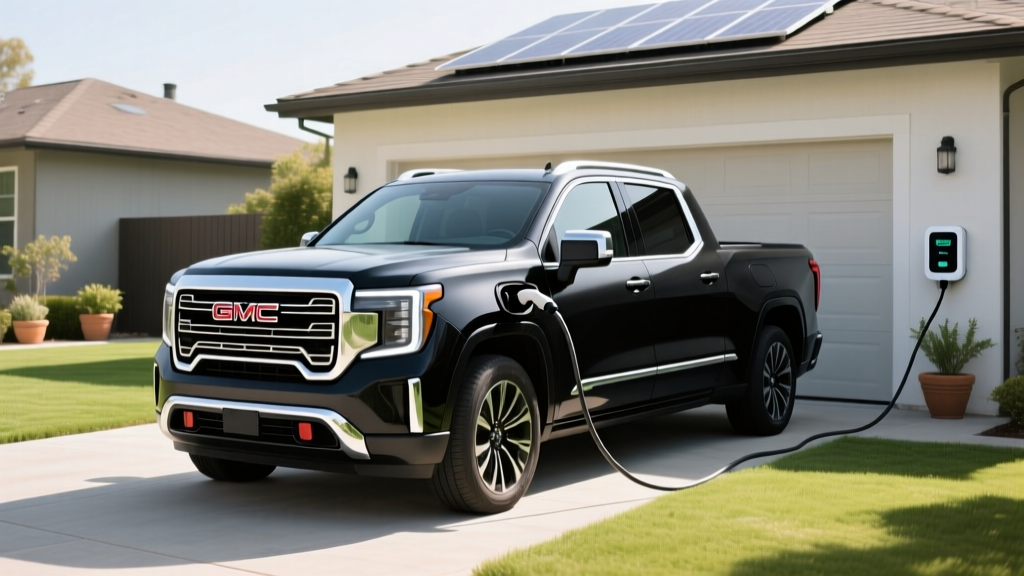
The 2026 GMC Sierra EV Elevation Extended Range packs a massive battery — approximately 200+ kWh of usable capacity (GM's Ultium platform in its largest configuration) — to deliver an EPA-estimated 390+ miles of range. That battery size is both the truck's greatest asset and its biggest home-charging challenge. Plugging into a standard 120V wall outlet (Level 1) would take well over 100 hours to fill this pack from empty. A proper Level 2 home setup isn't optional for Sierra EV owners — it's essential infrastructure.
This guide walks through every charging scenario for the 2026 Sierra EV Elevation Extended Range: home installation requirements and real costs, public DC fast charging capabilities, connector compatibility under the NACS transition, and what you'll actually pay per mile versus a gas-powered Silverado. All figures reflect 2026 model-year specifications and current electrical codes.
Battery: ~200+ kWh usable (Ultium, NMC chemistry)
EPA Range: ~390 miles (real-world highway: expect ~320–350 mi; cold weather: ~280–310 mi)
Max DC Fast Charge Rate: ~350 kW peak (800V architecture)
Level 2 Max Acceptance: 19.2 kW (80A capable)
Base MSRP: ~$69,900 (before destination and incentives)
Federal §30D Credit: Subject to MSRP cap ($80,000 for trucks), income limits, and battery-sourcing requirements — verify at IRS.gov
Charging Levels Explained: How Fast Will Each Add Range?
Understanding the three charging tiers is critical before spending money on equipment. The single most important distinction: kW (kilowatts) measures power — how fast energy flows into the truck. kWh (kilowatt-hours) measures energy — the total capacity of the battery. Think of kW as the width of a hose and kWh as the size of the bucket.
| Level | Voltage / Amperage | Power (kW) | Miles of Range / Hour | 0–100% Time (Sierra EV ~200 kWh) |
|---|---|---|---|---|
| Level 1 (120V) | 120V / 12A | ~1.4 kW | ~2–3 mi/hr | 100+ hours |
| Level 2 (240V) | 240V / 48A–80A | 11.5–19.2 kW | ~20–34 mi/hr | 10–18 hours |
| DC Fast (CCS/NACS) | 400–800V DC | 150–350 kW peak | ~250–500+ mi/hr (burst) | 10–80% in ~25–35 min |
Real-world charging curve note: The Sierra EV's 800V architecture enables a peak rate near 350 kW, but that rate only sustains from roughly 10% to 30–40% State of Charge (SoC). Above 50%, the rate tapers significantly. Above 80%, charging slows dramatically to protect the battery — expect 80–100% to add another 20–30 minutes. This taper is physics, not a defect. For daily driving, charging to 80% at home overnight is the optimal routine.
Home Level 2 Installation: Electrical Requirements, Panel Upgrades, and Real Costs
The Sierra EV Elevation Extended Range can accept up to 19.2 kW on Level 2 (240V at 80 amps). That's the highest Level 2 acceptance rate available on any consumer EV in 2026 — and it requires a dedicated 100-amp circuit with hardwired equipment. Most homes are not pre-wired for this.
What Electrical Service Does the Sierra EV Need?
To maximize the truck's 19.2 kW onboard charger, you need:
- A 240V dedicated circuit with a 100-amp breaker (for 80A continuous draw, NEC requires a breaker rated 125% of continuous load)
- 2-gauge or 1-gauge copper wire (depending on run length)
- A hardwired wall connector — NEMA 14-50 outlets are rated for 50A max, which caps you at 11.5 kW (48A continuous)
- Sufficient main panel capacity — a 200-amp service panel may need upgrading if existing loads are high
Practical compromise: If your panel can't support a 100A circuit, a 60A breaker / 48A continuous setup (NEMA 14-50 or hardwired) still delivers 11.5 kW — roughly 20 miles of range per hour. For overnight charging of a truck you drive 50–80 miles daily, this is often sufficient and avoids a panel upgrade.
Panel Upgrade Reality
Homes with 100-amp main service almost certainly need an upgrade to 200A to accommodate an 80A EV circuit alongside existing loads (HVAC, electric range, dryer). Even some 200A panels are near capacity. Your electrician will perform a load calculation per NEC Article 220 to determine if an upgrade is required. A panel upgrade from 100A to 200A typically costs $1,500–$3,500 depending on local labor rates and utility coordination.
Installation Cost Breakdown
| Component | Basic (48A / NEMA 14-50) | Max (80A / Hardwired) |
|---|---|---|
| EVSE Equipment (charger unit) | $400–$700 | $700–$1,300 |
| Electrician Labor | $500–$1,500 | $1,000–$3,000 |
| Electrical Materials (wire, conduit, breaker) | $200–$500 | $400–$1,000 |
| Permit & Inspection | $100–$300 | $150–$400 |
| Panel Upgrade (if needed) | N/A (usually not needed) | $1,500–$3,500 |
| Total Estimated Cost | $1,200–$3,000 | $3,750–$9,200 |
Federal incentive note: The Alternative Fuel Vehicle Refueling Property Credit (§30C) may cover up to 30% of home charger equipment and installation costs (capped at $1,000 for residential). Eligibility depends on census-tract requirements. Verify current rules at IRS.gov §30C.
Connector Compatibility: NACS, CCS1, and the 2026 Charging Landscape
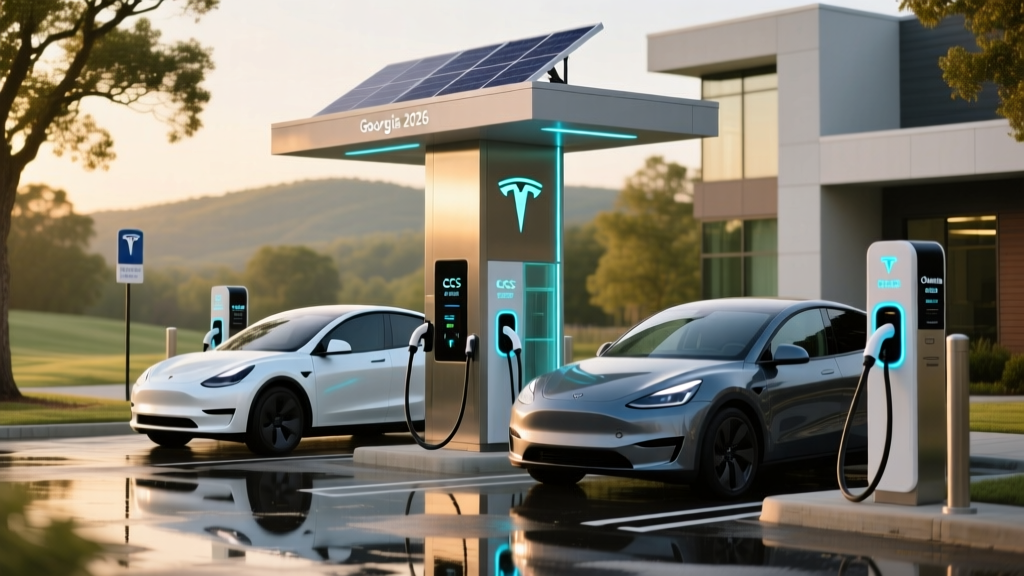
The 2026 GMC Sierra EV ships with a NACS (North American Charging Standard) port — the Tesla-derived connector now adopted by GM and most major automakers. This is a significant advantage: it means native access to Tesla Supercharger stations (over 25,000 stalls in North America as of 2026) without an adapter.
| Connector | Native Support? | Adapter Needed? | Network Access |
|---|---|---|---|
| NACS (Tesla-style) | ✅ Yes — native port | None | Tesla Superchargers, Electrify America (new stalls), EVgo, many others |
| CCS1 | ❌ No | NACS-to-CCS adapter (~$200–$300) | Legacy Electrify America, ChargePoint DC stalls |
| CHAdeMO | ❌ No | Rare; not recommended | Legacy Nissan Leaf infrastructure — phasing out |
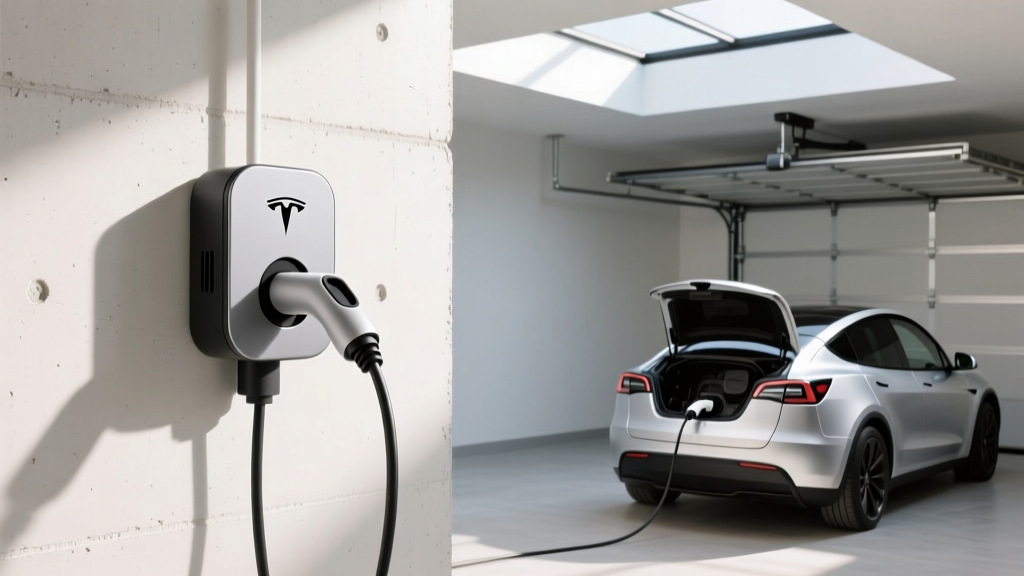
For home Level 2 charging, all J1772-based chargers will require the J1772-to-NACS adapter that GM includes with the vehicle. Tesla's Wall Connector (NACS-native) plugs directly in without an adapter.
Recommended Home Chargers for the Sierra EV Elevation Extended Range
Given the Sierra EV's 19.2 kW onboard charger capability, here are three tiers of equipment — each matched to a realistic electrical scenario:
Best for Max Speed: Tesla Wall Connector (NACS)
Power: Up to 19.2 kW (80A, hardwired, 240V)
Cable Length: 24 ft
Connector: NACS — plugs directly into Sierra EV
Smart Features: Wi-Fi, OTA updates, power sharing between two units, load management
Price: ~$480 (unit only)
Best For: Homes with 200A+ service that can dedicate a 100A circuit. Delivers the full 34 mi/hr range recovery.
Best All-Around: ChargePoint Home Flex (NACS)
Power: Up to 12 kW (50A, NEMA 14-50) or 19.2 kW (80A, hardwired)
Cable Length: 23 ft
Connector: NACS version available for 2026
Smart Features: App scheduling, utility integration, Alexa, energy tracking
Price: ~$600–$800
Best For: Flexible install — works on a 60A breaker (NEMA 14-50) or hardwired for max power.
Budget Pick: Emporia Vue Level 2 Charger
Power: Up to 11.5 kW (48A, NEMA 14-50) or 19.2 kW (80A hardwired)
Cable Length: 24 ft
Connector: J1772 (use included adapter) or NACS version
Smart Features: Whole-home energy monitoring integration, scheduling, solar-aware charging
Price: ~$400–$550
Best For: Cost-conscious buyers who want energy monitoring alongside charging.
Cost to Charge the Sierra EV vs. Gas: Per-Mile Economics
The Sierra EV Elevation Extended Range's ~200 kWh battery means charging costs add up — but they still undercut gasoline significantly. Here's the math based on an efficiency of approximately 2.0–2.2 kWh/mile (roughly 95–100 MPGe combined, per fueleconomy.gov estimates for full-size electric pickups):
| Scenario | Rate | Cost / Mile | Full "Tank" (0–100%) |
|---|---|---|---|
| Home Off-Peak (utility TOU rate) | $0.09–$0.13/kWh | $0.18–$0.29 | $18–$26 |
| Home Standard Rate | $0.15–$0.20/kWh | $0.30–$0.44 | $30–$40 |
| Public Level 2 (ChargePoint, etc.) | $0.25–$0.40/kWh | $0.50–$0.88 | $50–$80 |
| DC Fast Charging (public) | $0.35–$0.55/kWh | $0.70–$1.21 | $70–$110 |
| Gas Silverado 1500 (19 MPG combined) | $3.40/gal (2026 avg) | $0.18/mile | $82 (24-gal tank) |
Key takeaway: Home off-peak charging is the economic sweet spot — roughly $0.18–$0.29/mile, competitive with or cheaper than gas. But exclusive reliance on DC fast charging at $0.35–$0.55/kWh can push costs above gasoline. The Sierra EV's value proposition depends heavily on reliable home charging access. If you can't charge at home, run the numbers carefully before buying.
DC Fast Charging on the Road: What to Expect
The Sierra EV's 800V architecture and ~350 kW peak charge rate put it among the fastest-charging EVs on the road. On a V4 Supercharger or equivalent 350 kW stall, expect:
- 10–80% in approximately 25–35 minutes (conditions dependent)
- ~150 miles of range added in 10–12 minutes at peak rate
- Preconditioning activates automatically when you navigate to a charger via the infotainment system — this warms the battery to optimal temperature for maximum charge acceptance
Cold-weather charging reality: In sub-freezing temperatures without preconditioning, peak charge rates can drop by 30–50%. Always navigate to the charger using the built-in routing to trigger battery preconditioning. This is non-negotiable for road-trip efficiency.
Range on the highway: The EPA estimates ~390 miles, but sustained 70–80 mph highway driving typically yields 320–350 real-world miles. Towing drops this substantially — expect 180–240 miles when pulling a 5,000–7,000 lb trailer. Plan charging stops accordingly.
Safety and Electrical Code Considerations
Any Level 2 installation must comply with NEC (National Electrical Code) requirements and local amendments. Key considerations for Sierra EV owners:
- Dedicated circuit: The EV charger must have its own dedicated breaker — never share a circuit with other appliances.
- GFCI protection: NEC 2020 and later require GFCI protection for all outdoor receptacles used for EV charging. Hardwired installations may have different requirements depending on jurisdiction.
- Outdoor rating: If mounting outdoors, the EVSE must carry a NEMA 4 or NEMA 4X rating for weather resistance. All recommended units above meet this standard.
- Permit and inspection: Most jurisdictions require an electrical permit for any new 240V circuit. Skipping the permit risks insurance denial in the event of an electrical fire and may violate local code. Budget $100–$400 for permit fees.
- Load management: If your panel is near capacity, smart chargers like the Tesla Wall Connector and Emporia Vue offer load-sharing features that dynamically reduce charge rate when other household loads spike — potentially avoiding a panel upgrade.
Always hire a licensed electrician familiar with EV charger installations. Ask for a load calculation before committing to an 80A circuit.
Frequently Asked Questions
How much does it cost to install a home EV charger for the GMC Sierra EV?
For a 48A setup on a NEMA 14-50 outlet, expect $1,200–$3,000 total (equipment + electrician + permit). For a full 80A hardwired installation that maximizes the Sierra EV's 19.2 kW onboard charger, expect $3,750–$9,200, with panel upgrades accounting for the higher end. The §30C federal credit may offset up to $1,000 of these costs if your census tract qualifies.
How fast will each charging level add range to the Sierra EV?
Level 1 (120V) adds roughly 2–3 miles per hour — impractical for this truck. Level 2 at 48A adds ~20 mi/hr; at 80A, ~34 mi/hr. DC fast charging at a 350 kW station can add ~150 miles in 10–12 minutes at peak rate, tapering above 50% SoC.
Which connector does the 2026 Sierra EV use?
The 2026 Sierra EV has a native NACS port. It plugs directly into Tesla Superchargers and newer NACS-equipped public stations. For legacy CCS1 stations, you'll need a NACS-to-CCS adapter (~$200–$300). For home Level 2, use the included J1772-to-NACS adapter or buy a NACS-native charger like the Tesla Wall Connector.
Is charging the Sierra EV cheaper than gas?
At home off-peak rates ($0.09–$0.13/kWh), the Sierra EV costs approximately $0.18–$0.29/mile — competitive with or cheaper than a gas Silverado at $0.18/mile (19 MPG, $3.40/gal). At standard residential rates, costs are comparable. Exclusive DC fast charging at $0.35–$0.55/kWh can exceed gasoline costs. Home charging is the economic key.
What electrical upgrades might I need for an 80A charger?
An 80A continuous charger requires a 100A dedicated breaker. Homes with 200A main service may accommodate this if existing loads are modest; homes with 100A service will need a panel upgrade ($1,500–$3,500). Your electrician will perform a NEC Article 220 load calculation. Smart chargers with load management can sometimes avoid an upgrade by dynamically reducing draw.
Can I use a regular 120V outlet in a pinch?
Yes, but expect only 2–3 miles of range per hour. A full charge from near-empty would take over 100 hours. Level 1 is viable only as emergency trickle charging or if you drive fewer than 20 miles daily and can leave the truck plugged in for 8–10 hours overnight.