Why Charging Strategy Is the Real Range Extension for the Silverado EV
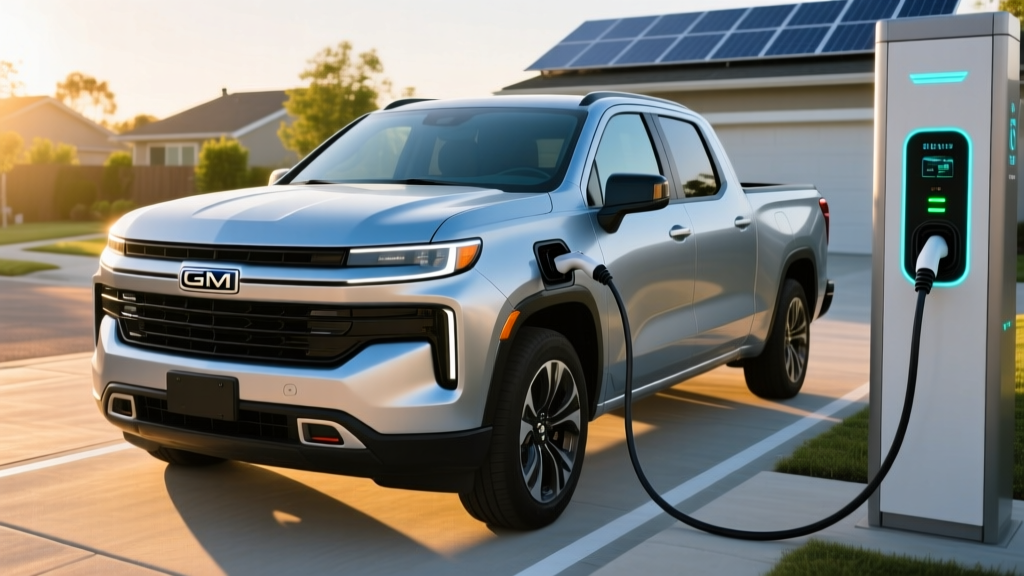
The GM Silverado EV packs one of the largest battery packs in any production vehicle — up to 200 kWh of usable capacity in the 4WT and RST trims — delivering an EPA-estimated 440 miles of range on the RST. But that massive Ultium battery also means charging logistics are fundamentally different from a compact EV with a 75 kWh pack. You cannot rely on a standard 120V wall outlet to refill it in any reasonable timeframe, and even DC fast charging sessions require patience and planning.
True range extension for the Silverado EV isn't about squeezing more miles from the battery — it's about minimizing downtime, maximizing charge speed at home, and understanding how the truck's charging curve behaves across different State of Charge (SoC) levels. This guide breaks down exactly what hardware, electrical upgrades, and connector setup you need to keep a Silverado EV charged efficiently in 2026.
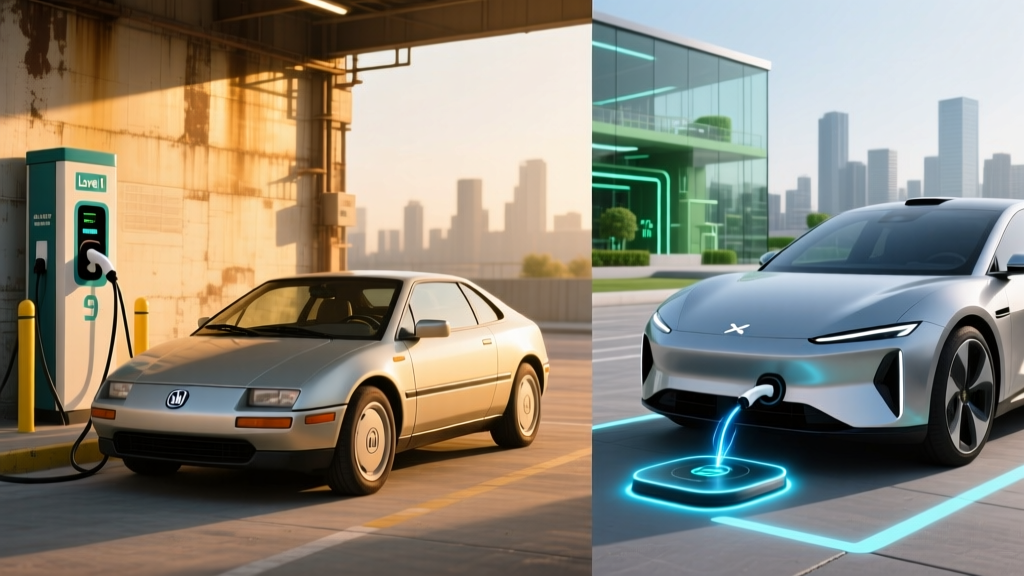
Understanding Silverado EV Charging Levels: kW Speeds and Real Range Added
Before selecting equipment, you need to understand the three charging tiers and what they actually deliver to a truck with this much battery capacity. Power is measured in kilowatts (kW) — the rate of energy flow — while battery capacity is measured in kilowatt-hours (kWh), the total energy stored. Confusing the two is the most common EV mistake.
| Level | Voltage / Amperage | Max Power (kW) | Miles of Range Added per Hour | Time for 10–80% (approx.) |
|---|---|---|---|---|
| Level 1 (120V) | 120V / 12A | ~1.4 kW | ~3–4 mi/hr | ~130+ hours (impractical) |
| Level 2 (240V) | 240V / 48A | ~11.5 kW | ~28–32 mi/hr | ~12–14 hours |
| Level 2 (240V, 80A) | 240V / 80A | ~19.2 kW | ~46–50 mi/hr | ~7–8 hours |
| DC Fast Charge | 800V architecture | Peak 350 kW | ~100 mi in ~10 min (low SoC) | ~35–45 min (10–80%) |
The Silverado EV supports up to 19.2 kW on Level 2 AC (when equipped with the optional dual onboard charger module on select trims) and peaks at 350 kW on DC fast charging thanks to GM's 800V-capable Ultium architecture. However, that 350 kW peak is only sustained at low SoC — expect the charge curve to taper significantly above 60% SoC, which is why a 10–80% session still takes 35–45 minutes at a 350 kW station.
Home Charger Installation: Electrical Requirements, Costs, and Panel Upgrades
Charging a 200 kWh battery at home is the most cost-effective and convenient approach — but it demands serious electrical infrastructure. A standard Level 2 installation for a smaller EV might use a 40-amp circuit; for the Silverado EV, you'll want at minimum a 60-amp dedicated circuit (to support 48A continuous charging) or ideally a 100-amp circuit (to support 80A continuous) to take full advantage of the truck's 19.2 kW onboard charger.
How much does it cost to install a home EV charger for a Silverado EV?
The total cost varies widely based on your home's existing electrical panel capacity and the distance from the panel to your garage or parking spot. Here's a realistic breakdown:
| Component | Basic Setup (48A / 60A circuit) | High-Power Setup (80A / 100A circuit) |
|---|---|---|
| Level 2 Charger Equipment | $500–$700 | $700–$1,200 |
| Electrical Permit | $50–$200 | $50–$250 |
| Electrician Labor (standard run, <50 ft) | $600–$1,500 | $1,000–$2,500 |
| Panel Upgrade (if needed: 100A → 200A service) | $1,500–$3,500 | $2,000–$5,000 |
| Total Estimated Range | $1,150–$5,900 | $1,750–$8,950 |
Homes built before 2000 often have 100-amp or 150-amp main panels. Adding a 100-amp dedicated EV circuit to an already-loaded 100-amp panel will require a service upgrade to 200 amps — this is the single biggest cost variable and one that many buyers overlook. Always have a licensed electrician perform a load calculation before committing to a charger amperage.
What electrical upgrades might I need?
Beyond the panel itself, common upgrades include:
- Dedicated circuit breaker: A 60A or 100A double-pole breaker exclusively for the EV charger — never share the circuit with other appliances.
- Conduit and wire gauge: 60A circuits require 6 AWG copper wire; 100A circuits require 3 AWG copper or 1 AWG aluminum. Longer wire runs increase material cost.
- GFCI protection: The 2023 NEC (National Electrical Code) and subsequent updates require GFCI protection for EV charging outlets in garages and outdoor locations. Hardwired chargers may bypass this requirement depending on local code interpretation.
- Outdoor-rated installation: If charging outdoors, the charger must carry a NEMA 4 or NEMA 4X rating for weather resistance.
Connector Compatibility: NACS, CCS, and the Silverado EV in 2026
GM transitioned all new electric vehicles to the North American Charging Standard (NACS) connector starting with the 2025 model year. This means the 2025 and 2026 Silverado EV ships with a native NACS charge port — the same connector used by Tesla vehicles and the growing Supercharger network.
| Model Year | Native Connector | Tesla Supercharger Access | CCS1 Station Access |
|---|---|---|---|
| 2024 (early production) | CCS1 | Requires NACS adapter (GM-approved) | Native — no adapter |
| 2025–2026 | NACS | Native — no adapter | Requires CCS1 adapter |
If you own a 2025+ Silverado EV, you can pull up to any Tesla Supercharger (V3 or V4) and plug in directly. For non-Tesla DC fast chargers still using CCS1 connectors (many Electrify America and EVgo stations), you'll need a NACS-to-CCS adapter. GM has provided adapters to some owners; aftermarket options from brands like Lectron and A2Z are also available for $150–$250.
For home Level 2 charging, NACS-equipped Silverado EVs will need a NACS wall connector or a J1772 charger with a J1772-to-NACS adapter. Most major charger manufacturers now offer native NACS models, which is the cleaner long-term solution.
Cost to Charge: Home vs. Public vs. Gas Comparison
The Silverado EV's 200 kWh battery means every charging session moves a large amount of energy — making the cost per kWh critically important. Here's what charging actually costs across different scenarios, benchmarked against a comparable gas truck.
| Scenario | Cost per kWh | Cost to Charge 200 kWh (0–100%) | Cost per Mile (est.) |
|---|---|---|---|
| Home, off-peak utility rate | $0.08–$0.12 | $16–$24 | $0.04–$0.05 |
| Home, standard rate | $0.14–$0.18 | $28–$36 | $0.06–$0.08 |
| Public Level 2 (ChargePoint, etc.) | $0.25–$0.40 | $50–$80 | $0.11–$0.18 |
| DC Fast Charge (Electrify America) | $0.35–$0.55 | $70–$110 | $0.16–$0.25 |
| Tesla Supercharger (V3/V4) | $0.28–$0.40 | $56–$80 | $0.13–$0.18 |
| Gas Silverado 1500 (4.3L V6, 20 MPG) | $3.40/gal avg | — | $0.17 |
At home on off-peak rates, the Silverado EV costs roughly $0.04–$0.05 per mile — about one-quarter the fuel cost of a gas Silverado. Even on standard residential rates, you're saving 50–60% per mile. However, exclusive reliance on DC fast charging erodes those savings significantly, sometimes matching or exceeding gas costs. This is why a home Level 2 setup is practically mandatory for Silverado EV ownership economics to work.
Many utilities offer time-of-use (TOU) plans that drop rates to $0.06–$0.10/kWh overnight. Programming your charger to begin sessions at 11 PM or midnight can cut your charging costs nearly in half versus daytime rates.
Recommended Level 2 Chargers for the Silverado EV
Given the truck's 19.2 kW onboard charging capability (on equipped trims), investing in an 80A-capable charger unlocks the fastest home charging speeds. Here are top picks based on power output, connector compatibility, build quality, and smart features:
ChargePoint Home Flex (NACS)
Power: Up to 19.2 kW (80A) on 240V
Connector: Native NACS (2025+ model) or J1772
Cable Length: 23 ft
Smart Features: Wi-Fi, app scheduling, Alexa integration, load sharing
Price: ~$699
Best For: Owners wanting maximum Silverado EV charge speed at home with smart scheduling for TOU rates.
Tesla Wall Connector (NACS)
Power: Up to 11.5 kW (48A) on 240V
Connector: Native NACS
Cable Length: 24 ft
Smart Features: Wi-Fi, OTA updates, power sharing between multiple units
Price: ~$475
Best For: Budget-conscious NACS owners. Note: limited to 48A — won't unlock the Silverado's full 19.2 kW AC rate.
Emporia Level 2 Smart Charger
Power: Up to 11.5 kW (48A) on 240V
Connector: J1772 (NACS adapter needed for 2025+ Silverado)
Cable Length: 24 ft
Smart Features: Energy monitoring, solar integration, scheduling, load management
Price: ~$399
Best For: Homeowners with solar panels who want detailed energy tracking and lowest hardware cost.
For the fastest possible home fill, the ChargePoint Home Flex at 80A is the clear winner for Silverado EV owners — it can add roughly 46–50 miles of range per hour, meaning an overnight session (8–10 hours) can replenish 370–500 miles, more than the truck's total range.
DC Fast Charging on the Road: What Silverado EV Owners Should Know
The Silverado EV's 350 kW peak DC fast-charge capability is impressive, but the real-world charging curve tells a more nuanced story. Like all large batteries, charge speed is highest at low SoC and tapers as the battery fills:
- 10–30% SoC: Near-peak 300–350 kW (if station supports it) — adds ~100 miles in roughly 10 minutes
- 30–60% SoC: Sustained 200–280 kW — adds ~150 miles in roughly 20 minutes
- 60–80% SoC: Tapers to 100–150 kW — adds ~80 miles in roughly 20 minutes
- 80–100% SoC: Drops below 50 kW — not recommended for DC fast charging; use Level 2 for the top-off
For road trips, the most time-efficient strategy is to charge from 10% to 80% at DC fast stations (35–45 minutes) and avoid topping off past 80% on DC — the taper makes it painfully slow. Plan your stops so you arrive at the next charger around 10–15% SoC to take advantage of the fastest part of the curve.
Use the EPA's fueleconomy.gov tool to look up official efficiency ratings and compare real-world energy consumption figures for your specific Silverado EV trim.
Safety, Code Compliance, and Installation Best Practices
Charging a 200 kWh battery at high amperage for hours at a time places significant demand on your home's electrical system. Cutting corners is dangerous and may void your homeowner's insurance coverage in the event of an electrical fire.
- Always use a licensed electrician. DIY EV charger installation on a 60A or 100A circuit is not advisable and may violate local code.
- Permit and inspection. Most jurisdictions require a permit for new 240V circuits. The inspection ensures wire gauge, breaker sizing, and grounding meet NEC standards.
- Hardwired vs. plug-in. Hardwired chargers (no plug) are generally preferred for 80A circuits, as NEMA 14-50 outlets are rated for 50A and there is no standard 80A/100A residential plug. Hardwired installations also avoid the GFCI breaker requirement in some jurisdictions.
- Thermal monitoring. Quality chargers include internal temperature sensors that reduce power if the unit overheats. Look for UL-listed or ETL-listed equipment — never buy uncertified chargers from unknown brands.
- Cable management. A 24-foot cable on a heavy-duty charger is stiff and heavy. Plan for a wall-mounted holster or cable organizer to prevent tripping hazards and connector damage.
Frequently Asked Questions
Can I charge a Silverado EV on a standard 120V outlet?
Technically yes, but practically no. At roughly 1.4 kW, a 120V outlet adds only 3–4 miles of range per hour. Fully charging the 200 kWh battery from empty would take over 130 hours — more than five full days. Level 1 is only useful for maintaining charge or adding 20–30 miles overnight in an emergency.
Does the Silverado EV qualify for the federal EV tax credit?
The IRS §30D clean vehicle credit offers up to $7,500 for qualifying new EVs, but eligibility depends on MSRP caps ($80,000 for trucks/vans/SUVs), buyer income limits ($300K joint / $150K single), and battery critical-mineral and component sourcing requirements that change annually. The Silverado EV's higher trims exceed the MSRP cap. Check the IRS source list and your tax professional before assuming eligibility. As of 2026, the credit can be transferred to the dealer at point of sale as a purchase-price reduction.
How long does a Silverado EV battery last?
GM warranties the Ultium battery for 8 years or 100,000 miles (whichever comes first) against defects and excessive capacity loss — typically defined as dropping below 60% of original capacity. Based on degradation data from earlier Ultium-based vehicles, expect roughly 5–8% capacity loss over the first 100,000 miles under normal use. The 200 kWh pack's large size is itself a longevity advantage: shallower discharge cycles reduce stress on the cells.
What happens if my home panel can't support an EV charger?
If your electrician's load calculation shows insufficient capacity, you have three options: upgrade to a 200A service ($2,000–$5,000), install a lower-amperage charger (e.g., 32A or 40A on a smaller circuit), or use a smart load-management device like the Emporia Smart Load Center that dynamically reduces charger draw when other appliances activate. The last option can avoid a panel upgrade entirely in some cases.
Is it cheaper to charge at home or use public DC fast chargers?
Home charging is dramatically cheaper — typically $0.04–$0.08 per mile versus $0.13–$0.25 per mile at public DC fast stations. For a truck with a 200 kWh battery, the difference can mean $40–$80 per full charge. Public DC fast charging should be reserved for road trips and occasional top-offs, not daily use.