Why the GM NACS DC Adapter Matters in 2026
If you own a General Motors electric vehicle — whether it's a Chevrolet Equinox EV, Blazer EV, Silverado EV, Cadillac Lyriq, or the GMC Sierra EV — you've likely heard that GM adopted the North American Charging Standard (NACS) for its EVs starting with the 2025 model year. But what about the millions of GM EVs built with CCS1 ports between 2022 and 2024? That's where the GM NACS DC adapter comes in, and it's one of the most consequential pieces of hardware in the EV charging ecosystem right now.
As of early 2026, Tesla's Supercharger network has over 28,000 DC fast-charging stalls across North America — more than any other network. GM's decision to adopt NACS means current and future GM EVs can access those stalls. For older CCS-equipped GM vehicles, the GM NACS DC adapter bridges the gap, letting you plug a CCS1 inlet into a NACS (Tesla-style) connector and charge at Supercharger speeds.
This guide breaks down exactly how the adapter works, what charging speeds to expect, how it fits into the broader home and public charging picture, and what you'll actually pay per mile.
Charging Levels Explained: kW, Speeds, and What They Mean
Before diving into the adapter itself, let's ground the discussion in the three charging levels every EV owner must understand. The critical distinction: kW (kilowatts) measures power — how fast energy flows into your battery. kWh (kilowatt-hours) measures energy — the total capacity of your battery. A 85 kWh battery charged at 85 kW would theoretically fill in one hour; real-world charging curves are never linear.
| Level | Voltage | Power (kW) | Miles of Range Added per Hour | Typical Use |
|---|---|---|---|---|
| Level 1 | 120V AC | 1.0–1.4 kW | 3–5 mi/hr | Emergency / overnight trickle |
| Level 2 | 240V AC | 3.3–19.2 kW | 12–75 mi/hr | Home daily charging, workplace |
| DC Fast Charge | 400–800V DC | 50–350 kW | 150–1,200+ mi/hr (peak) | Road trips, rapid top-ups |
For context, a Chevrolet Equinox EV with an 85 kWh (usable) battery and an EPA-estimated 319 miles of range would need roughly 11–13 hours on Level 1, about 8–10 hours on a 9.6 kW Level 2 home charger, and approximately 20–28 minutes from 10–80% on a 150+ kW DC fast charger, depending on the battery's state of charge and thermal conditions.
How the GM NACS DC Adapter Works
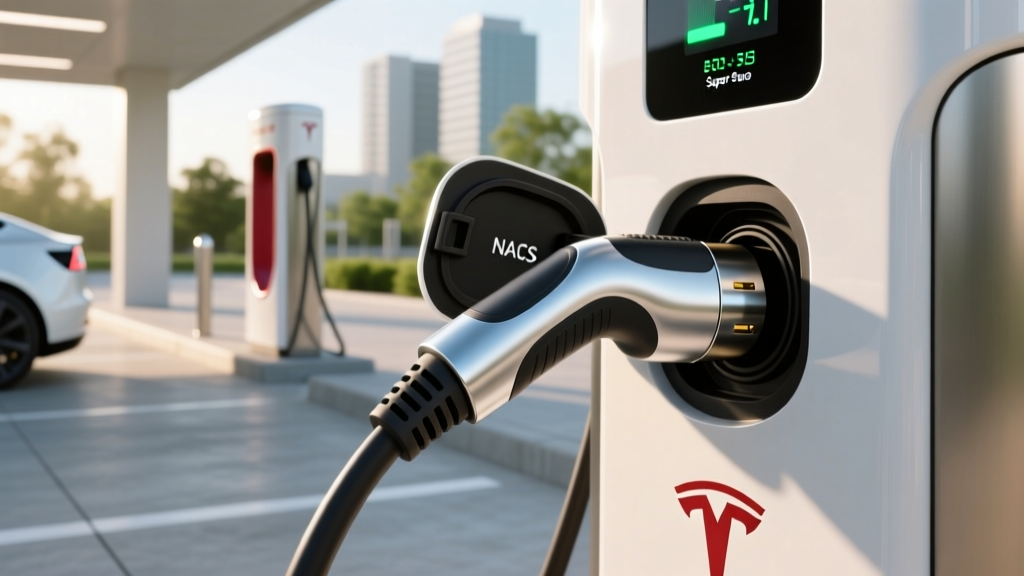
The GM NACS DC adapter is a CCS1-to-NACS converter. On one end, it plugs into your GM EV's existing CCS1 charge port. On the other end, it accepts a NACS (Tesla-style) DC fast-charging connector — the smaller, lighter plug now standard on Tesla Superchargers and increasingly on new chargers from Electrify America, EVgo, and other networks.
GM began shipping the adapter to eligible owners in mid-2024, initially providing it at no cost to owners of 2022–2024 Chevrolet Bolt EV/EUV, Cadillac Lyriq, GMC Hummer EV, and Chevrolet Silverado EV models equipped with CCS1 ports. By 2026, the adapter is available for purchase through GM dealers and the myChevrolet/myCadillac apps for approximately $225–$300 for owners who didn't receive the complimentary unit.
Charging Speeds with the GM NACS DC Adapter
The adapter itself does not limit charging speed — your vehicle's onboard charge controller does. Here's what to expect at a Tesla V3 Supercharger (peak 250 kW) or V4 Supercharger (peak 250–350 kW) using the adapter:
- Cadillac Lyriq (102 kWh usable, NMC): Peaks around 190 kW, 10–80% in approximately 28–34 minutes on a V3 stall.
- Chevrolet Blazer EV (102 kWh usable): Peaks around 190 kW, 10–80% in roughly 30–35 minutes.
- Chevrolet Equinox EV (85 kWh usable): Peaks around 150–170 kW, 10–80% in approximately 25–32 minutes.
- GMC Hummer EV (200+ kWh usable): Peaks around 300+ kW on capable stalls, but the massive battery means 10–80% still takes 40–55 minutes.
- Chevrolet Silverado EV (200+ kWh usable): Similar to Hummer EV — peak rate is high, but total charge time is long due to battery size.
Important: the GM NACS DC adapter handles DC fast charging only. It does not convert AC Level 2 NACS connectors (like Tesla Wall Connectors or Tesla Destination Chargers) to your CCS1 port. For Level 2 AC charging at home, you'll still use a standard J1772 connector or a dedicated Level 2 charger with a J1772 plug.
Connector Compatibility: NACS, CCS1, and CHAdeMO
The charging connector landscape has consolidated rapidly since 2023. Here's where things stand in 2026:
| Connector | Brands Using It (2026 Models) | AC Level 2? | DC Fast? | Adapter Needed for CCS1 GM EVs? |
|---|---|---|---|---|
| NACS (Tesla) | Tesla, GM, Ford, Rivian, Volvo, Polestar, Mercedes, BMW, Hyundai (new models) | Yes | Yes | Yes — GM NACS DC adapter for DC; no AC adapter widely available |
| CCS1 | Legacy GM (2022–2024), older VW/Hyundai/Kia, Stellantis | Yes (J1772) | Yes | Native — no adapter needed |
| CHAdeMO | Nissan Leaf (legacy only — discontinued) | Yes (J1772) | Yes | Not compatible; different standard entirely |
The key takeaway for GM owners: if your vehicle was built with a CCS1 port (2022–2024 model years), you need the GM NACS DC adapter to access Tesla Superchargers. If you have a 2025+ GM EV with a native NACS port, no adapter is required. And if you're shopping for a new GM EV in 2026, every model now ships with NACS natively.
Home Charging Setup: Electrical Requirements and Installation Costs
While the GM NACS DC adapter is for public fast charging, the backbone of EV ownership is home Level 2 charging. Here's what you need to know about installing a 240V home charger, regardless of your vehicle's connector type.
Electrical Requirements
A typical Level 2 home charger requires:
- Voltage: 240V (same as a dryer or oven circuit)
- Amperage: 40A circuit for a 32A charger (NEC requires circuits rated at 125% of continuous load) or 60A circuit for a 48A charger
- Dedicated circuit: Your charger must have its own breaker — no sharing with other appliances
- GFCI protection: Required by NEC 2020 and later for EV charging circuits
- Outdoor rating: If your charger is mounted outside, it must be NEMA 4 or NEMA 4X rated for weather resistance
Panel Upgrade Considerations
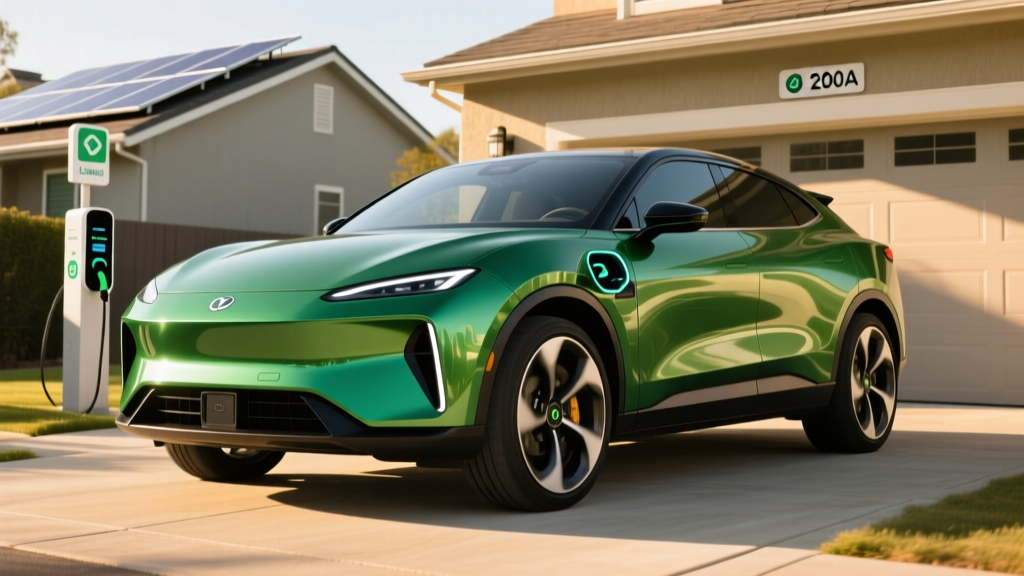
This is where costs can escalate. Many homes built before 2000 have 100A or 150A electrical panels. Adding a 40A or 60A EV charger circuit may push total load beyond the panel's capacity, especially if you already run electric heat, an electric dryer, and an electric oven. A licensed electrician will perform a load calculation per NEC Article 220 to determine if your panel can handle the additional circuit.
If a panel upgrade is needed — typically from 100A/150A to 200A — expect to pay $1,500–$4,000 for the panel replacement alone, on top of the charger installation. Homes with 200A panels usually have sufficient headroom for a Level 2 charger without an upgrade.
| Component | Low End | High End | Notes |
|---|---|---|---|
| Level 2 Charger (hardware) | $300 | $750 | 32A–48A, J1772 connector for CCS1 GM EVs |
| Electrician labor (standard install) | $400 | $1,200 | Assumes panel is nearby, no conduit runs over 50 ft |
| Electrical permit | $50 | $200 | Varies by municipality |
| Panel upgrade (if needed) | $1,500 | $4,000 | 100A/150A to 200A; not always required |
| Total (no panel upgrade) | $750 | $2,150 | Most common scenario for 200A-panel homes |
| Total (with panel upgrade) | $2,250 | $6,150 | Older homes with undersized panels |
Some utilities and states offer rebates of $250–$1,000 for home charger installation, which can offset costs significantly. Check with your local utility and your state energy office for current programs.
Recommended Home Chargers for GM CCS1 EVs
Since the GM NACS DC adapter is for public DC fast charging only, your home charger still needs a J1772 connector for AC Level 2 charging. Here are top picks for 2026:
ChargePoint Home Flex
- Power output: Up to 12 kW (50A circuit / 40A charge)
- Connector: J1772 (compatible with all CCS1 GM EVs)
- Cable length: 18 ft or 23 ft options
- Smart features: Wi-Fi, app scheduling, utility demand-response, Alexa integration
- Price: ~$549 (charger only)
- Best for: Owners wanting smart scheduling and utility integration
Emporia Vue Level 2 Charger
- Power output: Up to 11.5 kW (48A on a 60A circuit)
- Connector: J1772
- Cable length: 24 ft
- Smart features: Wi-Fi, app control, solar integration with Emporia energy monitor, load management
- Price: ~$399
- Best for: Budget-conscious buyers with solar panels
Grizzl-E Smart
- Power output: Up to 10 kW (40A on a 50A circuit)
- Connector: J1772
- Cable length: 24 ft
- Smart features: Wi-Fi, OCPP compatibility, adjustable amperage via DIP switches
- Price: ~$449
- Best for: Cold-climate durability (rated to -40°F), Canadian-built
Note: If you plan to upgrade to a 2025+ GM EV with a native NACS port in the future, consider a charger with a swappable connector head or plan to purchase a NACS-to-J1772 adapter when the time comes. Tesla's Universal Wall Connector ($599, 11.5 kW, built-in J1772 + NACS) is a strong dual-connector option.
Charging Cost Per Mile: Home vs. Public vs. Gas
One of the strongest arguments for EV ownership is fuel cost savings, but the math depends heavily on where you charge. Here's a realistic breakdown using a Chevrolet Equinox EV (85 kWh battery, 319 EPA miles, ~3.5 mi/kWh efficiency) as the reference vehicle:
| Scenario | Rate ($/kWh) | Cost to Add 200 Miles | Cost Per Mile |
|---|---|---|---|
| Home Level 2 (off-peak utility rate) | $0.08–$0.12 | $4.57–$6.86 | $0.023–$0.034 |
| Home Level 2 (average US residential) | $0.16 | $9.14 | $0.046 |
| Public Level 2 (ChargePoint, EVgo) | $0.25–$0.40 | $14.29–$22.86 | $0.071–$0.114 |
| DC Fast Charge (Electrify America, EVgo) | $0.35–$0.55 | $20.00–$31.43 | $0.100–$0.157 |
| Tesla Supercharger (via GM NACS DC adapter) | $0.28–$0.42 | $16.00–$24.00 | $0.080–$0.120 |
| Gasoline (25 MPG combined, $3.40/gal) | — | $27.20 | $0.136 |
The data is clear: home charging is dramatically cheaper than any public option, and even the most expensive DC fast charging is often cheaper than gasoline on a per-mile basis. The GM NACS DC adapter unlocks Tesla Supercharger pricing — typically $0.28–$0.42/kWh depending on location and time of day — which is often the most affordable public DC fast-charging option available.
Using the GM NACS DC Adapter at Tesla Superchargers: Step by Step
GM and Tesla completed network integration by late 2024, so the process is now seamless for eligible vehicles. Here's what to expect:
- Verify eligibility: Your GM EV must have an active OnStar connected services plan and be registered in the myChevrolet, myCadillac, or myGMC app. The vehicle's VIN must be authorized on Tesla's network.
- Locate a Supercharger: Use the GM in-vehicle navigation (which now shows Tesla Superchargers) or the Tesla app to find stalls.
- Plug in: Insert the GM NACS DC adapter into your vehicle's CCS1 port, then plug the Tesla Supercharger NACS connector into the adapter.
- Initiate charging: Charging should begin automatically once connected. Billing is handled through your GM app account — no separate Tesla account is required.
- Monitor: Track your session via the vehicle's infotainment screen or the GM app. You'll see real-time kW draw, state of charge, and estimated time to target SoC.
Known Limitations
A few practical considerations from real-world use:
- The adapter adds roughly 1.5–2 lbs and extends about 4 inches from the charge port. Store it in the provided case in your frunk or cargo area.
- Some older V2 Supercharger stalls (150 kW max) may not activate with the adapter. Tesla has been updating stall firmware, but V3 (250 kW) and V4 stalls have the most reliable compatibility.
- The adapter does not enable AC charging at Tesla Destination Chargers or Tesla Wall Connectors. For those, you'd need a separate NACS-to-J1772 AC adapter (third-party options from Lectron and others, ~$120–$180).
- Preconditioning your battery before arriving at a Supercharger — using the GM in-vehicle navigation to route to the charger — significantly improves charge speed, especially in cold weather.
Safety and Electrical Code Considerations
Whether you're installing a home Level 2 charger or using public DC fast chargers with an adapter, safety matters:
- Home charger installation: Always use a licensed electrician. DIY electrical work on 240V circuits carries serious shock and fire risk. Your electrician should pull a permit and schedule an inspection — this protects you legally and ensures your homeowner's insurance remains valid.
- Adapter care: Inspect the GM NACS DC adapter's pins and housing before each use. Look for signs of melting, discoloration, or corrosion. If you see damage, stop using it immediately and contact GM for a replacement.
- Cable management: Never use an extension cord with a Level 2 home charger. If the cable doesn't reach your vehicle, have your electrician relocate the charger or install a longer-cable unit.
- Outdoor installations: Your charger must carry a NEMA 4 (or higher) rating for outdoor use. The circuit must include GFCI protection per NEC 625.54.
Frequently Asked Questions
How much does the GM NACS DC adapter cost?
GM initially provided the adapter free of charge to eligible owners of 2022–2024 CCS1-equipped EVs. For owners who need to purchase one, the retail price through GM dealers and the myChevrolet/myCadillac apps is approximately $225–$300 as of early 2026. Third-party CCS1-to-NACS adapters from companies like Lectron and A2Z are also available for $150–$250, but GM recommends using the OEM adapter for guaranteed compatibility and warranty coverage.
How fast will each charging level add range to my GM EV?
On Level 1 (120V), expect 3–5 miles of range per hour. On Level 2 (240V, 32A–48A), expect 25–45 miles per hour depending on the charger's kW output and your vehicle's onboard charger capacity. On DC fast charging via the GM NACS DC adapter at a Tesla V3 Supercharger, you can add 150–200+ miles of range in 20 minutes, depending on your battery's state of charge and temperature.
Which connector and charger is compatible with my GM EV?
If your GM EV is a 2022–2024 model, it has a CCS1 port. You'll use J1772 for Level 2 AC charging and CCS1 for DC fast charging at non-Tesla networks. The GM NACS DC adapter adds Tesla Supercharger access for DC fast charging. If your GM EV is a 2025 or newer model, it has a native NACS port and can use Tesla Superchargers and NACS-equipped public chargers without any adapter.
How much does charging cost per mile compared to gas?
At home on off-peak electricity ($0.10/kWh), charging a GM Equinox EV costs roughly $0.03/mile — about 75–80% cheaper than a comparable gas vehicle at $3.40/gallon and 25 MPG ($0.14/mile). Even at Tesla Supercharger rates ($0.35/kWh average), the cost is approximately $0.10/mile, still significantly less than gasoline. The savings are largest when you charge at home overnight.
What electrical upgrades might I need for a home charger?
If your home has a 200A electrical panel, you likely won't need an upgrade — a 40A or 60A dedicated circuit for the charger should fit within existing capacity. If your panel is 100A or 150A, especially in homes with electric heat, dryer, and oven, a panel upgrade to 200A may be required, adding $1,500–$4,000 to your installation cost. A licensed electrician will perform a load calculation to determine this before any work begins.
Does the GM NACS DC adapter void my vehicle warranty?
No. The GM NACS DC adapter is an OEM-approved accessory. Using it at Tesla Superchargers does not affect your vehicle's battery or powertrain warranty, which covers 8 years / 100,000 miles on all GM EV batteries (with a minimum 70% capacity retention threshold per Chevrolet's EV warranty terms).
Can I use the GM NACS DC adapter at non-Tesla NACS chargers?
Yes. As of 2026, networks like Electrify America, EVgo, and ChargePoint are deploying NACS-equipped DC fast chargers alongside their CCS1 stalls. The GM NACS DC adapter works at any NACS DC fast charger, not just Tesla Superchargers, expanding your options significantly on road trips.
The Bottom Line for GM EV Owners
The GM NACS DC adapter is more than a dongle — it's a bridge to the most reliable and extensive DC fast-charging network in North America. For owners of 2022–2024 CCS1-equipped GM EVs, it transforms the road-trip experience, turning a patchwork of third-party networks into a seamless Supercharger-access ecosystem. Pair it with a properly installed 240V Level 2 home charger, and you have a charging setup that covers daily commuting at pennies per mile and long-distance travel at rates competitive with — or cheaper than — gasoline.
For more on federal EV charging tax credits and eligibility, consult the IRS Clean Vehicle Tax Credits page. For official EPA range and efficiency data on GM EVs, visit fueleconomy.gov.