GM's Bidirectional Charging Lineup: What's Available Now
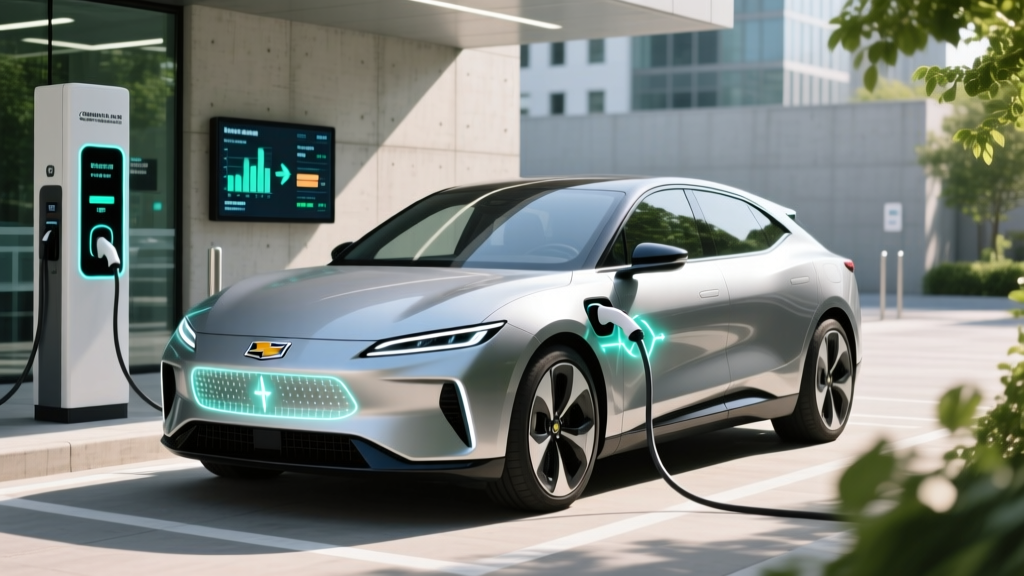
Bidirectional charging — the ability to send power from your EV's battery back to your home (V2H) or the grid (V2G) — has been a promised feature for years. As of the 2026 model year, General Motors has made tangible progress, but the rollout is limited to specific models and requires a carefully matched ecosystem of vehicle, charger, and home electrical panel. If you're researching which GM EVs are capable of bidirectional charging, the short answer is: the Chevrolet Silverado EV, GMC Sierra EV, and the refreshed 2026 Chevrolet Blazer EV (with specific trims), supported by GM's Energy platform and the Ultium Home PowerShift charger.
Before we break down the full GM bidirectional lineup, you need to understand the charging fundamentals that make V2H/V2G possible — and what it costs to set up.
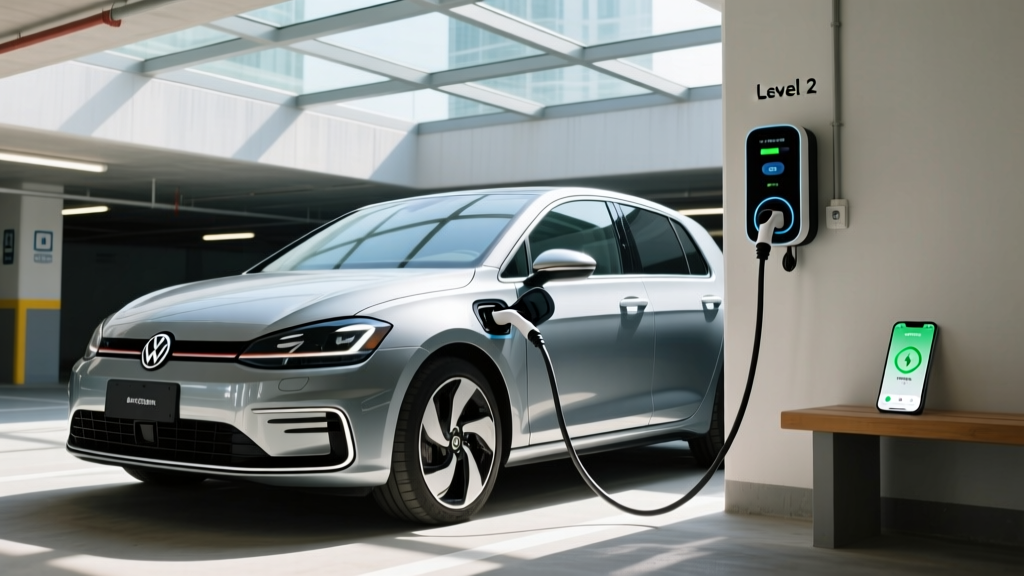
Charging Levels Explained: Level 1, Level 2, and DC Fast
Every EV charges at one of three levels. Understanding the difference between kW (power — the rate of energy flow) and kWh (energy — the battery's total capacity) is essential. Think of kW as the width of a hose and kWh as the size of the bucket you're filling.
| Level | Voltage | Max Power (kW) | Miles of Range Added per Hour | Typical Use Case |
|---|---|---|---|---|
| Level 1 | 120V AC | 1.4–1.9 kW | 3–5 mi/hr | Overnight trickle; PHEVs and low-mileage drivers |
| Level 2 | 240V AC | 7.2–19.2 kW | 20–60 mi/hr | Home daily charging; workplace; public destinations |
| DC Fast Charge | 400–800V DC | 50–350 kW | 150–1,000+ mi/hr (peak) | Road trips; 10–80% in 15–40 minutes |
For bidirectional power delivery (V2H), the vehicle outputs Level 2-style AC power back through a compatible bidirectional charger and a home energy management system. GM's V2H system currently supports up to 9.6 kW of continuous discharge — enough to run most household circuits during an outage for hours or even days, depending on battery state of charge (SoC).
GM EVs With Bidirectional Charging: Model-by-Model Breakdown
Here's the current GM bidirectional-capable lineup as of early 2026, with exact battery specs and power output:
| Model | Usable Battery (kWh) | V2H Output | Max DC Charge (kW) | 10–80% DC Time | Starting MSRP |
|---|---|---|---|---|---|
| Chevrolet Silverado EV (4WT / RST) | ~200 kWh (Ultium, NMC) | 9.6 kW | 350 kW (peak) | ~22 min | $55,900 (4WT); $87,300 (RST) |
| GMC Sierra EV (Denali Edition 1 / Elevation) | ~200 kWh (Ultium, NMC) | 9.6 kW | 350 kW (peak) | ~22 min | $79,900 (Denali Ed. 1) |
| Chevrolet Blazer EV (2026 RS/SS with Energy Package) | 102 kWh (Ultium, NMC) | 9.6 kW | 190 kW (peak) | ~28 min | $52,200 (RS) |
GM has confirmed that additional Ultium-based models, including future Equinox EV and Silverado EV fleet variants, are being engineered for bidirectional capability, but these remain announced/preliminary and are not yet available to consumers.
The Required Hardware: Ultium Home PowerShift Charger
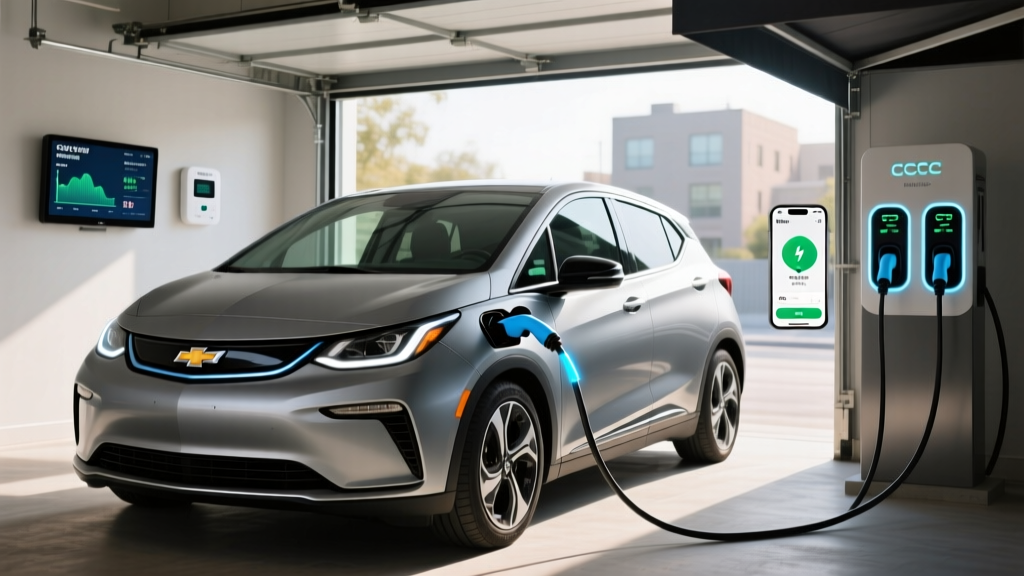
Bidirectional charging isn't plug-and-play with any Level 2 wallbox. GM's V2H system requires the Ultium Home PowerShift Charger, a bidirectional-capable wallbox developed in partnership with GM Energy. Here are the critical specs:
- Charge rate (to vehicle): Up to 11.5 kW (48A on a 60A circuit)
- Discharge rate (from vehicle to home): Up to 9.6 kW continuous
- Connector: NACS (North American Charging Standard) — native on all 2026 GM EVs
- Cable length: 25 feet
- Smart features: Wi-Fi connected, GM Energy app integration, automatic outage switchover when paired with the GM Energy Home Power manager panel
- Equipment cost: ~$1,800–$2,200 (charger unit + home energy management controller)
The Home Power manager acts as an automatic transfer switch: when the grid goes down, it detects the outage and seamlessly routes power from your EV's battery to your home's electrical panel within seconds. This replaces the need for a standalone home generator or a separate battery wall system like the Tesla Powerwall.
Home Charger Installation: Electrical Requirements and Real Costs
Installing a bidirectional-capable charger is more complex than a standard Level 2 wallbox because of the higher amperage circuit and the home energy management controller. Here's what to expect:
| Component | Specification | Cost Range |
|---|---|---|
| Ultium Home PowerShift Charger | 11.5 kW / NACS / 25-ft cable | $1,200–$1,500 |
| Home Energy Management Controller | Automatic transfer switch + gateway | $600–$800 |
| Electrical circuit (60A, 240V) | Dedicated breaker, 6 AWG copper wire | $300–$800 (if panel has capacity) |
| Electrician labor | 4–8 hours, licensed + permitted | $600–$1,800 |
| Permit and inspection | Local electrical permit (required by NEC) | $100–$300 |
| Electrical panel upgrade (if needed) | 100A → 200A service upgrade | $1,500–$3,500 |
| Total (no panel upgrade) | $2,800–$5,200 | |
| Total (with panel upgrade) | $4,300–$8,700 |
Connector Compatibility: NACS, CCS, and Adapter Needs
Starting with the 2025 model year, GM transitioned all new EVs to the NACS (North American Charging Standard) connector — the same port used by Tesla. This means every 2026 GM EV with bidirectional capability uses NACS natively, both for charging and for V2H power delivery through the PowerShift charger.
| Connector Type | Native on 2026 GM EVs? | Adapter Needed? | Notes |
|---|---|---|---|
| NACS (Tesla-style) | Yes — standard | No | Used for all home charging, Supercharger access, and V2H |
| CCS1 | No | Yes — NACS-to-CCS adapter (~$150–$250) | Needed for older Electrify America and non-Tesla DC fast stations |
| CHAdeMO | No | No adapter widely available | Legacy standard; avoid relying on CHAdeMO stations |
| J1772 (Level 2 public) | No | Yes — NACS-to-J1772 adapter (~$50–$80) | For public Level 2 stations at malls, workplaces, hotels |
GM includes a NACS-to-J1772 adapter with most new EVs. For DC fast charging on non-Tesla networks, GM's navigation system now routes to both Tesla Supercharger stalls (over 25,000 in North America) and CCS-equipped stations via the adapter.
Charging Cost Per Mile: Home vs. Public vs. Gas
One of the strongest arguments for EV ownership is fuel cost savings. Here's how charging costs compare to gasoline on a per-mile basis, using the Silverado EV 4WT (which averages roughly 2.0 kWh/mile) as our example:
| Scenario | Rate | Cost per Mile (Silverado EV) | Annual Cost (12,000 mi) |
|---|---|---|---|
| Home Level 2 (off-peak utility rate) | $0.10/kWh | $0.20 | $2,400 |
| Home Level 2 (standard residential) | $0.16/kWh | $0.32 | $3,840 |
| Public Level 2 (ChargePoint, EVgo L2) | $0.30/kWh | $0.60 | $7,200 |
| DC Fast Charging (Electrify America, EA Pass) | $0.48/kWh | $0.96 | $11,520 |
| Gas truck (18 MPG combined, $3.40/gal) | $3.40/gal | $0.19/mi (wait — see note) | $2,267 |
Important nuance: A comparable gas truck like the Chevrolet Silverado 1500 (5.3L V8, ~18 MPG combined) costs roughly $0.19 per mile at $3.40/gallon. That's actually competitive with home off-peak EV charging. The real savings emerge if you have solar panels (driving your effective electricity cost near $0.04/kWh), live in a state with low utility rates, or if gas prices rise. Where bidirectional charging adds economic value is outage resilience — avoiding spoiled food, hotel stays, and generator fuel during multi-day blackouts — and potential utility demand-response credits (V2G programs that pay you to discharge during peak hours, though these are still limited in availability as of 2026).
Alternative Level 2 Chargers for GM EVs (Non-Bidirectional)
If you don't need bidirectional capability and simply want a reliable Level 2 home charger for your GM EV, these are well-regarded options in 2026:
ChargePoint Home Flex
- Power: Up to 12 kW (50A)
- Connector: NACS (native on 2026 models)
- Cable: 23 ft
- Smart features: Wi-Fi, app scheduling, Alexa
- Price: ~$599
Emporia Level 2 EV Charger
- Power: Up to 11.5 kW (48A)
- Connector: NACS / J1772 (configurable)
- Cable: 24 ft
- Smart features: Energy monitoring, solar integration
- Price: ~$399
Wallbox Pulsar Plus (NACS)
- Power: Up to 11.5 kW (48A)
- Connector: NACS
- Cable: 25 ft
- Smart features: Wi-Fi, load balancing, app
- Price: ~$649
None of these support bidirectional power delivery. For V2H, you must use the GM Ultium Home PowerShift system.
Safety, Code, and Electrical Considerations
Any Level 2 charger installation must comply with the National Electrical Code (NEC) Article 625 and your local jurisdiction's amendments. Key requirements:
- Dedicated circuit: The charger must be on its own breaker — no sharing with other appliances.
- GFCI protection: NEC 2020+ requires ground-fault circuit interrupter protection for all EV charging outlets and hardwired units. The PowerShift charger has built-in GFCI.
- Outdoor rating: If installed outside, the unit must carry a NEMA 4 or IP65 weatherproof rating. The PowerShift is rated for outdoor installation.
- Wire gauge: A 60A circuit requires 6 AWG copper (THHN in conduit or NM-B where permitted). Your electrician will size this based on run length and local code.
- Permit and inspection: Virtually all jurisdictions require a permit for a new 240V circuit. Unpermitted work can void homeowner's insurance and create liability issues.
For bidirectional systems specifically, the home energy management controller must be listed to UL 9741 (the standard for bidirectional EV charging equipment). Confirm that your installer is certified or trained by GM Energy for PowerShift installations — not all electricians are familiar with V2H setups yet.
Frequently Asked Questions
Can I use bidirectional charging to power my entire house during an outage?
At 9.6 kW continuous output, the GM PowerShift system can power most household circuits — lights, refrigerator, HVAC blower, outlets, and electronics. It may not simultaneously handle high-draw loads like an electric oven, electric dryer, and heat pump all running at once. The Home Power controller manages load prioritization to prevent overload. With a 200 kWh Silverado EV battery, you have roughly 5–6 days of average home backup.
Does using V2H degrade my EV battery faster?
Every charge/discharge cycle contributes marginally to battery degradation, but GM's Ultium packs are engineered for deep-cycle durability with an 8-year/100,000-mile battery warranty covering capacity below 70% of original. Occasional V2H use during outages (a few times per year) will have negligible impact on long-term state of health (SoH). Daily V2G cycling for utility programs would accumulate more wear — monitor your SoH through the GM Energy app.
Do I qualify for a tax credit on the charger installation?
The federal §30C Alternative Fuel Vehicle Refueling Property Credit covers 30% of the cost of qualified home EV charging equipment (up to $1,000) installed at your primary residence. This applies to the PowerShift charger. Eligibility depends on census tract requirements — the installation address must be in a qualifying low-income or non-urban area. Consult a tax professional and verify current-year IRS guidance before claiming.
Which GM EVs will get bidirectional charging next?
GM has stated that bidirectional capability is a platform feature of the Ultium architecture, not a model-specific add-on. Expect the Chevrolet Equinox EV, Cadillac Optiq, and future Silverado EV trims to gain V2H support via over-the-air updates and compatible hardware, but no firm timeline has been published as of early 2026. These remain announced/preliminary.
Can I charge at Tesla Superchargers with a GM EV?
Yes. All 2026 GM EVs have a native NACS port, granting direct access to Tesla's Supercharger network (25,000+ stalls in North America) without an adapter. The Silverado EV and Sierra EV can accept up to 350 kW at V4 Supercharger stalls, though sustained rates will taper above 80% SoC — expect 10–80% in roughly 20–25 minutes at a 250–350 kW stall.