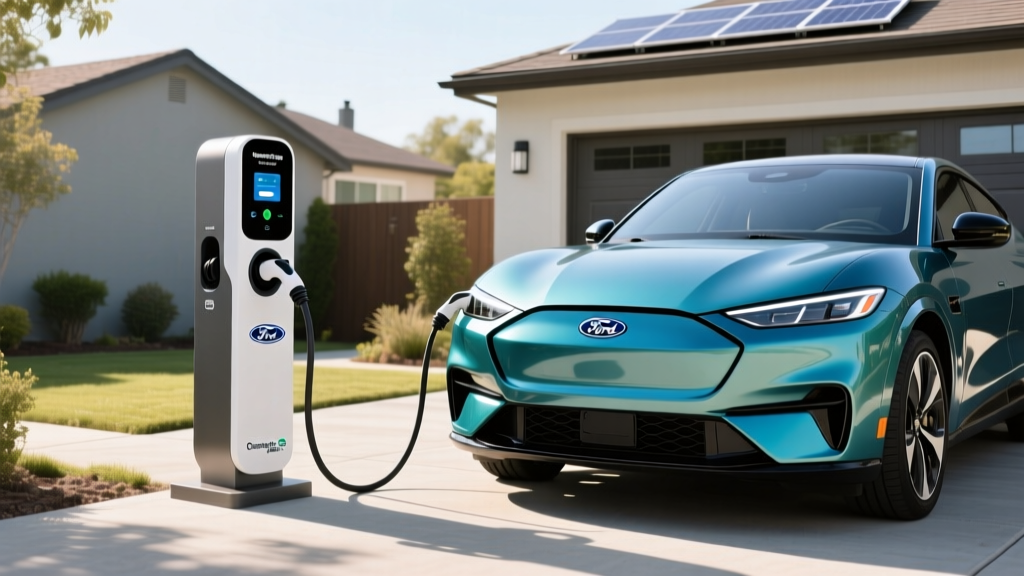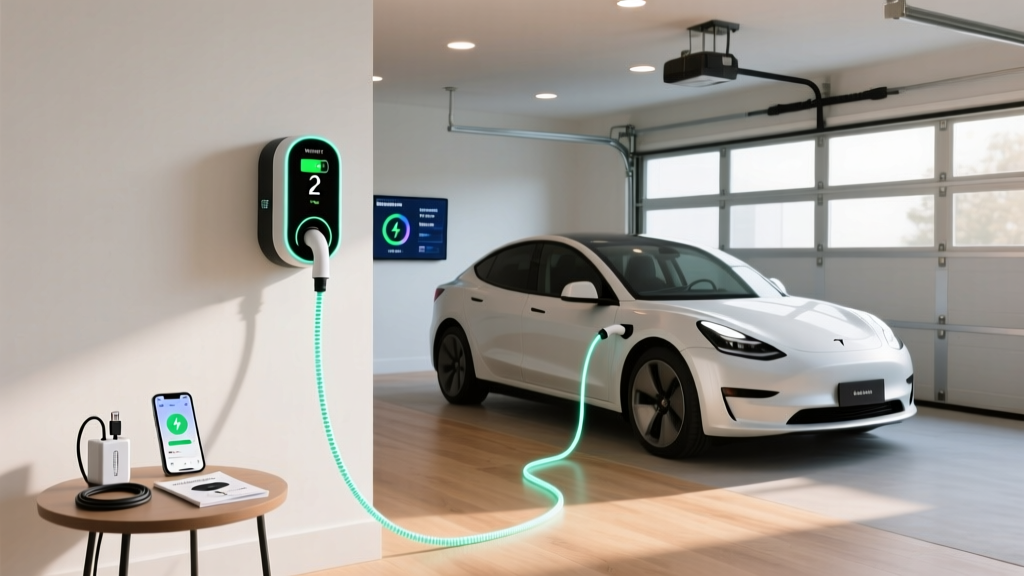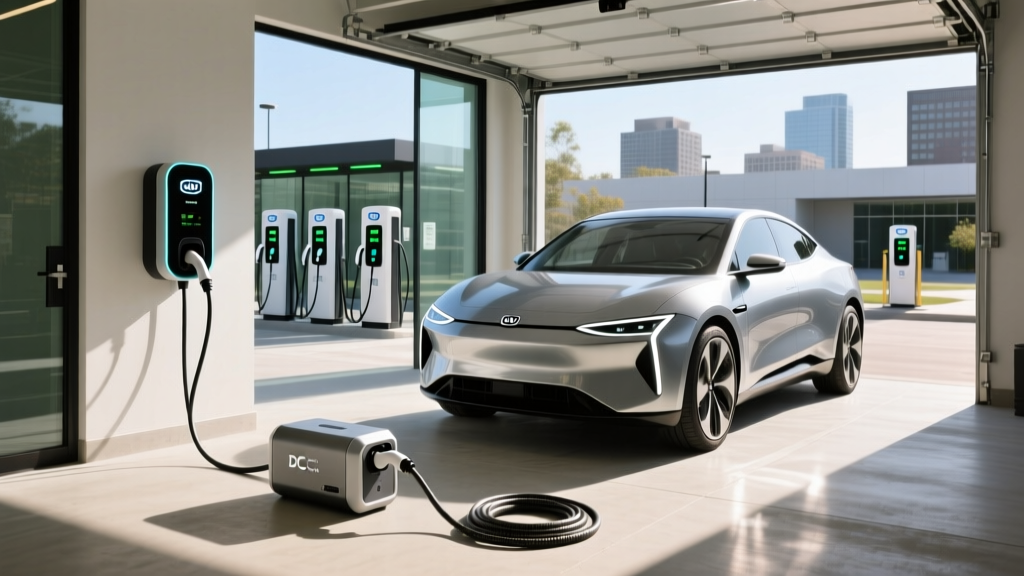
If you own or are shopping for a Chevrolet Equinox EV, Blazer EV, Silverado EV, or Cadillac Lyriq, understanding your charging ecosystem is as important as the vehicle itself. General Motors made a pivotal move for the 2025 model year: transitioning its North American EV lineup to the NACS (North American Charging Standard) connector, unlocking access to Tesla's Supercharger network. For 2026, that transition is fully in effect across GM's BEV portfolio, fundamentally changing where and how GM owners charge.
This guide breaks down every layer of the GM charging experience — from plugging into a standard 120V outlet in your garage to pulling up to a 350 kW DC fast charger on a road trip. We'll cover exact speeds in kilowatts (kW), real installation costs, connector compatibility, and what you'll actually pay per mile compared to a gas vehicle.
Understanding Charging Levels: How Fast Will Each Add Range?
Before selecting equipment, you need to understand the three charging tiers available to GM EV owners. The critical distinction: kW (kilowatts) measures power — the rate at which energy flows into your battery. kWh (kilowatt-hours) measures energy — the total capacity stored in your battery. Think of kW as the width of a hose and kWh as the size of the bucket.
| Level | Voltage | Power (kW) | Miles of Range Added Per Hour | Typical Use Case |
|---|---|---|---|---|
| Level 1 | 120V AC | 1.0–1.4 kW | 3–5 mi/hr | Overnight top-ups, emergencies, low-mileage drivers |
| Level 2 | 240V AC | 7.2–19.2 kW | 20–60 mi/hr | Primary home charging, workplace, shopping centers |
| DC Fast Charging | 400V+ DC | 50–350 kW | 150–800+ mi/hr (peak) | Road trips, rapid top-ups on highway corridors |
For context, a 2026 Chevrolet Equinox EV with its 85 kWh (usable) battery and EPA-estimated 315-mile range would take roughly 70+ hours on Level 1 from empty, about 8–10 hours on a typical 11.5 kW Level 2 home charger, and approximately 20 minutes from 10–80% at a 150+ kW DC fast charger. Real-world DC charging times vary based on battery temperature, state of charge, and the charger's actual output — peak kW rates are never sustained across the entire session.
GM Connector Compatibility: NACS, CCS1, and Adapters
GM's switch to NACS is one of the most significant charging-infrastructure shifts in the EV industry. Here's where each GM model stands for 2026 and what connectors you'll encounter:
| Vehicle | Built-In Connector | Supercharger Access | CCS1 Adapter Needed? |
|---|---|---|---|
| Chevrolet Equinox EV (2025+) | NACS | Native — no adapter | Yes, for Electrify America & non-Tesla CCS stations |
| Chevrolet Blazer EV (2024+) | NACS | Native — no adapter | Yes, for CCS-only stations |
| Chevrolet Silverado EV (2024+) | NACS | Native — no adapter | Yes, for CCS-only stations |
| Cadillac Lyriq (2025+) | NACS | Native — no adapter | Yes, for CCS-only stations |
| Cadillac Optiq (2025+) | NACS | Native — no adapter | Yes, for CCS-only stations |
| Older Bolt EV/EUV (discontinued) | CCS1 | Requires NACS adapter (GM-provided) | No — native CCS1 |
The practical upshot: if you're buying a new 2025 or 2026 GM EV, your vehicle has a NACS port. You can plug directly into any Tesla Supercharger V3 (250 kW) or V4 stall, as well as the growing number of non-Tesla chargers deploying NACS cables (including new Electrify America and EVgo stations). However, many existing public chargers still use CCS1 connectors. GM includes or offers a CCS1-to-NACS adapter for this purpose — keep it in your frunk for road trips through areas where CCS infrastructure still dominates.
For Level 2 home charging, your GM EV will accept any J1772 connector via a simple J1772-to-NACS adapter (typically included with the vehicle), or you can purchase a home charger with a native NACS plug — an increasingly common option in 2026.
Home Charger Installation: Electrical Requirements and Costs
Installing a dedicated Level 2 home charger is the single highest-impact upgrade a GM EV owner can make. Most GM EVs accept up to 11.5 kW on Level 2 (48 amps), though the Silverado EV with the available Ultium Charge Pro system supports up to 19.2 kW (80 amps) on compatible equipment.
Electrical Panel and Circuit Requirements
A standard 48-amp Level 2 charger requires a dedicated 60-amp circuit (National Electrical Code requires circuits rated at 125% of continuous load — so 48A × 1.25 = 60A). This means:
- 240V outlet or hardwired connection — most Level 2 chargers are hardwired for reliability and to avoid the cost of a 60A NEMA 14-60 or 6-50 receptacle
- Panel capacity: Your home's electrical panel needs enough spare capacity. A typical 200-amp panel in a modern home can usually accommodate a 60-amp breaker. Older homes with 100-amp panels may require a panel upgrade ($1,500–$3,500) or a smart load-management device that throttles charger draw when other appliances cycle on
- Permit: Nearly all jurisdictions require an electrical permit for a new 240V circuit. Your electrician will pull this, and an inspector will verify the work
- GFCI protection: NEC 2020 and later require GFCI protection for EV charging outlets — hardwired units may bypass this requirement depending on local code interpretation
| Component | Typical Cost Range | Notes |
|---|---|---|
| Level 2 Charger (Equipment) | $400 – $750 | Smart Wi-Fi-enabled, 40–48A, 24ft cable |
| Electrician Labor | $500 – $2,000 | Depends on run length from panel to garage/carport |
| Electrical Permit | $50 – $250 | Varies by municipality |
| Panel Upgrade (if needed) | $1,500 – $3,500 | 100A to 200A service; not needed in most modern homes |
| Conduit, Wire, Breaker | $150 – $500 | 6 AWG copper for 60A; longer runs cost more |
| Total (No Panel Upgrade) | $1,100 – $3,500 | Average install: ~$1,800–$2,200 |
| Total (With Panel Upgrade) | $2,600 – $7,000 | Older homes with 100A panels |
Always hire a licensed electrician and get at least two quotes. Ask specifically about the wire run distance from your panel to the charger location — this is the single biggest variable in labor cost. A charger mounted on the wall directly behind the panel might cost $800 in labor, while one in a detached garage 80 feet away could exceed $2,000.
Recommended Level 2 Chargers for GM Electric Vehicles
These are the chargers we recommend for GM EV owners based on power output, connector options, cable length, smart features, and reliability. All models below are available with a native NACS connector or include the appropriate adapter for GM's NACS port.
ChargePoint Home Flex
- Power: Up to 12 kW (50A) / configurable down to 16A
- Connector: NACS or J1772 (select at purchase)
- Cable: 23 feet
- Smart Features: Wi-Fi, Alexa, scheduling, energy tracking via app
- Price: ~$550–$650
- Best for: Most GM owners; flexible amperage fits older panels
Tesla Wall Connector
- Power: Up to 11.5 kW (48A)
- Connector: Native NACS
- Cable: 24 feet
- Smart Features: Wi-Fi, OTA updates, power sharing between units
- Price: ~$425–$475
- Best for: GM EV owners who want native NACS at a great price
Emporia Vue Level 2 Charger
- Power: Up to 11.5 kW (48A)
- Connector: NACS or J1772
- Cable: 24 feet
- Smart Features: Energy monitoring, solar integration, load management
- Price: ~$400–$500
- Best for: Budget-conscious buyers with solar panels
Grizzl-E Smart
- Power: Up to 10 kW (40A)
- Connector: J1772 (adapter needed for NACS) or NACS
- Cable: 24 feet
- Smart Features: OCPP-compatible, adjustable amperage
- Price: ~$400–$550
- Best for: Cold-climate durability (rated to -40°F)
For Silverado EV owners with the available 19.2 kW onboard charger, look at the ChargePoint Home Flex configured at 80A or the Ford Charge Station Pro (compatible with NACS via adapter) — though these require a 100-amp dedicated circuit and substantial panel capacity.
Cost to Charge: Home, Public, and DC Fast Charging vs. Gasoline
The economic case for an EV hinges on fuel savings. Here's what GM EV owners actually pay across different charging scenarios, benchmarked against a comparable gas vehicle averaging 25 MPG combined at $3.40/gallon.
| Charging Scenario | Rate ($/kWh) | Cost for 300 Miles | Cost Per Mile | Gas Equivalent (25 MPG, $3.40/gal) |
|---|---|---|---|---|
| Home (off-peak utility rate) | $0.08–$0.12 | $7.50–$11.25 | $0.025–$0.038 | $40.80 ($0.136/mi) |
| Home (standard residential avg.) | $0.15–$0.18 | $14.06–$16.88 | $0.047–$0.056 | $40.80 ($0.136/mi) |
| Public Level 2 (ChargePoint, EVgo) | $0.25–$0.40 | $23.44–$37.50 | $0.078–$0.125 | $40.80 ($0.136/mi) |
| DC Fast (Tesla Supercharger avg.) | $0.28–$0.36 | $26.25–$33.75 | $0.088–$0.113 | $40.80 ($0.136/mi) |
| DC Fast (Electrify America peak) | $0.40–$0.56 | $37.50–$52.50 | $0.125–$0.175 | $40.80 ($0.136/mi) |
The takeaway: home charging at off-peak or even standard residential rates delivers massive savings — typically 60–80% less per mile than gasoline. Even DC fast charging on the road usually undercuts gas on a per-mile basis, though premium-priced chargers during peak hours can briefly exceed gas costs. GM owners who charge at home 80%+ of the time and use DC fast charging only for road trips will see the strongest economics.
Many utilities offer time-of-use (TOU) plans that drop rates to $0.05–$0.08/kWh overnight. Pair this with your charger's scheduled-charging feature (available on all recommended models above) and you'll consistently pay under $10 for a full charge.
Public Charging Networks for GM EV Owners
GM's NACS transition has dramatically expanded the public charging map for its owners. Here's the network landscape as of 2026:
- Tesla Supercharger Network: Over 25,000 stalls in North America, now accessible to GM EVs natively. Most V3 stalls deliver up to 250 kW; newer V4 stalls support up to 350 kW. Use the Tesla app or your GM vehicle's built-in navigation to locate and activate stalls. Per the Chevrolet EV charging page, Supercharger access is integrated into the myChevrolet app with route planning.
- Electrify America: Deploying NACS connectors alongside CCS1 at new and renovated stations. Peak output: 350 kW. GM owners may need a CCS1 adapter at older EA stalls.
- EVgo: Adding NACS cables to its network. GM has a partnership with EVgo for discounted charging sessions — check the myChevrolet or myCadillac app for current offers.
- ChargePoint: Primarily Level 2 destination charging with growing DC fast locations. NACS connectors increasingly available.
For road-trip planning, GM's built-in navigation (via Google Built-in on most 2026 models) will automatically route through compatible chargers, precondition the battery for optimal charging speed upon arrival, and estimate charge times. Battery preconditioning — warming or cooling the pack to ideal temperature before a DC fast charge — can shave 5–10 minutes off a 10–80% session in cold weather.
Safety, Code, and Smart Charging Practices
EV charging involves sustained high-current draw over many hours, making proper installation and equipment selection critical for safety:
- Dedicated circuit: Your Level 2 charger must be on its own dedicated breaker — never share a circuit with other appliances
- Outdoor rating: If your charger is mounted outside (carport, driveway), ensure it carries a NEMA 4 or IP65 weather rating. All recommended chargers above meet this standard
- UL listing: Only purchase chargers that are UL-listed (or ETL-listed to UL standards). Avoid uncertified imports from marketplace sellers
- Cable management: A 24-foot cable keeps the charger accessible without stretching across a driveway. Use a wall-mounted cable organizer to prevent tripping hazards and connector damage
- Load management: If your panel is near capacity, consider a charger with built-in load management (like the Emporia or ChargePoint with panel monitoring) that dynamically reduces charging amps when household demand spikes
Frequently Asked Questions
How much does it cost to install a home EV charger for my GM electric vehicle?
Most GM EV owners pay between $1,100 and $3,500 for a complete Level 2 home charger installation (equipment, electrician labor, permit, and materials) when no panel upgrade is needed. The average falls around $1,800–$2,200. If your home requires a panel upgrade from 100A to 200A service, add $1,500–$3,500. Always get itemized quotes from at least two licensed electricians.
How fast will each charging level add range to my Chevrolet or Cadillac EV?
Level 1 (120V) adds approximately 3–5 miles of range per hour — adequate only for drivers covering under 40 miles daily. Level 2 (240V, 48A) adds 25–35 miles per hour for most GM EVs, easily replenishing a full day's driving overnight. DC fast charging adds 150–250 miles in a 20-minute session at a 150+ kW charger, though actual speed depends on battery temperature, state of charge, and the charger's output curve.
Which connector does my 2026 GM EV use, and do I need adapters?
All 2025 and 2026 GM electric vehicles (Equinox EV, Blazer EV, Silverado EV, Lyriq, Optiq) use the NACS connector natively. This plugs directly into Tesla Superchargers and any new NACS-equipped public station. You may want a CCS1-to-NACS adapter (often provided by GM) for older Electrify America and third-party chargers that still have CCS1 cables only. For home Level 2 charging with a J1772 charger, use the included J1772-to-NACS adapter.
How much does charging a GM EV cost per mile compared to gasoline?
Charging at home at the national average residential rate of ~$0.16/kWh, a 2026 Equinox EV costs roughly $0.05 per mile to fuel — about 63% less than a comparable 25 MPG gas vehicle at $3.40/gallon ($0.14/mile). Off-peak utility rates can push EV fueling costs below $0.03/mile. Even DC fast charging on road trips typically costs $0.09–$0.12 per mile, still below gasoline.
What electrical upgrades might I need before installing a home charger?
The most common upgrade is a panel capacity increase from 100A to 200A service, needed primarily in homes built before 1990. You may also need to upgrade the wire from your utility meter to the panel if it's undersized. In some cases, a smart load-management device ($200–$400 installed) can avoid a panel upgrade by dynamically limiting charger draw. Your electrician will perform a NEC Article 220 load calculation to determine your exact needs. Check NECA resources or your local building department for jurisdiction-specific requirements.
Can I use a Tesla Wall Connector to charge my Chevrolet or Cadillac EV?
Yes. Since GM EVs from 2025 onward use the native NACS connector, a Tesla Wall Connector (which has a NACS plug) works directly without any adapter. The Tesla Wall Connector is actually one of the most cost-effective home chargers for GM owners at approximately $425–$475 for the unit, delivering up to 11.5 kW on a 60-amp circuit.
For the most current information on GM EV models, charging compatibility, and available incentives, consult the EPA's fueleconomy.gov database for official range and efficiency ratings, and check IRS.gov for §30D clean vehicle credit eligibility, which can reduce the effective purchase price of qualifying GM EVs by up to $7,500 (subject to MSRP caps, buyer income limits, and battery-sourcing requirements that vary by model year and trim).