General Motors has made bidirectional power a centerpiece of its Ultium EV platform, but the feature isn't as simple as plugging in and running your house. Depending on the model and model year, GM's bidirectional capability spans three distinct functions — V2L (vehicle-to-load, powering tools and appliances), V2H (vehicle-to-home, backing up your panel during an outage), and the still-evolving V2G (vehicle-to-grid, selling power back to your utility). Here is a precise, spec-by-spec breakdown of what's available on 2026 GM EVs, what equipment you need, and what the home electrical work actually costs.
What GM Bidirectional Charging Actually Includes
GM uses the umbrella term Ultium Energy Transfer for its bidirectional suite, but the three sub-features serve very different purposes:
- V2L (Vehicle-to-Load): Powers external devices via a 120V or 240V outlet in the bed, cabin, or a dedicated accessory port. Typical output: 1.5 kW to 3.6 kW depending on the port and model.
- V2H (Vehicle-to-Home): Feeds power back through a wall-mounted energy transfer unit to your home's electrical panel during an outage. Output: up to 9.6 kW on compatible Silverado EV models.
- V2G (Vehicle-to-Grid): Exports power to the utility grid for demand-response programs. This remains announced and limited — availability depends on utility partnerships (e.g., PG&E, Duke Energy pilot programs) and is not yet broadly accessible.
The critical distinction: V2L works out of the box with minimal equipment. V2H requires a dedicated home energy transfer unit, a 240V bidirectional-capable circuit, and coordination with a licensed electrician. V2G is largely unavailable to most buyers as of 2026.
Which 2026 GM EVs Support Bidirectional Power?
Not every Ultium-based vehicle has full bidirectional capability. Here's the current lineup status:
| Model (2026 MY) | Battery (usable kWh) | V2L | V2H | Max V2H Output |
|---|---|---|---|---|
| Silverado EV RST / WT | 200+ kWh (RST) / 200 kWh (WT) | ✅ (bed + cabin) | ✅ | 9.6 kW |
| Blazer EV (SS, 2LT, RS) | 102 kWh | ✅ | ❌ (as of early 2026) | — |
| Equinox EV (3LT, RS) | 85 kWh | ✅ | ❌ | — |
| Cadillac OPTIQ | 102 kWh | ✅ | Announced | TBD |
| Silverado EV 4WT (fleet) | 200 kWh | ✅ | ✅ | 9.6 kW |
The Silverado EV is GM's flagship bidirectional vehicle, thanks to its massive battery. A fully charged 200 kWh pack at 9.6 kW output can theoretically sustain an average US home (~30 kWh/day) for roughly 5–6 days — a genuinely meaningful backup figure. The Blazer and Equinox EVs offer V2L for tailgating and job-site power, but not whole-home backup.
Charging Levels Explained: Speeds and Range Added
Before discussing bidirectional hardware, you need to understand the three charging levels — because bidirectional home systems also function as Level 2 chargers when importing power.
| Level | Voltage / Phase | Power (kW) | Miles of Range Added per Hour | Typical Use Case |
|---|---|---|---|---|
| Level 1 | 120V / 1-phase | 1.2–1.9 kW | 3–5 mi/hr | Emergency / trickle |
| Level 2 | 240V / 1-phase | 3.3–19.2 kW | 12–75 mi/hr | Home daily charging |
| DC Fast Charging | 400V+ DC | 50–350 kW | 150–1,000+ mi/hr | Road trips, public stations |
kW vs kWh reminder: kW (kilowatts) measures the rate of energy flow — like water pressure from a hose. kWh (kilowatt-hours) measures total energy stored — like the volume of a tank. A 19.2 kW Level 2 charger filling a 200 kWh Silverado EV battery from 10% to 80% (140 kWh) takes roughly 7.3 hours. A 350 kW DC fast charger hitting peak rate could do it in ~35 minutes (though charge-curve taper above 80% extends real-world time).
Home Installation: Electrical Requirements, Panel Upgrades, and Costs
Installing a bidirectional-capable home system is more complex than a standard Level 2 charger. You're not just adding an outlet — you're integrating a transfer switch or energy management system that safely isolates your home from the grid during an outage (a code requirement called "anti-islanding").
Electrical Requirements
- Circuit: Dedicated 240V circuit, typically 60A breaker (supports up to 48A continuous / 11.5 kW charge rate).
- Wire gauge: 6 AWG copper (for 60A) or 4 AWG aluminum, run in conduit.
- Energy Transfer Unit: GM partners with GM Energy (formerly Ultium Charge 360 Home) for its PowerUp bidirectional unit, which includes an integrated transfer switch.
- Panel capacity: Your main service panel must have enough spare capacity (amperage headroom) for the new circuit. Homes with 100A service often need a panel upgrade to 200A — a significant added cost.
- GFCI protection: NEC 2023/2026 requires GFCI protection on 240V EV circuits in garages.
- Permit: Required in virtually all US jurisdictions; inspection follows installation.
Installation Cost Breakdown
| Item | Standard Level 2 Install | Bidirectional (V2H) Install |
|---|---|---|
| Equipment (charger / energy transfer unit) | $500–$1,200 | $2,500–$4,500 |
| Electrician labor (wiring, breaker, mount) | $600–$2,000 | $2,000–$5,000 |
| Permit & inspection | $100–$300 | $200–$500 |
| Panel upgrade (if needed, 100A → 200A) | $1,500–$3,500 | $1,500–$3,500 |
| Transfer switch / energy management system | Not required | $800–$2,000 (often bundled with unit) |
| Total (no panel upgrade) | $1,200–$3,500 | $5,500–$12,000 |
| Total (with panel upgrade) | $2,700–$7,000 | $7,000–$15,500 |
The bidirectional premium is real. A standard Level 2 home install averages $1,200–$3,500 in most US markets (source: U.S. Department of Energy). A full V2H setup with GM's PowerUp unit runs two to four times that, largely due to the energy transfer hardware and transfer-switch integration. Homes with older 100A panels face the highest costs.
Federal Tax Credit for Home Charging Equipment
The IRS §30C Alternative Fuel Vehicle Refueling Property Credit covers 30% of home charging equipment and installation costs, up to $1,000. This applies to bidirectional-capable hardware. Eligibility requires installation at your primary residence in a qualifying census tract (many suburban and rural areas qualify; urban cores may not). Check the IRS website or consult a tax professional for your specific situation.
Connector Compatibility: NACS, CCS1, and Bidirectional
GM transitioned its entire North American EV lineup to the NACS (North American Charging Standard / Tesla-style) connector starting with the 2025 model year. This has implications for both charging and bidirectional power:
| Connector | Brands Using It (2026) | DC Fast Charge Compatible | Bidirectional Capable |
|---|---|---|---|
| NACS (J3400) | Tesla, GM, Ford, Rivian, Hyundai/Kia, Volvo, BMW, others | ✅ (Supercharger + NACS DC stations) | ✅ (GM V2H uses NACS) |
| CCS1 | Legacy models (pre-2025 VW, Stellantis, Honda) | ✅ (Electrify America, EVgo, ChargePoint) | Limited (VW ID.4 V2H in select markets) |
| CHAdeMO | Nissan Leaf (legacy, discontinued in US) | ✅ (shrinking network) | ❌ |
For bidirectional home use, GM's PowerUp energy transfer unit uses a NACS connector. If you own a pre-2025 GM EV with CCS1 (such as a 2024 Blazer EV), you'll need GM's official CCS-to-NACS adapter for DC fast charging at Superchargers, but V2H bidirectional power is not supported on CCS1-equipped GM vehicles. Always verify your specific model year and trim with your dealer.
Equipment Recommendations for Bidirectional and Standard Home Charging
Bidirectional (V2H) Equipment
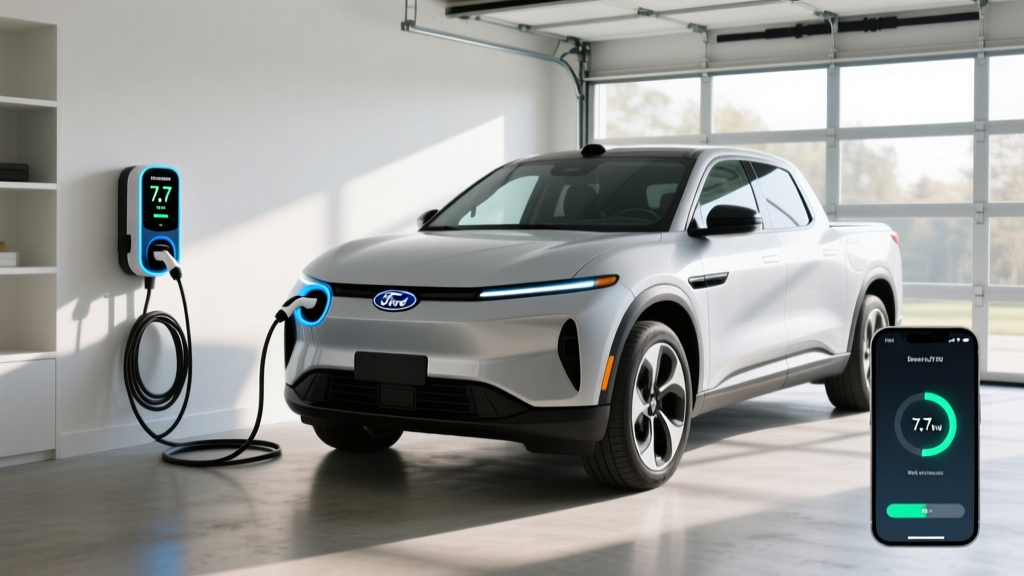
- GM Energy PowerUp 2 (Official): The only certified bidirectional unit for GM V2H. NACS connector, up to 11.5 kW charge / 9.6 kW discharge, integrated transfer switch, smart app control. MSRP: ~$3,800–$4,500 (installation not included). Required for V2H on Silverado EV.
Standard Level 2 Chargers (Non-Bidirectional)
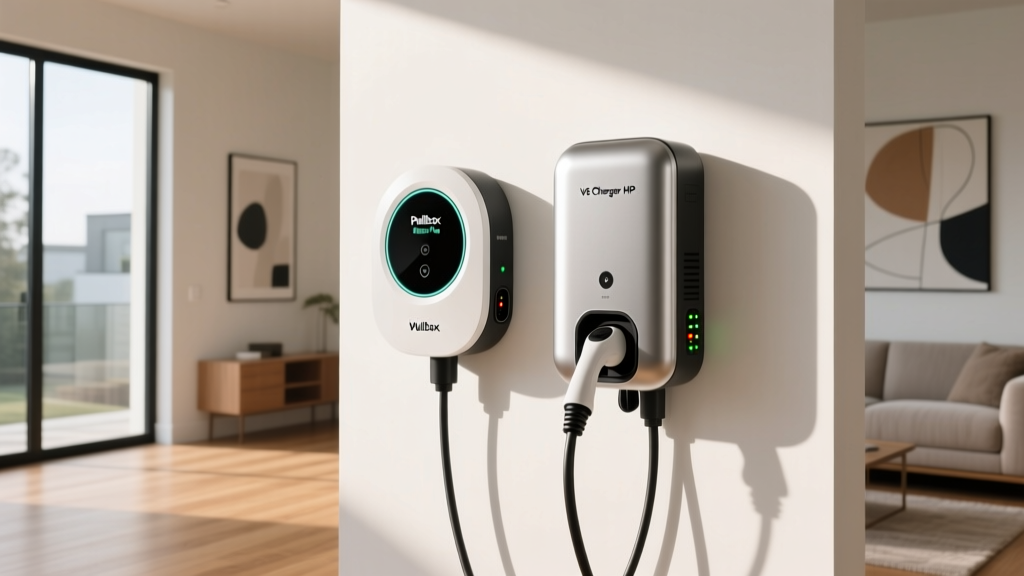
| Charger | Max Power (kW) | Amperage | Cable Length | Smart Features | Price (MSRP) |
|---|---|---|---|---|---|
| ChargePoint Home Flex (NACS) | 11.5 kW | Up to 48A | 23 ft | Wi-Fi, scheduling, Alexa | $699 |
| Wallbox Pulsar Max (NACS) | 11.5 kW | Up to 48A | 25 ft | Wi-Fi, load balancing, app | $649 |
| Emporia Level 2 Smart Charger | 11.5 kW | Up to 48A | 24 ft | Wi-Fi, energy monitoring, solar integration | $399 |
| Tesla Wall Connector (NACS native) | 11.5 kW | Up to 48A | 24 ft | Wi-Fi, OTA updates, Power Share | $425 |
All four chargers above are NACS-native and compatible with 2025–2026 GM EVs for Level 2 charging. However, none of them support V2H bidirectional discharge — that requires the GM Energy PowerUp unit specifically. Choose a standard charger if you only need daily home charging without backup-power capability.
Cost to Charge: Home, Public, and DC Fast Compared to Gas
Bidirectional or not, your day-to-day charging costs determine whether an EV saves you money. Here's a realistic cost-per-mile comparison for a 2026 Silverado EV (efficiency: ~52 MPGe combined, ~2.0 kWh/mile per fueleconomy.gov):
| Scenario | Rate ($/kWh) | Cost per Mile | Full 0–100% Cost (200 kWh) |
|---|---|---|---|
| Home, off-peak utility rate | $0.09–$0.13 | $0.18–$0.26 | $18–$26 |
| Home, standard rate | $0.14–$0.18 | $0.28–$0.36 | $28–$36 |
| Public Level 2 (ChargePoint, EVgo L2) | $0.25–$0.49 | $0.50–$0.98 | $50–$98 |
| DC Fast Charging (EA, EVgo, Tesla Supercharger) | $0.35–$0.65 | $0.70–$1.30 | $70–$130 |
Gas comparison: A comparable gas Silverado 1500 (4WD, 5.3L V8, ~19 MPG combined) at $3.40/gal costs roughly $0.18/mile in fuel. Home off-peak EV charging matches or beats this. Public DC fast charging, however, often exceeds gas cost per mile — making home charging the economic linchpin of EV ownership.
Safety, Code, and Practical Considerations
Bidirectional systems add complexity that demands professional installation. Key requirements:
- Anti-islanding protection: The energy transfer unit must automatically disconnect from the grid during an outage to prevent backfeeding power to utility lines — a life-safety requirement for lineworkers. GM's PowerUp handles this via its integrated transfer switch.
- Dedicated circuit: The bidirectional unit requires its own dedicated 240V circuit — it cannot share with a dryer, range, or other appliance.
- Outdoor rating: If mounted outside, the unit must carry a NEMA 4 or NEMA 4X rating for weather resistance. GM's PowerUp is rated for indoor/outdoor use.
- GFCI breaker: Required by NEC Article 625 for EV supply equipment in garages and outdoor locations.
- Battery warranty impact: Using V2H does not void GM's battery warranty (8 years/100,000 miles, 70% minimum capacity retention), but frequent deep-cycle discharge may accelerate degradation slightly. GM's battery management system (BMS) enforces a buffer — you cannot fully deplete the pack via V2H.
Charging Time Examples for Common GM Battery Sizes
| Model | Battery (kWh) | 10–80% Level 2 (11.5 kW) | 10–80% DC Fast (Peak kW) |
|---|---|---|---|
| Equinox EV | 85 | ~5.2 hours | ~28 min (150 kW peak) |
| Blazer EV | 102 | ~6.2 hours | ~30 min (190 kW peak) |
| Silverado EV WT | 200 | ~12.2 hours | ~45 min (350 kW peak) |
DC fast charging times assume preconditioning (the battery thermal management system warming or cooling the pack to optimal temperature before arrival). Without preconditioning — common if you navigate to a charger without using the vehicle's built-in route planner — peak charge rates may be 30–50% lower, especially in cold weather. Charge curves also taper significantly above 80% SoC, which is why 10–80% is the standard measurement.
Is GM Bidirectional Charging Worth the Investment?
Bidirectional capability is most valuable in two scenarios:
- Frequent power outages: If you live in an area with unreliable grid power (storm-prone coastal regions, wildfire-shutoff zones in California, rural areas), the Silverado EV's 200 kWh pack is a legitimate whole-home backup — potentially replacing a $10,000–$15,000 stationary battery system like a Tesla Powerwall.
- Job-site and off-grid power: V2L from the Silverado EV bed provides up to 3.6 kW of 240V power — enough to run power tools, compressors, or lighting without a generator.
If your grid is reliable and you don't need job-site power, the $5,500–$15,500 V2H installation premium is harder to justify. A standard Level 2 charger at $1,200–$3,500 installed covers daily charging needs perfectly. Bidirectional is a feature you buy for resilience, not for daily savings.
Frequently Asked Questions
Can I use GM bidirectional charging to power my entire house?
Yes, but only with the Silverado EV (WT or RST) paired with the GM Energy PowerUp unit and a properly installed transfer switch. The 9.6 kW output can sustain most homes' essential circuits (refrigerator, HVAC blower, lights, internet, well pump) during an outage. The 200 kWh battery provides 5–6 days of average household backup. The Blazer EV and Equinox EV do not support V2H as of early 2026.
Does using V2H degrade my EV battery faster?
Marginally, yes. Every charge-discharge cycle contributes to lithium-ion degradation. However, GM's BMS maintains a top and bottom buffer (you can't truly hit 0% or 100%), and LFP or NMC chemistry in Ultium packs is rated for thousands of cycles. Occasional V2H use during outages will have minimal impact on long-term battery health. Daily use as a home battery would accelerate wear.
Can I install a bidirectional charger myself?
No. V2H systems require a transfer switch, grid interconnection safety controls, and a dedicated high-amperage circuit. This work must be performed by a licensed electrician and permitted/inspected per NEC Article 625 and local code. Improper installation creates fire and electrocution risk and will void equipment warranties.
Does V2G (vehicle-to-grid) work in my area?
Most likely not yet. V2G requires a utility partnership, a compatible rate structure, and grid interconnection approval. As of 2026, GM has announced V2G pilot programs with select utilities (e.g., PG&E in California, Duke Energy in the Carolinas), but broad residential V2G availability is still years away. V2L and V2H are the currently usable bidirectional features.
What's the difference between GM's bidirectional system and Ford's Pro Power Onboard?
Ford's Pro Power Onboard (available on F-150 Lightning and F-150 PowerBoost hybrid) provides V2L (up to 9.6 kW on the Lightning) and, with the Ford Charge Station Pro + Home Integration System, V2H whole-home backup at up to 9.6 kW. The systems are functionally comparable. The key difference: the F-150 Lightning has a 131 kWh (extended range) battery vs. the Silverado EV's 200 kWh, giving GM roughly 50% more backup duration from a full charge.