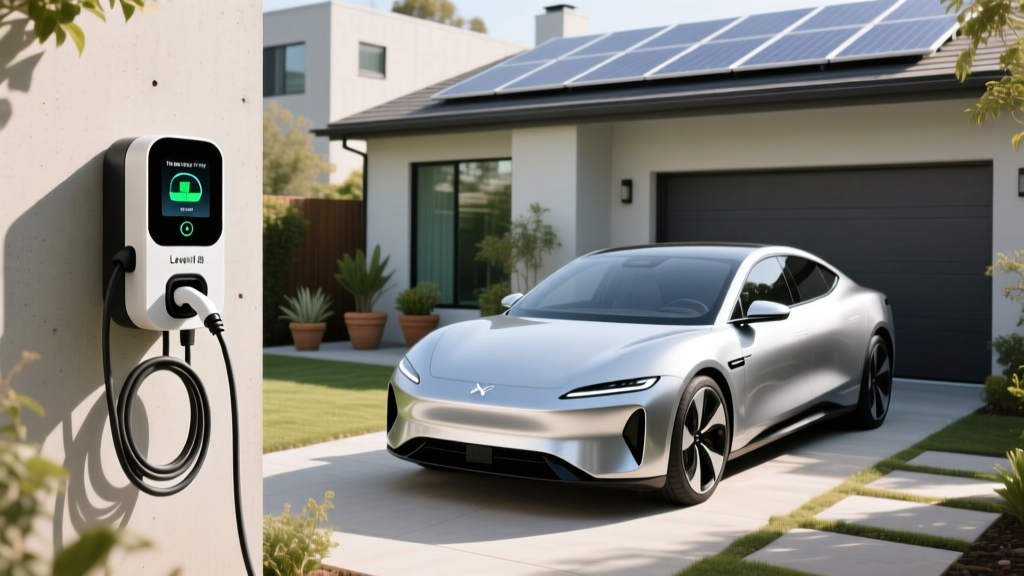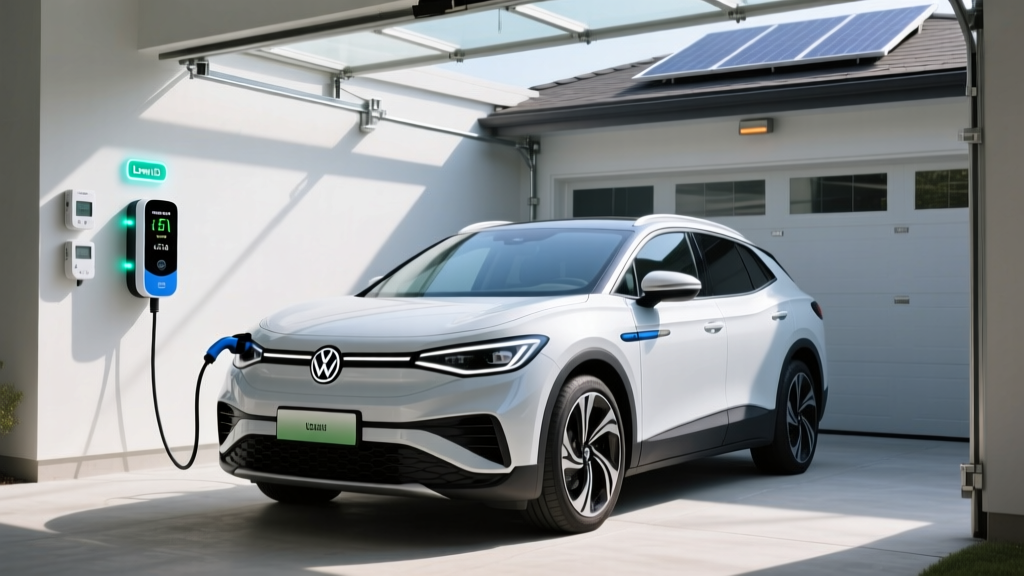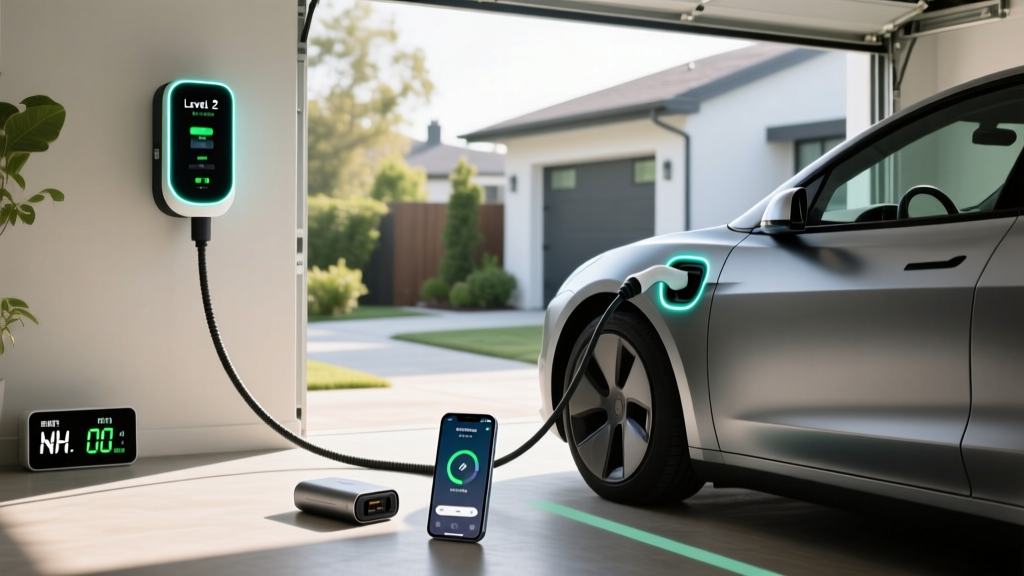
Georgia Power's Plug-In EV rate plan and associated rebate offerings have become a key factor for EV buyers in the state looking to offset the cost of home Level 2 charging equipment and installation. But utility incentives only matter if the underlying electrical work is done right and the charger you pick actually matches your vehicle's onboard charger capacity. This guide breaks down the Georgia Power electric charger rebate landscape for 2026, the real cost of getting a 240V circuit installed, how fast each charging tier actually adds range, and what you'll pay per mile compared to a gas car.
How the Georgia Power Electric Charger Rebate Works
Georgia Power has historically offered incentives tied to its Plug-In Electric Vehicle (PEV) rate plan, which provides a discounted off-peak electricity rate for EV charging during overnight hours (typically 11 PM – 7 AM). The utility has periodically bundled this with rebates on Level 2 charging equipment or installation credits for residential customers. As of 2026, eligibility and rebate amounts shift with each regulatory filing cycle, so the exact dollar figure varies. Always confirm current terms directly on Georgia Power's EV page before purchasing equipment.
Key points to verify before you buy:
- Rate plan enrollment: You typically must be enrolled in the PEV time-of-use rate to qualify for any associated rebate or discounted kWh rate.
- Equipment requirements: Some rebate tiers require a Wi-Fi-enabled (smart) Level 2 charger capable of scheduled or managed charging.
- Installation documentation: Keep your electrician's invoice, permit closure, and equipment receipt — utilities routinely require these for rebate processing.
- Federal §30D interaction: The federal Alternative Fuel Vehicle Refueling Property Credit (IRC §30C, not §30D — that's the vehicle credit) can cover up to 30% of home charger hardware and installation costs, capped at $1,000. Confirm current-year eligibility on irs.gov.
Charging Levels Explained: Speeds in kW and Miles Per Hour
The single most common EV confusion is between kW (kilowatts), which measures power — how fast energy flows into your battery — and kWh (kilowatt-hours), which measures energy capacity, the size of the "tank." Think of kW as the diameter of the hose and kWh as the size of the bucket. Here's what each level delivers in practice:
| Level | Voltage | Power (kW) | Miles of Range Added Per Hour | Typical Use |
|---|---|---|---|---|
| Level 1 | 120V AC | 1.0 – 1.4 kW | 3 – 5 mi/hr | Overnight trickle; PHEVs; emergency top-ups |
| Level 2 (Home/Public) | 240V AC | 3.3 – 19.2 kW | 12 – 70 mi/hr | Daily home charging; workplace; shopping centers |
| DC Fast Charging | 400V–900V DC | 50 – 350 kW | 150 – 1,000+ mi/hr (peak) | Road trips; highway corridors; 10-80% in 15-30 min |
Real-world nuance: A 75 kWh battery (like a Tesla Model Y Long Range) charging on a 48A / 11.5 kW Level 2 circuit will go from 10% to 80% in roughly 5.5 hours — perfect for overnight. On a 250 kW DC fast charger, that same 10-80% session takes about 20-25 minutes, but only if the vehicle supports that peak rate and the battery is preconditioned. Above 80% State of Charge (SoC), charging speed tapers sharply to protect battery health — the last 20% can take as long as the first 60%.
Home Charger Installation: Electrical Requirements and Real Costs
This is where most EV buyers get surprised. The charger unit itself is often $300–$700, but the electrical work to support it can range from straightforward to expensive depending on your home's panel capacity and the distance from panel to garage or driveway.
Electrical Requirements for a Standard Level 2 Install
- Circuit: A dedicated 240V circuit, typically 40A or 50A (supporting continuous loads of 32A or 40A respectively, per the NEC 80% rule for continuous loads).
- Wire gauge: 6 AWG copper for 50A circuits; 8 AWG for 40A — your electrician will size this based on run length and local code.
- Outlet vs. hardwired: A NEMA 14-50 receptacle offers flexibility (you can unplug and take the charger when you move). Hardwired units avoid the ~$50-$100 outlet cost and eliminate a potential failure point, but are permanent.
- GFCI protection: NEC 2020 and later require GFCI breakers for receptacle-based EV charging circuits in garages. A 50A GFCI breaker can add $80–$150 to the bill.
- Outdoor rating: If your charger mounts outside, it needs at least a NEMA 4 (weatherproof) rating. Most reputable chargers meet this.
Panel Upgrade: The Hidden Cost
If your home has a 100A main panel — common in houses built before the 1990s — adding a 50A EV circuit may exceed your panel's capacity, especially if you already run electric HVAC, a dryer, and an electric range. A panel upgrade to 200A typically costs $1,500–$3,500 depending on your utility's meter-main requirements and local labor rates. This is the single biggest variable in home charger installation cost. Have an electrician perform a load calculation before you commit to a charger amperage.
| Component | Simple Install (panel adjacent) | Complex Install (long run or panel upgrade) |
|---|---|---|
| Level 2 Charger Unit (40A–48A) | $350 – $650 | $350 – $750 |
| Electrician Labor (2–4 hrs simple; 6–10+ hrs complex) | $400 – $800 | $1,200 – $2,500 |
| Materials (wire, conduit, breaker, outlet) | $100 – $300 | $300 – $800 |
| Permit & Inspection | $50 – $150 | $50 – $200 |
| Panel Upgrade (if needed) | $0 | $1,500 – $3,500 |
| Total Range | $900 – $1,900 | $3,400 – $7,750 |
After incentives: Apply the Georgia Power rebate (confirm current amount) and the federal §30C credit (up to $1,000 or 30% of combined hardware + install, whichever is less). A $1,500 straightforward install could drop to roughly $800–$1,100 out of pocket after both incentives, depending on your tax situation. Consult a tax professional for §30C eligibility.
Connector Compatibility: NACS, CCS, and CHAdeMO
The connector landscape has consolidated significantly since 2023, when Ford and GM announced adoption of the North American Charging Standard (NACS, the Tesla connector). By 2026, nearly all new EVs sold in the U.S. ship with a native NACS charge port. CCS1 (Combined Charging System) remains on vehicles sold through ~2024-2025 model years, and CHAdeMO is effectively legacy (Nissan Leaf being the primary holdout, now discontinued).
| Connector | Brands Using It (Native) | Adapter Needed? |
|---|---|---|
| NACS (Tesla) | Tesla, Ford, GM, Rivian, Volvo, Polestar, Hyundai, Kia, BMW, Mercedes (2025+ models) | No — native on new vehicles |
| CCS1 | VW ID.4 (through 2024), older BMW i4/iX, older Hyundai Ioniq 5, Chevy Bolt (discontinued) | NACS-to-CCS adapter (~$150–$250) needed for Tesla Superchargers |
| CHAdeMO | Nissan Leaf (legacy, discontinued 2025) | Limited public availability; no NACS adapter widely available |
For home Level 2 charging: All Level 2 home chargers use a J1772 connector (the AC charging standard). If your vehicle has a native NACS port, you'll use the J1772-to-NACS adapter that ships with the car. If your car has CCS1, the J1772 connector plugs directly into the top portion of the CCS inlet. This means any Level 2 home charger works with any EV for AC charging — the connector fragmentation only matters for DC fast charging on road trips.
Cost to Charge: $/kWh and Cost Per Mile vs. Gas
Electricity pricing varies dramatically between home charging on an off-peak utility rate and public DC fast charging. Here's how the math works for Georgia:
| Scenario | Rate ($/kWh) | Cost to Add 200 Miles* | Cost Per Mile |
|---|---|---|---|
| Home — Georgia Power PEV Off-Peak | ~$0.06 – $0.08 | $4.20 – $5.60 | $0.021 – $0.028 |
| Home — Standard Residential Rate | ~$0.12 – $0.14 | $8.40 – $9.80 | $0.042 – $0.049 |
| Public Level 2 (ChargePoint, EVgo L2) | ~$0.18 – $0.28 | $12.60 – $19.60 | $0.063 – $0.098 |
| DC Fast Charging (Electrify America, Tesla Supercharger) | ~$0.32 – $0.48 | $22.40 – $33.60 | $0.112 – $0.168 |
| Gasoline Car (28 MPG combined, $3.10/gal) | — | $22.14 | $0.111 |
*Based on a vehicle averaging 3.5 miles per kWh (approximately 286 Wh/mi), typical of a midsize crossover EV like a Hyundai Ioniq 5 or Tesla Model Y.
The takeaway: Home off-peak charging via Georgia Power's PEV rate is roughly 4-5x cheaper per mile than gasoline. Even standard residential rates deliver about half the per-mile fuel cost of a 28 MPG gas car. But exclusive reliance on DC fast charging can actually exceed gasoline cost per mile — which is why home Level 2 access is the economic foundation of EV ownership.
Charging Time Examples for Common Battery Sizes
Charge time depends on battery capacity (kWh), the charger's power output (kW), and the vehicle's onboard charger limit for AC charging. Most EVs accept between 7.7 kW and 11.5 kW on Level 2, regardless of how much the wall unit can supply. Here are real-world 10-80% estimates:
| Vehicle (Battery kWh) | Onboard AC Limit | 11.5 kW Level 2 (48A) | 7.7 kW Level 2 (32A) | 150 kW DC Fast | 250 kW DC Fast |
|---|---|---|---|---|---|
| Chevy Equinox EV (85 kWh usable) | 11.5 kW | ~5.2 hrs | ~7.7 hrs | ~28 min | ~22 min |
| Tesla Model Y LR (75 kWh usable) | 11.5 kW | ~4.6 hrs | ~6.8 hrs | ~25 min | ~18 min |
| Hyundai Ioniq 5 (77.4 kWh usable) | 10.9 kW | ~4.9 hrs | ~7.3 hrs | ~18 min | ~18 min (800V arch) |
| Ford F-150 Lightning Ext. (131 kWh usable) | 19.2 kW | ~4.8 hrs (at 19.2 kW unit) | ~12 hrs | ~41 min | ~35 min |
Key insight: The Hyundai Ioniq 5's 800V battery architecture allows it to sustain higher DC fast-charge rates longer than 400V competitors — it can genuinely hit 10-80% in ~18 minutes on a 350 kW charger. Most 400V vehicles peak at their rated kW for only a few minutes before tapering. Always look at the sustained charge curve, not just the peak kW number.
Top Home Level 2 Chargers for 2026
These units represent the best combination of power output, build quality, smart features, and value for Georgia homeowners. All support J1772 output (compatible with every EV via included adapters) and are NEMA 4 rated for outdoor installation.
ChargePoint Home Flex
- Power Output: Up to 12 kW (50A circuit) — configurable down to 16A for lower-capacity panels
- Connector: J1772 (NACS adapter included with most new EVs)
- Cable Length: 23 feet
- Smart Features: Wi-Fi, Alexa/Google Home, scheduled charging, energy tracking, works with utility demand-response programs
- Price: ~$550–$650
- Best for: Flexibility — the dip-switch amperage adjustment means you can install it on a 20A through 50A circuit without buying a different unit
Emporia Level 2 EV Charger
- Power Output: Up to 11.5 kW (48A on a 60A circuit)
- Connector: J1772
- Cable Length: 24 feet
- Smart Features: Wi-Fi, app scheduling, solar integration (pairs with Emporia Vue energy monitor), load management
- Price: ~$350–$400
- Best for: Budget-conscious buyers who want smart features; excellent value per kW
Tesla Wall Connector
- Power Output: Up to 11.5 kW (48A on a 60A circuit)
- Connector: NACS native (J1772 adapter available for ~$50 for non-Tesla EVs)
- Cable Length: 24 feet
- Smart Features: Wi-Fi, OTA updates, power sharing (link up to 6 units on one circuit), Tesla app integration
- Price: ~$475
- Best for: Tesla owners or households with NACS-native vehicles; cleanest integration if you drive a Tesla, Ford, or GM with NACS
Safety, Code, and Inspection Considerations
Georgia adopts the National Electrical Code (NEC) with state amendments. Key requirements for a compliant and safe home EV charger installation:
- Dedicated circuit: Your EV charger must be on its own dedicated breaker — no sharing with other appliances.
- GFCI protection: Required for all receptacle-based EV charging (NEMA 14-50) in garages and outdoors per NEC 2020 §625.54. Hardwired installations are exempt from this specific GFCI requirement, which is one reason many electricians recommend hardwiring.
- Permit required: Most Georgia jurisdictions (Fulton, DeKalb, Gwinnett, Cobb counties, etc.) require an electrical permit for a new 240V circuit. Permit fees typically run $50–$150. The inspection ensures correct wire gauge, breaker sizing, and grounding.
- Load calculation: A licensed electrician will perform a NEC Article 220 load calculation to confirm your panel can handle the additional circuit. If it can't, you'll need a panel upgrade or a lower-amperage charger setting.
- Do not use extension cords: EV charging draws sustained high current over many hours. Extension cords — even heavy-duty ones — create fire risk and violate code.
Frequently Asked Questions
How much does it cost to install a home EV charger in Georgia?
A straightforward Level 2 installation (short wire run from a 200A panel, NEMA 14-50 outlet or hardwired) typically costs $900–$1,900 including equipment, labor, materials, and permit. If your home needs a panel upgrade from 100A to 200A, total costs can reach $3,400–$7,750. The Georgia Power electric charger rebate and the federal §30C tax credit (up to $1,000) can reduce your out-of-pocket cost by $500–$1,500+ depending on current program terms and your tax situation.
How fast will each charging level add range?
Level 1 (120V) adds roughly 3–5 miles of range per hour. Level 2 (240V) adds 12–70 miles per hour depending on the circuit amperage and your vehicle's onboard charger limit — a typical 48A home charger delivers about 30–40 miles per hour for most midsize EVs. DC fast charging adds 150–1,000+ miles per hour at peak, enabling 10-80% sessions in 15–35 minutes depending on battery size and vehicle architecture.
Which connector or charger is compatible with my EV?
For home Level 2 charging, every EV is compatible with every Level 2 charger via the standard J1772 connector (or the J1772-to-NACS adapter included with NACS-equipped vehicles). For DC fast charging on road trips, check whether your vehicle has a NACS port (most 2025-2026 models) or CCS1 (older models). CCS1 vehicles need a NACS-to-CCS adapter (~$150–$250) to access Tesla Superchargers, which now form the largest U.S. fast-charging network.
How much does charging cost per mile vs. gas?
On Georgia Power's off-peak PEV rate (~$0.06–$0.08/kWh), EV charging costs roughly $0.02–$0.03 per mile — about 4 to 5 times cheaper than a 28 MPG gas car at $3.10/gallon ($0.11/mile). On a standard residential rate, expect ~$0.04–$0.05/mile. Public DC fast charging at $0.35–$0.48/kWh can cost $0.11–$0.17/mile, which equals or exceeds gasoline cost. Home charging is where the savings live.
What electrical upgrades might I need?
The most common upgrade is a panel replacement from 100A to 200A service ($1,500–$3,500), required when your existing panel lacks capacity for a new 40A–50A circuit. Older homes may also need a new conduit run from the meter to the panel, or a meter-main combo upgrade if the utility requires it. Some homeowners opt for a lower-amperage charger (24A or 32A) to avoid a panel upgrade — this still delivers 10–25 miles of range per hour, sufficient for daily driving under 60 miles.