Genesis GV60 Range: What the EPA Sticker Doesn't Tell You
The Genesis GV60 rides on Hyundai Motor Group's E-GMP platform, sharing its 77.4 kWh (usable) NMC lithium-ion battery and 800V architecture with the Ioniq 5 and EV6. But the GV60's luxury tuning, heavier curb weight, and standard AWD on most trims compress its efficiency compared to its corporate cousins. Here's the real picture for 2026 model-year buyers.
| Trim | EPA Range | Real-World Highway (70 mph) | Cold Weather (20°F) |
|---|---|---|---|
| Standard AWD (314 hp) | 294 mi | ~250–265 mi | ~210–230 mi |
| Advanced AWD (314 hp, 20" wheels) | 264 mi | ~225–240 mi | ~190–210 mi |
| Performance AWD (483 hp) | 235 mi | ~195–215 mi | ~165–185 mi |
Source: fueleconomy.gov. Real-world estimates based on 70 mph sustained highway driving; cold-weather figures assume cabin heating without heat pump preconditioning.
The Standard trim's 294-mile EPA figure is competitive with the BMW iX xDrive50 and Audi Q4 e-tron, but the Performance trim's 235 miles demands more deliberate trip planning. Efficiency ranges from roughly 89 MPGe (Performance) to 95 MPGe (Standard), or about 3.2–3.5 kWh per mile depending on trim and driving style.
Charging the GV60: Level 1, Level 2, and DC Fast Explained
Understanding charging requires separating kW (power — the rate electricity flows, like water pressure) from kWh (energy — the battery's capacity, like a tank's volume). The GV60's 77.4 kWh battery is the tank; your charger's kW rating determines how fast it fills.
| Level | Voltage / Amps | Power (kW) | Miles Added per Hour | GV60 10–80% Time |
|---|---|---|---|---|
| Level 1 (120V outlet) | 120V / 12A | ~1.4 kW | ~4–5 mi/hr | ~40–48 hours |
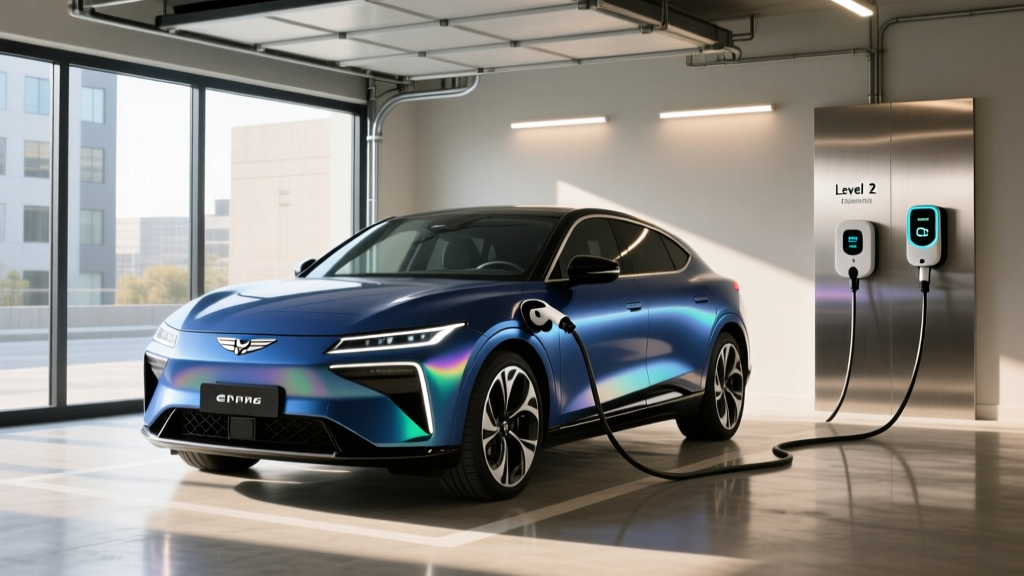
| Level 2 (240V home/public) | 240V / 32–48A | 7.7–11.5 kW | ~25–38 mi/hr | ~5.5–7.5 hours |
| DC Fast Charging | 400–800V DC | Up to 240 kW peak | ~600+ mi/hr (peak) | ~18 minutes (10–80%) |
The GV60's 800V architecture is its charging secret weapon. At a 350 kW-capable DC fast charger (like Electrify America's latest stalls), the GV60 can sustain roughly 200–230 kW through the 10–60% state of charge window before tapering. That 18-minute 10–80% claim holds in moderate temperatures with battery preconditioning active. Without preconditioning — or in cold weather below 40°F — expect 25–35 minutes as the battery management system limits current to protect the cells.
The onboard AC charger maxes at 10.9 kW (48A), meaning a 48A Level 2 home charger will fill the battery in about 7 hours from empty — ideal for overnight replenishment.
Home Charger Installation: Costs, Electrical Requirements, and Gotchas
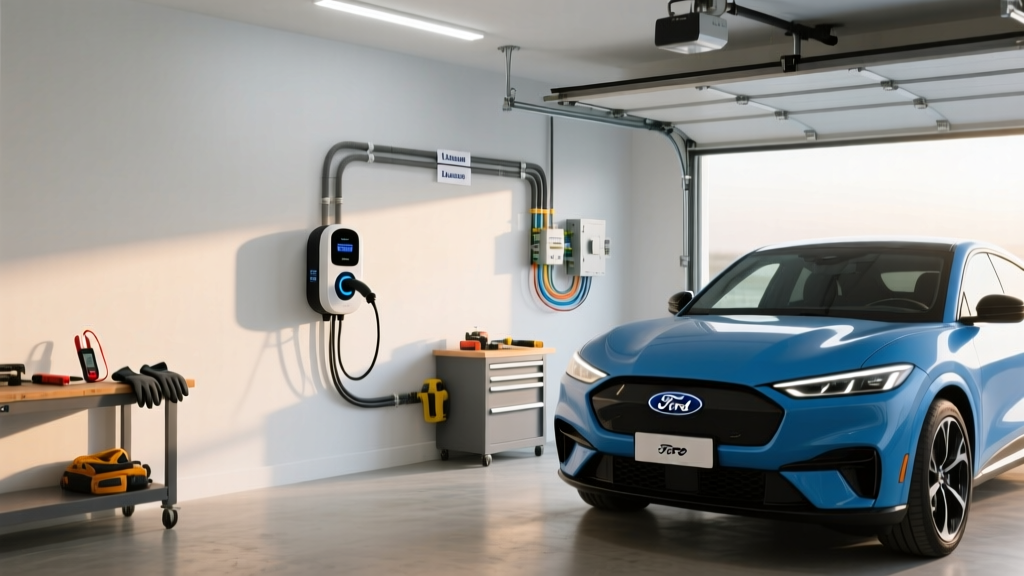
Installing a Level 2 home charger is the single biggest ownership infrastructure task. Budget realistically — the charger unit itself is often the cheapest part.
Electrical Requirements for the GV60
To hit the GV60's full 10.9 kW AC charge rate, you need a 240V circuit rated at 60 amps (which delivers 48A continuous, per the National Electrical Code's 80% rule for continuous loads). A 50A circuit (40A continuous, ~9.6 kW) is an acceptable compromise if your panel is tight on capacity. A 40A circuit (32A continuous, ~7.7 kW) still works but adds roughly an hour to a full charge.
| Cost Component | Typical Range | Notes |
|---|---|---|
| Level 2 Charger Unit (hardwired, 48A) | $400–$750 | Smart Wi-Fi models at higher end |
| Electrician Labor (2–6 hrs) | $600–$2,000 | Varies by run length, conduit, wall type |
| Electrical Permit | $50–$250 | Required in most jurisdictions |
| Panel Upgrade (if needed) | $1,500–$4,000 | 100A → 200A service; common in pre-1990 homes |
| Total (no panel upgrade) | $1,050–$3,000 | Most homes with 200A service |
| Total (with panel upgrade) | $2,550–$7,000 | Older homes or high-load panels |
Do You Need a Panel Upgrade?
Homes with 200-amp service and moderate existing loads (electric range, dryer, central AC) typically have enough headroom for a 60A EV circuit. Homes with 100A or 150A service, or those already running electric heat, may need an upgrade. A licensed electrician will perform a load calculation per NEC Article 220. Don't skip this — an overloaded panel is a fire risk, not a shortcut.
Safety and Code Considerations
- Dedicated circuit: Your EV charger must be on its own breaker — never shared with other appliances.
- GFCI protection: NEC 2020+ requires GFCI for outdoor receptacles; hardwired units may be exempt depending on local code, but GFCI breakers add a layer of safety.
- Outdoor rating: If your charger mounts outside or in an unsealed garage, ensure a NEMA 4 (weatherproof) rating.
- Hardwired vs. plug: Hardwired installations at 48A avoid the NEMA 14-50 receptacle, which has been linked to overheating in some EV charging scenarios. Many electricians now recommend hardwiring for circuits above 40A.
Which Connector Does the Genesis GV60 Use?
As of the 2026 model year, the Genesis GV60 sold in North America ships with a CCS1 (Combined Charging System) port for both Level 2 AC and DC fast charging. Genesis has not yet transitioned to the NACS (Tesla-style) connector that Ford, GM, Rivian, and others adopted starting in 2025.
| Connector | Used By | GV60 Compatible? |
|---|---|---|
| CCS1 | VW, Hyundai/Kia/Genesis, BMW, Stellantis, most legacy EVs | ✅ Native port |
| NACS (Tesla) | Tesla, Ford, GM, Rivian, Volvo, Polestar, others (2025+) | ⚠️ Adapter required for Superchargers |
| CHAdeMO | Nissan Leaf, Mitsubishi (legacy/discontinued) | ❌ Not compatible |
Practical implication: The GV60 can access Electrify America, EVgo, ChargePoint, and other CCS networks natively. For Tesla Supercharger access — which now opens to non-Tesla CCS vehicles at select locations via Tesla's Magic Dock — no adapter is needed at those specific stalls. However, if you want access to the broader NACS Supercharger network as Tesla expands it, a CCS-to-NACS adapter (approximately $200–$300 from reputable brands like Lectron or A2Z) is a worthwhile investment. Verify adapter certification and warranty before purchasing.
Level 2 Home Charger Recommendations for the GV60
These chargers match the GV60's 10.9 kW onboard charger capability and are hardwired for safety at 48A.
ChargePoint Home Flex (48A, hardwired)
- Power: Up to 11.5 kW (48A at 240V)
- Connector: CCS1 (J1772 + CCS combo)
- Cable length: 23 ft
- Smart features: Wi-Fi, app scheduling, utility demand-response, Energy Star certified
- Price: ~$550–$650
- Why it fits: Flexible amperage dip-switch settings let you match your circuit exactly; robust app with charging history and cost tracking.
Emporia Level 2 EV Charger (48A, hardwired)
- Power: Up to 11.5 kW (48A at 240V)
- Connector: CCS1 (J1772 + CCS combo)
- Cable length: 24 ft
- Smart features: Wi-Fi, app control, solar integration, energy monitoring, load management
- Price: ~$400–$500
- Why it fits: Best value for smart features; pairs with Emporia Vue energy monitor for whole-home load balancing — useful if your panel is near capacity.
Grizzl-E Smart (40A, hardwired or plug)
- Power: Up to 9.6 kW (40A at 240V)
- Connector: J1772 (CCS adapter included for DC is separate)
- Cable length: 24 ft
- Smart features: Wi-Fi optional, OCPP-compatible, extreme cold rated (-40°F)
- Price: ~$450–$550
- Why it fits: Canadian-built, rugged for outdoor/cold-climate installs. 40A is sufficient for most GV60 owners and eases panel load requirements.
Cost to Charge the GV60: Home vs. Public vs. Gas
The GV60's efficiency of roughly 3.2–3.5 kWh per mile (varies by trim) makes cost-per-mile calculations straightforward once you know your electricity rate.
| Scenario | Rate ($/kWh) | Cost per Mile | Full 10–80% Cost (~54 kWh) |
|---|---|---|---|
| Home (off-peak utility rate) | $0.10–$0.14 | $0.032–$0.049 | $5.40–$7.56 |
| Home (standard residential avg) | $0.16–$0.20 | $0.051–$0.070 | $8.64–$10.80 |
| Public Level 2 (ChargePoint, etc.) | $0.25–$0.40 | $0.080–$0.140 | $13.50–$21.60 |
| DC Fast (Electrify America, EVgo) | $0.35–$0.55 | $0.112–$0.193 | $18.90–$29.70 |
| Gasoline equivalent (25 MPG, $3.40/gal) | — | $0.136 | — |
At home off-peak rates, the GV60 costs roughly one-quarter to one-third what a comparable gas SUV (like the Genesis GV70 at 22 MPG combined) costs per mile. Even at DC fast-charging prices, you're roughly breaking even with gasoline — making home charging the clear economic play. Public DC fast charging should be treated as a road-trip convenience, not a daily strategy.
For a driver covering 12,000 miles per year with 80% home charging at $0.14/kWh and 20% DC fast at $0.45/kWh, annual fuel cost lands around $720. The equivalent gas SUV at 24 MPG and $3.40/gallon spends roughly $1,700. That's nearly $1,000/year in fuel savings before factoring in reduced maintenance (no oil changes, less brake wear from regenerative braking).
Tax Credits and Incentives for Home Charging
The federal Alternative Fuel Vehicle Refueling Property Credit (IRS §30C) covers 30% of home EV charger equipment and installation costs, up to $1,000, for installations in eligible census tracts (typically lower-income or rural areas). Check your eligibility at irs.gov before counting on this credit — many suburban and urban tracts no longer qualify post-2023.
Additionally, many utilities offer rebates of $250–$750 for installing a smart Level 2 charger, particularly models that participate in demand-response programs. Check with your local utility before purchasing.
Frequently Asked Questions
How much does it cost to install a home EV charger for the Genesis GV60?
Expect $1,050–$3,000 for a typical installation with a 200A panel and a short conduit run. If your home needs a panel upgrade from 100A to 200A service, total costs can reach $2,550–$7,000. Always get a load calculation from a licensed electrician before committing.
How fast will each charging level add range to the GV60?
Level 1 (120V) adds roughly 4–5 miles per hour — fine for topping off, useless for daily driving. Level 2 (240V, 48A) adds about 35–38 miles per hour, fully replenishing the battery overnight. DC fast charging at 240 kW peak can add up to 185 miles in 18 minutes (10–80%), though real-world speeds depend on battery temperature and state of charge.
Which connector does the Genesis GV60 use, and will I need an adapter?
The GV60 uses CCS1 natively, compatible with Electrify America, EVgo, and most public CCS networks. For Tesla Supercharger access at NACS-only stalls, you'll need a CCS-to-NACS adapter (~$200–$300). Select Superchargers with Tesla's Magic Dock support CCS vehicles without an adapter.
How does the GV60's charging cost compare to gas?
At typical home electricity rates ($0.14/kWh), the GV60 costs about $0.04–$0.05 per mile — roughly one-third the cost of a 24 MPG gas SUV at $3.40/gallon. Annual fuel savings of $800–$1,000 are realistic for a 12,000-mile driver who charges primarily at home.
What electrical upgrades might I need for a 48A home charger?
A 48A continuous charger requires a 60A dedicated 240V circuit. Homes with 200A service and moderate loads usually accommodate this without a panel upgrade. Homes with 100A or 150A service, electric heat, or multiple high-draw appliances may need a panel upgrade ($1,500–$4,000) to safely support EV charging alongside existing loads.
Does the GV60 battery degrade, and what's the warranty?
The 77.4 kWh NMC battery is covered by Genesis's 10-year/100,000-mile warranty, which guarantees retention of at least 70% original capacity. E-GMP platform batteries have shown moderate degradation in early data — expect roughly 5–8% capacity loss over the first 100,000 miles under normal use. Minimizing prolonged 100% state of charge and frequent DC fast charging in extreme heat helps preserve long-term health.
Genesis GV60 pricing starts at approximately $53,350 (Standard AWD) and reaches $70,300 (Performance) for the 2026 model year before destination. Federal §30D tax credit eligibility depends on MSRP caps, buyer income limits, and battery component/critical mineral sourcing requirements — verify current rules at irs.gov before purchase.