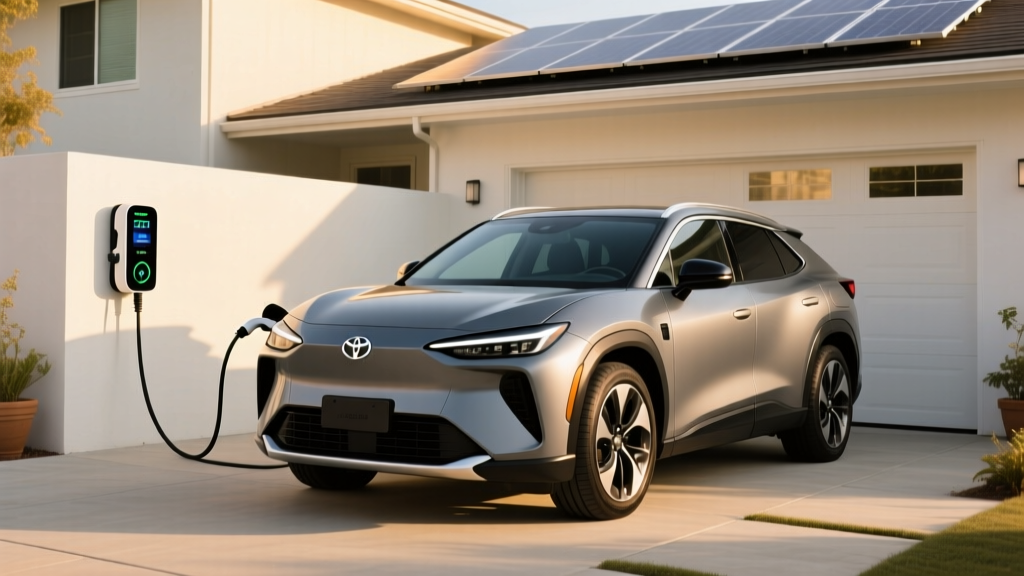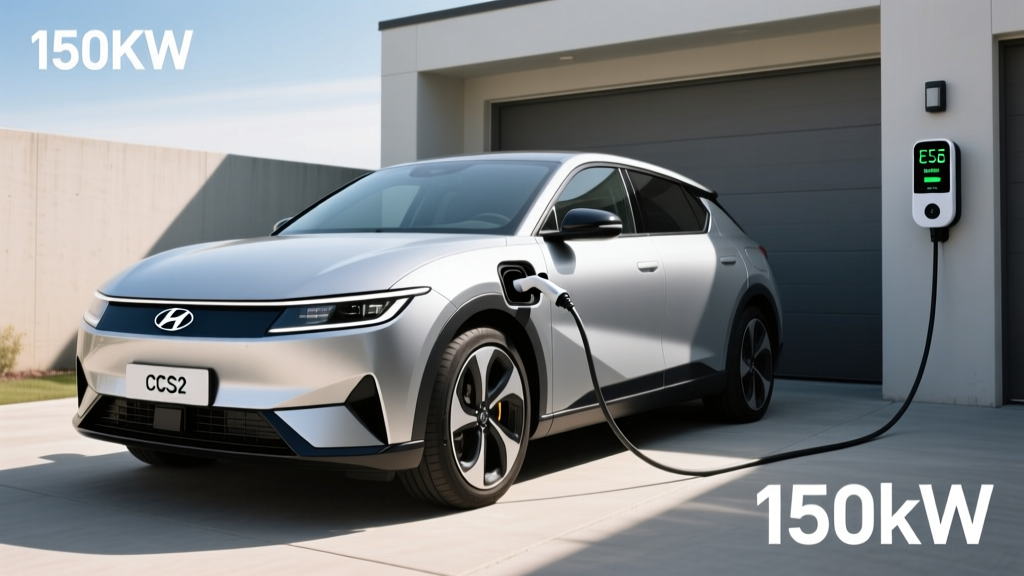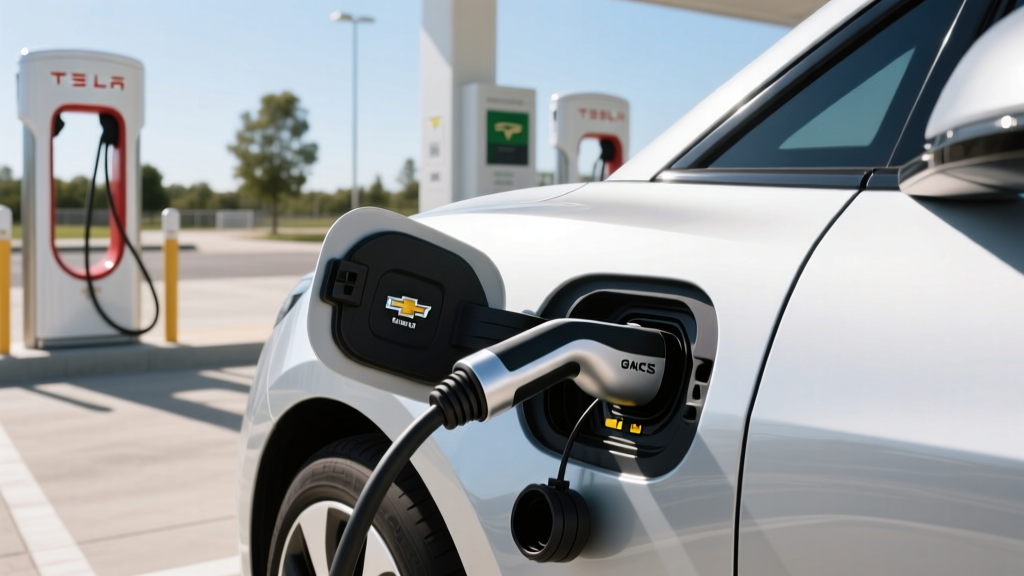
If you drive a Chevrolet Bolt EV, Bolt EUV, Cadillac Lyriq, GMC Hummer EV, Chevrolet Silverado EV, Blazer EV, or Equinox EV, you've likely heard that General Motors is adopting the North American Charging Standard (NACS) for its electric vehicles. But the transition isn't happening overnight, and for current GM EV owners with CCS1 charge ports, the General Motors NACS adapter is the bridge to the largest fast-charging network in North America: Tesla's Supercharger network.
This guide covers exactly which GM vehicles need the adapter, how it affects charging speeds, what it means for home Level 2 charging, and how to set up your garage for daily charging — including the electrical requirements, costs, and equipment you'll need.
Throughout this guide, kW (kilowatts) refers to charging power — how fast energy flows into your battery. kWh (kilowatt-hours) refers to energy capacity — how much total energy your battery stores. A 250 kW charger delivers energy faster than a 50 kW charger. A 100 kWh battery holds more energy than a 65 kWh battery. These units are not interchangeable.
Which GM EVs Need the NACS Adapter?
General Motors began equipping new vehicles with native NACS charge ports starting with certain 2025 model-year vehicles. However, the majority of GM EVs on the road today — and many 2025 models still in production — use the CCS1 (Combined Charging System) connector. Here's the breakdown:
| Vehicle | Model Years | Native Port | NACS Adapter Needed? |
|---|---|---|---|
| Chevrolet Bolt EV | 2017–2023 | CCS1 | Yes (for Supercharger access) |
| Chevrolet Bolt EUV | 2022–2023 | CCS1 | Yes |
| Cadillac Lyriq | 2023–2024 | CCS1 | Yes |
| GMC Hummer EV | 2022–2024 | CCS1 | Yes |
| Chevrolet Silverado EV | 2024–2025 | CCS1 (early) / NACS (late) | Check build date |
| Chevrolet Blazer EV | 2024–2025 | CCS1 (early) / NACS (late) | Check build date |
| Chevrolet Equinox EV | 2024–2025 | CCS1 (early) / NACS (late) | Check build date |
| Cadillac Optiq | 2025+ | NACS (native) | No (CCS adapter may be needed) |
GM has offered a complimentary NACS adapter to eligible owners of CCS-equipped vehicles through a redemption program. If you haven't claimed yours, check the myChevrolet, myCadillac, or myGMC app, or visit GM's official NACS page for current availability. Third-party CCS-to-NACS adapters from companies like Lectron and A2Z EV are also available, typically priced between $150–$250, but GM's OEM adapter is the recommended choice for warranty and compatibility assurance.
How the GM NACS Adapter Works at Tesla Superchargers
The General Motors NACS adapter converts your vehicle's CCS1 charge port to accept the Tesla NACS connector found at every Supercharger stall. Here's what to expect in practice:
DC Fast Charging Speeds with the Adapter
Your charging speed at a Supercharger is limited by your vehicle's onboard charge acceptance rate, not by the adapter itself. The adapter is a passive connector — it doesn't bottleneck the charge. Here's what real-world charging looks like for popular GM EVs at V3 Superchargers (250 kW capable):
- Chevrolet Bolt EV/EUV (65 kWh battery, 55 kW peak DC acceptance): 10–80% in approximately 60 minutes. The Bolt's modest DC acceptance rate means Supercharger speeds are no faster than Electrify America or other CCS networks.
- Cadillac Lyriq (102 kWh usable, NMC, 190 kW peak): 10–80% in approximately 30 minutes on a V3 Supercharger. The Lyriq's Ultium platform supports robust DC charging.
- GMC Hummer EV (212 kWh usable, dual-layer NMC, 350 kW capable): 10–80% in approximately 25–30 minutes at compatible high-power stalls, though most V3 Superchargers cap at 250 kW.
- Chevrolet Silverado EV 4WT (200 kWh, 350 kW capable): 10–80% in approximately 25 minutes at 350 kW-capable chargers; ~30 minutes at 250 kW V3 Superchargers.
Peak kW ratings are sustained only during a portion of the charge session — typically between 10–50% State of Charge (SoC). Above 80%, charging speed tapers significantly to protect battery health. A vehicle rated at "190 kW peak" may average 80–100 kW across a full 10–80% session. Always plan road-trip stops around 10–80% charges for the fastest experience.
Enabling Supercharger Access
Before plugging in, GM EV owners must link their vehicle to the Supercharger network:
- Download the Tesla app or create an account at tesla.com.
- Add your GM vehicle using its VIN.
- Enable "Charge with NACS Adapter" in the Tesla app (this verifies adapter authorization).
- At the Supercharger, plug the NACS connector into your adapter (already inserted in your charge port), and the session begins automatically via your Tesla account payment method.
GM has also integrated Supercharger locations into its in-vehicle navigation and the myChevrolet/myCadillac/myGMC apps, so you can find and route to Superchargers without opening the Tesla app.
Charging Levels Explained: Speeds, Power, and Range Added
Whether you're using the NACS adapter at a Supercharger or charging at home, understanding the three charging levels is essential for planning:
| Level | Voltage | Power (kW) | Miles of Range/Hour | Best For |
|---|---|---|---|---|
| Level 1 | 120V AC | 1.0–1.9 kW | 3–5 mi/hr | Overnight top-ups, PHEVs, emergencies |
| Level 2 | 240V AC | 3.3–19.2 kW | 12–75 mi/hr | Daily home charging, workplace, destinations |
| DC Fast Charge | 400–800V DC | 50–350 kW | 150–1,000+ mi/hr | Road trips, rapid top-ups |
Important for GM NACS adapter users: The adapter is designed for DC fast charging at Superchargers. For Level 2 AC charging, Tesla's NACS connector at Destination Chargers and Wall Connectors will also work with the adapter, but you can also use any standard J1772 Level 2 charger with your existing CCS1 port (the CCS1 port includes a J1772 inlet on top). You do not need the NACS adapter for J1772 Level 2 stations.
Home EV Charger Installation: Requirements and Costs
The single most impactful upgrade for any GM EV owner is a dedicated Level 2 home charger. Charging at home on a 240V circuit is dramatically cheaper than public DC fast charging, and it means you start every morning with a full battery. Here's what's involved:
Electrical Requirements for Level 2 Home Charging
A Level 2 charger requires a dedicated 240V circuit, similar to what powers an electric dryer or oven. The specific amperage depends on your charger's power output:
- 32A charger (7.7 kW): Requires a 40A breaker (NEC code mandates 125% overhead for continuous loads)
- 40A charger (9.6 kW): Requires a 50A breaker
- 48A charger (11.5 kW): Requires a 60A breaker
- 80A charger (19.2 kW): Requires a 100A breaker — only supported by vehicles with large onboard chargers (Silverado EV, Hummer EV)
Most GM EVs have onboard AC chargers rated between 7.7 kW (Bolt EV/EUV) and 19.2 kW (Silverado EV, Hummer EV). The Cadillac Lyriq and Blazer EV accept up to 11.5 kW on AC. Installing a charger that exceeds your vehicle's onboard charger capacity isn't harmful — the car simply draws only what it can accept — but it's wasted money.
Panel Upgrade Considerations
This is the variable that most homeowners underestimate. If your home has a 100A main electrical panel (common in homes built before 1990), adding a 40–60A dedicated circuit may exceed your panel's capacity. Signs you may need a panel upgrade:
- Your main breaker is 100A or less
- You have no open breaker slots
- Your panel is already near capacity with existing appliances (electric range, dryer, HVAC, water heater)
- You have a Federal Pacific or Zinsco panel (these are safety hazards and must be replaced regardless)
A panel upgrade from 100A to 200A typically costs $1,500–$3,500 depending on your utility's requirements, local labor rates, and whether a new meter base or service drop is needed. Homes with existing 200A panels usually have sufficient capacity for a 40–60A EV circuit without an upgrade.
Home Charger Installation Cost Breakdown
| Component | Low End | High End | Notes |
|---|---|---|---|
| Level 2 charger (hardware) | $250 | $700 | 32A–48A smart chargers |
| Electrician labor | $300 | $1,500 | Depends on run length, conduit, wall type |
| Permit & inspection | $50 | $300 | Required by most jurisdictions |
| Electrical materials (conduit, wire, breaker) | $50 | $400 | Longer runs = more wire and conduit |
| Panel upgrade (if needed) | $1,500 | $3,500 | 100A → 200A service upgrade |
| Total (no panel upgrade) | $650 | $2,900 | Most homes with 200A panel |
| Total (with panel upgrade) | $2,150 | $6,400 | Older homes needing service upgrade |
Federal tax credit note: The IRS Residential Clean Energy Credit (IRC §25D) does not cover EV chargers for most taxpayers after 2022. However, the Alternative Fuel Vehicle Refueling Property Credit (§30C) was reinstated and modified by the Inflation Reduction Act, offering up to $1,000 for home charger installation in qualifying census tracts (low-income or non-urban areas). Check IRS §30C guidelines and consult a tax professional to determine your eligibility. Income caps and census-tract requirements apply.
Recommended Level 2 Chargers for GM EVs
Below are chargers well-suited for GM EVs with CCS1 ports (and NACS-equipped GM EVs with appropriate adapters). All recommendations include NACS or J1772 connector options, exact power output, and key features:
ChargePoint Home Flex
- Power: Up to 11.5 kW (48A) — adjustable via DIP switch to 16A–50A
- Connector: J1772 (works directly with GM CCS1 ports for AC charging)
- Cable length: 23 feet
- Smart features: Wi-Fi, scheduling, energy tracking, Alexa integration
- Price: ~$550
- Best for: Lyriq, Blazer EV, Equinox EV (matches their 11.5 kW onboard charger)
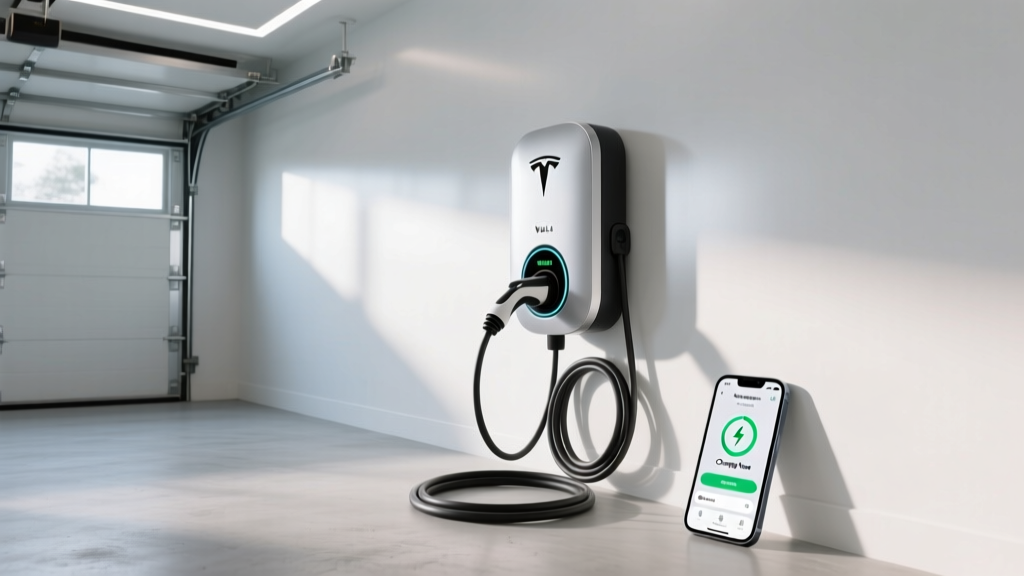
Tesla Wall Connector
- Power: Up to 11.5 kW (48A)
- Connector: NACS native — ideal for 2025+ GM EVs with NACS ports
- Cable length: 24 feet
- Smart features: Wi-Fi, OTA updates, power sharing between multiple units
- Price: ~$475
- Best for: NACS-equipped GM vehicles; CCS1 owners can use the GM NACS adapter for AC charging via this unit
Emporia Level 2 EV Charger
- Power: Up to 11.5 kW (48A)
- Connector: J1772
- Cable length: 24 feet
- Smart features: Wi-Fi, energy monitoring, solar integration, load management
- Price: ~$350
- Best for: Budget-conscious buyers, homes with solar panels
Grizzl-E Smart
- Power: Up to 10 kW (40A)
- Connector: J1772
- Cable length: 24 feet
- Smart features: OCPP-compatible, adjustable amperage, NEMA 4 outdoor rating
- Price: ~$450
- Best for: Outdoor installations, Canadian/cold-climate durability
For Bolt EV/EUV owners: Your onboard charger maxes out at 7.2 kW (32A at 240V). A 40A charger (9.6 kW) will work perfectly — the car simply draws 32A. No need to overspend on a 48A unit unless you plan to upgrade to a different EV later.
Cost to Charge: Home vs. Public vs. Gas
One of the strongest financial arguments for EV ownership is the per-mile fuel cost. Here's how charging costs compare across scenarios for a typical GM EV like the Cadillac Lyriq (102 kWh battery, EPA efficiency of ~2.9 mi/kWh or ~34 kWh/100mi):
| Scenario | Avg. $/kWh | Cost per 100 Miles | Cost per 300-Mile Trip |
|---|---|---|---|
| Home (national avg. $0.16/kWh) | $0.16 | $5.44 | $16.32 |
| Home (off-peak TOU rate) | $0.08–$0.12 | $2.72–$4.08 | $8.16–$12.24 |
| Tesla Supercharger (avg. $0.30/kWh) | $0.30 | $10.20 | $30.60 |
| Electrify America / EVgo ($0.40–$0.55/kWh) | $0.48 | $16.32 | $48.96 |
| Gas car (25 MPG, $3.40/gal) | — | $13.60 | $40.80 |
The takeaway: home charging on off-peak rates is roughly 70–80% cheaper per mile than gasoline. Even Supercharger pricing is competitive with gas, and significantly cheaper when you factor in the Lyriq's efficiency. However, frequent reliance on premium-priced public DC fast chargers ($0.48+/kWh) can erode the cost advantage — which is why home Level 2 installation pays for itself within 1–2 years for most drivers.
Safety, Electrical Code, and Best Practices
EV charging involves sustained high-current draw over many hours. This places demands on your home's electrical system that differ from typical appliance use. Key safety and code requirements include:
- Dedicated circuit: NEC Article 625 requires EV chargers to be on a dedicated circuit — no sharing with other outlets or appliances.
- GFCI protection: The 2020 NEC update requires GFCI (Ground Fault Circuit Interrupter) protection for all EV charging outlets. Most modern Level 2 chargers have built-in GFCI, but your electrician must verify compliance.
- NEMA rating: For outdoor installations, the charger and any receptacle must be rated NEMA 4 (weatherproof) or higher. Indoor garage installations have no NEMA requirement but should be mounted at least 18" above the floor in attached garages per some local codes.
- Hardwired vs. plug-in: Chargers above 40A (9.6 kW) must be hardwired per NEC — no NEMA plug. Chargers at 40A or below can use a NEMA 14-50 receptacle, which offers portability if you move.
- Permit required: Virtually all jurisdictions require an electrical permit for new 240V circuits. The inspection ensures proper wire gauge, breaker sizing, grounding, and GFCI compliance. Unpermitted work can void homeowner's insurance claims.
Always hire a licensed electrician familiar with NEC Article 625 (Electric Vehicle Charging System Equipment). Many utilities maintain lists of recommended or certified EV charger installers.
Frequently Asked Questions
Is the General Motors NACS adapter free?
GM has offered a complimentary NACS adapter to eligible owners of CCS-equipped GM EVs through a limited-time redemption program. Availability varies by model and timing. Check your myChevrolet, myCadillac, or myGMC app, or contact your dealer. Third-party CCS-to-NACS adapters from Lectron and others typically cost $150–$250.
Can I use the GM NACS adapter at non-Tesla NACS chargers?
Yes. As more charging networks (Electrify America, EVgo, ChargePoint) add NACS connectors to their stations, your GM NACS adapter will work at those as well. However, most non-Tesla networks currently still offer CCS1 connectors, which plug directly into your GM EV without an adapter.
How fast will each charging level add range to my GM EV?
Level 1 (120V) adds approximately 3–5 miles per hour. Level 2 (240V, 48A) adds approximately 30–35 miles per hour for a Lyriq or Blazer EV, and about 20–22 miles per hour for a Bolt EV (limited by its 7.2 kW onboard charger). DC fast charging at 150+ kW can add 150–300+ miles in 20–30 minutes, depending on battery size and charge acceptance rate.
Do I need a panel upgrade for a home Level 2 charger?
It depends on your home's existing electrical service. Homes with a 200A main panel and available breaker slots typically do not need an upgrade. Homes with 100A service, full panels, or older unsafe panels (Federal Pacific, Zinsco) will likely need a panel upgrade costing $1,500–$3,500. A licensed electrician can perform a load calculation to determine your specific needs.
Does the GM NACS adapter affect charging speed?
No. The adapter is a passive mechanical connector that does not limit power delivery. Your charging speed is determined by (1) the charger's maximum output and (2) your vehicle's onboard charge acceptance rate. A Bolt EV will still max out at 55 kW DC whether using an adapter at a Supercharger or plugging directly into an Electrify America CCS station.
What does charging cost per mile compared to gas?
Home charging at the national average electricity rate ($0.16/kWh) costs approximately $5.44 per 100 miles for a Cadillac Lyriq — roughly 60% less than a comparable gas SUV getting 25 MPG at $3.40/gallon ($13.60 per 100 miles). Off-peak time-of-use rates can push home charging costs even lower, to $2.72–$4.08 per 100 miles.
Which connector does my GM EV use, and what chargers are compatible?
Most 2017–2024 GM EVs use CCS1, which includes a J1772 AC inlet on top and two DC pins below. This means you can use any J1772 Level 2 charger and any CCS1 DC fast charger natively. With the GM NACS adapter, you additionally gain access to Tesla Superchargers and other NACS-equipped stations. Starting in late 2024/2025, some GM models are shipping with native NACS ports — check your vehicle's build details.
Sources: fueleconomy.gov (EPA efficiency data), General Motors NACS information, IRS §30C Alternative Fuel Vehicle Refueling Property Credit. All pricing and availability current as of early 2026; verify with your dealer and electrician.