What Makes FreeWire Charging Stations Different
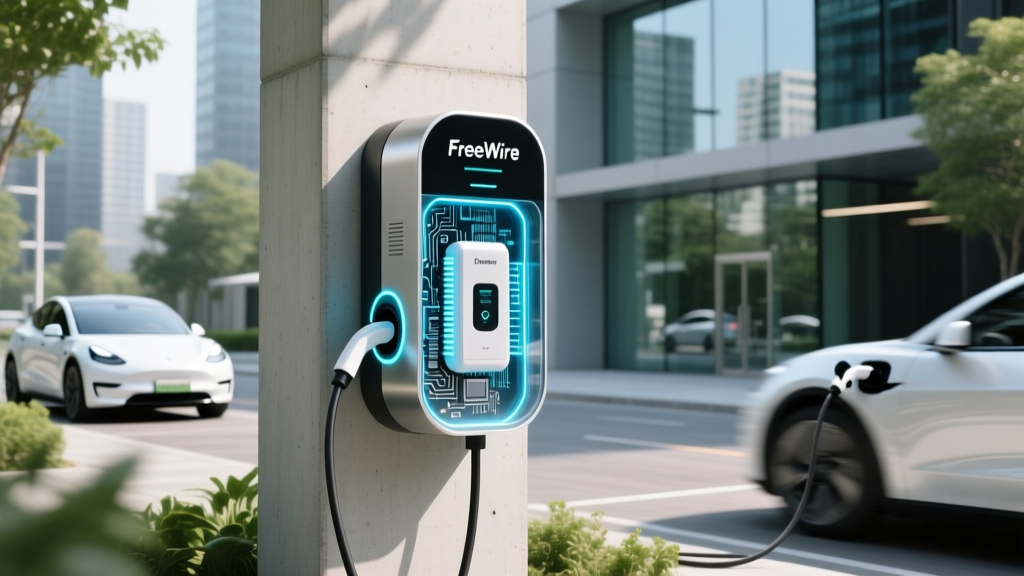
Most DC fast chargers demand massive grid connections — 200 kW chargers can require dedicated medium-voltage utility lines costing $100,000+ to install. FreeWire Technologies took a fundamentally different approach: build a large battery pack directly into the charger itself. The FreeWire Boost Charger draws power slowly from a standard commercial utility connection (as low as 30 kW), stores it in an internal lithium-ion battery bank, and then dispenses it to your EV at full DC fast-charging speeds up to 350 kW.
This battery-integrated architecture solves one of the biggest barriers to fast-charger deployment: grid capacity. Retail locations, rural highway stops, and older commercial buildings often lack the electrical infrastructure to support traditional DC fast chargers. FreeWire units can be installed at sites where conventional 150-350 kW chargers would require a utility transformer upgrade, trenching, and months of permitting.
For EV drivers, the experience at a FreeWire station is largely identical to any other DC fast charger — you plug in, the session starts, and you receive rapid charging. The difference is behind the scenes: the battery buffer means the charger can deliver peak power even when the site's grid connection is modest.
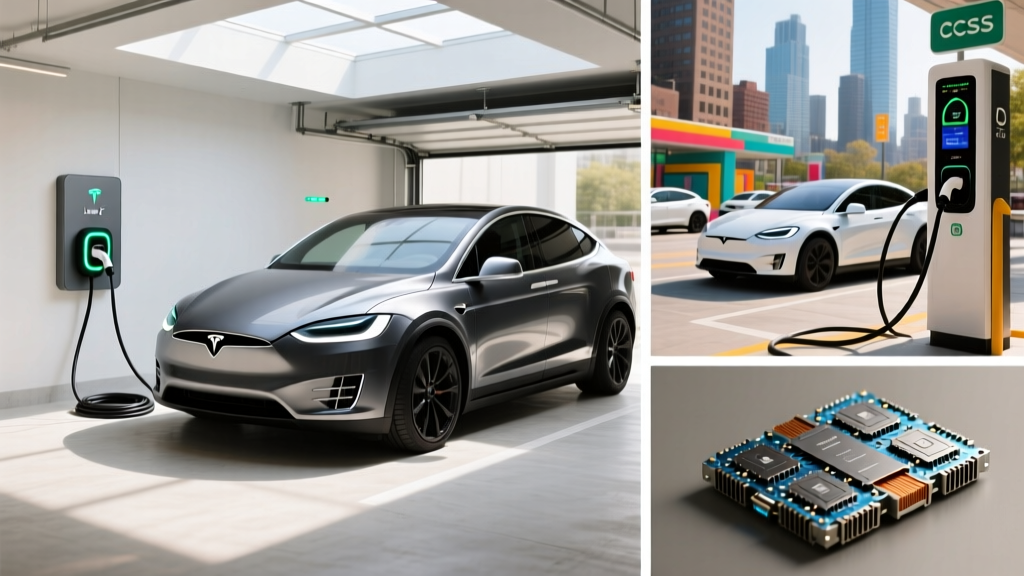
Understanding Charging Levels: Speeds and Range Added
Before evaluating FreeWire's DC fast-charging capability, it's worth grounding yourself in the three charging levels available to EV owners. The key distinction: kW (kilowatts) measures power — the rate of energy delivery — while kWh (kilowatt-hours) measures energy, the total amount stored in your battery.
| Level | Voltage | Typical Power (kW) | Miles of Range Per Hour | Best Use Case |
|---|---|---|---|---|
| Level 1 | 120V AC | 1.2–1.9 kW | 3–5 mi/hr | Overnight top-ups, PHEVs, emergencies |
| Level 2 | 240V AC | 7.2–19.2 kW | 20–60 mi/hr | Daily home charging, workplace, destinations |
| DC Fast Charge | 200–900V DC | 50–350 kW | 150–1,200+ mi/hr (peak) | Road trips, rapid replenishment, commercial fleets |
FreeWire Boost Chargers operate at the DC Fast Charge level. The current-generation Boost Charger delivers up to 120 kW per connector (with dual CCS1 connectors) or up to 350 kW on newer configurations supporting NACS (Tesla connector). The internal battery pack — typically around 180 kWh — acts as a buffer, enabling these peak rates even from a 30–50 kW utility feed.
Real-world charging speed depends heavily on your vehicle's acceptance rate. A Hyundai Ioniq 5 with its 800V architecture can accept up to 240 kW and charge from 10–80% in roughly 18 minutes. A Chevrolet Equinox EV, limited to around 150 kW peak, will take approximately 25–30 minutes for the same 10–80% session. FreeWire's 120 kW single-port configuration will charge most mainstream EVs from 10–80% in 25–40 minutes depending on battery size and acceptance rate.
Connector Compatibility: NACS, CCS1, and CHAdeMO
The connector landscape in 2026 has consolidated significantly around NACS (North American Charging Standard, the Tesla-derived connector now adopted by Ford, GM, Rivian, Hyundai, and most major automakers) and CCS1 (the legacy standard still found on many 2022–2025 EVs). CHAdeMO, once used by Nissan and Mitsubishi, is effectively discontinued for new vehicles.
| Connector | Status in 2026 | Common Vehicles | Adapter Availability |
|---|---|---|---|
| NACS (Tesla) | Industry standard for new EVs | Tesla Model 3/Y, Ford F-150 Lightning, GM Ultium vehicles, Hyundai Ioniq 5 (2026+) | CCS-to-NACS adapters widely available (~$150–200) |
| CCS1 | Legacy; still on many 2022–2025 EVs | VW ID.4 (pre-2026), older BMW i4, Kia EV6 (pre-2026) | NACS-to-CCS adapters available; many networks adding NACS cables |
| CHAdeMO | Discontinued for new vehicles | Nissan Leaf (2011–2025), Mitsubishi Outlander PHEV (older) | Limited adapter options; station availability declining |
FreeWire Boost Chargers have historically shipped with CCS1 connectors, consistent with their major network partners like Electrify America and BP Pulse. As networks retrofit for NACS, newer FreeWire deployments include NACS cables. If you drive a NACS-equipped vehicle and arrive at a CCS1-only FreeWire station, a CCS-to-NACS adapter (such as the Lectron or A2Z adapter, typically $150–$200) will allow you to charge. Always verify the connector type in your charging app before routing to a specific station.
How Much Does It Cost to Install a Home EV Charger?
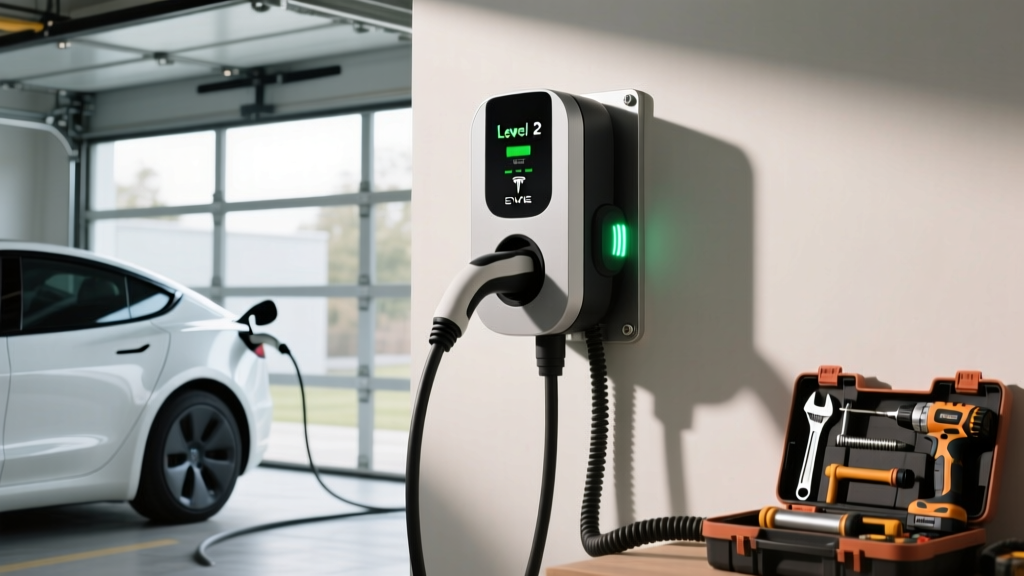
FreeWire charging stations are commercial-grade DC fast chargers — you won't install one in your garage. But understanding the full spectrum of home charging costs helps contextualize why public DC fast-charging networks (including FreeWire-equipped sites) matter for road trips and for drivers without home charging access.
For most EV owners, a Level 2 home charger is the primary charging solution. Here's what a typical 240V/48A Level 2 installation costs:
| Component | Typical Cost Range | Notes |
|---|---|---|
| Level 2 Charger Equipment | $300–$750 | Smart Wi-Fi chargers (ChargePoint Home Flex, Emporia Level 2, Tesla Wall Connector) |
| Electrician Labor | $600–$2,500 | Depends on run length from panel, conduit type, wall penetration |
| Permitting & Inspection | $100–$400 | Varies by municipality; some jurisdictions waive for simple installs |
| Electrical Panel Upgrade (if needed) | $1,500–$4,000 | Required if panel is 100A or at capacity; upgrading to 200A service |
| Total (no panel upgrade) | $1,000–$3,650 | Most installations for newer homes with 200A panels |
| Total (with panel upgrade) | $2,500–$7,650 | Older homes with 100A or 125A service |
The panel upgrade is the cost variable that catches many homeowners off guard. If your home was built before the 1990s, there's a meaningful chance you have a 100A or 125A electrical panel. Adding a 48A (continuous 40A draw) EV circuit to an already-loaded 100A panel can exceed the panel's safe capacity, triggering a required upgrade to 200A service. This involves the utility replacing the service drop, a new meter base, and a new breaker panel — a significant project.
An alternative for panel-constrained homes: devices like the Span smart panel or the Emporia Smart Load Management system can dynamically throttle EV charging when household loads are high, potentially avoiding a panel upgrade entirely. These systems cost $500–$2,000 additional but can save thousands versus a full panel replacement.
Charging Cost Per Mile: Home vs. Public vs. Gas
One of the strongest economic arguments for EV ownership is the cost-per-mile advantage, but this varies dramatically depending on where and when you charge. Let's break down real scenarios using a vehicle averaging 3.0 miles per kWh (roughly equivalent to a Tesla Model Y or Hyundai Ioniq 5 in mixed driving).
| Charging Scenario | Cost per kWh | Cost per Mile | Annual Cost (12,000 mi) |
|---|---|---|---|
| Home (off-peak utility rate) | $0.08–$0.14 | $0.027–$0.047 | $320–$560 |
| Home (average US residential rate) | $0.16–$0.18 | $0.053–$0.060 | $640–$720 |
| Public Level 2 (network pricing) | $0.25–$0.49 | $0.083–$0.163 | $1,000–$1,960 |
| DC Fast Charge (Electrify America, EVgo, FreeWire sites) | $0.35–$0.55 | $0.117–$0.183 | $1,400–$2,200 |
| Gasoline vehicle (28 MPG combined, $3.30/gal) | — | $0.118 | $1,414 |
The takeaway is clear: home charging is the economic sweet spot, typically costing 60–75% less per mile than gasoline. Public DC fast charging, including at FreeWire-equipped stations, can approach or exceed gas-car fuel costs depending on the network's per-kWh pricing. However, many drivers use DC fast charging only for road trips (perhaps 10–20% of total miles), keeping their blended cost well below gasoline.
According to the U.S. Energy Information Administration, the national average residential electricity rate hovers around $0.16–$0.17/kWh. Time-of-use (TOU) plans from utilities like PG&E, SCE, and ConEdison can drop off-peak rates to $0.08–$0.12/kWh, making overnight home charging extraordinarily cheap.
FreeWire in the Broader Public Charging Ecosystem
FreeWire doesn't operate its own consumer-facing charging network the way Tesla operates Superchargers or Electrify America operates its stations. Instead, FreeWire sells its Boost Charger hardware to charging networks, site hosts, fuel retailers, and fleet operators. You'll find FreeWire equipment deployed under brands like BP Pulse, Electrify America (at select sites), and various regional networks and convenience-store chains.
The primary value proposition is deployment speed and site flexibility. A conventional 350 kW DC fast charger may require 12–18 months for utility upgrades, permitting, and construction. A FreeWire Boost Charger, drawing only 30–50 kW from the grid, can often be installed in weeks using existing commercial electrical service. This matters for expanding charging access in:
- Rural corridors where utility infrastructure is limited and traditional DC fast chargers are economically impractical
- Urban retail sites (gas stations, convenience stores, shopping centers) with older electrical infrastructure
- Fleet depots needing rapid DC charging without multi-megawatt grid connections
For the driver, the practical consideration is whether the specific FreeWire-equipped station you're routing to has the connector type and power output your vehicle needs. Check your charging app (PlugShare, A Better Routeplanner, or the network's native app) for real-time connector availability, current station status, and pricing before committing to a stop.
Charging Time Examples: What to Expect
Charging speed is not linear. Every EV follows a charge curve where peak kW is achieved at low state of charge (SoC) and tapers significantly as the battery fills — particularly above 80% SoC. This is why manufacturers and reviewers quote 10–80% times rather than 0–100% times; the final 20% can take as long as the first 80%.
Here are approximate 10–80% charging times on a FreeWire Boost Charger at 120 kW (single-port session), assuming optimal battery preconditioning and moderate temperatures:
- Tesla Model Y (75 kWh usable, NMC): ~30–35 minutes at 120 kW (vehicle can accept up to 250 kW on V3 Supercharger, so 120 kW is a partial bottleneck)
- Hyundai Ioniq 5 (77.4 kWh usable, NMC): ~35–40 minutes at 120 kW (vehicle's 800V system can accept 240 kW; 120 kW limits peak speed)
- Ford F-150 Lightning (131 kWh usable, NMC extended range): ~55–65 minutes at 120 kW (large battery, moderate acceptance rate)
- Chevrolet Equinox EV (85 kWh usable, NMC): ~40–45 minutes at 120 kW
On newer FreeWire configurations supporting up to 350 kW, vehicles with high acceptance rates (Hyundai/Kia E-GMP at 240 kW, Lucid Air at 300+ kW, Porsche Taycan at 270 kW) will see dramatically faster sessions — 10–80% in 15–20 minutes. The key variable is always the vehicle's peak acceptance rate and charge curve shape, not just the charger's maximum output.
Cold-weather caveat: Battery chemistry slows lithium-ion diffusion at low temperatures. In sub-freezing conditions without preconditioning, expect charge rates to drop 30–50% until the battery warms. Always use your vehicle's built-in navigation routing to a charger — this triggers preconditioning, warming the battery to optimal charging temperature before you arrive.
Recommended Home Level 2 Equipment
Since FreeWire is a commercial DC fast-charging solution, your home charging setup is a separate decision. Here are proven Level 2 chargers for 2026, selected for reliability, smart features, and value:
ChargePoint Home Flex
- Power: Up to 11.5 kW (48A) at 240V; configurable down to 16A for lower-capacity circuits
- Connector: NACS or J1772 (select at purchase)
- Cable length: 23 feet
- Smart features: Wi-Fi, app scheduling, energy tracking, Alexa integration
- Price: ~$550–$650
Tesla Wall Connector
- Power: Up to 11.5 kW (48A) at 240V
- Connector: NACS native (works directly with all Tesla and NACS-equipped vehicles)
- Cable length: 24 feet
- Smart features: Wi-Fi, OTA updates, power sharing between multiple units, access control
- Price: ~$475
Emporia Level 2 EV Charger
- Power: Up to 11.5 kW (48A) at 240V
- Connector: J1772 (NACS adapter included or sold separately)
- Cable length: 24 feet
- Smart features: Wi-Fi, integration with Emporia Vue energy monitor, solar-aware scheduling, load management
- Price: ~$350–$400
For homes with 240V/60A circuits available (the ideal scenario), any of these chargers at 48A will add roughly 35–45 miles of range per hour to a typical crossover EV — enough to fully replenish any daily driving overnight. If your circuit capacity is limited to 240V/20A or 240V/30A, the ChargePoint Home Flex's adjustable amperage is particularly valuable, as you can set it to match your circuit without a hardware swap.
Safety and Electrical Code Considerations
Whether you're evaluating a commercial site's charging infrastructure or planning your own home install, these electrical safety requirements are non-negotiable:
- Dedicated circuit: Level 2 EV chargers must be on a dedicated circuit — no sharing with other appliances. A 48A charger requires a 60A breaker (NEC requires continuous loads to be derated to 80% of breaker capacity).
- GFCI protection: The 2023 NEC (National Electrical Code) and subsequent adoptions require GFCI (Ground Fault Circuit Interrupter) protection for EV charging outlets in many jurisdictions. Hardwired chargers may have internal GFCI compliance; plug-in units using a NEMA 14-50 receptacle require a GFCI breaker, which adds $50–$150 to the electrical cost.
- Outdoor rating: If the charger is installed outdoors (driveway, exterior wall), it must carry a NEMA 4 or IP65 weather resistance rating. All three chargers recommended above meet this standard.
- Wire gauge: A 60A circuit requires 4 AWG copper wire for runs up to ~50 feet; longer runs may require 3 AWG to prevent voltage drop. Your licensed electrician will calculate this based on your specific installation.
- Permit and inspection: Virtually all jurisdictions require an electrical permit for EV charger installation. The inspection ensures the work meets NEC standards — this protects your home and is typically required for insurance and warranty purposes.
The National Fire Protection Association's NEC guidelines govern EV charging installation requirements. Always hire a licensed electrician familiar with EV charger installs — this is not a DIY project given the sustained high-current draw involved.
Frequently Asked Questions
Can I charge my Tesla at a FreeWire station?
Yes, if the FreeWire station has NACS connectors (increasingly common in 2026 deployments) or if you carry a CCS-to-NACS adapter for CCS1-equipped FreeWire sites. Tesla Superchargers remain the most seamless option for Tesla owners, but FreeWire stations integrated into networks like BP Pulse offer competitive pricing and good coverage.
Why does my charging speed slow down above 80%?
Lithium-ion batteries experience increased internal resistance as state of charge rises. The battery management system (BMS) reduces charge rate to protect cell health and prevent lithium plating. This is why 10–80% charge times are the standard metric — charging from 80–100% can take as long as the 10–80% phase on DC fast charging. For daily driving, charging to 80% is also better for long-term battery health, particularly for NMC chemistry. LFP batteries (found in some Tesla Model 3/Y Standard Range vehicles) tolerate regular 100% charges better.
Is DC fast charging bad for my battery?
Modern battery thermal management systems have largely mitigated the degradation concerns of earlier EVs. Data from fueleconomy.gov and long-term fleet studies show that vehicles using DC fast charging regularly still retain 85–90% battery capacity after 100,000 miles. The bigger degradation factors are sustained high state of charge (sitting at 100% for days), extreme heat exposure, and deep discharge cycles. Use DC fast charging as needed for road trips without concern; rely on Level 2 home charging for daily needs.
How do I find FreeWire charging stations near me?
FreeWire equipment is deployed under various network brands. Use PlugShare or A Better Routeplanner and filter by network (BP Pulse, Electrify America, etc.) to find stations that may use FreeWire hardware. The station listing will show connector type, power output, real-time availability, and pricing. You typically won't see "FreeWire" branded on the app — the network operator's branding is what's displayed.
Do I qualify for a tax credit for installing a home charger?
The federal Alternative Fuel Vehicle Refueling Property Credit (IRC §30C) offers up to $1,000 for residential EV charger installation through 2032, covering 30% of equipment and installation costs. Eligibility depends on your census tract (must be a qualifying low-income or non-urban area) and your tax liability. Consult a tax professional and review current IRS guidance on §30C before claiming. Some states and utilities offer additional rebates — check your local programs.