If you own a Tesla—or are about to buy one—the idea of free Supercharging sounds like the ultimate ownership hack. But the landscape in 2026 looks very different from the early days of unlimited complimentary Supercharging. Today, free miles are rare, targeted, and often tied to specific promotions or referral programs. This guide breaks down every legitimate way to score free Supercharging credits, then pivots to what matters more for long-term savings: setting up efficient, low-cost home charging that makes public Supercharging a road-trip luxury rather than a daily necessity.
The Current State of Free Tesla Supercharging in 2026
Tesla phased out its original unlimited free Supercharging program years ago. The last vehicles to carry transferable lifetime free Supercharging were certain Model S and Model X units ordered before 2019—and even those credits typically stay with the original owner or expire upon resale. Here is what still exists:
- Referral credits: Tesla periodically revives its referral program, where existing owners share a link. Successful referrals can earn Supercharging credits (often 1,000–3,000 miles worth, roughly 300–900 kWh). Availability fluctuates—check the Tesla app or Tesla's referral page for current status.
- Promotional incentives: During end-of-quarter delivery pushes, Tesla has offered limited-time free Supercharging (e.g., 10,000 miles or one year) on new Model 3 or Model Y deliveries. These are announced via Tesla's website and email, not dealers.
- Loyalty/upgrade programs: Trading in a Tesla for a newer model has occasionally bundled Supercharging credits, though this is inconsistent by region and quarter.
- Destination charging partnerships: Some hotels, resorts, and restaurants offer free Level 2 Tesla Destination Chargers for guests. This is not Supercharging (it is Level 2, adding ~30–44 miles per hour), but it offsets travel costs.
Understanding Charging Levels: Speed, Power, and What They Mean for Your Tesla
Before discussing costs, you need to know the difference between kW (kilowatts — the rate of power delivery, like water pressure) and kWh (kilowatt-hours — the total energy stored, like gallons in a tank). Confusing these two is the single most common EV mistake. A 150 kW charger delivers energy at a rate of 150 kilowatts; a 75 kWh battery holds 75 kilowatt-hours of energy.
| Level | Voltage | Max Power (kW) | Miles of Range Added per Hour | Best For |
|---|---|---|---|---|
| Level 1 (120V) | 120V AC | 1.4–1.9 kW | 3–5 mi/hr | Overnight trickle, PHEVs, emergencies |
| Level 2 (240V) | 240V AC | 7.2–19.2 kW | 20–55 mi/hr | Daily home/work charging |
| DC Fast (Supercharger/CCS) | 400–800V DC | 150–350 kW | 500–1,200 mi/hr (peak) | Road trips, quick top-ups |
For a Tesla Model Y Long Range (75 kWh usable battery, ~310 miles EPA), here is what charging times look like in practice:
- Level 1 (120V, 1.4 kW): 0–100% in roughly 54 hours. Impractical for daily use.
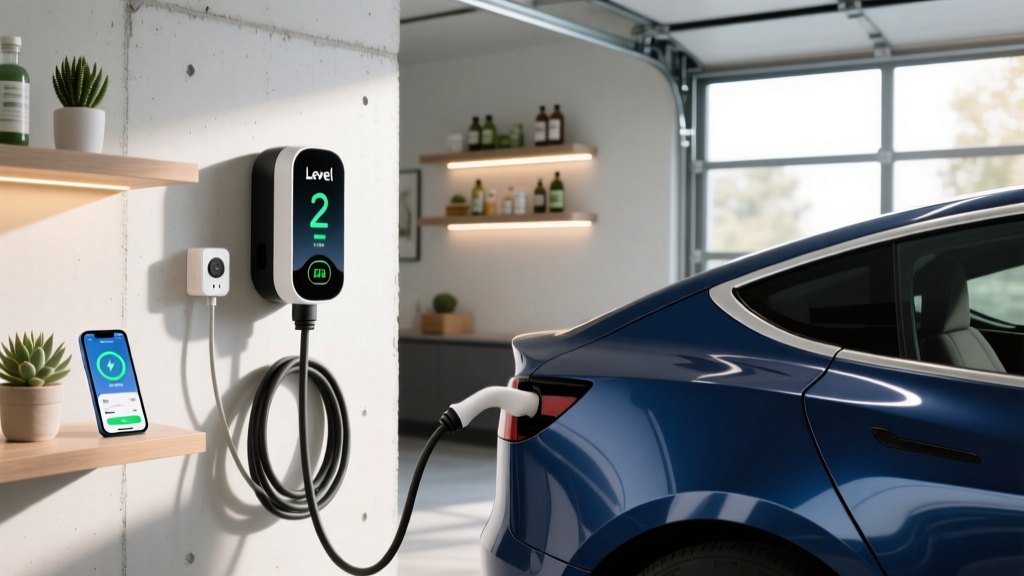
- Level 2 (240V, 11.5 kW / 48A): 0–100% in ~7 hours; 10–80% in ~5 hours. Ideal overnight solution.
- V3 Supercharger (250 kW peak): 10–80% in ~25–30 minutes. Note: peak rate only holds up to ~50% SoC, then tapers. Expect an average of ~120 kW over the full session due to the charge curve.
- V4 Supercharger (350 kW capable): Tesla's newest architecture supports faster sessions for compatible vehicles (Cybertruck, next-gen platforms). Model 3/Y on V4 charge at similar speeds to V3 unless equipped with newer battery packs.
How Much Does It Cost to Install a Home EV Charger?
Home Level 2 charging is where Tesla owners save the most money. But installation costs vary wildly depending on your electrical panel, the distance from panel to charger location, and local permitting. Here is a realistic 2026 breakdown:
| Component | Cost Range | Notes |
|---|---|---|
| Level 2 Charger Equipment | $350–$700 | Tesla Wall Connector: ~$450; ChargePoint Home Flex: ~$550 |
| Electrician Labor (standard install) | $500–$1,500 | Short run (<20 ft from panel), 240V/60A circuit |
| Electrician Labor (long run) | $1,500–$3,000 | 50+ ft run, conduit through walls/attic/crawlspace |
| Permit & Inspection | $50–$250 | Varies by municipality; some jurisdictions waive EV permits |
| Electrical Panel Upgrade (if needed) | $1,500–$4,000 | Upgrading from 100A to 200A service; common in pre-1990 homes |
| Total (no panel upgrade) | $900–$2,500 | Most homes with 200A service |
| Total (with panel upgrade) | $2,500–$6,500 | Older homes or those with high existing loads |
Panel upgrade reality check: A 60A dedicated circuit for a Level 2 charger requires your panel to have sufficient spare capacity. A 200A panel with existing loads near 160A cannot safely add 60A without an upgrade or a smart load-management device (like the Emporia V2 with automatic load shedding, ~$150 add-on). Have a licensed electrician perform a load calculation before quoting.
Cost to Charge: Home vs. Supercharger vs. Gas
The financial case for home charging becomes obvious when you compare per-mile costs:
| Scenario | Rate | Cost per Mile (Model Y, 3.5 mi/kWh) | Cost per Mile (RAV4, 30 MPG combined) |
|---|---|---|---|
| Home (off-peak, $0.12/kWh) | $0.12/kWh | $0.034 | — |
| Home (standard, $0.18/kWh) | $0.18/kWh | $0.051 | — |
| Tesla Supercharger ($0.32/kWh avg) | $0.32/kWh | $0.091 | — |
| Public DC Fast (Electrify America, $0.48/kWh) | $0.48/kWh | $0.137 | — |
| Gasoline ($3.40/gallon) | $3.40/gal | — | $0.113 |
At national-average electricity rates, home charging costs roughly one-third to one-half what you would pay for gasoline per mile. Even at Supercharger rates, the Model Y is competitive with a 30 MPG gas car. But if you rely exclusively on public DC fast chargers at premium rates ($0.40–$0.55/kWh in some metro areas), you can actually exceed gas costs per mile—another reason home charging is essential.
Which Connector and Charger Is Compatible with My Tesla?
Tesla uses the NACS (North American Charging Standard) connector natively—this is the proprietary Tesla plug that is now being adopted industry-wide. Here is how the connector landscape looks in 2026:
| Connector | Brands Using It | Tesla Compatibility | Adapter Needed? |
|---|---|---|---|
| NACS (Tesla) | Tesla (all), Ford, GM, Rivian, Volvo, Polestar (2025+) | Native | No |
| CCS1 | Hyundai, Kia, BMW, VW, legacy Ford/GM (pre-2025) | With Tesla CCS adapter ($175) | Yes — required for non-Tesla DC fast chargers |
| CHAdeMO | Nissan Leaf (legacy), Mitsubishi | Not supported | No adapter available; avoid |
| J1772 (Level 2 AC) | All non-Tesla EVs | With included J1772 adapter (comes with Tesla) | Tesla includes one in the glovebox |
Key takeaway for Tesla owners: Your Tesla comes with a J1772 adapter for public Level 2 stations. For non-Tesla DC fast chargers (Electrify America, EVgo CCS stalls), you need Tesla's CCS1 adapter, available from the Tesla Shop for ~$175. You cannot use CHAdeMO stations at all. As of 2026, most new public fast-charging infrastructure is being built with both NACS and CCS1 cables, so compatibility is improving.
Best Home Chargers for Tesla Owners in 2026
Here are three proven Level 2 chargers that pair well with Tesla vehicles, each with distinct strengths:
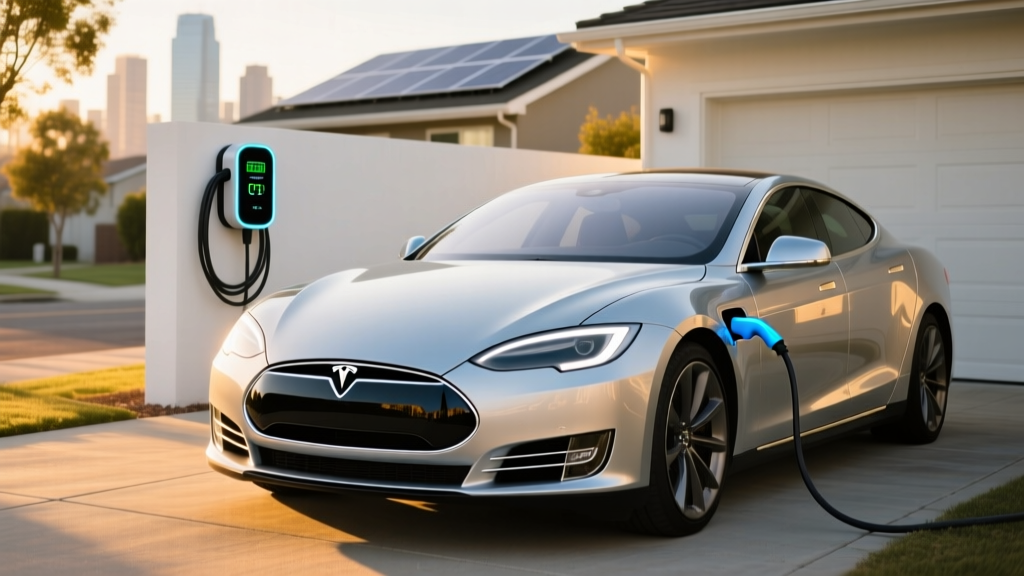
Tesla Wall Connector
Power: Up to 11.5 kW (48A) on a 60A circuit
Connector: NACS (native Tesla)
Cable: 24 ft
Smart features: Wi-Fi for OTA updates, power sharing (link up to 6 units on one circuit), load management
Price: ~$450
Best for: Tesla-only households wanting seamless integration
ChargePoint Home Flex
Power: Up to 12 kW (50A) on a 60A circuit; configurable down to 16A
Connector: NACS or J1772 (NACS version launched 2025)
Cable: 24 ft
Smart features: App scheduling, Alexa integration, detailed energy tracking, flexible amperage for older panels
Price: ~$550
Best for: Multi-EV households (Tesla + non-Tesla) and panels with limited capacity
Emporia Vue Level 2 Charger
Power: Up to 11.5 kW (48A)
Connector: NACS or J1772
Cable: 24 ft
Smart features: Automatic load management (pairs with Emporia Vue panel monitor to avoid overload), solar integration, real-time cost tracking
Price: ~$400 (charger) + ~$150 (Vue panel monitor)
Best for: Homes needing load management without a panel upgrade
Safety, Electrical Code, and Installation Requirements
Level 2 charger installation is not a DIY project. The National Electrical Code (NEC) and local jurisdictions require specific safety measures:
- Dedicated circuit: Your charger must have its own breaker—no sharing with other appliances. A 48A charger requires a 60A breaker (NEC requires the breaker be rated at 125% of continuous load).
- GFCI protection: NEC 2020 and later require GFCI protection for outdoor receptacles and many indoor EV charging installations. Your electrician will use a GFCI breaker or ensure the charger has built-in ground-fault protection.
- Outdoor rating: If your charger is installed outside (garage exterior, driveway post), it must carry a NEMA 4 or NEMA 4X rating for weather resistance. The Tesla Wall Connector and ChargePoint Home Flex both meet this standard.
- Permit and inspection: Most jurisdictions require an electrical permit for a new 240V circuit. The inspection ensures proper wire gauge (6 AWG copper for 60A), correct breaker sizing, and adequate grounding. Skipping the permit risks insurance denial if a fire occurs.
- Wire gauge: 6 AWG copper (THHN in conduit) is standard for a 60A circuit. For runs over 100 feet, your electrician may upsized to 4 AWG to prevent voltage drop.
Always hire a licensed electrician who has experience with EV charger installations. Ask for references and verify they pull permits. The National Electrical Code (NFPA 70) is the governing standard—your installer should reference it.
Frequently Asked Questions
Can I still get free Supercharging if I buy a used Tesla?
Almost certainly not. Free Supercharging credits were historically tied to the original owner and did not transfer upon resale. Some 2017–2019 Model S/X units had transferable credits, but Tesla ended this practice. In 2026, assume a used Tesla has no free Supercharging unless the seller can show documentation of active credits in the Tesla app.
How much does a Tesla Supercharger session cost in 2026?
Supercharger pricing varies by location and time of day. Expect $0.25–$0.36/kWh in most US markets, with some urban stations charging up to $0.45/kWh during peak hours. A typical 10–80% session on a Model Y Long Range (adding ~52 kWh) costs approximately $14–$19. Idle fees of $0.50–$1.00/minute apply if you remain plugged in after reaching your charge limit.
Is it bad for my Tesla battery to Supercharge frequently?
DC fast charging generates more heat than Level 2, which accelerates long-term degradation slightly. Tesla's battery management system (BMS) and liquid cooling mitigate this effectively. Real-world data from Tesla Impact Reports shows Model 3/Y batteries retain ~85–90% capacity after 150,000 miles regardless of charging mix. However, if you have home charging access, using Level 2 for daily needs and reserving Supercharging for road trips is the optimal strategy for longevity.
What electrical upgrades might I need for a home charger?
The most common upgrade is a panel replacement from 100A to 200A service ($1,500–$4,000). If your panel is already 200A but near capacity, a smart load-management device (~$150–$300 installed) can dynamically reduce charger power when other appliances draw heavily, avoiding the need for a full panel upgrade. Homes built after 2000 typically have sufficient capacity without modification.
How fast will each charging level add range to my Model 3 or Model Y?
Level 1 (120V): ~3–5 miles per hour. Level 2 at 11.5 kW (48A): ~35–44 miles per hour—enough to fully replenish a day's driving in 1–2 hours. V3 Supercharger at 250 kW peak: ~200 miles in 15 minutes (10–50% SoC), tapering significantly above 60%. Always precondition your battery by navigating to a Supercharger in the Tesla nav system—this warms the pack and enables peak charging speeds.