Search for "free Tesla Supercharging" and you'll find a patchwork of expired referral codes, forum rumors, and legacy perks that no longer apply to new buyers. In 2026, complimentary Supercharging is largely a relic of Tesla's early demand-generation playbook — but a handful of narrow pathways still exist, and understanding them requires a clear-eyed look at the broader EV charging landscape. This guide maps where free miles remain, what Supercharging actually costs today, and why most owners save more by investing in a proper home Level 2 setup.
The Truth About Free Tesla Supercharging in 2026
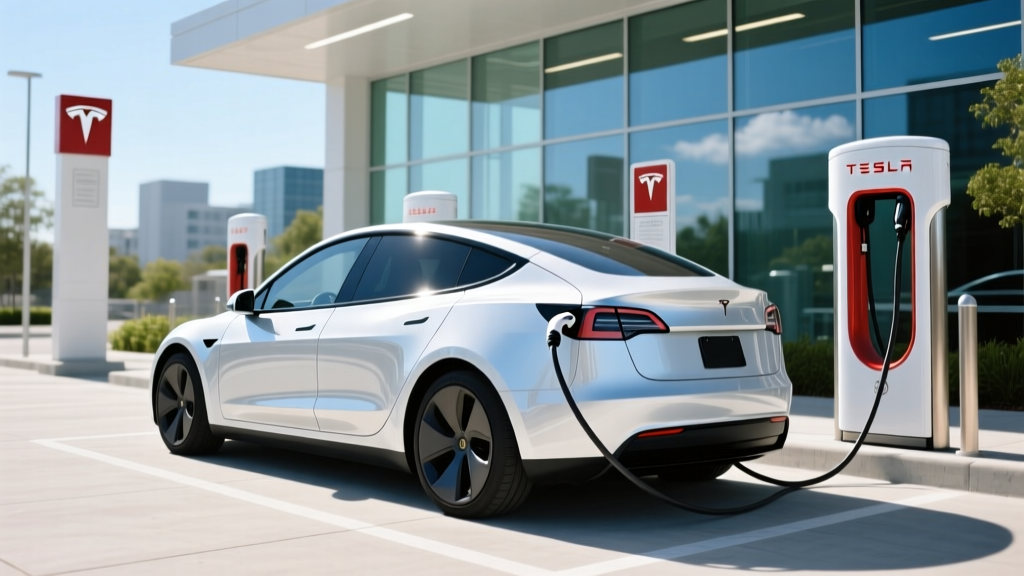
Tesla phased out unlimited free Supercharging for new vehicle purchases in 2019, replacing it with limited-time promotional credits tied to specific sales pushes. Today, the only realistic ways to access complimentary Supercharging are:
- Legacy transfers: A small number of Model S and Model X vehicles (2012–2017) retain transferable free unlimited Supercharging tied to the VIN — but Tesla has progressively restricted transferability, and these cars command a premium on the used market that often exceeds the value of the perk.
- Referral credits: Tesla periodically revives referral programs awarding Supercharging credits (typically measured in kWh, not unlimited). These are time-limited, region-specific, and often capped at a few hundred kWh — enough for a road trip or two, not a lifetime of fueling.
- Destination and partner charging: Some hotels, resorts, and commercial properties offer free Level 2 Tesla Destination Chargers to guests. This is property-level hospitality, not a Tesla program, and availability is unpredictable.
- Employer and municipal programs: A growing number of workplaces and city governments subsidize charging at installed stations, sometimes including Tesla-specific equipment. Check your employer's benefits or local sustainability office.
The bottom line: if you're buying a new Tesla in 2026 — whether a Model 3, Model Y, refreshed Model S/X, or the Cybertruck — budget for Supercharging as a paid service. Current rates at Tesla Superchargers average $0.28–$0.42 per kWh depending on location and time-of-use tiers, with some urban sites charging peak rates above $0.50/kWh.
Charging Levels Explained: Speeds, Power, and Range Added
Before evaluating whether to chase free Supercharger credits or invest in home equipment, it's critical to understand the three charging tiers. Remember: kW (kilowatts) measures power — the rate of energy delivery — while kWh (kilowatt-hours) measures energy capacity, like gallons in a tank. Confusing them is the most common EV literacy mistake.
| Level | Voltage / Current | Max Power (kW) | Miles of Range Added Per Hour | Typical Use Case |
|---|---|---|---|---|
| Level 1 | 120V / 12–16A | 1.4–1.9 kW | 3–5 mi/hr | Overnight trickle; emergency; PHEV top-ups |
| Level 2 | 240V / 32–48A | 7.7–11.5 kW | 25–44 mi/hr | Daily home/workplace charging; primary method for most owners |
| DC Fast Charge | 400–800V DC | 50–350 kW | 150–1,000+ mi/hr (peak) | Road trips; rapid top-ups; 10–80% in 15–40 min |
A few real-world nuances the table doesn't capture:
- Charge curve taper: DC fast charging peaks only between roughly 10–50% State of Charge (SoC). Above 80%, speeds drop sharply to protect battery health — a 250 kW-rated session may average 100–130 kW across the full 10–80% window.
- Preconditioning matters: Tesla and most modern EVs warm the battery when you navigate to a Supercharger or DC fast station. Cold batteries charge dramatically slower — preconditioning can cut a 40-minute session to 20 minutes in winter.
- Level 2 is the daily workhorse: Even if you find free Supercharging nearby, relying on DC fast charging exclusively accelerates battery degradation. Most manufacturers, including Tesla, recommend daily charging on Level 2 for longevity.
Home EV Charger Installation: Costs, Electrical Requirements, and Upgrades
For most EV owners, a home Level 2 charger is the single highest-impact investment in ownership convenience. Here's what a proper installation actually requires.
Electrical Requirements
A standard Level 2 home charger runs on a 240-volt dedicated circuit, typically rated at 40, 50, or 60 amps. The National Electrical Code (NEC) requires that continuous loads (like EV charging, which can run 8+ hours) use only 80% of a circuit's rated capacity. So a 50-amp breaker delivers a maximum continuous 40 amps, or about 9.6 kW of charging power.
- 40A circuit / 32A continuous: 7.7 kW — adequate for overnight charging most EVs; requires a NEMA 14-50 outlet or hardwired connection.
- 50A circuit / 40A continuous: 9.6 kW — the sweet spot for most homes; charges a Tesla Model Y Long Range (75 kWh usable battery) from 10–80% in roughly 5.5 hours.
- 60A circuit / 48A continuous: 11.5 kW — ideal for larger-battery vehicles (Ford F-150 Lightning Extended Range at 131 kWh, Rivian R1T at 128 kWh); may require a panel upgrade in older homes.
Panel Upgrade Reality
Homes built before 2000 often have 100-amp main service panels with limited spare breaker slots. Adding a 50A EV circuit may exceed available capacity, requiring a panel upgrade to 200 amps — a significant cost that buyers frequently overlook. Signs you may need an upgrade:
- Main panel rated below 150 amps
- Fewer than 4 open breaker slots
- Existing high-draw appliances (electric range, dryer, HVAC, tankless water heater) already consuming 80%+ of panel capacity
- Frequent breaker trips under normal household load
Installation Cost Breakdown
| Component | Basic Install (Near Panel) | Complex Install (Panel Upgrade + Long Run) |
|---|---|---|
| Level 2 Charger (Equipment) | $400–$700 | $500–$800 |
| Electrician Labor | $300–$800 | $1,500–$3,000 |
| Electrical Permit | $50–$200 | $100–$300 |
| Panel Upgrade (if needed) | $0 | $1,500–$3,500 |
| Conduit, Wire, Misc. Materials | $50–$200 | $300–$800 |
| Total Estimated Cost | $800–$1,900 | $3,900–$8,400 |
The wide range reflects real variability: a condo with a garage adjacent to the panel might cost under $1,000 all-in, while a 1970s home needing a 200A panel upgrade and a 60-foot conduit run to a detached garage can exceed $7,000. Always get 2–3 quotes from licensed electricians and verify they pull permits — unpermitted work can void home insurance claims and complicate future sales.
Connector Compatibility: NACS, CCS1, CHAdeMO, and Adapter Needs
The connector landscape shifted dramatically in 2024–2025 when Ford, GM, Rivian, Volvo, and most major automakers adopted Tesla's North American Charging Standard (NACS) for their new vehicles. By 2026, NACS is the de facto standard for new EVs sold in North America, though millions of CCS1-equipped vehicles remain on the road.
| Connector | Brands Using It (New Vehicles) | Notes |
|---|---|---|
| NACS (Tesla) | Tesla, Ford, GM, Rivian, Volvo, Polestar, Mercedes-Benz, BMW, Hyundai, Kia, Subaru, Lucid, Fisker | Native access to Tesla Supercharger network; smaller/lighter connector |
| CCS1 | Volkswagen ID.4 (older model years), legacy models from Ford/GM pre-2025 | Requires NACS-to-CCS adapter for Supercharger access; Electrify America, EVgo native |
| CHAdeMO | Nissan LEAF (legacy only — Nissan has moved to CCS/NACS for Ariya and future models) | Declining infrastructure; avoid for new purchases |
Adapter reality check: Tesla sells a CCS-to-NACS adapter (~$250) for older CCS-equipped vehicles to access Superchargers. Ford and GM provide adapters to existing CCS-vehicle owners. Third-party adapters from brands like Lectron and A2Z exist but verify UL certification before purchasing — cheap adapters can overheat or damage vehicle charge ports.
Cost Per Mile: Home Charging vs. Supercharger vs. Gas
This is where the economics of "free Supercharging" fall into perspective. Even without free access, home Level 2 charging remains dramatically cheaper per mile than gasoline — and significantly cheaper than public DC fast charging.
| Charging/Fueling Method | Rate | Efficiency Assumption | Cost Per Mile |
|---|---|---|---|
| Home Level 2 (Off-Peak, avg US) | $0.12/kWh | 3.5 mi/kWh (Model Y) | $0.034 |
| Home Level 2 (Peak / High-Cost State like CA) | $0.28/kWh | 3.5 mi/kWh | $0.080 |
| Tesla Supercharger (avg) | $0.35/kWh | 3.5 mi/kWh | $0.100 |
| Electrify America / 3rd-Party DCFC | $0.43/kWh | 3.5 mi/kWh | $0.123 |
| Gasoline (28 MPG avg sedan, $3.40/gal) | $3.40/gal | 28 mi/gal | $0.121 |
| Gasoline (18 MPG truck/SUV, $3.40/gal) | $3.40/gal | 18 mi/gal | $0.189 |
Key takeaways:
- Home off-peak charging at $0.034/mile is roughly 3.5× cheaper than gasoline for a comparable sedan.
- Even at Supercharger rates, a Tesla Model Y costs about the same per mile as a fuel-efficient gas sedan — the savings advantage shrinks when you rely exclusively on public DC fast charging.
- For a driver covering 12,000 miles/year, home off-peak charging saves approximately $1,040/year vs. a 28 MPG gas car and $1,860/year vs. an 18 MPG truck.
- Those savings pay back a $1,500 home charger installation in 10–18 months — far more reliable than chasing limited free Supercharging credits.
Recommended Home Level 2 Chargers: Power, Features, and Price
The best home charger for you depends on your vehicle's onboard charger capacity (which caps the maximum Level 2 speed), your electrical panel, and whether you want smart scheduling features for off-peak electricity rates.
Tesla Wall Connector (Gen 4)
- Power Output: Up to 11.5 kW (48A continuous on 60A circuit)
- Connector: Native NACS — no adapter needed for Tesla vehicles
- Cable Length: 24 ft
- Smart Features: Wi-Fi, OTA updates, load sharing (pair two units on one circuit), Power-Share with Tesla Powerwall
- Price: ~$475
- Best For: Tesla owners who want the simplest, most integrated experience
ChargePoint Home Flex
- Power Output: Up to 12 kW (50A continuous on 60A circuit; configurable down to 16A for smaller panels)
- Connector: Available in NACS or CCS1 (J1772 with adapter)
- Cable Length: 23 ft
- Smart Features: Wi-Fi, Alexa integration, detailed energy tracking, scheduled charging for TOU rates
- Price: ~$550–$700
- Best For: Multi-EV households, non-Tesla owners, renters who may move (NEMA 14-50 plug version available)
Emporia Level 2 EV Charger
- Power Output: Up to 11.5 kW (48A on 60A circuit)
- Connector: J1772 (CCS-compatible); NACS adapter included in 2026 bundle
- Cable Length: 24 ft
- Smart Features: Wi-Fi, solar integration with Emporia energy monitor, TOU scheduling, real-time cost tracking
- Price: ~$400 (frequently on sale for $300–$350)
- Best For: Budget-conscious buyers, solar-panel owners, value pick with surprisingly robust features
Grizzl-E Smart
- Power Output: Up to 10 kW (40A on 50A circuit)
- Connector: J1772 (NACS adapter available separately)
- Cable Length: 24 ft
- Smart Features: Wi-Fi, OCPP-compatible (works with utility demand-response programs), extreme cold rated to -40°F
- Price: ~$450–$550
- Best For: Cold-climate owners (Canadian-built, tested to -40°F), utility program participants
Safety, Electrical Code, and Installation Best Practices
EV charging draws sustained high current for hours — this is not like plugging in a phone. Proper installation protects your home, your vehicle, and your insurance coverage.
- Dedicated circuit required: Your EV charger must have its own breaker — never share a circuit with other appliances. A shared circuit risks overheating and breaker trips during simultaneous use.
- GFCI protection: The 2020 NEC update (and subsequent editions) requires GFCI (Ground Fault Circuit Interrupter) protection for all EV charging outlets. Hardwired installations may have different GFCI requirements depending on jurisdiction — your electrician will know local code.
- Outdoor rating: If your charger is installed outside or in an unenclosed carport, it must carry a NEMA 4 (weatherproof) rating. All chargers recommended above meet this standard, but verify connector holster covers and cable management for UV and moisture exposure.
- Permit and inspection: Most jurisdictions require an electrical permit for new 240V circuits. The inspection ensures code compliance and is often required for insurance claims and utility rebate eligibility. Never skip this step.
- Load calculation: A licensed electrician will perform a NEC Article 220 load calculation to verify your panel can handle the added EV circuit alongside existing loads. If the calculation shows insufficient capacity, a panel upgrade is not optional — it's a safety requirement.
10–80% Charging Times: What to Expect by Battery Size
DC fast charging times are the metric most buyers obsess over, but real-world sessions depend on battery chemistry, temperature, and the charge curve. Here are representative 10–80% times for common 2026 EVs at rated peak DC fast charge power:
- Tesla Model Y Long Range (75 kWh, NMC): Peak 250 kW at V3 Supercharger; 10–80% in approximately 25–28 minutes (preconditioned)
- Tesla Model 3 Highland Long Range (75 kWh, NMC): Peak 250 kW; 10–80% in approximately 25 minutes
- Hyundai Ioniq 5 (77.4 kWh, NMC, 800V architecture): Peak 240 kW; 10–80% in approximately 18–20 minutes — among the fastest in its class thanks to 800V system
- Ford F-150 Lightning Extended Range (131 kWh, NMC): Peak 150 kW; 10–80% in approximately 40–44 minutes — large battery means longer sessions even at moderate peak power
- Chevrolet Equinox EV (85 kWh, NMC): Peak 150 kW; 10–80% in approximately 30 minutes
Cold-weather caveat: In sub-freezing temperatures without preconditioning, these times can increase by 30–50%. Always use your vehicle's navigation-based preconditioning when heading to a DC fast charger.
Frequently Asked Questions
How much does it cost to install a home EV charger?
A straightforward Level 2 installation (charger near the electrical panel, no panel upgrade) typically costs $800–$1,900 including equipment, electrician labor, and permit. If your home needs a 200A panel upgrade or a long conduit run, expect $3,900–$8,400. Always get multiple quotes and verify permits are pulled.
How fast will each charging level add range?
Level 1 (120V) adds 3–5 miles per hour — essentially overnight trickle charging. Level 2 (240V) adds 25–44 miles per hour, fully replenishing most EVs overnight. DC fast charging adds 150–1,000+ miles per hour at peak power, but sessions are typically limited to 10–80% in 18–45 minutes due to charge curve taper.
Which connector/charger is compatible with my EV?
If your EV is a 2025+ model from Tesla, Ford, GM, Rivian, Hyundai, Kia, BMW, Mercedes, Volvo, or most other major brands, it likely uses NACS. Older CCS1 vehicles can access Tesla Superchargers with a CCS-to-NACS adapter. CHAdeMO is limited to legacy Nissan LEAF models and has declining infrastructure support.
How much does charging cost per mile vs. gas?
Home off-peak charging costs approximately $0.03–$0.08 per mile depending on your electricity rate. Tesla Supercharging averages $0.10/mile. A comparable gas sedan at 28 MPG and $3.40/gallon costs $0.12/mile, while a less efficient truck at 18 MPG costs $0.19/mile. Home charging delivers the strongest savings.
What electrical upgrades might I need?
Homes with 100A service panels, fewer than 4 open breaker slots, or significant existing electrical loads (electric heat, tankless water heater, EV + dryer + range on the same panel) may need a 200A panel upgrade costing $1,500–$3,500. A licensed electrician will perform a NEC load calculation to determine this before installation.
Is free Tesla Supercharging worth choosing a used Tesla for?
Generally, no. Used Model S/X vehicles with transferable free Supercharging carry a price premium of $2,000–$5,000+ over comparable vehicles without it. At Supercharger rates of ~$0.35/kWh and average consumption of 3.5 mi/kWh, you'd need to drive 20,000–50,000+ miles on Superchargers alone to recoup that premium — and relying exclusively on DC fast charging accelerates battery degradation. A home Level 2 setup pays for itself faster and preserves battery health.
Sources: fueleconomy.gov (EPA range and efficiency data), Tesla Home Charging Installation Guide, NFPA National Electrical Code (NEC).