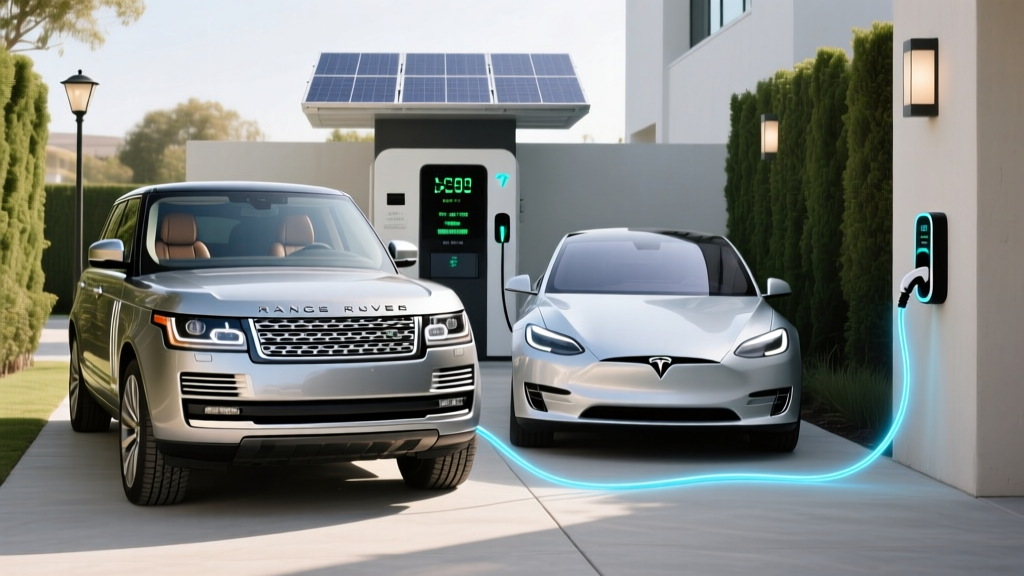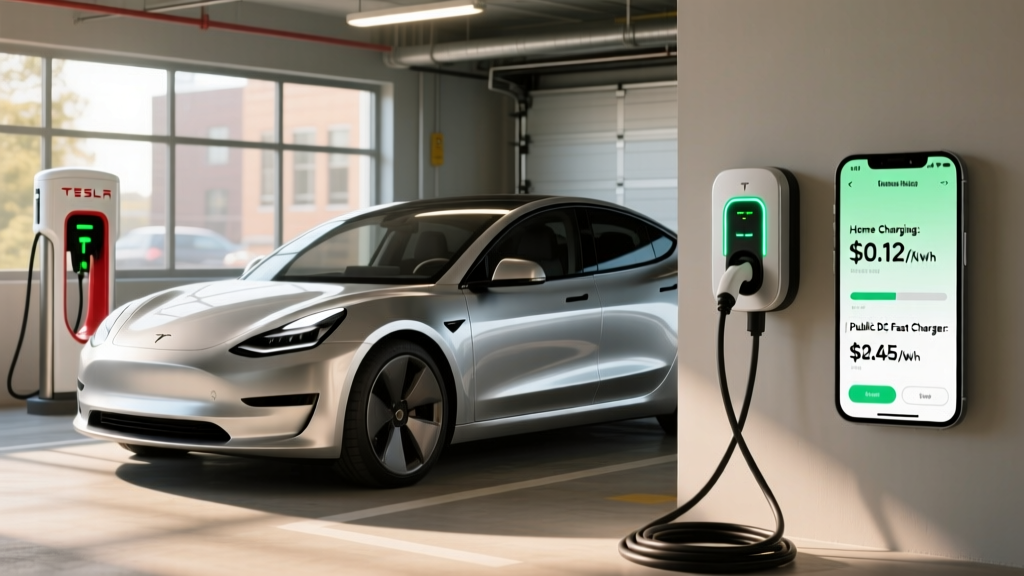
For early Tesla adopters, the phrase free Tesla Supercharger evoked an era of unlimited, no-cost road trips. Tesla's original referral and promotional programs granted lifetime free Supercharging to thousands of Model S and Model X owners. But as the EV market has matured and Tesla's network has expanded to over 60,000 connectors globally, truly free Supercharging has become increasingly rare. If you're shopping for an EV in 2026 or evaluating your charging strategy, understanding the real economics of home vs. public charging — and where free charging still exists — is essential.
This guide breaks down every charging tier, the true cost to install a home Level 2 charger, connector compatibility across brands, and exactly what you'll pay per mile compared to gasoline. We'll also address where free Tesla Supercharger credits still surface and how to maximize your charging savings.
Where Free Tesla Supercharger Credits Still Exist in 2026
Tesla largely discontinued its unlimited free Supercharging promotions after 2019, but a few avenues remain:
- Legacy vehicles: Model S and Model X vehicles sold with transferable free Supercharging (tied to the VIN, not the owner) still receive complimentary charging. These are typically 2017-2019 models and command a premium on the used market.
- Referral credits: Tesla periodically runs referral programs awarding Supercharging miles (e.g., 1,000–5,000 miles of credit) when existing owners refer new buyers. These are limited-time and region-specific.
- Destination and partner chargers: Some hotels, shopping centers, and workplaces offer free Level 2 Tesla Destination Chargers or third-party chargers. These aren't Superchargers but provide complimentary electrons while you're on-site.
- Promotional bundles: Occasionally, Tesla or third-party fleets include limited Supercharger credits (e.g., 10,000 miles over 12 months) with vehicle purchase or lease. Check current offers on Tesla's Supercharger page.
Reality check: If you're buying a new Tesla in 2026, expect to pay for Supercharging. Budget approximately $0.28–$0.48/kWh at DC fast chargers depending on your region and time of day. Free Supercharging is a legacy perk, not a current purchase incentive.
Charging Levels Explained: Speeds, kW, and Real-World Range Added
Before calculating costs, you need to understand the three charging tiers. The critical distinction: kW (kilowatts) measures power — how fast energy flows into your battery. kWh (kilowatt-hours) measures energy — the total capacity of your battery. Think of kW as the width of a hose and kWh as the size of the bucket.
| Level | Voltage | Power (kW) | Miles of Range Added Per Hour | Best For |
|---|---|---|---|---|
| Level 1 (120V) | 120V AC | 1.0–1.4 kW | 3–5 mi/hr | Overnight top-ups, PHEVs, low daily mileage |
| Level 2 (240V) | 240V AC | 7.2–19.2 kW | 20–60 mi/hr | Daily home charging, most BEV owners |
| DC Fast Charging | 400–800V DC | 50–350 kW | 150–1,000+ mi/hr (peak) | Road trips, rapid replenishment |
Important nuance on DC fast charging: Peak kW is not sustained kW. A vehicle advertising "250 kW peak" may only hold that rate for a narrow state-of-charge window (typically 10–30% SoC). Above 80% SoC, charging slows dramatically to protect battery health — this is called the charge curve taper. Always evaluate 10–80% charge times, not peak kW alone.
Real-World Charging Time Examples
Here's what charging looks like for common 2026 battery sizes at each tier:
- 60 kWh battery (e.g., base Tesla Model 3 RWD):
- Level 1 (1.4 kW): 0–100% in ~43 hours
- Level 2 (11.5 kW): 0–100% in ~5.2 hours
- DC Fast (170 kW peak, ~110 kW sustained avg): 10–80% in ~22 minutes
- 82 kWh battery (e.g., Tesla Model Y Long Range):
- Level 2 (11.5 kW): 0–100% in ~7.1 hours
- DC Fast (250 kW peak, ~150 kW sustained avg): 10–80% in ~25 minutes
- 100 kWh battery (e.g., Model S/X, Rivian R1T Max Pack):
- Level 2 (11.5 kW): 0–100% in ~8.7 hours
- DC Fast (250 kW peak): 10–80% in ~30 minutes
Home EV Charger Installation: Costs, Electrical Requirements, and Panel Upgrades
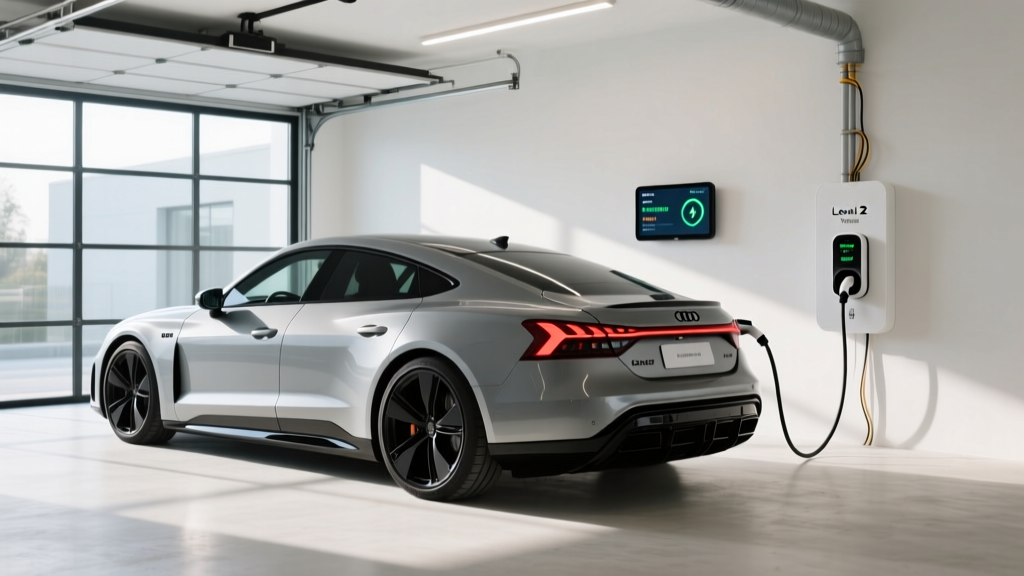
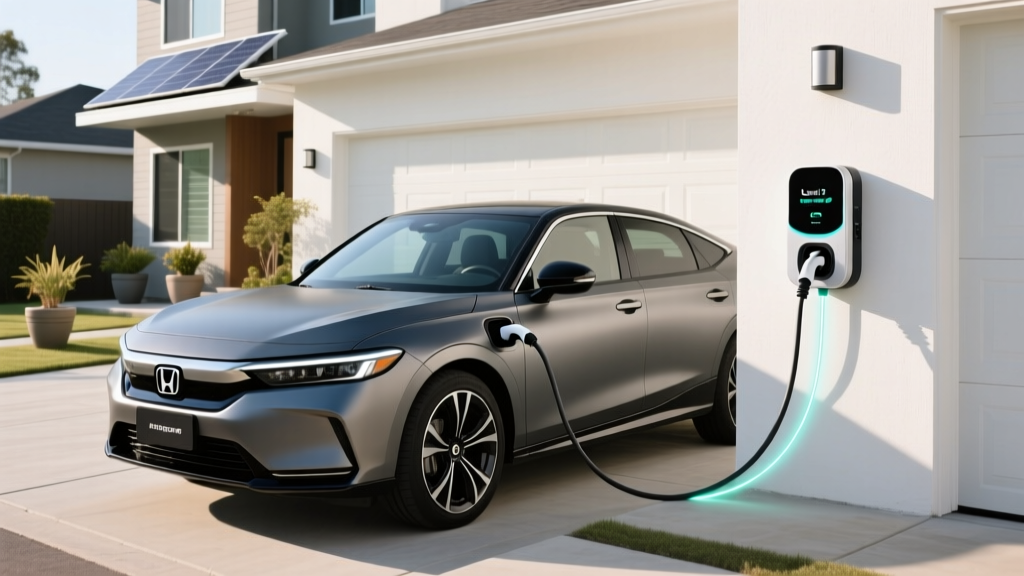
Installing a Level 2 home charger is the single biggest factor in long-term EV ownership satisfaction. Here's what's involved.
Electrical Requirements
A typical Level 2 charger requires a 240V dedicated circuit, similar to what an electric dryer or oven uses. Common configurations:
- 32A circuit (7.7 kW): Requires a 40A breaker (NEC requires circuits rated 125% above continuous load). Suitable for most daily driving needs.
- 40A circuit (9.6 kW): Requires a 50A breaker. Ideal for larger batteries or higher daily mileage.
- 48A circuit (11.5 kW): Requires a 60A breaker. Maximum for most residential hardwired chargers.
- 80A circuit (19.2 kW): Requires a 100A breaker. Available on premium chargers; demands a robust electrical panel (200A+ service).
Do You Need a Panel Upgrade?
This is the most common surprise cost. If your home has a 100A main service panel (common in homes built before the 1990s), adding a 40–60A EV circuit may exceed your panel's capacity. Signs you need an upgrade:
- Main breaker rated at 100A or less
- No open breaker slots
- Existing heavy loads (electric heat, hot tub, double oven) consuming most of your panel's capacity
A panel upgrade to 200A service typically costs $1,500–$3,500 including permit and utility coordination. Homes already on 200A service rarely need an upgrade for a 48A or smaller EV circuit.
Installation Cost Breakdown
| Component | Cost Range | Notes |
|---|---|---|
| Level 2 Charger Equipment | $300–$750 | Varies by power output, cable length, smart features |
| Electrician Labor (standard install) | $500–$1,500 | Short run from panel to garage; longer runs cost more |
| Permit Fees | $50–$250 | Varies by municipality; some waive for EV chargers |
| Electrical Panel Upgrade (if needed) | $1,500–$3,500 | 200A upgrade; not always required |
| Conduit/Wire (long runs, 50+ ft) | $200–$800 | Detached garages or far-from-panel locations |
| Total (no panel upgrade) | $850–$2,500 | Most common scenario |
| Total (with panel upgrade) | $2,350–$6,000 | Older homes with 100A service |
Federal incentive: The IRS Residential Clean Energy Credit (§25D) covers 30% of home EV charger equipment and installation costs, up to $1,000, through 2032. Confirm eligibility with a tax professional — income caps and sourcing rules may apply.
Connector Compatibility: NACS, CCS1, CHAdeMO, and Adapters
The connector landscape shifted dramatically between 2023 and 2026. Here's where things stand:
| Connector | Brands Using It (2026) | Notes |
|---|---|---|
| NACS (North American Charging Standard / Tesla) | Tesla (all models), Ford, GM, Rivian, Volvo, Polestar, Mercedes, BMW, Hyundai, Kia (select 2025+ models) | Now the dominant standard in North America; supports AC and DC on one connector |
| CCS1 (Combined Charging System) | Volkswagen, Audi, Subaru, legacy Hyundai/Kia models, most non-Tesla 2020–2024 EVs | Still widely available; being phased out on new models through 2027 |
| CHAdeMO | Nissan Leaf (discontinued 2025), Mitsubishi Outlander PHEV | Legacy standard; declining infrastructure |
Adapter needs: If you drive a CCS1-equipped EV, you'll need a CCS-to-NACS adapter ($150–$250) to access Tesla Superchargers, which now welcome non-Tesla vehicles at select locations via the Non-Tesla Supercharger program. Tesla owners rarely need adapters since NACS is native and most public networks now offer NACS connectors.
Charging Cost Per Mile: Home vs. Public vs. Gasoline
This is where EV ownership economics become clear. Let's compare real costs using a 2026 Tesla Model Y Long Range (82 kWh battery, EPA 330 miles, ~3.5 mi/kWh efficiency) and a comparable gas SUV (28 MPG combined) at $3.40/gallon.
| Charging Scenario | $/kWh | Cost for Full Charge (82 kWh) | Cost Per Mile | Annual Fuel Cost (12,000 mi) |
|---|---|---|---|---|
| Home (off-peak utility rate) | $0.08–$0.14 | $6.56–$11.48 | $0.02–$0.03 | $240–$360 |
| Home (standard residential avg) | $0.15–$0.20 | $12.30–$16.40 | $0.04–$0.05 | $480–$600 |
| Public Level 2 (workplace/mall) | $0.20–$0.35 | $16.40–$28.70 | $0.05–$0.08 | $600–$960 |
| DC Fast Charging (Supercharger/Electrify America) | $0.28–$0.48 | $22.96–$39.36 | $0.07–$0.11 | $840–$1,320 |
| Gasoline (28 MPG @ $3.40/gal) | N/A | N/A | $0.12 | $1,440 |
The takeaway: Home charging at off-peak rates saves $1,000–$1,200/year vs. gasoline. Even exclusive DC fast charging is typically cheaper per mile than gas — but you sacrifice the convenience and cost advantage that makes EVs compelling. The free Tesla Supercharger dream, if you have it, essentially makes road-trip charging free while home charging remains your cheapest daily option.
For the latest EPA efficiency data and MPGe ratings across all EVs, consult fueleconomy.gov.
Best Home Level 2 Chargers for 2026: Equipment Recommendations
Here are our tested picks for home Level 2 chargers across key use cases, with exact specs:
Tesla Wall Connector (Gen 4)
- Power Output: Up to 11.5 kW (48A)
- Connector: NACS (native Tesla); J1772 adapter included
- Cable Length: 24 ft
- Smart Features: Wi-Fi, OTA updates, power sharing (pair up to 6 units on one circuit), load management
- Price: $475
- Best for: Tesla owners, multi-EV households, those wanting native NACS without adapters
ChargePoint Home Flex (NACS version)
- Power Output: Up to 12 kW (50A) configurable
- Connector: NACS or J1772 (select at purchase)
- Cable Length: 23 ft
- Smart Features: Wi-Fi, app scheduling, Alexa integration, energy tracking
- Price: $599
- Best for: Non-Tesla EVs transitioning to NACS, smart home integration
Emporia Vue Level 2 Charger
- Power Output: Up to 11.5 kW (48A)
- Connector: J1772 (CCS via adapter)
- Cable Length: 24 ft
- Smart Features: Wi-Fi, energy monitoring, solar integration, budget-friendly app
- Price: $399
- Best for: Budget-conscious buyers, solar-panel households, CCS1 EVs
Grizzl-E Smart (United Chargers)
- Power Output: Up to 10 kW (40A)
- Connector: J1772 or NACS (select at purchase)
- Cable Length: 24 ft
- Smart Features: OCPP-compatible, adjustable amperage, extreme-weather rated (-40°F to 122°F)
- Price: $499
- Best for: Cold-climate installations, outdoor mounting, commercial OCPP fleet use
Safety, Electrical Code, and Installation Best Practices
EV chargers draw sustained high current for hours — this isn't like plugging in a lamp. Proper installation protects your home and your vehicle:
- Dedicated circuit: Your EV charger must have its own breaker — never share a circuit with other appliances.
- GFCI protection: NEC 2023 (and most 2026 local adoptions) requires GFCI protection for outdoor receptacles and many indoor EV installations. Hardwired chargers may have built-in GFCI; plug-in units require a GFCI breaker.
- Outdoor rating: If mounting outdoors, ensure the charger carries a NEMA 4 (or IP65+) weatherproof rating. All units listed above meet this standard.
- Permit and inspection: Most jurisdictions require an electrical permit and post-installation inspection. Skipping this risks insurance denial in the event of a fire.
- Use a licensed electrician: While some jurisdictions allow homeowner DIY electrical work, a 240V/40A+ circuit demands professional installation. Errors here can cause fires or void your charger's warranty.
Frequently Asked Questions
How much does it cost to install a home EV charger?
Most standard installations (no panel upgrade, short wire run) cost $850–$2,500 including equipment, electrician labor, and permit. If your home needs a 200A panel upgrade, total costs rise to $2,350–$6,000. The federal §25D tax credit covers 30% of equipment and installation up to $1,000.
How fast will each charging level add range?
Level 1 (120V) adds 3–5 miles per hour. Level 2 (240V, 48A) adds 35–45 miles per hour depending on vehicle efficiency. DC fast charging at 150–250 kW can add 150–300+ miles in 20–30 minutes, though speeds taper significantly above 80% SoC.
Which connector/charger is compatible with my EV?
Check your vehicle's charge port. New 2025–2026 models from Tesla, Ford, GM, Rivian, Volvo, and others use NACS. Older non-Tesla EVs typically use CCS1. CHAdeMO is legacy (Nissan Leaf). If your EV has CCS1, a $150–$250 CCS-to-NACS adapter unlocks Tesla Supercharger access at participating stations.
How much does charging cost per mile vs. gas?
Home charging at off-peak rates costs approximately $0.02–$0.03/mile. Public DC fast charging costs $0.07–$0.11/mile. A comparable gas vehicle at 28 MPG and $3.40/gallon costs $0.12/mile. Home charging saves $1,000+ annually for a 12,000-mile driver.
What electrical upgrades might I need?
If your home has a 100A main panel or no open breaker slots, you'll likely need a panel upgrade to 200A ($1,500–$3,500). Homes with 200A service and available breaker space rarely need upgrades for a standard 48A EV charger. A licensed electrician can perform a load calculation to determine your panel's remaining capacity.
Is a free Tesla Supercharger still worth seeking out?
If you can acquire a vehicle with transferable free Supercharging or earn referral credits, the value is real — roughly $0.28–$0.48/kWh saved per session. However, don't pay a steep premium on the used market solely for this perk. Calculate your actual road-trip mileage: if you drive 5,000+ highway miles annually and rely on Superchargers, the savings offset a modest purchase premium. For most buyers, investing in a home Level 2 charger delivers far greater long-term value.