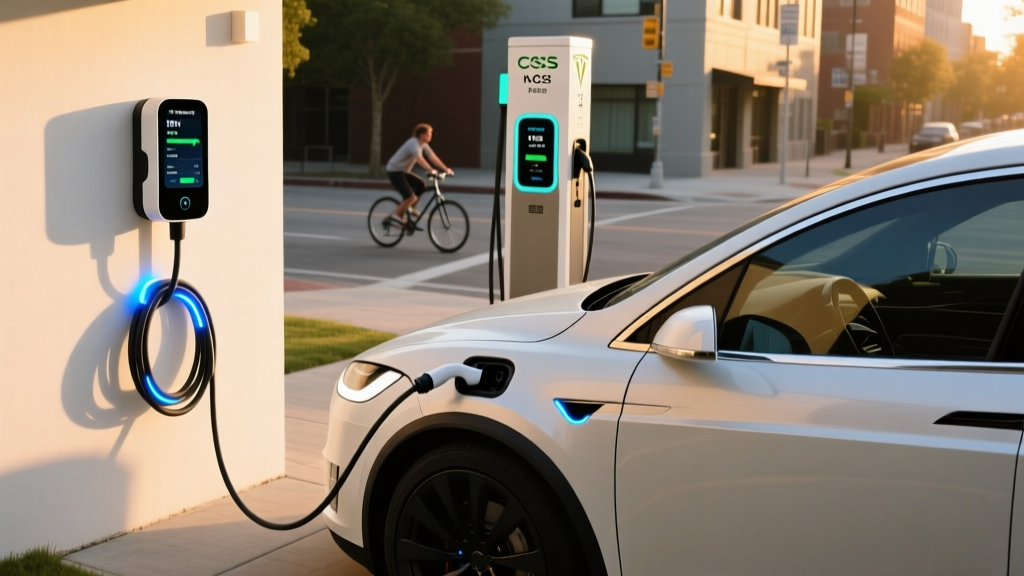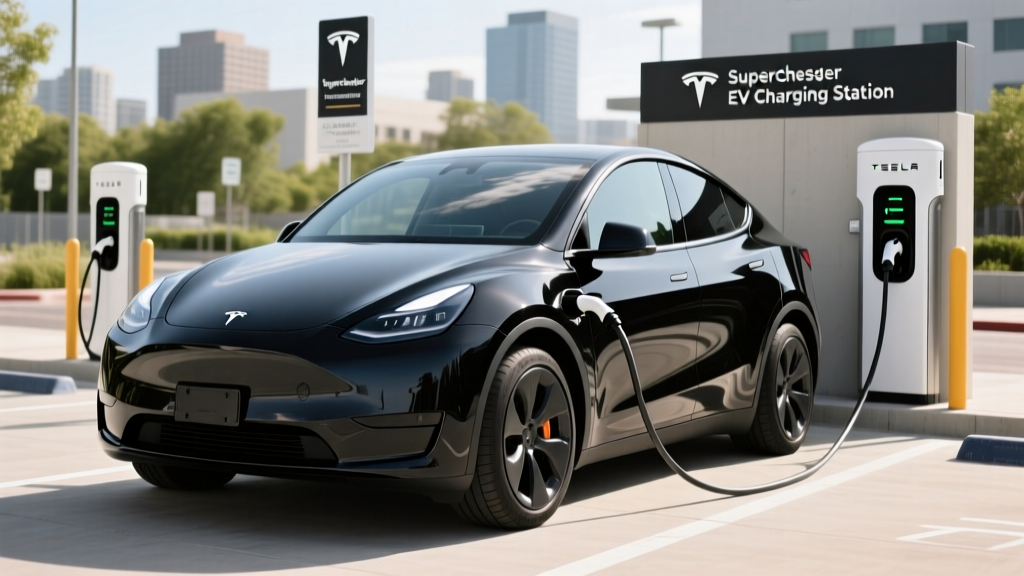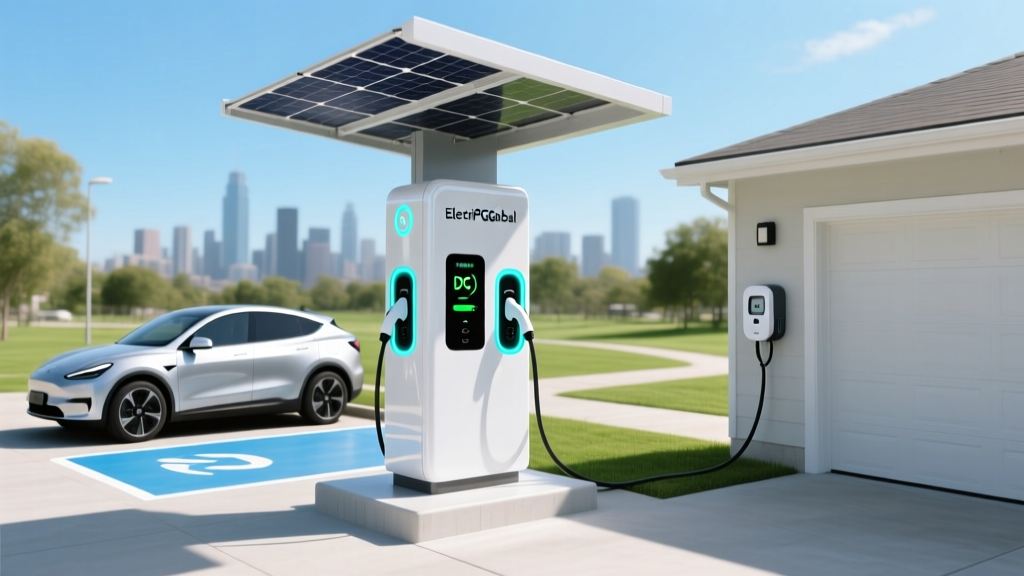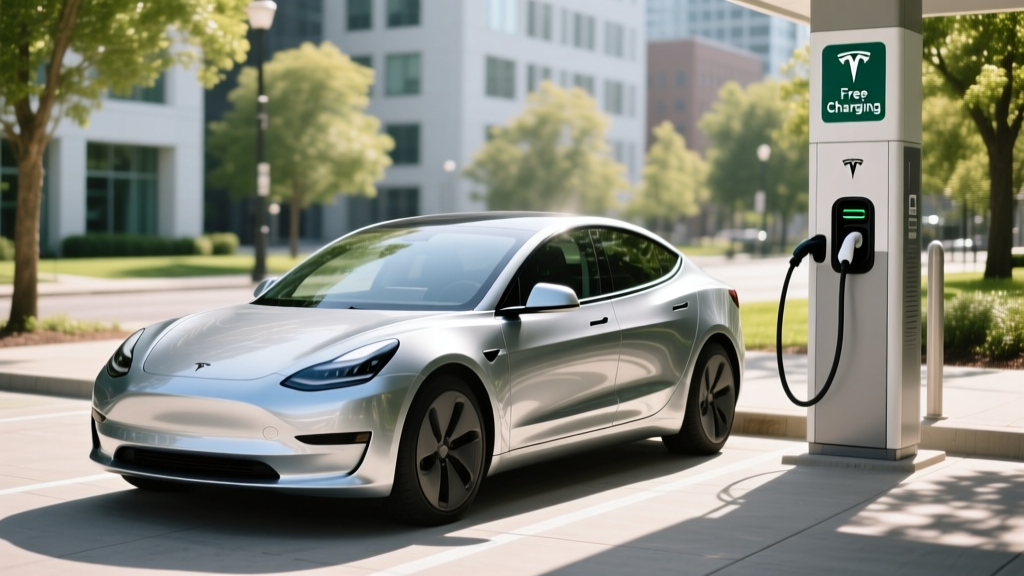
If you own a Tesla—or any EV with a NACS port—you've likely searched for free Tesla charging stations at some point. While Tesla's Supercharger network is famously reliable (and almost never free), complimentary charging still exists in specific scenarios: destination chargers at hotels, promotional credits from Tesla referrals, workplace charging perks, and select retail locations. But relying on free public charging is a strategy with an expiration date. The real long-term play is understanding your full charging ecosystem: home Level 2, public DC fast charging, and what each actually costs per mile.
This guide breaks down where free Tesla charging still exists in 2026, then pivots to what matters more—building a charging setup that keeps your cost per mile under $0.05 and your departure state of charge at 90%+ every morning.
Where Free Tesla Charging Stations Still Exist in 2026
Let's address the keyword directly. Free Tesla charging falls into four buckets, each with real limitations:
- Tesla Destination Chargers at hotels and resorts: Many hospitality venues install Wall Connectors (Level 2, typically 11.5 kW / 48A) as a guest amenity. You'll find these at select Marriott, Hilton, and boutique properties. The catch: they're slow (adding ~30–44 miles per hour), often limited to guests, and availability is first-come-first-served. Search Tesla's Find Us map and filter by "Destination Charging."
- Referral and promotional credits: Tesla periodically offers Supercharger credits through referral programs, trade-in promotions, or new-vehicle delivery incentives. These are time-limited, account-specific, and not a permanent infrastructure strategy.
- Workplace and municipal chargers: Some employers, universities, and city parking structures offer free Level 2 charging as an employee or resident perk. These are typically J1772 or NACS connectors at 7.2–19.2 kW.
- Retail and grocery store chargers: Stores like Target, Whole Foods, and some shopping centers host free or validated charging—often via networks like ChargePoint or EVgo with a 1–2 hour time limit.
The reality? Free public charging is opportunistic, not foundational. The average Tesla owner does 80–90% of their charging at home. Let's build that foundation.
Charging Levels Explained: Speeds, kW, and Miles Per Hour
Before you buy equipment or call an electrician, you need clarity on the three charging levels. The critical distinction: kW (kilowatts) measures power—how fast energy flows into your car. kWh (kilowatt-hours) measures energy—the total capacity of your battery. A 75 kWh battery charged at 11.5 kW takes roughly 6.5 hours from 0–100% (minus taper losses).
| Level | Voltage / Amps | Power (kW) | Miles Added Per Hour | Best For |
|---|---|---|---|---|
| Level 1 (120V) | 120V / 12A | ~1.4 kW | 3–5 mi/hr | Overnight top-off, PHEVs, emergencies |
| Level 2 (240V) | 240V / 32–48A | 7.7–11.5 kW | 25–44 mi/hr | Daily home charging (the standard) |
| DC Fast Charge | 400–800V DC | 50–350 kW | 150–1,000+ mi/hr | Road trips, rapid top-ups |
For context, a Tesla Model Y Long Range with an ~81 kWh usable battery charging at 11.5 kW (48A Level 2) adds roughly 44 miles of range per hour—enough to go from 20% to 80% in about 4.5 hours overnight. On a V3 Supercharger peaking at 250 kW, that same 10–80% session takes approximately 25–30 minutes, though the charge curve tapers significantly above 60% state of charge.
Home Charger Installation: Electrical Requirements and Real Costs
This is where most EV buyers underestimate complexity. A Level 2 home charger isn't plug-and-play unless you already have a 240V outlet (like a NEMA 14-50 for a dryer or range). Here's what a proper installation actually requires:
- Dedicated 240V circuit: A 48A charger requires a 60A breaker (EVSE continuous-load rule: breaker must be rated 125% of the charger's max amperage). A 40A charger needs a 50A breaker.
- Wire gauge: 6 AWG copper for 60A circuits; 8 AWG for 50A. Longer runs (over 50 feet from panel) may require 4 AWG to prevent voltage drop.
- GFCI protection: NEC 2020 and later require GFCI breakers for EV charging circuits in garages—a $50–$120 adder.
- Permit and inspection: Most jurisdictions require an electrical permit ($50–$200) and a post-install inspection to close the permit.
- Panel capacity check: A licensed electrician will calculate your panel's available amperage. If you have a 100A panel already running near capacity (electric range, dryer, HVAC), adding a 60A EV circuit may require a panel upgrade to 200A—a significant cost driver.
| Component | Low Estimate | High Estimate | Notes |
|---|---|---|---|
| Level 2 EVSE (charger unit) | $350 | $700 | 40A–48A smart charger; Wi-Fi enabled |
| Electrical labor | $300 | $1,200 | Depends on run length, wall type, conduit |
| Materials (wire, conduit, breaker) | $100 | $400 | 6 AWG copper, PVC/EMT conduit |
| Permit and inspection | $50 | $200 | Varies by municipality |
| Panel upgrade (if needed) | $1,500 | $3,500 | 100A → 200A service upgrade |
| Total (no panel upgrade) | $800 | $2,500 | Typical for most homes with 200A panel |
| Total (with panel upgrade) | $2,300 | $6,000 | Older homes, high-load panels |
The federal Alternative Fuel Vehicle Refueling Property Credit (IRS Form 8911) can cover up to 30% of home charger equipment and installation costs, capped at $1,000—but only if you live in an eligible census tract. Check the IRS guidance for current-year qualification maps, as these change annually.
Connector Compatibility: NACS, CCS, and What Adapters You Need
The North American Charging Standard (NACS)—Tesla's connector, now adopted industry-wide—has effectively won the connector war. But in 2026, the transition is still in progress, and adapter needs depend on your vehicle's model year and charge port.
| Connector | Brands Using It (Native) | Adapter Needed For | Notes |
|---|---|---|---|
| NACS (Tesla) | Tesla (all years), Ford (2025+), GM (2025+), Rivian (2025+), Hyundai/Kia (2026+) | CCS1 vehicles via CCS-to-NACS adapter (~$200–$350) | Access to Tesla Supercharger network + growing third-party NACS stations |
| CCS1 | VW ID.4 (pre-2026), BMW iX, older Ford/GM EVs | NACS vehicles via NACS-to-CCS adapter (~$200) | Access to Electrify America, EVgo CCS stalls |
| CHAdeMO | Nissan Leaf (legacy) | Limited adapter options | Network shrinking; not recommended for new buyers |
If you drive a 2024 or earlier non-Tesla EV with CCS, you can purchase a NACS-to-CCS adapter from Tesla, Ford, or Lectron to access Superchargers. Verify your vehicle's manufacturer has approved the specific adapter—some early CCS vehicles require firmware updates for safe NACS handshake protocols.
Charging Cost Per Mile: Home vs. Public vs. Gas
This is where EV ownership economics become undeniable—or complicated, depending on your utility rate. The national average residential electricity rate sits around $0.17/kWh in early 2026 (EIA data), but time-of-use (TOU) plans can drop off-peak rates to $0.08–$0.12/kWh overnight.
| Scenario | Rate | Vehicle Efficiency | Cost Per Mile |
|---|---|---|---|
| Home off-peak (TOU plan) | $0.10/kWh | 3.5 mi/kWh (Model Y) | $0.029 |
| Home standard rate | $0.17/kWh | 3.5 mi/kWh (Model Y) | $0.049 |
| Public Level 2 (ChargePoint, etc.) | $0.25–$0.39/kWh | 3.5 mi/kWh | $0.071–$0.111 |
| DC Fast (Tesla Supercharger) | $0.28–$0.42/kWh | 3.5 mi/kWh | $0.080–$0.120 |
| DC Fast (Electrify America) | $0.35–$0.55/kWh | 3.5 mi/kWh | $0.100–$0.157 |
| Gas vehicle (28 MPG combined) | $3.30/gallon | 28 mi/gal | $0.118 |
At home off-peak rates, a Tesla Model Y costs roughly $0.03/mile to fuel—about 75% cheaper than a 28 MPG gas car. Even on a standard residential rate with no TOU optimization, you're at $0.05/mile, roughly half the gas cost. Public DC fast charging erodes this advantage significantly; a road trip relying solely on Superchargers at $0.38/kWh pushes your cost to ~$0.11/mile, nearly matching gasoline.
This is the core argument for home charging: it's not just convenience, it's a 60–75% fuel cost reduction that compounds over 12,000–15,000 annual miles.
Equipment Recommendations: Best Level 2 Chargers for 2026
Not all Level 2 chargers are equal. Here are three proven options, selected for reliability, smart features, and NACS compatibility:
Tesla Wall Connector (Gen 3)
- Power Output: 11.5 kW (48A) on a 60A circuit
- Connector: Native NACS
- Cable Length: 24 feet
- Smart Features: Wi-Fi, OTA updates, load sharing (up to 6 units on one circuit), power-sharing for multi-EV homes
- Price: ~$475
- Best For: Tesla owners, NACS-equipped Ford/GM/Rivian vehicles
ChargePoint Home Flex
- Power Output: Up to 12 kW (50A) on a 60A circuit; configurable down to 16A for lower-capacity panels
- Connector: NACS (2025+ models) or J1772 with NACS adapter
- Cable Length: 23 feet
- Smart Features: Wi-Fi, Alexa integration, detailed session tracking, flexible amperage dial
- Price: ~$550–$650
- Best For: Multi-EV households, panel-limited installations
Emporia Level 2 EV Charger
- Power Output: 11.5 kW (48A) on a 60A circuit
- Connector: NACS or J1772 (configurable)
- Cable Length: 24 feet
- Smart Features: Wi-Fi, solar integration (pairs with Emporia Vue energy monitor), scheduled charging, load management
- Price: ~$400
- Best For: Budget-conscious buyers, solar-panel homes
Safety, Code, and Common Installation Mistakes
A Level 2 charger pulls continuous current for hours—this is fundamentally different from a dryer or oven that cycles on and off. The National Electrical Code (NEC) treats EV charging as a continuous load, meaning the circuit breaker must be rated at 125% of the charger's maximum amperage. A 48A charger demands a 60A breaker; a 32A charger needs a 40A breaker. Never undersize the breaker.
Key code and safety requirements:
- Dedicated circuit: Your EV charger must have its own dedicated circuit—no sharing with other appliances.
- GFCI protection: Required for all 240V EV circuits in garages and outdoor locations per NEC 2020+.
- Outdoor rating: If mounting outside, the EVSE must carry a NEMA 4 or IP65 rating for weather resistance.
- Cable management: Use a wall-mounted holster or cable retractor to prevent tripping hazards and cord damage.
- Panel load calculation: Your electrician should perform a NEC Article 220 load calculation before installing. If your existing loads exceed 80% of panel capacity with the EV circuit added, a panel upgrade is mandatory—not optional.
The most common mistake? Homeowners buying a 48A charger and plugging it into a NEMA 14-50 outlet rated for only 40A continuous. The outlet will overheat. Either hardwire the charger (preferred for 48A units) or use a 40A charger with a 14-50 plug.
Frequently Asked Questions
How much does it cost to install a home EV charger?
A typical Level 2 home charger installation runs $800–$2,500 when your electrical panel has sufficient capacity. This includes the charger unit ($350–$700), electrician labor ($300–$1,200), materials ($100–$400), and permit fees ($50–$200). If your home needs a panel upgrade from 100A to 200A service, add $1,500–$3,500, bringing the total to $2,300–$6,000. Older homes built before 1990 are more likely to need this upgrade.
How fast will each charging level add range?
Level 1 (120V) adds 3–5 miles per hour—suitable only for PHEVs with small batteries or overnight trickle-charging. Level 2 (240V at 48A / 11.5 kW) adds 35–44 miles per hour for most EVs, fully replenishing a 75–85 kWh battery overnight. DC fast charging at 150–250 kW adds 150–400+ miles per hour in peak conditions, though charge curves taper above 60–80% SoC, so real-world 10–80% sessions take 18–35 minutes depending on the vehicle and charger.
Which connector/charger is compatible with my EV?
All Tesla vehicles use the native NACS connector. For 2025+ models from Ford, GM, Rivian, and 2026+ Hyundai/Kia EVs, NACS is also native. Pre-2025 non-Tesla EVs typically use CCS1 and require a NACS-to-CCS adapter (~$200–$350) to access Tesla Superchargers. CHAdeMO (Nissan Leaf) is a legacy standard with declining infrastructure. Check your vehicle's charge port or owner's manual to confirm, and verify adapter compatibility with your automaker before purchasing.
How much does charging cost per mile vs. gas?
Home charging on an off-peak TOU plan costs approximately $0.03/mile for a Tesla Model Y (3.5 mi/kWh at $0.10/kWh). On a standard residential rate ($0.17/kWh), that rises to ~$0.05/mile. A comparable 28 MPG gas car at $3.30/gallon costs ~$0.12/mile. Public DC fast charging at $0.35–$0.45/kWh costs $0.10–$0.13/mile—roughly matching gasoline. The savings case for EVs depends heavily on access to affordable home charging.
What electrical upgrades might I need?
If your home has a 200A electrical panel with available capacity, you likely need only a new dedicated 60A breaker and wiring run—no upgrade required. If you have a 100A panel, or a 200A panel already running high loads (electric heat, pool equipment, dual EVs), your electrician's load calculation may require a panel upgrade to 200A or even 400A service. This adds $1,500–$3,500+ to your installation. Homes built before 1990, those with original panels, or those that have added major electric appliances over the years are the most likely candidates.