For early Tesla adopters, free Supercharging for Tesla vehicles was the ultimate perk — unlimited long-distance travel at zero cost. But as Tesla has phased out transferable free Supercharging credits on most used and new models, the economics of EV charging have shifted firmly toward home Level 2 setups and pay-per-use public networks. If you're shopping for a Tesla in 2026 — or any EV with a NACS connector — understanding the real cost structure of charging is essential before you buy.
This guide breaks down exactly what free Supercharging means today, how home and public charging compare on cost and speed, and what you'll actually spend to keep an EV fueled. All figures reflect 2026 pricing, network availability, and equipment.
The Truth About Free Supercharging for Tesla in 2026
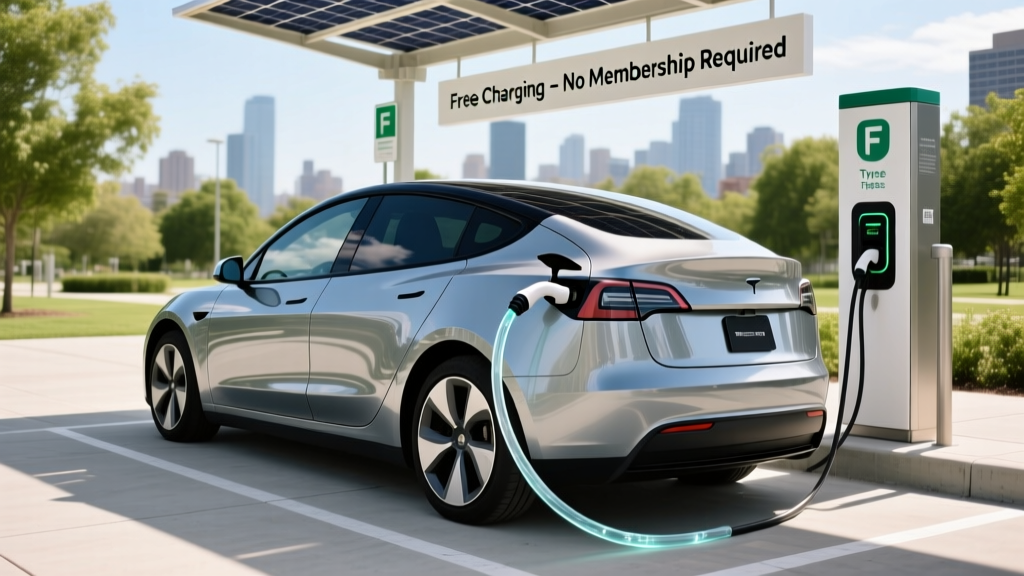
Tesla's free unlimited Supercharging program was largely discontinued for new vehicle purchases after 2019. Today, free Supercharging exists in three narrow forms:
- Legacy vehicles: Some 2017–2019 Model S and Model X units retain non-transferable free Supercharging tied to the original owner. Once the car is sold, the benefit typically expires.
- Promotional referrals: Tesla occasionally offers limited-time free Supercharging credits (e.g., 10,000 miles) through referral programs or end-of-quarter promotions. These are time-bound and mileage-capped.
- Employer or destination charging: Some workplaces, hotels, and shopping centers offer complimentary Level 2 or Destination Charger access — not Supercharging, but effectively free electrons.
For the vast majority of 2026 Tesla buyers — whether purchasing a new Model 3, Model Y, Cybertruck, or a used Tesla — you should budget for paid charging. Supercharger rates in 2026 average $0.28–$0.48 per kWh depending on location, time of day, and whether you're a Tesla owner or driving a non-Tesla EV on the now-open network.
Charging Levels Explained: Speed, Power, and Range Added
Before comparing costs, you need to understand the three charging levels and what they deliver. A critical distinction: kW (kilowatts) measures power — the rate at which energy flows into your battery. kWh (kilowatt-hours) measures energy — the total capacity of your battery, like gallons in a gas tank. Never confuse the two.
| Level | Voltage | Power (kW) | Miles of Range Added per Hour | Best Use Case |
|---|---|---|---|---|
| Level 1 | 120V AC | 1.0–1.9 kW | 3–5 miles | Overnight top-off, PHEVs, emergencies |
| Level 2 | 240V AC | 7.2–19.2 kW | 20–60 miles | Daily home charging, workplace |
| DC Fast Charging | 400–800V DC | 50–350 kW | 150–1,200+ miles (equivalent rate) | Road trips, rapid top-ups |
For context, a Tesla Model Y Long Range with an 82 kWh usable battery charging at a Level 2 rate of 11.5 kW (48A) will add roughly 37 miles of range per hour. A full 10–80% charge at that rate takes approximately 5 hours. On a V3 Supercharger peaking at 250 kW, that same 10–80% session takes roughly 25–28 minutes, though the charge curve tapers significantly above 60% state of charge (SoC) to protect battery health.
Home EV Charger Installation: Costs, Electrical Requirements, and Gotchas
Home Level 2 charging is where most EV owners do 80–90% of their charging — and where the economics overwhelmingly favor electrification. But installation costs vary dramatically based on your home's electrical infrastructure.
Electrical Requirements for Level 2 Charging
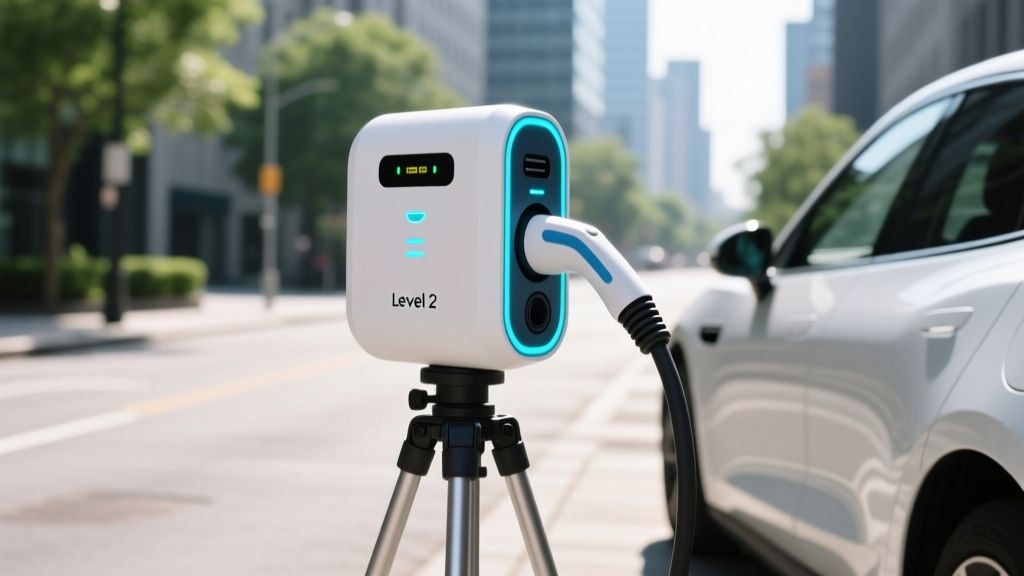
A typical Level 2 home charger requires a 240V dedicated circuit, similar to what powers an electric dryer or oven. Common configurations:
- 40-amp circuit / 32A continuous charge: Delivers 7.7 kW — adequate for most overnight charging of 60–82 kWh batteries.
- 50-amp circuit / 40A continuous: Delivers 9.6 kW — the sweet spot for most homes, fully replenishing a Model Y overnight.
- 60-amp circuit / 48A continuous: Delivers 11.5 kW — Tesla Wall Connector maximum, ideal for larger batteries like the Cybertruck (123 kWh usable) or F-150 Lightning Extended Range (131 kWh usable).
Panel Upgrade: The Hidden Cost
Many homes built before 2000 have 100-amp electrical panels. Adding a 50-amp EV circuit may push total load beyond panel capacity, requiring an upgrade to 200 amps. This is the single biggest variable in installation cost and can add $1,500–$4,000+ to the project. A licensed electrician will perform a load calculation before recommending a circuit size.
| Component | Typical Cost Range | Notes |
|---|---|---|
| Level 2 Charger (hardwired) | $350–$750 | Smart chargers with Wi-Fi/app at higher end |
| Electrician labor (standard install) | $500–$1,500 | Depends on run length from panel to garage |
| Electrical permit | $50–$200 | Required in most jurisdictions |
| Panel upgrade (if needed) | $1,500–$4,000 | 100A to 200A service upgrade |
| Conduit/wiring (long runs) | $200–$800 | Runs over 50 ft from panel add cost |
| Total (no panel upgrade) | $900–$2,450 | Most typical scenario |
| Total (with panel upgrade) | $2,400–$6,550 | Older homes, high-load panels |
The federal Residential Clean Energy Credit does not cover EV chargers as of 2026 (the previous §30C alternative fuel infrastructure credit expired for residential use). However, many utilities and state programs offer rebates of $200–$1,000 for Level 2 equipment and installation. Check your local utility's EV program page before purchasing.
Safety and Code Considerations
- Dedicated circuit: NEC Article 625 requires EV charging equipment to be on its own dedicated circuit — no sharing with other outlets or appliances.
- GFCI protection: 2020 and later NEC editions require GFCI protection for all EV receptacles (NEMA 14-50 or 6-50). Hardwired chargers with built-in ground-fault protection may exempt the circuit from additional GFCI breakers in some jurisdictions.
- Outdoor rating: If your charger is mounted outdoors (carport, driveway), ensure the unit carries a NEMA 4 or NEMA 4X rating for weather resistance.
- Cable management: Trip hazards from charging cables violate code in walkway areas. Wall-mounted cable organizers or retractors keep installations compliant and tidy.
Connector Compatibility: NACS, CCS, and Adapter Realities
As of 2026, the connector landscape has consolidated significantly. Tesla's North American Charging Standard (NACS) has been adopted by nearly every major automaker, but legacy CCS1 vehicles still need adapters for Supercharger access.
| Connector | Brands Using It (2026) | Tesla Supercharger Access | Adapter Needed? |
|---|---|---|---|
| NACS (native) | Tesla, Ford, GM, Rivian, Volvo, Polestar, Mercedes, Nissan (new models) | Yes, direct plug-in | No |
| CCS1 | Hyundai, Kia, BMW, VW, Stellantis (legacy models) | Yes, with Magic Dock or third-party adapter | Yes — CCS-to-NACS adapter ($150–$250) |
| CHAdeMO | Nissan Leaf (legacy), Mitsubishi Outlander PHEV | No | No reliable adapter exists |
Key detail for non-Tesla owners: Tesla has opened select Supercharger locations to CCS-equipped vehicles through the built-in "Magic Dock" adapter at the stall, or via the Tesla app with a purchased NACS adapter. However, not all Supercharger stalls have Magic Dock — availability varies by station, and charging speed may be limited to 150 kW for non-Tesla vehicles at some locations.
Charging Cost Per Mile: Home vs. Public vs. Gas
The single most important economic question for EV buyers: how much does it actually cost to "fill up"? The answer depends entirely on where you charge.
| Charging Scenario | Rate ($/kWh) | Cost to Add 200 Miles (Model Y LR, 3.5 mi/kWh) | Cost Per Mile |
|---|---|---|---|
| Home Level 2 (national avg electricity) | $0.16 | $9.14 | $0.046 |
| Home Level 2 (off-peak TOU rate) | $0.08 | $4.57 | $0.023 |
| Tesla Supercharger V3 (avg 2026) | $0.35 | $20.00 | $0.100 |
| Electrify America / non-Tesla DC fast | $0.48 | $27.43 | $0.137 |
| Gas car (28 MPG combined, $3.40/gal) | — | $24.29 | $0.121 |
10–80% Charging Time Examples (2026 EVs)
| Vehicle | Battery (kWh usable) | Peak DC Fast kW | 10–80% Time | Level 2 (11.5 kW) 10–80% |
|---|---|---|---|---|
| Tesla Model Y Long Range | 82 kWh | 250 kW | ~25–28 min | ~5 hours |
| Tesla Model 3 Long Range | 79 kWh | 250 kW | ~25 min | ~4.8 hours |
| Ford F-150 Lightning Ext. Range | 131 kWh | 150 kW | ~41 min | ~8 hours |
| Hyundai Ioniq 5 (NACS adapter) | 77.4 kWh | 240 kW (CCS station) | ~18 min | ~4.7 hours |
| Chevrolet Silverado EV 4WT | 200 kWh | 350 kW | ~35 min | ~12 hours |
Charge curve reality: Peak kW ratings are sustained only briefly — typically between 10–40% SoC. Above 60%, charge speed tapers to protect battery chemistry. A "250 kW" Supercharger session averages closer to 120–150 kW across the full 10–80% session. Plan road-trip stops around 20–25 minutes, not the theoretical minimum.
Best Level 2 Home Chargers for 2026
Not all Level 2 chargers are equal. Here are the top picks based on power output, build quality, smart features, and connector compatibility — all verified for 2026 availability.
Tesla Wall Connector (Gen 4)
- Power: 11.5 kW (48A) on 60A circuit
- Connector: NACS native
- Cable length: 24 ft
- Smart features: Wi-Fi, OTA updates, Power-Share load balancing between two units, Tesla app integration
- Price: ~$475
- Best for: Tesla-only households, maximum Level 2 speed
ChargePoint Home Flex (NACS version)
- Power: Up to 12 kW (50A) on 60A circuit; adjustable down to 16A
- Connector: NACS (2025+ models) or J1772 with adapter
- Cable length: 23 ft
- Smart features: Wi-Fi, Alexa/Google integration, detailed energy tracking, scheduled charging, NEMA 4 outdoor rating
- Price: ~$649
- Best for: Multi-EV households, renters who may move (flexible amperage)
Emporia Level 2 EV Charger
- Power: 11.5 kW (48A) on 60A circuit
- Connector: J1772 (NACS adapter included with 2025+ units)
- Cable length: 24 ft
- Smart features: Wi-Fi, solar integration with Emporia Vue energy monitor, load management, time-of-use scheduling
- Price: ~$399
- Best for: Solar-panel owners, budget-conscious buyers wanting smart features
Grizzl-E Smart (United Chargers)
- Power: 10 kW (40A) on 50A circuit
- Connector: J1772 or NACS (select at purchase)
- Cable length: 24 ft
- Smart features: Wi-Fi, OCPP compatibility, adjustable amperage via dip switches
- Price: ~$449
- Best for: Extreme cold climates (rated to -40°F), Canadian-built durability
When Public DC Fast Charging Makes Sense (and When It Doesn't)
Public DC fast charging — whether Tesla Superchargers, Electrify America, EVgo, or ChargePoint — is designed for road trips and drivers without home charging access. But relying on it as your primary fueling method carries real trade-offs:
- Cost: At $0.35–$0.48/kWh, exclusive DC fast charging costs 2–3x more than home Level 2 and can approach or exceed gasoline cost per mile for less efficient vehicles.
- Battery health: Frequent DC fast charging accelerates battery degradation. Tesla's own data and independent studies from Recurrent Auto show that vehicles fast-charging more than 3 times per week exhibit 2–5% additional capacity loss over 100,000 miles compared to primarily Level 2-charged vehicles.
- Time: Even at peak speeds, a 10–80% session takes 20–40 minutes. For daily commuting, that's unsustainable versus a 10-second plug-in at home overnight.
- Reliability: While Tesla Superchargers maintain an uptime rate above 99%, non-Tesla networks still experience 10–20% failure rates at some stations according to J.D. Power's 2025 EVX Public Charging Study.
The bottom line: If you're evaluating a Tesla purchase based on the idea of free Supercharging, recalibrate. The real economic win of EV ownership comes from home Level 2 charging at off-peak utility rates — typically $0.02–$0.05 per mile versus $0.10–$0.14 per mile on paid public fast chargers.
Frequently Asked Questions
How much does it cost to install a home EV charger?
A standard Level 2 home charger installation costs between $900 and $2,450 when no panel upgrade is needed. If your home requires a 100A-to-200A electrical panel upgrade, total costs range from $2,400 to $6,550. The charger unit itself runs $350–$750, with electrician labor at $500–$1,500 and permits at $50–$200.
How fast will each charging level add range?
Level 1 (120V) adds 3–5 miles of range per hour. Level 2 (240V) adds 20–60 miles per hour depending on amperage and vehicle acceptance rate. DC fast charging adds the equivalent of 150–1,200+ miles per hour at peak rates, though sessions are measured in minutes, not hours — expect 10–80% in 18–40 minutes depending on the vehicle and charger.
Which connector and charger is compatible with my EV?
All 2026 Tesla vehicles use the native NACS connector. Ford, GM, Rivian, Volvo, and Polestar also ship with NACS as of 2025–2026. Hyundai, Kia, BMW, and VW models still use CCS1 but can access Tesla Superchargers with a CCS-to-NACS adapter ($150–$250). CHAdeMO (Nissan Leaf legacy) has no Supercharger compatibility. For home charging, match your charger's connector to your vehicle or use a certified adapter.
How much does charging cost per mile compared to gas?
Home Level 2 charging at the national average electricity rate of $0.16/kWh costs approximately $0.046 per mile in a Tesla Model Y (3.5 mi/kWh). Off-peak rates drop this to $0.023 per mile. Gas at $3.40/gallon in a 28 MPG vehicle costs $0.121 per mile. Tesla Supercharging at $0.35/kWh costs $0.10 per mile — still cheaper than gas, but the gap narrows.
What electrical upgrades might I need for a home charger?
The most common upgrade is a panel capacity increase from 100A to 200A service, required when your existing panel cannot accommodate a new 40–60A dedicated circuit alongside existing loads. Older homes (pre-1990s), homes with electric heat, or homes already running multiple high-draw appliances (dryer, oven, hot tub) are most likely to need this. A licensed electrician will perform a NEC Article 220 load calculation to determine your panel's available capacity before installation.
Is free Tesla Supercharging transferable when buying a used Tesla?
Generally, no. Free unlimited Supercharging on 2017–2019 Model S/X vehicles is tied to the original owner and VIN. When the vehicle is sold — even through Tesla's own used inventory — the free Supercharging benefit is typically revoked. Some Tesla Certified Pre-Owned vehicles have occasionally been sold with limited-time Supercharging credits, but unlimited free charging on used Teslas is effectively extinct in 2026.
Does frequent Supercharging damage my Tesla's battery?
DC fast charging generates more heat than Level 2 charging, and sustained heat accelerates lithium-ion cell degradation. Tesla's battery management system actively mitigates this through thermal preconditioning and charge-curve tapering. However, data from battery analytics firm Recurrent shows that vehicles relying primarily on DC fast charging lose approximately 2–5% more capacity over 100,000 miles than those charging predominantly on Level 2. For maximum battery longevity, use Supercharging for road trips and Level 2 for daily needs.