The Short Answer on Free Supercharging for Model S
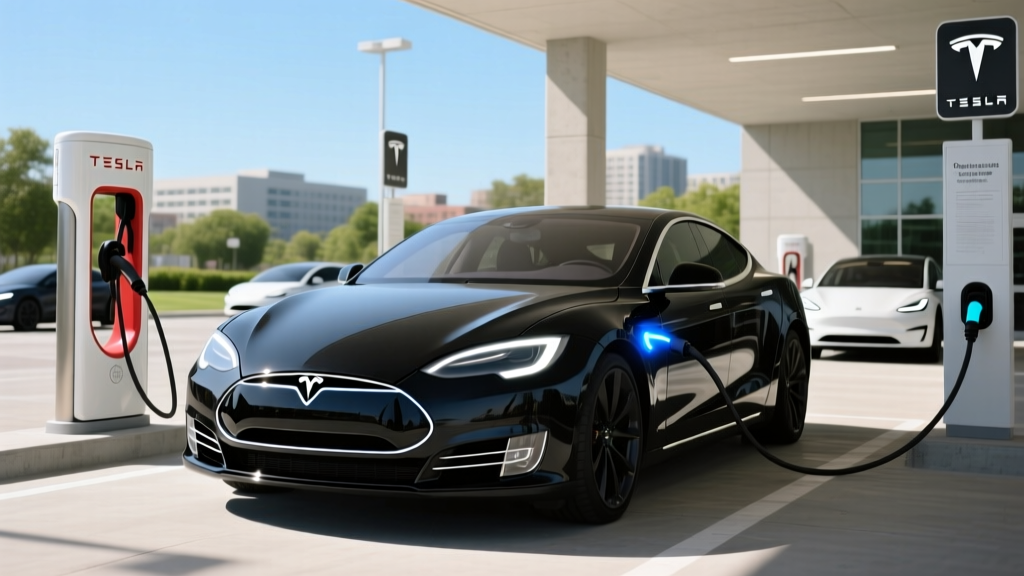
"Free Supercharging" was once Tesla's most powerful sales incentive, but for the 2026 Tesla Model S, the perk is no longer standard. Tesla phased out unlimited free Supercharging for new vehicle orders back in 2017, and the promotional referral credits that replaced it have also been retired. Today, a new 2026 Model S pays the going Supercharger rate at the plug — typically $0.28–$0.48 per kWh in the U.S., varying by location, time of day, and whether the stall is V2 or V4 hardware.
There are, however, three remaining paths to free or heavily discounted Supercharging:
- Legacy transferable credits on pre-2017 Model S vehicles (VIN-bound, occasionally transferable at Tesla's discretion).
- Limited-time promotional credits Tesla occasionally offers on inventory or end-of-quarter pushes — always check Tesla's current offers page before ordering.
- Used Model S purchases from private sellers where the original non-transferable free Supercharging is still attached to the VIN for the life of the car.
For everyone else, the real ownership-economics story is home Level 2 charging, where electricity costs a fraction of public DC fast rates. Below, we cover what it actually costs to charge a Model S today — at home, on the road, and at the Supercharger — plus what you need to install a proper home setup.
Charging Levels Explained: Speed, Power, and Range Added
Before comparing costs, let's lock down the three charging tiers every EV owner needs to understand. Power is measured in kW (how fast energy flows), while battery capacity is measured in kWh (how much energy the pack holds). The 2026 Model S Long Range carries roughly a 100 kWh usable battery pack.
| Level | Voltage / Current | Max Power (kW) | Miles of Range per Hour | Typical Use Case |
|---|---|---|---|---|
| Level 1 (120V) | 120V / 12–16A | 1.4–1.9 kW | 3–5 mi/hr | Emergency / overnight trickle |
| Level 2 (240V) | 240V / 32–80A | 7.7–19.2 kW | 25–55 mi/hr | Daily home & workplace |
| DC Fast (Supercharger V3/V4) | 400V+ DC | 150–250 kW | ~700–1,000+ mi/hr (peak) | Road trips, rapid top-ups |
The 2026 Model S can accept up to 250 kW at a V3 or V4 Supercharger. In real-world testing, a 10–80% charge takes roughly 25–30 minutes, with the charge curve tapering sharply above 80% SoC to protect the battery. Plan to unplug at 80% on road trips — the last 20% can take as long as the first 80%.
How Much Does Supercharging Actually Cost in 2026?
For a 2026 Model S without legacy free credits, Supercharger pricing is metered per kWh in most U.S. states (some older stations still bill per minute). Expect:
- Off-peak Supercharger: $0.25–$0.32/kWh
- Peak Supercharger: $0.38–$0.48/kWh
- Idle fees: $0.50–$1.00/minute if you stay plugged in past full charge at a busy station
Filling the Model S's 100 kWh pack from 10–80% at $0.35/kWh average costs roughly $24.50 and adds about 230 miles of real-world range (EPA rates the 2026 Model S Long Range at ~402 miles, but expect ~340–360 miles on mixed highway driving at 75 mph).
Cost Per Mile: Model S vs Gas Sedan
| Scenario | Cost per kWh / Gallon | Cost per Mile |
|---|---|---|
| Home charging (national avg $0.16/kWh) | $0.16/kWh | $0.046 |
| Home off-peak TOU ($0.09/kWh) | $0.09/kWh | $0.026 |
| Supercharger avg ($0.35/kWh) | $0.35/kWh | $0.10 |
| Gas sedan (30 MPG, $3.50/gal) | $3.50/gal | $0.117 |
| Gas sedan (25 MPG, $3.50/gal) | $3.50/gal | $0.14 |
The math is clear: home-charged Model S driving costs one-third to one-quarter what a comparable gas sedan costs per mile. Even exclusive Supercharger use roughly matches a 30 MPG gas car — and beats any car under 28 MPG.
Home Charger Installation: What You'll Really Pay
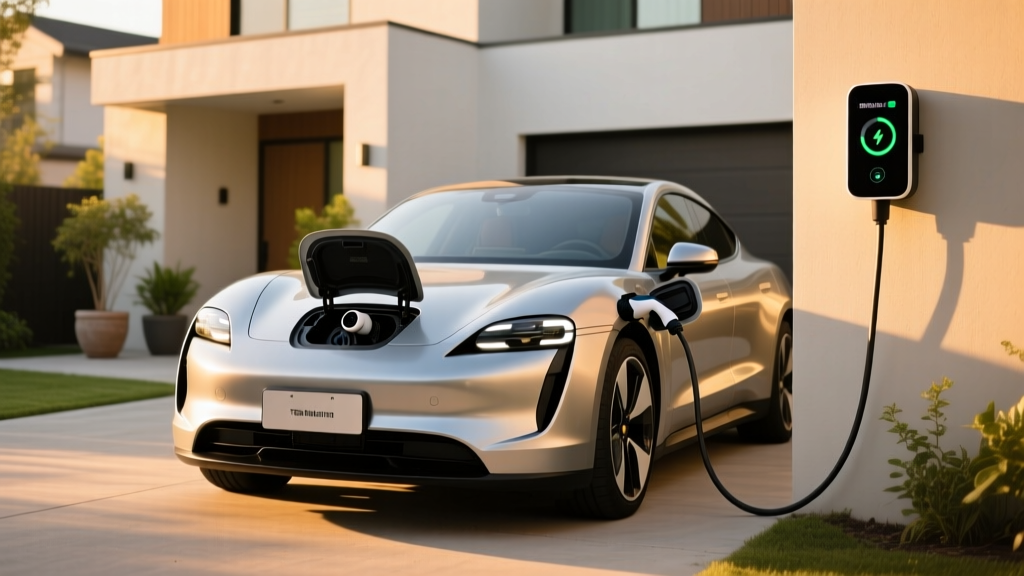
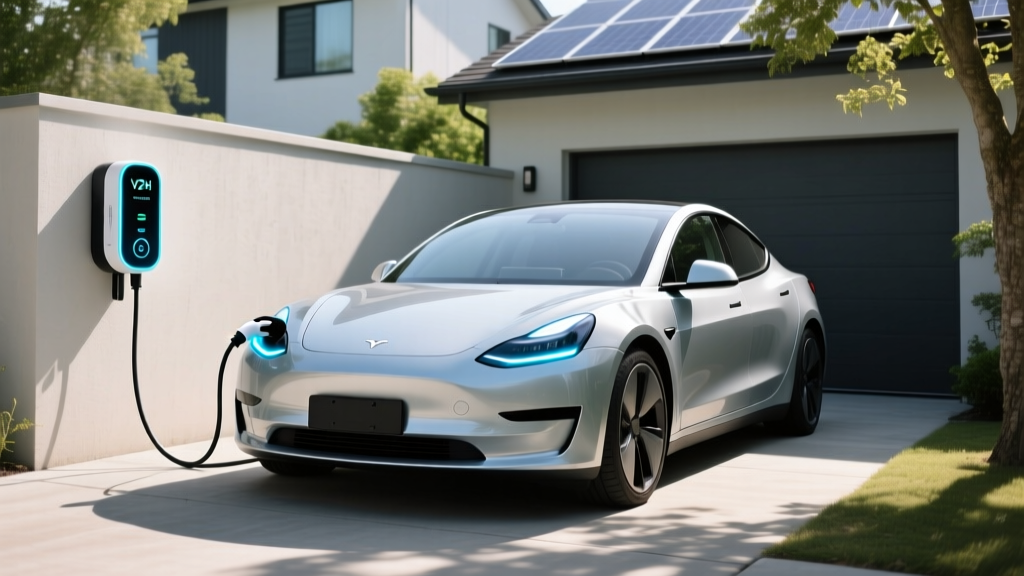
To unlock those low home-charging costs, you need a properly installed Level 2 station. The Tesla Wall Connector is the natural pick for Model S owners, but the installation cost depends heavily on your home's electrical panel.
| Item | Typical Cost Range | Notes |
|---|---|---|
| Level 2 charger (hardware) | $400–$700 | Tesla Wall Connector ~$475; ChargePoint Home Flex ~$550 |
| Electrician labor (standard install) | $500–$1,500 | Short run from panel, 240V/60A circuit |
| Electrical permit | $50–$250 | Varies by municipality |
| Panel upgrade (if needed) | $1,500–$3,500 | 100A → 200A service; common in pre-1990 homes |
| Total (no panel upgrade) | $950–$2,450 | Most newer homes with 200A service |
| Total (with panel upgrade) | $2,450–$5,950 | Older homes or maxed-out panels |
Electrical Requirements for the Model S
The Tesla Wall Connector supports up to 48 amps continuous on a 60-amp dedicated 240V circuit, delivering up to 11.5 kW to the vehicle. The Model S's onboard charger accepts up to 11.5 kW (48A). For a full overnight charge from 20–80%, plan on roughly 5–6 hours at this rate — more than enough for daily driving.
If your panel lacks capacity for a 60A circuit, you can configure the Wall Connector for a 40A circuit (32A continuous, ~7.7 kW), which still adds ~25 miles per hour of charging.
Do You Need a Panel Upgrade?
A licensed electrician will perform a load calculation per NEC Article 220. Homes with 200A service and moderate existing loads (electric stove, dryer, HVAC) usually have headroom for a 60A EV circuit. Homes with 100A service, all-electric appliances, or older wiring almost always need an upgrade. This is the single biggest variable in your install quote — get two estimates and ask for the load calculation in writing.
Connectors and Compatibility: NACS, CCS, and Adapters
The 2026 Model S comes equipped with the NACS (North American Charging Standard) port natively — the connector Tesla designed and opened to the industry in late 2022. This means direct compatibility with every Tesla Supercharger and a growing number of third-party stations adopting NACS.
| Connector | Native on Model S? | Adapter Available? | Network Access |
|---|---|---|---|
| NACS (Tesla) | Yes — native | N/A | Tesla Superchargers, Electrify America (select), EVgo, Rivian Adventure Network |
| CCS1 | No | Tesla CCS Adapter (~$175) | Electrify America, EVgo, ChargePoint DC, non-Tesla networks |
| CHAdeMO | No | Setec CHAdeMO→NACS (~$300) | Limited; mostly legacy Nissan Leaf infrastructure |
| J1772 (Level 2 public) | No | Included with Model S (J1772→NACS) | Public Level 2 stations, workplaces, hotels |
For 2026, the CCS adapter is less critical than it was in 2023–2024 because most major networks have committed to NACS deployment. But if you travel in rural areas where CCS-only stations remain, the adapter is worth keeping in the frunk. According to Tesla's official support page, the CCS adapter enables DC fast charging up to 150 kW on compatible stations.
Recommended Home Chargers for the Model S
Tesla Wall Connector (Best for Model S)
- Power output: Up to 11.5 kW (48A) on 60A circuit
- Connector: NACS native — no adapter needed
- Cable length: 24 ft
- Smart features: Wi-Fi, OTA updates, Power-Share between two units, access control
- Price: ~$475
- Outdoor rated: Yes (NEMA 4)
ChargePoint Home Flex (Best Universal Option)
- Power output: Up to 12 kW (50A) on 60A circuit; configurable down to 16A
- Connector: NACS (2025+ model) or J1772 with adapter
- Cable length: 23 ft
- Smart features: Wi-Fi, scheduling, Alexa integration, energy tracking via app
- Price: ~$549
- Outdoor rated: Yes (NEMA 4)
Grizzl-E Smart (Best Value / Cold Climate)
- Power output: Up to 10 kW (40A) on 50A circuit
- Connector: NACS available; J1772 standard with adapter
- Cable length: 24 ft
- Smart features: OCPP-compatible, app scheduling, load management
- Price: ~$449
- Outdoor rated: Yes (IP67) — tested to -40°F
Safety, Code, and Installation Best Practices
Level 2 EV charging is a continuous load that runs for hours — cutting corners is both dangerous and a code violation. Here's what the National Electrical Code (NEC) and best practices require:
- Dedicated circuit: Your EV charger must have its own breaker — no sharing with dryers, ovens, or HVAC.
- GFCI protection: NEC 2020+ requires GFCI breakers for outdoor receptacles; hardwired Wall Connector installations are exempt in most jurisdictions but verify locally.
- Wire gauge: 60A circuits require 4 AWG copper (or 2 AWG aluminum) in most installations; longer runs may need upsizing to limit voltage drop below 3%.
- Outdoor rating: If your charger is outside, both the unit (NEMA 4 or IP65+) and any junction boxes must be rated for wet locations.
- Permit and inspection: Nearly all jurisdictions require an electrical permit and final inspection. Skipping this can void your homeowner's insurance in the event of a fire.
Always hire a licensed electrician. Per the U.S. Department of Energy's EV charging guide, professional installation ensures compliance and protects your home warranty.
Frequently Asked Questions
Does a new 2026 Tesla Model S come with free Supercharging?
No. Tesla discontinued complimentary unlimited Supercharging for new Model S orders in 2017. The 2026 Model S pays standard per-kWh rates at Superchargers unless a limited-time promotional credit is active at the time of purchase.
Can free Supercharging transfer when I buy a used Model S?
It depends on the VIN and the era of the car. Model S vehicles delivered before January 2017 with "free Supercharging for the life of the car" retain that benefit as long as the car is not traded back to Tesla. Private-party sales generally preserve the credit. Always verify with Tesla using the VIN before purchasing used.
How fast will each charging level add range to the Model S?
Level 1 (120V): 3–5 miles per hour. Level 2 at 11.5 kW (48A): ~37 miles per hour. DC Fast Charging at 250 kW peak: roughly 200 miles in 15 minutes under ideal conditions, tapering above 50–60% SoC.
How much does it cost to install a home EV charger?
A typical install with a 60A circuit, no panel upgrade, and a short wire run costs $950–$2,450 all-in (hardware + electrician + permit). If your home needs a 100A→200A panel upgrade, add $1,500–$3,500, bringing the total to $2,450–$5,950.
How much does charging a Model S cost per mile vs a gas car?
At the national average home electricity rate of ~$0.16/kWh, the Model S costs about $0.046 per mile. A 30 MPG gas car at $3.50/gallon costs $0.117 per mile — more than double. Even exclusive Supercharging at $0.35/kWh comes to ~$0.10/mile, still below most gas vehicles.
What electrical upgrades might I need for a Level 2 charger?
The most common upgrade is a panel service increase from 100A to 200A, required when your existing panel lacks spare capacity for a 60A continuous circuit. Other potential needs: replacing a Federal Pacific or Zinsco panel (known fire hazards), adding a sub-panel for a detached garage, or upgrading wire from aluminum to copper.
Is the Tesla Wall Connector better than third-party chargers for a Model S?
For pure convenience, yes — the Wall Connector's native NACS plug, 11.5 kW output matching the Model S's onboard charger, and integrated software features make it the optimal choice. Third-party chargers like the ChargePoint Home Flex are equally capable electrically but may require an adapter depending on the model year.