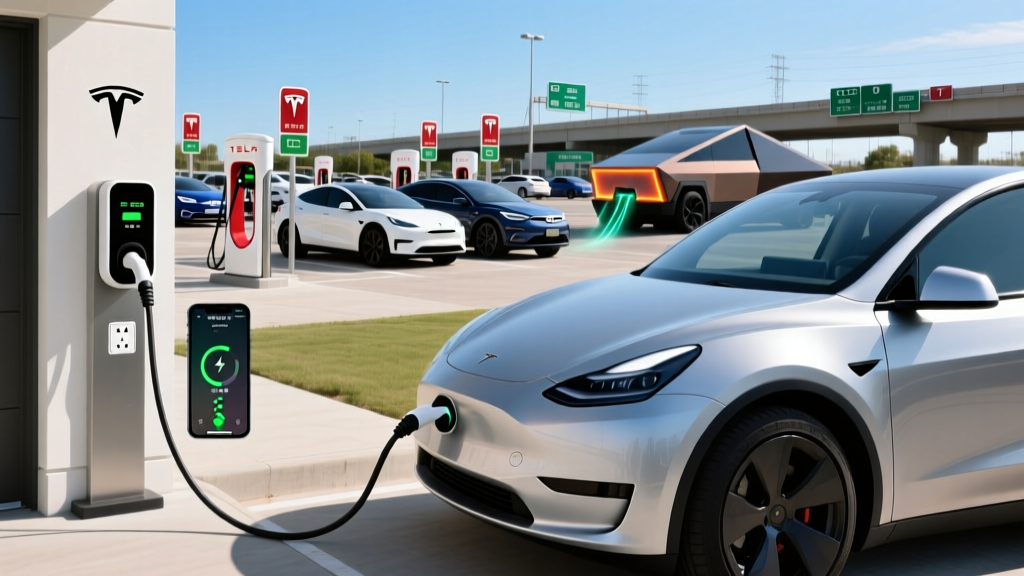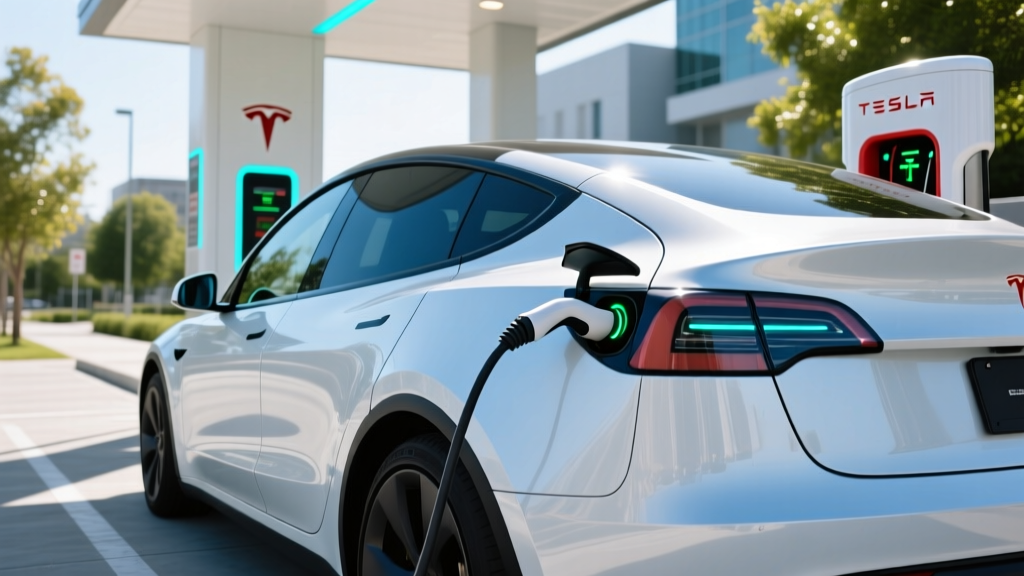
If you've spent any time browsing used Tesla listings, you've likely seen "Free Supercharger for Life" plastered across the description. For some buyers, it's the deciding factor. But in 2026 — with the Supercharger network open to nearly every EV brand via NACS, home charging infrastructure more accessible than ever, and electricity rates climbing in some regions — does this legacy perk actually save you money? And more importantly, should it influence your charging strategy?
This guide breaks down the real-world economics of free Supercharging, how it compares to home Level 2 charging and public DC fast networks, and everything you need to set up a cost-effective charging routine — whether your car came with unlimited free electrons or you're paying every kWh.
What "Free Supercharger for Life" Actually Means
Tesla's Free Unlimited Supercharging perk originated as a referral incentive and early adoption bonus. Vehicles that received this perk fall into two categories:
- Transferable (tied to the car): Primarily Model S and Model X vehicles ordered before January 15, 2017, and delivered before April 15, 2017. These vehicles retain free Supercharging through subsequent ownership transfers — making them highly sought after on the used market.
- Non-transferable (tied to the original owner): Some referral-program vehicles received free Supercharging that stays with the original owner's account and does not transfer at sale.
As of 2026, Tesla no longer offers unlimited free Supercharging on new vehicle purchases. Promotional credits (typically 10,000–15,000 miles) occasionally appear as limited-time incentives, but the permanent perk is exclusively a legacy benefit.
Charging Levels Explained: Speeds, Costs, and Real-World Range Added
Before calculating whether free Supercharging saves you money, you need to understand the three charging tiers available to EV owners. The critical distinction: kW (kilowatts) measures charging power — how fast energy flows into your battery. kWh (kilowatt-hours) measures energy capacity — how much total energy your battery stores. Think of kW as the width of a hose and kWh as the size of the bucket.
| Level | Voltage / Amperage | Power (kW) | Miles of Range Added Per Hour | Typical Use Case |
|---|---|---|---|---|
| Level 1 | 120V / 12A | 1.4 kW | 3–5 miles | Overnight trickle, PHEVs, emergencies |
| Level 2 | 240V / 32–48A | 7.7–11.5 kW | 25–44 miles | Daily home charging, workplace |
| DC Fast Charge | 400–800V DC | 50–350 kW | 150–1,000+ miles (equivalent/hr) | Road trips, rapid top-ups |
Real-World Charging Time Examples
Charge times vary significantly based on battery size, state of charge (SoC), battery temperature, and the vehicle's charge curve. Here are realistic 10–80% times for common battery sizes:
- 60 kWh battery (e.g., base Tesla Model 3 RWD): ~25–28 minutes on a 170 kW DC fast charger; ~6–7 hours on a 9.6 kW Level 2 home charger
- 82 kWh battery (e.g., Tesla Model Y Long Range): ~28–32 minutes on a 250 kW V3 Supercharger; ~8–9 hours on a 9.6 kW Level 2 charger
- 100 kWh battery (e.g., Model S/X or large SUV): ~30–38 minutes on a 250 kW Supercharger; ~10–12 hours on a 9.6 kW Level 2 charger
How Much Does It Cost to Install a Home EV Charger?
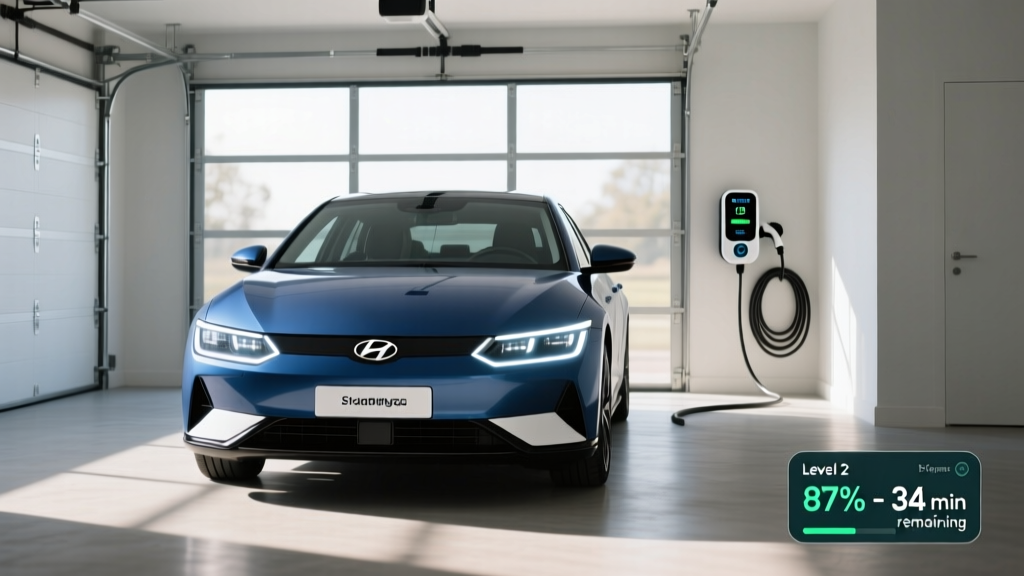
Home Level 2 charging is where the majority of EV owners do 80–90% of their charging. It's also where cost savings over public charging — and even free Supercharging in terms of convenience — become most apparent. But installation costs vary wildly depending on your home's electrical infrastructure.
| Cost Component | Simple Install (Panel Adjacent) | Moderate Install (50–80 ft Run) | Complex Install (Panel Upgrade) |
|---|---|---|---|
| Level 2 Charger (hardware) | $400–$700 | $400–$700 | $400–$700 |
| Electrician labor | $300–$600 | $600–$1,500 | $1,000–$2,500 |
| Electrical permit | $50–$150 | $50–$200 | $100–$300 |
| Panel upgrade (if needed) | N/A | N/A | $1,500–$3,500 |
| Total estimated cost | $750–$1,450 | $1,050–$2,400 | $3,000–$7,000 |
What Electrical Upgrades Might You Need?
A Level 2 charger requires a dedicated 240V circuit — the same voltage your electric dryer or oven uses. Here's what determines your installation complexity:
- Panel capacity: Most homes built after 1990 have a 200-amp service panel, which typically supports a 40A or 50A dedicated EV circuit. Older homes with 100A service may require a panel upgrade to 200A — this is the single biggest cost variable.
- Circuit amperage: A 48A charger (like the Tesla Wall Connector) requires a 60A breaker (NEC code requires circuits rated at 125% of continuous load). A 32A charger needs a 40A breaker.
- Wire run distance: Longer runs from your panel to the garage or driveway require thicker (more expensive) copper wire. Runs over 100 feet may also need a sub-panel.
- Permit requirements: Virtually all jurisdictions require a permit for EV charger installation. Your electrician handles this, and an inspector will verify the work meets NEC Article 625 (Electric Vehicle Charging System Equipment).
Connector Compatibility: Which Plug Does Your EV Use?
The connector landscape has shifted dramatically since Tesla opened its Supercharger network and the industry broadly adopted the North American Charging Standard (NACS). Here's where things stand in 2026:
| Connector | Brands Using It (2026) | Adapter Needed for Tesla Superchargers? |
|---|---|---|
| NACS (Tesla) | Tesla (all models), Ford, GM, Rivian, Volvo, Polestar, Hyundai/Kia (2025+ models), Mercedes-Benz, BMW (2025+) | No — native plug |
| CCS1 | Legacy VW/Audi EVs, older Hyundai/Kia models, Stellantis EVs, some Honda/Toyota | Yes — CCS-to-NACS adapter required ($200–$250) for Supercharger access |
| CHAdeMO | Nissan Leaf (legacy), Mitsubishi Outlander PHEV (DC charging) | Limited adapters available; CHAdeMO infrastructure declining |
If you own a CCS1-equipped EV and want access to Tesla Superchargers (including legacy free-Supercharger vehicles that have CCS ports via adapter), you'll need a manufacturer-approved CCS-to-NACS adapter. Tesla sells one for non-Tesla vehicles, and several OEMs include adapters with their vehicles as of the 2025–2026 model years.
Cost Per Mile: Free Supercharging vs. Home vs. Public Charging vs. Gas
This is where the "Free Supercharger for Life" value proposition gets real. Let's compare the actual cost per mile across charging scenarios and a gas baseline, using a mid-size EV averaging 3.5 miles per kWh (approximately 100 MPGe) and a gas car averaging 28 MPG combined.
| Charging Scenario | Cost per kWh | Cost per Mile | Annual Cost (12,000 mi) |
|---|---|---|---|
| Free Supercharger (legacy perk) | $0.00 | $0.00 | $0 |
| Home Level 2 (off-peak utility rate) | $0.12–$0.18 | $0.034–$0.051 | $408–$612 |
| Home Level 2 (standard rate, no TOU) | $0.16–$0.28 | $0.046–$0.080 | $552–$960 |
| Public DC Fast (Electrify America, EVgo) | $0.35–$0.55 | $0.10–$0.157 | $1,200–$1,884 |
| Tesla Supercharger (paid, 2026 avg) | $0.28–$0.40 | $0.080–$0.114 | $960–$1,368 |
| Gas car (28 MPG, $3.40/gal) | $3.40/gallon | $0.121 | $1,457 |
Source: Average electricity rates from EIA; gas prices from EIA weekly retail gasoline averages; Supercharger pricing based on regional averages observed in 2025–2026.
The Real Value of Free Supercharger for Life
At 12,000 miles per year, a vehicle with transferable free unlimited Supercharging saves you $408–$1,884 annually compared to paid charging scenarios — depending on how much you rely on Superchargers vs. home charging. Over a 5-year ownership period, that's $2,040–$9,420 in fuel savings.
However, there's a critical trade-off: exclusive Supercharger reliance means no home charging convenience. You're making trips to a charging station instead of plugging in at night. Most EV owners who have both home Level 2 and free Supercharging access use the Supercharger primarily for road trips — which is where the savings concentrate.
Best Home EV Chargers for 2026: Equipment Picks
If you're setting up home charging — whether you have free Supercharging for road trips or you're paying for every kWh — these are the Level 2 chargers we recommend based on reliability, power output, smart features, and value:
Tesla Wall Connector
- Power: Up to 11.5 kW (48A) on a 60A circuit
- Connector: NACS native; J1772 adapter included
- Cable length: 24 ft
- Smart features: Wi-Fi, OTA updates, power sharing between multiple units, access control
- Price: ~$475
- Best for: Tesla owners, NACS-equipped EVs
ChargePoint Home Flex
- Power: Up to 12 kW (50A) on a 60A circuit; configurable down to 16A
- Connector: J1772 (NACS adapter available separately)
- Cable length: 23 ft
- Smart features: Wi-Fi, app scheduling, Alexa integration, energy tracking
- Price: ~$550–$650
- Best for: Non-Tesla EVs, flexible amperage needs
Emporia Level 2 EV Charger
- Power: Up to 11.5 kW (48A) on a 60A circuit
- Connector: J1772 (NACS version available)
- Cable length: 24 ft
- Smart features: Wi-Fi, app control, solar integration with Emporia energy monitor, scheduling
- Price: ~$350–$400
- Best for: Budget-conscious buyers, solar homes
Grizzl-E Smart
- Power: Up to 10 kW (40A) on a 50A circuit
- Connector: J1772
- Cable length: 24 ft
- Smart features: OCPP-compatible, app control, built-in GFCI, extreme weather rated (-40°F)
- Price: ~$450–$550
- Best for: Cold climates, outdoor installations, durability
Safety and Electrical Code Requirements
EV charger installation is governed by the National Electrical Code (NEC), specifically Article 625. Key requirements that protect your home and ensure compliance:
- Dedicated circuit: Your Level 2 charger must be on its own dedicated circuit — it cannot share with other appliances. This prevents overloads and tripped breakers.
- GFCI protection: NEC 2020 and later require Ground Fault Circuit Interrupter protection for EV charging outlets. Hardwired chargers with built-in GFCI (like most smart chargers) satisfy this requirement. If you install a NEMA 14-50 receptacle, a GFCI breaker is required — these cost $50–$100 more than standard breakers.
- Outdoor rating: If your charger is installed outdoors, it must carry a NEMA 4 or NEMA 4X rating for weather resistance. All chargers listed above meet this standard.
- Hardwired vs. plug-in: Hardwired installations (no plug, direct electrical connection) are generally preferred for 48A+ chargers because NEMA 14-50 receptacles are rated for 50A maximum and some jurisdictions restrict plug-in EV chargers above 40A. Hardwired also eliminates the GFCI breaker requirement since the charger's internal GFCI suffices.
- Permit and inspection: Skipping the permit to save $100 is a false economy. Unpermitted work can void homeowner's insurance claims related to electrical fires and creates issues at resale. Always get the permit and final inspection.
Is "Free Supercharger for Life" Worth Paying a Premium For?
Used Tesla Model S and Model X vehicles with transferable free Supercharging typically command a $3,000–$7,000 premium over identical vehicles without the perk, based on market listings and auction data. Whether that premium pays for itself depends entirely on your charging profile:
Decision Framework
Pay the premium if:
- You lack access to home or workplace Level 2 charging and will rely heavily on Superchargers
- You drive 15,000+ miles annually with frequent road trips
- You plan to keep the vehicle 4+ years (the premium amortizes to $750–$1,750/year in savings)
- You value the convenience of never paying for fuel on long-distance travel
Skip the premium and install home charging if:
- You have a garage or dedicated parking spot where you can install Level 2
- Your daily commute is under 80 miles round-trip (easily covered by overnight home charging)
- You drive under 12,000 miles per year (home charging cost: ~$408–$612/year — the premium takes 5–17 years to recoup)
- You prioritize battery longevity (Level 2 charging is gentler on cells than daily Supercharging)
Frequently Asked Questions
Can free Supercharger for life be transferred to a new owner?
It depends on how the perk was originally granted. Free Supercharging tied to Model S and Model X vehicles ordered before January 15, 2017, and delivered before April 15, 2017, is generally transferable with the vehicle through private sales and Tesla's own resale program. However, free Supercharging granted through referral programs is typically tied to the original owner's account and does not transfer. Always verify through Tesla directly using the VIN before purchasing.
Does free Supercharging work at all Supercharger stations?
Yes — legacy free unlimited Supercharging applies to the entire Tesla Supercharger network globally, including V2 (150 kW), V3 (250 kW), and V4 stations. The perk is tied to the vehicle's VIN in Tesla's system, not to specific station locations.
How much does home Level 2 charging cost per month?
For a typical driver covering 1,000 miles per month with an EV averaging 3.5 miles per kWh, home charging at $0.15/kWh costs approximately $43 per month. At $0.25/kWh (higher-cost states like California and Massachusetts), it rises to about $71 per month. Compare this to $121 per month in gas for a 28 MPG vehicle at $3.40/gallon.
Will installing a home EV charger require upgrading my electrical panel?
Not necessarily. Homes with a 200-amp service panel and available breaker slots typically support a 40A–60A EV circuit without a panel upgrade. Homes with 100-amp service, or 200-amp panels that are already near capacity (common in homes with electric heating, AC, and cooking), may need an upgrade. An electrician can perform a load calculation to determine if your panel has sufficient headroom. Panel upgrades add $1,500–$3,500 to your installation cost.
Is it safe to use an extension cord with a Level 1 or Level 2 charger?
No. EV manufacturers and the NEC prohibit extension cords for EV charging. Level 1 charging through an undersized extension cord creates a fire hazard due to sustained high-current draw over many hours. If your outlet is too far from your parking spot, have an electrician install a dedicated outlet or hardwired charger at the correct location.
Does frequent Supercharging damage the battery?
Exclusively relying on DC fast charging does accelerate battery degradation compared to predominantly using Level 2 charging. The primary mechanisms are increased thermal stress and higher cell voltage exposure. Tesla's battery management system actively mitigates this through thermal preconditioning and charge-rate tapering, but fleet data shows vehicles that primarily Supercharge lose roughly 1–3% more capacity over 100,000 miles compared to vehicles that primarily charge at home. Best practice: use Level 2 for daily needs and Supercharge for road trips.