If you've been hunting for free public EV charging stations, you've probably noticed the landscape is shifting fast. A few years ago, dealerships, malls, and workplaces offered complimentary Level 2 plugs as an EV adoption perk. In 2026, many of those stations have migrated to paid networks — but free options still exist if you know where to look. More importantly, understanding the full economics of EV charging — from free public Level 2 to paid DC fast charging to home installation — is what actually determines your cost-per-mile and whether an electric vehicle saves you money over gas.
This guide breaks down every charging tier with exact speeds, where free public chargers still operate, what home installation actually costs (including the panel upgrade nobody warns you about), and which Level 2 chargers are worth buying this year.
Where Free Public EV Charging Stations Still Exist in 2026
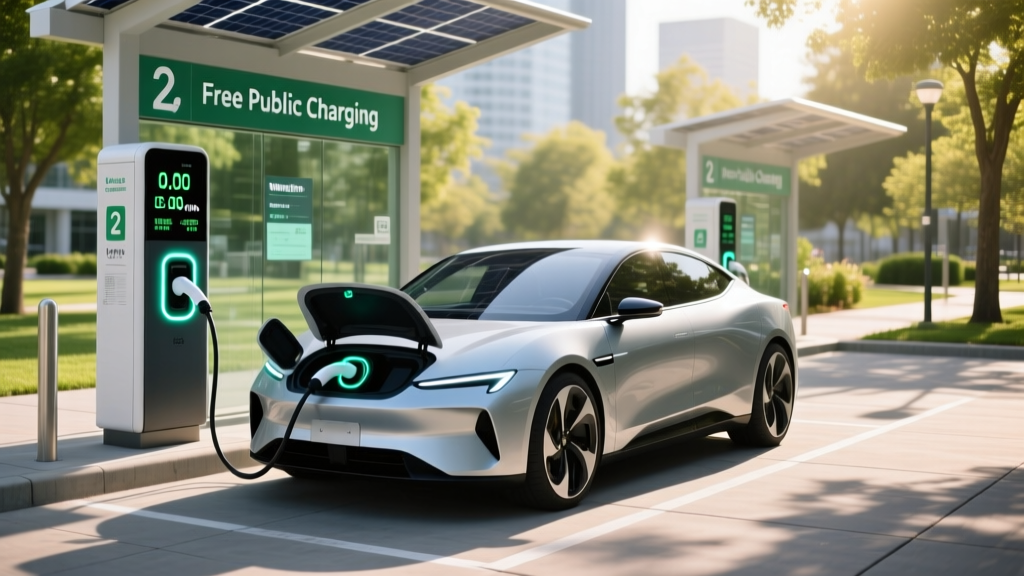
Free public charging hasn't disappeared — it's just become more location-specific. Here's where you're most likely to find complimentary electrons:
- Car dealerships: Many EV-friendly dealers (especially Volkswagen, Hyundai, and Ford) maintain free Level 2 chargers in their lots. These are typically 7.2 kW or 11.5 kW units intended for customers but often accessible to the public.
- Workplace charging: Corporate campuses — particularly tech companies and universities — frequently subsidize employee charging at no cost. Check with your employer's facilities team.
- Municipal and library chargers: Some cities (notably in California, Oregon, and parts of the Northeast) still offer free Level 2 charging at public parking garages and libraries, funded by local air-quality grants.
- Hospitality perks: Hotels and resorts increasingly advertise free EV charging as an amenity. Chains like Marriott and Hilton have expanded their Level 2 installations, though policies vary by property.
- Promotional network periods: Electrify America, EVgo, and ChargePoint occasionally run free-charging promotions tied to new vehicle purchases — for example, Volkswagen ID.4 buyers typically receive complimentary Electrify America charging for a set period.
The reality check: Free DC fast chargers are exceptionally rare. Almost all free public stations are Level 2 (6–19 kW), meaning they add roughly 20–70 miles of range per hour. They're ideal for topping off while you shop or work, not for road-trip rapid charging. Apps like PlugShare and the AFDC station locator let you filter specifically for free stations by network and connector type.
Charging Levels Explained: Speeds, kW, and Miles Added Per Hour
The single most important distinction in EV charging is between kW (kilowatts) — the rate of power delivery, like water pressure in a hose — and kWh (kilowatt-hours) — the total energy stored in your battery, like the size of a water tank. A 10 kW charger delivering power for one hour adds 10 kWh to your battery. Confusing these two is the most common EV literacy mistake new owners make.
| Level | Voltage | Max Power (kW) | Miles of Range Added Per Hour | Typical Use Case |
|---|---|---|---|---|
| Level 1 (120V) | 120V AC | 1.4–1.9 kW | 3–5 miles | Overnight trickle; emergency top-up |
| Level 2 (240V) | 240V AC | 3.3–19.2 kW | 12–70 miles | Home daily charging; public/workplace |
| DC Fast Charge | 400–800V DC | 50–350 kW | 150–1,200+ miles (equivalent/hr) | Road trips; rapid 10–80% top-ups |
Real-world context: Those "miles per hour" figures assume average EV efficiency of 3–4 miles per kWh. A highly efficient sedan like the Hyundai Ioniq 6 (EPA-rated 140 MPGe combined) will gain more miles per kW than a heavy truck like the Ford F-150 Lightning (around 2.0–2.5 mi/kWh). Cold weather, battery preconditioning status, and state of charge all affect actual delivery rates.
Charging Time Examples: 10–80% for Common Battery Sizes
Most EV owners charge from 10% to 80% on DC fast chargers rather than a full 0–100%, because charging speed tapers dramatically above 80% to protect the battery. Here's what to expect with popular 2025/2026 models:
- Tesla Model Y (75 kWh battery, 250 kW peak): 10–80% in approximately 20–25 minutes at a V3 Supercharger.
- Hyundai Ioniq 5 (77.4 kWh, 240 kW peak on 800V architecture): 10–80% in roughly 18 minutes — among the fastest in production.
- Ford F-150 Lightning (131 kWh extended range, 150 kW peak): 10–80% in about 40–45 minutes. The large battery takes longer despite a decent charge rate.
- Chevrolet Equinox EV (85 kWh, 150 kW peak): 10–80% in approximately 30–35 minutes.
Charging curve reality: A charger rated for 250 kW does not deliver 250 kW for the entire session. Peak rates typically hold between 10–40% state of charge, then taper progressively. A "250 kW charger" might average 120–150 kW across a full 10–80% session. This is why manufacturer-published 10–80% times are more useful than peak kW figures alone.
Home EV Charger Installation: Electrical Requirements and Real Costs
Home Level 2 charging is where most EV owners do 80–90% of their charging. But the installation cost varies wildly depending on your home's electrical infrastructure.
Electrical Requirements
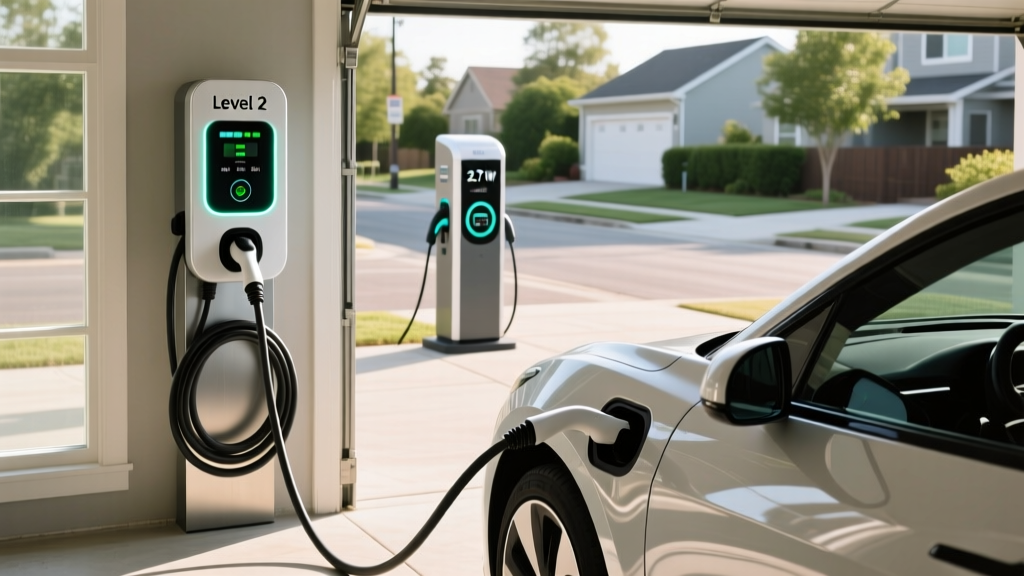
A typical home Level 2 charger requires a 240V dedicated circuit — the same voltage as your electric dryer or oven. Common configurations:
- 40-amp circuit / 32-amp continuous draw: Delivers up to 7.7 kW. The most common residential setup. Requires a 50-amp breaker (NEC code requires breakers rated at 125% of continuous load).
- 50-amp circuit / 40-amp continuous: Delivers up to 9.6 kW. Good for larger batteries or faster overnight fills.
- 60-amp circuit / 48-amp continuous: Delivers up to 11.5 kW. Requires a robust panel — usually 200-amp service minimum.
Do You Need a Panel Upgrade?
This is the question that catches homeowners off guard. If your home has a 100-amp electrical panel (common in homes built before the 1990s), adding a 40–50 amp EV circuit may max out your panel's capacity. An electrician will perform a load calculation considering all existing circuits. If you're near capacity, a panel upgrade to 200 amps typically costs $1,500–$3,500 before the charger circuit is even installed.
Homes with existing 200-amp panels usually have enough headroom for a Level 2 charger without an upgrade — but this depends on what else you're running (electric heat, hot tub, second kitchen). Always get a professional load calculation.
Installation Cost Breakdown
| Component | Cost Range | Notes |
|---|---|---|
| Level 2 EV charger (hardware) | $300–$750 | Varies by power output, cable length, smart features |
| Electrician labor (standard install) | $500–$1,500 | Assumes panel is nearby, no major conduit runs |
| Electrical permit | $50–$300 | Varies by municipality; required in most jurisdictions |
| Panel upgrade (if needed) | $1,500–$3,500 | 200-amp upgrade from 100-amp service |
| Conduit/wiring (long runs) | $200–$1,000 | If panel is far from garage/carport |
| Total (no panel upgrade) | $850–$2,550 | Most homes with modern panels |
| Total (with panel upgrade) | $2,350–$6,050 | Older homes needing service upgrade |
Federal incentive note: The IRS §30C Alternative Fuel Vehicle Refueling Property Credit covers up to 30% of home charger hardware and installation costs (max $1,000), but eligibility depends on census-tract income qualifications. Check the IRS guidance or consult a tax professional — this credit is not universal.
Connector Compatibility: NACS, CCS1, and CHAdeMO Explained
The connector landscape has consolidated dramatically. As of 2025–2026, nearly every major automaker has adopted or committed to NACS (North American Charging Standard) — the Tesla-designed connector — either natively or via adapter. Here's where things stand:
| Connector | Brands Using It (2025–2026) | Adapter Needed? |
|---|---|---|
| NACS (Tesla) | Tesla (all), Ford, GM, Rivian, Volvo, Polestar, Hyundai/Kia (new models), Mercedes-Benz, BMW (2025+) | No for native NACS vehicles; CCS-to-NACS adapters available (~$200) for older CCS cars at Superchargers |
| CCS1 (Combined Charging System) | Older VW ID.4, older Hyundai/Kia, Stellantis, some legacy models still in circulation | CCS vehicles can use NACS Superchargers with approved adapter; CCS networks (Electrify America, EVgo) still widely available |
| CHAdeMO | Nissan Leaf (legacy); essentially discontinued for new vehicles after 2025 | CHAdeMO-to-CCS adapters exist but are expensive (~$400+); CHAdeMO stations declining |
Practical advice: If you're buying a new EV in 2026, it almost certainly has NACS or will support it via a manufacturer-provided adapter. The Tesla Supercharger network — now open to non-Tesla vehicles via the "Magic Dock" NACS adapter built into many stalls — is the most reliable DC fast-charging network in North America, with over 30,000 stalls. CCS networks like Electrify America have improved reliability but still trail Supercharger consistency.
Cost to Charge: Per-kWh, Per-Mile, and How It Compares to Gas
Whether free public EV charging stations or paid DC fast chargers save you money depends entirely on your local electricity rates and driving habits. Here are the 2026 benchmarks:
| Scenario | Cost per kWh | Cost per Mile (at 3.5 mi/kWh) | Annual Cost (12,000 mi) |
|---|---|---|---|
| Home charging (national avg. off-peak) | $0.13–$0.17 | $0.037–$0.049 | $444–$588 |
| Home charging (California TOU peak) | $0.30–$0.45 | $0.086–$0.129 | $1,032–$1,548 |
| Public Level 2 (paid networks) | $0.20–$0.35 | $0.057–$0.100 | $684–$1,200 |
| DC Fast Charging (Electrify America, EVgo) | $0.35–$0.55 | $0.100–$0.157 | $1,200–$1,884 |
| Free public Level 2 | $0.00 | $0.00 | $0 |
| Gasoline car (30 MPG, $3.40/gal) | — | $0.113 | $1,360 |
The bottom line: Home charging at average residential rates is roughly one-third to one-quarter the per-mile fuel cost of a 30 MPG gas car. Even paid DC fast charging is competitive with gas on a per-mile basis. But if you rely exclusively on expensive public DC fast chargers in high-cost states like California, your savings shrink significantly — and could even exceed gas costs in extreme cases. This is why home charging access remains the single biggest economic advantage of EV ownership.
According to fueleconomy.gov, the average 2025 EV achieves 97–140 MPGe combined, translating to roughly 25–35 kWh per 100 miles driven. Use your local utility rate and your vehicle's kWh/100mi figure to calculate your personal cost-per-mile with precision.
Best Home Level 2 EV Chargers for 2026: Equipment Picks
We've tested and tracked reliability data on the major Level 2 chargers available to US homeowners. Here are our top picks based on power output, build quality, smart features, and value:
ChargePoint Home Flex
- Power output: Up to 11.5 kW (48-amp) on a 60-amp circuit; configurable down to 16 amps
- Connector: NACS or J1772 (select at purchase)
- Cable length: 23 feet
- Smart features: Wi-Fi connected, app-based scheduling, Alexa integration, energy tracking
- Price: ~$550–$650
- Best for: Flexible amperage configuration if your panel has limited capacity
Emporia Vue Level 2 Charger
- Power output: Up to 11.5 kW (48-amp)
- Connector: NACS or J1772
- Cable length: 24 feet
- Smart features: Integrates with Emporia Vue energy monitor for whole-home load management, solar-aware charging
- Price: ~$400–$500
- Best for: Budget-conscious buyers who want smart features; solar-home integration
Tesla Wall Connector
- Power output: Up to 11.5 kW (48-amp)
- Connector: NACS (native Tesla); includes J1772 adapter in box for non-Tesla EVs
- Cable length: 24 feet
- Smart features: Wi-Fi updates, power sharing between multiple units, access control
- Price: ~$475
- Best for: Tesla owners or multi-EV households wanting power-sharing between two Wall Connectors on one circuit
Grizzl-E Smart
- Power output: Up to 9.6 kW (40-amp)
- Connector: J1772 (NACS adapter available separately)
- Cable length: 24 feet
- Smart features: OCPP-compatible, works with multiple apps, extremely durable cold-weather build
- Price: ~$400–$450
- Best for: Cold-climate owners (rated to -40°F); outdoor installations in harsh weather
Key buying note: Always match your charger's maximum amperage to your circuit capacity. A 48-amp charger requires a 60-amp breaker. If your electrician installs a 50-amp circuit (40-amp continuous), choose a charger that can be configured to 40 amps or lower. Overloading a circuit will trip the breaker and could create a fire hazard.
Safety, Code, and Installation Considerations
EV charger installation isn't a DIY project. The National Electrical Code (NEC) and local building codes impose specific requirements:
- Dedicated circuit: Your Level 2 charger must be on its own dedicated circuit — not shared with other appliances. This prevents overloads and breaker trips.
- GFCI protection: NEC 2020 and later require GFCI (Ground Fault Circuit Interrupter) protection for EV charging outlets. Many modern EVSEs (Electric Vehicle Supply Equipment) have built-in GFCI, but your electrician will verify code compliance.
- Outdoor rating: If your charger is installed outside (carport, driveway pedestal), it must carry a NEMA 4 or NEMA 4X weather-resistance rating. All chargers listed above meet this standard.
- Hardwired vs. plug-in: Chargers above 40 amps (continuous) are typically hardwired rather than plug-in, as NEMA 14-50 receptacles are rated for 50 amps and some jurisdictions have raised fire concerns about high-draw plug-in connections. Hardwired installations are generally safer and preferred for 48-amp chargers.
- Permit and inspection: Most municipalities require an electrical permit and post-installation inspection. Don't skip this — unpermitted work can void homeowner's insurance claims and create resale issues.
Frequently Asked Questions
How much does it cost to install a home EV charger?
A standard Level 2 home charger installation with no panel upgrade typically costs $850–$2,550 including hardware, electrician labor, and permit. If your home needs a 200-amp panel upgrade (common in pre-1990s homes), total costs range from $2,350–$6,050. Always get a professional load calculation before committing.
How fast will each charging level add range?
Level 1 (120V) adds 3–5 miles per hour. Level 2 (240V) adds 12–70 miles per hour depending on amperage (7.7 kW ≈ 25–30 mi/hr; 11.5 kW ≈ 40–45 mi/hr for an average EV). DC fast charging can add 150–300+ miles in a 20–30 minute session, depending on the vehicle's peak charge rate and battery size.
Which connector/charger is compatible with my EV?
If your 2025–2026 EV is a Tesla, Ford, GM, Rivian, Volvo, Hyundai/Kia (new models), or Mercedes, it likely uses NACS natively. Older CCS1 vehicles can access Tesla Superchargers with an approved adapter. CHAdeMO is essentially legacy-only (Nissan Leaf). Check your owner's manual or manufacturer spec page for the exact connector type.
How much does charging cost per mile vs gas?
At the national average residential electricity rate (~$0.15/kWh) and average EV efficiency (3.5 mi/kWh), home charging costs roughly $0.043 per mile. A comparable 30 MPG gas car at $3.40/gallon costs $0.113 per mile — about 2.6x more. Even paid DC fast charging ($0.35–$0.55/kWh) is competitive with gas. Free public charging, when you can find it, eliminates fuel cost entirely.
What electrical upgrades might I need?
The most common upgrade is a panel capacity increase from 100 amps to 200 amps ($1,500–$3,500) if your existing panel can't handle the additional 40–60 amp EV circuit. You may also need new conduit runs if your panel is far from your garage, or a sub-panel installation. A licensed electrician's load calculation will determine exactly what's needed for your home.
Are free public EV charging stations reliable?
Reliability varies. Free stations at dealerships and workplaces tend to be well-maintained because they serve customers and employees directly. Municipal free chargers may have longer downtime due to maintenance budgets. Always check PlugShare or your charging network app for real-time station status before driving to a free charger — and have a paid backup plan nearby in case the free station is offline or occupied.
Can I use a free public Level 2 charger to fully charge my EV?
Yes, but it takes time. A 75 kWh battery charging at 7.2 kW from 10% to 100% requires approximately 9–10 hours. Free Level 2 chargers are best used as supplemental top-ups while you're already at a destination for several hours — shopping, working, or staying overnight at a hotel.
Free public EV charging stations remain a valuable perk for opportunistic top-ups, but they shouldn't be the foundation of your charging strategy. The economics of EV ownership overwhelmingly favor home Level 2 charging: it's cheaper per mile, more reliable, and far more convenient than hunting for public plugs. If your home's electrical infrastructure supports it, a $1,000–$2,500 Level 2 installation pays for itself within 1–3 years of gas savings — and gives you the freedom to wake up every morning with a full battery.