The Real Economics of Free EV Charging
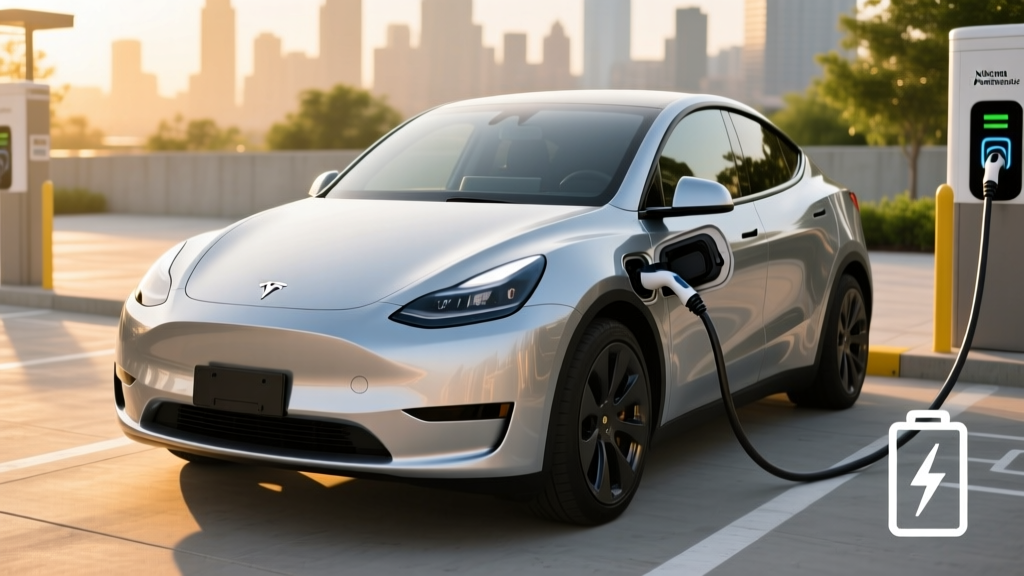
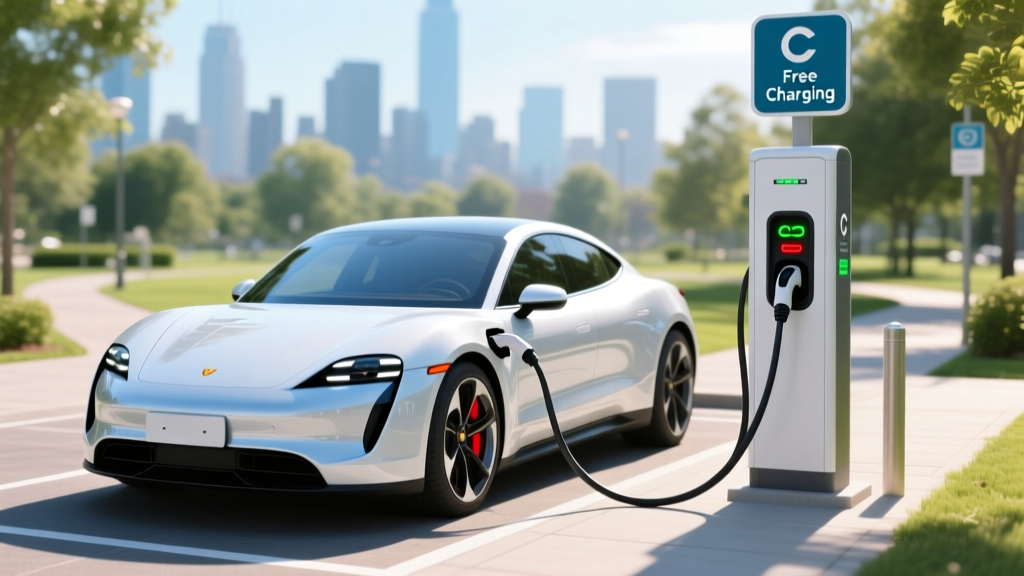
Search any EV app and you'll spot the lure: a handful of free charging stations in your area. Workplace lots, shopping centers, dealerships, and some municipal garages still offer complimentary electrons — but the landscape in 2026 is shifting fast. Networks like Electrify America, EVgo, and Tesla Supercharger have largely moved to paid DC fast charging (typically $0.35–$0.55/kWh), and even "free" Level 2 destinations often cap sessions at 2–4 hours or require a customer purchase.
Before you plan ownership around free public charging, understand what you're actually getting. A free Level 2 plug adding 30 miles of range during a grocery run is a nice perk; it's not a fueling strategy. This guide maps where free charging still exists, how fast each level actually replenishes your battery, what home installation really costs (including the panel-upgrade gotcha), and whether paid home charging still beats gasoline per mile. Spoiler: it usually does.
Charging Levels Explained: kW, Miles per Hour, and 10–80% Times
First, a critical distinction every EV owner must internalize: kW (kilowatts) is power — the rate electricity flows into your car. kWh (kilowatt-hours) is energy — the total capacity of your battery. Think kW as the width of the hose, kWh as the size of the bucket. A 150 kW DC fast charger fills an 80 kWh battery faster than a 7 kW Level 2 plug, but both deliver the same kWh of energy over time.
| Level | Voltage / Amps | Power (kW) | Miles of Range Added per Hour | Typical 10–80% Time (75 kWh battery) | Best For |
|---|---|---|---|---|---|
| Level 1 (120V household) | 120V / 12A | ~1.4 kW | 3–5 mi/hr | ~35–45 hours | Overnight top-offs, PHEVs, low-mileage drivers |
| Level 2 (240V home/public) | 240V / 32–48A | 7.7–11.5 kW | 25–45 mi/hr | ~7–9 hours | Daily home charging, workplace, destinations |
| DC Fast (public) | 400–800V DC | 50–350 kW peak | 150–300+ mi/hr (peak) | 18–35 minutes | Road trips, quick top-ups, apartment dwellers |
A few real-world caveats. Those "350 kW" peak DC rates only hold for a narrow portion of the charge curve — typically between 10% and 40% State of Charge — before tapering to protect battery health. An Ioniq 5 or EV6 on an 800V architecture may sustain 200+ kW longer than a 400V vehicle, but even they slow markedly past 80%. That's why the industry standard metric is 10–80% time, not peak kW. Charging past 80% at a DC fast charger is painfully slow and often more expensive per kWh; most savvy owners unplug at 80% unless they genuinely need the final electrons for a long leg.
Where Free Charging Stations Still Exist in 2026
Free public charging falls into four buckets — and each has trade-offs worth knowing:
- Workplace Level 2 (free or subsidized): Still common at tech campuses, government buildings, and some corporate offices. Usually J1772/NACS connectors, 7–11 kW. The catch: spots fill by 8 AM, and many employers now require an employee badge or limit sessions.
- Retail and hospitality destinations: Hotels, grocery chains (Whole Foods, Target in some regions), and shopping malls often host free Level 2 chargers to drive foot traffic. Expect 2–4 hour limits enforced by parking validation or network-app timers.
- Municipal and utility-sponsored chargers: Some cities (Austin, Portland, parts of California) and utilities (SMUD, Sacramento) still offer free or heavily discounted public Level 2 charging, often in parking garages. These are increasingly rare as adoption scales.
- Dealership and promotional networks: Tesla Superchargers are almost never free anymore, but brands like Hyundai, Kia, and Volkswagen have included 1–3 years of complimentary Electrify America or partner-network DC fast charging with new EV purchases. Read the fine print — these are typically capped at 500–2,000 kWh total.
Apps like PlugShare, ChargePoint, and A Better Routeplanner let you filter for "free" stations. Use them, but verify in user comments — a charger marked free in 2023 may have flipped to paid by 2026.
Home Level 2 Installation: Costs, Electrical Requirements, and the Panel-Upgrade Gotcha
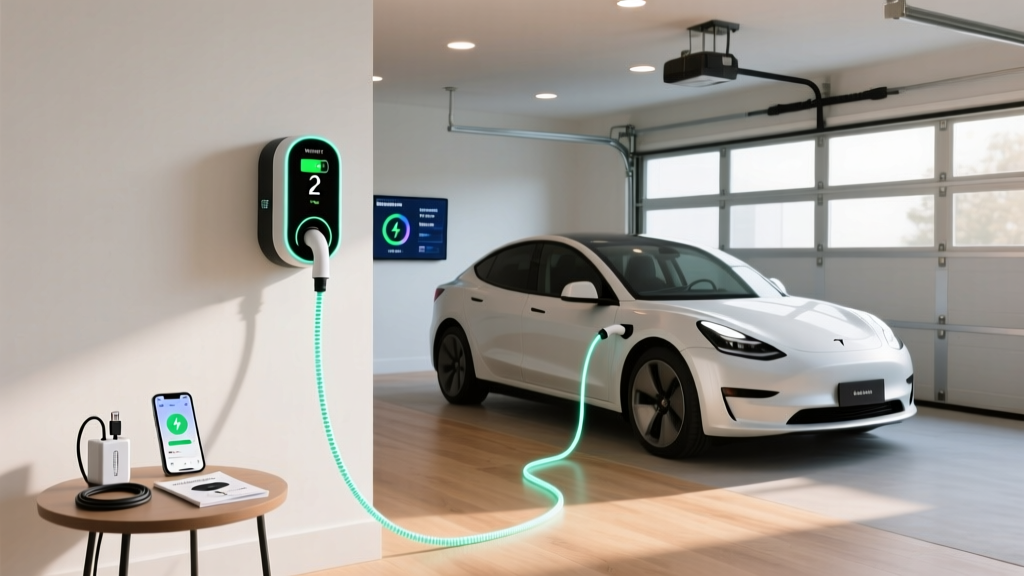
Even the most aggressive free-charging hunter will concede this: a home Level 2 charger is the single highest-ROI upgrade an EV owner can make. You wake up to a full battery every morning, avoid circling for public plugs, and pay residential electricity rates ($0.12–$0.25/kWh in most of the U.S.) instead of DC fast-charging premiums.
Level 2 home charging requires a dedicated 240V circuit — the same voltage as your electric dryer or oven. Most installations use a NEMA 14-50 outlet (50A circuit, delivering up to 40A continuous to the car for 9.6 kW) or a hardwired 60A circuit for 11.5 kW chargers like the ChargePoint Home Flex or Tesla Wall Connector.
| Component | Low-End | High-End | Notes |
|---|---|---|---|
| Level 2 charger hardware | $400 | $750 | Emporia, ChargePoint, Tesla, Wallbox |
| Electrician labor (standard install) | $500 | $1,500 | Short run from panel to garage |
| Permit & inspection | $100 | $350 | Varies by municipality |
| Panel upgrade (100A → 200A) | $1,500 | $4,000 | Needed in older homes with 100A service |
| Total (no panel upgrade) | $1,000 | $2,600 | Most modern homes |
| Total (with panel upgrade) | $2,500 | $6,500 | Homes built pre-1990 often need this |
The panel-upgrade gotcha: Homes built before 1990 often have 100-amp main panels that simply cannot spare 40–50A for EV charging while running HVAC, a dryer, and an electric oven. A licensed electrician will perform a load calculation per NEC Article 220 before signing off. If you need a 200A upgrade, budget an extra $1,500–$4,000 and a 1–3 week lead time. Some utilities offer rebates of $300–$1,000 for panel upgrades tied to EV adoption — check with your provider.
Federal incentive: The IRS §30D-related Alternative Fuel Vehicle Refueling Property Credit (Form 8911) can cover up to 30% of home charger hardware and installation costs, capped at $1,000 per year, but only if you live in an eligible census tract (typically lower-income or non-urban areas). Check the latest IRS guidance — eligibility is tract-specific and has tightened since 2023.
Which Connector Fits Your EV? NACS, CCS1, CHAdeMO, and Adapter Math
The North American connector landscape consolidated dramatically between 2023 and 2026. Tesla's NACS (North American Charging Standard) is now the de facto standard: Ford, GM, Rivian, Hyundai, Kia, Volvo, Polestar, and most other OEMs have adopted it for new vehicles. CCS1 is being phased out on new models but remains on 2019–2024 vehicles from VW, BMW, Hyundai, and others. CHAdeMO is effectively legacy — only the Nissan Leaf and older Mitsubishi models still use it, and new public CHAdeMO stalls are rare.
| Connector | Brands / Models | Adapter Needed for Tesla Superchargers? |
|---|---|---|
| NACS (native) | Tesla (all), Ford F-150 Lightning & Mustang Mach-E (2025+), GM Ultium vehicles (2025+), Rivian (2025+), Hyundai Ioniq 5/6 (2026+), Kia EV6/EV9 (2026+) | No — direct access to 25,000+ Superchargers |
| CCS1 (legacy) | VW ID.4 (2021–2024), BMW i4/iX (2022–2024), older Mach-E, Ioniq 5 (2022–2025) | Yes — OEM or Tesla CCS-to-NACS adapter (~$200–$250) |
| CHAdeMO | Nissan Leaf (all years), Mitsubishi Outlander PHEV (older) | No reliable adapter to NACS; use Electrify America / EVgo CHAdeMO stalls |
For home Level 2 charging, all vehicles use the same J1772 connector — or NACS, which now includes J1772 signaling on the same plug. Most home chargers ship with NACS or J1772; if your car has the "other" port, a simple $80–$150 adapter solves it.
Cost to Charge per Mile: Home, Public, and Gas Compared
Here's where the math gets compelling — and where even paid home charging destroys gasoline on cost per mile. We'll use a 2026 Hyundai Ioniq 5 (310-mile EPA range, ~84 kWh usable battery, ~3.6 miles/kWh efficiency) and a comparable 28 MPG gas crossover at $3.40/gallon as our baseline.
| Scenario | $/kWh or $/gallon | Cost per Mile | Annual Cost (12,000 mi) |
|---|---|---|---|
| Home Level 2, off-peak utility rate | $0.13/kWh | $0.036 | $432 |
| Home Level 2, average U.S. rate | $0.17/kWh | $0.047 | $564 |
| Public Level 2 (paid) | $0.25/kWh | $0.069 | $828 |
| DC Fast Charging (paid) | $0.45/kWh | $0.125 | $1,500 |
| Free public Level 2 | $0.00 | $0.00 | $0 |
| Gasoline (28 MPG crossover) | $3.40/gallon | $0.121 | $1,452 |
Key takeaway: even paying full retail for DC fast charging, an efficient EV roughly matches a gas car per mile. Charge at home on off-peak rates and you're spending one-quarter to one-third what a gas car owner spends. Free public charging is gravy — nice when available, not essential to the economics.
Recommended Home Level 2 Chargers for 2026
Emporia Vue Level 2 EV Charger
- Power output: Up to 11.5 kW (48A on 60A circuit)
- Connector: J1772 (NACS adapter available)
- Cable length: 24 ft
- Smart features: Wi-Fi, energy monitoring, solar integration, scheduled charging, utility demand-response compatible
- Price: ~$400
- Best for: Budget-conscious buyers who want energy visibility and solar pairing
Tesla Wall Connector (Gen 4)
- Power output: Up to 11.5 kW (48A)
- Connector: NACS native (J1772 adapter included in box)
- Cable length: 24 ft
- Smart features: Wi-Fi, OTA updates, power-sharing across multiple units, access control
- Price: ~$475
- Best for: Tesla and NACS-native households; multi-EV garages
ChargePoint Home Flex
- Power output: Configurable 16A–50A (3.8–12 kW, depending on circuit)
- Connector: J1772 or NACS (select at purchase)
- Cable length: 23 ft
- Smart features: Wi-Fi, app scheduling, Alexa integration, detailed session history
- Price: ~$600–$700
- Best for: Flexibility across circuit sizes; robust app ecosystem
Wallbox Pulsar Plus
- Power output: Up to 11.5 kW (48A)
- Connector: J1772 or NACS
- Cable length: 25 ft
- Smart features: Wi-Fi + Bluetooth, Power Sharing, Eco-Smart solar mode, compact form factor
- Price: ~$550
- Best for: Tight garage spaces; solar-integrated homes
For most homes with a 50A circuit (NEMA 14-50), any of these chargers at 40A / 9.6 kW will fully replenish a 75–85 kWh battery overnight in 7–9 hours — more than enough for daily driving.
Safety, Code, and Installation Must-Haves
Level 2 EV charging draws sustained high current for hours — harder on wiring than most household appliances. Do not cut corners here. Per NEC 2023 (adopted by most states by 2026), the following are required or strongly recommended:
- Dedicated circuit: Your EV charger must be on its own breaker — no sharing with outlets or lights. A 50A breaker for 40A continuous charging, or 60A for 48A.
- GFCI protection: NEC 625.41 requires ground-fault protection for EVSE. Most modern chargers have this built in; if using a NEMA 14-50 outlet outdoors, your electrician may need a GFCI breaker (~$80–$150 extra).
- Outdoor rating: If mounting outside, the charger must be NEMA 4 rated (rain and dust). All four recommendations above qualify. Use a weatherproof cover on outdoor 14-50 outlets.
- Wire gauge: 6 AWG copper for 50A circuits; 4 AWG for 60A. Aluminum wire requires upsizing. Your electrician will spec this.
- Permit and inspection: Required in nearly all U.S. jurisdictions. Skipping the permit risks insurance denial if an electrical fire occurs. Budget $100–$350 and a 1–2 week inspection window.
According to NHTSA and the National Fire Protection Association, properly permitted EV charger installations have an extremely low incident rate — far lower than portable space heaters or aging dryer outlets. The risk comes from unpermitted DIY work and undersized circuits, not from the chargers themselves.
Frequently Asked Questions
How much does it cost to install a home EV charger?
A typical Level 2 home installation runs $1,000–$2,600 all-in (charger + electrician + permit) for homes with modern 200A electrical panels. If your home needs a panel upgrade from 100A to 200A, add $1,500–$4,000. Always get 2–3 quotes from licensed electricians and confirm the quote includes permit and inspection.
How fast will each charging level add range?
Level 1 (120V) adds 3–5 miles of range per hour. Level 2 (240V home) adds 25–45 miles per hour depending on amperage. DC fast charging at 150+ kW can add 150–300 miles per hour at peak, but sustained rates drop as the battery fills — expect 10–80% in 18–35 minutes for most modern EVs.
Which connector or charger is compatible with my EV?
For 2026 model-year vehicles, most new EVs use NACS (Tesla's standard). Older EVs from 2019–2024 likely have CCS1. Nissan Leaf uses CHAdeMO. For home Level 2, all EVs accept J1772 or NACS — adapters cost $80–$250. Check your vehicle's charge port or owner's manual before buying a charger.
How much does charging cost per mile vs gas?
Home charging at average U.S. electricity rates ($0.17/kWh) costs about $0.04–$0.05 per mile in an efficient EV like the Ioniq 5. A comparable 28 MPG gas crossover at $3.40/gallon costs $0.12 per mile — roughly 2.5× more. Even paid DC fast charging at $0.45/kWh is close to gas parity.
What electrical upgrades might I need?
The most common upgrade is a panel service increase from 100A to 200A, needed in older homes. Your electrician will perform an NEC Article 220 load calculation. Other potential upgrades: running a new 240V circuit from the panel to your garage or parking spot, upgrading the main service drop from the utility, or adding a sub-panel if your main panel is full.
Are free charging stations reliable enough to depend on?
No. Free public chargers are often occupied, broken, or capped at 2–4 hours. Use them opportunistically — as a perk at work or while shopping — but build your ownership around reliable home Level 2 charging. According to fueleconomy.gov, home charging also delivers the lowest cost per mile and best battery longevity due to slower, cooler charging.
Does frequent DC fast charging hurt my battery?
Exclusively using DC fast charging can accelerate battery degradation by 1–3% over 5 years compared to primarily Level 2 charging, per studies from IIHS-adjacent research groups and OEM data. Modern thermal management systems have largely mitigated this — but for long-term State of Health, 80%+ of your charging should be Level 2 at moderate rates.