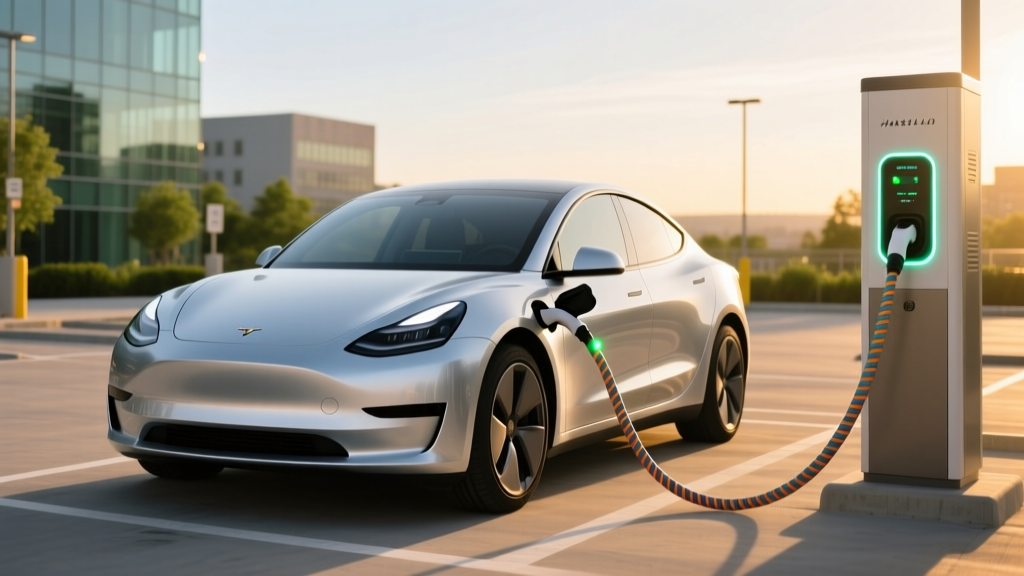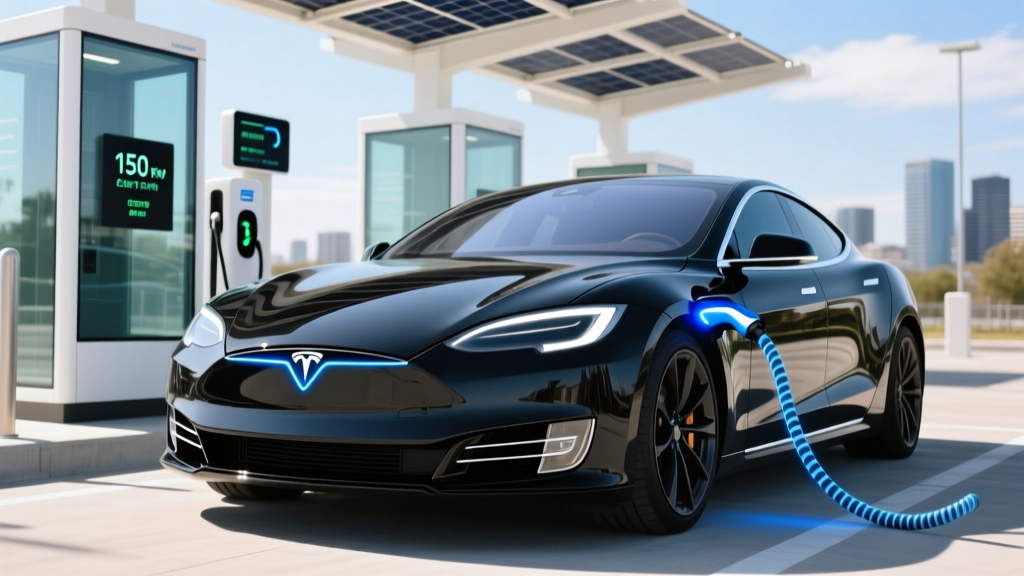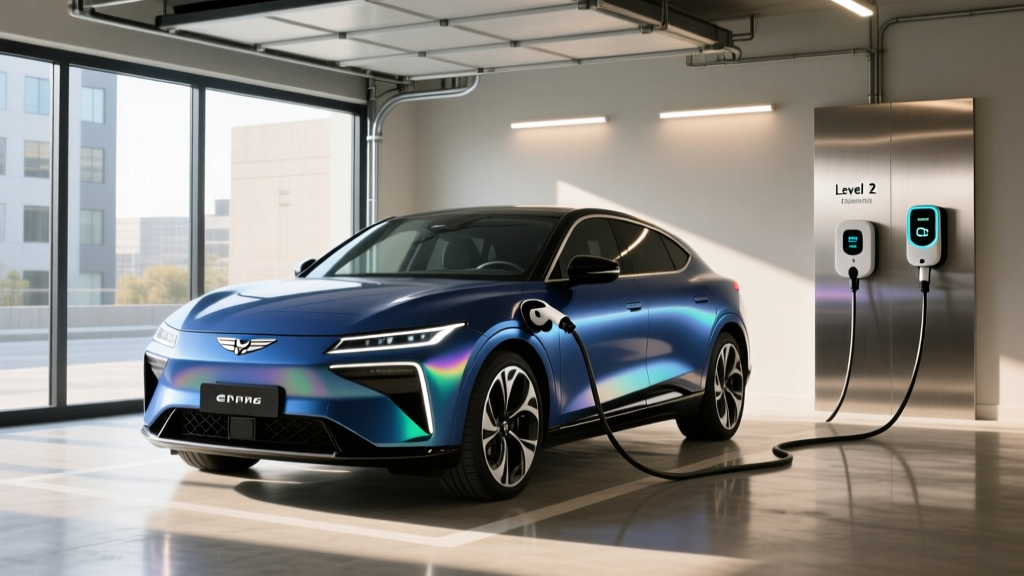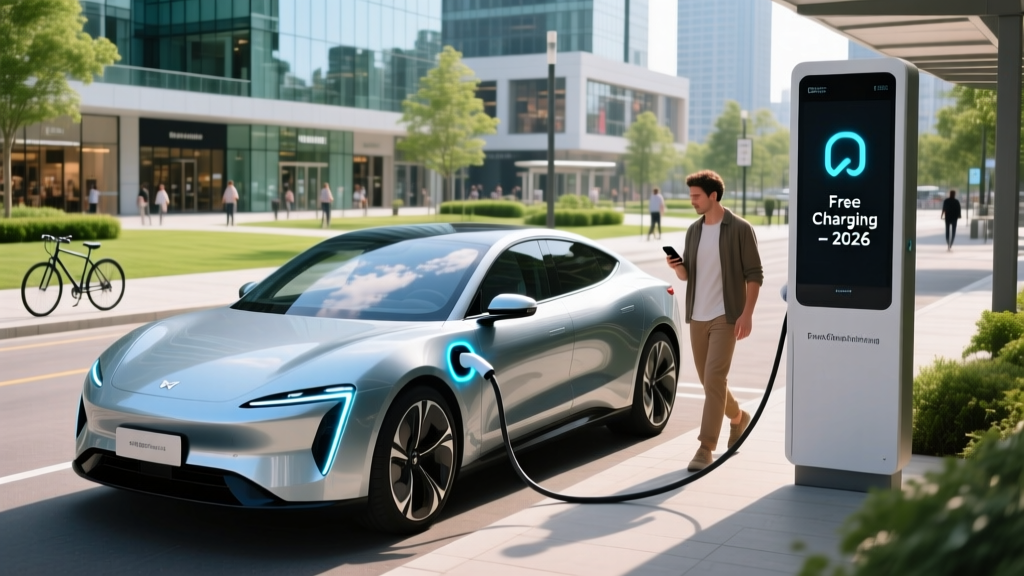
If you're new to electric vehicle ownership or considering the switch, one question likely dominates your research: where can I find free EV charging points? While the majority of EV owners do the bulk of their charging at home, a growing network of complimentary public chargers exists at shopping centers, workplaces, hotels, and municipal lots across the United States. This guide breaks down where to locate free charging, how charging levels and speeds actually work, what home installation really costs, and how charging economics compare to gasoline on a per-mile basis.
Understanding EV Charging Levels and Speeds
Before hunting for free EV charging points, you need to understand what you're plugging into. EV charging falls into three categories, each with dramatically different power outputs and charging times. The critical distinction every EV owner must internalize: kW (kilowatts) measures power — how fast energy flows into your battery. kWh (kilowatt-hours) measures energy — the total capacity of your battery. Think of kW as the width of a hose and kWh as the size of the bucket.
| Level | Voltage | Max Power (kW) | Miles of Range Added Per Hour | Typical Location |
|---|---|---|---|---|
| Level 1 | 120V AC | 1.4–1.9 kW | 3–5 miles | Standard household outlet |
| Level 2 | 240V AC | 7.2–19.2 kW | 20–60 miles | Home, workplace, retail, free public stations |
| DC Fast Charging | 400–800V DC | 50–350 kW | 150–1,200+ miles (equivalent) | Highway corridors, dedicated stations |
Most free EV charging points you'll encounter are Level 2 stations delivering 7.2 kW to 11.5 kW — perfect for topping off during a shopping trip or workday but not designed for rapid road-trip replenishment. DC fast chargers capable of adding 200+ miles in 20 minutes are almost universally pay-per-use, operated by networks like Electrify America, EVgo, and Tesla Superchargers.
Where to Find Free EV Charging Points
Free public charging remains widely available in 2026, though the landscape has shifted as networks monetize high-traffic locations. Here's where you're most likely to plug in without paying:
Workplace Charging
The single most reliable source of free EV charging points is employer-provided stations. According to the U.S. Department of Energy, over 40% of workplace charging installations offer complimentary access to employees. If your employer doesn't currently offer charging, the Alternative Fuels Data Center maintains a database of workplace incentive programs by state.
Retail and Hospitality
Shopping centers (especially Target, Whole Foods, and Simon Property Group malls), hotels (notably Marriott and Hilton properties), and grocery chains frequently install Level 2 chargers as customer amenities. These free stations typically deliver 7.2 kW and limit sessions to 2–4 hours. Always check signage — some locations have transitioned to paid models through ChargePoint or Blink networks.
Municipal and Utility Programs
City-owned parking garages, public libraries, and parks departments in EV-forward states (California, Oregon, Washington, New York, Colorado) often operate free Level 2 chargers. Some municipal utilities — like Sacramento Municipal Utility District (SMUD) and Austin Energy — still offer free charging at select public locations as part of grid-management and adoption-incentive programs.
Dealerships and Service Centers
Many EV-brand dealerships (Tesla, Rivian, Hyundai, Kia) provide complimentary Level 2 charging while you wait for service or test-drive vehicles. This is informal and location-dependent, but worth asking about.
Pro tip: Use the AFDC Station Locator and filter by "free" or "no fee" to map complimentary chargers near your routes. Apps like PlugShare also let users flag free stations with real-time availability updates.
Home Charging Installation: Costs, Requirements, and Electrical Upgrades
Free public chargers are a bonus, but the economic foundation of EV ownership is home Level 2 charging. Here's what installation actually requires and costs in 2026.
Electrical Requirements
A standard home Level 2 charger requires a dedicated 240-volt circuit — the same voltage your electric dryer or oven uses. Most EV owners install a 40-amp or 48-amp circuit, which supports charging at 9.6 kW or 11.5 kW respectively. The National Electrical Code (NEC) requires that continuous loads (like EV charging) not exceed 80% of a circuit's rated capacity, so a 48-amp charger needs a 60-amp breaker.
Panel Upgrade Reality
Homes built before 2000 often have 100-amp electrical panels that may lack capacity for a dedicated EV circuit — especially if you're already running electric heat, a dryer, and an electric range. A panel upgrade to 200 amps typically costs $1,500–$3,500 before EV charger installation. This is the single biggest variable in home charging cost and the one most online guides understate.
| Component | Cost Range |
|---|---|
| Level 2 EVSE Equipment (charger unit) | $350–$750 |
| Electrician Labor (standard install, panel nearby) | $500–$1,500 |
| Electrical Permit | $50–$200 |
| Panel Upgrade (if needed, 100A → 200A) | $1,500–$3,500 |
| Conduit and Wiring (long runs, 50+ ft) | $200–$800 |
| Total — No Panel Upgrade | $900–$2,450 |
| Total — With Panel Upgrade | $2,400–$5,950 |
The federal Residential Clean Energy Credit (IRC §25C) covers up to 30% of EV charger equipment and installation costs, capped at $1,000 per year through 2032. This credit applies to the charger unit and associated electrical work, but not to panel upgrades. Always consult a tax professional for eligibility specifics.
Connector Compatibility: NACS, CCS, and CHAdeMO
The EV connector landscape has consolidated significantly since Tesla opened its North American Charging Standard (NACS) to other automakers. Here's where things stand for the 2025–2026 model year:
| Connector | Brands Using It (Factory) | Adapter Needed for Tesla Superchargers? |
|---|---|---|
| NACS (Tesla) | Tesla, Ford, GM, Rivian, Volvo, Polestar, Fisker, Mercedes-Benz (2025+) | No — native NACS port |
| CCS1 | Hyundai, Kia, BMW, VW, Audi, Porsche, Lucid (legacy models) | Yes — CCS-to-NACS adapter (~$150–$250) |
| CHAdeMO | Nissan Leaf (discontinued after 2025), Mitsubishi Outlander PHEV | Limited Supercharger access; rely on Electrify America network |
If you're buying a new EV in 2026, NACS is increasingly the default. Ford, GM, and Rivian owners can use Tesla Superchargers directly, while CCS-equipped vehicles from Hyundai/Kia require an adapter for Supercharger access. Most free public Level 2 chargers use the universal J1772 connector, which works with all EVs (Tesla owners use a small J1772-to-NACS adapter included with the vehicle).
Charging Cost Per Mile: EV vs. Gasoline
Even when you can't find free EV charging points, home charging delivers massive per-mile savings over gasoline. Here's the math with real 2026 numbers.
| Scenario | Rate | Vehicle Efficiency | Cost Per Mile |
|---|---|---|---|
| Home Charging (national avg. electricity) | $0.16/kWh | 3.5 mi/kWh (286 Wh/mi) | $0.046 |
| Home Off-Peak / Time-of-Use Rate | $0.09/kWh | 3.5 mi/kWh | $0.026 |
| Scenario | Rate | Vehicle Efficiency | Cost Per Mile |
|---|---|---|---|
| Public Level 2 (paid) | $0.30/kWh | 3.5 mi/kWh | $0.086 |
| DC Fast Charging (Electrify America avg.) | $0.48/kWh | 3.5 mi/kWh | $0.137 |
| Free Public Level 2 | $0.00/kWh | 3.5 mi/kWh | $0.00 |
| Gasoline (national avg. $3.40/gal) | $3.40/gal | 28 MPG (avg. ICE sedan) | $0.121 |
At national average electricity rates, home EV charging costs roughly $0.05 per mile — less than half the $0.12 per mile of a 28 MPG gasoline car at $3.40/gallon. With off-peak time-of-use rates, that drops to under $0.03/mile. Even DC fast charging at highway rates ($0.48/kWh) costs only slightly more than gasoline per mile. And whenever you score a free EV charging point, your fuel cost drops to zero.
Charging Time Examples for Common Battery Sizes
How long does charging actually take? Here are real-world 10–80% charging times for popular 2026 EV models across charging levels. Note that DC fast charging speeds are not linear — the charge curve tapers significantly above 80% State of Charge (SoC) to protect battery health, which is why we measure 10–80% rather than 0–100%.
| Vehicle (Battery Size) | Level 2 at 11.5 kW | DC Fast (Peak kW) | 10–80% DCFC Time |
|---|---|---|---|
| Tesla Model Y (75 kWh, LFP) | ~5.5 hours | 250 kW peak | ~25 minutes |
| Hyundai Ioniq 5 (77.4 kWh, NMC) | ~5.8 hours | 240 kW peak (800V) | ~18 minutes |
| Ford F-150 Lightning (131 kWh ext., NMC) | ~10 hours | 150 kW peak | ~42 minutes |
| Chevrolet Equinox EV (85 kWh, NMC) | ~6.5 hours | 150 kW peak | ~35 minutes |
| BMW i4 eDrive40 (81.5 kWh, NMC) | ~6 hours | 200 kW peak | ~28 minutes |
For free public Level 2 chargers, plan on adding roughly 25–40 miles of range per hour of parking. A 3-hour shopping trip at an 11.5 kW free charger adds approximately 80–100 miles — enough to cover most daily driving needs.
Recommended Home EV Chargers for 2026
If you're installing a home Level 2 charger, here are three proven units that balance performance, reliability, and smart features:
ChargePoint Home Flex (Best Overall)
Power: Up to 11.5 kW (48A) on a 60A circuit, adjustable down to 16A
Connector: NACS or J1772 (configurable at purchase)
Cable Length: 23 feet
Smart Features: Wi-Fi connected, ChargePoint app scheduling, Alexa integration, energy tracking, automatic off-peak scheduling
Price: $549–$649
Why: The most versatile and widely recommended home charger. Adjustable amperage means it works with nearly any electrical panel without requiring a full upgrade.
Tesla Wall Connector (Best for NACS Vehicles)
Power: Up to 11.5 kW (48A) on a 60A circuit
Connector: NACS native (J1772 adapter available)
Cable Length: 24 feet
Smart Features: Wi-Fi updates, Tesla app integration, power sharing between two units on one circuit, load management
Price: $425
Why: Best value for Tesla and NACS-equipped vehicle owners. Clean design, reliable connectivity, and the power-sharing feature is ideal for two-EV households.
Emporia Level 2 EV Charger (Best Budget Smart Charger)
Power: Up to 11.5 kW (48A) on a 60A circuit
Connector: J1772 (NACS adapter included for Tesla vehicles)
Cable Length: 24 feet
Smart Features: Wi-Fi, Emporia app with solar integration, scheduling, energy monitoring, utility demand-response compatible
Price: $379–$399
Why: Unbeatable price for a full-featured smart charger. Especially strong for homes with solar panels — the app can prioritize charging during peak solar production.
Safety, Code Compliance, and Installation Best Practices
EV charger installation is not a DIY project. The National Electrical Code (NEC Article 625) governs EV charging equipment, and your installation must comply with local building codes. Here's what matters:
- Dedicated circuit: Your Level 2 charger must have its own dedicated circuit — it cannot share with other appliances. This prevents overloading and tripped breakers.
- GFCI protection: NEC 2023 and later requires Ground Fault Circuit Interrupter (GFCI) protection for all EV charging outlets. Hardwired installations (no plug) may have different requirements depending on your jurisdiction.
- Outdoor rating: If your charger is installed outdoors or in an unenclosed carport, the EVSE unit must carry a NEMA 4 (weather-resistant) rating. All three chargers recommended above meet this standard.
- Permit and inspection: Most jurisdictions require an electrical permit ($50–$200) and a post-installation inspection. Skipping this step can void your homeowner's insurance coverage for electrical fires and create problems at resale.
- Wire gauge: A 60-amp circuit typically requires 6 AWG copper wire (THHN in conduit) or 4 AWG aluminum. Your electrician will size this based on run length and local code.
Hire a licensed electrician with EV charger installation experience — not a general handyman. Ask for references from previous EV installs and verify they pull permits. The U.S. Department of Energy recommends getting at least three quotes, as pricing varies significantly by region and electrician.
Frequently Asked Questions
How much does it cost to install a home EV charger?
A standard Level 2 home charger installation costs between $900 and $2,450 when no panel upgrade is needed. If your home requires a 200-amp panel upgrade, total costs range from $2,400 to $5,950. The federal §25C Residential Clean Energy Credit covers 30% of equipment and installation costs up to $1,000, which can reduce a typical $1,500 install to around $1,050 out of pocket.
How fast will each charging level add range?
Level 1 (120V) adds 3–5 miles per hour — adequate only for overnight top-offs on PHEVs with small batteries. Level 2 (240V) adds 20–60 miles per hour depending on amperage — the practical standard for daily home and public charging. DC fast charging adds 150–1,200+ equivalent miles per hour at peak power, but real-world sessions are measured in minutes (typically 18–42 minutes for 10–80%).
Which connector/charger is compatible with my EV?
All 2026 Tesla, Ford, GM, Rivian, and Volvo EVs use the NACS connector natively. Hyundai, Kia, and BMW EVs use CCS1 but can access Tesla Superchargers with a $150–$250 adapter. For free public Level 2 chargers, all EVs use the J1772 standard (Tesla owners use the included J1772-to-NACS adapter). CHAdeMO is effectively discontinued for new vehicles.
How much does charging cost per mile vs. gas?
Home charging at the national average electricity rate of $0.16/kWh costs approximately $0.05 per mile in a typical EV — about 60% less than a 28 MPG gasoline car at $3.40/gallon ($0.12/mile). Off-peak home rates can drop this to $0.03/mile. DC fast charging at $0.48/kWh costs roughly $0.14/mile, still competitive with gasoline. Free EV charging points bring your fuel cost to $0.00/mile.
What electrical upgrades might I need?
Homes with 100-amp electrical panels may need a service upgrade to 200 amps ($1,500–$3,500) to support a dedicated 60-amp EV circuit — especially if you have other high-draw electric appliances. Homes built after 2005 with 200-amp panels usually have sufficient spare capacity. Your electrician will perform a load calculation (NEC Article 220) to determine if an upgrade is necessary before any work begins.
Are free EV charging points reliable?
Reliability varies. Free chargers at well-maintained retail locations and workplaces tend to be reliable, but municipal and older installations may experience downtime. Always have a backup paid-charging option (like a ChargePoint or EVgo account) for when free stations are occupied or out of service. PlugShare user reviews are the best real-time reliability indicator.