The Truth About Free EV Charging in 2026
Search any EV forum and you'll find owners hunting for free charging like it's a birthright. The good news: free public charging still exists in 2026, but it's shrinking as networks monetize their infrastructure. The better news? If you can charge at home — even without a "free" label — you're likely paying less per mile than any public station can offer.
Before we break down where free charging lives (and dies), let's ground this in the numbers that actually matter: charging speed, cost per mile, and what your home electrical panel can handle. Because the cheapest electron is usually the one you pull from your own garage.
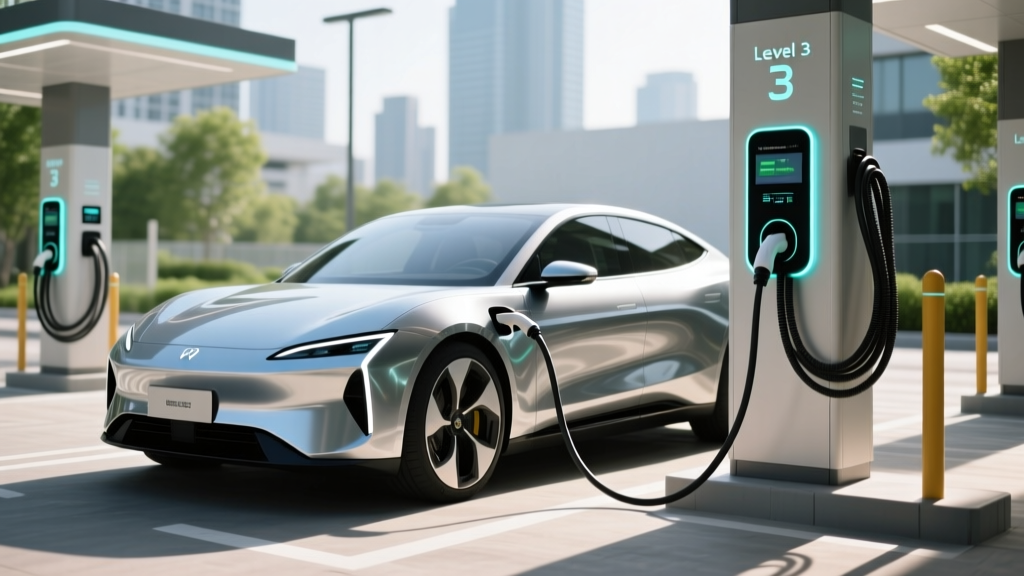
Charging Levels Explained: Speed, Power, and Real-World Range Added
EV charging comes in three tiers, each defined by its power delivery in kilowatts (kW). Remember: kW measures the rate of energy flow, while kilowatt-hours (kWh) measures the total energy stored in your battery. Confusing them is the most common EV literacy mistake — like mixing up a hose's flow rate with the bucket's capacity.
| Level | Typical Power (kW) | Voltage / Amperage | Miles of Range Added per Hour | 10-80% Time (75 kWh Battery) | Best For |
|---|---|---|---|---|---|
| Level 1 | 1.2 – 1.9 kW | 120V / 12-16A | 3 – 5 mi/hr | ~40+ hours (not practical) | Overnight top-ups, PHEVs, emergencies |
| Level 2 (Home/Public) | 3.3 – 19.2 kW | 240V / 16-80A | 12 – 75 mi/hr | 4 – 14 hours | Daily home charging, workplace, destinations |
| DC Fast Charging | 50 – 350 kW | 400-800V DC | 150 – 1,000+ mi/hr (peak) | 15 – 45 minutes | Road trips, quick top-ups, fleet depots |
A few real-world caveats: DC fast charging doesn't sustain peak power for the entire session. A vehicle rated for 250 kW peak might only hold that rate between 10-40% State of Charge (SoC), then taper to 150 kW, then 80 kW, then 40 kW above 80%. This is the charge curve, and it's why a "250 kW charger" doesn't mean you'll average 250 kW. Most 10-80% times assume optimal battery preconditioning — if you arrive at a fast charger with a cold battery, expect 20-40% slower speeds initially.
For context, a 2026 Hyundai Ioniq 5 (84 kWh usable, NMC battery) can accept up to 240 kW DC and hit 10-80% in roughly 18 minutes when preconditioned. A Chevrolet Equinox EV (85 kWh, NMC) peaks around 150 kW, taking about 30 minutes for the same 10-80% window. These numbers assume battery temperatures between 75-95°F.
Where to Actually Find Free Charging in 2026
Free charging hasn't disappeared, but it's become more targeted. Here's where it still exists:
- Workplace charging: The single most reliable source of free electrons. Companies like Google, Salesforce, and many universities still subsidize Level 2 charging as an employee perk. Power typically ranges from 6.6 to 19.2 kW per stall.
- Destination chargers at hotels and shopping centers: Many upscale hotels (Hilton, Marriott properties) and retail centers install Level 2 chargers as amenities. Expect 7-11 kW, enough to add 25-40 miles per hour of shopping or an overnight top-up.
- Municipal and utility programs: Some cities and public utilities offer free Level 2 charging at libraries, transit centers, and parks — particularly in states with ZEV mandates like California, New York, and Massachusetts. These are often time-limited (2-4 hour sessions).
- Automaker complimentary programs: Brands like Hyundai, Kia, and Volkswagen have offered 2-3 years of complimentary DC fast charging through networks like Electrify America for new EV buyers. Check your purchase agreement — these credits expire.
- Apartment and condo amenities: Newer multifamily buildings increasingly include free or subsidized Level 2 charging to attract tenants, typically at 7-11 kW per stall.
Use apps like PlugShare, ChargePoint, and A Better Routeplanner to filter for free stations. But always verify — a station marked free may have changed to paid, or require a purchase, or limit sessions to 30 minutes.
Home Charging Installation: What It Actually Costs
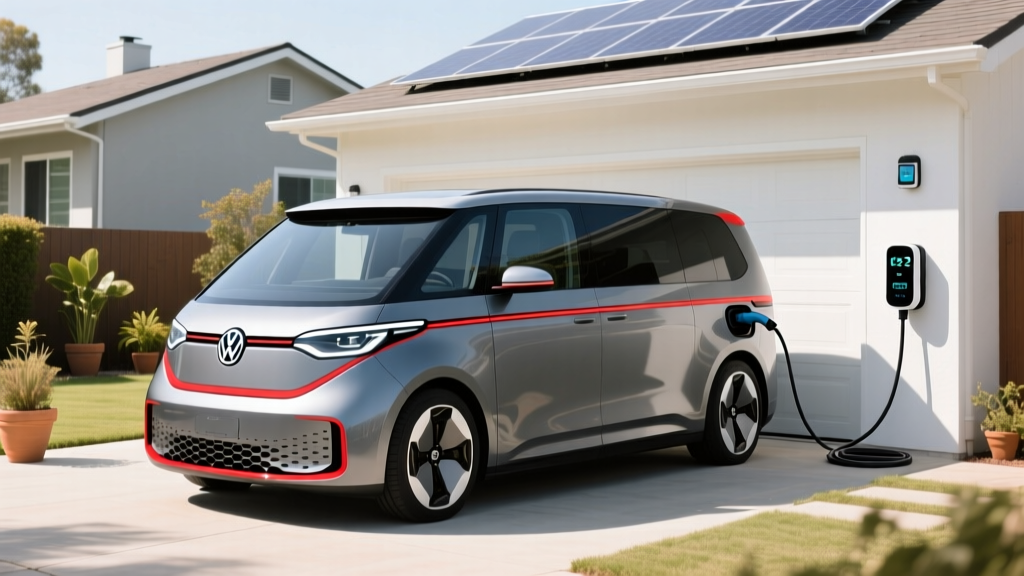
Home Level 2 charging is where most EV owners find their true "free" — or at least their cheapest — electrons. But installation costs vary wildly depending on your home's electrical infrastructure.
Electrical Requirements for Level 2 Home Charging
A typical Level 2 home charger requires a 240-volt dedicated circuit, similar to what powers an electric dryer or oven. The most common configurations:
- 40-amp circuit (delivers 32A continuous / 7.7 kW) — sufficient for most EVs and the most common residential install
- 50-amp circuit (delivers 40A continuous / 9.6 kW) — faster charging, good for larger batteries like the Ford F-150 Lightning (131 kWh extended range)
- 60-amp circuit (delivers 48A continuous / 11.5 kW) — maximum practical home speed, requires robust panel capacity
The National Electrical Code (NEC) requires that continuous loads (like EV charging) use no more than 80% of a circuit's rated capacity. So a 40A breaker delivers 32A of continuous charging power. This isn't a suggestion — it's code, and your inspector will check.
Panel Upgrade: The Hidden Cost
If your home has a 100-amp main electrical panel (common in homes built before 1990), adding a 40A EV circuit may push you over your panel's capacity. An electrician will perform a load calculation to determine if you need a panel upgrade to 200 amps. This is the single biggest variable in installation cost.
| Component | Typical Cost Range | Notes |
|---|---|---|
| Level 2 charger (hardware) | $300 – $700 | Smart Wi-Fi chargers; basic models from $200 |
| Electrician labor (standard install) | $400 – $1,200 | Assumes panel within 50 ft of install location |
| Electrical permit | $50 – $200 | Varies by municipality; some waive for EV installs |
| Conduit and wiring materials | $100 – $400 | Longer runs and outdoor conduit cost more |
| Panel upgrade (if needed) | $1,500 – $3,500 | 100A to 200A service upgrade; older homes |
| Total (no panel upgrade) | $850 – $2,500 | Most homes built after 1995 |
| Total (with panel upgrade) | $2,350 – $6,000 | Homes with 100A service |
Many utilities offer rebates of $250-$500 for home charger installation, and the federal Residential Clean Energy Credit covers 30% of charger hardware and installation costs (up to $1,000) through 2032, per the IRS. This applies to both the charger and the electrical work, including panel upgrades if they're solely for EV charging. Consult a tax professional for your specific eligibility.
Charging Cost Per Mile: Home vs Public vs Gas
This is where the math gets decisive. Let's compare real cost-per-mile scenarios using a mid-size EV averaging 3.5 miles per kWh (roughly 28.5 kWh/100mi — typical for a 2026 Tesla Model Y or Hyundai Ioniq 5 on the combined cycle, per fueleconomy.gov).
| Charging Scenario | Cost per kWh | Cost per Mile | Annual Cost (12,000 mi) |
|---|---|---|---|
| Home (off-peak utility rate) | $0.08 – $0.15 | $0.023 – $0.043 | $275 – $514 |
| Home (standard rate, no TOU) | $0.13 – $0.22 | $0.037 – $0.063 | $446 – $754 |
| Public Level 2 (paid) | $0.20 – $0.45 | $0.057 – $0.129 | $686 – $1,543 |
| DC Fast Charging (public) | $0.30 – $0.58 | $0.086 – $0.166 | $1,029 – $1,986 |
| Free workplace/destination | $0.00 | $0.00 | $0 |
| Gasoline (28 MPG avg, $3.40/gal) | — | $0.121 | $1,457 |
The takeaway: home off-peak charging at $0.10/kWh costs roughly $0.029/mile — about four times cheaper than gasoline at current prices. Even public DC fast charging at $0.48/kWh ($0.137/mile) roughly matches gas. Free workplace charging is pure savings, but relying on it means you're tethered to your employer's schedule and charger availability.
Connector Compatibility: Which Plug Fits Your EV?
The connector landscape has consolidated significantly since Tesla opened its Supercharger network and the North American Charging Standard (NACS) emerged as the dominant plug. Here's where things stand for 2026 models:
| Connector | Brands Using It (2026 Models) | Max DC Fast Charge Power | Adapter Needed? |
|---|---|---|---|
| NACS (Tesla / J3400) | Tesla, Ford, GM, Rivian, Volvo, Polestar, Mercedes-Benz, Nissan, Honda, Fisker, BMW (2025+) | Up to 350 kW | CCS-to-NACS adapter for legacy CCS stations (~$200-$250) |
| CCS1 (Combined Charging System) | Hyundai, Kia, Stellantis (Jeep/Dodge), Volkswagen ID.4 (2024 and earlier), some legacy models | Up to 350 kW | NACS-to-CCS adapter for Tesla Superchargers (~$200-$250) |
| CHAdeMO | Nissan Leaf (discontinued 2025), Mitsubishi Outlander PHEV (legacy) | Up to 100 kW (typically 50 kW) | Phasing out; limited adapter options |
For Level 2 home and public AC charging, all EVs use the J1772 connector — or a NACS plug that carries AC on the same pins (Tesla's approach). Your home Level 2 charger will have either a J1772 plug (works with all EVs, including Teslas via the included adapter) or a NACS plug (works directly with NACS vehicles, requires adapter for CCS vehicles).
Practical advice: If you're buying a new EV in 2026, NACS is the future-proof choice. Most major automakers have switched or are switching. If your EV has CCS, budget for a NACS adapter (~$200-250) to access Tesla Superchargers — which remain the most reliable DC fast charging network in North America.
Best Home EV Chargers for 2026: Equipment Picks
Not all Level 2 chargers are equal. Here's what we recommend based on power output, build quality, smart features, and real-world reliability:
ChargePoint Home Flex
- Power: Up to 12 kW (50A circuit / 40A continuous), adjustable down to 16A
- Connector: J1772 (NACS adapter included for newer units)
- Cable length: 23 feet
- Smart features: Wi-Fi, Alexa integration, scheduling, energy tracking, load sharing for multi-charger installs
- Price: ~$550-$650
- Best for: Most homes; flexible amperage means it works on 30A to 60A circuits
Tesla Wall Connector
- Power: Up to 11.5 kW (60A circuit / 48A continuous)
- Connector: NACS (J1772 adapter available separately)
- Cable length: 24 feet
- Smart features: Wi-Fi, over-the-air updates, power sharing between multiple units, Tesla app integration
- Price: ~$475
- Best for: NACS-equipped vehicles (Tesla, Ford, GM, Rivian); best value for power output
Emporia Vue Level 2 Charger
- Power: Up to 11.5 kW (60A circuit / 48A continuous)
- Connector: J1772
- Cable length: 24 feet
- Smart features: Wi-Fi, integration with Emporia energy monitoring, solar-aware charging, time-of-use scheduling
- Price: ~$400-$450
- Best for: Solar-panel owners and budget-conscious buyers wanting full smart features
Grizzl-E Smart
- Power: Up to 10 kW (50A circuit / 40A continuous)
- Connector: J1772
- Cable length: 24 feet
- Smart features: Wi-Fi, OCPP compatibility, adjustable amperage via DIP switches
- Price: ~$450-$550
- Best for: Outdoor installs (rated to -40°F), Canadian-built durability, harsh climates
For most buyers, the ChargePoint Home Flex offers the best combination of adjustable power, connector flexibility, and smart features. If you drive a NACS vehicle and want maximum power on a budget, the Tesla Wall Connector is hard to beat at $475 for 11.5 kW.
Safety and Electrical Code: What Your Installation Must Include
A safe home EV charger installation isn't just about plugging in. The NEC and local codes require specific protections:
- Dedicated circuit: Your EV charger must be on its own breaker — not shared with other appliances. This prevents overloading and tripped breakers during long charging sessions.
- GFCI protection: The 2020 NEC (and later) requires Ground Fault Circuit Interrupter protection for all EV charging outlets. Most hardwired chargers have built-in GFCI; if you're installing a NEMA 14-50 receptacle, the breaker must be GFCI-rated (~$80-$120 extra for the breaker).
- Outdoor rating: If your charger is installed outside, it must carry a NEMA 4 (or higher) weather resistance rating. All chargers listed above meet this standard, but the connector holster and cable management must also be rated for UV and moisture exposure.
- Proper wire gauge: A 50A circuit requires 6 AWG copper wire; a 60A circuit requires 4 AWG. Undersized wire creates fire risk and will fail inspection. Your electrician handles this, but verify it on the permit paperwork.
- Permit and inspection: Most jurisdictions require an electrical permit for EV charger installation ($50-$200). The inspector verifies wire gauge, breaker sizing, GFCI protection, and grounding. Don't skip this — unpermitted work can void homeowner's insurance claims.
Frequently Asked Questions
How much does it cost to install a home EV charger?
Expect $850-$2,500 for a standard Level 2 installation if your electrical panel has sufficient capacity (200A service). If you need a panel upgrade from 100A to 200A, total costs range from $2,350-$6,000. The federal Residential Clean Energy Credit covers 30% of hardware and installation (up to $1,000), and many utilities offer additional rebates of $250-$500.
How fast will each charging level add range?
Level 1 (120V) adds 3-5 miles of range per hour — adequate for PHEVs with small batteries but impractical for full EVs. Level 2 (240V) adds 12-75 miles per hour depending on amperage; a 40A circuit delivers about 30 miles per hour for a typical EV. DC fast charging adds 150-1,000+ miles per hour at peak power, though the charge curve tapers significantly above 80% SoC.
Which connector is compatible with my EV?
For 2026 models, most new EVs use NACS (Tesla, Ford, GM, Rivian, Volvo, and others). Hyundai, Kia, and some Stellantis vehicles still use CCS1. The Nissan Leaf used CHAdeMO but was discontinued in 2025. For home Level 2 charging, all EVs accept J1772 or NACS AC charging. Check your vehicle's charge port or owner's manual to confirm, and budget $200-$250 for an adapter if you need cross-network access.
How much does charging cost per mile vs gas?
Home charging at $0.10-$0.15/kWh costs $0.029-$0.043 per mile for an EV averaging 3.5 mi/kWh. Gasoline at $3.40/gallon in a 28 MPG vehicle costs $0.121 per mile. That makes home EV charging roughly 3-4x cheaper per mile. Public DC fast charging at $0.40-$0.58/kWh costs $0.11-$0.17 per mile — comparable to or slightly above gas. Free workplace charging is $0/mile but depends on availability.
What electrical upgrades might I need?
The most common upgrade is a panel capacity increase from 100A to 200A service ($1,500-$3,500), required when your existing panel can't handle the added continuous load of a 40-50A EV circuit alongside your other appliances. Older homes (pre-1990) are most likely to need this. Your electrician will perform a NEC Article 220 load calculation to determine if an upgrade is necessary. Some utilities offer "make-ready" programs that cover the cost of wiring from the utility pole to your panel.
Is free public charging worth the time trade-off?
It depends on your routine. A free Level 2 charger at a grocery store (7 kW) adds about 25 miles per hour — fine if you're already shopping for 45 minutes. But driving 20 minutes out of your way for a free charger that delivers 6 kW, only to get 30 miles of range, isn't economical when your time is worth anything. For daily needs, a home Level 2 charger at $0.10/kWh costs about $2.85 to add 100 miles of range — and it happens while you sleep.