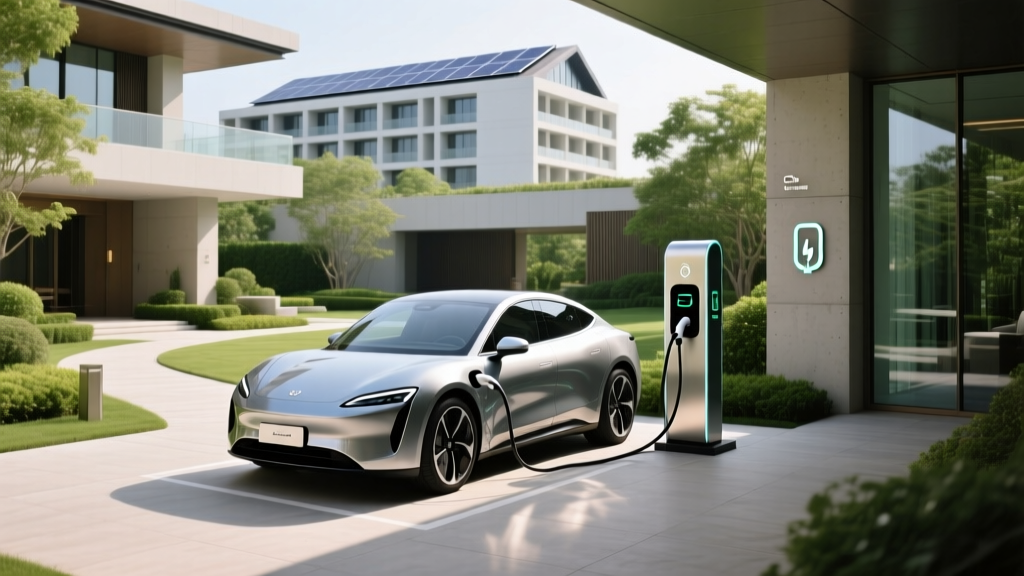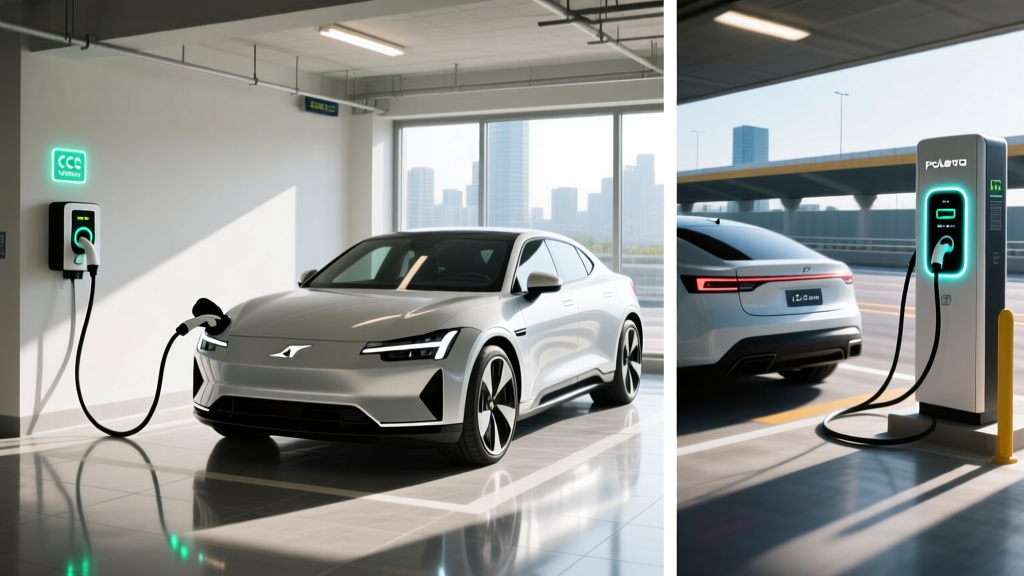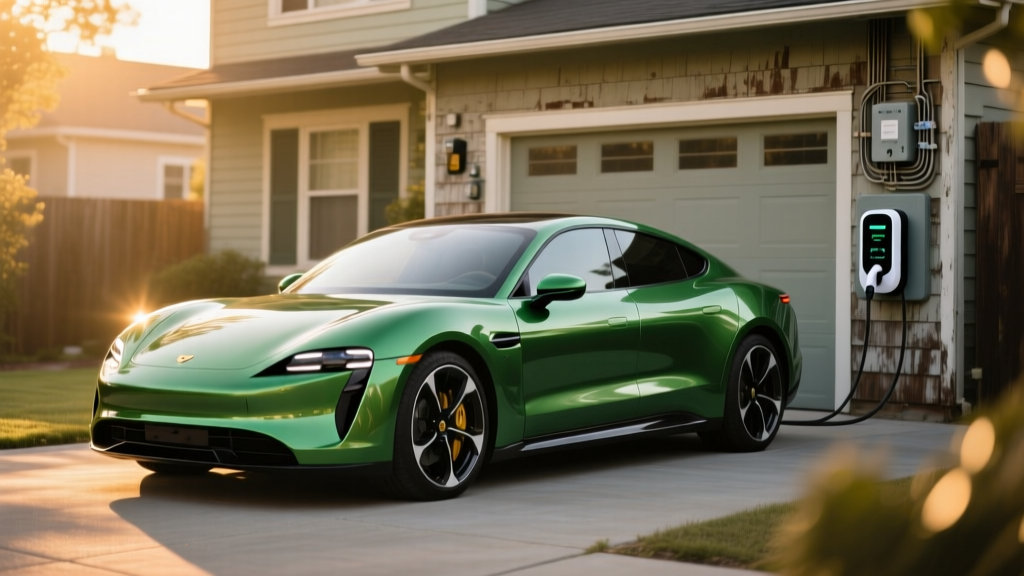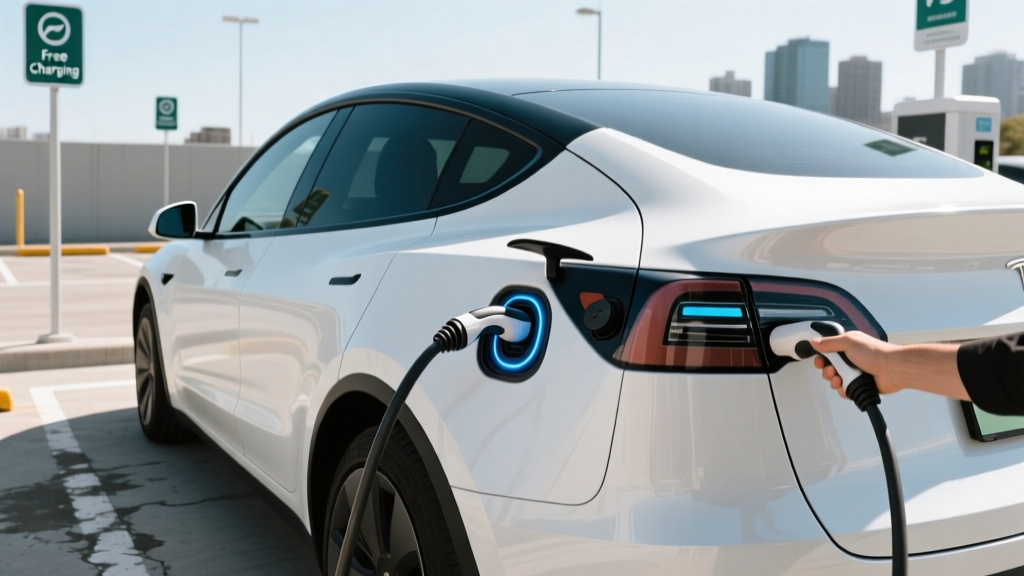
If you've searched for "free EV charging" or "freeto charging" online, you've probably found a mix of outdated apps, broken chargers, and vague promises. The reality in 2026: genuinely free public charging still exists, but it's shrinking as networks monetize their infrastructure and utilities phase out promotional rates. This guide cuts through the noise — showing you where free charging actually lives, how fast each level adds range, what a home charger install really costs, and how your per-mile charging cost stacks up against gasoline.
Where Free EV Charging Still Exists in 2026
Free charging hasn't disappeared — it has just moved to specific niches. Here's where you're most likely to find it:
- Workplace charging: Many employers still subsidize Level 2 charging as a benefit. Tech campuses, hospitals, and government buildings commonly offer complimentary 6–12 kW Level 2 stalls.
- Destination charging at hotels and resorts: Chains like Marriott, Hilton, and select Airbnb hosts provide free overnight Level 2 charging (typically 7–11 kW) for guests.
- Retail and grocery promotions: Some Whole Foods, Target, and Walmart locations partner with Volta (now part of Shell) or Electrify America for ad-supported free sessions — usually capped at 30 minutes or a specific kWh allotment.
- Utility promotional programs: Certain municipal utilities and co-ops offer free off-peak kWh credits for new EV owners during their first 6–12 months of ownership.
- Dealer and service center perks: Many EV dealerships let you top up for free while you wait for service.
The catch: Free public chargers are overwhelmingly Level 2 (6–19 kW), not DC fast chargers. You'll add roughly 20–60 miles of range per hour — fine for overnight or all-day parking, but not a road-trip solution. Apps like PlugShare and ChargePoint let you filter for "free" stations, but always verify in the comments; a charger listed as free six months ago may now require payment.
Charging Levels Explained: Speed, Power, and Real-World Range Added
Before hunting for free electrons, understand what each charging level delivers. Power is measured in kilowatts (kW) — the rate of energy flow. Energy is measured in kilowatt-hours (kWh) — the total amount stored in your battery. Confusing these two is the single most common EV literacy gap.
| Level | Voltage | Power (kW) | Miles of Range Added/Hour | Best Use Case |
|---|---|---|---|---|
| Level 1 | 120V AC | 1.0–1.4 kW | 3–5 mi/hr | Overnight top-up, PHEVs, emergency |
| Level 2 (home/public) | 240V AC | 3.3–19.2 kW | 12–60 mi/hr | Daily home charging, workplace, destination |
| DC Fast Charging | 400–800V DC | 50–350 kW | 150–1,200+ mi/hr (peak) | Road trips, rapid top-ups |
Real-world charging time examples (10–80% State of Charge):
- Hyundai Ioniq 5 (84 kWh battery, 800V architecture): ~18 minutes at a 350 kW DC fast charger; ~7.5 hours on a 48A Level 2 home charger (11.5 kW).
- Tesla Model Y Long Range (75 kWh usable): ~25 minutes at a 250 kW V3 Supercharger; ~8 hours on a 32A Level 2 (7.7 kW).
- Chevrolet Equinox EV (85 kWh usable): ~30 minutes at a 150 kW DC charger; ~9 hours on a 40A Level 2 (9.6 kW).
Note that DC fast charging follows a charge curve — peak kW is sustained only between roughly 10–50% SoC, then tapers significantly above 80%. This is why most manufacturers quote 10–80% times rather than 0–100%.
Home Charger Installation: Costs, Electrical Requirements, and Gotchas
Most EV owners do 80%+ of their charging at home. A Level 2 home charger on a dedicated 240V circuit is the gold standard. Here's what an installation actually involves and costs in 2026.
Electrical Requirements
- Circuit: A dedicated 240V circuit, typically 40A or 60A, depending on charger amperage. A 48A charger requires a 60A circuit (National Electrical Code requires circuits rated at 125% of continuous load).
- Wire gauge: 6 AWG copper for 60A circuits; 8 AWG for 40A. Longer runs (over 50 feet from the panel) may require upsizing to 4 AWG to prevent voltage drop.
- Panel capacity: Your main electrical panel must have enough spare amperage. Most modern 200A panels handle a 60A EV circuit without issue. Older 100A panels often require a service upgrade ($2,000–$4,500).
- Permit: Nearly all jurisdictions require an electrical permit for new 240V circuits. Inspections ensure code compliance and protect your home insurance coverage.
| Item | Cost Range | Notes |
|---|---|---|
| Level 2 charger (hardware) | $350–$800 | 32A–48A smart chargers; Wi-Fi-enabled models on the higher end |
| Electrician labor | $500–$2,000 | Depends on run length, conduit needs, wall material |
| Electrical permit | $50–$250 | Varies by municipality |
| Panel upgrade (if needed) | $2,000–$4,500 | 100A→200A service upgrade; not always required |
| Total (no panel upgrade) | $900–$3,050 | Most homes with 200A panels fall in this range |
| Total (with panel upgrade) | $2,900–$7,550 | Older homes with 100A service |
Federal tax credit note: The IRS §30D alternative fuel vehicle refueling property credit covers up to 30% of home charger hardware and installation costs (capped at $1,000) — but only if you live in a qualifying census tract and meet specific requirements. Always check the current IRS guidance and consult a tax professional before claiming.
Connector Compatibility: NACS, CCS, and CHAdeMO in 2026
The North American Charging Standard (NACS), developed by Tesla, has become the dominant connector for new EVs sold in North America. Most legacy CCS1 vehicles can access Tesla Superchargers using a manufacturer-approved adapter. CHAdeMO is effectively discontinued for new vehicles but still appears on older Nissan Leafs and Mitsubishi Outlander PHEVs.
| Connector | Native Brands | Adapter Required? |
|---|---|---|
| NACS (Tesla) | Tesla, Ford, GM, Rivian, Volvo, Polestar, Mercedes-Benz, Hyundai/Kia (2025+) | No — native port |
| CCS1 | VW, BMW, Audi, legacy Hyundai/Kia, Stellantis (some) | NACS-to-CCS adapter (~$150–$250) for Supercharger access |
| CHAdeMO | Nissan Leaf (2011–2025), Mitsubishi Outlander PHEV (older) | Limited network; no practical adapter to NACS/CCS DC |
For home Level 2 charging: All Level 2 chargers sold in North America use a J1772 connector (or a NACS connector with J1772 compatibility). If your EV has a NACS port, you'll need a J1772-to-NACS adapter for non-Tesla Level 2 chargers — or simply buy a NACS-terminated home charger like the Tesla Wall Connector.
Cost Per Mile: EV Charging vs. Gasoline
The economics of EV charging depend heavily on where and when you charge. Here's a realistic breakdown for a mid-size EV averaging 3.0 miles per kWh (roughly 33 kWh/100 mi — typical for a 2026 Tesla Model Y or Hyundai Ioniq 5).
| Scenario | Rate ($/kWh) | Cost Per Mile | Equivalent Gas MPG at $3.50/gal |
|---|---|---|---|
| Home off-peak (utility TOU rate) | $0.08–$0.12 | $0.027–$0.040 | 88–130 MPG |
| Home standard rate | $0.14–$0.18 | $0.047–$0.060 | 58–75 MPG |
| Public Level 2 (paid) | $0.25–$0.45 | $0.083–$0.150 | 23–42 MPG |
| DC Fast Charging (paid) | $0.35–$0.65 | $0.117–$0.217 | 16–30 MPG |
| Free charging | $0.00 | $0.000 | Infinite MPG |
| Gas car baseline (28 MPG combined) | — | $0.125 | 28 MPG |
The takeaway: Home charging at off-peak rates delivers the best economics by far — roughly one-quarter to one-third the per-mile cost of gasoline. Public DC fast charging can approach or even exceed gas costs per mile, which is why it's best reserved for road trips. Free charging, when you can find it, is obviously unbeatable — but don't plan your ownership around it.
Recommended Home EV Chargers (2026)
Here are three proven Level 2 home chargers across different budgets and ecosystems. All are UL-listed and compatible with NEMA 14-50 outlets or hardwired installation.
Emporia Vue Level 2 EV Charger
- Power: 48A / 11.5 kW (hardwired) or 40A / 9.6 kW (NEMA 14-50)
- Connector: J1772 (includes NACS adapter)
- Cable length: 24 ft
- Smart features: Wi-Fi, energy monitoring, solar integration, scheduling via app
- Price: ~$399
- Best for: Budget-conscious buyers who want smart scheduling and energy tracking
ChargePoint Home Flex
- Power: Up to 50A / 12 kW (hardwired) or 40A / 9.6 kW (14-50 plug)
- Connector: J1772 (NACS adapter available)
- Cable length: 23 ft
- Smart features: Wi-Fi, Alexa integration, ChargePoint network compatibility, flexible amperage dial
- Price: ~$599
- Best for: Owners who want network integration and adjustable amperage to match their circuit
Tesla Wall Connector (Gen 4)
- Power: 48A / 11.5 kW (hardwired, 60A circuit)
- Connector: NACS native (J1772 adapter included for non-Tesla EVs)
- Cable length: 24 ft
- Smart features: Wi-Fi, OTA updates, power sharing (link up to 6 units on one circuit), Tesla app integration
- Price: ~$475
- Best for: Tesla and NACS-native EV owners who want a clean, high-output native solution
Safety, Code, and Installation Best Practices
EV charging draws sustained high current for hours — unlike most household appliances that cycle on and off. This makes proper installation non-negotiable.
- Dedicated circuit: Your EV charger must be on its own dedicated breaker — never shared with other appliances. Continuous loads require the circuit to be rated at 125% of the charger's maximum draw (a 48A charger needs a 60A breaker).
- GFCI protection: The 2023 NEC update requires GFCI protection for 240V EV receptacles (NEMA 14-50). Hardwired installations may be exempt depending on local code. Many EV chargers have built-in ground-fault detection, but a GFCI breaker adds a layer of protection, especially for outdoor installs.
- Outdoor rating: If your charger is mounted outdoors or in an unconditioned garage, ensure it carries a NEMA 4 (or IP65+) weatherproof rating. All three chargers recommended above meet this standard.
- NEMA 14-50 vs. hardwired: A 14-50 outlet offers portability — you can unplug and take the charger when you move. Hardwired connections support higher amperage (up to 48A–80A depending on circuit) and avoid the GFCI breaker requirement in many jurisdictions. Your licensed electrician will recommend the right approach based on your panel and local code.
- Never use an extension cord: Standard extension cords are not rated for sustained 40A+ loads and pose a serious fire risk. If you need more reach, buy a charger with a longer cable or relocate the outlet.
Frequently Asked Questions
How much does it cost to install a home EV charger?
A typical Level 2 home charger installation costs between $900 and $3,050 when your electrical panel has adequate capacity (200A service with spare breaker slots). This includes the charger ($350–$800), electrician labor ($500–$2,000), and permit ($50–$250). If your home has a 100A panel and needs a service upgrade, add $2,000–$4,500. Get at least two quotes from licensed electricians and confirm they have EV charger installation experience.
How fast will each charging level add range?
Level 1 (120V) adds 3–5 miles per hour — adequate only for PHEVs with small batteries or overnight trickle-charging. Level 2 (240V) adds 12–60 miles per hour depending on amperage (a 48A/11.5 kW charger adds roughly 35–40 mi/hr for an efficient EV). DC fast charging adds 150–1,200+ miles per hour at peak power, but only during the 10–50% SoC window before tapering.
Which connector and charger is compatible with my EV?
Check your vehicle's charge port. If it's NACS (standard on 2025+ Tesla, Ford, GM, Rivian, Hyundai/Kia, Volvo, and others), buy a NACS-terminated charger like the Tesla Wall Connector or use a J1772-to-NACS adapter. If it's CCS1 (VW, BMW, older Hyundai/Kia), use any J1772 Level 2 charger natively, or get a NACS-to-CCS adapter (~$150–$250) for Supercharger access. CHAdeMO owners (Nissan Leaf) should use J1772 Level 2 chargers and plan DC fast charging around remaining CHAdeMO stations.
How much does EV charging cost per mile compared to gas?
Home charging at off-peak utility rates ($0.08–$0.12/kWh) costs roughly $0.03–$0.04 per mile in an efficient EV — about one-quarter the cost of a 28 MPG gas car at $3.50/gallon ($0.125/mile). Public DC fast charging at $0.45–$0.65/kWh can cost $0.15–$0.22 per mile, which approaches or exceeds gasoline costs. The economic advantage of EVs is strongest when you charge at home.
What electrical upgrades might I need for a home charger?
If your home has a 200A electrical panel with at least two spare breaker slots, you likely need no upgrade — just a new dedicated 60A (or 40A) breaker and a wire run to the garage or driveway. If your panel is 100A, fully loaded, or uses an outdated fuse box, you'll need a service upgrade to 200A ($2,000–$4,500). Some utilities offer rebates or financing for panel upgrades tied to EV adoption. A licensed electrician's load calculation will determine your exact situation.
Can I really rely on free public charging?
Not as a primary strategy. Free chargers are often Level 2 (slow), may be occupied by non-EVs, and can be removed or converted to paid at any time. Use free charging as a bonus — for workplace top-ups, hotel overnight stays, or promotional events — but ensure your home or a reliable paid network covers your daily and road-trip needs.