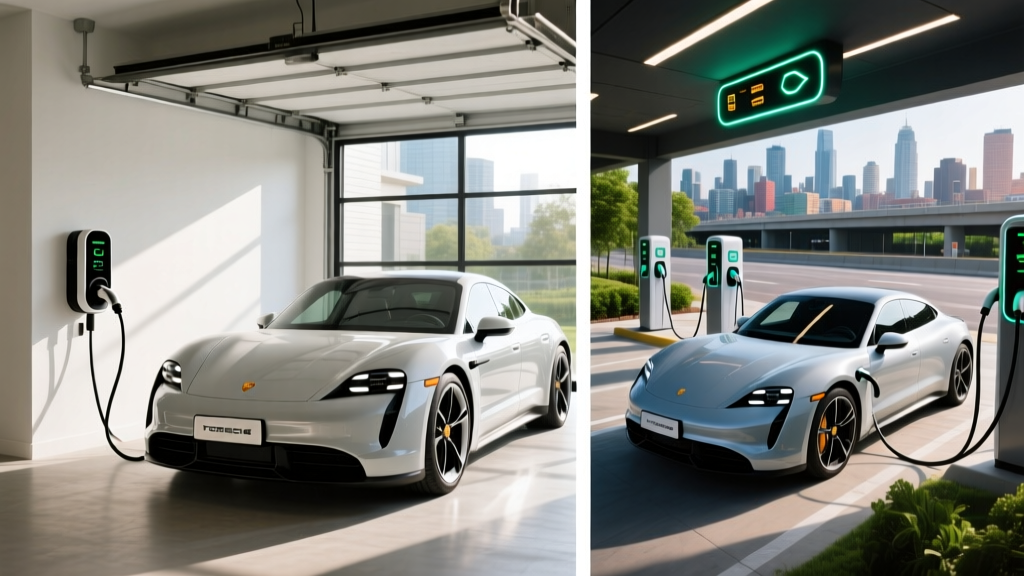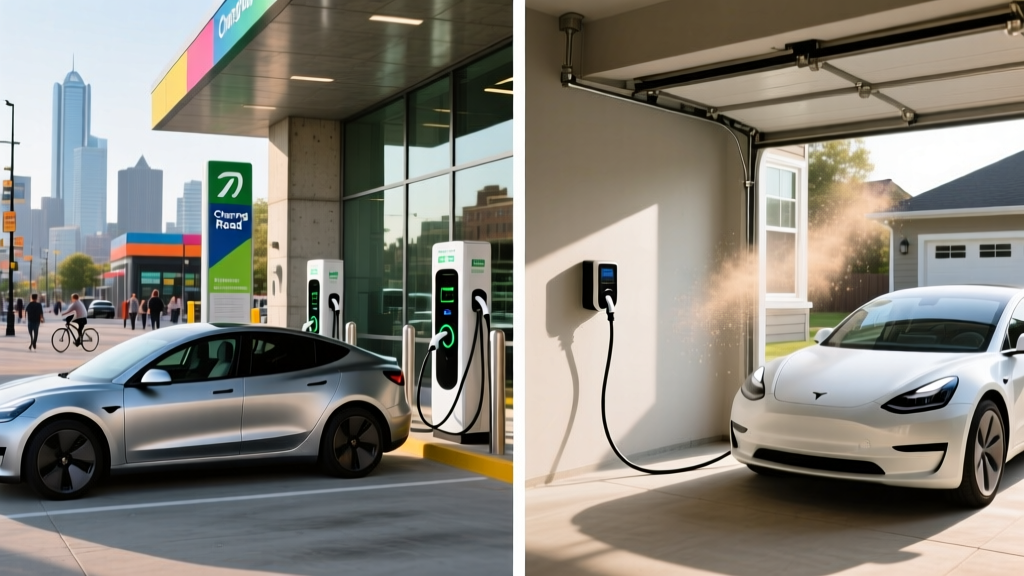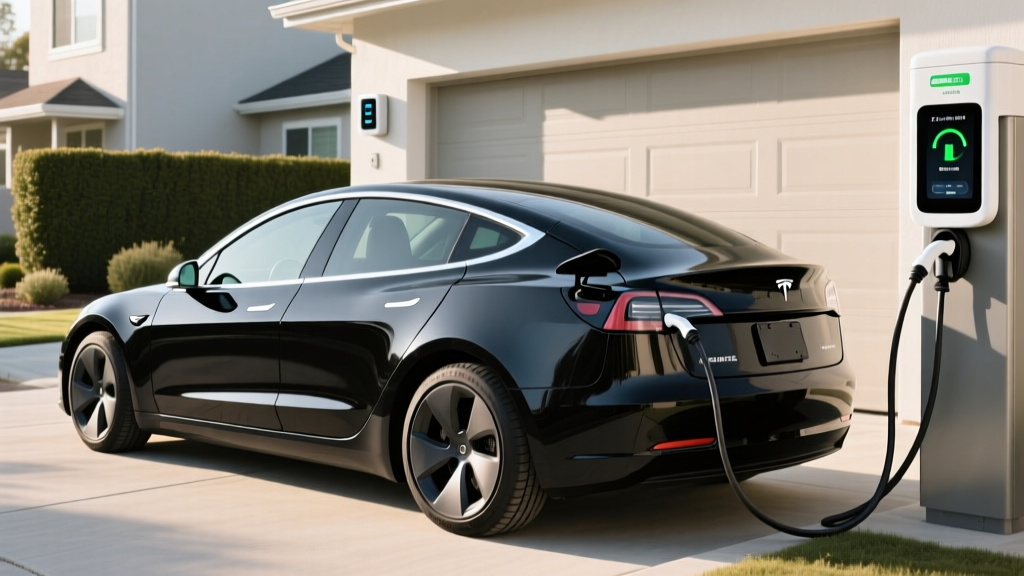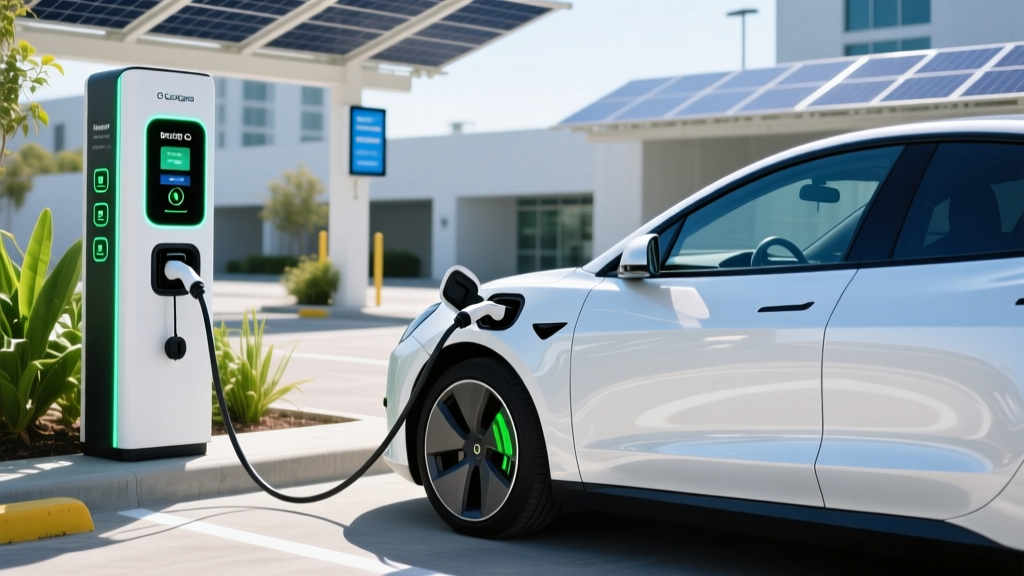
If you've searched for a free EV charger near you, you've likely hit a wall of outdated maps, broken stations, and paywalled networks. The reality of free public charging in 2026 is nuanced: genuine free stations still exist, but they're shrinking as networks monetize. The smarter play for most owners is understanding the full charging ecosystem — free promotional stops, workplace perks, low-cost home charging, and when DC fast charging is worth the premium.
This guide breaks down every angle: where free chargers still operate, what home installation actually costs (including the panel-upgrade scenario nobody warns you about), exact charging speeds at each level, connector compatibility across 2026 models, and the per-mile math versus gasoline.
Where Free EV Chargers Still Exist (and the Catch)
Free public charging hasn't disappeared — it's just relocated. Here's where you'll reliably find it in 2026:
- Automaker promotional credits: Hyundai, Kia, BMW, and Volkswagen frequently bundle 2–3 years of complimentary charging on networks like Electrify America or EVgo with new EV purchases. These typically cover 1,000–2,000 kWh — roughly 3,000–6,000 miles of driving.
- Workplace charging: Companies with sustainability commitments often offer free Level 2 charging to employees. Availability is first-come, first-served, and power is usually shared across ports (a 19.2 kW station split between two cars delivers ~9.6 kW each).
- Destination charging at hotels and retail: Tesla Destination Chargers and generic J1772/NACS Level 2 units at hotels, shopping centers, and restaurants sometimes remain free as a customer amenity. Always verify on-site — many have migrated to paid networks like ChargePoint or Blink.
- Municipal and utility programs: Some city governments and public utilities (Sacramento SMUD, Austin Energy, Seattle City Light) subsidize free or heavily discounted public charging to promote EV adoption. These are geographically limited and subject to budget renewal.
- Dealership courtesy charging: Most franchise dealers with EV lines offer free Level 2 or DC fast charging for customers waiting on service. This is informal and not guaranteed.
Charging Levels Explained: Speeds, Power, and Range Added
Before evaluating any charger — free or paid — you need to understand the three charging levels and what they actually deliver. The most common confusion in EV ownership is mixing up kW (kilowatts = power, the rate of charging) with kWh (kilowatt-hours = energy, the battery's capacity). A 150 kW charger fills your battery faster; your 75 kWh battery is how much energy it holds. They are not interchangeable.
| Level | Voltage | Power (kW) | Miles of Range Added/Hour | Best For |
|---|---|---|---|---|
| Level 1 | 120V AC | 1.0–1.4 kW | 3–5 miles | Overnight top-ups, PHEVs, low-mileage drivers |
| Level 2 | 240V AC | 3.3–19.2 kW | 12–75 miles | Daily home charging, workplace, destination |
| DC Fast Charge | 400–800V DC | 50–350 kW | 150–1,200+ miles (equivalent rate) | Road trips, rapid top-ups, commercial fleets |
Real-world charging time examples (10–80% State of Charge):
- 60 kWh battery (e.g., base Nissan Ariya): ~7 hours on 7.7 kW Level 2; ~28 minutes on a 130 kW DC fast charger
- 82 kWh battery (e.g., Tesla Model Y Long Range): ~8.5 hours on 9.6 kW Level 2; ~22 minutes on a 250 kW Supercharger (with preconditioning)
- 100 kWh battery (e.g., Ford F-150 Lightning Extended Range): ~10.5 hours on 9.6 kW Level 2; ~35 minutes on a 150 kW DCFC; ~19 minutes on a 350 kW CCS station (sustaining peak rate is rare — see charge curve below)
Home EV Charger Installation: Costs, Electrical Requirements, and the Panel-Upgrade Gotcha
Home Level 2 charging is where most EV owners do 80–90% of their charging. It's also where the free EV charger dream becomes practical reality — once installed, your marginal cost drops to your utility's residential kWh rate (national average: ~$0.16/kWh in 2026, with off-peak rates as low as $0.06–$0.10/kWh on time-of-use plans).
Electrical Requirements for Level 2 Home Charging
A Level 2 home charger requires a 240V dedicated circuit — the same voltage as your electric dryer or oven. The most common configurations:
- NEMA 14-50 outlet (50A circuit, 40A continuous): Delivers up to 9.6 kW. This is the most popular home setup, compatible with nearly every EV and portable charger. Requires 6-gauge copper wire for runs up to ~50 feet.
- Hardwired 60A circuit (48A continuous): Delivers up to 11.5 kW. Required for higher-output chargers like the ChargePoint Home Flex at max settings or the Tesla Wall Connector at 48A. Uses 4-gauge wire.
- Hardwired 80A circuit (64A continuous): Delivers up to 15.3–19.2 kW. Only useful if your EV's onboard charger supports it (most cap at 11.5 kW; the Lucid Air and some high-end models accept 19.2 kW). Requires a 100A+ panel sub-feed and 2-gauge wire.
Installation Cost Breakdown
Here's what a professional Level 2 installation actually costs in 2026. Prices vary by region, panel location, and run distance:
| Component | Typical Range | Notes |
|---|---|---|
| Level 2 charger unit (hardwired or plug-in) | $350–$750 | Smart Wi-Fi chargers cost more; basic units start ~$300 |
| Electrician labor (NEMA 14-50 or hardwire) | $400–$1,200 | Short runs from a nearby panel are cheaper; garage-adjacent panels save $500+ |
| Electrical permit | $50–$200 | Required in most jurisdictions; inspected for code compliance |
| Panel upgrade (100A → 200A service) | $1,500–$3,500 | Needed if your home has an older 100A panel and you're adding a 50A+ circuit |
| Utility make-ready rebate (if available) | –$200 to –$1,000 | Some utilities cover part of the panel or wiring cost |
| Total (no panel upgrade) | $800–$2,150 | Most homes with 200A panels fall here |
| Total (with panel upgrade) | $2,300–$5,650 | Older homes (pre-2000) frequently need this |
Federal Tax Credit for Home Charging Equipment
The IRS §30C Alternative Fuel Vehicle Refueling Property Credit covers 30% of home charger equipment and installation costs, up to $1,000. However, eligibility is restricted to census tracts that are not classified as "eligible" under the Inflation Reduction Act's targeting rules — meaning many suburban and urban tracts no longer qualify. Check your census tract via the IRS guidance or consult a tax professional before counting on this credit.
Connector Compatibility: NACS, CCS, and CHAdeMO in 2026
The connector landscape has consolidated dramatically. As of the 2026 model year, the North American Charging Standard (NACS) — originally Tesla's proprietary connector — is now the dominant standard. Here's where each brand stands:
| Connector | Brands Using It (Native) | Adapter Needed? |
|---|---|---|
| NACS (Tesla-style) | Tesla, Ford, GM, Rivian, Volvo, Polestar, Mercedes-Benz, Fisker, Lucid (2025+), Hyundai/Kia (2026 select models) | CCS → NACS adapters available (~$150–$250) for older CCS vehicles to access Superchargers |
| CCS1 (Combo) | Hyundai, Kia, BMW, VW, Audi, Porsche, Stellantis (remaining models transitioning to NACS by 2027) | NACS → CCS adapters available for Tesla Supercharger access |
| CHAdeMO | Nissan Leaf (legacy only — discontinued in US after 2025), Mitsubishi Outlander PHEV | CHAdeMO infrastructure is declining; plan around CCS/NACS |
For home Level 2 charging, the connector matters less than you'd think. All Level 2 chargers use the J1772 standard (or NACS for Tesla), and Tesla includes a J1772-to-NACS adapter with every vehicle. If you own a non-Tesla EV with NACS (like a 2026 Ford Mustang Mach-E), any NACS home charger works natively. If your EV has CCS1, buy a J1772 charger and use the J1772-to-CCS adapter that came with the car, or purchase a native CCS home unit.
For DC fast charging on the road, connector compatibility determines which networks you can use. Tesla Superchargers (now open to non-Tesla NACS vehicles) offer the most reliable network in North America, with 150–350 kW peak speeds. Electrify America and EVgo use CCS1 and are adding NACS cables. CHAdeMO stations are increasingly rare — if you drive a legacy Nissan Leaf, plan routes carefully.
Cost to Charge: Per-Mile Math vs. Gasoline
The financial case for EV charging hinges on your electricity rate. Here's how common scenarios compare to a 30 MPG gasoline car at $3.40/gallon:
| Scenario | Rate | Cost Per Mile (at 3.5 mi/kWh efficiency) | vs. 30 MPG Gas at $3.40/gal |
|---|---|---|---|
| Home off-peak (TOU plan) | $0.08/kWh | $0.023/mile | 80% cheaper |
| Home standard rate | $0.16/kWh | $0.046/mile | 60% cheaper |
| Public Level 2 (paid) | $0.20/kWh | $0.057/mile | 50% cheaper |
| DC Fast Charge (Electrify America, EVgo) | $0.38/kWh | $0.109/mile | 4% cheaper |
| DC Fast Charge (Tesla Supercharger, member rate) | $0.28/kWh | $0.080/mile | 30% cheaper |
| Gasoline (30 MPG, $3.40/gal) | $3.40/gal | $0.113/mile | Baseline |
At home on a time-of-use plan, EV charging costs roughly $0.02–$0.05 per mile — a fraction of gasoline. The savings narrow at DC fast chargers, where rates approach gas-equivalent costs. This is why home charging is the economic backbone of EV ownership: a driver covering 12,000 miles/year saves $800–$1,100 annually by charging at home versus buying gas, but only ~$50–$150/year if relying exclusively on DC fast charging.
Free charging's real value: If you have access to free workplace or promotional charging for 50% of your driving, your effective cost per mile drops to $0.01–$0.03 — making EV ownership dramatically cheaper than any gasoline vehicle.
Recommended Home EV Chargers: 2026 Equipment Picks
After testing dozens of units across multiple homes and EVs, these are the Level 2 chargers that deliver reliable performance, smart features, and fair pricing in 2026:
Tesla Wall Connector
Power: Up to 11.5 kW (48A hardwired)
Connector: NACS native; J1772 adapter included
Cable: 24 ft
Smart features: Wi-Fi, OTA updates, power-sharing with multiple units, access control
Price: ~$475
Best for: Tesla owners and NACS-equipped Ford/GM/Rivian drivers who want the cleanest integration
ChargePoint Home Flex
Power: Up to 12 kW (50A, configurable down to 16A for lower-capacity circuits)
Connector: J1772 (works with all EVs via adapter for NACS/Tesla)
Cable: 23 ft
Smart features: Wi-Fi, ChargePoint app with scheduling, energy tracking, Alexa integration
Price: ~$550–$650
Best for: CCS1-equipped EVs (Hyundai, Kia, BMW, VW) and households with multiple EV brands
Emporia Vue Smart Charger
Power: Up to 11.5 kW (48A hardwired) or 9.6 kW (40A plug-in)
Connector: J1772
Cable: 24 ft
Smart features: Integrated with Emporia Vue energy monitor, real-time solar-aware charging, load management
Price: ~$400 (charger only) or ~$600 with energy monitor bundle
Best for: Homes with solar panels or those wanting whole-home energy visibility; excellent value
Key buying criteria: Always match the charger's maximum amperage to your circuit (a 48A charger requires a 60A circuit — NEC requires circuits to be rated 125% of continuous load). Choose a cable length that reaches your charge port from the mounting location — 24 ft covers most garage setups. NEMA 4 outdoor rating is essential for exterior installations. And ensure the charger has a UL listing (not just "tested to UL standards") for safety and insurance compliance.
Safety, Permits, and Code Requirements
Level 2 EV charging draws sustained high current for hours — this is not a DIY extension-cord situation. Here's what code and safety require:
- Dedicated circuit: Your EV charger must have its own dedicated breaker — it cannot share a circuit with other appliances. A 50A circuit for the charger means a 50A breaker solely for that outlet.
- GFCI protection: NEC 2020 (Article 625.54) requires GFCI protection for all 120V and 240V EV charging outlets rated 150V to ground or less and 50A or less. Hardwired chargers may be exempt depending on local interpretation, but many jurisdictions now require GFCI for hardwired units as well.
- NEMA 4 outdoor rating: Any charger mounted outside (or in an open carport) must be rated NEMA 4 or NEMA 4X to resist rain, dust, and hose-directed water. Indoor-only units (NEMA 1) will fail and void warranties if used outdoors.
- Permit and inspection: Nearly all US jurisdictions require an electrical permit for a new 240V circuit. The inspection verifies wire gauge, breaker sizing, grounding, and GFCI compliance. Skipping the permit risks insurance denial in the event of an electrical fire.
- Wire gauge and run distance: For a 50A circuit, use 6 AWG copper for runs up to ~50 feet. Beyond 50 feet, voltage drop becomes significant — upgrade to 4 AWG. Your electrician should calculate voltage drop for your specific run.
Frequently Asked Questions
How much does it cost to install a home EV charger?
A typical Level 2 home installation (NEMA 14-50 outlet or hardwired charger) costs $800–$2,150 including equipment, electrician labor, and permit — assuming your home has a 200A electrical panel with available capacity. Homes with older 100A panels may need a panel upgrade adding $1,500–$3,500. The total range is wide because labor varies significantly by region and the distance between your panel and garage.
How fast will each charging level add range?
Level 1 (120V standard outlet) adds 3–5 miles of range per hour — adequate for PHEVs with small batteries or drivers covering under 30 miles daily. Level 2 (240V) adds 12–75 miles per hour depending on amperage and your EV's onboard charger capacity. DC fast charging adds 150–1,200+ miles per hour at peak rates, but real-world 10–80% sessions take 18–40 minutes depending on battery size and station power.
Which connector or charger is compatible with my EV?
Check your vehicle's charge port: if it's a Tesla or a 2025+ Ford, GM, Rivian, or Volvo EV, you have NACS. Most 2024–2026 Hyundai, Kia, BMW, VW, and Stellantis models still use CCS1. For home Level 2, all EVs can charge from a J1772 station using the adapter included with the vehicle. For DC fast charging, your native connector determines which networks you can use without an adapter.
How much does charging cost per mile compared to gas?
Home charging on a standard residential rate (~$0.16/kWh) costs about $0.046/mile for a typical EV getting 3.5 miles per kWh — roughly 60% cheaper than a 30 MPG gas car at $3.40/gallon ($0.113/mile). Off-peak home rates drop this to $0.02–$0.03/mile. Public DC fast charging at $0.35–$0.48/kWh narrows the gap to near parity with gasoline.
What electrical upgrades might I need for a home charger?
If your home has a 200A electrical panel with available breaker spaces and load capacity, you likely need only a new 50A or 60A breaker and wiring — no upgrade required. If your panel is 100A or 125A (common in homes built before 2000), or if a load calculation shows your existing circuits already consume 80%+ of panel capacity, you'll need a panel upgrade to 200A ($1,500–$3,500) or an automatic load-management device that throttles the charger when other appliances run.
Are free EV chargers worth planning around?
Free chargers are a bonus, not a strategy. Workplace charging, automaker promotional credits, and destination chargers can meaningfully reduce your fuel costs — but availability is inconsistent, stations may be occupied or broken, and programs change without notice. Build your ownership model around reliable home charging at your utility's rate, and treat free public charging as found money.
The bottom line: a free EV charger is a great find, but the real financial advantage of EV ownership comes from cheap, reliable home charging on an off-peak rate. Budget $800–$2,200 for a professional Level 2 installation, verify your panel capacity first, choose a UL-listed smart charger matched to your EV's connector, and you'll fuel your car for $0.02–$0.05 per mile — free stations or not.