Is Free Electric Car Charging Actually Free?
The promise of free electric car charging is one of the most compelling reasons drivers consider going electric. And it's real — but with significant caveats. In 2026, free charging still exists at select workplaces, retail locations, hotels, and through promotional utility programs, but the landscape has shifted dramatically. Networks like Electrify America, EVgo, and ChargePoint have largely phased out the free introductory sessions that once lured early adopters, and most complimentary chargers operate at Level 2 speeds (6–19 kW), not the 150–350 kW DC fast chargers you'd need for a road trip pit stop.
This guide breaks down where free charging still exists, what it actually costs to charge at home versus in public, the equipment you need, and whether chasing free electrons is worth the time trade-off. We'll also cover the full economics of EV charging so you can calculate your real cost per mile versus gasoline.
Where to Find Free Electric Car Charging in 2026
Free charging hasn't disappeared — it has just become more targeted. Here's where you're most likely to find it:
- Workplace charging: Many employers offer free Level 2 charging as an employee benefit. A 2025 survey by the U.S. Department of Energy found that roughly 35% of workplace chargers remain free, though many have shifted to subsidized rates ($0.05–$0.15/kWh).
- Retail and hospitality: Shopping centers, grocery chains (notably some Whole Foods and Target locations), and hotels continue to offer free Level 2 charging to attract customers. Expect 6–19 kW speeds — enough for 20–70 miles of range per hour.
- Utility promotions: Some utilities offer free off-peak charging credits for new EV owners during their first year. Check with your local provider — programs vary by state and are often limited to the first 500–1,000 enrollees.
- Automaker promotions: Brands like Hyundai, Kia, and Volkswagen have periodically bundled 1–3 years of complimentary DC fast charging (typically 500–1,000 kWh) through networks like Electrify America. These are model-specific and time-limited.
- Municipal and university chargers: City-owned lots, public libraries, and university campuses sometimes provide free Level 2 charging, though many have introduced nominal fees ($0.10–$0.20/kWh) to cover maintenance.
The catch: Free chargers are overwhelmingly Level 2. You'll rarely find a free DC fast charger. And free Level 2 sessions often come with time limits (2–4 hours), occupancy restrictions, or require you to be a paying customer. Plan accordingly.
Charging Levels Explained: Speed, Power, and Real-World Range
Before hunting for free stations, understand the three charging levels and what each delivers. This is where the kW (power — how fast energy flows) versus kWh (energy — what your battery stores) distinction matters most.
| Level | Voltage | Power (kW) | Miles Added/Hour | Best For | Typical Location |
|---|---|---|---|---|---|
| Level 1 | 120V AC | 1.0–1.4 kW | 3–5 miles | Overnight trickle, PHEVs | Standard household outlet |
| Level 2 | 240V AC | 3.3–19.2 kW | 12–75 miles | Daily home/workplace charging | Home garage, workplace, retail |
| DC Fast (Level 3) | 400–900V DC | 50–350 kW | 150–1,000+ miles (equivalent) | Road trips, quick top-ups | Highway corridors, dedicated stations |
Real-world charging time examples (10% to 80% state of charge):
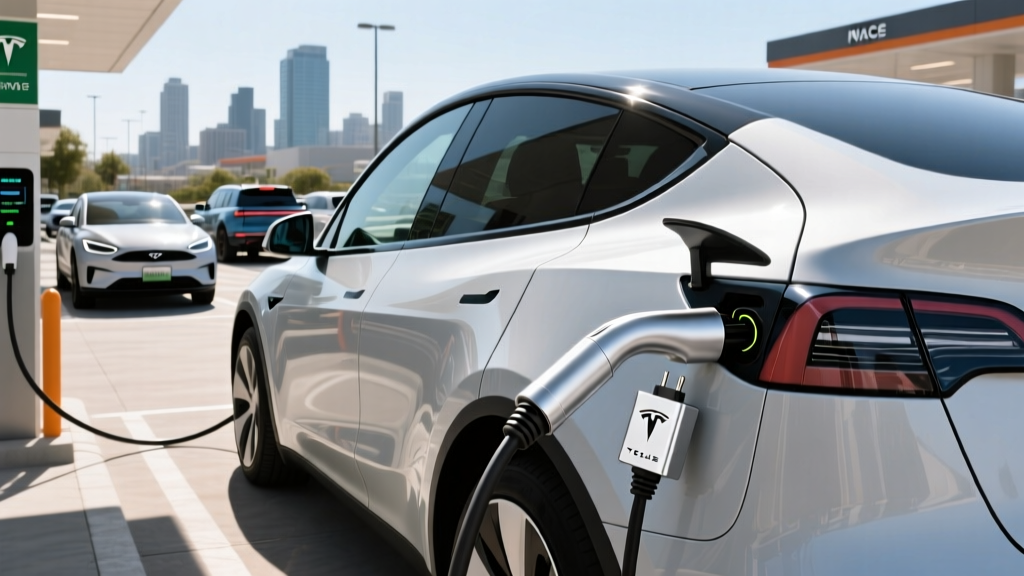
- Tesla Model Y (75 kWh usable, NMC): ~11 hours at Level 2 (7.7 kW); ~20 minutes at a 250 kW Supercharger (peak rate, tapering above 50% SoC).
- Hyundai Ioniq 5 (77.4 kWh usable, NMC): ~10.5 hours at 7.7 kW Level 2; ~18 minutes at a 350 kW Electrify America station (800V architecture enables sustained high rates to ~55% SoC before tapering).
- Ford F-150 Lightning Extended Range (131 kWh usable, NMC): ~17 hours at 7.7 kW Level 2; ~35–41 minutes at a 150 kW DC fast charger.
These times assume optimal battery preconditioning (warming the pack to ~95°F) and a station delivering its rated power — conditions that aren't always met in practice.
Home Charger Installation: Requirements, Costs, and Panel Upgrades
Most EV owners do 80–90% of their charging at home. Installing a Level 2 home charger is the single most impactful upgrade for convenience and cost savings. But the total cost varies enormously depending on your electrical panel, wiring distance, and local permit fees.
Electrical Requirements for Level 2 Home Charging
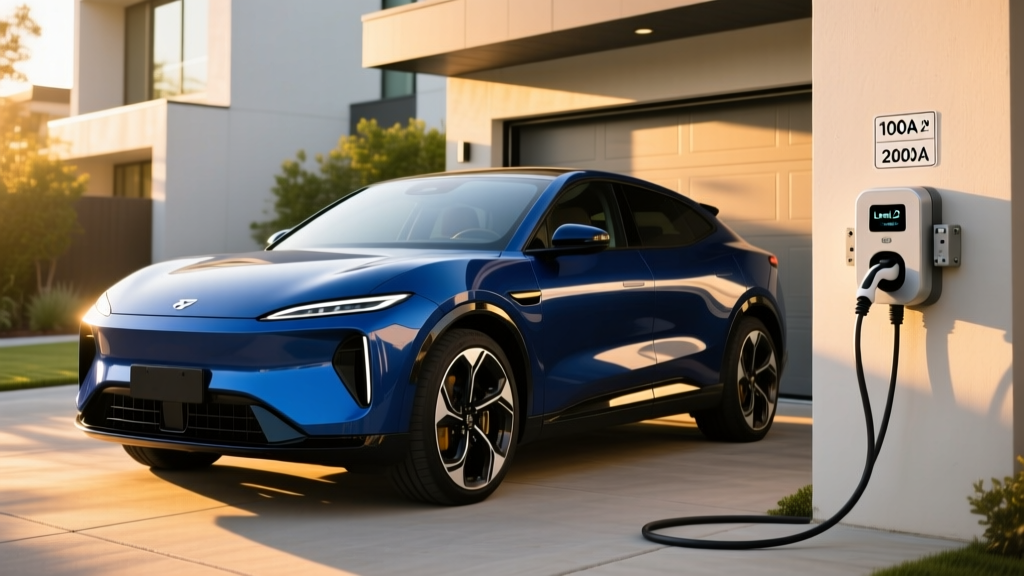
A typical Level 2 home charger requires a dedicated 240V circuit. Common configurations:
- 40A circuit / 32A continuous (7.7 kW): The most common residential setup. Requires 6 AWG copper wire and a NEMA 14-50 outlet or hardwired connection.
- 50A circuit / 40A continuous (9.6 kW): Faster charging for larger batteries. Requires 6 AWG copper wire.
- 60A circuit / 48A continuous (11.5 kW): Maximum practical for most homes. Requires 4 AWG copper wire and a robust panel.
Panel upgrade reality: Many older homes have 100A or 150A main panels that lack capacity for a 40–60A dedicated EV circuit — especially if you're also running electric HVAC, a dryer, and an electric range. A panel upgrade to 200A typically costs $1,500–$3,000 and adds 1–3 weeks to your timeline. A licensed electrician will perform a load calculation to determine if your panel can handle the additional draw.
Installation Cost Breakdown
| Cost Component | Simple Install (panel nearby) | Complex Install (long run, panel upgrade) |
|---|---|---|
| EVSE equipment (charger unit) | $350–$700 | $500–$800 |
| Electrician labor | $400–$800 | $1,200–$2,500 |
| Permit and inspection | $50–$200 | $100–$350 |
| Electrical panel upgrade (if needed) | $0 | $1,500–$3,000 |
| Conduit, wiring, misc. materials | $100–$300 | $300–$800 |
| Total | $900–$2,000 | $3,600–$7,450 |
Some utilities offer rebates of $250–$1,000 for home charger installation, and certain states provide additional incentives. The federal Alternative Fuel Vehicle Refueling Property Credit (§30C) covers up to 30% of equipment and installation costs (capped at $1,000 for residential), subject to census-tract eligibility. Consult a tax professional for your specific situation.
Safety and Code Considerations
Every home EV charger installation should meet these requirements:
- Dedicated circuit: Your EVSE must be on its own breaker — never share a circuit with other major appliances.
- GFCI protection: NEC 2020 and later require ground-fault circuit interrupter protection for outdoor receptacles used for EV charging. Hardwired units with built-in GFCI are increasingly preferred.
- Outdoor rating: If your charger is mounted outside, ensure the unit carries a NEMA 4 (weatherproof) rating. All major brands (ChargePoint, Emporia, Wallbox) offer outdoor-rated models.
- Permit and inspection: Most jurisdictions require an electrical permit and a post-installation inspection. Skipping this step can void your homeowner's insurance coverage for electrical fires.
Connector Compatibility: NACS, CCS1, and CHAdeMO
The connector on your EV determines which public chargers you can use without an adapter. The North American market has largely standardized on NACS (the Tesla-designed connector), but millions of CCS1-equipped vehicles remain on the road.
| Connector | Brands Using It (Factory) | Adapter Needed For | Notes |
|---|---|---|---|
| NACS (Tesla) | Tesla, Ford, GM, Rivian, Volvo, Polestar, Fisker, BMW (new), Hyundai/Kia (2025+) | CCS1 stations (with adapter, often included) | Access to Tesla Supercharger network (17,000+ stalls in North America) |
| CCS1 | Hyundai/Kia (pre-2025), VW, Audi, Porsche, Mercedes, Stellantis, legacy models | NACS stations (with CCS-to-NACS adapter, $150–$300) | Electrify America, EVgo networks remain CCS1-primary |
| CHAdeMO | Nissan Leaf (legacy only) | N/A — no practical adapter to NACS/CCS | Network support declining; not recommended for new purchases |
Adapter reality check: Ford and GM include CCS-to-NACS adapters with new vehicles. Third-party adapters from brands like Lectron and A2Z cost $150–$300. Always verify adapter compatibility with your specific model year and firmware version before purchasing.
Cost to Charge: Home vs. Public vs. Gas — The Real Numbers
Free electric car charging is attractive, but most of your charging will be paid. Here's what the economics look like across different scenarios, benchmarked against a comparable gasoline vehicle.
| Scenario | Rate | Cost Per Mile* | Annual Cost (12,000 mi) |
|---|---|---|---|
| Home off-peak (utility rate) | $0.09–$0.14/kWh | $0.03–$0.05 | $360–$600 |
| Home standard rate | $0.14–$0.20/kWh | $0.04–$0.06 | $480–$720 |
| Public Level 2 (paid) | $0.20–$0.35/kWh | $0.06–$0.11 | $720–$1,320 |
| DC Fast Charging (public) | $0.30–$0.55/kWh | $0.09–$0.17 | $1,080–$2,040 |
| Free charging (workplace/retail) | $0.00/kWh | $0.00 | $0 |
| Gasoline (28 MPG avg, $3.40/gal) | $3.40/gallon | $0.12 | $1,440 |
*Based on an EV efficiency of 3.0–3.5 miles/kWh (typical for a midsize crossover like the Tesla Model Y or Hyundai Ioniq 5). Larger vehicles like the F-150 Lightning average 2.0–2.5 mi/kWh, increasing per-mile costs by ~40%.
The takeaway: home off-peak charging is the cheapest way to fuel any vehicle on the road — roughly 75% cheaper per mile than gasoline. Even paid DC fast charging is competitive with gas on a per-mile basis for most vehicles. But if you rely exclusively on paid DC fast charging, your fuel costs can approach or exceed gasoline, especially in high-cost states like California ($0.48–$0.55/kWh at some stations).
The U.S. Department of Energy's EV cost calculator lets you input your local electricity rate and vehicle model for a personalized estimate.
Best Home EV Chargers: Equipment Picks for 2026
If you're installing a home charger, these are the units we recommend based on reliability, power output, smart features, and value. All are UL-listed and support the J1772 or NACS connector standard.
Emporia Vue Level 2 Smart Charger
- Power: 48A (11.5 kW) max, adjustable down to 16A
- Connector: J1772 (NACS adapter included with 2025+ models)
- Cable length: 24 feet
- Smart features: Wi-Fi, energy monitoring via Emporia app, solar integration, scheduled charging
- Price: $399–$449
- Best for: Budget-conscious buyers who want full smart features and energy tracking
ChargePoint Home Flex
- Power: 50A (12 kW) max, configurable 16–50A via DIP switches
- Connector: J1772 or NACS (select at purchase)
- Cable length: 23 feet
- Smart features: Wi-Fi, ChargePoint app, Alexa integration, utility demand-response programs
- Price: $599–$699
- Best for: Reliability-focused owners who want a proven brand with broad utility partnerships
Tesla Wall Connector (Gen 4)
- Power: 48A (11.5 kW) max
- Connector: NACS native; includes J1772 adapter dongle
- Cable length: 24 feet
- Smart features: Wi-Fi, over-the-air updates, power sharing (link two units on one circuit), Tesla app integration
- Price: $475–$550
- Best for: Tesla owners and NACS-adopting brand owners who want native integration
Wallbox Pulsar Max
- Power: 48A (11.5 kW) max
- Connector: J1772 or NACS
- Cable length: 25 feet
- Smart features: Wi-Fi + Bluetooth, Wallbox app, Eco-Smart solar mode, load balancing
- Price: $549–$649
- Best for: Solar-panel owners who want automated solar-to-EV charging optimization
Is Chasing Free Charging Worth It? A Decision Framework
Prioritize free public charging if:
- You have reliable access to a workplace or retail charger within 5 minutes of your daily routine
- Your daily driving is under 40 miles (easily replenished in 2–3 hours on Level 2)
- You lack home charging access (apartment, street parking)
- Your EV came with a complimentary DC fast charging credit bundle
Invest in home Level 2 charging if:
- You have a garage, driveway, or dedicated parking spot with electrical access
- You value convenience over marginal cost savings (plug in at night, wake up full)
- Your daily driving exceeds 50 miles
- You live in a region with extreme cold (preconditioning at home preserves range)
- You want to take advantage of off-peak utility rates ($0.05–$0.09/kWh in many areas)
For most homeowners, the $900–$2,000 investment in a basic Level 2 installation pays for itself within 18–30 months through fuel savings alone — even without factoring in the convenience premium. Free public charging is a useful supplement, but it shouldn't be the foundation of your charging strategy.
Frequently Asked Questions
How much does it cost to install a home EV charger?
A straightforward Level 2 home charger installation (panel has capacity, short wire run) typically costs $900–$2,000 including equipment, electrician labor, and permits. If your home needs a 200A panel upgrade or has a long conduit run (over 50 feet from the panel to the garage), expect $3,600–$7,450. Always get a load calculation from a licensed electrician before committing.
How fast will each charging level add range?
Level 1 (120V) adds 3–5 miles per hour — adequate for PHEVs with small batteries but impractical for full EVs. Level 2 (240V) adds 12–75 miles per hour depending on the charger's kW rating and your vehicle's onboard charger capacity. DC fast charging can add 150–300+ miles in 15–30 minutes, though charge speed tapers significantly above 80% state of charge.
Which connector and charger is compatible with my EV?
All 2025–2026 model-year EVs from Tesla, Ford, GM, Rivian, Volvo, Polestar, and BMW use the NACS connector. Hyundai, Kia, and most legacy EVs (2024 and earlier, non-Tesla) use CCS1. The Nissan Leaf is the last holdout using CHAdeMO. Check your vehicle's charge port or owner's manual, and verify whether your automaker includes a CCS-to-NACS adapter.
How much does EV charging cost per mile compared to gas?
Home charging at off-peak rates costs $0.03–$0.05 per mile — roughly 75% less than gasoline at $3.40/gallon in a 28 MPG vehicle ($0.12/mile). Public DC fast charging at $0.35–$0.55/kWh costs $0.10–$0.17 per mile, which is comparable to or slightly higher than gas. Free workplace or retail charging brings your per-mile fuel cost to zero.
What electrical upgrades might I need for a home charger?
The most common upgrade is a panel capacity increase from 100A or 150A to 200A, costing $1,500–$3,000. You may also need a new dedicated 240V circuit with appropriately gauged wiring (6 AWG for 40A, 4 AWG for 60A), a NEMA 14-50 outlet or hardwired junction box, and a local electrical permit. Homes with 200A+ panels and nearby garage wiring typically need no panel upgrade.
Are free EV chargers reliable?
Reliability varies widely. Workplace and university chargers tend to be well-maintained. Free retail chargers at shopping centers can suffer from higher downtime due to heavier turnover and less dedicated maintenance. Apps like PlugShare and ChargeHub show real-time user-reported status — always check before driving to a free station.