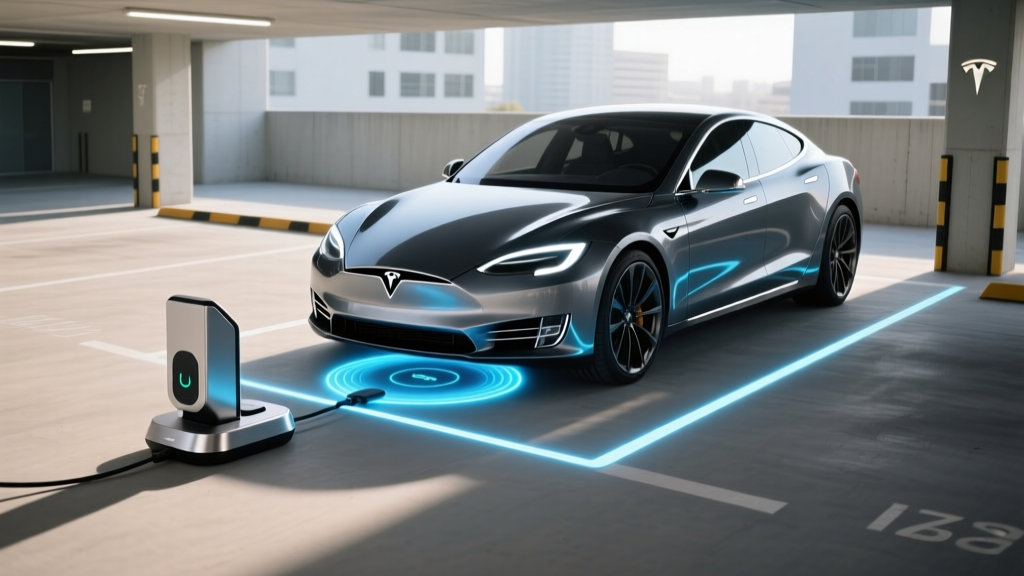
Hunt for "free chargers" long enough and you'll find them: grocery-store Level 2 stalls, workplace plugs, hotel destination chargers, and promotional DC fast-charging credits from automakers. But free charging comes with friction — occupied stalls, slow speeds, detours, and time cost. The real question for EV buyers isn't whether free chargers exist, but whether they can replace a predictable home setup and what the true cost-per-mile looks like across every charging scenario.
This guide breaks down every charging tier with exact kW speeds, maps connector compatibility across 2026 models, prices out a home Level 2 installation down to the permit, and shows where free public charging actually fits into an ownership strategy.
Charging Levels Explained: kW Speeds and Miles Per Hour
The single most important distinction in EV charging is kW (kilowatts), which measures power flow rate, versus kWh (kilowatt-hours), which measures total energy stored in your battery. A 10 kW charger delivering power for one hour adds 10 kWh of energy. Confusing the two leads to wildly wrong expectations about charging time.
| Level | Voltage | Power (kW) | Miles of Range Added Per Hour | Best For |
|---|---|---|---|---|
| Level 1 | 120V AC | 1.0–1.4 kW | 3–5 mi/hr | Overnight top-ups, PHEVs, emergencies |
| Level 2 (Home/Public) | 240V AC | 3.3–19.2 kW | 12–75 mi/hr | Daily home charging, workplace, destinations |
| DC Fast Charging | 400–800V DC | 50–350 kW | 150–1,200+ mi/hr (peak) | Road trips, quick top-ups, commercial fleets |
Those miles-per-hour figures assume an average efficiency of 3–4 miles per kWh, which covers most 2026 EVs from the Chevrolet Equinox EV to the Ford F-150 Lightning. High-efficiency sedans like the Hyundai Ioniq 6 (4.2 mi/kWh) will add more range per hour; heavy trucks and SUVs will add less.
DC fast charging speeds are peak rates, not sustained rates. A vehicle that peaks at 250 kW will typically taper to 100–120 kW above 60% state of charge (SoC) and drop further above 80% to protect battery health. This charge-curve taper means a "10–80% in 18 minutes" claim doesn't mean 80–100% takes another 6 minutes — it often takes 20+ minutes.
Where to Find Free Chargers (and the Real Cost of Using Them)
Free EV chargers still exist in 2026, but they've become less common as networks monetize their infrastructure. Here's where they cluster:
- Workplace charging: The most reliable free source. Many employers offer complimentary Level 2 access as an employee benefit, though spots fill early at large campuses.
- Retail and grocery destinations: Stores like Target, Whole Foods, and select shopping centers offer free Level 2 charging (typically 6.6–7.2 kW) to attract customers, often limited to 1–2 hours.
- Hotels and Airbnb: Destination chargers (Tesla Wall Connectors or J1772 Level 2) are sometimes complimentary for guests, though many now charge overnight fees.
- Automaker promotional credits: Hyundai, Kia, and Volkswagen have bundled 2–3 years of free DC fast charging (typically 1,000–2,500 kWh of credit) with new EV purchases through networks like Electrify America. These expire.
- Municipal and utility programs: Some city-owned lots and utility-sponsored stations offer free or deeply discounted charging during off-peak hours.
The hidden costs of relying on free chargers are time, detour distance, and unpredictability. A "free" 7.2 kW Level 2 stall that's occupied when you arrive, broken, or located 15 minutes out of your way may cost you more in lost time than a $0.35/kWh paid station next door. Free DC fast chargers are exceptionally rare in 2026 outside of promotional credits.
Home Level 2 Installation: Costs, Electrical Requirements, and Panel Upgrades
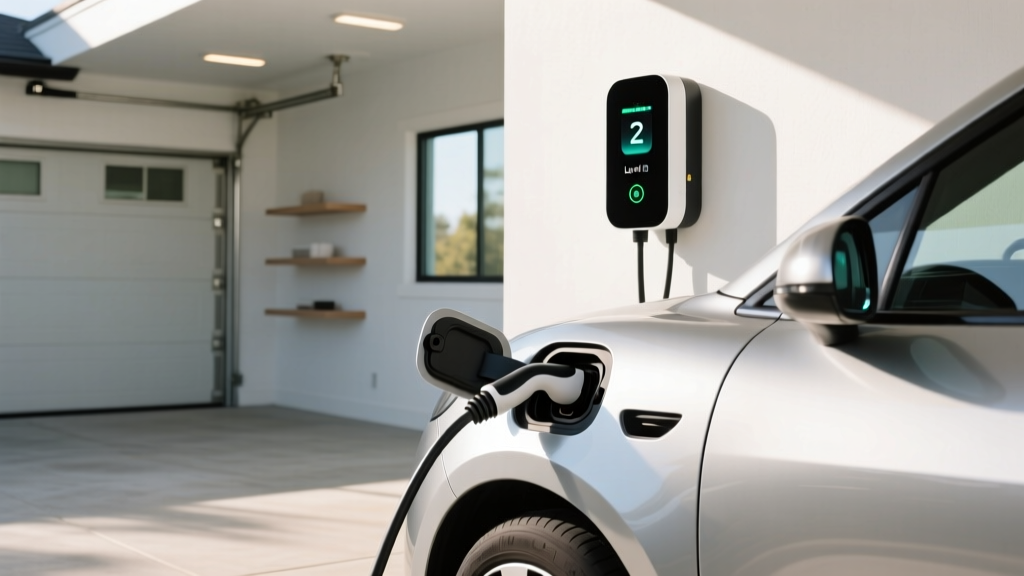
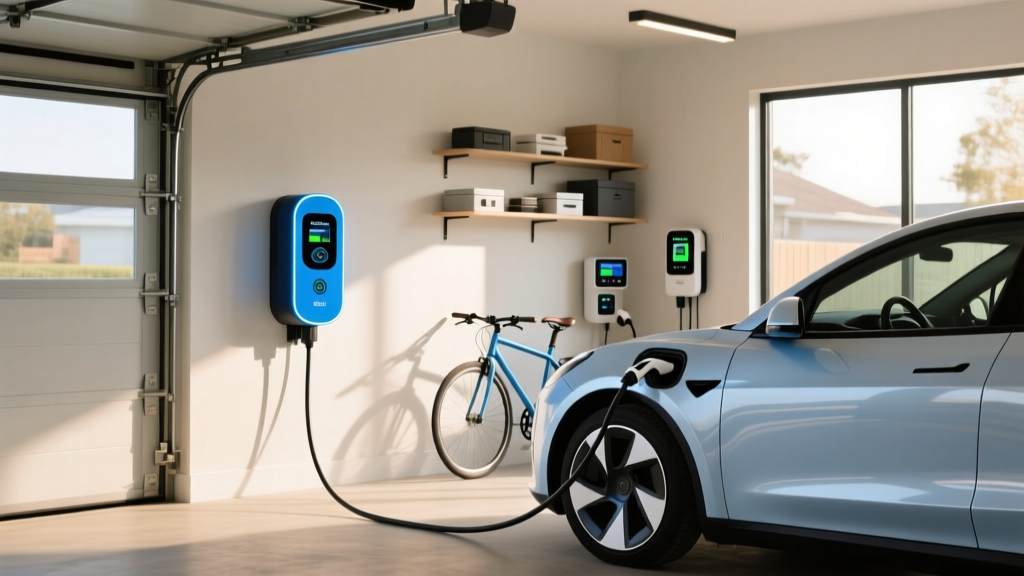
Home Level 2 charging is the backbone of practical EV ownership. Most EV owners do 80–95% of their charging at home, waking up to a full battery every morning. Here's what installation actually involves.
Electrical Requirements
A standard home Level 2 charger runs on a 240V dedicated circuit, the same voltage as an electric dryer or oven. Common circuit sizes:
- 40-amp circuit: Delivers up to 32 amps continuous (7.7 kW). Sufficient for most EVs and the most common home setup.
- 50-amp circuit: Delivers up to 40 amps continuous (9.6 kW). Ideal for larger batteries (100+ kWh) or faster overnight charging.
- 60-amp circuit: Delivers up to 48 amps continuous (11.5 kW). Needed to max out vehicles with high onboard charger capacity (e.g., Ford F-150 Lightning Extended Range at 19.2 kW requires an 80-amp circuit and hardwired charger).
National Electrical Code (NEC) requires that continuous loads (like EV charging) use only 80% of a circuit's rated capacity. A 40A circuit provides 32A of usable charging current.
Panel Upgrade Reality
Many older homes have 100-amp electrical panels that may not support an additional 40–50A EV circuit alongside existing loads (HVAC, electric range, dryer). An electrician will perform a load calculation to determine if your panel has headroom. If not, a panel upgrade to 200A typically costs $1,500–$3,500 before any charger work begins. This is the single biggest surprise cost for EV buyers in older housing stock.
Some utilities and local jurisdictions offer load-management devices (like the Span panel or EV-specific smart breakers) that allow EV charging without a full panel upgrade by dynamically limiting charger draw when other loads are high.
Home Charger Installation Cost Breakdown (2026 Estimates)
| Component | Low End | High End | Notes |
|---|---|---|---|
| Level 2 Charger (Equipment) | $300 | $700 | 32A–48A smart Wi-Fi charger |
| Electrician Labor | $400 | $1,500 | Depends on run length, conduit, drywall work |
| Permit & Inspection | $50 | $250 | Required in most jurisdictions |
| Electrical Materials (wire, conduit, breaker) | $100 | $400 | Longer runs cost more |
| Panel Upgrade (if needed) | $1,500 | $3,500 | 100A to 200A service upgrade |
| Total (no panel upgrade) | $850 | $2,850 | Typical install for most homes |
| Total (with panel upgrade) | $2,350 | $6,350 | Older homes with 100A service |
The federal Residential Clean Energy Credit (IRC §25D) covers 30% of home EV charger equipment and installation costs, up to $1,000, for equipment placed in service. Some states and utilities add additional rebates — check your local utility and the Alternative Fuels Data Center for current programs.
Connector Compatibility: NACS, CCS1, and CHAdeMO in 2026
The connector landscape has consolidated dramatically. As of the 2026 model year, the North American Charging Standard (NACS), originally developed by Tesla, has become the dominant connector for new vehicles. Here's where each brand stands:
| Connector | Brands (2026 Models) | Public DC Fast Network Access |
|---|---|---|
| NACS (native) | Tesla (all), Ford (2025+), GM (2025+), Rivian, Hyundai/Kia (2026+), Volvo/Polestar | Tesla Supercharger + growing NACS stations on Electrify America, EVgo, ChargePoint |
| CCS1 | Volkswagen ID.4 (remaining), BMW iX/i4, some legacy models | Electrify America, EVgo, ChargePoint, Ionity (EU) |
| CHAdeMO | Nissan Ariya (2025+ switched to CCS/NACS); legacy Leaf only | Declining availability; limited to older stations |
Adapter needs: If you own a CCS1-equipped EV, a CCS-to-NACS adapter ($150–$250) unlocks Tesla Supercharger access, which remains the most reliable DC fast-charging network in North America with over 25,000 stalls. Ford and GM provide these adapters to owners. NACS-native vehicles can access CCS stations with a NACS-to-CCS adapter. CHAdeMO is effectively legacy — plan your ownership around NACS or CCS1.
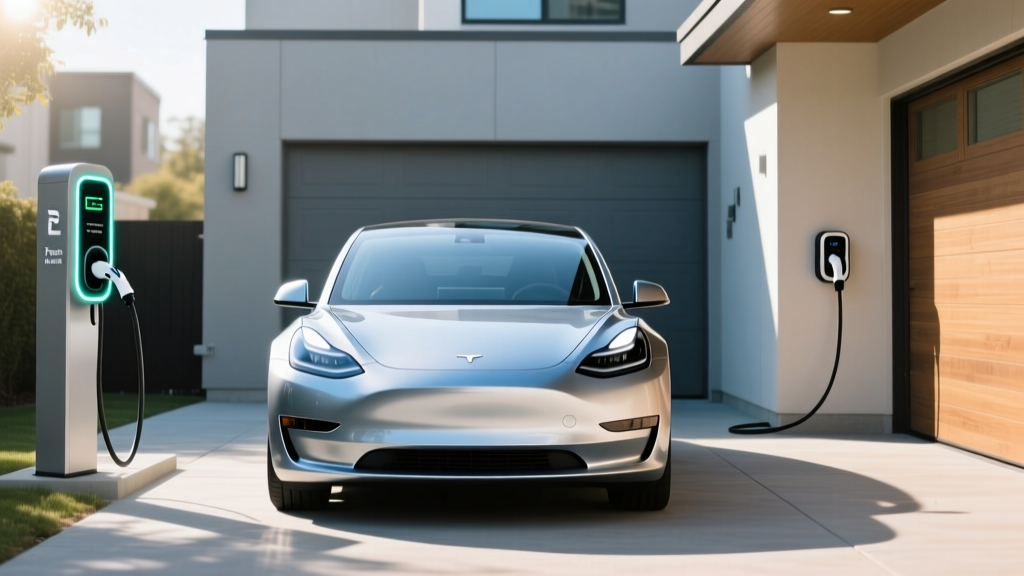
For home Level 2 charging, all vehicles use the same J1772 connector (or NACS, which includes J1772 signaling). Any Level 2 home charger with a J1772 plug will charge any EV sold in the US. Tesla Wall Connectors use NACS natively but include a J1772 adapter in the box.
Cost Per Mile: Free Chargers vs. Home vs. Public vs. Gas
Let's put real numbers to the cost question. The following assumes a 2026 EV averaging 3.5 miles per kWh (typical for a mid-size crossover like the Hyundai Ioniq 5 or Tesla Model Y) and a gas car averaging 28 MPG combined.
| Scenario | Rate | Cost Per kWh | Cost Per Mile | Annual Cost (12,000 mi) |
|---|---|---|---|---|
| Free workplace/retail charger | $0.00 | $0.00 | $0.00 | $0 |
| Home charging (off-peak utility rate) | $0.12/kWh | $0.12 | $0.034 | $411 |
| Home charging (standard rate) | $0.17/kWh | $0.17 | $0.049 | $583 |
| Public Level 2 (paid network) | $0.25–$0.49/kWh | $0.35 avg | $0.100 | $1,200 |
| DC Fast Charging (public) | $0.35–$0.65/kWh | $0.48 avg | $0.137 | $1,646 |
| Gasoline vehicle (28 MPG) | $3.30/gal | n/a | $0.118 | $1,414 |
Key takeaways from these numbers:
- Home off-peak charging is the cheapest fuel in transportation. At $0.034/mile, it's roughly one-quarter the cost of gasoline per mile.
- Free chargers save money but not time. If you can reliably access free workplace or retail Level 2 charging, your fuel cost drops to near zero — but plan for occupied stalls, time limits, and the inconvenience of detours.
- Exclusive DC fast charging is more expensive than gas. If you rely entirely on public DC fast chargers at $0.48/kWh average, your per-mile cost exceeds a 28 MPG gas car. DCFC is designed for road trips, not daily fueling.
- The sweet spot is home Level 2 + occasional DCFC. Most owners charge 90%+ at home and use DC fast charging only for trips over 200 miles.
Charging Time Examples: 10–80% for Common Battery Sizes
Here's what charging looks like in practice for popular 2026 EV battery sizes. Times assume optimal battery preconditioning and peak charge rates.
| Vehicle Example | Battery (kWh usable) | Level 2 @ 7.7 kW (40A) | Level 2 @ 11.5 kW (48A) | DCFC (peak rate) | DCFC 10–80% Time |
|---|---|---|---|---|---|
| Chevrolet Equinox EV | 85 kWh | ~8.5 hours | ~5.5 hours | 150 kW peak | ~32 minutes |
| Hyundai Ioniq 5 | 77.4 kWh | ~7.5 hours | ~5 hours | 240 kW peak (800V) | ~18 minutes |
| Tesla Model Y Long Range | 75 kWh | ~7 hours | ~5 hours | 250 kW peak | ~20 minutes |
| Ford F-150 Lightning Ext. Range | 131 kWh | ~13 hours | ~8.5 hours | 150 kW peak | ~55 minutes |
| BMW iX xDrive50 | 105.2 kWh | ~10.5 hours | ~7 hours | 200 kW peak | ~35 minutes |
Notice that larger batteries (100+ kWh) require significantly more time at Level 2 and DCFC alike. The F-150 Lightning's 131 kWh pack takes nearly an hour for a 10–80% DC fast charge because even at 150 kW peak, the sheer energy volume is massive. This is why a 48A (11.5 kW) home charger is strongly recommended for trucks and large SUVs — it cuts overnight charging to a manageable 8–9 hours.
Best Home EV Chargers for 2026: Equipment Picks
ChargePoint Home Flex
- Power: Up to 11.5 kW (48A) on a 60A circuit, configurable down to 16A
- Connector: J1772 (NACS adapter available)
- Cable length: 23 feet
- Smart features: Wi-Fi, app scheduling, Alexa integration, energy tracking
- Price: ~$550
- Best for: Most EVs, flexible amperage for homes with limited panel capacity
Tesla Wall Connector
- Power: Up to 11.5 kW (48A) on a 60A circuit
- Connector: NACS native (includes J1772 adapter)
- Cable length: 24 feet
- Smart features: Wi-Fi, over-the-air updates, power sharing between two units, Tesla app integration
- Price: ~$475
- Best for: Tesla owners and NACS-native vehicles; cleanest integration with Tesla ecosystem
Emporia Level 2 EV Charger
- Power: Up to 11.5 kW (48A)
- Connector: J1772
- Cable length: 24 feet
- Smart features: Wi-Fi, solar integration (pairs with Emporia Vue energy monitor), time-of-use scheduling
- Price: ~$400
- Best for: Solar-equipped homes, budget-conscious buyers wanting smart features
Grizzl-E Smart
- Power: Up to 9.6 kW (40A)
- Connector: J1772
- Cable length: 24 feet
- Smart features: Wi-Fi, OCPP-compatible, adjustable amperage
- Price: ~$450
- Best for: Cold-climate durability (rated to -40°F), Canadian-made, rugged build
Safety, Electrical Code, and Installation Best Practices
EV charging draws sustained high current for hours — unlike a dryer that cycles on and off. This makes proper installation non-negotiable:
- Dedicated circuit: Your EV charger must be on its own dedicated breaker, not shared with other outlets or appliances.
- GFCI protection: NEC 2020 and later requires GFCI (ground-fault circuit interrupter) protection for all EV charging outlets. Hardwired chargers may have GFCI built into the unit. If your charger trips a GFCI breaker repeatedly, a hardwired connection (which avoids the double-GFCI issue) often resolves it.
- Outdoor rating: If your charger is installed outdoors or in an unsealed garage, ensure the unit carries a NEMA 4 (weather-resistant) rating. Most quality chargers (ChargePoint, Tesla, Grizzl-E) are rated for outdoor use.
- Wire gauge: A 48A continuous load on a 60A circuit requires 4 AWG copper wire (or 3 AWG aluminum). Your electrician will size wire based on run length to minimize voltage drop — longer runs may need thicker wire.
- Permit and inspection: Nearly all jurisdictions require a permit for EV charger installation. This protects you: an inspected installation ensures code compliance and keeps your homeowner's insurance valid in the event of an electrical fire.
- Never use an extension cord. EV chargers draw sustained high current that standard extension cords cannot safely handle.
Frequently Asked Questions
How much does it cost to install a home EV charger?
A typical 240V/40A Level 2 home charger installation costs $850–$2,850 when your electrical panel has sufficient capacity. If your home needs a 100A-to-200A panel upgrade, expect $2,350–$6,350 total. The federal §25D credit covers 30% of equipment and installation, up to $1,000.
How fast will each charging level add range?
Level 1 (120V) adds 3–5 miles per hour. Level 2 (240V) adds 12–75 miles per hour depending on amperage and vehicle efficiency. DC fast charging adds 150–1,200+ miles per hour at peak rates, but sustained rates taper significantly above 80% SoC.
Which connector is compatible with my EV?
For 2026 models: Tesla, Ford, GM, Rivian, Hyundai, Kia, and Volvo use NACS. Most European brands (BMW, VW remaining models) use CCS1. The Nissan Leaf (legacy) uses CHAdeMO. Adapters exist between NACS and CCS1 for cross-network access. All home Level 2 chargers use J1772 or NACS, both universally compatible.
How much does charging cost per mile vs gas?
Home charging at off-peak rates ($0.12/kWh) costs about $0.034/mile — roughly one-quarter the cost of gasoline at $3.30/gallon and 28 MPG ($0.118/mile). Public DC fast charging at $0.48/kWh averages $0.137/mile, slightly more than gas. Free chargers cost $0/mile but require time and access trade-offs.
What electrical upgrades might I need?
Homes with 100-amp electrical panels may need a panel upgrade to 200A ($1,500–$3,500) to support a 40–60A EV circuit. An electrician will perform a load calculation to determine if your existing panel has capacity. Load-management devices can sometimes avoid a full panel upgrade by dynamically limiting charger draw.
Are free chargers reliable enough to be my only charging strategy?
For most EV owners, no. Free chargers are an excellent supplement — especially workplace Level 2 — but relying on them exclusively means dealing with occupied stalls, broken equipment, time limits, and detours. The most practical strategy is home Level 2 for daily needs, free workplace charging when available, and DC fast charging for road trips.