The Reality About Free Car Charging Stations in 2026
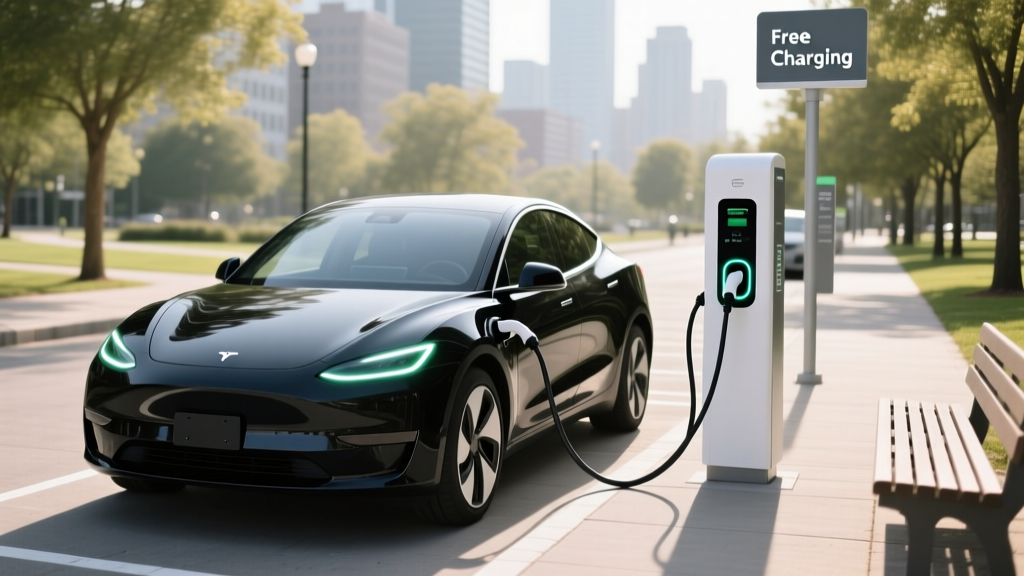
Search for "free car charging stations" and you'll find a patchwork of shopping-mall Level 2 posts, workplace chargers, hotel amenities, and municipal programs — but the map is shrinking. As networks like ChargePoint, EVgo, and Electrify America have consolidated pricing, truly free public charging now represents a small fraction of available plugs. Most free stations are slow Level 2 (6.6–7.2 kW), often limited to 2–4 hours, and located where the host property wants foot traffic, not where you need a full charge.
This guide cuts through the noise: where free stations actually exist, how fast each charging level adds real-world range, what home installation really costs (including the panel-upgrade scenario nobody talks about), and whether chasing free kWh is worth your time versus installing a dedicated Level 2 circuit at home.
Charging Levels Explained: Speeds, kW, and Miles Added Per Hour
Every EV owner uses a mix of three charging levels. The right level depends on your battery size, daily mileage, and whether you're topping off or road-tripping.
| Level | Voltage | Max Power (kW) | Miles of Range Per Hour | Typical Use Case |
|---|---|---|---|---|
| Level 1 | 120V AC | 1.4–1.9 kW | 3–5 mi/hr | Overnight top-off, PHEVs, low-mileage drivers |
| Level 2 | 240V AC | 7.2–19.2 kW | 20–65 mi/hr | Home daily charging, workplace, retail locations |
| DC Fast | 400–800V DC | 50–350 kW | 150–800+ mi/hr (peak) | Road trips, rapid top-ups, 10–80% in 18–45 min |
Real-world nuance: Those "miles per hour" figures assume a ~3–4 mi/kWh efficiency vehicle (typical midsize EV like the Hyundai Ioniq 5 or Tesla Model Y). Heavier vehicles like the Ford F-150 Lightning (~2 mi/kWh) will see significantly fewer miles added per hour at the same kW rate.
DC fast charging taper: Peak kW is not sustained kW. A vehicle rated for 250 kW peak will typically sustain that rate only between 10–40% State of Charge (SoC). Above 80%, charge speed drops dramatically — often to under 40 kW — to protect battery chemistry. This is why manufacturers quote 10–80% times, not 0–100%.
Charging Time Examples: 10–80% for Common Battery Sizes
| Vehicle | Battery (kWh usable) | Peak DC kW | 10–80% Time | Level 2 (11.5 kW) 0–100% |
|---|---|---|---|---|
| Tesla Model Y Long Range | 75 kWh (NMC) | 250 kW | ~27 min | ~6.5 hr |
| Hyundai Ioniq 5 (84 kWh) | 77.4 kWh (NMC) | 240 kW (800V) | ~18 min | ~7 hr |
| Ford F-150 Lightning Ext. Range | 131 kWh (NMC) | 155 kW | ~41 min | ~11.5 hr |
| Chevrolet Equinox EV | 85 kWh (NMC) | 150 kW | ~34 min | ~7.5 hr |
| Toyota Prius Prime (PHEV) | 10.9 kWh (NMC) | N/A (no DCFC) | N/A | ~1.5 hr (L2) / ~4 hr (L1) |
Where to Actually Find Free Car Charging Stations
Free charging in 2026 falls into four categories, each with distinct trade-offs:
1. Workplace Charging: The single largest source of free Level 2 charging. Companies like Google, Adobe, and many university campuses offer free L2 to employees. Power is typically 6.6–7.2 kW — enough to add 25–30 miles per hour. Limitation: spots are first-come, first-served, and you'll compete with coworkers. Check with your HR department or facilities team.
2. Retail and Hospitality: Shopping centers (notably some Simon Property Group malls), grocery chains (select Whole Foods, Wegmans), and hotel chains (Marriott, Hilton properties) offer free L2 charging to attract customers. Expect 2–4 hour time limits. Use apps like PlugShare or ChargePoint to filter for "free" stations and read user reviews about reliability.
3. Municipal and Utility Programs: Some cities and utilities offer free or heavily subsidized charging as part of air-quality initiatives. Examples include select curbside chargers in Sacramento (SMUD territory) and municipal lots in Burlington, VT. These programs often sunset after 1–3 years or convert to paid models.
4. Promotional Network Credits: Automakers sometimes bundle free charging — Hyundai has offered complimentary Electrify America sessions with new Ioniq purchases, and BMW has partnered with EVgo. These are time-limited (typically 2–3 years or a kWh cap) and should not factor into long-term ownership economics.
Home Level 2 Installation: Real Costs, Electrical Requirements, and the Panel-Upgrade Problem
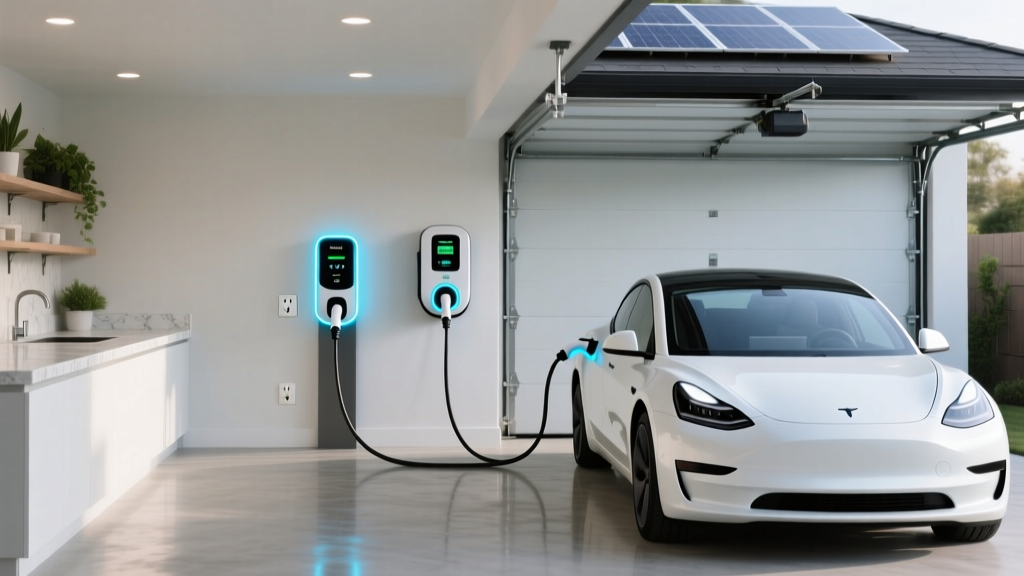
Home Level 2 charging is where 80%+ of EV charging actually happens. A dedicated 240V circuit delivers 7–11 miles of range per hour of sleep — more than enough for daily needs. But installation costs vary enormously based on your electrical panel, conduit run distance, and local permit fees.
Electrical Requirements for Level 2
Most home Level 2 chargers require a 240V dedicated circuit at either 40A or 48A. The National Electrical Code (NEC) requires circuits to be rated at 125% of the continuous load, meaning:
- A 40A charger needs a 50A breaker and 6 AWG copper wire
- A 48A charger needs a 60A breaker and 4 AWG copper wire
- Hardwired installations are preferred over NEMA 14-50 outlets for 48A+ chargers (the NEC no longer reliably permits 50A outlets on 60A circuits without specific conditions)
Your electrical panel is the bottleneck. Most homes built before 2000 have 100A or 150A main service. If your panel is already near capacity (electric range, dryer, HVAC, water heater), adding a 40–48A EV circuit may require a panel upgrade to 200A — or even a service upgrade from the utility, which can cost $2,000–$5,000+.
Some newer homes and those with gas appliances may have ample headroom for a 40A circuit with no upgrade needed. A licensed electrician will perform a load calculation per NEC Article 220 before quoting the job.
Installation Cost Breakdown
| Component | Simple Install (panel has room, short run) | Complex Install (long conduit, subpanel) | Panel/Service Upgrade Required |
|---|---|---|---|
| Level 2 Charger (equipment) | $350–$700 | $350–$700 | $350–$700 |
| Electrician labor (2–8 hrs @ $85–$150/hr) | $250–$500 | $600–$1,200 | $1,500–$3,500 |
| Materials (wire, conduit, breaker) | $100–$250 | $300–$800 | $500–$1,500 |
| Permit & inspection | $50–$200 | $100–$300 | $150–$500 |
| Panel upgrade (if needed) | — | — | $1,500–$4,000 |
| Total Range | $750–$1,650 | $1,350–$3,000 | $4,000–$10,200 |
Federal tax credit for home charging: The IRS §30C Alternative Fuel Vehicle Refueling Property Credit covers 30% of home charger equipment and installation costs, up to $1,000. However, eligibility depends on your census tract meeting specific low-income or non-urban criteria. Check the IRS §30C guidelines before assuming you qualify. This credit is separate from the §30D new-vehicle credit.
Connector Compatibility: NACS, CCS, CHAdeMO, and Adapter Realities
As of 2026, the North American Charging Standard (NACS) — originally Tesla's proprietary connector — has become the dominant connector for new EVs. Ford, GM, Rivian, Hyundai, Kia, and most other automakers have transitioned to NACS on 2025–2026 model-year vehicles. CCS1 (Combined Charging System) remains on many 2020–2024 vehicles. CHAdeMO is effectively legacy, found only on older Nissan Leafs and Mitsubishi Outlander PHEVs.
| Connector | Vehicles (2026 models) | DC Fast Network Access | Adapter Needed? |
|---|---|---|---|
| NACS (Tesla standard) | Tesla all models, Ford (2025+), GM (2025+), Rivian, Hyundai/Kia (2025+), Volvo/Polestar | Tesla Supercharger, Electrify America (new stalls), EVgo, ChargePoint | None for NACS-native; CCS→NACS adapter ($150–$250) for older CCS vehicles |
| CCS1 | 2020–2024 models: VW ID.4, older Bolt, older Ioniq 5, BMW i4 (pre-2025) | Electrify America, EVgo, ChargePoint, Ionity (EU) | NACS→CCS adapter ($200–$300) to access Superchargers |
| CHAdeMO | Nissan Leaf (2011–2025), Mitsubishi Outlander PHEV (older) | Limited and declining; some EVgo stations | No practical adapter to CCS/NACS for DCFC |
Home Level 2 note: All Level 2 home chargers use a J3400 (NACS) or J1772 connector for AC charging. The J1772-to-NACS adapter is included with most new NACS vehicles and costs $30–$50 separately. For home L2, connector compatibility is far less of an issue than for DC fast charging — any J1772 or NACS charger will work with any EV using the appropriate adapter.
Cost to Charge: $/kWh Scenarios and Cost Per Mile vs Gas
Charging cost depends entirely on your electricity rate, which varies by location, time of day, and whether you're at home or on a public network.
| Scenario | Rate ($/kWh) | Vehicle Efficiency | Cost Per Mile | Gas Equivalent (30 MPG @ $3.50/gal) |
|---|---|---|---|---|
| Home off-peak (time-of-use rate) | $0.08–$0.13 | 3.5 mi/kWh | $0.023–$0.037 | $0.117/mi |
| Home standard rate | $0.14–$0.20 | 3.5 mi/kWh | $0.040–$0.057 | $0.117/mi |
| Public Level 2 (paid) | $0.25–$0.49 | 3.5 mi/kWh | $0.071–$0.140 | $0.117/mi |
| DC Fast Charging | $0.35–$0.65 | 3.5 mi/kWh | $0.100–$0.186 | $0.117/mi |
| Free station | $0.00 | 3.5 mi/kWh | $0.00 | $0.117/mi |
The takeaway: Home off-peak charging is 3–5× cheaper per mile than gasoline. Public DC fast charging at $0.48–$0.65/kWh can actually exceed the per-mile cost of a 30 MPG gas car. Free stations eliminate cost entirely but trade time and convenience.
For a driver covering 12,000 miles/year in an EV averaging 3.5 mi/kWh:
- Home off-peak ($0.11/kWh): ~$377/year
- Home standard ($0.17/kWh): ~$583/year
- Mixed public DCFC ($0.48/kWh): ~$1,646/year
- Gas car (30 MPG, $3.50/gal): ~$1,400/year
Home charging is where EV economics win decisively. Public DCFC-heavy lifestyles can negate the cost advantage entirely.
Recommended Home Level 2 Chargers: Power, Features, and Pricing
Not all Level 2 chargers are equal. Key differentiators: power output (kW), cable length, smart scheduling (for time-of-use rates), connector type, and indoor/outdoor rating (NEMA 4 for outdoor use).
ChargePoint Home Flex (2nd Gen)
- Power: Up to 12 kW (50A) — configurable from 16A to 50A to match your circuit
- Connector: J1772 (includes NACS adapter)
- Cable: 23 ft
- Smart Features: Wi-Fi, app scheduling, Alexa/Google integration, energy tracking
- Rating: NEMA 4 (indoor/outdoor)
- Price: ~$549
Best for: Most homes — flexible amperage means it adapts to your panel capacity without overspending on electrical work.
Tesla Wall Connector
- Power: Up to 11.5 kW (48A)
- Connector: NACS native (J1772 adapter available for non-Tesla EVs)
- Cable: 24 ft
- Smart Features: Wi-Fi, over-the-air updates, power sharing (link multiple units on one circuit), Tesla app integration
- Rating: NEMA 4 (indoor/outdoor)
- Price: ~$475
Best for: Tesla owners or households with NACS-native EVs. Power-sharing feature is unique for multi-EV garages.
Emporia Vue Level 2 Charger
- Power: Up to 11.5 kW (48A)
- Connector: J1772 (NACS adapter included)
- Cable: 24 ft
- Smart Features: Integrates with Emporia Vue home energy monitor, solar-aware charging, time-of-use scheduling
- Rating: NEMA 4 (indoor/outdoor)
- Price: ~$399
Best for: Homes with solar panels or Emporia energy monitoring — charge only when solar is producing excess or when rates are lowest.
Grizzl-E Smart (United Chargers)
- Power: Up to 10 kW (40A)
- Connector: J1772 or NACS (specify at purchase)
- Cable: 24 ft
- Smart Features: OCPP protocol (works with utility demand-response programs), app control, adjustable amperage
- Rating: NEMA 4X (indoor/outdoor, extreme cold rated to -40°F)
- Price: ~$449
Best for: Cold-climate installations and utility demand-response participants. Built in Canada, exceptionally durable.
Safety, Electrical Code, and Installation Best Practices
EV charging draws sustained high current for hours — unlike a dryer that cycles on and off. This makes proper installation non-negotiable.
- Dedicated circuit: Your EV charger must be on its own dedicated breaker — never shared with other appliances. A 40A charger needs a 50A breaker; a 48A charger needs a 60A breaker.
- GFCI protection: NEC 2020 and later require GFCI (Ground Fault Circuit Interrupter) protection for all EV charging outlets. Hardwired chargers with integrated ground-fault protection may satisfy this without a GFCI breaker, but your local inspector has final say.
- Outdoor rating: If your charger is mounted outside or in an unsealed garage, it must carry at least a NEMA 4 rating (splash-resistant). NEMA 4X adds corrosion resistance for coastal or salt-air environments.
- Permit and inspection: Every jurisdiction requires an electrical permit for EV charger installation. The inspector will verify wire gauge, breaker sizing, grounding, and GFCI compliance. Skipping the permit risks insurance denial if a fire occurs and may create problems during home sale.
- NEMA 14-50 outlet vs hardwired: A 14-50 outlet offers portability (take your charger when you move), but NEC 2023+ has tightened rules around 50A receptacles for continuous EV loads. For 48A chargers, hardwired installation is strongly recommended and often required by code.
Always hire a licensed electrician who has experience with EV charger installations. Ask for a load calculation before committing to a specific amperage — the difference between a 40A and 48A charger is only ~1 mile/hour of charging speed, but it may be the difference between needing a panel upgrade and not.
Frequently Asked Questions
How much does it cost to install a home EV charger?
A straightforward Level 2 installation (panel has capacity, short wire run to garage) typically costs $750–$1,650 including equipment, labor, materials, and permit. Complex installations with long conduit runs or subpanel additions run $1,350–$3,000. If your home needs a 200A panel upgrade or utility service upgrade, expect $4,000–$10,200 total. The IRS §30C credit may cover 30% (up to $1,000) if your census tract qualifies.
How fast will each charging level add range?
Level 1 (120V) adds 3–5 miles per hour — suitable only for PHEVs or very low daily mileage. Level 2 (240V, 40–48A) adds 25–40 miles per hour, fully replenishing most EVs overnight. DC fast charging (150–350 kW) can add 150–300+ miles in 20–30 minutes, but speed tapers significantly above 80% SoC to protect the battery.
Which connector/charger is compatible with my EV?
For 2025–2026 model-year vehicles, NACS is now the standard for Ford, GM, Rivian, Tesla, Hyundai, Kia, and most others. Older 2020–2024 EVs typically have CCS1. Nissan Leaf uses CHAdeMO. For home Level 2, any J1772 or NACS charger works with any EV using a simple adapter ($30–$50). For DC fast charging, NACS vehicles access Tesla Superchargers natively; CCS vehicles need a NACS-to-CCS adapter ($200–$300) to use Superchargers.
How much does charging cost per mile vs gas?
Home off-peak charging at $0.11/kWh costs roughly $0.03/mile — about 75% less than a 30 MPG gas car at $3.50/gallon ($0.12/mile). Standard home rates ($0.17/kWh) still deliver ~$0.05/mile. However, public DC fast charging at $0.48–$0.65/kWh can cost $0.14–$0.19/mile, which actually exceeds gasoline. The economics only work if you charge at home most of the time.
What electrical upgrades might I need?
The most common upgrade is a panel capacity increase. Homes with 100A or 150A service that already run electric range, dryer, and HVAC may not have headroom for a 40–48A EV circuit. A licensed electrician performs a NEC Article 220 load calculation. If you're over capacity, options include: upgrading to 200A service ($1,500–$4,000), installing a smart panel or circuit-sharing device ($300–$800), or choosing a lower-amperage charger (24A or 32A) that draws less current. Some utilities offer free or subsidized panel upgrades for EV adopters — check with your local provider.
Are free car charging stations worth relying on?
Free stations are a useful supplement for apartment dwellers, road-trippers topping off at a shopping center, or workplace commuters. But as a primary strategy, they're unreliable: chargers may be occupied, broken, or limited to 2-hour sessions. If you have access to a garage or driveway, a home Level 2 installation pays for itself within 1–3 years through fuel savings alone, based on DOE efficiency data.