Why Your FPL Home Charger Setup Matters More Than the Car You Buy
Florida Power & Light (FPL) serves over 5 million customer accounts across Florida, making it one of the largest EV-charging utilities in the Southeast. If you own or are shopping for an EV in FPL territory, your home charging setup determines your daily convenience, your monthly electricity bill, and your long-term ownership cost more than any single vehicle spec.
Most EV owners do 80–90% of their charging at home. The sticker price of the car gets the headlines, but the charger on your garage wall — paired with the right FPL rate plan — is what actually defines your ownership experience. A properly sized Level 2 charger on FPL's off-peak rate can deliver fueling costs equivalent to $1.20-per-gallon gasoline. A poorly planned install on the wrong rate plan? You could be paying more per mile than a hybrid.
This guide walks through the exact electrical requirements, real installation costs, FPL-specific rate structures, connector compatibility for every major EV sold in 2026, and the specific charger hardware worth your money.
Charging Levels Explained: Speeds, Power, and What They Mean for Your EV
Before evaluating equipment or calling an electrician, you need to understand the three charging levels — and the critical difference between kW (kilowatts, a measure of power or charge rate) and kWh (kilowatt-hours, a measure of energy or battery capacity). Think of kW as the width of the pipe filling your tank, and kWh as the size of the tank itself.
| Level | Voltage | Max Power (kW) | Miles of Range Added Per Hour | Typical Use Case |
|---|---|---|---|---|
| Level 1 | 120V AC | 1.0–1.4 kW | 3–5 mi/hr | Overnight trickle; PHEVs or emergency top-ups |
| Level 2 | 240V AC | 3.3–19.2 kW | 12–75 mi/hr | Daily home charging; the standard for BEVs |
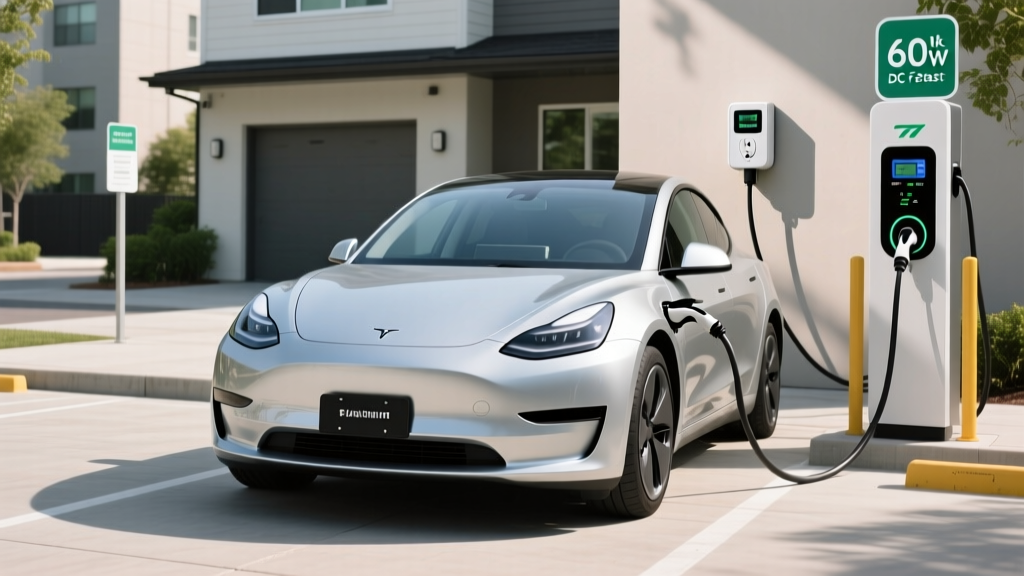
| DC Fast Charge | 400–800V DC | 50–350 kW | 150–1,000+ mi/hr (equivalent) | Road trips; 10–80% in 15–40 minutes |
For an FPL home charger installation, Level 2 is the target. Level 1 (a standard 120V outlet) is too slow for any battery-electric vehicle with more than 30 kWh of capacity — it would take over 50 hours to charge a Tesla Model Y Long Range (75 kWh usable) from empty. Level 2 on a 240V circuit delivers a full overnight charge for any EV on the market.
- Chevrolet Equinox EV (85 kWh battery, 315 mi EPA): 0–100% in ~8.5 hours; 10–80% in ~5.5 hours
- Hyundai Ioniq 5 (77.4 kWh battery, 303 mi EPA): 0–100% in ~7.8 hours; 10–80% in ~5 hours
- Ford F-150 Lightning Extended Range (131 kWh battery, 320 mi EPA): 0–100% in ~13 hours; 10–80% in ~8.5 hours
- Toyota RAV4 Prime PHEV (18.1 kWh battery, 42 mi electric): 0–100% in ~2.5 hours
Note: DC fast charging times are not linear. A 270 kW peak charger may only sustain that rate between 10–40% SoC, then taper significantly above 80%. Always evaluate DC charging by 10–80% time, not peak kW.
FPL Home Charger Installation: Electrical Requirements and Real Costs
Installing a Level 2 FPL home charger requires a dedicated 240-volt circuit, typically rated at 40A, 50A, or 60A depending on the charger's maximum amperage. The National Electrical Code (NEC) requires that continuous loads (including EV chargers) not exceed 80% of the circuit rating — so a 48-amp charger requires a 60-amp circuit, and a 40-amp charger requires a 50-amp circuit.
What Your Electrician Will Evaluate
- Electrical panel capacity: Most modern homes have 200A service panels. Adding a 60A EV circuit is straightforward if you have spare breaker slots and sufficient remaining capacity. Older homes with 100A panels or heavily loaded 200A panels may need a panel upgrade ($1,500–$3,500) or a load-management device.
- Wire run distance: The distance from your panel to the charger location affects wire gauge and cost. Runs over 50 feet require thicker (more expensive) copper wire to prevent voltage drop. Expect $8–$15 per foot for a standard install; longer runs or conduit through concrete push costs higher.
- Permitting: Florida requires an electrical permit for EV charger installations in most jurisdictions. Permit fees typically range from $50–$200 depending on your county (Miami-Dade, Broward, Palm Beach, etc.). Your electrician usually pulls this permit and schedules the inspection.
- Outlet vs. hardwired: A NEMA 14-50 outlet gives you portability (take the charger when you move), while hardwiring eliminates the GFCI breaker requirement (saving $80–$150) and is marginally safer for permanent installations.
| Component | Simple Install (Short Run, Adequate Panel) | Complex Install (Long Run or Panel Upgrade) |
|---|---|---|
| Level 2 Charger (Equipment) | $350–$700 | $350–$700 |
| Electrician Labor | $300–$600 | $800–$2,000 |
| Materials (Wire, Conduit, Breaker) | $100–$300 | $300–$800 |
| Electrical Permit | $50–$150 | $50–$200 |
| Panel Upgrade (if needed) | $0 | $1,500–$3,500 |
| Total Estimated Cost | $800–$1,750 | $3,000–$7,200 |
The wide range reflects real variation. A homeowner with a 200A panel, an empty double-slot, and a garage wall 15 feet from the panel might pay $900 all-in. A homeowner in a 1970s home needing a panel upgrade, a 70-foot wire run through an attic, and a concrete-penetrating conduit might pay $5,000+. Get at least three quotes from licensed Florida electricians — and verify they carry the proper insurance and FPL coordination experience.
FPL's EVantage Rate Plan: Time-of-Use Savings
FPL offers the EVantage Time-of-Use rate plan, which provides significantly lower electricity rates during off-peak hours (typically overnight, 10 PM – 6 AM). Under this plan, off-peak charging can cost roughly $0.08–$0.10 per kWh compared to $0.13–$0.16 per kWh during peak hours. This is the single most impactful financial decision for your FPL home charger setup — scheduling your EV to charge overnight at off-peak rates can cut your per-mile fuel cost by 40–50% compared to charging on the standard residential rate.
Which Connector Does Your EV Need? NACS, CCS, and Adapter Reality in 2026
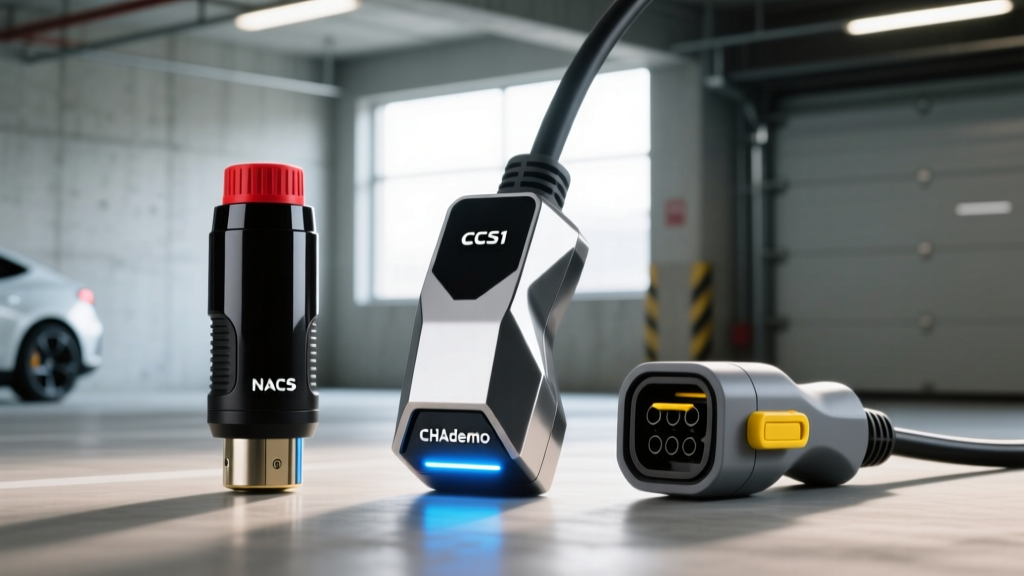
The connector landscape has shifted dramatically. As of the 2025 model year, Tesla's North American Charging Standard (NACS) has been adopted by Ford, GM, Rivian, Hyundai/Kia, BMW, and most other major automakers. By 2026, nearly every new EV sold in the U.S. ships with a NACS charge port. CCS1 (the previous standard for non-Tesla EVs) is now primarily found on 2024 and earlier models and a handful of remaining inventory vehicles.
| Connector | Brands Using It (2026 Models) | Home Charger Availability | Adapter Needed? |
|---|---|---|---|
| NACS (Tesla Standard) | Tesla, Ford, GM, Hyundai, Kia, Rivian, BMW, Volvo, Polestar, Mercedes-Benz | Widely available — Tesla Wall Connector, ChargePoint, Emporia, Grizzl-E all offer NACS | CCS-to-NACS adapters available (~$150–$250) for older CCS vehicles |
| CCS1 | Legacy 2024 and older models (VW ID.4 pre-2025, older Hyundai/Kia, etc.) | Most Level 2 chargers still available with CCS/J1772 connector | NACS-to-J1772 adapter (~$100–$150) if charger has NACS plug |
| CHAdeMO | Nissan Leaf (discontinued 2025), Mitsubishi Outlander PHEV (older) | Limited new charger options; adapters scarce | No practical home adapter — use J1772 chargers with vehicle-side adapter if available |
For new FPL home charger installations in 2026, buy a NACS-connector charger unless you specifically own a CCS1-only vehicle with no plans to upgrade. The market has moved, and NACS chargers will be compatible with virtually every EV you might buy over the next decade. If you currently own a CCS1 vehicle and plan to keep it, a J1772-connector charger with a J1772-to-NACS adapter on the vehicle side is a practical bridge solution.
Best Level 2 Chargers for FPL Customers: Equipment Recommendations
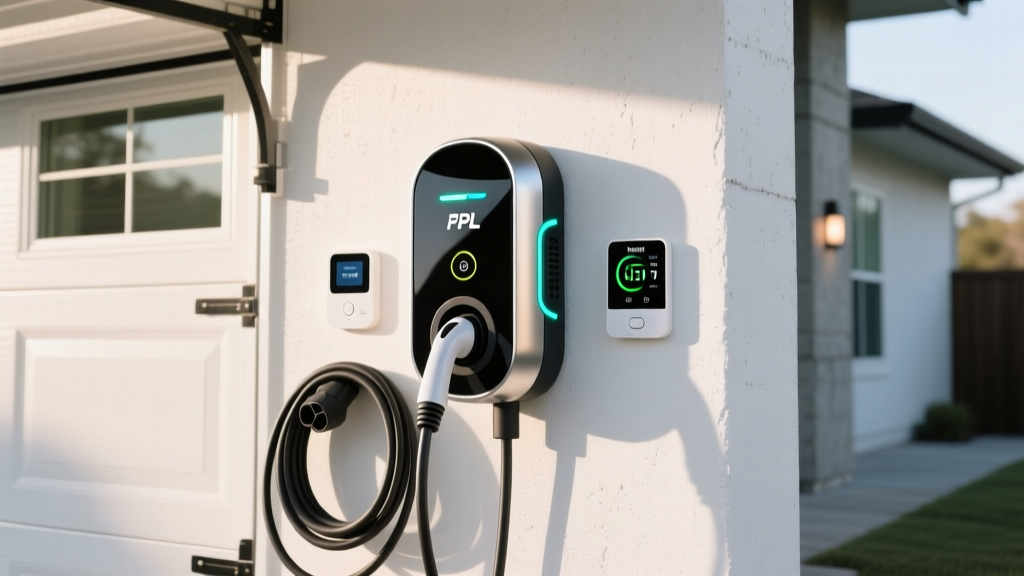
Not all Level 2 chargers are equal. The right unit for your FPL home charger setup depends on your electrical panel capacity, your EV's onboard charger limit, and whether you want smart scheduling features to align with FPL's EVantage off-peak rates. Below are the top picks for 2026 based on reliability, features, and value.
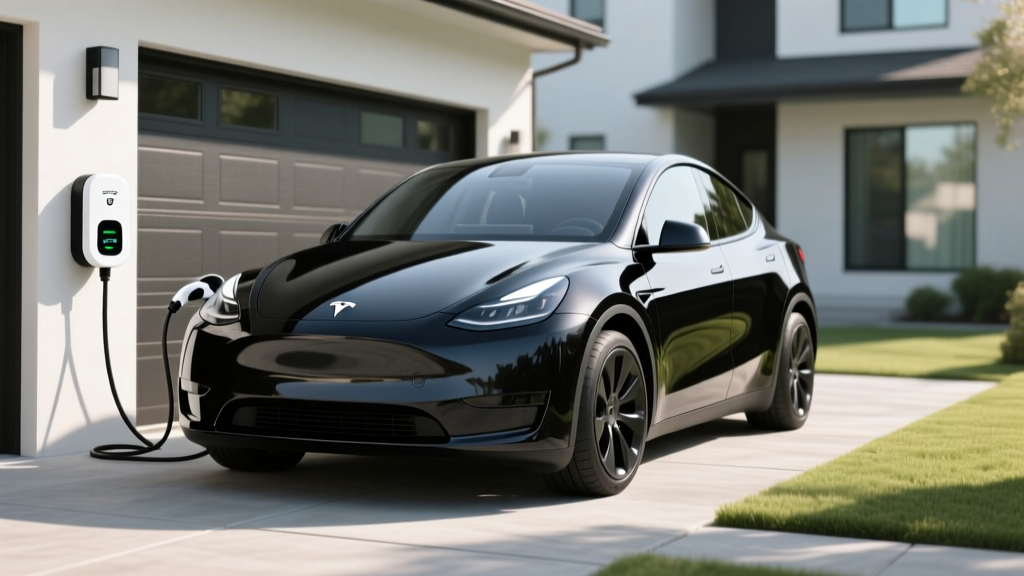
Tesla Wall Connector (Gen 4, NACS)
- Max Power Output: 11.5 kW (48A on 60A circuit)
- Connector: NACS native
- Cable Length: 24 feet
- Smart Features: Wi-Fi scheduling, power sharing (link multiple units on one circuit), over-the-air updates, Tesla app integration
- Price: ~$450
- Best For: Tesla owners or households with multiple NACS vehicles; clean design, proven reliability
- Limitation: No J1772/CCS option — NACS only. Non-Tesla NACS vehicles work but require the Tesla app or third-party scheduling.
ChargePoint Home Flex (NACS or J1772)
- Max Power Output: 12 kW (50A on 60A circuit) — adjustable down to 16A for smaller circuits
- Connector: Available in NACS or J1772
- Cable Length: 23 feet
- Smart Features: Wi-Fi scheduling, Alexa integration, detailed energy tracking via ChargePoint app, EVantage TOU scheduling
- Price: ~$550–$650
- Best For: Households wanting flexible amperage settings and robust app-based scheduling for off-peak FPL rates
- Limitation: Slightly pricier; the J1772 version requires an adapter for NACS vehicles
Emporia Vue Level 2 Charger (NACS or J1772)
- Max Power Output: 11.5 kW (48A on 60A circuit)
- Connector: NACS or J1772 options
- Cable Length: 24 feet
- Smart Features: Wi-Fi, integration with Emporia home energy monitor, solar-aware charging, TOU scheduling
- Price: ~$350–$400
- Best For: Budget-conscious buyers; solar-panel owners who want to charge exclusively on excess solar production
- Limitation: App is functional but less polished than ChargePoint or Tesla
Grizzl-E Smart (NACS or J1772)
- Max Power Output: 10 kW (40A on 50A circuit)
- Connector: NACS or J1772
- Cable Length: 24 feet
- Smart Features: Wi-Fi scheduling, OCPP compatibility, outdoor-rated enclosure (NEMA 4), built-in load balancing
- Price: ~$450–$550
- Best For: Outdoor installations (carport, driveway) — one of the most rugged, weather-resistant units available
- Limitation: Maxes at 40A (10 kW), so large-battery EVs like the F-150 Lightning will take ~15 hours for a full charge
Pro tip: Match the charger's amperage to your EV's onboard charger limit. The Hyundai Ioniq 5 accepts up to 10.9 kW (45.4A) on Level 2 — so a 48A charger maxes it out. The Ford F-150 Lightning with the extended-range battery accepts up to 19.2 kW (80A), which requires an 80A charger on a 100A circuit (a significant electrical upgrade). Most EVs in 2026 accept 11.5 kW, making a 48A/60A circuit the sweet spot for cost versus performance.
Charging Cost Per Mile: FPL Home Rates vs. Public Charging vs. Gasoline
The financial case for an FPL home charger hinges on electricity rates. Florida's average residential rate sits around $0.13–$0.15 per kWh on the standard plan, but the EVantage off-peak rate drops this substantially. Here's how the math works in practice.
| Scenario | Rate / Price | Vehicle Efficiency | Cost Per Mile |
|---|---|---|---|
| FPL Home, EVantage Off-Peak | ~$0.09/kWh | 3.0 mi/kWh (typical EV) | $0.030 |
| FPL Home, Standard Residential Rate | ~$0.14/kWh | 3.0 mi/kWh | $0.047 |
| Public Level 2 (ChargePoint, etc.) | ~$0.25–$0.35/kWh | 3.0 mi/kWh | $0.083–$0.117 |
| DC Fast Charging (Electrify America, EVgo) | ~$0.35–$0.55/kWh | 3.0 mi/kWh | $0.117–$0.183 |
| Gasoline Car (30 MPG combined) | ~$3.20/gal (FL avg) | 30 MPG | $0.107 |
| Gasoline Car (22 MPG combined, truck/SUV) | ~$3.20/gal | 22 MPG | $0.145 |
At FPL's off-peak EVantage rate, home-charging an EV costs roughly $0.03 per mile — about one-third the cost of fueling a 30 MPG gasoline car and one-fifth the cost of fueling a full-size truck at 22 MPG. Over 15,000 miles of annual driving, that's a savings of $1,150–$1,725 per year compared to gasoline, depending on the vehicle you're replacing.
However, the numbers flip if you rely primarily on DC fast charging at $0.45/kWh — at that rate, your per-mile cost ($0.15) exceeds a 22 MPG gasoline vehicle. This is why home charging isn't optional for EV economics; it's the foundation. Public DC fast charging is a road-trip convenience, not a daily fueling strategy.
Safety, Code Compliance, and Common Installation Mistakes
EV chargers draw sustained high current for hours — a load profile very different from a dryer or oven that cycles on and off. This makes proper installation non-negotiable.
Code Requirements for Florida EV Charger Installations
- Dedicated circuit: Your EV charger must be on its own dedicated circuit — no sharing with other appliances. This prevents overloading and nuisance breaker trips.
- GFCI protection: If you install a receptacle (NEMA 14-50 outlet), NEC 2020 and later requires a GFCI breaker for garage installations. Hardwired chargers are exempt from this requirement, which saves $80–$150 on the breaker and eliminates a common source of nuisance trips.
- Outdoor rating: If your charger is mounted outside (carport, exterior wall, driveway post), it must carry a NEMA 4 (weatherproof) rating. All chargers recommended above meet this standard.
- Wire gauge: A 60A circuit requires 6 AWG copper wire (or 4 AWG aluminum) for runs under 50 feet. Longer runs require upsizing to prevent voltage drop — your electrician will calculate this.
- Permit and inspection: Do not skip this. An unpermitted installation can void your homeowner's insurance in the event of an electrical fire and will cause problems during a home sale inspection.
- Using a 14-50 outlet on a 40A breaker: A NEMA 14-50 receptacle is rated for 50A. Installing it on a 40A circuit is a code violation in many jurisdictions. Match the receptacle rating to the breaker.
- Ignoring the 80% continuous-load rule: A 50A breaker supports a maximum continuous load of 40A. Plugging in a 48A charger to a 50A circuit will trip the breaker. Always size the breaker at 125% of the charger's rated amperage.
- Running undersized wire: Using 8 AWG wire on a 60A circuit creates a fire hazard. Wire gauge must match breaker amperage per NEC Table 310.16.
- Skipping the load calculation: If your panel is already near capacity (multiple large appliances, pool heater, AC units), adding 48–80A of EV charging may overload it. A professional load calculation is essential.
Federal Tax Credits and FPL Rebates for Home Charger Installation
As of 2026, the federal Alternative Fuel Vehicle Refueling Property Credit (IRS Form 8911) provides a tax credit of up to 30% of the cost of home EV charging equipment and installation, capped at $1,000. However, eligibility depends on your census tract meeting specific low-income or non-urban criteria — not all FPL customers will qualify. Consult a tax professional before assuming eligibility.
- Equipment must be new and placed in service during the tax year
- Installed at your primary residence in the United States
- Your census tract must qualify (rural or low-income community designation — check the IRS eligibility tool)
- Credit is 30% of combined equipment + installation cost, up to a maximum of $1,000
- Nonrefundable credit — it can reduce your tax liability to zero but will not generate a refund
- Consult a qualified tax professional for your specific situation
FPL has periodically offered rebates or incentives for EV charger installations and EVantage rate enrollment. Check FPL's current EV programs page for any active offers, as these change annually.
Frequently Asked Questions: FPL Home Charger Setup
How much does it cost to install a home EV charger with FPL?
A straightforward Level 2 charger installation in a home with an adequate 200A electrical panel and a short wire run typically costs $800–$1,750 (equipment + electrician + permit). If your home needs a panel upgrade, a long wire run, or conduit through concrete, costs can reach $3,000–$7,200. Always get multiple quotes from licensed electricians.
How fast will each charging level add range to my EV?
Level 1 (120V) adds 3–5 miles per hour — only practical for PHEVs with small batteries. Level 2 (240V, 48A) adds 25–40 miles per hour for most EVs, enough for a full overnight charge. DC fast charging (50–350 kW) can add 100–250 miles in 15–30 minutes, though speeds taper significantly above 80% State of Charge.
Which connector is compatible with my EV?
If your EV is a 2025 or newer model from Tesla, Ford, GM, Hyundai, Kia, Rivian, BMW, or Volvo, it almost certainly uses NACS. Older non-Tesla EVs (2024 and earlier) typically use CCS1/J1772. For a 2026 home charger installation, NACS is the future-proof choice. If your vehicle uses CCS1, you can use a J1772-connector charger with a J1772-to-NACS adapter, or purchase a CCS1-connector charger directly.
How much does EV charging cost per mile compared to gasoline?
On FPL's EVantage off-peak rate (~$0.09/kWh), home EV charging costs approximately $0.03 per mile — roughly one-third the cost of a 30 MPG gasoline car at $3.20/gallon ($0.107/mile). Even on the standard FPL residential rate (~$0.14/kWh), EV charging costs about $0.047/mile. However, public DC fast charging at $0.40+/kWh can exceed gasoline costs.
What electrical upgrades might I need for a Level 2 home charger?
The most common upgrade is a panel capacity increase — if your 200A panel is already heavily loaded or you have an older 100A panel, you may need a panel upgrade ($1,500–$3,500). Other potential needs include: a load-management device (avoids panel upgrade by throttling charger when other appliances run, ~$300–$600), wire upsizing for long runs, or a sub-panel installation if the charger is far from the main panel (detached garage, carport).
Does FPL offer a special rate for EV charging?
Yes. FPL's EVantage Time-of-Use rate plan offers significantly lower per-kWh rates during off-peak hours (typically 10 PM – 6 AM). Scheduling your charger to operate only during these windows is the single most effective way to minimize your EV fueling cost. Contact FPL or enroll through your online account to switch to this rate.
Can I install a NEMA 14-50 outlet myself to save money?
No. A 240V/50A circuit carries lethal voltage and sustained high current. Improper installation creates fire and electrocution risk. Florida requires a licensed electrician and a permit for this work. DIY installation will also void most charger warranties and may invalidate your homeowner's insurance coverage for electrical fires.
Setting up an FPL home charger is a one-time investment that pays dividends across every mile you drive. With a properly sized Level 2 unit on the EVantage rate, you'll pay the equivalent of $0.90-per-gallon fuel, wake up to a full battery every morning, and eliminate gas station visits entirely. The key is doing it right: correct circuit sizing, permitted installation, the right connector for your vehicle, and off-peak scheduling. Get three electrician quotes, pull the permit, and start saving from day one.