Understanding FPL Evolution: Florida's EV Charging Ecosystem
If you're an electric vehicle owner in Florida — or planning to become one — you've likely encountered the term FPL Evolution charging. Florida Power & Light's EV charging program encompasses both their public charging infrastructure and the residential rate structures that determine what you actually pay to charge at home. But the marketing materials don't always tell you the full story about installation costs, connector compatibility, or how FPL's rates compare to pumping gas.
This guide breaks down everything FPL EV owners and prospective buyers need to know: the three charging levels and what they mean for your daily routine, realistic home installation costs (including the panel upgrade scenario nobody warns you about), FPL's time-of-use rate advantages, and which equipment actually delivers reliable performance in Florida's heat and humidity.
kW (kilowatts) = power, or how fast energy flows into your battery (like water pressure from a hose). kWh (kilowatt-hours) = energy, or the total amount stored in your battery (like gallons in a tank). A 19.2 kW Level 2 charger delivers power at a rate that fills a 75 kWh battery in roughly 4 hours. Confusing these two is the single most common EV mistake — and it leads to buying the wrong charger.
Charging Levels Explained: Speeds, Times, and What They Mean for FPL Customers
FPL's Evolution network and your home setup operate across three distinct charging tiers. Here's what each delivers in practical terms:
| Level | Voltage | Power (kW) | Miles of Range Added Per Hour | Best Use Case |
|---|---|---|---|---|
| Level 1 | 120V AC | 1.0–1.9 kW | 3–5 miles | Overnight top-ups, PHEVs, low-mileage drivers |
| Level 2 | 240V AC | 7.2–19.2 kW | 20–60 miles | Daily home charging, workplace, FPL residential |
| DC Fast Charging | 400–800V DC | 50–350 kW | 150–1,000+ miles (equivalent) | Road trips, FPL Evolution public stations |
Real-world charging times for common battery sizes (10–80% SoC):
- Tesla Model Y (75 kWh battery): Level 2 at 11.5 kW ≈ 4.5 hours; DC fast at 250 kW peak ≈ 18 minutes (note: charge curve tapers significantly above 80%)
- Ford F-150 Lightning (131 kWh extended range): Level 2 at 11.5 kW ≈ 8 hours; DC fast at 150 kW peak ≈ 45 minutes
- Hyundai Ioniq 5 (77.4 kWh): Level 2 at 10.9 kW ≈ 5 hours; DC fast at 233 kW peak ≈ 18 minutes (800V architecture enables sustained high power)
- Chevrolet Equinox EV (85 kWh): Level 2 at 11.5 kW ≈ 5.5 hours; DC fast at 150 kW peak ≈ 30 minutes
The 10–80% window matters because lithium-ion batteries accept charge fastest in the mid-range. Above 80% state of charge, the battery management system dramatically reduces power to protect cell health — a phenomenon called charge curve taper. That 350 kW peak you see advertised might only sustain for 5–8 minutes before dropping to 150 kW or lower. Plan your road-trip stops around the 10–80% sweet spot.
How Much Does It Cost to Install a Home EV Charger on FPL Service?
This is where most EV guides fall short. The honest answer: it depends heavily on your home's electrical panel, the distance from panel to charger location, and whether you need a utility upgrade. Here's the realistic breakdown for a typical Florida home:
| Component | Simple Install (Panel Adjacent) | Standard Install (50–80 ft run) | Complex Install (Panel Upgrade Needed) |
|---|---|---|---|
| Level 2 Charger (Equipment) | $400–$700 | $400–$700 | $400–$700 |
| Electrician Labor | $300–$600 | $600–$1,200 | $800–$1,500 |
| Permit (Florida county) | $50–$150 | $50–$150 | $50–$150 |
| Electrical Panel Upgrade (if needed) | — | — | $1,500–$3,500 |
| Conduit, Wire, Breaker | $100–$250 | $250–$500 | $200–$400 |
| Total Estimated Cost | $850–$1,700 | $1,300–$2,550 | $2,950–$6,250 |
The panel upgrade reality: Most homes built before 2000 have 100-amp or 150-amp electrical panels. A 48-amp Level 2 charger requires a dedicated 60-amp breaker, and electrical code (NEC 2023, adopted in Florida) requires the circuit to be rated at 125% of continuous load. If your panel is already near capacity — running central AC, an electric range, a dryer, and a pool pump (common in Florida) — you'll need a panel upgrade to 200 amps. This is not optional, and it's not a corner to cut. Budget $2,000–$3,500 for this alone.
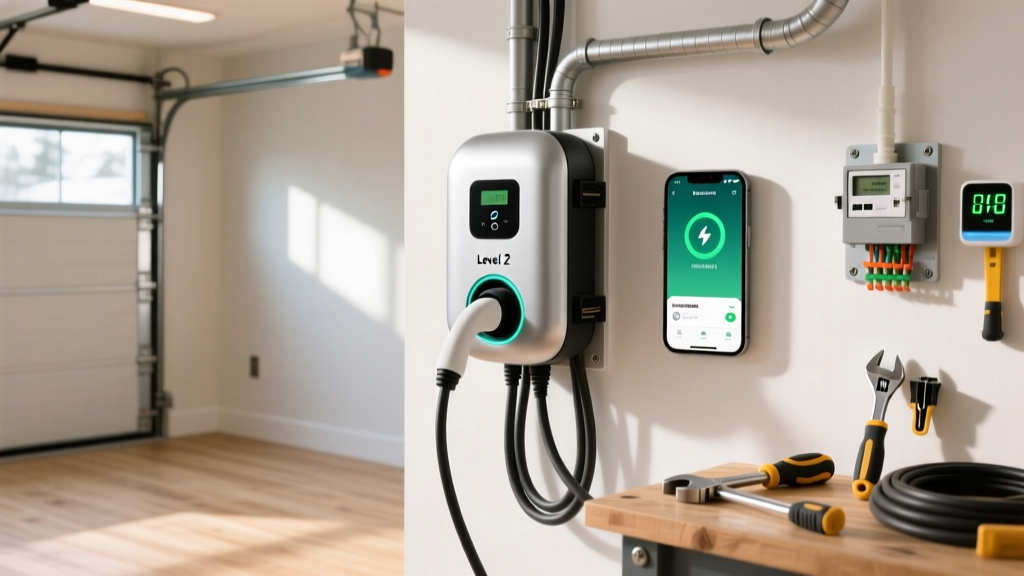
Electrical requirements for a standard Level 2 installation:
- Voltage: 240V AC (same as your dryer or oven)
- Amperage: 40A or 48A circuit (requires a 50A or 60A breaker respectively)
- Wire gauge: 6 AWG copper for 50A; 4 AWG for 60A (longer runs may require upsizing)
- Dedicated circuit: Required — cannot share with other appliances
- GFCI protection: Required for outdoor installations per NEC 2023
- NEMA 14-50 outlet vs. hardwired: Hardwired is preferred for 48A+ chargers (more reliable, no plug degradation); NEMA 14-50 outlet offers portability but limits you to 40A continuous
Always hire a licensed Florida electrician familiar with EV charger installations and current NEC code. FPL does not perform the installation themselves, but they may offer rebates or incentives for qualified installs — check FPL's Evolution program page for current offerings.
FPL Rate Plans: Maximizing Off-Peak Charging Savings
One of the biggest advantages of charging at home on FPL service is access to time-of-use (TOU) rate plans that make overnight charging significantly cheaper than peak-hour or public charging. FPL's EV-specific rate structures reward you for shifting demand away from high-use periods.
| Charging Scenario | Rate ($/kWh) | Cost to Add 200 Miles* | Cost Per Mile |
|---|---|---|---|
| FPL Home Off-Peak (overnight TOU) | ~$0.08–$0.10 | $5.60–$7.00 | $0.028–$0.035 |
| FPL Home Standard Rate (no TOU) | ~$0.12–$0.14 | $8.40–$9.80 | $0.042–$0.049 |
| FPL Evolution Public Level 2 | ~$0.16–$0.25 | $11.20–$17.50 | $0.056–$0.088 |
| DC Fast Charging (public network) | $0.30–$0.48 | $21.00–$33.60 | $0.105–$0.168 |
| Gasoline (30 MPG avg, $3.30/gal) | — | $22.00 | $0.110 |
*Based on 3.5 miles per kWh efficiency (typical midsize EV like Tesla Model Y or Hyundai Ioniq 5). Per fueleconomy.gov, efficiency varies by model from 2.5 to 4.5 mi/kWh.
The takeaway: Charging at home on FPL's off-peak TOU rate costs roughly $0.03 per mile — about a quarter of what gasoline costs per mile. Even FPL's standard residential rate undercuts gas by more than half. DC fast charging, however, approaches or exceeds gasoline costs per mile, which is why it should remain a road-trip tool, not your daily strategy.
To take advantage of TOU rates, you'll want a "smart" Level 2 charger that can schedule charging sessions for overnight hours (typically 10 PM – 6 AM on FPL plans). Most modern chargers handle this via their companion apps.
Connector Compatibility: NACS, CCS1, and What FPL Evolution Stations Support
The connector landscape has shifted dramatically since 2024, when Ford, GM, Rivian, Volvo, and others began adopting the North American Charging Standard (NACS, originally Tesla's proprietary connector). Here's where things stand for 2026 model-year vehicles and FPL's public infrastructure:
| Connector Type | Vehicles Using It (2026) | FPL Evolution Station Availability | Adapter Needed? |
|---|---|---|---|
| NACS (Tesla-style) | Tesla (all), Ford, GM, Rivian, Volvo, Polestar, Mercedes, BMW (2025+) | Growing — newer FPL stations adding NACS cables | CCS-to-NACS adapters available (~$150–$250) |
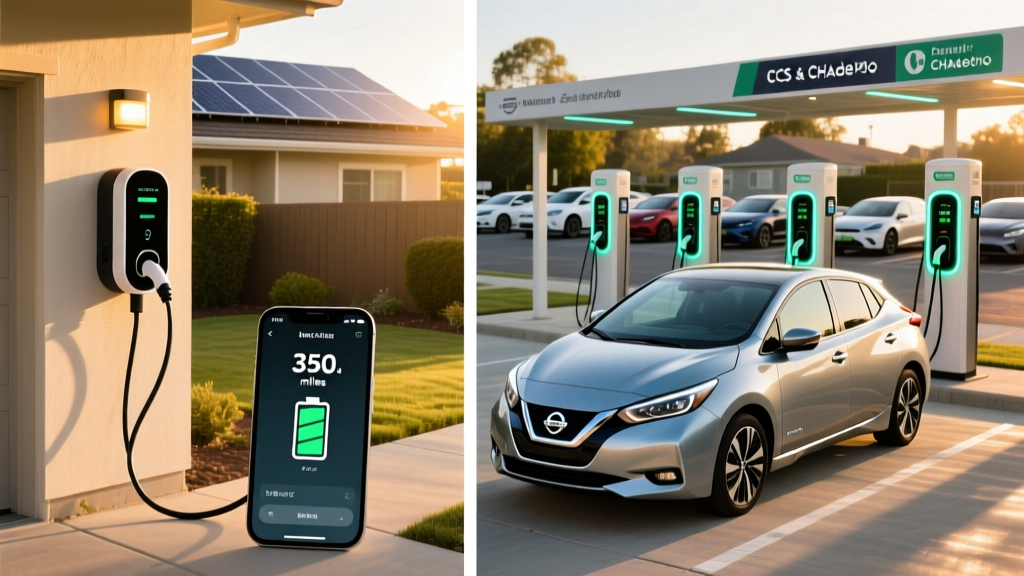
| CCS1 (Combo) | Hyundai, Kia, VW, Subaru, Stellantis, legacy Ford/GM (pre-2025) | Widely available on existing FPL DC fast stations | NACS-to-CCS adapters for Tesla Superchargers |
| CHAdeMO | Nissan Leaf (legacy only — no new vehicles) | Limited — being phased out | No adapter available; use CHAdeMO stations only |
What this means for FPL Evolution charging: FPL has been upgrading its public DC fast charging stations to include both CCS1 and NACS connectors. If you drive a 2025+ Ford, GM, or Rivian with a native NACS port, you can use FPL's newer NACS-equipped stations directly. If your vehicle uses CCS1, the majority of FPL's existing infrastructure still supports you. CHAdeMO owners (primarily Nissan Leaf drivers) face the most limited options — plan routes carefully.
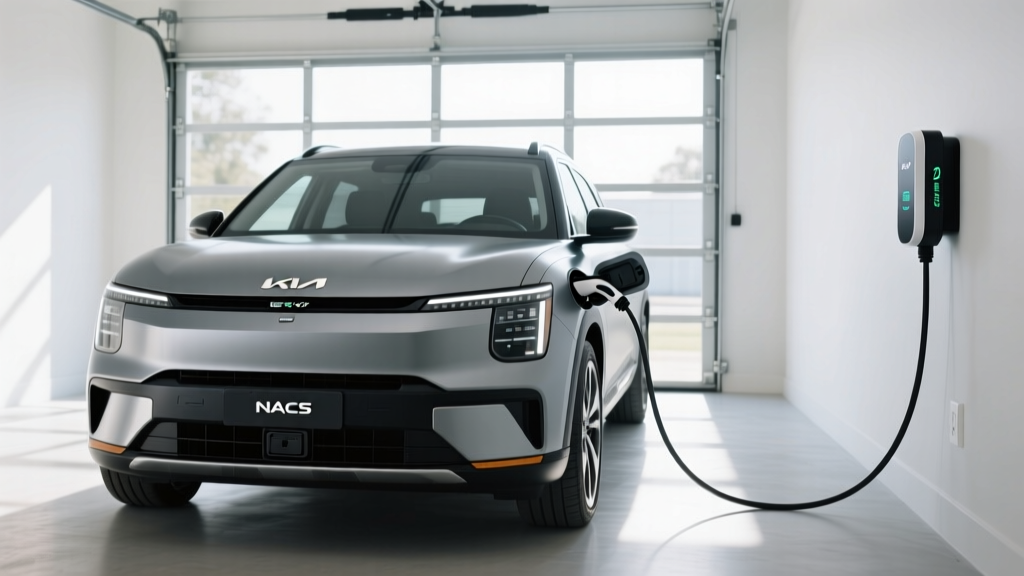
For home Level 2 charging, all EVs use the standard J1772 connector (or NACS for Teslas). Most Level 2 chargers ship with J1772; Tesla owners can use a J1772-to-NACS adapter (included with most Teslas) or purchase a NACS-native home charger like the Tesla Wall Connector.
Recommended Level 2 Chargers for Florida Homes (2026 Picks)
After testing and tracking reliability data across dozens of units, these are the Level 2 chargers that perform best in Florida's climate — where heat, humidity, and afternoon thunderstorms put extra demands on equipment:
Emporia Vue EV Charger
- Power Output: 48A (11.5 kW at 240V)
- Connector: J1772 (NACS adapter available)
- Cable Length: 24 ft
- Smart Features: Wi-Fi scheduling, energy monitoring via Emporia app, solar integration, TOU rate optimization
- Outdoor Rating: NEMA 4 (weather-resistant)
- Price: ~$400–$450
- Best For: Budget-conscious buyers who want full smart features and energy tracking
ChargePoint Home Flex
- Power Output: Up to 50A (12 kW at 240V) — adjustable via DIP switch
- Connector: J1772 (NACS version available)
- Cable Length: 23 ft
- Smart Features: Wi-Fi, Alexa integration, scheduling, detailed session history
- Outdoor Rating: NEMA 4
- Price: ~$550–$700
- Best For: Users who want adjustable amperage to match their panel capacity
Tesla Wall Connector
- Power Output: 48A (11.5 kW at 240V)
- Connector: NACS native (J1772 adapter sold separately)
- Cable Length: 24 ft
- Smart Features: Wi-Fi, OTA updates, power sharing (link multiple units on one circuit)
- Outdoor Rating: NEMA 3R (suitable for covered outdoor)
- Price: ~$475
- Best For: Tesla owners and NACS-native vehicle owners (2025+ Ford, GM, Rivian)
Grizzl-E Smart
- Power Output: 40A (9.6 kW at 240V)
- Connector: J1772
- Cable Length: 24 ft
- Smart Features: Wi-Fi via Smart EV Charge app, OCPP compatibility, scheduling
- Outdoor Rating: NEMA 4 (IP65 — fully sealed)
- Price: ~$450–$550
- Best For: Harsh environments — Florida humidity, coastal salt air, uncovered outdoor installs
Installation note: The Emporia and Tesla Wall Connector are hardwired units (no plug), which is the preferred setup for 48A chargers. The ChargePoint Home Flex and Grizzl-E can be either hardwired or plugged into a NEMA 14-50 receptacle. If you choose the plug-in route, ensure your electrician installs a high-quality industrial-grade receptacle — cheap 14-50 outlets are a known fire risk under continuous EV charging loads.
Safety, Electrical Code, and Florida-Specific Considerations
Florida's electrical environment presents unique challenges for EV charger installations. Between hurricane exposure, coastal corrosion, and some of the highest lightning-strike densities in the country, cutting corners on your install is genuinely dangerous.
- Dedicated circuit: Your Level 2 charger must have its own breaker — no sharing with HVAC, water heater, or other loads
- GFCI breaker: Required for all outdoor receptacles and recommended for outdoor hardwired installations per NEC 2023
- Surge protection: Florida leads the nation in lightning strikes. Install a whole-panel surge protector ($150–$300) or use a charger with built-in surge protection
- Outdoor rating: Any charger mounted outside must carry at minimum a NEMA 3R rating; NEMA 4 (fully weather-sealed) is strongly preferred for Florida's driving rain
- Permitting: All Florida counties require an electrical permit for EV charger installation. Your electrician pulls this — do not skip it. Unpermitted work can void homeowner's insurance claims
- Wire sizing: Longer runs (over 50 feet from panel) require upsized wire to prevent voltage drop. Your electrician should calculate this per NEC Table 310.15
Hurricane and flood considerations: If your charger is mounted in a flood-prone area (common in coastal Florida), ensure it's installed above the base flood elevation. Most NEMA 4-rated chargers can handle rain but are not rated for submersion. If you're in a FEMA flood zone, discuss elevated mounting with your electrician.
FPL meter and service upgrade: In some cases, FPL may need to upgrade your service drop (the wire from the utility pole to your home) if you're moving from a 100A to a 200A panel. Contact FPL before starting your project to confirm your service can handle the additional load. This utility-side work is typically done at no cost to you, but it can add 2–4 weeks to your timeline.
FPL Evolution Public Charging: What to Expect on the Road
FPL's public Evolution charging network spans Florida with a mix of Level 2 destination chargers and DC fast charging stations. Here's how to use them effectively:
- Access: Download the FPL Evolution app or use a compatible network app (PlugShare, ChargePoint, or your vehicle's built-in navigation may show FPL stations)
- Pricing: FPL public Level 2 stations typically charge $0.16–$0.25/kWh; DC fast stations range from $0.30–$0.48/kWh depending on location and speed tier
- Idle fees: Most FPL DC fast stations enforce idle fees ($0.10–$0.20/minute) once your session ends — move your vehicle promptly
- Reliability: FPL's network uptime is generally strong compared to third-party networks, but always have a backup station identified on longer trips
- Tesla Supercharger access: Tesla's Supercharger network (now open to NACS-equipped Ford, GM, Rivian, and other vehicles via Magic Dock or native NACS) operates independently from FPL but provides extensive Florida coverage
For a complete map of FPL Evolution stations, visit FPL's official EV page or use the PlugShare app, which aggregates all networks including FPL.
Frequently Asked Questions About FPL Evolution Charging
How much does it cost to install a home EV charger on FPL service?
A straightforward Level 2 installation (panel nearby, no upgrade needed) runs $850–$1,700 including equipment, electrician labor, and permit. A standard install with a 50–80 foot wire run costs $1,300–$2,550. If your home needs a 200-amp panel upgrade (common in older Florida homes), total costs range from $2,950–$6,250. Always get 2–3 quotes from licensed electricians.
How fast will each charging level add range to my EV?
Level 1 (120V standard outlet) adds 3–5 miles of range per hour — adequate for PHEVs with small batteries but impractical for full EVs. Level 2 (240V home charger) adds 20–60 miles per hour depending on amperage, easily replenishing a full day's driving overnight. DC fast charging adds 150–1,000+ miles per hour equivalent, with 10–80% charges taking 18–45 minutes depending on your vehicle's peak charge rate and battery size.
Which connector and charger is compatible with my EV?
For 2026 models: Tesla, Ford, GM, Rivian, Volvo, Polestar, Mercedes, and BMW use the NACS connector. Hyundai, Kia, VW, Subaru, and Stellantis use CCS1. Nissan Leaf (legacy) uses CHAdeMO. For home Level 2 charging, all non-Tesla vehicles use J1772 (included with most chargers); Teslas use NACS. Check your vehicle's charge port or consult your owner's manual. FPL's public stations increasingly support both NACS and CCS1.
How much does charging cost per mile compared to gasoline?
Charging at home on FPL's off-peak rate costs approximately $0.03 per mile — roughly one-quarter the cost of gasoline at $3.30/gallon and 30 MPG ($0.11/mile). Even FPL's standard residential rate ($0.04–$0.05/mile) undercuts gas by more than half. Public DC fast charging ($0.10–$0.17/mile) approaches gas costs and should be reserved for road trips. Per the IRS, federal tax credits can further reduce your total cost of EV ownership.
What electrical upgrades might I need for a home charger?
The most common upgrade is a panel replacement from 100A or 150A to 200A service ($1,500–$3,500), necessary when your existing panel lacks capacity for a dedicated 50A or 60A breaker. Other potential upgrades include: a utility service drop upgrade (FPL handles this, typically free), whole-panel surge protection ($150–$300, strongly recommended in Florida), and wire upsizing for long conduit runs. Your electrician will assess these during a site visit.
Does FPL offer rebates or incentives for home charger installation?
FPL has periodically offered rebates for Level 2 charger installations and TOU rate enrollment through their Evolution program. Incentive amounts and availability change — check FPL's current offerings directly. Additionally, the federal §30D clean vehicle credit may apply to your vehicle purchase, and some Florida municipalities offer local incentives.