FPL EV Charging: What Florida EV Owners Need to Know
If you're driving an electric vehicle in Florida — or planning to — understanding the FPL EV charging landscape is the single biggest factor in whether ownership feels effortless or frustrating. Florida Power & Light serves over 5 million customer accounts across the state, and its rate structure, grid capacity, and public charging partnerships directly shape your daily EV experience.
This guide covers everything from installing a Level 2 home charger on an FPL circuit to navigating Florida's growing (but still uneven) public DC fast-charging network. We'll break down exact costs in kW and dollars, name specific equipment, and flag the electrical gotchas that catch too many new EV owners off guard.
Charging Levels Explained: kW, Speeds, and Real-World Range Added
Before we talk FPL-specific rates, let's nail down the three charging levels. The distinction that trips up most new EV buyers: kW (kilowatts) measures power — how fast energy flows into your car. kWh (kilowatt-hours) measures energy — the total capacity of your battery, like gallons in a gas tank. A 75 kWh battery charged at 11.5 kW (a common Level 2 rate) takes roughly 6.5 hours from empty to full.
| Level | Voltage | Power (kW) | Miles of Range Added per Hour | Best For |
|---|---|---|---|---|
| Level 1 | 120V AC | 1.0–1.4 kW | 3–5 miles | Overnight top-ups, PHEVs, low-mileage drivers |
| Level 2 | 240V AC | 3.3–19.2 kW | 12–75 miles | Daily home charging, most EV owners' primary source |
| DC Fast Charge | 400–800V DC | 50–350 kW | 150–1,000+ miles (equivalent rate) | Road trips, quick top-ups away from home |
Real-world charging time examples (10–80% SoC):
- Tesla Model Y (75 kWh battery, 250 kW peak): ~25 minutes at a V3 Supercharger, tapering significantly above 80%
- Hyundai Ioniq 5 (77.4 kWh, 800V architecture, 240 kW peak): ~18 minutes on a compatible 350 kW charger
- Ford F-150 Lightning (131 kWh extended range, 150 kW peak): ~41 minutes — larger batteries take longer even at high kW
- Chevrolet Equinox EV (85 kWh, 150 kW peak): ~30 minutes
These times assume optimal battery preconditioning and a charger that can actually deliver peak power. Many public chargers in Florida are 50–150 kW units, which will extend these times. Always check the charger's rated output in the app before driving there.
Installing a Level 2 Home Charger on Your FPL Service
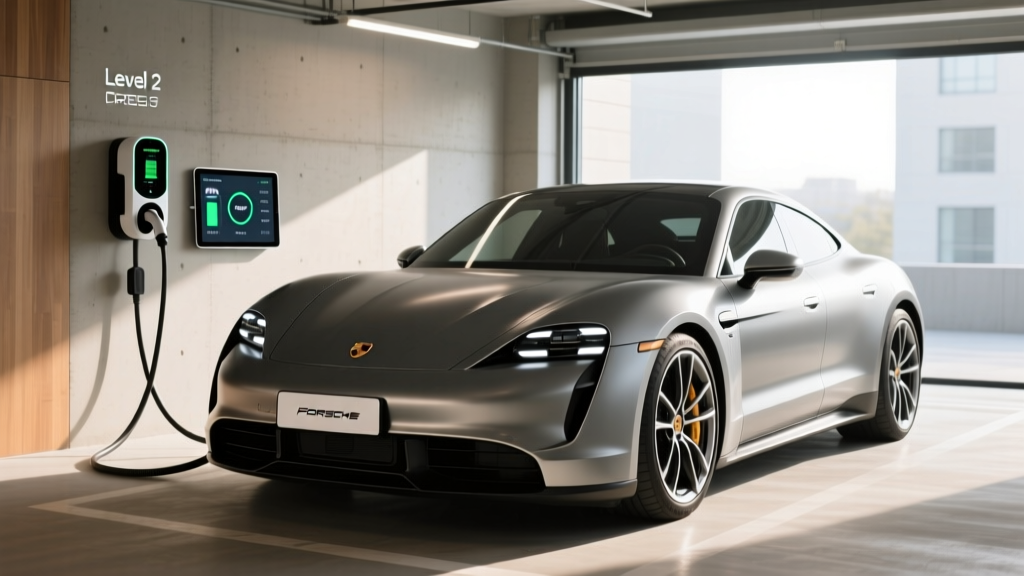
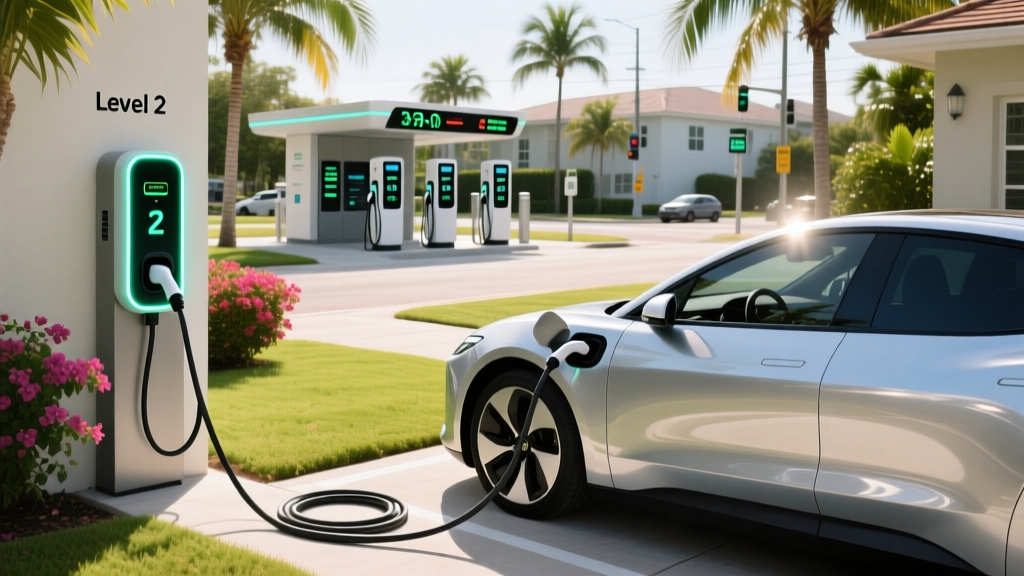
Home charging is where FPL customers gain the biggest advantage. Florida's relatively mild winters mean less cold-weather range loss than northern states, and FPL's off-peak rates make overnight charging remarkably cheap. But the installation process requires planning.
Electrical Requirements
A typical Level 2 home charger requires a 240-volt, 40- to 60-amp dedicated circuit. Most popular hardwired chargers draw 48 amps continuously, which by National Electrical Code (NEC) requires a 60-amp breaker (continuous loads can only use 80% of a breaker's rated capacity). If you choose a plug-in charger using a NEMA 14-50 outlet, you'll need a 50-amp breaker, limiting continuous draw to 40 amps (9.6 kW).
What Your Electrical Panel Can Handle
Many Florida homes built before 2005 have 100-amp or 150-amp main panels. Adding a 60-amp EV circuit may push you close to or over your panel's capacity, especially if you also run central A/C, an electric range, and a pool pump. A licensed electrician will perform a load calculation per NEC Article 220 to determine if your panel can handle the additional draw.
If you need a panel upgrade — from 100A to 200A, for example — expect to add $1,500–$3,500 to your project cost. This is the single biggest surprise cost for EV charger installations, and it's more common in older Florida homes.
Permitting and Code Requirements
Florida requires an electrical permit for EV charger installations. Your electrician will pull this from your county or municipality. Expect permit fees of $50–$150 depending on jurisdiction. The installation must meet NEC 2023 (or later, as adopted locally), which includes:
- A dedicated circuit (no sharing with other appliances)
- GFCI protection for outdoor installations
- Proper wire gauge (typically 6 AWG copper for 60A circuits, 4 AWG for longer runs)
- NEMA 14-50 outlets must be installed with the correct orientation and torque specifications — a known fire-risk issue when done incorrectly
Installation Cost Breakdown
| Cost Component | Simple Install (panel nearby, no upgrade) | Complex Install (long wire run or panel upgrade) |
|---|---|---|
| EV charger equipment (Level 2, 40–48A) | $400–$750 | $400–$750 |
| Electrician labor (2–6 hours) | $300–$800 | $800–$2,000 |
| Materials (wire, conduit, breaker) | $100–$300 | $300–$800 |
| Electrical permit | $50–$150 | $50–$150 |
| Panel upgrade (if needed) | $0 | $1,500–$3,500 |
| Total | $850–$2,000 | $3,050–$7,200 |
Florida does not currently offer a statewide EV charger installation rebate, but check with FPL directly — utility incentive programs change annually, and some municipalities or homeowner associations offer supplemental rebates. The federal Alternative Fuel Vehicle Refueling Property Credit (30C) may cover up to $1,000 of home charging equipment and installation costs, subject to income and census-tract eligibility. Consult a tax professional.
FPL Electricity Rates: What Charging Actually Costs
FPL's residential rates make Florida one of the more affordable states for EV charging — especially if you use time-of-use optimization. As of early 2026, FPL's standard residential rate averages approximately $0.13–$0.14 per kWh (including fuel and non-fuel charges), though this varies by usage tier and rate schedule.
FPL offers a Residential Demand Rate and some time-of-use options that can lower off-peak charging costs to roughly $0.09–$0.11 per kWh during overnight hours (typically 10 PM – 6 AM). Check FPL's current rate schedules at fpl.com/residential/rates-and-pricing, as rate structures update annually.
| Scenario | Cost per kWh or Gallon | Cost per Mile (250 Wh/mi EV / 28 MPG Gas) |
|---|---|---|
| Home charging (FPL off-peak) | ~$0.10/kWh | $0.025/mile |
| Home charging (FPL standard rate) | ~$0.135/kWh | $0.034/mile |
| Public Level 2 (e.g., ChargePoint) | $0.25–$0.40/kWh | $0.063–$0.10/mile |
| DC fast charging (Electrify America, etc.) | $0.35–$0.55/kWh | $0.088–$0.138/mile |
| Gasoline (Florida avg, early 2026) | ~$3.20/gallon | $0.114/mile |
The takeaway: home charging on FPL's grid is 3–4x cheaper per mile than gasoline. Even public DC fast charging is often comparable to or cheaper than gas on a per-mile basis. The cost advantage shrinks if you rely exclusively on expensive public fast chargers, which is why home Level 2 installation is the highest-ROI investment for any Florida EV owner.
Connector Compatibility: NACS, CCS, and CHAdeMO in Florida
The connector landscape has shifted dramatically since 2024, when Ford, GM, Rivian, and most other automakers committed to adopting the North American Charging Standard (NACS), originally developed by Tesla. Here's where things stand in 2026:
| Connector | Physical Standard | Vehicles Using It (2026 Models) | Public Network Access |
|---|---|---|---|
| NACS (J3400) | Compact, no latch | Tesla (all), Ford, GM, Rivian, Hyundai/Kia (new models), Volvo, Polestar | Tesla Supercharger network (17,000+ stalls), growing non-Tesla networks |
| CCS1 (Combo) | Bulky, latched | VW ID.4 (carryover), legacy BMW, Mercedes, Stellantis models, older Ford/GM | Electrify America, EVgo, ChargePoint, most non-Tesla DC networks |
| CHAdeMO | Round, large | Nissan Leaf (discontinued but still on roads), Mitsubishi Outlander PHEV | Limited — many stations have removed CHAdeMO connectors |
Adapter needs: If you drive a vehicle with a CCS1 port but want access to Tesla Superchargers, you'll need a CCS-to-NACS adapter. Ford and GM provided these to early transition buyers; aftermarket adapters from reputable brands (e.g., Lectron, A2Z) run $150–$250. If you drive a NACS-equipped vehicle and need to use a CCS charger, NACS-to-CCS adapters are also available. Tesla's Supercharger network now includes a "Magic Dock" CCS adapter built into select stalls — check the Tesla app for locations.
Public EV Charging in FPL Territory: Networks and Reliability
Florida's public charging infrastructure has expanded significantly, but reliability remains inconsistent. Here's what FPL customers can expect from the major networks operating across the state:
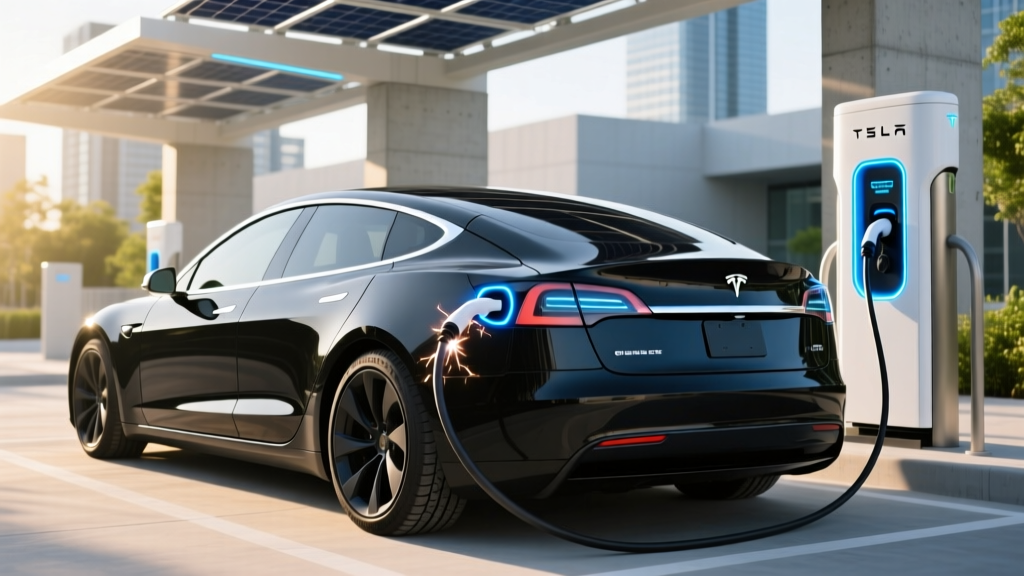
Tesla Supercharger Network
Florida has over 100 Supercharger stations, concentrated along I-95, I-75, I-4, and the Turnpike corridor. V3 stalls deliver up to 250 kW; V4 stalls (limited deployment) support up to 350 kW. Non-Tesla vehicles with NACS ports or CCS adapters can access select stations via the Tesla app. Pricing for non-Tesla vehicles is typically $0.35–$0.48/kWh in Florida.
Electrify America
EA operates numerous stations at Walmart, Target, and highway travel centers across Florida. Most stations offer 150 kW and 350 kW chargers. Pricing ranges from $0.36–$0.51/kWh for guest users; the Pass+ membership ($7/month) reduces rates to ~$0.31–$0.36/kWh. Reliability has improved since 2024 but still lags behind Tesla — always check the EA app for real-time stall status before committing to a stop.
EVgo and ChargePoint
EVgo operates fast-charging hubs primarily in metro areas (Miami, Tampa, Orlando, Jacksonville). ChargePoint has the broadest Level 2 network, often found at shopping centers, hotels, and workplaces. Level 2 pricing on ChargePoint varies widely by site host ($0.15–$0.49/kWh or per-hour fees).
FPL's Own Charging Initiatives
FPL has invested in EV infrastructure through its FPL EVolution program, deploying public charging stations in select locations and offering commercial charging solutions. FPL also provides an EV toolkit to help residential customers plan charging setups. While FPL is not a primary public charging network operator, its grid investments and rate structures underpin every EV charge in its service territory.
Recommended Home Level 2 Chargers for FPL Customers
Based on real-world testing, build quality, smart features, and compatibility, here are the top Level 2 chargers for Florida homes in 2026:
ChargePoint Home Flex
- Power output: Up to 12 kW (50A) on a 60A circuit; configurable down to 16A for lower-capacity panels
- Connector: NACS or J1772 (select at purchase)
- Cable length: 23 feet
- Smart features: Wi-Fi, app scheduling (sync with FPL off-peak hours), Alexa integration, energy tracking
- Price: ~$599–$699
- Best for: Flexibility — adjustable amperage means it works with nearly any panel
Emporia Level 2 EV Charger
- Power output: Up to 11.5 kW (48A) on a 60A circuit
- Connector: J1772 (NACS adapter included with newer models)
- Cable length: 24 feet
- Smart features: Wi-Fi, app scheduling, integrates with Emporia Vue energy monitor for whole-home load tracking
- Price: ~$399–$449 (best value)
- Best for: Budget-conscious buyers who want smart scheduling without premium pricing
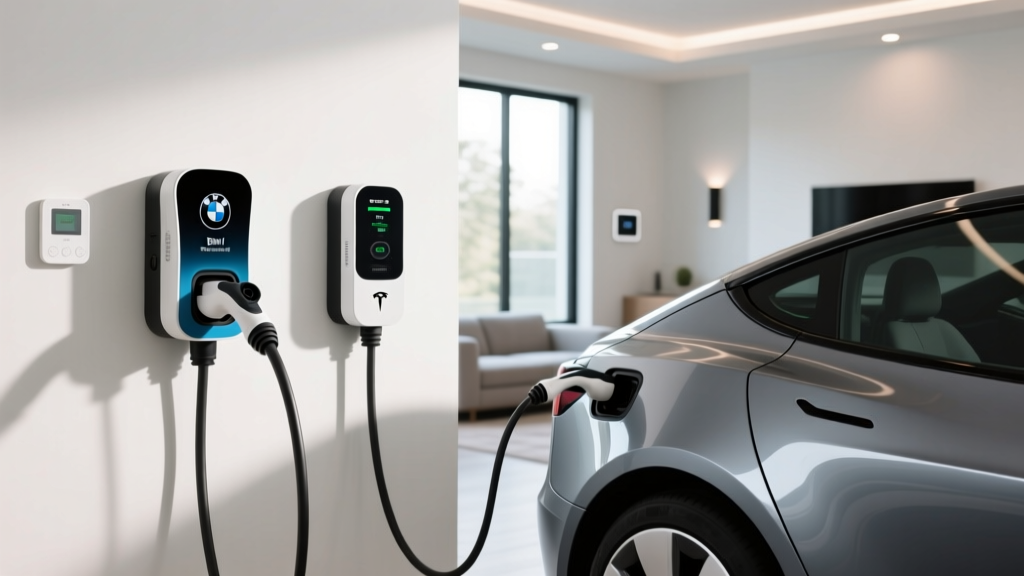
Tesla Wall Connector
- Power output: Up to 11.5 kW (48A) on a 60A circuit
- Connector: NACS native; includes J1772 adapter in box (2025+ models)
- Cable length: 24 feet
- Smart features: Wi-Fi, power sharing (link multiple units on one circuit), OTA updates, access control
- Price: ~$450–$475
- Best for: Tesla owners or NACS-equipped vehicles — cleanest integration, excellent build quality
Grizzl-E Smart
- Power output: Up to 10 kW (40A) on a 50A circuit
- Connector: J1772 (NACS version available)
- Cable length: 24 feet
- Smart features: Wi-Fi, OCPP-compatible, adjustable amperage via dip switches
- Price: ~$449–$549
- Best for: Outdoor installs — IP67-rated, built in Canada, handles Florida heat and humidity well
Safety, Maintenance, and Florida-Specific Considerations
Florida's climate creates unique conditions for EV charging equipment:
- Hurricane and flood risk: If your charger is installed outdoors in a flood-prone area, ensure it's rated for wet locations (NEMA 4 or IP65+) and mounted at least 18 inches above the base flood elevation. After any flooding event, have an electrician inspect the unit before use.
- Heat and UV exposure: Florida's sun degrades cables and housings over time. Choose chargers with UV-stabilized enclosures and park in shade when possible. Cable management hooks prevent ground contact and prolong cable life.
- Lightning: Florida leads the nation in lightning strikes. A whole-home surge protector (installed at your panel, ~$200–$400) is a wise investment that protects your charger, vehicle, and other electronics.
- HOA rules: Florida law (F.S. § 718.113) prohibits HOAs from unreasonably restricting EV charger installation in designated parking spaces, but they can impose reasonable aesthetic and safety requirements. Get HOA approval in writing before installation.
Frequently Asked Questions
How much does it cost to install a home EV charger with FPL service?
A straightforward Level 2 installation (60A circuit, panel nearby, no upgrade needed) typically costs $850–$2,000 including equipment, labor, and permit. If your home needs a panel upgrade from 100A to 200A, total costs can reach $3,050–$7,200. Get at least two quotes from licensed electricians, and confirm they include the permit in their estimate.
How fast will each charging level add range to my EV?
Level 1 (120V) adds 3–5 miles per hour — fine for a PHEV with 30 miles of electric range, but inadequate for a BEV with a depleted battery. Level 2 (240V, 48A) adds 30–40 miles per hour for most EVs, replenishing a typical 250–300 mile battery overnight. DC fast charging adds 150–300+ miles in 20–30 minutes depending on the vehicle's peak charge rate and the station's output.
Which connector and charger is compatible with my EV?
Check your vehicle's charge port. 2025–2026 models from Tesla, Ford, GM, Rivian, Hyundai, Kia, and Volvo use NACS (J3400). Most 2024 and earlier non-Tesla EVs use CCS1. The Nissan Leaf uses CHAdeMO. For home Level 2 charging, J1772 is the universal standard for non-Tesla vehicles; Tesla includes a J1772 adapter. When buying a home charger, match the connector to your vehicle or buy an adapter.
How much does charging cost per mile compared to gas?
Charging at home on FPL's off-peak rate (~$0.10/kWh) costs approximately $0.025 per mile for an EV averaging 250 Wh/mile — roughly 4x cheaper than gasoline at $3.20/gallon in a 28 MPG vehicle ($0.114/mile). Even standard-rate home charging ($0.135/kWh) costs only $0.034/mile. Public DC fast charging ($0.35–$0.55/kWh) is closer to gas parity but still often cheaper.
What electrical upgrades might I need before installing an EV charger?
The most common upgrade is a panel capacity increase — moving from a 100A or 150A main panel to 200A. This is more likely in homes built before 2005 or homes with multiple high-draw appliances (electric range, dryer, central A/C, pool equipment). Your electrician will perform a NEC Article 220 load calculation. Some homes may also need a service drop upgrade from the utility (FPL handles the utility side; you handle the panel and meter base). In rare cases, older aluminum wiring must be replaced with copper for the charger circuit.
Does FPL offer any EV-specific rate plans?
FPL has explored time-of-use and demand-based rate structures that benefit EV owners who charge during off-peak hours. Availability and terms change — visit FPL's EV program page or call their residential energy team to ask about current options. Regardless of rate plan, scheduling your charger to operate between 10 PM and 6 AM avoids peak demand and reduces costs.
Can I use a regular 120V outlet to charge my EV?
Yes, but slowly. Level 1 charging at 120V delivers 1.0–1.4 kW, adding 3–5 miles of range per hour. For a 75 kWh battery starting at 20% SoC, a full charge would take 40+ hours. Level 1 works well for plug-in hybrids with small batteries (10–18 kWh) or for BEV owners who drive fewer than 30 miles daily and can top up overnight. For anything beyond that, Level 2 is strongly recommended.