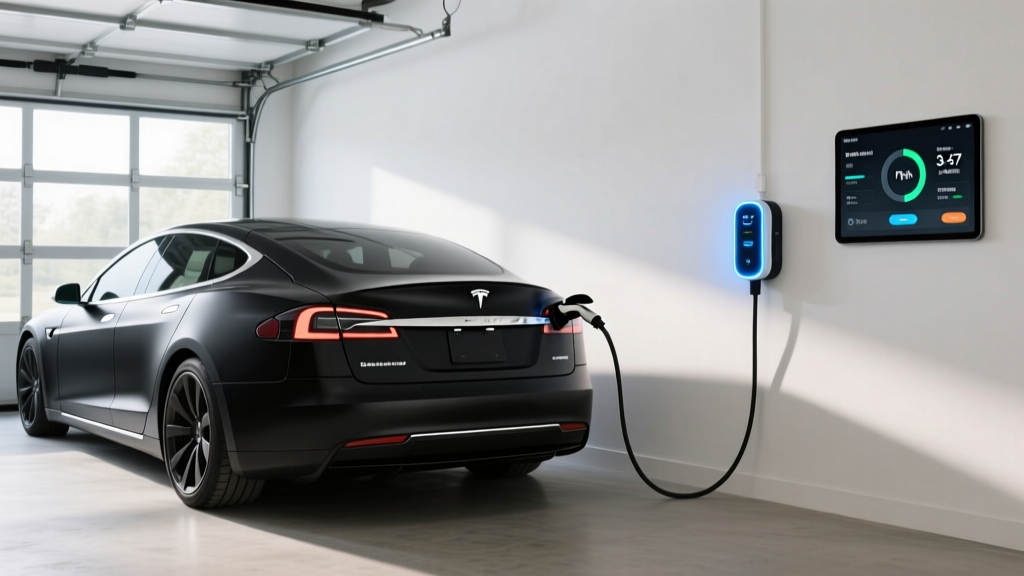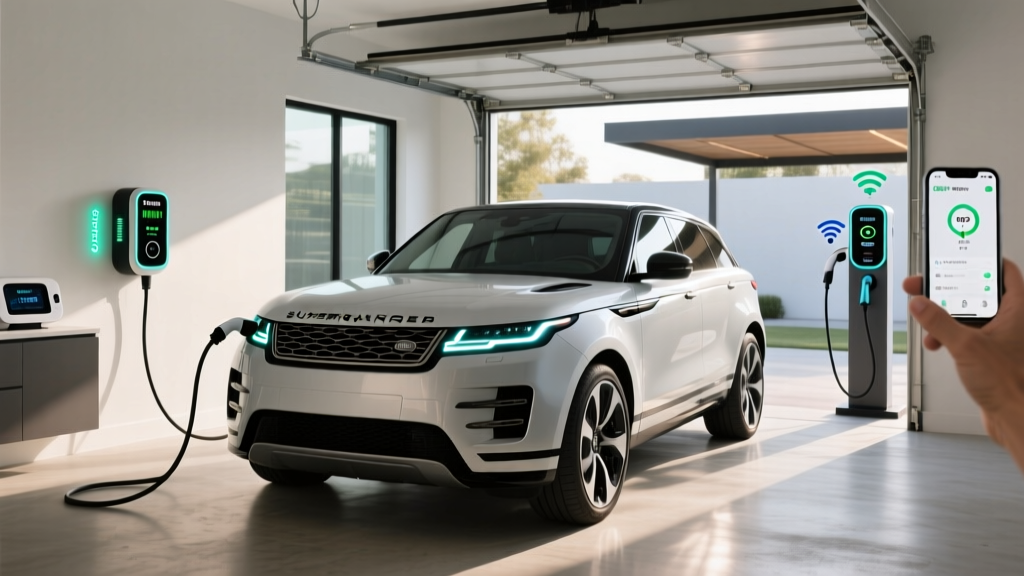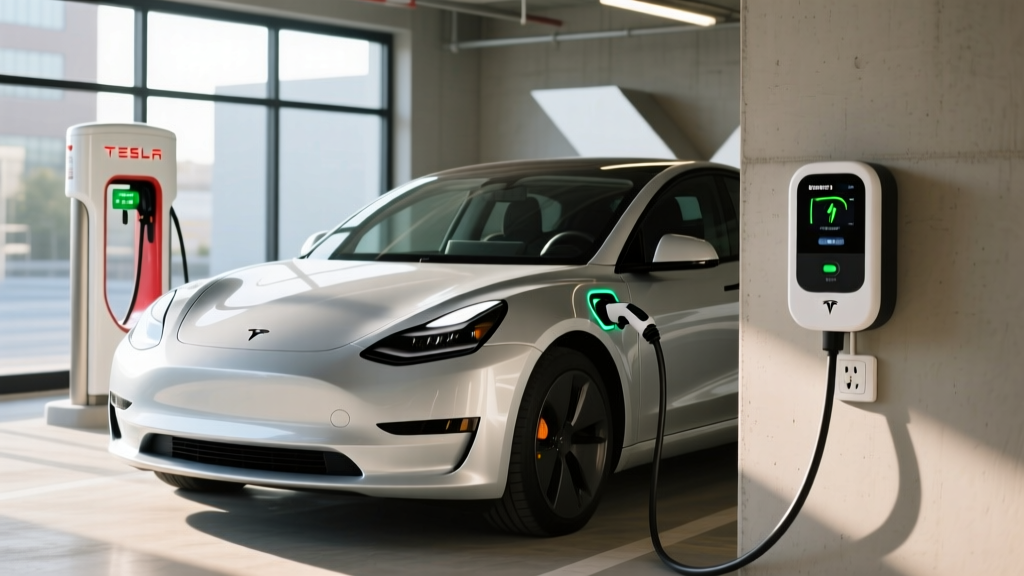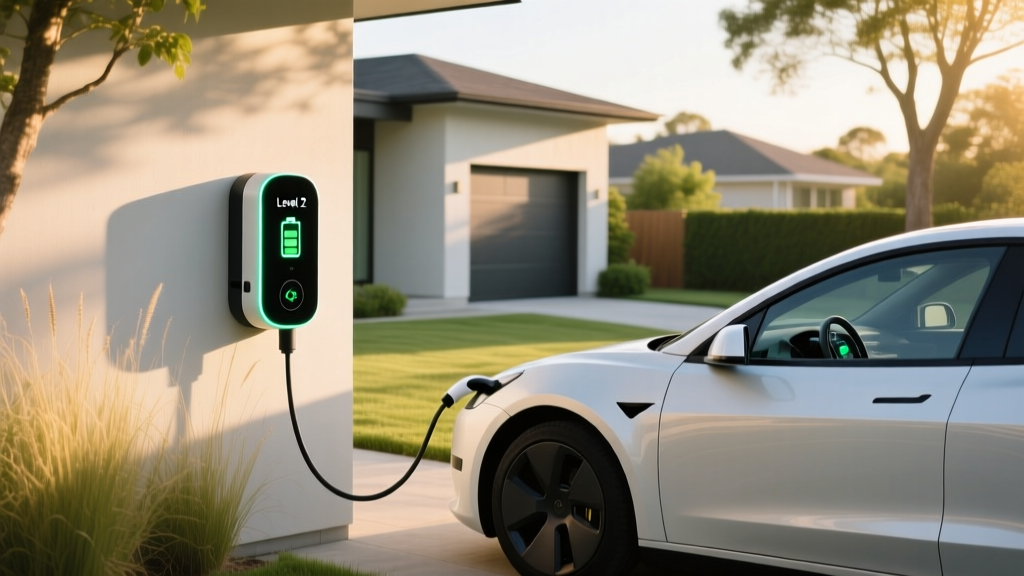
If you live in Florida and drive an electric vehicle, Florida Power & Light (FPL) offers one of the more accessible utility rebate programs for home EV charging equipment. The FPL EV charger rebate can offset a meaningful chunk of your Level 2 home charger purchase and installation — but the savings only materialize if you understand the electrical requirements, choose compatible equipment, and navigate the application correctly.
This guide breaks down exactly what FPL offers in 2026, what a home Level 2 installation actually costs (including the panel-upgrade scenario nobody warns you about), which chargers qualify, and how your per-mile charging cost compares to filling a gas tank in Florida.
Understanding the FPL EV Charger Rebate Program
FPL's residential EV charging rebate is designed to encourage off-peak home charging, which reduces strain on the grid during Florida's high-demand afternoon hours. As of 2026, the program typically offers up to $500 back on a qualifying Level 2 (240V) smart charger and its installation, though exact amounts and eligibility windows shift with each program cycle.
Key requirements generally include:
- You must be an active FPL residential customer.
- The charger must be a Wi-Fi-enabled smart charger capable of participating in demand-response or time-of-use (TOU) programs.
- Installation must be performed by a licensed Florida electrician with a pulled permit.
- You must enroll in FPL's EV rate plan or agree to off-peak charging windows (typically overnight, 10 PM – 6 AM).
- Rebate applications must be submitted within 60 days of installation with receipts and permit documentation.
Charging Levels Explained: How Fast Will Each Add Range?
Before selecting equipment, you need to understand the three charging levels available to EV owners. The critical distinction: kW (kilowatts) measures power — the rate of energy delivery, while kWh (kilowatt-hours) measures energy — the total amount stored in your battery. Think of kW as the width of a pipe and kWh as the size of the tank it's filling.
| Level | Voltage | Power (kW) | Miles of Range Added Per Hour | Typical Use Case |
|---|---|---|---|---|
| Level 1 | 120V (standard outlet) | 1.2 – 1.9 kW | 3 – 5 miles/hr | Overnight top-ups, PHEVs, low-mileage drivers |
| Level 2 | 240V (dryer-style outlet or hardwired) | 7.2 – 19.2 kW | 20 – 60+ miles/hr | Daily home charging — the standard for BEV owners |
| DC Fast Charging | 400V–800V (public stations) | 50 – 350 kW | 150 – 1,000+ miles/hr | Road trips, quick top-ups away from home |
Real-world context: A 2026 Tesla Model Y Long Range (81 kWh usable battery, EPA 320 miles) charging on a 48-amp Level 2 circuit at 11.5 kW will go from 10% to 80% State of Charge (SoC) in roughly 5.5 hours. That same session on a Level 1 outlet at 1.4 kW would take over 40 hours — making Level 1 impractical as a primary charging solution for most battery-electric vehicles.
For DC fast charging, that same Model Y on a 250 kW Supercharger can add 10-80% in approximately 25 minutes, though charging speed tapers significantly above 80% SoC to protect battery health. This taper is called the charge curve, and it's why manufacturers quote 10-80% times rather than 0-100%.
Home Level 2 Installation: Electrical Requirements and Costs
The FPL EV charger rebate helps, but your total out-of-pocket cost depends heavily on your home's existing electrical infrastructure. Here's what determines the final price:
Core Electrical Requirements
- Circuit: A dedicated 240V circuit, typically 40-amp or 60-amp, depending on charger amperage.
- Breaker sizing: EV chargers are considered "continuous loads" under the National Electrical Code (NEC), meaning the circuit must be rated at 125% of the charger's maximum draw. A 40-amp charger requires a 50-amp breaker; a 48-amp charger requires a 60-amp breaker.
- Wire gauge: 6 AWG copper for 50-amp circuits; 4 AWG for 60-amp runs (varies with run length).
- Connection type: NEMA 14-50 receptacle (plug-in) or direct hardwire. Hardwired is generally preferred for 48-amp+ chargers and is required by some local codes for circuits above 50 amps.
The Panel Upgrade Question
This is the cost variable that catches many homeowners off guard. Most Level 2 chargers draw 32–48 amps continuously. If your home has a 100-amp electrical panel (common in homes built before the 1990s), adding a 50-amp circuit may exceed your panel's capacity — especially if you're already running central A/C, an electric range, and a dryer.
A licensed electrician will perform a load calculation per NEC Article 220 to determine whether your panel can handle the additional draw. If it can't, you'll need a panel upgrade to 200 amps, which in the Florida market typically costs $1,800–$3,500 including permits and utility coordination.
| Cost Component | Simple Install (200A panel, short run) | Complex Install (panel upgrade, long run) |
|---|---|---|
| Level 2 Smart Charger (Equipment) | $400 – $700 | $400 – $700 |
| Electrician Labor (2–6 hours) | $500 – $1,200 | $1,500 – $2,800 |
| Materials (wire, conduit, breaker) | $150 – $400 | $400 – $900 |
| Permit Fees | $50 – $150 | $100 – $250 |
| Panel Upgrade (if needed) | $0 | $1,800 – $3,500 |
| Total Before Rebate | $1,100 – $2,450 | $4,200 – $8,150 |
| After FPL Rebate (~$500) | $600 – $1,950 | $3,700 – $7,650 |
Choosing the Right Charger: Equipment Recommendations for 2026
To qualify for the FPL EV charger rebate, your unit must be a smart (Wi-Fi-connected) Level 2 charger. Here are three proven options that meet FPL's typical requirements and serve different installation scenarios:
ChargePoint Home Flex
- Power Output: Up to 12 kW (50 amps) on a 60-amp circuit; configurable down to 16 amps for smaller panels
- Connector: NACS (Tesla) or J1772 (standard) — select at purchase
- Cable Length: 23 feet
- Smart Features: Wi-Fi scheduling, Alexa/Google integration, energy tracking, demand-response compatible
- Price: ~$599 (NACS) / ~$549 (J1772)
- Best For: Flexible amperage configuration if your panel is tight on capacity
Emporia Level 2 EV Charger
- Power Output: Up to 11.5 kW (48 amps) on a 60-amp circuit
- Connector: J1772 (NACS adapter available separately)
- Cable Length: 24 feet
- Smart Features: Wi-Fi, solar-integration with Emporia Vue energy monitor, TOU scheduling, load management
- Price: ~$399
- Best For: Budget-conscious buyers who want energy monitoring and solar pairing
Tesla Wall Connector
- Power Output: Up to 11.5 kW (48 amps) on a 60-amp circuit
- Connector: NACS (native Tesla); includes J1772 adapter in-box for non-Tesla EVs
- Cable Length: 24 feet
- Smart Features: Wi-Fi, OTA updates, power sharing (link two units on one circuit), access control
- Price: ~$475
- Best For: Tesla owners or mixed-fleet households (Tesla + non-Tesla)
Important note on NACS vs. J1772: Starting in 2025, most major automakers (Ford, GM, Rivian, Hyundai, Kia, BMW, and others) transitioned to the North American Charging Standard (NACS) port for new vehicles. If you drive a 2025+ model from these brands, your car likely has a native NACS port. Older models and vehicles from Stellantis, Toyota (some), and VW still use J1772. Choose your charger connector accordingly — or buy a J1772-to-NACS adapter (~$150–$250) for flexibility.
Connector Compatibility: Which Plug Does Your EV Need?
| Connector Standard | Also Known As | Brands Using It (2026 Models) | Adapter Needed? |
|---|---|---|---|
| NACS | Tesla connector (now SAE J3400) | Tesla (all years), Ford, GM, Rivian, Hyundai, Kia, BMW, Mercedes, Volvo, Polestar, Nissan (2026+) | None for NACS vehicles; J1772-to-NACS adapter for older J1772 EVs |
| J1772 | SAE J1772 (standard AC plug) | Stellantis (Jeep, Chrysler), Toyota (bZ4X), VW (ID.4 pre-2026), Subaru (Solterra), some legacy EVs | NACS-to-J1772 adapter if using a Tesla Wall Connector |
| CCS1 | Combined Charging System (DC fast) | Legacy DC fast charging on J1772 vehicles — being phased out at public stations in favor of NACS | NACS-to-CCS adapter for Tesla Superchargers (~$250) |
| CHAdeMO | — | Nissan Leaf (legacy), Mitsubishi Outlander PHEV (older) | Increasingly rare at public stations; no practical adapter to NACS |
Cost to Charge: Home vs. Public vs. Gas in Florida
One of the strongest arguments for installing a home Level 2 charger — and pursuing the FPL rebate — is the per-mile cost advantage over gasoline. Here's how the numbers stack up in Florida for 2026:
| Charging Scenario | Rate ($/kWh) | Cost to Add 200 Miles* | Cost Per Mile |
|---|---|---|---|
| Home — FPL Off-Peak (overnight TOU rate) | ~$0.085/kWh | $5.10 | $0.026/mile |
| Home — FPL Standard Residential Rate | ~$0.13/kWh | $7.80 | $0.039/mile |
| Public Level 2 (ChargePoint, EVgo L2) | $0.25 – $0.49/kWh | $15 – $29 | $0.075 – $0.145/mile |
| DC Fast Charging (Electrify America, Tesla Supercharger) | $0.35 – $0.55/kWh | $21 – $33 | $0.105 – $0.165/mile |
| Gasoline Vehicle (30 MPG combined, $3.40/gal FL avg) | — | $22.67 | $0.113/mile |
*Based on a vehicle efficiency of 3.0 miles/kWh (typical for a 2026 crossover SUV EV like the Hyundai Ioniq 5 or Tesla Model Y).
The takeaway: home off-peak charging at FPL's TOU rate costs roughly 77% less per mile than gasoline. Even at the standard residential rate without TOU optimization, you're paying about one-third the per-mile cost of gas. Public DC fast charging, however, can approach or exceed gas costs — which is why a home Level 2 setup is the economic backbone of EV ownership.
Safety and Code Considerations for Your Installation
Florida electrical code (based on the NEC with state amendments) requires several safety measures for EV charger installations:
- Dedicated circuit: Your Level 2 charger must have its own dedicated breaker — it cannot share a circuit with other appliances.
- GFCI protection: NEC 2020 and later require Ground Fault Circuit Interrupter (GFCI) protection for all EV charging outlets. Many modern chargers have built-in GFCI; if yours doesn't, your electrician must install a GFCI breaker (adds ~$50–$80 to materials).
- Outdoor rating: If your charger is installed outdoors (carport, driveway, exterior wall), the unit must carry a NEMA 4 or NEMA 4X rating for weather resistance. All three chargers recommended above meet this standard.
- Permit and inspection: Florida requires an electrical permit for any new 240V circuit. Your electrician pulls the permit, and a local inspector verifies the work. Do not skip this step — FPL's rebate application requires permit documentation, and unpermitted work can void your homeowner's insurance coverage for related claims.
- Cable management: If the charging cable crosses a driveway or walkway, consider a cable management arm or conduit to prevent trip hazards and cable damage.
Frequently Asked Questions
How much does it cost to install a home EV charger in Florida?
For a straightforward installation in a home with an existing 200-amp panel and a short wire run, expect $1,100–$2,450 total (charger + electrician + permit). If your home needs a panel upgrade from 100A to 200A, total costs can reach $4,200–$8,150. The FPL EV charger rebate (up to $500) and the federal §30C tax credit (up to $1,000) can offset a meaningful portion.
How fast will a Level 2 charger add range to my EV?
Most residential Level 2 chargers deliver 7.2–11.5 kW, adding 25–45 miles of range per hour of charging. A full overnight session (8–10 hours) on an 11.5 kW unit adds roughly 250–400 miles — more than enough to replenish daily driving for virtually any EV on the market.
Which connector is compatible with my EV?
If you drive a 2025 or newer Ford, GM, Rivian, Hyundai, Kia, BMW, or Tesla, your vehicle uses the NACS (J3400) connector. If you drive a pre-2025 non-Tesla EV or certain Stellantis/Toyota models, you likely have J1772. Check your vehicle's charge port or owner's manual. Adapters are available for cross-compatibility.
Does the FPL rebate cover the entire installation?
No. The FPL rebate typically covers up to $500, which offsets the equipment cost or a portion of labor. Most installations cost $1,100+ even in the simplest scenario. However, combined with the federal §30C tax credit (up to $1,000), your net cost on a basic install could drop to under $500 out of pocket.
What if my electrical panel can't handle a Level 2 charger?
If your electrician's load calculation shows insufficient capacity, you have three options: (1) upgrade to a 200-amp panel ($1,800–$3,500), (2) install a lower-amperage charger (e.g., 24-amp or 32-amp on a smaller circuit — the ChargePoint Home Flex allows this), or (3) use a smart load-management device like the Emporia Smart Load Center, which dynamically shares capacity between your charger and other high-draw appliances.
Is off-peak charging really worth it?
Yes — significantly. FPL's off-peak TOU rate (~$0.085/kWh) is roughly 35% cheaper than the standard residential rate (~$0.13/kWh). For a driver adding 1,000 miles per month, that difference saves about $15–$18/month, or over $200/year. Since most EV charging happens overnight while you sleep, off-peak scheduling via your charger's app requires zero lifestyle change.
Next Steps: Claiming Your FPL Rebate
- Verify eligibility: Confirm you're an FPL residential customer and review the current rebate terms on FPL's EV charging page.
- Get an electrician quote: Request a load calculation and installation estimate from a licensed Florida electrician. Ask specifically whether your panel can handle the additional circuit.
- Select a qualifying smart charger: Ensure it's on FPL's approved list and has the correct connector for your vehicle.
- Install with a permit: Your electrician should pull the required electrical permit and schedule inspection.
- Submit your rebate application: Include receipts, permit documentation, and proof of FPL enrollment within the program's 60-day window.
- Enroll in FPL's TOU rate plan: Start saving on every overnight charging session.
Home Level 2 charging is the single biggest quality-of-life upgrade in EV ownership — and with the FPL EV charger rebate, federal tax credits, and Florida's relatively low electricity rates, the economics of going electric in the Sunshine State have rarely been stronger.