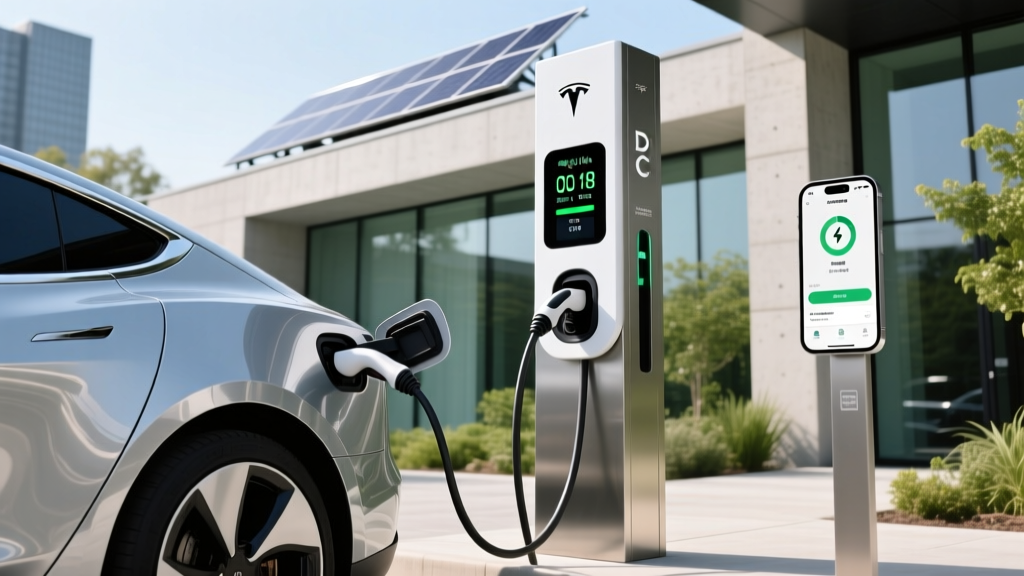
If you drive an electric vehicle in Florida — or are shopping for one — you've likely encountered the term "FPL charger" while researching how to keep your EV powered up. Florida Power & Light operates one of the largest utility-backed EV charging ecosystems in the Southeast, spanning residential rebates, workplace installations, and a growing public DC fast-charging network along major corridors like I-95, I-75, and the Turnpike. But understanding how FPL's charging options fit into a broader home-and-public charging strategy requires clarity on speeds, costs, electrical requirements, and connector compatibility.
This guide breaks down everything you need to know: how fast each charging level actually adds range, what a Level 2 home install really costs (including the panel upgrade nobody warns you about), which connector your EV needs, and how FPL's per-kWh rates compare to gasoline on a cost-per-mile basis.
Charging Levels Explained: How Fast Each Adds Range
The single most important distinction in EV charging is between kW (kilowatts), which measures power — the rate at which energy flows — and kWh (kilowatt-hours), which measures energy — the total amount stored in your battery. Think of kW as the width of a hose and kWh as the size of the bucket. A wider hose (more kW) fills the bucket faster, but the bucket size (kWh) determines how far you can drive.
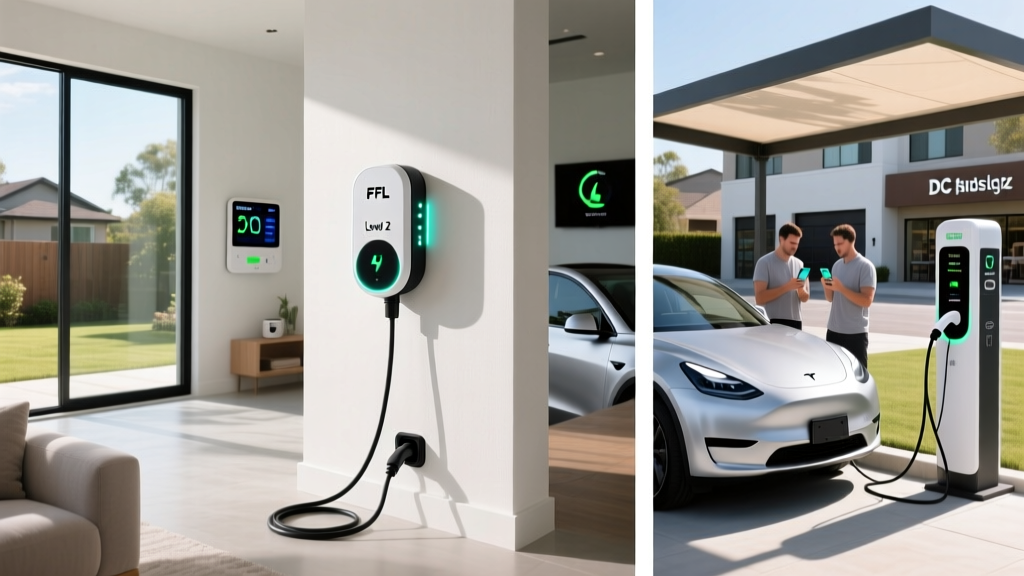
Every EV sold in the US charges at one of three levels. Here's how they compare in real-world terms:
| Level | Voltage | Power (kW) | Miles of Range per Hour | Best For |
|---|---|---|---|---|
| Level 1 | 120V (standard outlet) | 1.0–1.4 kW | 3–5 mi/hr | Overnight trickle; PHEVs with small batteries |
| Level 2 | 240V (dryer-style outlet) | 3.3–19.2 kW | 12–75 mi/hr | Daily home and workplace charging |
| DC Fast Charge | 400V–900V DC | 50–350 kW | 150–1,200+ mi/hr (peak) | Road trips; rapid top-ups |
Real-world context: A Level 2 charger at 11.5 kW (48 amps on a 60-amp circuit) will add roughly 40–44 miles of range per hour for a midsize EV like the Tesla Model Y or Hyundai Ioniq 5. That means a 10–80% charge on a 75 kWh battery takes approximately 5.5 to 6.5 hours — ideal for overnight. At a 150 kW DC fast charger, that same 10–80% session takes roughly 20–28 minutes, though charge speed tapers significantly above 80% State of Charge (SoC) to protect battery health.
FPL's public network includes both Level 2 destination chargers (typically 7.2–19.2 kW) and DC fast chargers ranging from 50 kW to 350 kW at select highway corridors. Most FPL-branded DC fast stations deployed since 2024 support at least 150 kW, which is sufficient for most current EVs' peak charge rates.
Home Level 2 Installation: Electrical Requirements and Costs
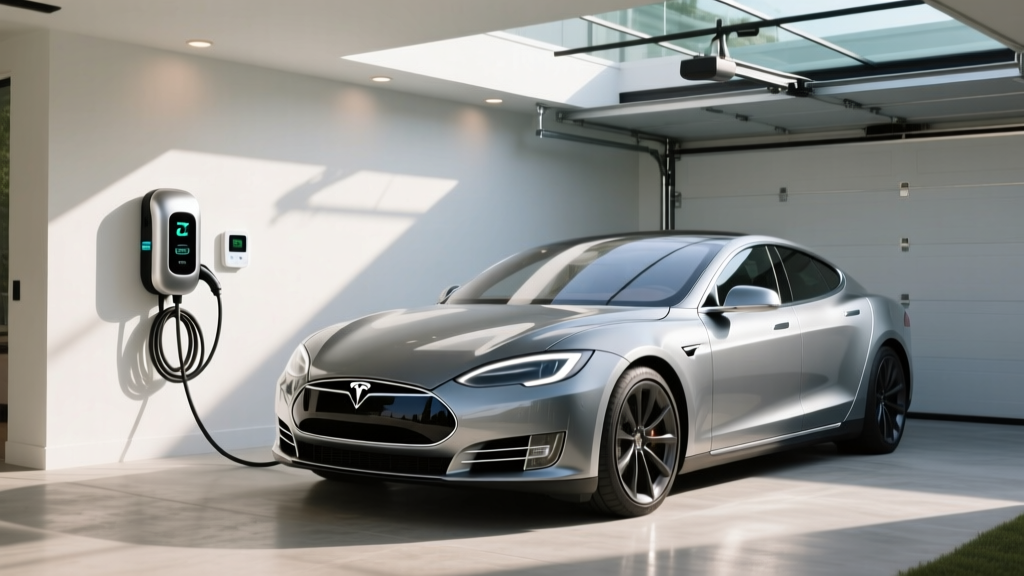
Installing a Level 2 home charger is the single biggest quality-of-life upgrade an EV owner can make. But the total cost depends heavily on your home's existing electrical infrastructure. Here's what's involved:
Electrical Specifications
A typical home Level 2 installation requires:
- 240V dedicated circuit — the same voltage as an electric dryer or oven
- 40-amp to 60-amp breaker — a 48A charger requires a 60A breaker (National Electrical Code requires circuits to be rated at 125% of continuous load)
- NEMA 14-50 outlet (for plug-in chargers) or hardwired connection (for higher-amperage units or local code requirements)
- GFCI protection — required by NEC 2020+ for EV charging outlets in garages
Panel Upgrade: The Hidden Cost
Many Florida homes built before 2010 have 100-amp or 150-amp main electrical panels. Adding a 60-amp EV circuit may exceed your panel's available capacity — especially if you already run electric A/C, an electric water heater, and a dryer. A licensed electrician will perform a load calculation to determine if you need a panel upgrade to 200 amps. This is not optional; it's a code requirement for safe operation.
FPL offers a residential EV program that includes time-of-use rate plans designed to lower charging costs during off-peak hours, and may provide rebates for qualified installations. Check current offerings directly with FPL, as utility rebate programs update frequently.
| Component | Low-End Estimate | High-End Estimate | Notes |
|---|---|---|---|
| Level 2 charger (equipment) | $350 | $750 | 32A–48A smart charger; Wi-Fi enabled |
| Electrician labor + wiring | $400 | $1,500 | Depends on panel-to-garage distance, conduit run |
| Electrical permit | $50 | $200 | Varies by Florida county |
| Panel upgrade (if needed) | $1,500 | $4,000 | 200A upgrade; only if load calculation requires it |
| Total (no panel upgrade) | $800 | $2,450 | Most homes with 200A panels |
| Total (with panel upgrade) | $2,300 | $6,450 | Older homes with 100A/150A service |
Pro tip: Even if your current EV only accepts 11.5 kW (48A), consider running wiring rated for 60A or higher. Future EVs may accept faster Level 2 rates, and upgrading wire later costs significantly more than doing it right the first time.
Connector Compatibility: NACS, CCS1, and CHAdeMO
Not all EV chargers physically connect to every vehicle. The connector landscape has shifted dramatically since 2024, when Ford, GM, Rivian, Volvo, and most other automakers adopted Tesla's North American Charging Standard (NACS) for new vehicles. Here's where things stand for the 2025–2026 model years:
| Connector | Brands Using It | Adapter Needed? |
|---|---|---|
| NACS (native) | Tesla (all), Ford (2025+), GM (2025+), Rivian (2025+), Volvo/Polestar (2025+), Hyundai/Kia (2026 select) | None for Tesla Superchargers and NACS-equipped public stations |
| CCS1 | Hyundai/Kia (2025 and prior), VW/ID series, BMW, Mercedes, Stellantis, legacy Ford/GM | NACS-to-CCS adapter for Tesla Supercharger access (~$200–$250) |
| CHAdeMO | Nissan Leaf (legacy only; discontinued in US after 2025) | Limited public infrastructure; consider adapter if available |
For FPL public chargers: Most FPL-branded DC fast stations are equipped with both CCS1 and NACS cables, reflecting the network's 2024–2025 infrastructure refresh. Older FPL Level 2 stations may still use J1772 connectors (the universal Level 2 standard), which all non-Tesla EVs accept natively. Tesla owners use a J1772-to-NACS adapter (included with every Tesla) for Level 2 public charging.
Before buying a home charger, confirm your vehicle's charge port type. Most Level 2 home chargers sold in 2025–2026 are available with either a J1772 plug or a NACS plug. If you own a CCS1 vehicle, a J1772 home charger works perfectly — you'll only need a NACS adapter for Tesla Superchargers on road trips.
Charging Cost: FPL Rates vs Gasoline per Mile
One of the strongest arguments for EV ownership in Florida is the cost-per-mile advantage — especially when charging at home on FPL's off-peak rate plan. Here's how the math works out:
| Scenario | Rate ($/kWh) | Cost to Add 250 Miles* | Cost per Mile |
|---|---|---|---|
| Home (FPL off-peak, overnight) | $0.08–$0.10 | $6.00–$7.50 | $0.024–$0.030 |
| Home (FPL standard rate) | $0.13–$0.15 | $9.75–$11.25 | $0.039–$0.045 |
| FPL public DC fast charger | $0.28–$0.38 | $21.00–$28.50 | $0.084–$0.114 |
| Electrify America / EVgo (non-FPL) | $0.35–$0.56 | $26.25–$42.00 | $0.105–$0.168 |
| Gasoline car (30 MPG, $3.40/gal) | — | $28.33 | $0.113 |
*Based on a 75 kWh battery delivering ~3.3 miles per kWh (roughly 110 MPGe combined), a realistic figure for a midsize crossover like the Hyundai Ioniq 5 or Tesla Model Y.
The takeaway is clear: home charging on FPL's off-peak rate delivers fuel costs roughly one-quarter to one-third the cost of gasoline per mile. Even public DC fast charging at FPL stations undercuts gasoline in most scenarios. The economics shift less favorably only when relying exclusively on expensive non-utility DC fast networks — which is why home charging access remains the keystone of affordable EV ownership.
FPL's EV time-of-use rate typically designates off-peak hours as overnight (roughly midnight to 6 AM), when grid demand is lowest. Scheduling your home charger to operate during these windows — most smart chargers support scheduled charging via app — maximizes savings.
Recommended Level 2 Home Chargers for FPL Customers
The best home charger for your Florida garage depends on your vehicle's connector, your electrical panel's capacity, and whether you want smart scheduling features to align with FPL's off-peak rates. Here are three proven options across common configurations:
Emporia Vue Level 2 EV Charger
- Power output: 11.5 kW (48A) on a 60A circuit
- Connector: J1772 (NACS version available)
- Cable length: 24 feet
- Smart features: Wi-Fi, scheduled charging, energy monitoring, integrates with Emporia home energy panel
- Price: ~$399
- Best for: Budget-conscious buyers who want full smart features and energy tracking
ChargePoint Home Flex
- Power output: Configurable from 16A to 50A (up to 12 kW at 50A)
- Connector: J1772 (NACS adapter included in recent packages)
- Cable length: 23 feet
- Smart features: Wi-Fi, app scheduling, Alexa integration, flexible amperage lets you match your circuit
- Price: ~$549–$649
- Best for: Homes with limited circuit capacity (can be dialed down to 32A or 40A to match a 40A or 50A breaker)
Tesla Wall Connector (Gen 3)
- Power output: 11.5 kW (48A) on a 60A circuit
- Connector: NACS native (J1772 adapter available separately)
- Cable length: 24 feet
- Smart features: Wi-Fi, over-the-air updates, power sharing between two units on one circuit, Tesla app integration
- Price: ~$420
- Best for: Tesla owners and 2025+ NACS-equipped Ford/GM/Rivian vehicles; excellent build quality at a competitive price
Safety, Code, and Florida-Specific Considerations
Florida's building codes and climate add specific requirements to EV charger installation that out-of-state guides often miss:
- Dedicated circuit required: Your EV charger must be on its own breaker — sharing a circuit with other appliances violates NEC and creates a fire hazard.
- GFCI breaker: The 2020 NEC and subsequent Florida adoptions require ground-fault circuit interrupter protection on all EV charging outlets. Budget an extra $40–$80 for a GFCI breaker.
- Outdoor-rated equipment: If your charger is mounted outside (carport, exterior wall), it must carry a NEMA 4 or IP65 weather rating. All three chargers recommended above meet this standard.
- Hurricane and flood zone: In coastal Florida counties, chargers mounted in flood-prone areas should be elevated above base flood elevation. Check your county's flood zone maps before finalizing placement.
- Permitting: Most Florida counties (Miami-Dade, Broward, Palm Beach, Hillsborough, Orange, Duval) require an electrical permit for EV charger installation. Your electrician typically handles this. Inspections ensure code compliance and protect your homeowner's insurance coverage.
- HOA considerations: Florida Statute 720.3065 prohibits homeowners' associations from unreasonably restricting EV charger installation, though they may impose reasonable aesthetic guidelines. If your HOA pushes back, cite this statute.
Charging Time Examples: How Long Does a Full Session Take?
Charge times vary based on battery size (kWh), the vehicle's onboard charger capacity (for Level 2), and the DC fast-charge curve. Here are realistic estimates for common EV battery sizes:
| Battery Size | Example Vehicles | Level 2 (11.5 kW) 10–80% | DC Fast (150 kW) 10–80% | DC Fast (350 kW) 10–80%* |
|---|---|---|---|---|
| ~40 kWh | Nissan Leaf, older Bolt | ~2.5 hours | ~20 min (50 kW max) | N/A (vehicle-limited) |
| ~65 kWh | VW ID.4, Chevrolet Equinox EV | ~4 hours | ~28 min | ~22 min |
| ~75 kWh | Tesla Model Y, Hyundai Ioniq 5 | ~4.5 hours | ~25 min | ~18 min |
| ~100 kWh | Ford F-150 Lightning Ext., Rivian R1S | ~6.5 hours | ~38 min | ~25 min |
*350 kW times apply only to vehicles with 800V+ architectures (Hyundai Ioniq 5, Kia EV6, Porsche Taycan, Lucid Air) that can sustain high charge rates. Most 400V vehicles peak well below 350 kW.
Charge curve reality check: No EV sustains its peak charge rate for an entire session. A vehicle rated at "250 kW peak" may sustain that rate only between 10–40% SoC, then taper to 150 kW, then drop further above 70%. This is normal battery management, not a defect. The 10–80% times above reflect these real-world taper curves, not theoretical peak-rate math.
Frequently Asked Questions
How much does it cost to install a home EV charger in Florida?
Expect $800–$2,450 for a standard installation on an existing 200-amp panel (equipment + electrician + permit). If your home needs a panel upgrade from 100A or 150A to 200A, total costs range from $2,300–$6,450. FPL may offer rebates that offset part of the equipment cost — check their current EV programs page for eligibility.
How fast will each charging level add range?
Level 1 (120V) adds 3–5 miles per hour — enough for plug-in hybrids with small batteries. Level 2 (240V at 48A/11.5 kW) adds roughly 40–44 miles per hour for a typical crossover EV. DC fast charging at 150 kW can add 150–250 miles in a 20–30 minute session, depending on battery size and charge curve.
Which connector or charger is compatible with my EV?
For 2025–2026 model years: Tesla, new Ford, GM, Rivian, and Volvo/Polestar vehicles use NACS. Most Hyundai, Kia, VW, BMW, and Mercedes EVs still use CCS1 (transitioning to NACS in 2026+). The Nissan Leaf (discontinued in the US) used CHAdeMO. For home Level 2 charging, a J1772-connector charger works with all non-Tesla EVs; Tesla owners should use the Tesla Wall Connector or a J1772 charger with the included adapter.
How much does EV charging cost per mile compared to gas?
Charging at home on FPL's off-peak rate costs approximately $0.024–$0.030 per mile — roughly one-quarter the cost of a 30 MPG gasoline car at $3.40/gallon ($0.113/mile). Even FPL public DC fast charging at $0.28–$0.38/kWh costs $0.084–$0.114 per mile, competitive with or cheaper than gasoline.
What electrical upgrades might I need for a home charger?
The most common upgrade is a panel replacement from 100A or 150A to 200A service ($1,500–$4,000) if your existing panel lacks capacity for a dedicated 60A circuit. You'll also need a GFCI breaker (~$40–$80), and potentially a conduit run if your panel is far from the garage. A licensed electrician's load calculation will determine exactly what's required for your home. For definitive electrical specifications, always defer to a licensed electrician familiar with your local Florida county codes.