Understanding the FordPass Charging Network in 2026
The FordPass Charging Network is Ford's aggregated charging ecosystem, accessible through the FordPass app or your vehicle's SYNC infotainment system. It stitches together multiple public charging providers — including Electrify America, EVgo, ChargePoint, and Shell Recharge — into a single interface for routing, payment, and session tracking. For Ford EV owners (Mustang Mach-E, F-150 Lightning, E-Transit) and new Ford EV shoppers, understanding how this network integrates with home charging and public infrastructure is essential for realistic trip planning and daily ownership costs.
Before mapping out public stations, you need a firm grasp of the three charging levels, what each delivers in real-world range per hour, and how your home electrical system determines your daily charging experience.
Charging Levels: Speeds, Power, and Real-World Range Added
EV charging is measured in kilowatts (kW), which represents power — the rate of energy flow. The energy stored in your battery is measured in kilowatt-hours (kWh). A 91 kWh battery (like the F-150 Lightning Extended Range) charged at 11.5 kW (a typical Level 2 home charger) would theoretically take about 8 hours from 0–100%. Here is how each level performs in practice:
| Level | Power (kW) | Voltage/Amps | Miles of Range Added per Hour | Best Use Case |
|---|---|---|---|---|
| Level 1 (120V) | 1.2–1.9 kW | 120V / 12–16A | 3–5 mi/hr | Overnight top-off, PHEVs, low-mileage drivers |
| Level 2 (240V) | 7.2–19.2 kW | 240V / 30–80A | 20–55 mi/hr | Daily home charging, workplace charging |
| DC Fast Charge | 50–350 kW | 400–800V DC | 150–300+ mi in 20–30 min | Road trips, highway travel, quick top-ups |
Home Charger Installation: Electrical Requirements and Cost Breakdown
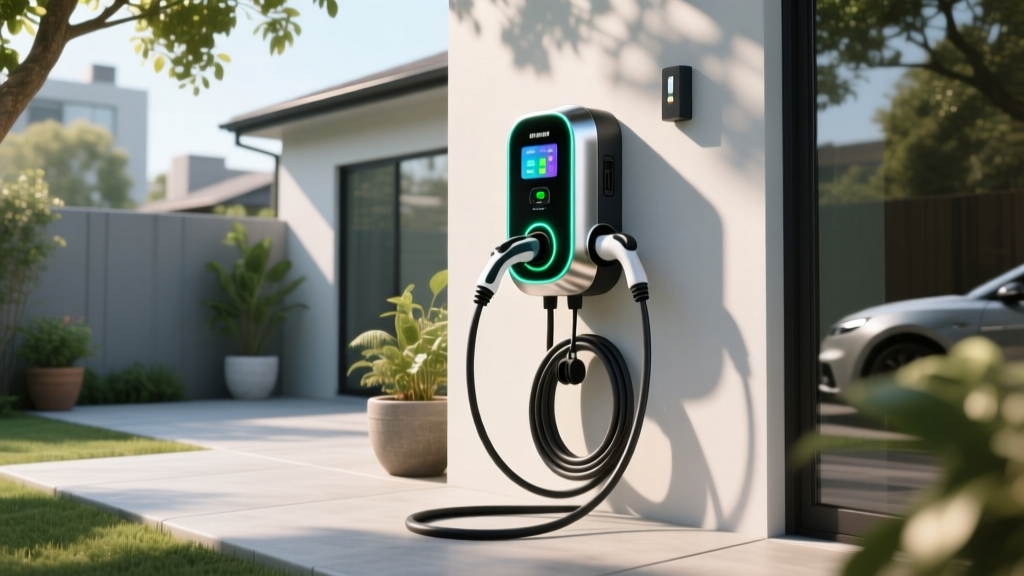
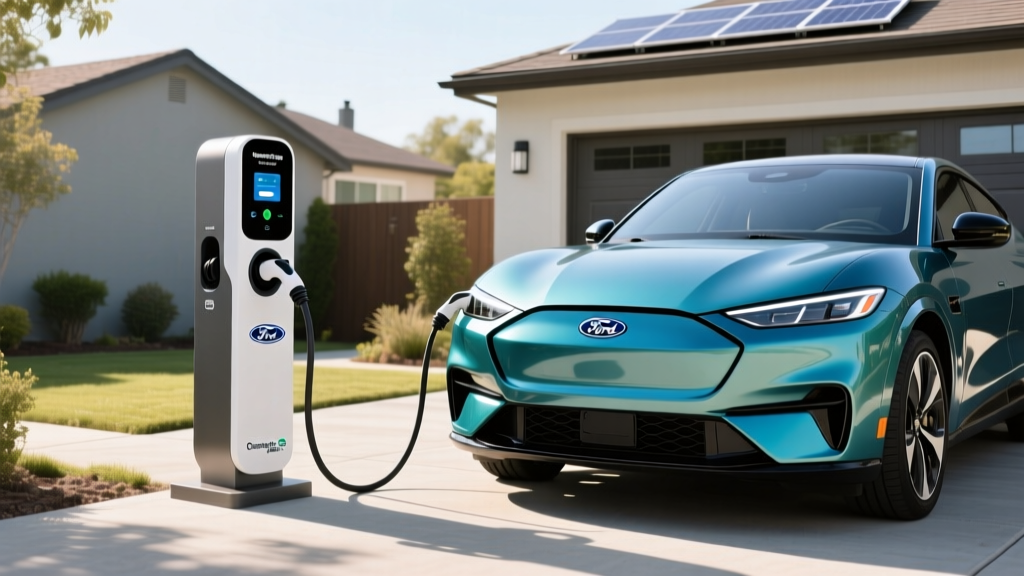
Installing a Level 2 home charger is the single most impactful upgrade for EV ownership. For Ford EVs, the Ford Connected Charge Station delivers up to 48 amps (11.5 kW on a 60-amp circuit) and integrates natively with the FordPass app for scheduling and energy tracking. But the hardware is only part of the cost — your home's electrical panel and wiring determine the real expense.
Electrical Requirements
A 48-amp charger requires a dedicated 60-amp, 240-volt circuit. This draws continuous current and must comply with NEC (National Electrical Code) 80% rule: a circuit rated for 60A can deliver 48A continuously. Homes built after 2000 with a 200-amp service panel typically have sufficient headroom. Older homes with 100-amp panels or limited breaker slots may require a panel upgrade — a significant added cost.
Installation Cost Breakdown
| Component | Cost Range | Notes |
|---|---|---|
| Level 2 Charger Hardware | $400–$800 | Ford Connected Charge Station ~$600; third-party options vary |
| Electrician Labor (standard install) | $500–$1,500 | Depends on run length from panel to garage/carport |
| Electrical Permit | $50–$200 | Required in most jurisdictions; varies by municipality |
| Panel Upgrade (if needed) | $1,500–$4,000 | 100A → 200A upgrade; needed in ~20% of older homes |
| Conduit/Wiring (long runs) | $200–$800 | If panel is far from charging location (e.g., detached garage) |
| Total (no panel upgrade) | $950–$2,500 | Typical suburban home with 200A panel |
| Total (with panel upgrade) | $2,500–$6,500 | Older homes needing service upgrade |
Always hire a licensed electrician familiar with EV charger installations and NEC Article 625 (Electric Vehicle Charging System Equipment). The FordPass app can locate certified installers in your area, or you can source one through Qmerit, Ford's recommended installation partner.
Connector Compatibility: NACS, CCS1, and Adapter Needs
Ford made a pivotal move in 2024 by adopting the North American Charging Standard (NACS) — the Tesla-designed connector — for its EVs. This has major implications for which chargers you can use and what adapters you may need.
| Connector | Ford Model Year | Native Support | Adapter Needed? |
|---|---|---|---|
| NACS (Tesla-style) | 2025+ Mach-E, F-150 Lightning | Yes — native NACS port | No — plugs directly into Tesla Superchargers and NACS stations |
| CCS1 | 2021–2024 Mach-E, 2022–2024 Lightning | Yes — native CCS1 port | NACS-to-CCS adapter required for Tesla Supercharger access (Ford provides adapter to qualifying owners) |
| CHAdeMO | Not applicable | No | Not supported; CHAdeMO is largely phased out in the US |
The FordPass Charging Network in the app shows real-time connector availability at stations, filtering for NACS and CCS1 based on your vehicle's port type — a practical feature that prevents driving to an incompatible station.
Charging Cost: Home vs. Public vs. Gas Comparison
One of the strongest ownership arguments for a Ford EV is the per-mile fuel cost. Here is a data-driven breakdown across common charging scenarios, using a Mustang Mach-E Extended Range (91 kWh usable battery, EPA-estimated 312 miles range, ~29 kWh/100mi efficiency):
| Scenario | Rate ($/kWh) | Cost for Full Charge (91 kWh) | Cost per Mile | Equiv. Gas MPG at $3.50/gal |
|---|---|---|---|---|
| Home Off-Peak (utility TOU rate) | $0.08–$0.12 | $7.28–$10.92 | $0.023–$0.035 | 100–152 MPG |
| Home Standard Rate | $0.14–$0.18 | $12.74–$16.38 | $0.041–$0.052 | 67–85 MPG |
| Public Level 2 (ChargePoint, etc.) | $0.25–$0.39 | $22.75–$35.49 | $0.073–$0.114 | 31–48 MPG |
| DC Fast (Electrify America/EVgo) | $0.35–$0.55 | $31.85–$50.05 | $0.102–$0.161 | 22–34 MPG |
| Gas Vehicle Baseline (25 MPG combined) | $3.50/gallon | — | $0.140 | 25 MPG |
Home charging on an off-peak time-of-use (TOU) plan delivers the most dramatic savings — roughly 4–6× cheaper per mile than gasoline. Even DC fast charging, the most expensive EV option, often matches or undercuts a 25 MPG gas car. Through the FordPass app, Electrify America sessions are billed directly (often with a Ford introductory discount period), reducing friction and sometimes cost at public DC chargers.
Equipment Recommendations: Best Level 2 Chargers for Ford EVs
Choosing the right Level 2 charger depends on your electrical capacity, desired smart features, and whether you want native FordPass integration.
Ford Connected Charge Station
- Power Output: 48A / 11.5 kW (requires 60A circuit)
- Connector: CCS1 (2021–2024 models) or NACS (2025+ models)
- Cable Length: 25 feet
- Smart Features: Native FordPass integration, scheduled charging, energy tracking, OTA updates
- Price: ~$600 (often included with new Ford EV purchase)
- Best For: Ford EV owners wanting seamless app integration
ChargePoint Home Flex
- Power Output: Up to 50A / 12 kW (adjustable 16–50A, circuit 20–60A)
- Connector: NACS or J1772 (with adapter)
- Cable Length: 23 feet
- Smart Features: ChargePoint app scheduling, Alexa integration, load sharing for dual units
- Price: ~$550–$650
- Best For: Flexible amperage for older panels; multi-EV households
Emporia Vue Level 2 Charger
- Power Output: Up to 48A / 11.5 kW (requires 60A circuit)
- Connector: J1772 (NACS via adapter)
- Cable Length: 24 feet
- Smart Features: Energy monitoring, solar integration, scheduling via Emporia app
- Price: ~$400–$500
- Best For: Budget-conscious buyers; solar-panel homes
Wallbox Pulsar Plus
- Power Output: Up to 48A / 11.5 kW (requires 60A circuit)
- Connector: J1772 or NACS
- Cable Length: 25 feet
- Smart Features: Wi-Fi/Bluetooth, Power Sharing for two chargers on one circuit, compact form factor
- Price: ~$450–$600
- Best For: Tight garage spaces; dual-charger setups
Safety, Code, and Panel Considerations
EV charging draws sustained high current — far more than typical household appliances. Safety and code compliance are not optional:
- Dedicated circuit: Your Level 2 charger must be on its own dedicated breaker. Sharing a circuit with other appliances violates NEC and creates a fire hazard.
- GFCI protection: NEC 2020 and later require GFCI (Ground Fault Circuit Interrupter) protection for EV charging outlets. Hardwired chargers may have built-in GFCI; plug-in units (NEMA 14-50 receptacle) require a GFCI breaker, which adds $50–$100 to the install.
- Outdoor rating: If your charger is installed outside (carport, driveway), it must carry a NEMA 4 or NEMA 4X rating for weather resistance. All chargers listed above carry appropriate outdoor ratings.
- Panel capacity: Your electrician will perform a load calculation per NEC Article 220. If your existing loads (HVAC, electric range, dryer) already consume most of your panel's capacity, a panel upgrade from 100A to 200A (or higher) is mandatory before adding a 60A EV circuit.
- Permit and inspection: Most municipalities require an electrical permit and post-installation inspection. Skipping this can void homeowner's insurance coverage for electrical fires and cause issues at resale.
FordPass Charging Network: Public Charging Tips and Real-World Use
The FordPass app's public charging features are strongest when used for route planning on road trips. The system routes through the combined networks and shows real-time stall availability, connector type, and pricing. Key practical notes from real-world use:
- Preconditioning: When you set a DC fast-charger destination in your Ford's navigation, the vehicle preconditions the battery — warming it to optimal temperature for faster charging. This can shave 5–10 minutes off a 10–80% session, especially in cold weather.
- Electrify America integration: Ford EVs historically received complimentary Electrify America charging (typically 250–800 kWh depending on model year). Check your FordPass account for remaining balance — this credit significantly reduces road-trip fuel costs in the first year or two of ownership.
- Tesla Supercharger access: With a NACS port (2025+ models) or the Ford-provided adapter (2021–2024 CCS1 models), Ford EVs can access over 25,000 Tesla Supercharger stalls. The FordPass network map includes these stations, though payment may route through the Tesla app rather than FordPass depending on your vehicle's configuration.
- Charging curve reality: The F-150 Lightning Extended Range (131 kWh usable, peak ~150 kW DC) charges 10–80% in approximately 41 minutes at a 150+ kW station. The Mach-E Extended Range (91 kWh, peak ~150 kW) does 10–80% in roughly 45 minutes. Plan bathroom and food breaks accordingly.
Frequently Asked Questions
How much does it cost to install a home EV charger for my Ford?
A typical Level 2 installation (48A charger on a 60A circuit) costs $950–$2,500 in homes with a 200-amp panel that doesn't need upgrading. If your home has a 100-amp panel or insufficient breaker space, expect $2,500–$6,500 including the panel upgrade. The Ford Connected Charge Station hardware runs about $600 and is often included with a new Ford EV purchase.
How fast will each charging level add range to my Mach-E or Lightning?
Level 1 (120V) adds 3–5 miles per hour — suitable only for PHEVs or very low daily mileage. Level 2 (240V at 48A/11.5 kW) adds roughly 25–30 miles per hour for the Mach-E and 20–25 miles per hour for the Lightning (heavier vehicle, higher consumption). DC fast charging at 150 kW can add 150+ miles in 20–30 minutes, but speed tapers above 80% SoC.
Which connector does my Ford EV use, and do I need an adapter?
2025 and newer Ford EVs use the NACS connector natively and plug directly into Tesla Superchargers and NACS-equipped public stations. 2021–2024 models use CCS1 and require a NACS-to-CCS adapter for Tesla Supercharger access. Ford has provided these adapters to qualifying owners; check the Ford EV Charging page for current eligibility.
How much does charging cost per mile compared to gas?
Home charging on off-peak utility rates costs $0.02–$0.04 per mile — equivalent to a 100–150 MPG gas car. Standard-rate home charging runs $0.04–$0.05/mile. Public DC fast charging at $0.35–$0.55/kWh costs $0.10–$0.16/mile, which is comparable to or cheaper than a 25 MPG gas vehicle at $3.50/gallon. Data sourced from fueleconomy.gov efficiency figures.
What electrical upgrades might my home need before installing a charger?
The most common upgrade is a panel replacement from 100A to 200A service ($1,500–$4,000). You may also need a new conduit run if the panel is far from the charging location, or a sub-panel if you're installing in a detached garage. Your electrician will perform a NEC Article 220 load calculation to determine whether your existing panel has capacity for a 60A dedicated circuit. Homes with solar panels or battery storage (e.g., Ford's own bidirectional PowerUP system) may have additional wiring considerations.
Does the FordPass Charging Network offer any free or discounted charging?
Ford has historically bundled complimentary Electrify America DC fast-charging credits with new EV purchases (amount varies by model year and promotion — typically 250–800 kWh). These credits are applied automatically through the FordPass app. Check your account or contact your dealer for current promotional details, as these offers change annually.