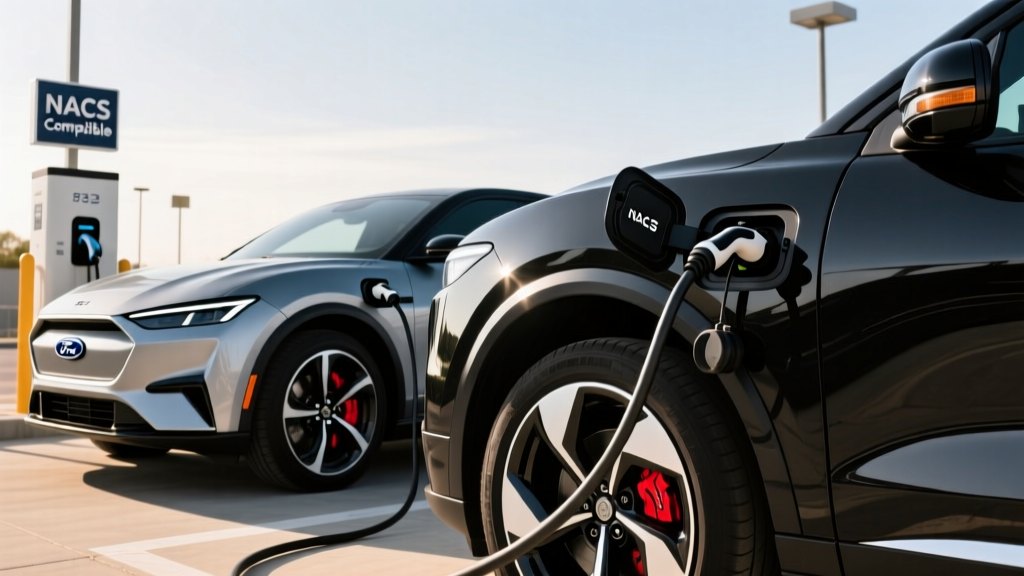
When Ford began transitioning its North American electric vehicles to the Tesla-designed NACS (North American Charging Standard) connector, the company promised existing CCS-equipped owners a way onto the Supercharger network at no extra cost. That promise centers on the Ford-provided Tesla NACS adapter — a small but critical piece of hardware that unlocks over 25,000 Supercharger stalls for F-150 Lightning and Mustang Mach-E drivers.
But "free" has conditions, and the adapter is only one piece of a broader charging picture. This guide breaks down exactly what Ford offers, what your home electrical system needs, how fast each charging level actually adds range, and what you'll spend per mile versus a gasoline truck or crossover.
Is the Ford Tesla Adapter Really Free?
Ford announced in mid-2023 that owners of CCS-equipped F-150 Lightning and Mustang Mach-E vehicles could receive a complimentary NACS adapter through Ford's official ordering process. Here's how the program works as of the 2026 model year:
- Eligible vehicles: Model-year 2021–2025 F-150 Lightning and Mustang Mach-E built with a CCS1 charge port.
- How to claim: Owners request the adapter through the FordPass app or their dealer. Ford ships a NACS-to-CCS adapter manufactured by an approved supplier (typically Tesla's official adapter or an equivalent).
- Cost: The adapter itself is free for one request per VIN. Replacement adapters or additional units cost approximately $230.
- Starting 2025 model year: New Ford EVs ship with a native NACS charge port, eliminating the adapter need entirely.
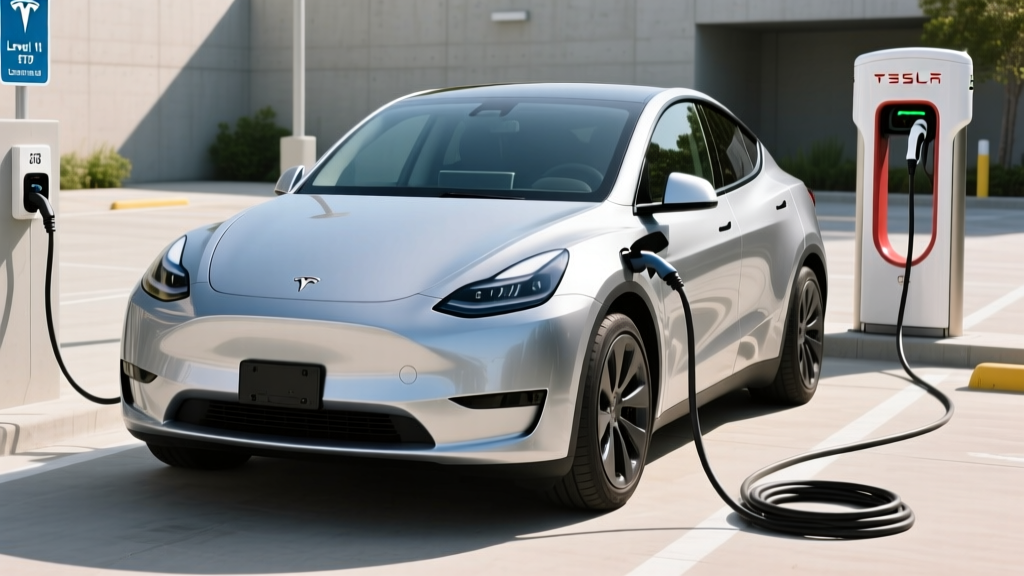
The adapter enables DC fast charging at V3 and V4 Superchargers (up to 250 kW peak for the Lightning Extended Range). However, Ford recommends checking Supercharger compatibility via the FordPass app before traveling, as not all legacy stalls support non-Tesla vehicles.
Charging Levels Explained: Speed, Range, and Real-World Times
Whether you're topping off at home or road-tripping on Superchargers, understanding the three charging levels determines your daily routine and trip planning.
| Level | Voltage | Max Power (kW) | Miles of Range Per Hour | Typical Use Case |
|---|---|---|---|---|
| Level 1 | 120V AC | 1.0–1.4 kW | 3–5 mi/hr | Emergency / overnight trickle |
| Level 2 | 240V AC | 7.2–19.2 kW | 20–60 mi/hr | Home daily charging |
| DC Fast | 400–800V DC | 50–250+ kW | 150–500+ mi/hr | Road trips, Superchargers |
Real-World Charging Time Examples
Here's what actual 10–80% charging sessions look like for popular Ford EVs:
- F-150 Lightning Extended Range (131 kWh usable, NMC): ~41 minutes on a 150 kW DC fast charger; ~10 hours on a 48A / 11.5 kW Level 2 home charger.
- F-150 Lightning Standard Range (98 kWh usable, LFP): ~36 minutes at 150 kW DC; ~7.5 hours on 11.5 kW Level 2.
- Mustang Mach-E Extended Range (91 kWh usable, NMC): ~38 minutes at 150 kW DC; ~7 hours on 11.5 kW Level 2.
Charge curve reality: Peak kW ratings only apply between roughly 10–40% State of Charge (SoC). Above 80%, charging slows dramatically to protect the battery. That's why manufacturers quote 10–80% times — the final 20% can take as long as the first 70%. For daily driving, charging to 80% at home on Level 2 is ideal for battery longevity, especially with NMC chemistry. LFP packs (Lightning Standard Range) tolerate regular 100% charges better.
Home Level 2 Charger Installation: Costs, Electrical Requirements, and Panel Upgrades
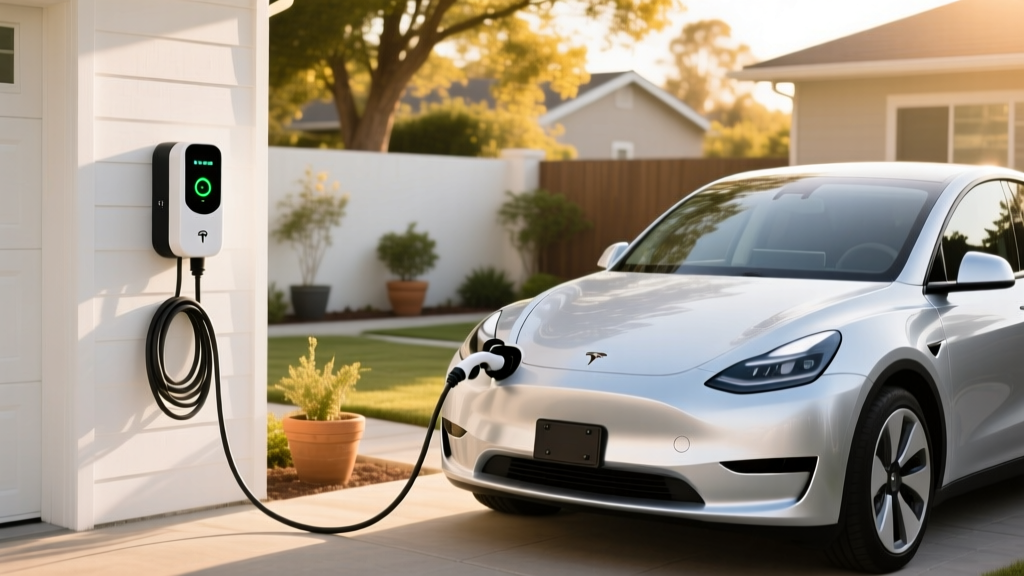
A Level 2 home charger is the backbone of practical EV ownership. Most Ford EV owners install a 240V / 48-amp circuit delivering 11.5 kW — enough to fully replenish a Mach-E overnight and nearly fill a Lightning Extended Range.
Electrical Requirements
- Circuit: Dedicated 60-amp breaker (NEC requires circuits rated 125% above continuous load, so a 48A charger needs a 60A breaker).
- Wire: 6 AWG copper (THHN in conduit or NM-B) for runs up to ~50 feet; 4 AWG for longer runs to minimize voltage drop.
- Outlet vs. hardwire: NEMA 14-60 outlet offers portability; hardwired units allow up to 48A continuous (some 80A circuits support 64A chargers for 19.2 kW).
- Panel capacity: Most modern 200-amp panels can accommodate a 60A EV circuit. Older 100-amp panels almost certainly require an upgrade.
Installation Cost Breakdown
| Item | Low End | High End | Notes |
|---|---|---|---|
| Level 2 Charger (Equipment) | $350 | $750 | Smart Wi-Fi chargers, 40–48A |
| Electrician Labor | $400 | $1,200 | Depends on run length, conduit, wall type |
| Materials (wire, conduit, breaker) | $150 | $400 | Longer runs = more copper |
| Permit & Inspection | $50 | $250 | Varies by municipality |
| Panel Upgrade (if needed) | $1,500 | $4,000 | 100A→200A service upgrade |
| Total (no panel upgrade) | $950 | $2,600 | Typical install for most homes |
| Total (with panel upgrade) | $2,450 | $6,600 | Older homes with 100A service |
Federal incentive: The IRS §30D-related residential clean energy credit (IRC §25C) covers up to 30% of equipment and installation costs, capped at $1,000 per year for EV charger installs. Check IRS guidance for current-year eligibility, as income caps and requirements may apply. Some utilities also offer rebates of $250–$500 for smart charger installations.
Do You Need a Panel Upgrade?
An electrician will perform a load calculation per NEC Article 220. If your existing panel's calculated loads plus the new 60A circuit exceed 80% of panel rating, you'll need an upgrade. Common triggers:
- 100-amp main service (common in pre-1990 homes)
- Electric resistance heating, electric water heater, AND electric range on the same panel
- No available breaker slots (requires a sub-panel or tandem breakers)
A load-management device (such as the Emporia Smart Load Management) can sometimes avoid a panel upgrade by dynamically limiting charger draw when other high-load appliances run. This costs $200–$400 additional but can save thousands versus a full panel swap.
Connector Compatibility: NACS, CCS1, and Adapter Requirements
The North American charging landscape has consolidated heavily around NACS, but legacy CCS1 infrastructure remains widespread. Here's what Ford owners need to know:
| Vehicle / Year | Native Port | Tesla Supercharger | CCS1 Public Chargers | Adapter Needed? |
|---|---|---|---|---|
| F-150 Lightning 2022–2024 | CCS1 | Yes (with NACS adapter) | Yes (native) | NACS adapter (free from Ford) |
| Mustang Mach-E 2021–2024 | CCS1 | Yes (with NACS adapter) | Yes (native) | NACS adapter (free from Ford) |
| F-150 Lightning 2025+ | NACS | Yes (native) | With CCS adapter | CCS1 adapter for non-Tesla DC |
| Mustang Mach-E 2025+ | NACS | Yes (native) | With CCS adapter | CCS1 adapter for non-Tesla DC |
For 2025+ NACS-equipped Fords: You'll charge natively at all Tesla Superchargers. For Electrify America, EVgo, and other CCS1 networks, you'll need a NACS-to-CCS1 adapter (approximately $180–$250 from Tesla or third-party suppliers). Ford includes a CCS1 adapter with some 2025+ models — check your window sticker or dealer.
CHAdeMO note: This legacy Japanese standard (used by older Nissan Leaf models) is essentially obsolete for new Ford EVs. No adapter is available or needed.
Cost to Charge: Home vs. Public vs. Gas
The economic case for an F-150 Lightning or Mach-E hinges on where you charge. Here's a realistic breakdown using national averages as of early 2026:
| Scenario | Rate ($/kWh) | Cost for Full Charge (0–100%) | Cost Per Mile |
|---|---|---|---|
| Home (off-peak utility rate) | $0.10–$0.14 | $13.10–$18.34 | $0.041–$0.057 |
| Home (standard residential avg.) | $0.16 | $20.96 | $0.066 |
| Public Level 2 (ChargePoint, etc.) | $0.25–$0.35 | $32.75–$45.85 | $0.102–$0.143 |
| DC Fast (Electrify America) | $0.35–$0.55 | $45.85–$72.05 | $0.143–$0.225 |
| Tesla Supercharger V3 (avg.) | $0.30–$0.40 | $39.30–$52.40 | $0.123–$0.164 |
EV vs. Gas: Cost Per Mile
Compare the Lightning to a gas-powered F-150 3.5L EcoBoost (EPA 20 MPG combined, per fueleconomy.gov):
- Gas F-150 at $3.40/gal, 20 MPG: $0.170 per mile
- Lightning home charging (avg. $0.16/kWh): $0.066 per mile — 61% cheaper
- Lightning DC fast charging exclusively ($0.45/kWh): $0.186 per mile — slightly more expensive than gas
The math is clear: home charging delivers massive savings. Relying solely on public DC fast charging erases most of the cost advantage. This is why Level 2 home installation is essentially mandatory for cost-conscious EV truck ownership.
Recommended Home Level 2 Chargers for Ford EVs
Not all Level 2 chargers are equal. Here are three proven options matched to Ford's charging capabilities:
Ford Connected Charge Station
Power: 48A / 11.5 kW (240V)
Connector: CCS1 (for 2021–2024 models)
Cable: 25 feet
Smart features: Wi-Fi, FordPass integration, scheduled charging, energy tracking
Price: ~$599 (sometimes included with new vehicle purchase)
Best for: Seamless FordPass integration; one-app experience for Ford EV owners
ChargePoint Home Flex
Power: Configurable 16–50A (up to 12 kW at 50A)
Connector: NACS or J1772 (CCS1 with adapter)
Cable: 23 feet
Smart features: Wi-Fi, app scheduling, Alexa integration, load sharing (two units on one circuit), energy dashboard
Price: ~$549–$649
Best for: Multi-EV households; adjustable amperage fits older panels
Emporia Vue Level 2 Charger
Power: 48A / 11.5 kW (240V)
Connector: NACS or J1772
Cable: 24 feet
Smart features: Wi-Fi, real-time energy monitoring via Emporia Vue panel integration, solar-aware scheduling, load management
Price: ~$399
Best for: Budget-conscious installs; solar homeowners; panel-load management to avoid upgrades
Pro tip: If your Ford has a CCS1 port (2021–2024 models), choose a J1772-connector charger and use your CCS combo inlet, or buy a NACS-connector charger and use the Ford-supplied adapter. For 2025+ NACS-native Fords, buy a NACS-connector charger directly.
Safety, Electrical Code, and Outdoor Installation
A Level 2 charger draws significant continuous current for hours. Code compliance isn't optional — it protects your home and ensures insurance coverage in the event of a fault.
- Dedicated circuit: Your EV charger must be on its own dedicated breaker — no shared circuits with other appliances.
- GFCI protection: NEC 2020 and later requires GFCI protection for all 240V receptacles used for EV charging in garages and outdoor locations. Hardwired installations may have different requirements depending on jurisdiction.
- Outdoor rating: If installing outside, ensure the charger carries a NEMA 4 (weather-resistant) rating. All three chargers recommended above are outdoor-rated.
- Permit required: Most jurisdictions require an electrical permit for new 240V circuits. Your electrician pulls this; inspection typically occurs after installation. Skipping permits risks insurance denial and code violations discovered during home sale.
- Cable management: Use a wall-mounted cable organizer or holster to prevent tripping hazards and connector damage. Never run charging cables across driveways or sidewalks.
Frequently Asked Questions
How much does it cost to install a home EV charger for my Ford?
Most installations without a panel upgrade cost $950–$2,600 total (equipment, electrician labor, materials, and permit). If your home needs a 100A-to-200A panel upgrade, expect $2,450–$6,600. The federal §25C credit covers 30% of costs up to $1,000, and many utilities offer additional rebates.
How fast will each charging level add range to my F-150 Lightning?
Level 1 (120V) adds about 3–5 miles per hour — barely practical for a large battery. Level 2 at 11.5 kW adds roughly 25–30 miles per hour for the Lightning, enough for a full overnight charge. DC fast charging at 150 kW adds approximately 200+ miles in 20 minutes under ideal conditions, though charge-curve taper slows progress above 80% SoC.
Which connector and charger is compatible with my Ford EV?
2021–2024 F-150 Lightning and Mach-E models use a native CCS1 port. You can charge at CCS public stations directly, or use the free Ford NACS adapter for Tesla Superchargers. 2025+ models ship with native NACS, charging directly at Superchargers but requiring a CCS1 adapter for Electrify America and similar networks.
How much does charging cost per mile compared to gas?
Home charging at $0.16/kWh averages about $0.066 per mile for the Lightning Extended Range — roughly 61% cheaper than a gas F-150 at $3.40/gallon and 20 MPG ($0.170/mile). Public DC fast charging at $0.45/kWh rises to ~$0.186 per mile, slightly more than gas. Home charging is where the savings live.
What electrical upgrades might I need before installing a charger?
An electrician will perform a load calculation. Homes with 100-amp main panels, electric heat, and multiple high-draw appliances often need a panel upgrade to 200 amps ($1,500–$4,000). If panel capacity is tight, a smart load-management device ($200–$400) can dynamically throttle charger output to avoid tripping the main breaker — sometimes eliminating the upgrade entirely.
Can I use the Ford NACS adapter at every Tesla Supercharger?
Most V3 and V4 Superchargers support non-Tesla vehicles with the adapter. However, some older V2 stalls (150 kW max) and specific urban Supercharger locations may not be enabled for Ford vehicles. Always confirm stall compatibility in the FordPass app or Tesla app before relying on a specific location. Per Ford's official charging page, coverage continues to expand.