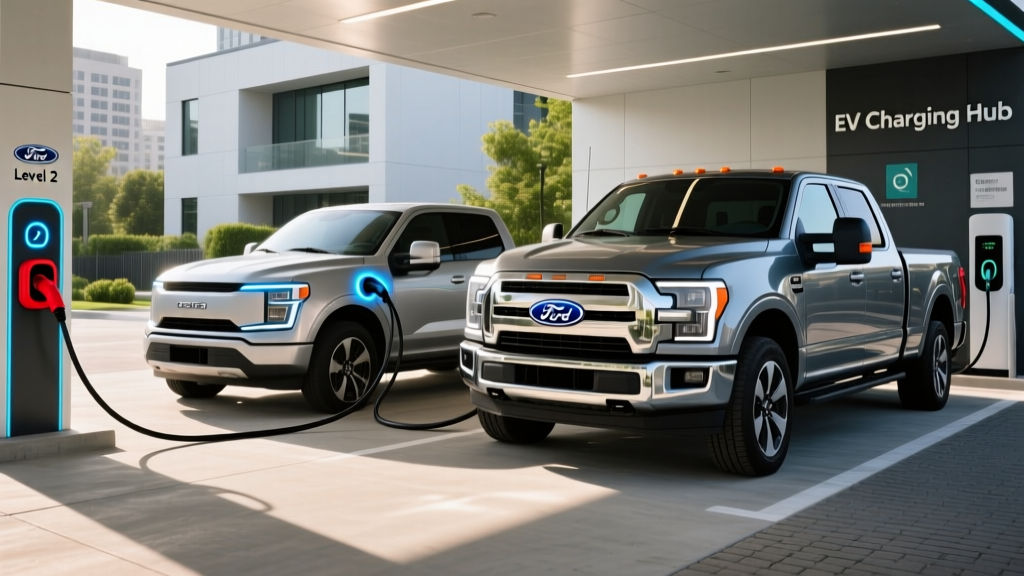
Whether you're pulling the trigger on a 2026 Ford F-150 Lightning, eyeing the upcoming Super Duty electric variant, or simply trying to understand what it takes to keep a battery-electric truck fueled, the charging question is the first one that matters. A Ford supercharged truck — in the electrified sense, meaning a high-performance battery-electric pickup — demands serious charging infrastructure. The Lightning's Extended Range pack holds 131 kWh of usable energy. That's a massive battery that can either refill overnight on a properly installed home charger or strand you waiting at a public DC fast station if you don't plan ahead.
This guide breaks down every layer of charging a Ford electric truck: the three charging levels and what they actually deliver in miles per hour, the real cost of a home Level 2 installation (including the panel upgrade scenario nobody talks about), connector compatibility as Ford transitions to NACS, and how the per-mile cost stacks up against a gas-powered F-150. We'll also recommend specific Level 2 chargers that can handle a truck-sized battery.
Charging Levels Explained: Level 1, Level 2, and DC Fast Charging
Before evaluating equipment, you need to understand the three charging tiers and what each delivers. The distinction between kW (kilowatts — the rate of power delivery, like water pressure) and kWh (kilowatt-hours — the total energy stored, like gallons in a tank) is critical here. Charging speed is measured in kW; your battery capacity is measured in kWh.
| Level | Voltage | Max Power (kW) | Miles of Range Added Per Hour | Best For |
|---|---|---|---|---|
| Level 1 | 120V AC | 1.2–1.9 kW | 3–5 mi/hr | Emergency/top-up only on a truck |
| Level 2 (Home/Public) | 240V AC | 7.2–19.2 kW | 20–55 mi/hr | Daily home charging, overnight refill |
| DC Fast Charging | 400–800V DC | 50–350 kW | 150–600+ mi/hr (at peak) | Road trips, rapid top-ups |
For a Ford F-150 Lightning with the 131 kWh Extended Range battery, Level 1 charging is essentially impractical as a primary strategy — adding roughly 4 miles per hour means a full charge would take over 30 hours. Level 2 at 19.2 kW (Ford's available 80-amp Charge Station Pro) can add roughly 30 miles of range per hour, meaning a 10–80% session takes about 8 hours. On a DC fast charger peaking at 150 kW, Ford rates the Lightning Extended Range at approximately 10–80% in 41 minutes, though real-world sessions depend heavily on battery temperature and state of charge.
Real-World Charging Reality: The peak 150 kW rate on the Lightning only holds between roughly 15–55% SoC. Above 60%, the charge curve tapers significantly — expect 80 kW or less past 70%. If you arrive at a DC station with a cold, un-preconditioned battery, peak rates may drop to 80–100 kW. Always use the truck's navigation-based battery preconditioning when routing to a charger.
Home Charger Installation: Requirements, Costs, and Panel Upgrades
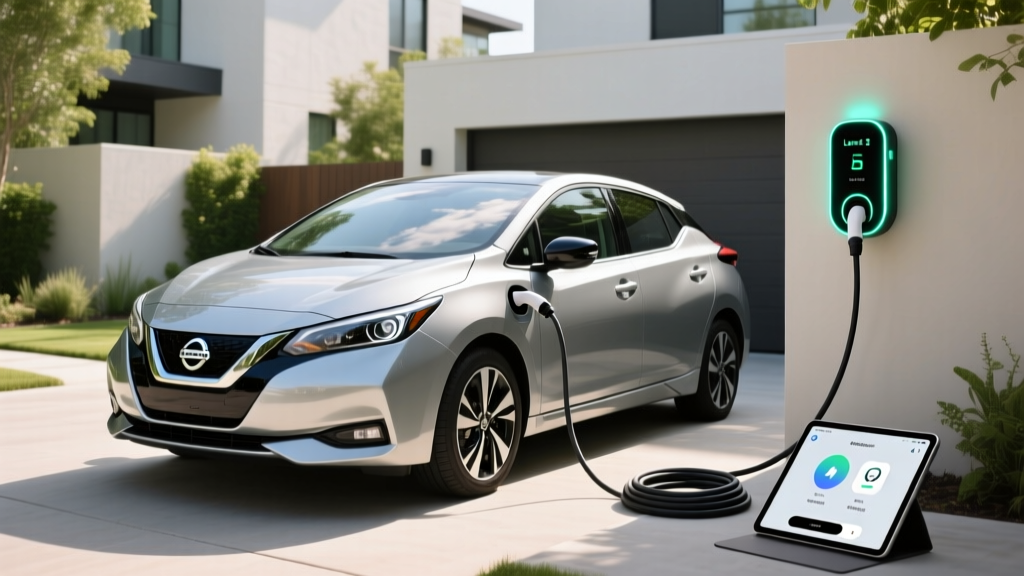
Charging a Ford electric truck at home is where most owners will do 80–90% of their "refueling." But a truck-sized battery makes the electrical requirements non-negotiable. Here's what's involved.
Electrical Requirements for Level 2 Home Charging
A Level 2 home charger requires a 240-volt dedicated circuit, similar to what powers an electric dryer or oven. The circuit amperage determines your charging speed:
- 40-amp circuit (32A continuous): Delivers 7.7 kW — adequate for Standard Range Lightning (98 kWh), slow for Extended Range
- 60-amp circuit (48A continuous): Delivers 11.5 kW — the practical minimum for daily truck charging
- 80-amp circuit (64A continuous): Delivers 15.4–19.2 kW — Ford's Charge Station Pro maximum, ideal for 131 kWh pack
National Electrical Code (NEC) requires that continuous loads (like EV charging) use no more than 80% of a circuit's rated capacity. So a 48-amp charger needs a 60-amp breaker, and an 80-amp charger needs a 100-amp breaker.
Do You Need a Panel Upgrade?
This is the question that catches many truck buyers off guard. Most homes built before 2000 have a 100-amp or 150-amp main electrical panel. Modern homes typically have 200-amp service. Here's the issue: if your panel is already near capacity (running central AC, electric range, dryer, water heater), adding a 60-amp or 80-amp EV circuit may push you over the limit.
A licensed electrician will perform a load calculation per NEC Article 220 to determine if your panel has headroom. If it doesn't, you'll need either:
- Panel upgrade to 200A: $1,500–$3,500 depending on utility requirements and conduit runs
- Smart load management device: $300–$600 — devices like the Emporia Smart Charger or Span panel dynamically reduce charger amperage when other loads spike, avoiding a full panel upgrade
Installation Cost Breakdown
| Component | Typical Cost Range | Notes |
|---|---|---|
| Level 2 Charger (Equipment) | $400–$1,300 | Varies by power output and smart features |
| Electrician Labor (install circuit + mount charger) | $500–$2,000 | Depends on panel proximity, wall type, conduit run length |
| Electrical Permit | $50–$250 | Required by most jurisdictions; inspected after install |
| Panel Upgrade (if needed) | $1,500–$3,500 | Only if existing panel lacks capacity |
| Utility Make-Ready (if service upgrade needed) | $0–$2,000 | Some utilities cover this; varies widely |
| Total — Typical Install (No Panel Upgrade) | $950–$3,550 | Most common scenario for 200A-panel homes |
| Total — With Panel Upgrade | $2,450–$7,050 | Common for older homes with 100A service |
Always hire a licensed electrician and pull a permit. Unpermitted EV charger installs can void homeowner's insurance coverage and create fire risk — especially at the sustained high loads a truck battery demands.
Connector Compatibility: NACS, CCS, and Ford's Transition
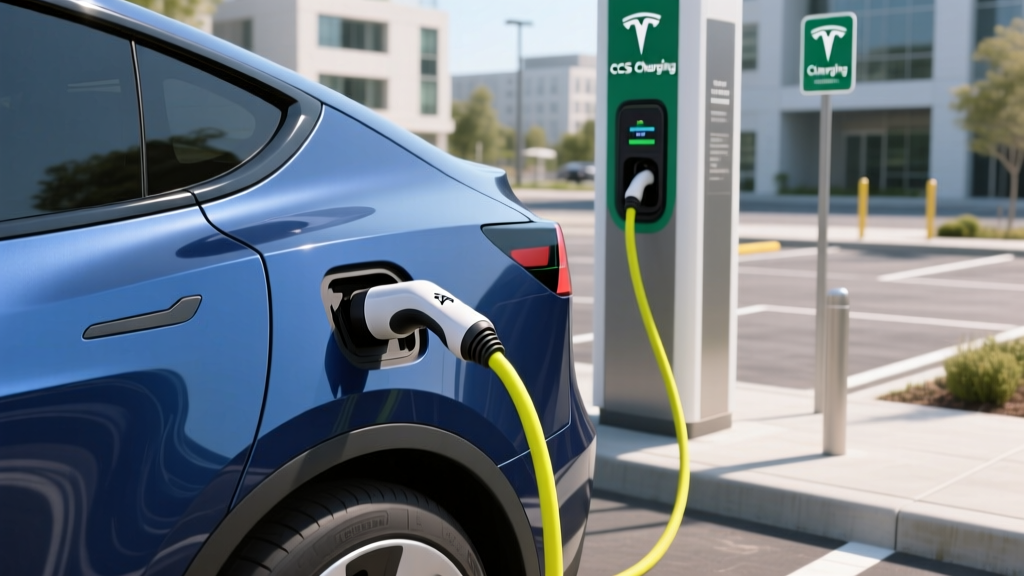
Ford made a decisive move in 2024: beginning with the 2025 model year, the F-150 Lightning adopted the North American Charging Standard (NACS) connector — the same connector Tesla uses. This replaced the CCS1 connector used on 2022–2024 Lightning models.
| Connector | Model Years | DC Fast Network Access | Adapter Needed? |
|---|---|---|---|
| NACS (Tesla-style) | 2025+ Lightning, upcoming Super Duty EV | Tesla Superchargers (15,000+ stalls), plus Electrify America, EVgo adding NACS | No adapter for Superchargers; CCS adapter may be needed for older public stations |
| CCS1 | 2022–2024 Lightning | Electrify America, EVgo, ChargePoint DC stations | Tesla provides a CCS-to-NACS adapter for Supercharger access (included or ~$250) |
| CHAdeMO | Not used on Ford trucks | Nissan Leaf, older Japanese EVs | N/A — no adapter available for Lightning |
For 2025+ Lightning owners: The NACS connector opens access to Tesla's Supercharger network — currently the most reliable DC fast-charging network in North America, with over 25,000 stalls. Ford owners use the Tesla Supercharger app or FordPass to initiate sessions. Peak speeds on V3 Superchargers are 150 kW for the Lightning, though V4 Supercharger stalls with higher power capability are rolling out.
For 2022–2024 Lightning owners: Ford provided a complimentary NACS adapter to access Tesla Superchargers starting in early 2024. Keep this adapter in the truck — it's essential for road trips. For CCS stations, your truck's native port works directly.
Cost to Charge: Per-Mile Comparison vs. Gas F-150
The economic case for an electric truck hinges on fuel cost. Here's how charging a Ford Lightning compares to gassing up an equivalent F-150 with the 3.5L EcoBoost V6.
| Scenario | Cost per kWh | Lightning Extended Range (kWh/100mi) | Cost per Mile | Annual Cost (12,000 mi) |
|---|---|---|---|---|
| Home — Off-Peak (Time-of-Use rate) | $0.08–$0.12 | 48 | $0.04–$0.06 | $480–$720 |
| Home — Standard Residential Rate | $0.14–$0.18 | 48 | $0.07–$0.09 | $840–$1,080 |
| Public Level 2 (ChargePoint, etc.) | $0.20–$0.35 | 48 | $0.10–$0.17 | $1,200–$2,040 |
| DC Fast Charging (Electrify America, Supercharger) | $0.30–$0.55 | 48 | $0.14–$0.26 | $1,680–$3,120 |
| Gas F-150 3.5L EcoBoost (20 MPG combined) | $3.30/gallon (national avg) | $0.17 | $2,040 | |
The takeaway is clear: home charging at off-peak rates delivers the lowest per-mile cost by far — roughly one-third the cost of gas. However, if you rely exclusively on DC fast charging at $0.45+/kWh, your cost per mile can actually exceed that of a gas F-150. This is why home charging infrastructure isn't optional for truck owners — it's the economic foundation.
Source for efficiency data: EPA Fuel Economy Guide — Ford F-150 Lightning.
Charging Time Examples: How Long Does a Ford Electric Truck Take?
Time is the other side of the charging equation. Here's what to expect with the F-150 Lightning's two battery options across common charging scenarios:
| Scenario | Standard Range (98 kWh) | Extended Range (131 kWh) |
|---|---|---|
| Level 1 (120V, 1.4 kW) — 10 hours overnight | +14 kWh (~20 mi) | +14 kWh (~18 mi) |
| Level 2 (240V, 48A / 11.5 kW) — 10 hours overnight | +115 kWh (~165 mi) | +115 kWh (~150 mi) |
| Level 2 (240V, 80A / 19.2 kW) — Full charge | ~5.5 hours (0–100%) | ~7.5 hours (0–100%) |
| DC Fast (150 kW peak) — 10–80% | ~36 minutes | ~41 minutes |
| DC Fast (350 kW stall — truck limited to ~150 kW) | ~36 minutes (no benefit over 150 kW stall) | ~41 minutes (no benefit) |
A critical note for road-trip planning: the Lightning's DC fast-charging architecture tops out around 150 kW. Plugging into a 350 kW Electrify America stall won't charge the truck any faster — the vehicle's onboard charge controller limits the rate. Don't pay premium pricing for ultra-high-power stalls when a 150 kW Supercharger delivers identical speeds.
Recommended Level 2 Chargers for Ford Electric Trucks
Not all Level 2 chargers are equal. For a truck with a 131 kWh battery, you want maximum amperage, a long cable (trucks are tall and charge ports may be far from the wall), and reliable smart features for scheduling off-peak charging.
Ford Charge Station Pro (80A)
- Power Output: 19.2 kW (80A / 240V)
- Connector: NACS (2025+ trucks) or CCS (2022–2024)
- Cable Length: 25 feet
- Smart Features: FordPass integration, scheduled charging, bidirectional V2H capability (with Home Integration System)
- Price: ~$1,300 (equipment only)
- Best For: Maximum speed charging + Power During Outage (V2H)
Wallbox Pulsar Plus (48A)
- Power Output: 11.5 kW (48A / 240V)
- Connector: J1772 (CCS-compatible) — NACS version available 2025+
- Cable Length: 25 feet
- Smart Features: Wi-Fi, app scheduling, load balancing with Power Meter accessory
- Price: ~$650
- Best For: Budget-conscious install on a 60A circuit
Emporia Level 2 Smart Charger (48A)
- Power Output: 11.5 kW (48A / 240V)
- Connector: J1772 or NACS (selectable at purchase)
- Cable Length: 24 feet
- Smart Features: Energy monitoring, solar integration, utility demand-response compatible
- Price: ~$400
- Best For: Solar-home owners and energy monitoring enthusiasts
Grizzl-E Smart (40A)
- Power Output: 9.6 kW (40A / 240V)
- Connector: J1772 or NACS
- Cable Length: 24 feet
- Smart Features: Basic app, OCPP compatible, adjustable amperage via DIP switches
- Price: ~$500
- Best For: Cold-climate durability (rated to -40°F), simple reliable charging
Our recommendation for Ford truck owners: If your panel supports it, the Ford Charge Station Pro at 80A is the clear winner for Extended Range trucks — it cuts overnight charge time by roughly 40% compared to a 48A unit. For Standard Range trucks or homes with 60-amp circuit capacity, the Wallbox Pulsar Plus delivers the best balance of speed, features, and price.
Safety, Code, and Installation Best Practices
EV charging is a sustained high-load electrical event — unlike a dryer that cycles on and off, a truck charger may run at full amperage for 6–10 hours straight. Safety is non-negotiable.
- Dedicated circuit: Your Level 2 charger must be on its own dedicated breaker — never shared with other appliances.
- GFCI protection: NEC 2020 and later require GFCI (Ground Fault Circuit Interrupter) protection for outdoor receptacles. Hardwired chargers may be exempt in some jurisdictions, but hardwiring is generally preferred for high-amperage truck charging as it eliminates the plug/receptacle failure point.
- Outdoor rating: If mounting outside, ensure the charger is rated NEMA 4 (weatherproof). All chargers listed above carry outdoor ratings.
- Wire gauge: 60-amp circuits require 6 AWG copper wire; 80-amp circuits require 3 AWG. Your electrician will size appropriately.
- Permit and inspection: Always required. The inspector verifies wire sizing, breaker rating, grounding, and GFCI compliance. Skipping this step risks insurance denial in the event of an electrical fire.
For the definitive safety reference, see NFPA 70: National Electrical Code, Article 625 (Electric Vehicle Charging System Equipment).
Frequently Asked Questions
How much does it cost to install a home EV charger for a Ford F-150 Lightning?
A typical Level 2 installation with a 60-amp circuit runs $950–$3,550 total (equipment, electrician labor, and permit). If your home needs a panel upgrade from 100A to 200A service, add $1,500–$3,500. The Ford Charge Station Pro (80A) requires a 100-amp breaker and may push older panels to require an upgrade.
How fast will each charging level add range to a Ford Lightning?
Level 1 (120V) adds roughly 3–5 miles per hour — impractical for a truck. Level 2 at 48A adds about 20–25 miles per hour; at 80A (Ford's Charge Station Pro), roughly 30–35 miles per hour. DC fast charging at 150 kW adds the equivalent of 150–200 miles in a 30-minute session, though the charge curve tapers above 60% SoC.
Which connector does the Ford F-150 Lightning use?
2025 and newer Lightnings use the NACS (Tesla-style) connector natively, giving direct access to Tesla Superchargers. 2022–2024 Lightnings use CCS1; Ford provided a NACS adapter for Supercharger access. The upcoming Super Duty electric truck is expected to launch with NACS.
How much does charging cost per mile compared to gas?
Home charging at off-peak rates ($0.10/kWh) costs roughly $0.05/mile — about one-third the $0.17/mile cost of a gas F-150 EcoBoost at $3.30/gallon. However, DC fast charging at $0.45/kWh pushes costs to $0.22/mile, exceeding gas. Home charging is the economic key.
What electrical upgrades might I need for a Ford truck charger?
If your home has a 200-amp panel with available capacity, you likely need only a new dedicated circuit ($500–$2,000 for electrician labor). Homes with 100-amp or 150-amp panels often require a service upgrade ($1,500–$3,500) or a smart load-management device to avoid overloading the panel during simultaneous high-draw appliance use.
Can I use a Ford F-150 Lightning to power my home?
Yes — with the Ford Charge Station Pro and the Ford Home Integration System (~$3,900 additional equipment plus installation), the Lightning Extended Range can deliver up to 9.6 kW of backup power to your home via bidirectional V2H (Vehicle-to-Home). This can power essential circuits for up to 3 days during an outage, per Ford's estimates. A transfer switch or backup-load panel is required, installed by a licensed electrician.
Does the Ford Lightning qualify for the federal EV tax credit?
The 2026 Ford F-150 Lightning may qualify for up to $7,500 under IRS §30D, but eligibility depends on your taxable income (capped at $150K single / $300K joint), the truck's MSRP (must be under $80,000 for trucks/vans), and battery critical-mineral and component sourcing requirements that tighten annually. The credit can now be transferred to the dealer as a point-of-sale discount. Verify current eligibility at IRS.gov Clean Vehicle Credits and consult a tax professional.