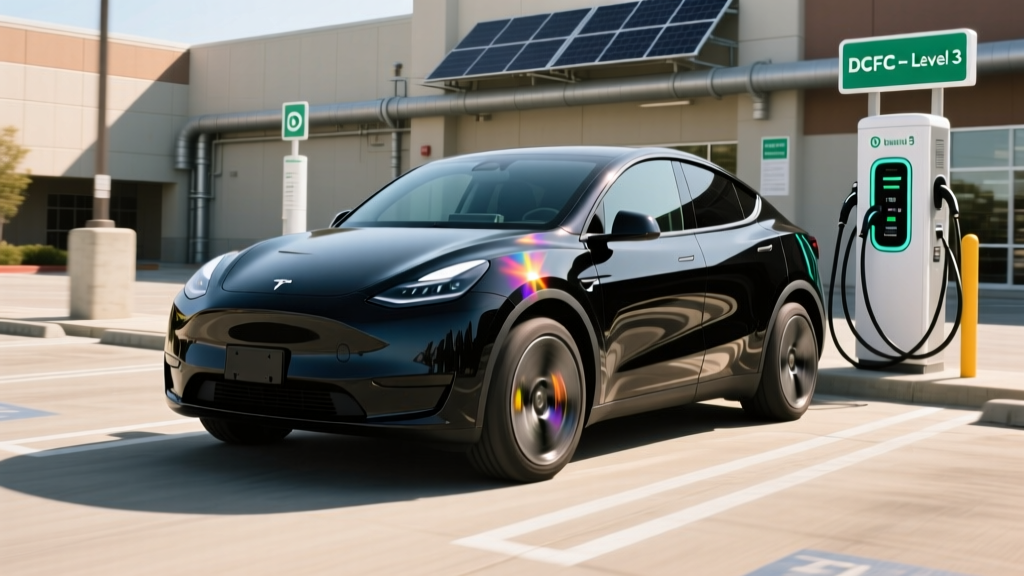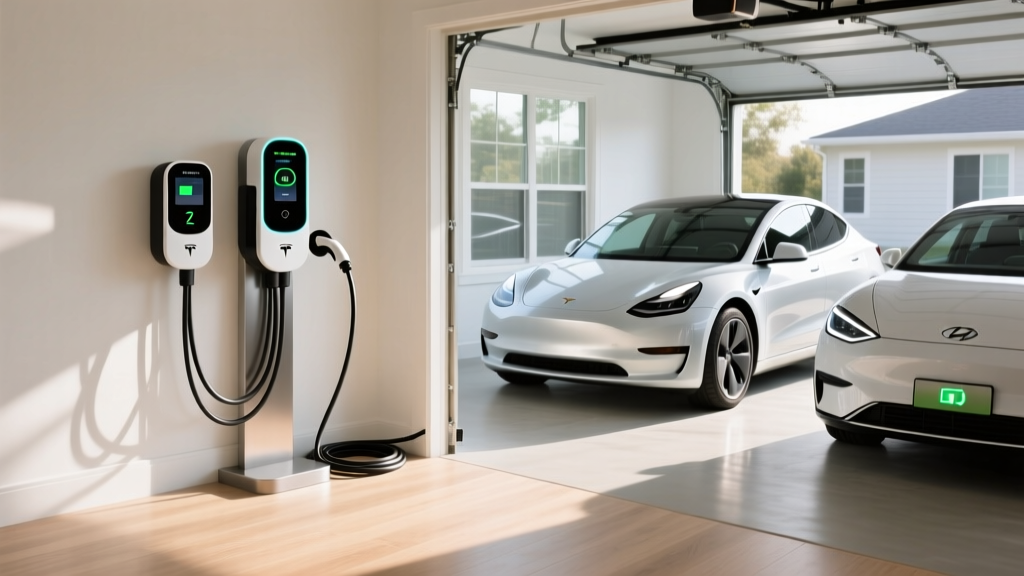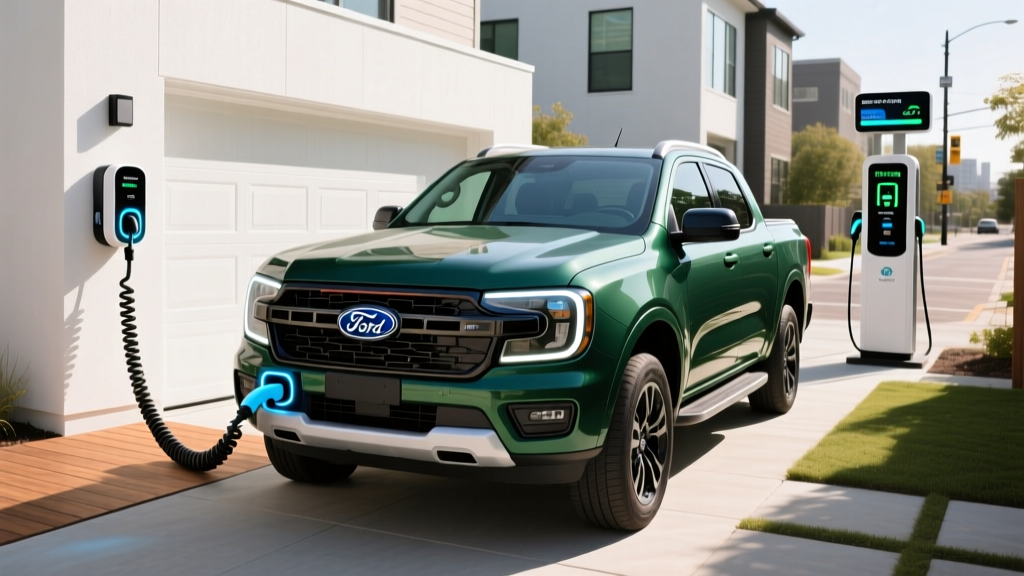
The 2026 Ford Ranger Plug-In Hybrid (PHEV) brings electrified efficiency to the midsize truck segment, pairing a turbocharged gasoline engine with an electric motor and a modest but useful battery pack. But owning a PHEV means understanding a charging ecosystem that's fundamentally different from a conventional hybrid or gas truck. Whether you're plugging in at home overnight or topping up at a public station, knowing your kW from your kWh — and your Level 2 from DC fast charging — is essential to maximizing the Ranger PHEV's electric-only range and minimizing your fuel bill.
This guide walks through every charging scenario for the Ford Ranger Plug-In Hybrid: what equipment you need, what it costs, how fast each level charges, and how to set up your home for reliable daily plugging. We'll also cover the electrical upgrades that catch many truck buyers off guard.
Ford Ranger PHEV Battery and Charging Basics
Before selecting a charger, you need to understand what you're filling. The 2026 Ford Ranger Plug-In Hybrid uses a lithium-ion battery pack (estimated ~15–18 kWh usable capacity based on Ford's global PHEV architecture) that delivers roughly 30–40 miles of EPA-estimated electric-only range depending on final U.S. specification. That range is designed for daily commuting and errands — not cross-country electric driving.
Because the Ranger PHEV's battery is relatively small compared to a full BEV (which might carry 75–100 kWh), your charging setup priorities are different. You likely won't need DC fast charging for daily use. A solid Level 2 home setup handles nearly all PHEV needs, with Level 1 as a backup. Here's how each level performs.
Charging Levels Explained: Speeds and Range Added
Three charging levels apply to PHEV ownership. The table below shows typical speeds and what they mean for a battery in the Ranger PHEV's class.
| Level | Voltage / Amps | Power (kW) | Miles of Range Added per Hour | Full Charge Time (~15 kWh) |
|---|---|---|---|---|
| Level 1 (120V outlet) | 120V / 12A | ~1.4 kW | ~3–5 mi/hr | 10–14 hours |
| Level 2 (240V home/public) | 240V / 32–48A | 7.2–11.5 kW | ~20–35 mi/hr | 1.5–2.5 hours |
| DC Fast Charging | 400–800V DC | 50–350 kW | ~150–1,000+ mi/hr | Not typically available on PHEVs* |
*Most PHEVs, including the Ranger PHEV, do not support DC fast charging. The onboard AC charger is the bottleneck — typically rated at 7.2 kW maximum. Even if you plug into a 150 kW DC fast charger (with the correct adapter), the vehicle will only accept what its onboard charger allows. For a ~15 kWh battery, Level 2 is already fast enough to fully recharge in about 2 hours.
Home Charger Installation: Requirements, Costs, and Upgrades
Installing a dedicated Level 2 home charger is the single best upgrade for PHEV ownership. You'll wake up every morning with a full battery, ready for electric-only commuting. But installation costs vary widely depending on your home's electrical panel, the distance from panel to charger location, and local permitting requirements.
Electrical Requirements for Level 2
A Level 2 charger requires a 240-volt circuit — the same voltage your electric dryer or oven uses. The most common home setup is a 240V / 40A circuit, which safely delivers up to 32A continuous (electrical code requires circuits be loaded to no more than 80% of their breaker rating for continuous loads). That yields 7.7 kW — more than enough for any PHEV.
If you want to future-proof for a full BEV, consider a 240V / 60A circuit (48A continuous, ~11.5 kW). The wire and breaker cost a bit more during installation, but you won't need to re-run anything when you eventually upgrade to a larger-battery vehicle.
Installation Cost Breakdown
| Component | Simple Install (panel nearby) | Complex Install (long run or upgrade) |
|---|---|---|
| Level 2 charger equipment | $350–$700 | $350–$700 |
| Electrician labor (240V circuit) | $300–$800 | $800–$2,500 |
| Permit and inspection | $50–$200 | $50–$200 |
| Panel upgrade (100A → 200A), if needed | N/A | $1,500–$4,000 |
| Total estimated cost | $700–$1,700 | $2,700–$7,400 |
Safety and Code Considerations
Any Level 2 installation must comply with NEC (National Electrical Code) Article 625, which governs EV charging systems. Key requirements include:
- Dedicated circuit: The charger must be on its own breaker — not shared with other appliances.
- GFCI protection: Outdoor installations require ground-fault circuit interrupter protection (built into most modern EVSE units or the breaker).
- Outdoor rating: If your charger is mounted outside (garage exterior, driveway post), the unit must carry a NEMA 4 or NEMA 4X weatherproof rating.
- Wire gauge: A 40A circuit typically requires 8 AWG copper wire; a 60A circuit needs 6 AWG. Longer wire runs may require thicker gauge to prevent voltage drop.
- Permit and inspection: Most jurisdictions require an electrical permit and post-installation inspection. Skipping this can void your homeowner's insurance coverage for electrical fires.
Connector Compatibility: What Fits the Ranger PHEV?
The North American charging connector landscape has shifted dramatically. Here's what you need to know for the Ford Ranger Plug-In Hybrid and PHEVs in general.
| Connector | Type | Used By | Ranger PHEV Compatible? |
|---|---|---|---|
| J1772 | AC (Level 1 & 2) | All non-Tesla EVs/PHEVs (Ford, GM, Hyundai, etc.) | ✅ Yes — native port |
| NACS (Tesla) | AC + DC | Tesla; Ford BEVs starting 2025+ with adapter | ⚠️ Adapter needed for Tesla destination chargers |
| CCS1 | DC Fast | Most non-Tesla BEVs | N/A — PHEVs typically lack DC port |
| CHAdeMO | DC Fast | Nissan Leaf (legacy) | N/A |
The Ford Ranger PHEV will use a J1772 connector for AC charging, which is the universal standard for Level 1 and Level 2 charging among non-Tesla vehicles in North America. Every public Level 2 station (ChargePoint, Blink, EVgo L2) uses J1772 natively. If you want to charge at a Tesla Wall Connector or Tesla Destination Charger, you'll need a J1772-to-NACS adapter — widely available for $100–$200 from brands like Lectron or Telgeoot.
For Level 1 charging, the Ranger PHEV will include a portable charging cord that plugs into a standard 120V household outlet. This is your backup and travel option — perfectly adequate for topping up a ~15 kWh battery overnight.
Charging Cost: Per-Mile Comparison vs. Gasoline
One of the strongest arguments for a PHEV is the cost savings when running on electricity. Here's how the numbers shake out for the Ranger PHEV compared to its gasoline-only counterpart.
| Scenario | Rate | Cost per Full Charge (~15 kWh) | Cost per Mile (electric) |
|---|---|---|---|
| Home off-peak (utility time-of-use) | $0.09/kWh | $1.35 | ~$0.038/mi |
| Home standard rate (national avg.) | $0.16/kWh | $2.40 | ~$0.068/mi |
| Public Level 2 (network pricing) | $0.25–$0.49/kWh | $3.75–$7.35 | ~$0.11–$0.21/mi |
| Gas Ranger (23 MPG combined, $3.40/gal) | — | — | ~$0.148/mi |
At home on off-peak rates, the Ranger PHEV costs roughly 3.8 cents per mile on electricity — about one-quarter the per-mile cost of the gas-only Ranger. Even at standard residential rates, you're looking at under 7 cents per mile. The savings are most dramatic when you charge at home and use the electric range for most daily driving.
The EPA's fueleconomy.gov tool lets you input your local electricity rate and compare specific PHEV models against their gasoline equivalents for personalized estimates.
Recommended Level 2 Chargers for PHEV Owners
Because PHEVs have smaller batteries and lower onboard charge rates (typically 7.2 kW max), you don't need the most powerful charger on the market. A reliable, smart 32A–40A unit is ideal. Here are three proven options suited to Ranger PHEV owners:
Emporia Vue Level 2 EVSE
- Power output: 48A max (11.5 kW at 240V)
- Connector: J1772 (NACS adapter available)
- Cable length: 24 ft
- Smart features: Wi-Fi, app scheduling, energy monitoring, solar integration
- Price: ~$400 (often bundled with Emporia home energy monitor)
- Best for: Budget-conscious buyers who want smart scheduling for off-peak utility rates
ChargePoint Home Flex
- Power output: Up to 50A (12 kW at 240V), configurable down to 16A
- Connector: J1772 (NACS version also available)
- Cable length: 23 ft
- Smart features: Wi-Fi, Alexa integration, ChargePoint network access, flexible amperage settings
- Price: ~$550–$700
- Best for: Flexibility — adjustable amperage means it works with 20A to 60A circuits
Grizzl-E Smart
- Power output: 40A (9.6 kW at 240V)
- Connector: J1772
- Cable length: 24 ft
- Smart features: Wi-Fi, OCPP-compatible, over-the-air updates, -40°F rated
- Price: ~$450–$550
- Best for: Cold-climate truck owners — built in Canada, rated for extreme temperatures
For PHEV use specifically, even a 32A (7.7 kW) charger will replenish the Ranger's battery in roughly 2 hours. Spending extra on a 48A+ unit is worthwhile only if you plan to eventually own a full BEV with a larger battery and faster onboard charger.
Public Charging: What PHEV Owners Need to Know
Public Level 2 chargers are widely available at shopping centers, workplaces, and parking garages — networks like ChargePoint, EVgo, and Blink operate thousands of J1772-equipped stations nationwide. For a PHEV, public Level 2 charging is most useful as an opportunistic top-up: plug in while you shop or work, and add 15–30 miles of electric range in an hour or two.
DC fast charging stations (Electrify America, EVgo, Tesla Superchargers with Magic Dock) are designed for BEVs and typically aren't useful for PHEVs. The Ranger PHEV lacks a DC fast-charge port, so plan your road trips around the gasoline engine for highway stretches and use electric mode around town.
One practical tip: many public Level 2 stations charge by the kWh or by the hour. At $0.35/kWh and a 15 kWh battery, a full public charge costs roughly $5.25 — still cheaper than a gallon of gas but less economical than home charging. Use public charging as a convenience, not your primary strategy.
Frequently Asked Questions
How much does it cost to install a home EV charger for the Ford Ranger PHEV?
Expect $700–$1,700 for a straightforward installation where your electrical panel is close to the charger location and has sufficient capacity. If you need a long wire run, conduit work, or a panel upgrade from 100A to 200A, costs can climb to $2,700–$7,400. Always get a quote from a licensed electrician before purchasing equipment.
How fast will each charging level add range to the Ranger PHEV?
Level 1 (120V) adds approximately 3–5 miles of range per hour — enough to replenish a full PHEV battery overnight in 10–14 hours. Level 2 (240V) adds roughly 20–35 miles per hour and fully recharges a ~15 kWh battery in about 2 hours. DC fast charging is not available on most PHEVs, including the Ranger PHEV.
Which connector and charger is compatible with the Ford Ranger Plug-In Hybrid?
The Ranger PHEV uses the J1772 connector for AC Level 1 and Level 2 charging — the universal standard for non-Tesla electrified vehicles in North America. Any J1772-equipped home charger or public station will work. To use Tesla Destination Chargers or Wall Connectors, you'll need a J1772-to-NACS adapter.
How much does charging cost per mile compared to gas?
Charging at home on off-peak electricity ($0.09/kWh) costs roughly $0.04 per mile — about 75% less than a gas Ranger at $0.15 per mile (23 MPG combined, $3.40/gallon). At standard residential rates ($0.16/kWh), the PHEV still costs under $0.07 per mile on electricity. Savings are maximized when you charge at home and drive within the electric-only range for daily trips.
What electrical upgrades might I need for a Level 2 charger?
You'll need a dedicated 240V circuit (typically 40A) installed by a licensed electrician. If your home has a 100-amp electrical panel that's already near capacity, you may need to upgrade to 200A service — a $1,500–$4,000 job. Homes built after 2000 with 200A panels usually have sufficient headroom. An electrician can assess your panel's available capacity during a site visit.
Does the Ford Ranger PHEV qualify for federal tax credits?
PHEVs may qualify for the IRS §30D Clean Vehicle Credit, but eligibility depends on several factors: the vehicle's MSRP must not exceed $80,000 for trucks, your adjusted gross income must fall below IRS thresholds ($150,000 single / $300,000 joint), and the battery must meet critical-mineral and component sourcing requirements. The credit can be up to $7,500 and is available as a point-of-sale transfer. Confirm the Ranger PHEV's specific eligibility on the IRS qualified vehicles list before purchasing, as sourcing rules tighten periodically.
For the most current list of eligible vehicles, check the IRS Clean Vehicle Credit page and the fueleconomy.gov tax incentive tool.