Midsize truck buyers weighing the 2026 Ford Ranger hybrid's MPG against a fully electric alternative face a math problem that goes deeper than the window sticker. The Ranger Hybrid's fuel economy is a known quantity — but how does its cost per mile stack up against charging a comparable electric truck at home or on the road? This guide breaks down real charging speeds, home installation costs, connector compatibility, and per-mile energy costs so you can decide whether hybrid efficiency or EV charging economics win for your driving pattern.
2026 Ford Ranger Hybrid MPG: The Baseline
The 2026 Ford Ranger Hybrid pairs a turbocharged engine with an electric motor assist, targeting an EPA-estimated combined fuel economy in the mid-20s MPG range for the 4x2 configuration. For a concrete comparison, we'll use 25 MPG combined as our working figure — consistent with midsize hybrid truck powertrains in this class. At a national average gasoline price of $3.45/gallon (early 2026 EIA data), that translates to a fuel cost of approximately $0.138 per mile.
Real-world highway driving at sustained 70-75 mph speeds typically reduces hybrid truck fuel economy by 2-4 MPG due to aerodynamic drag and the reduced benefit of regenerative braking at constant speed. Expect roughly 21-23 MPG on long highway trips, pushing the per-mile fuel cost closer to $0.15-$0.16 in those conditions.
Now let's see what EV charging looks like on the same per-mile basis — and what it takes to set up at home.
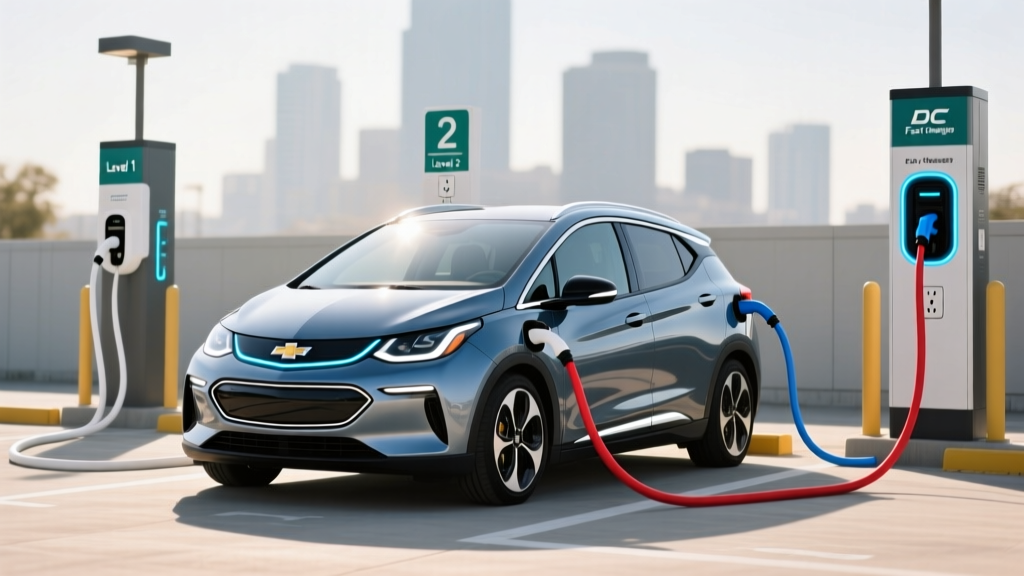
Charging Levels Explained: Speeds, Power, and Range Added
Understanding EV charging requires a clear distinction between kW (kilowatts), which measures power — how fast energy flows into the battery — and kWh (kilowatt-hours), which measures energy — the total capacity of the battery. Think of kW as the flow rate of a hose and kWh as the size of the bucket.
| Level | Voltage | Power (kW) | Miles of Range Added Per Hour | Typical Use Case |
|---|---|---|---|---|
| Level 1 | 120V AC | 1.0 – 1.4 kW | 3 – 5 mi/hr | Overnight top-ups, PHEVs, emergency |
| Level 2 | 240V AC | 3.3 – 19.2 kW | 12 – 70+ mi/hr | Home daily charging, workplace, public L2 |
| DC Fast Charge | 200 – 500V+ DC | 50 – 350+ kW | 150 – 1,200+ mi/hr (peak) | Road trips, highway corridors |
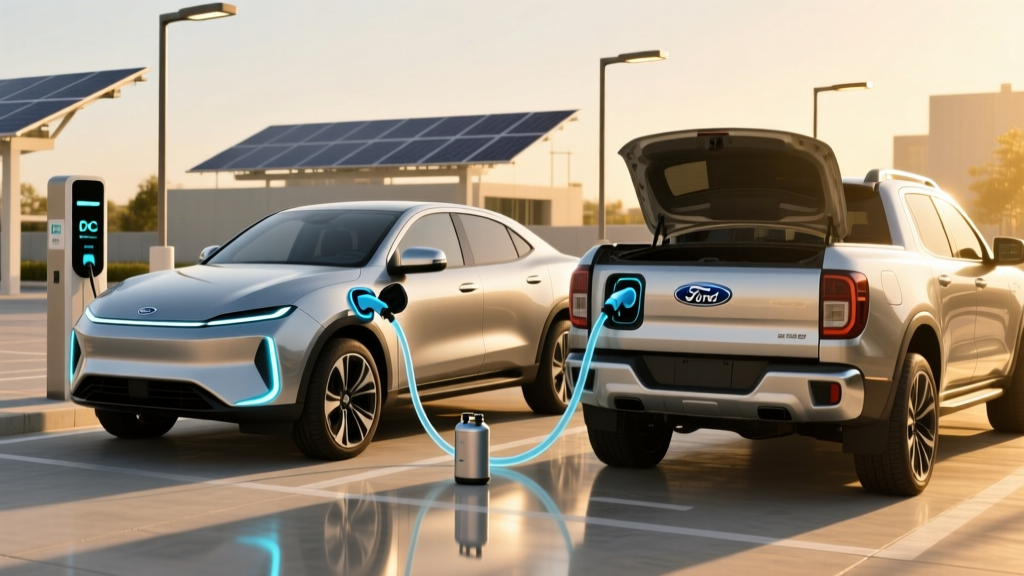
For a midsize electric truck with a ~100 kWh battery pack (such as the Ford F-150 Lightning standard-range or comparable platforms), a Level 2 home charger at 11.5 kW adds roughly 25-30 miles of range per hour. That same truck on a 150 kW DC fast charger can go from 10% to 80% state of charge (SoC) in approximately 35-40 minutes — though the charge curve tapers significantly above 80%, making the final 20% disproportionately slow.
Home Charger Installation: Costs, Electrical Requirements, and Panel Upgrades
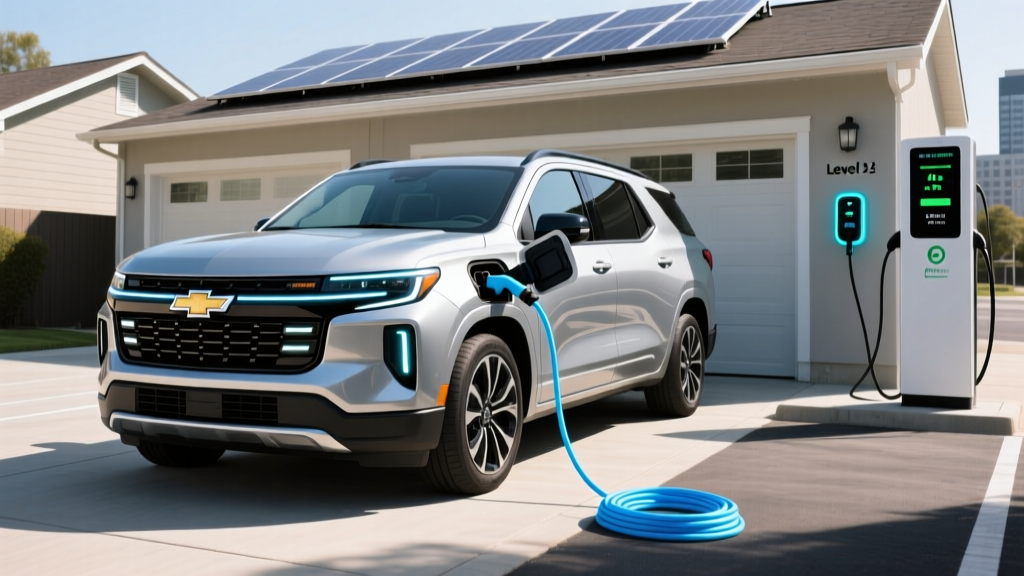
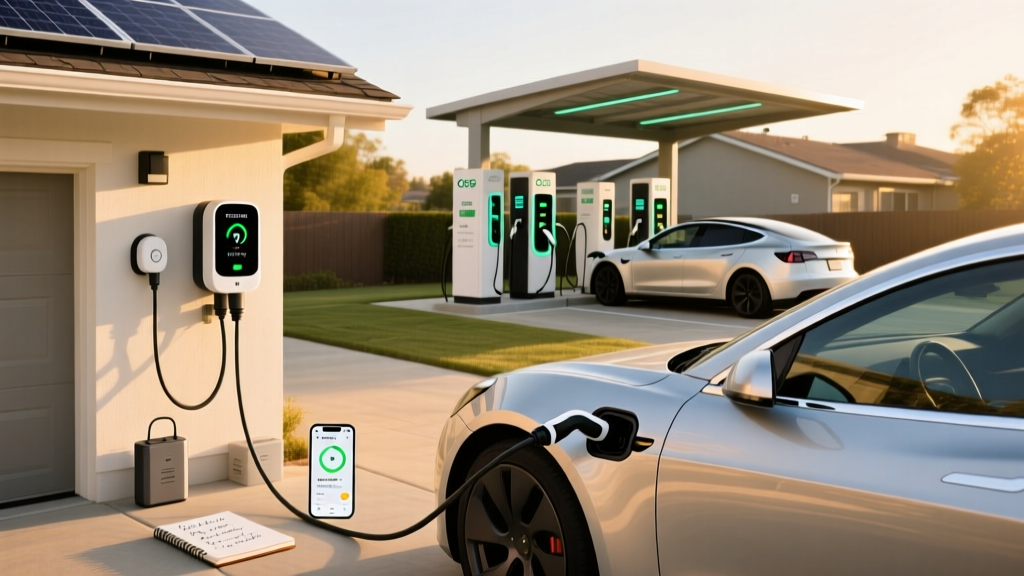
The single biggest variable in home EV charging isn't the charger itself — it's your home's electrical panel. Most Level 2 chargers require a dedicated 240V circuit at 40 to 60 amps, which means your panel must have sufficient spare capacity to support the additional load.
Electrical Requirements for a Typical 48-Amp Level 2 Charger
- Circuit rating: 60-amp breaker (EVSE rated at 48A continuous, per NEC 80% rule)
- Wire gauge: 6 AWG copper (or 4 AWG aluminum) for runs up to ~50 feet
- Panel capacity: Minimum 200-amp main service recommended; older 100-amp panels may require a service upgrade ($1,500–$3,500)
- Permit: Required in most jurisdictions; electrical permit fees range $50–$250
- GFCI protection: NEC 2020+ requires GFCI protection for EV outlets; hardwired units may have internal GFCI
- Outdoor rating: NEMA 4-rated enclosure required for outdoor installations
| Component | Low Estimate | High Estimate | Notes |
|---|---|---|---|
| Level 2 EVSE equipment | $350 | $750 | 40A–48A smart charger, 25ft cable |
| Electrician labor (standard install) | $400 | $1,200 | Short run from panel to garage |
| Electrical permit | $50 | $250 | Varies by municipality |
| Panel upgrade (if needed) | $1,500 | $3,500 | 100A → 200A service upgrade |
| Conduit/wire for long runs | $200 | $800 | 100ft+ runs, trenching for detached garage |
| Total (no panel upgrade) | $800 | $2,200 | Most homes with 200A service |
| Total (with panel upgrade) | $2,300 | $5,750 | Older homes or high-load panels |
Pro tip: Before hiring an electrician, check your panel's amp rating and count existing breakers. If your panel is near capacity, a load calculation by a licensed electrician will determine whether an upgrade is necessary. Some utilities offer free or subsidized panel assessments for EV adopters.
Connector Compatibility: NACS, CCS1, and Adapter Realities in 2026
The connector landscape has consolidated significantly. As of the 2026 model year, most new EVs sold in North America use the NACS (North American Charging Standard) port — the Tesla-designed connector now adopted by Ford, GM, Rivian, Hyundai, and others. CCS1 remains on some carryover models and is still supported at Electrify America and other networks via adapter or native cable.
| Connector | Brands Using Natively | DC Fast Network Access |
|---|---|---|
| NACS (Tesla) | Tesla, Ford (2025+), GM (2025+), Rivian, Hyundai/Kia (2025+), Volvo, Polestar | Tesla Supercharger, Electrify America (NACS stalls), EVgo |
| CCS1 | VW ID.4 (carryover), BMW iX (some), legacy 2022-2024 EVs | Electrify America, EVgo, ChargePoint DC |
| CHAdeMO | Nissan Leaf (discontinued 2025), Mitsubishi Outlander PHEV (legacy) | Limited and declining network |
If you own a CCS1-equipped EV and want Supercharger access, Ford and other manufacturers offer NACS adapters (typically $200–$250) that enable use of Tesla's V3 and V4 Supercharger stalls. Always verify adapter compatibility with your specific model year before purchasing.
Cost Per Mile: Ford Ranger Hybrid vs. EV Charging Scenarios
This is where the Ford Ranger hybrid MPG number meets real-world wallet impact. Let's compare per-mile energy costs across common charging scenarios using an electric midsize truck with an efficiency rating of 2.0 kWh/mile (representative of aerodynamic midsize electric pickups) and the Ranger Hybrid at 25 MPG combined.
| Scenario | Energy Cost | Cost Per Mile | Annual Cost (12,000 mi) |
|---|---|---|---|
| Ranger Hybrid (25 MPG, $3.45/gal) | $3.45/gallon | $0.138 | $1,656 |
| EV — Home Level 2 (off-peak, $0.12/kWh) | $0.12/kWh | $0.024 | $288 |
| EV — Home Level 2 (standard, $0.18/kWh) | $0.18/kWh | $0.036 | $432 |
| EV — Public Level 2 ($0.30/kWh avg) | $0.30/kWh | $0.060 | $720 |
| EV — DC Fast Charge ($0.45/kWh avg) | $0.45/kWh | $0.090 | $1,080 |
| EV — DC Fast (peak pricing, $0.65/kWh) | $0.65/kWh | $0.130 | $1,560 |
The math is clear: home charging at off-peak rates delivers a per-mile cost roughly 5-6x lower than the Ranger Hybrid. Even exclusive DC fast charging at peak rates approaches hybrid fuel costs — which is why home Level 2 access is the single most important factor in EV ownership economics.
Over five years and 60,000 miles, a home-charged electric truck saves approximately $6,000–$6,800 in energy costs compared to the Ranger Hybrid — enough to offset a significant portion of the EV's higher purchase price. Factor in reduced maintenance (no oil changes, fewer brake replacements due to regenerative braking) and the total cost of ownership gap widens further.
Equipment Recommendations: 2026 Level 2 Chargers
Not all Level 2 chargers are equal. Here are three proven options across price tiers, all compatible with NACS-equipped 2026 EVs:
Tesla Wall Connector (NACS native)
- Power output: Up to 11.5 kW (48A on 60A circuit)
- Connector: NACS (native), J1772 adapter included
- Cable length: 24 feet
- Smart features: Wi-Fi, OTA updates, load sharing (pair two units on one circuit), access control
- Price: ~$475
- Best for: Ford, GM, Rivian, Tesla owners wanting maximum Supercharger-ecosystem integration
ChargePoint Home Flex
- Power output: Configurable 16A–50A (up to 12 kW on 50A/60A circuit)
- Connector: J1772 (NACS adapter available) or NACS pigtail option
- Cable length: 23 feet
- Smart features: Wi-Fi, Alexa integration, scheduling, energy tracking, flexible amperage DIP-switch config
- Price: ~$550–$650
- Best for: Homes with varied circuit capacity; adjustable amperage avoids panel upgrades
Emporia Level 2 EV Charger
- Power output: Up to 11.5 kW (48A)
- Connector: J1772 or NACS (select at purchase)
- Cable length: 24 feet
- Smart features: Wi-Fi, solar integration (pairs with Emporia Vue energy monitor), time-of-use scheduling
- Price: ~$350–$400
- Best for: Budget-conscious buyers with solar panels; best value per kW
Charging Times for Common EV Battery Sizes
How long does a full charge actually take? The answer depends on battery capacity (kWh) and charger power (kW). Here are real-world charge times for representative battery sizes:
| Battery Size | Level 1 (1.4 kW) | Level 2 (11.5 kW) | DC Fast (150 kW peak) | DC Fast (350 kW peak) |
|---|---|---|---|---|
| 60 kWh (compact EV) | ~36 hours | ~4.5 hours | ~28 min | ~18 min |
| 85 kWh (midsize sedan/SUV) | ~51 hours | ~6.5 hours | ~38 min | ~22 min |
| 100 kWh (full-size truck) | ~60 hours | ~7.5 hours | ~45 min | ~28 min |
| 130 kWh (extended-range truck) | ~78 hours | ~10 hours | ~55 min | ~35 min |
Charge curve reality check: Peak DC fast charge rates (150 kW, 350 kW) are sustained only between roughly 10-50% SoC. Above 60%, the battery management system reduces charge rate to protect cell health, often dropping to 50 kW or below past 80%. This is why manufacturers quote 10-80% times rather than 0-100% — the final 20% can take as long as the first 70%.
Safety, Code, and Long-Term Ownership Considerations
EV charging infrastructure must comply with the National Electrical Code (NEC) and local amendments. Key safety requirements include:
- Dedicated circuit: Level 2 chargers must be on their own dedicated breaker — no sharing with other appliances
- GFCI protection: Required for receptacle-connected EVSE (NEC 625.54); hardwired units may integrate GFCI internally
- Outdoor installations: Must use NEMA 4-rated (weatherproof) enclosures and outdoor-rated cable/conduit
- Strain relief: Wall-mounted units should include cable management to prevent connector stress and tripping hazards
- Utility notification: Some utilities require notification before installing EVSE; many offer time-of-use (TOU) rate plans that dramatically reduce off-peak charging costs
From an ownership standpoint, Level 2 EVSE units typically carry 3-year warranties and have a service life of 10+ years. The IRS §30D clean vehicle credit does not cover home charging equipment directly, but the separate §30C Alternative Fuel Vehicle Refueling Property Credit offers up to $1,000 for residential EVSE installation in eligible census tracts — check IRS guidelines for your zip code eligibility.
Frequently Asked Questions
How much does it cost to install a home EV charger?
A standard Level 2 home charger installation costs $800–$2,200 when your electrical panel has sufficient capacity (200A service with spare breaker slots). If a panel upgrade from 100A to 200A is needed, total costs range $2,300–$5,750. Equipment itself runs $350–$750 for a quality 40-48A smart charger.
How fast will each charging level add range?
Level 1 (120V) adds 3-5 miles per hour — sufficient for PHEVs with small batteries but impractical for full EVs. Level 2 (240V, 48A) adds 25-35 miles per hour for most EVs, fully replenishing overnight. DC fast charging adds 150-1,200 miles per hour at peak rates, enabling 10-80% charges in 18-45 minutes depending on battery size and peak kW capability.
Which connector/charger is compatible with my EV?
For 2026 model-year EVs, NACS is the dominant standard across Ford, GM, Tesla, Rivian, Hyundai, and Kia. CCS1 persists on some carryover models. CHAdeMO is effectively discontinued. Check your vehicle's charge port — if it's the smaller NACS connector, you have direct Supercharger access. CCS1 vehicles require a NACS adapter ($200-$250) for Tesla network use.
How much does charging cost per mile vs. gas?
At home off-peak rates ($0.12/kWh), EV charging costs roughly $0.024/mile — about 5.7x cheaper than the Ford Ranger Hybrid at 25 MPG and $3.45/gallon ($0.138/mile). Public DC fast charging ($0.45/kWh) costs $0.090/mile, still 35% less than gasoline. Only peak-priced DC charging ($0.65/kWh) approaches hybrid fuel costs at $0.130/mile.
What electrical upgrades might I need?
Homes with 100-amp main panels typically need a service upgrade to 200A ($1,500-$3,500) before adding a 48A Level 2 charger. Homes with 200A panels near maximum load may benefit from a smart load management device (e.g., Emporia Smart Load Manager) that dynamically reduces charger amperage when other appliances draw power — avoiding a panel upgrade entirely.
Does the Ford Ranger Hybrid qualify for the same tax credits as an EV?
No. The IRS §30D clean vehicle credit applies to plug-in vehicles with battery capacity ≥7 kWh that meet critical mineral and battery component sourcing requirements, MSRP caps ($80,000 for trucks), and buyer income limits. Conventional hybrids like the Ranger Hybrid do not qualify for §30D. However, some hybrids may qualify for reduced credits if they have plug-in capability — consult a tax professional and the IRS clean vehicle credit page for current eligibility.