Why Charging the New Electric Ranger Requires a Plan
The Ford Ranger EV brings mid-size truck capability into an electric package, but owning one means shifting your fueling mindset entirely. Instead of stopping at a gas station, you'll replenish a large battery pack — likely 75–85 kWh usable — mostly at home. Getting your charging setup right before delivery day is the single biggest factor in daily satisfaction.
This guide walks through every charging layer the new electric Ranger will use: what speeds to expect, what your home electrical panel can handle, which connector you'll plug in, what charging actually costs per mile, and which Level 2 equipment is worth buying in 2026.
Charging Levels Explained: Speeds, kW, and Real-World Range Gains
Before anything else, let's lock in the most common EV confusion: kW (kilowatts) measures power — how fast energy flows into the battery. kWh (kilowatt-hours) measures energy — how much the battery holds. A 250 kW charger doesn't deliver 250 kWh; it delivers energy at a rate of 250 kW, tapering as the battery fills.
| Level | Voltage | Power (kW) | Miles of Range Added per Hour | Typical Use Case |
|---|---|---|---|---|
| Level 1 (120V) | 120V AC | 1.0–1.4 kW | ~3–5 mi/hr | Emergency/trickle only |
| Level 2 (240V) | 240V AC | 7.2–11.5 kW | ~22–38 mi/hr | Daily home charging |
| DC Fast Charge | 400–800V DC | 50–150+ kW (peak) | ~150–250+ mi/hr (at peak) | Road trips, quick top-ups |
Level 1 is essentially useless for a truck-sized battery. Plugging a ~80 kWh pack into a standard 120V outlet would take 60+ hours for a full charge. Level 2 at home is where 85% of your charging will happen. DC fast charging handles road trips and is measured in 10–80% session times, not full charges.
Home Charger Installation: Electrical Requirements, Costs & Panel Gotchas
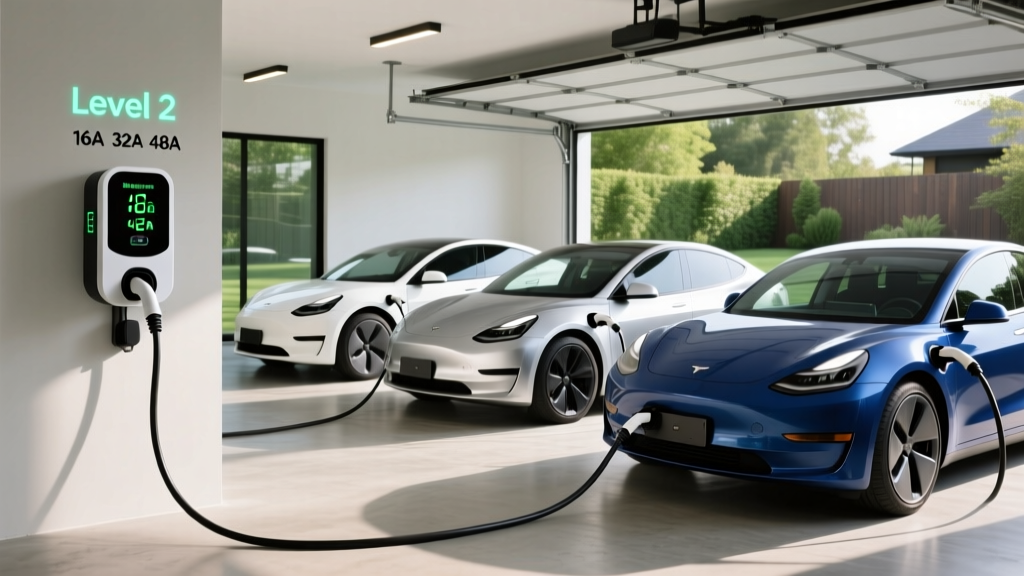
A Level 2 home charger for the new electric Ranger needs a dedicated 240V circuit. Most EV owners install a 40-amp or 48-amp circuit, which supports continuous charging at 32A or 40A respectively (the National Electrical Code requires circuits rated 125% above the continuous load).
What Your Electrician Will Assess
- Panel capacity: A 200-amp service panel is standard in modern homes and usually sufficient. Older homes with 100-amp service will likely need a panel upgrade — a $1,500–$3,000 job on its own.
- Wire run distance: Longer runs from panel to garage/driveway mean thicker (more expensive) copper wire and higher labor costs.
- Permit requirements: Most jurisdictions require an electrical permit ($50–$200) and a post-install inspection.
- GFCI protection: NEC 2020+ requires GFCI breakers for EV outlets in garages, adding $50–$120 to material costs.
- Outdoor rating: If you're charging in a driveway or carport, the charger and receptacle must carry a NEMA 4 or NEMA 4X weatherproof rating.
| Item | Low End | High End | Notes |
|---|---|---|---|
| Level 2 Charger Unit | $350 | $750 | Smart WiFi-connected units with 25-ft cable |
| Electrical Permit | $50 | $200 | Varies by municipality |
| Electrician Labor (standard install) | $400 | $1,200 | Short wire run, panel nearby |
| Electrician Labor (long/complex run) | $800 | $2,500 | Conduit, attic crawls, 60+ ft run |
| Panel Upgrade (if needed) | $1,500 | $3,000 | 100A → 200A service upgrade |
| GFCI Breaker (40A–50A) | $50 | $120 | Required by NEC in garages |
| Total (standard install) | $850 | $2,270 | No panel upgrade needed |
| Total (with panel upgrade) | $2,350 | $5,270 | Older home, 100A service |
Always get a final spec from a licensed electrician who has inspected your panel in person. Online estimates can't account for your home's specific wiring, conduit path, or local code amendments.
Connector Compatibility: NACS, CCS1, and the Adapter Landscape in 2026
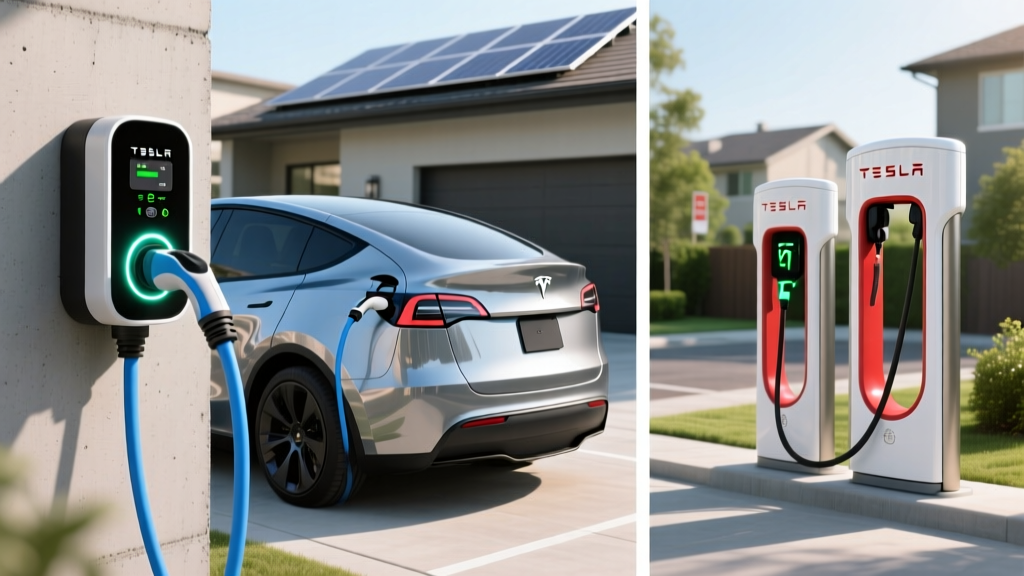
The EV charging connector landscape has consolidated significantly. Ford adopted the North American Charging Standard (NACS) — originally developed by Tesla — for its new electric vehicles, meaning the new electric Ranger is expected to ship with a native NACS charge port. This is a major advantage: NACS ports give you direct access to Tesla Supercharger stalls (now rebranded as open networks) without an adapter.
| Connector | Used By | Ranger Compatibility |
|---|---|---|
| NACS (Tesla-style) | Tesla, Ford, Rivian, GM, Volvo, others | Native — direct plug-in |
| CCS1 | Legacy Electrify America, EVgo, older non-Tesla EVs | NACS-to-CCS adapter required |
| CHAdeMO | Nissan Leaf (discontinued), older Japanese EVs | Not compatible; network largely retired |
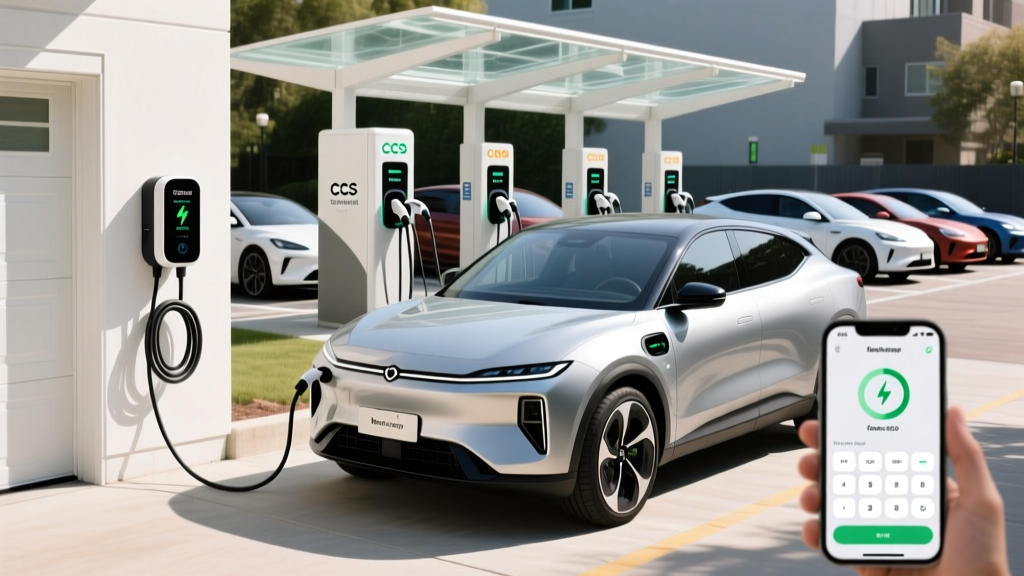
Most public DC fast-charging networks have added NACS cables or will by late 2026. If you encounter a CCS1-only station, Ford provides or sells a NACS-to-CCS adapter (~$200–$250). Keep one in the truck for road trips through areas where CCS-only chargers still exist.
For Level 2 home and public AC charging, NACS handles AC charging natively — no J1772 adapter is needed if your home charger is NACS-equipped. If you have an older J1772 Level 2 unit, a J1772-to-NACS adapter (~$100–$150) bridges the gap.
DC Fast Charging Times and the Charge-Curve Reality
The new electric Ranger is expected to support DC fast charging at up to 150 kW peak. But peak rate is only part of the story. Every EV follows a charge curve: charging speed is fastest between ~10% and ~50% state of charge (SoC), then tapers progressively to protect the battery. A "150 kW" charger might only sustain that rate for 5–8 minutes before dropping to 90 kW, then 50 kW above 80%.
Estimated 10–80% Charging Times
- At a 150 kW DC fast charger: ~28–35 minutes (assuming a ~80 kWh usable battery and optimal battery temperature)
- At a 50 kW DC fast charger: ~75–90 minutes
- Level 2 at home (11.5 kW / 48A): ~7–8 hours for a full 10–100% charge
- Level 2 at home (7.2 kW / 32A): ~11–12 hours for a full 10–100% charge
Preconditioning matters. If you navigate to a DC fast charger using the Ranger's built-in navigation, the battery thermal management system will warm (or cool) the pack to its optimal charging temperature before you arrive. Skipping preconditioning — especially in cold weather below 40°F — can add 10–15 minutes to a fast-charge session as the battery limits intake rate to protect itself.
Cost to Charge: Home vs. Public vs. Gas Comparison
Electricity pricing varies enormously by region, time of day, and charging location. Here's a realistic breakdown for the new electric Ranger assuming 2.5–3.0 miles per kWh efficiency (typical for a mid-size electric truck).
| Scenario | Rate | Cost per Mile | Notes |
|---|---|---|---|
| Home charging (off-peak utility rate) | $0.09–$0.13/kWh | $0.03–$0.05/mi | Best-case; overnight TOU rate |
| Home charging (standard rate) | $0.14–$0.18/kWh | $0.05–$0.07/mi | Average US residential rate |
| Public Level 2 (ChargePoint, etc.) | $0.20–$0.35/kWh | $0.07–$0.12/mi | Varies by network and location |
| DC Fast Charging (Electrify America, EVgo) | $0.30–$0.55/kWh | $0.10–$0.18/mi | Peak pricing in metro areas |
| Tesla Supercharger (NACS, open network) | $0.25–$0.40/kWh | $0.08–$0.14/mi | Varies by station and time |
| Gasoline Ranger (22 MPG combined) | $3.30/gal (avg) | $0.15/mi | US average regular unleaded |
| Gasoline Ranger (22 MPG combined) | $4.00/gal (high-cost state) | $0.18/mi | CA, WA, NY pricing |
Home charging on an off-peak rate delivers the strongest economics — roughly one-third the per-mile cost of gasoline. DC fast charging on the road narrows the gap but still undercuts gas in most states. The break-even point where public DC fast charging costs more than gas is around $0.50/kWh, which some urban stations now charge during peak hours.
For a driver covering 12,000 miles per year with 80% home charging at $0.12/kWh and 20% public DC fast charging at $0.38/kWh, annual fuel cost comes to roughly $580–$650. A comparable gas Ranger at 22 MPG and $3.40/gal runs about $1,855/year. That's over $1,200 in annual fuel savings before factoring in reduced maintenance (no oil changes, fewer brake replacements due to regenerative braking).
Recommended Level 2 Home Chargers for the New Electric Ranger (2026)
With a native NACS port, you want a Level 2 charger that speaks NACS natively — no adapter needed every time you plug in at home. Here are three strong picks based on power output, cable management, smart features, and reliability.
Tesla Wall Connector (NACS)
Power: Up to 11.5 kW (48A)
Connector: Native NACS
Cable length: 24 ft
Smart features: WiFi, OTA updates, power sharing between two units, access control
Price: ~$475
Best for: Maximum charge speed on a 60A circuit; clean cable management
ChargePoint Home Flex (NACS)
Power: Up to 12 kW (50A) configurable
Connector: NACS (2025+ model)
Cable length: 23 ft
Smart features: WiFi, scheduling, Alexa/Google Home, energy dashboard, amperage adjustment via app
Price: ~$550–$650
Best for: Flexible amperage tuning if your circuit is less than 60A
Emporia Vue Level 2 (NACS)
Power: Up to 11.5 kW (48A)
Connector: Native NACS
Cable length: 24 ft
Smart features: WiFi, solar integration, scheduled charging, energy monitoring with whole-home panel integration
Price: ~$400–$500
Best for: Budget-conscious buyers who want smart scheduling and solar-aware charging
All three support NACS natively, include WiFi connectivity for scheduled and off-peak charging, and carry UL certification for safety. Hardwired installation is preferred over plug-in (NEMA 14-50) for higher-amperage units, as it eliminates the GFCI breaker requirement and provides a more reliable connection.
Safety, Code, and Best Practices for Home EV Charging
EV charging draws sustained high current for hours — a duty cycle far more demanding than an oven or dryer. Cutting corners on installation creates fire risk. Non-negotiable safety requirements include:
- Dedicated circuit: Your Level 2 charger must be on its own dedicated breaker — never shared with other appliances.
- Correct wire gauge: A 48A continuous load requires 6 AWG copper wire on a 60A breaker. Undersized wire overheats.
- GFCI protection: Required by NEC for plug-in receptacles in garages. Hardwired chargers may be exempt depending on local code.
- Outdoor-rated equipment: Any charger or receptacle exposed to weather must carry a NEMA 4 (splash-proof) or NEMA 4X (corrosion-resistant) rating.
- Permit and inspection: Skipping the permit may void your homeowner's insurance in the event of an electrical fire. The inspection catches wiring errors that could cause problems years later.
- Cable management: Use a wall-mounted holster or retractable reel. A charging cable on a garage floor is a tripping hazard and degrades the cable jacket over time.
Frequently Asked Questions
How much does it cost to install a home EV charger for the new electric Ranger?
A standard Level 2 installation with a short wire run and adequate panel capacity costs $850–$2,270 all-in (charger, permit, electrician). If your home needs a 100A-to-200A panel upgrade, add $1,500–$3,000, bringing the total to $2,350–$5,270. Always get a site-specific quote from a licensed electrician.
How fast will each charging level add range to the Ranger EV?
Level 1 (120V) adds roughly 3–5 miles of range per hour — impractical for daily use. Level 2 (240V) at 11.5 kW adds approximately 30–38 miles per hour, enough to fully replenish overnight. DC fast charging at 150 kW peak can add 150+ miles in roughly 15 minutes at peak rate, though sustained speeds taper significantly above 50% SoC.
Which connector and charger is compatible with the new electric Ranger?
The new electric Ranger uses a native NACS (North American Charging Standard) charge port, the same connector used by Tesla vehicles. This gives direct access to Tesla Supercharger stations and any NACS-equipped public charger. For legacy CCS1 stations, a NACS-to-CCS adapter is required. CHAdeMO is not compatible.
How much does charging cost per mile vs. gasoline?
Home charging on an average US electricity rate ($0.14–$0.18/kWh) costs roughly $0.05–$0.07 per mile. Off-peak utility rates drop this to $0.03–$0.05/mi. A gasoline Ranger at 22 MPG and $3.40/gal costs about $0.15/mi. Even public DC fast charging at $0.38/kWh ($0.13/mi) undercuts gas in most states.
What electrical upgrades might my home need before installing a charger?
The most common upgrade is a panel capacity increase from 100A to 200A service — necessary if your existing panel is near capacity with current loads. Other potential needs: adding a 240V circuit (if none exists near the parking spot), upgrading wire gauge for long runs, and installing a GFCI breaker for plug-in receptacles. An electrician's load calculation will determine exactly what's required.
Does the new electric Ranger qualify for the federal EV tax credit?
Federal §30D tax credit eligibility depends on MSRP caps (trucks: $80,000), buyer income limits ($150K single / $300K joint), battery critical-mineral sourcing, and final assembly in North America. Rules evolve frequently. Check current eligibility at IRS.gov and confirm with a tax professional before purchase. The credit can be transferred to the dealer at point of sale as an immediate price reduction.
Sources: EPA Fuel Economy, IRS Clean Vehicle Credits, Ford Motor Company press materials.