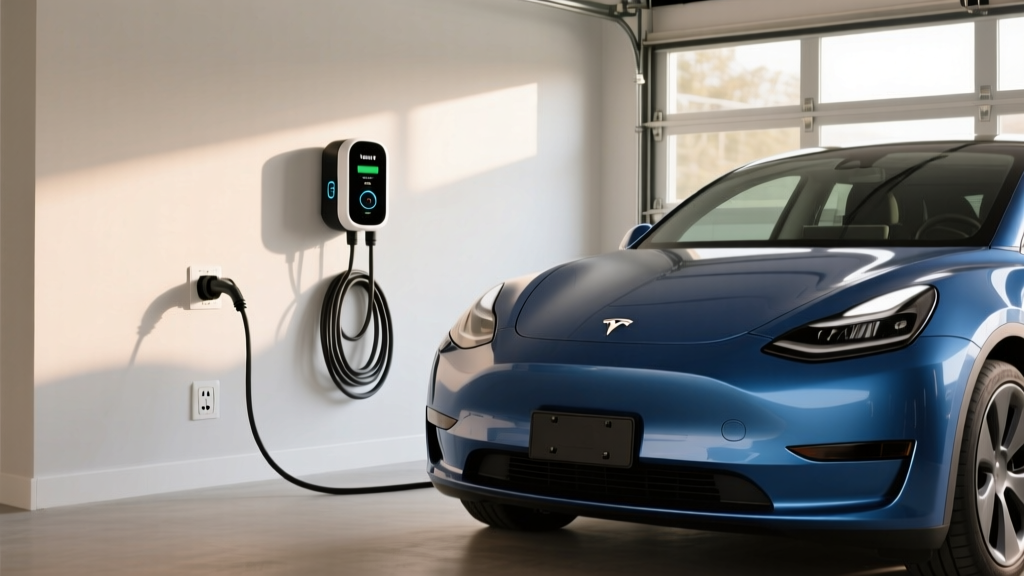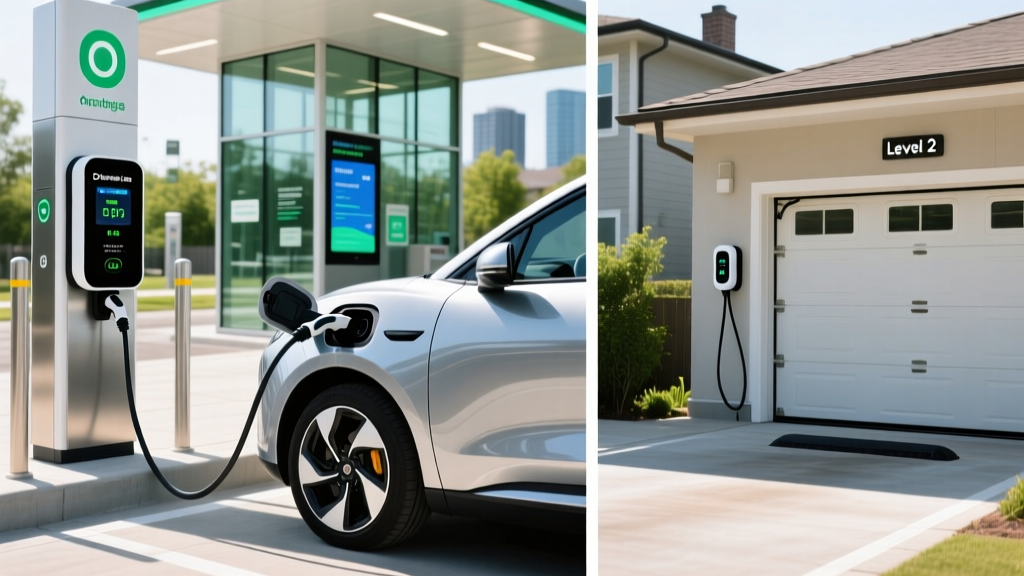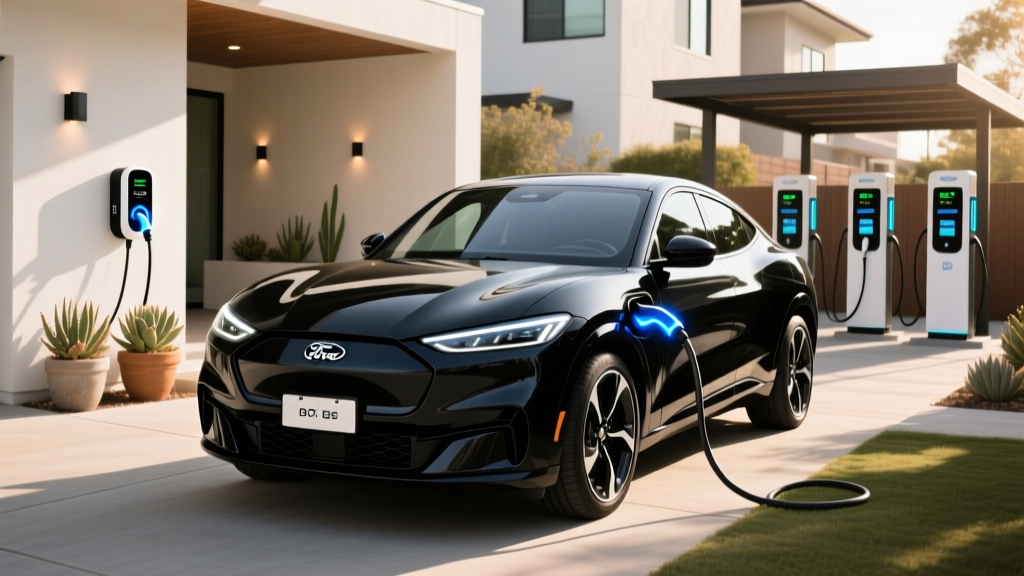
The Ford Mustang Mach-E remains one of the most popular electric crossovers on the road, but understanding its charging behavior across different scenarios is essential before you plug in for the first time. Whether you own the Standard Range (SR) model with its 70 kWh usable LFP battery or the Extended Range (ER) with 91 kWh of NMC chemistry, the Mach-E's charging speed varies significantly depending on the equipment you use. This guide breaks down every charging scenario for the 2025 Ford Mustang Mach-E — from a standard wall outlet to a 350 kW DC fast charger — with exact numbers, real-world expectations, and the home installation costs you will actually face.
Ford Mustang Mach-E Battery and Charging Specs at a Glance
Before calculating charge times, you need to know what is inside the vehicle. The 2025 Mach-E lineup uses two distinct battery packs, and each responds differently to charging power.
| Specification | Standard Range (LFP) | Extended Range (NMC) |
|---|---|---|
| Usable Battery Capacity | 70 kWh | 91 kWh |
| Chemistry | Lithium Iron Phosphate (LFP) | Nickel Manganese Cobalt (NMC) |
| EPA Range | 250 miles | 320 miles (RWD) / 290 miles (AWD) |
| Max DC Fast Charge Rate | 115 kW (peak) | 150 kW (peak) |
| DC 10–80% Time (est.) | ~38 minutes | ~36 minutes |
| Onboard AC Charger | 10.5 kW (48A at 240V) | 10.5 kW (48A at 240V) |
| Native Connector (2025) | CCS1 | CCS1 |
| NACS / Supercharger Access | Yes, with Ford-provided adapter | Yes, with Ford-provided adapter |
| Battery/Powertrain Warranty | 8 years / 100,000 miles | 8 years / 100,000 miles |
Charging Levels Explained: How Fast Will Each Level Add Range?
The single most important distinction in EV charging is between kW (kilowatts), which measures the rate of power delivery, and kWh (kilowatt-hours), which measures total energy stored. Think of kW as the width of a hose and kWh as the size of the bucket. A wider hose (higher kW) fills the bucket faster, but the bucket's size (kWh) determines how far you can drive.
Here is how each charging level translates to actual miles added per hour for the Mach-E:
| Charging Level | Voltage / Amperage | Power (kW) | Miles of Range per Hour | Best Use Case |
|---|---|---|---|---|
| Level 1 (Standard Outlet) | 120V / 12A | ~1.4 kW | ~3–4 miles/hr | Overnight trickle, emergency top-off |
| Level 2 (Home / Workplace) | 240V / 48A | 10.5 kW (vehicle max) | ~28–32 miles/hr | Daily home charging, full overnight refill |
| DC Fast Charging | 400V DC | Up to 150 kW (ER) | ~150+ miles in 10 min (peak) | Road trips, rapid top-ups |
Level 1 reality check: Plugging into a standard 120V household outlet will add roughly 3 to 4 miles of range per hour. Fully recharging the Extended Range battery from 10% would take approximately 65 hours — making Level 1 practical only as a backup or for very low-mileage drivers who travel under 30 miles per day.
Level 2 is the daily driver: The Mach-E's onboard charger accepts up to 10.5 kW on AC power. With a properly installed 48-amp Level 2 home charger on a 240V circuit, you can add roughly 30 miles of range per hour. A full 10–100% charge on the ER takes about 9.5 hours — perfect for overnight charging on a time-of-use electricity plan.
DC fast charging and the charge curve: The Mach-E ER peaks at 150 kW, but that rate is not sustained. Like all EVs, charging speed tapers significantly as the battery fills. You might see 150 kW between 10–30% state of charge, dropping to roughly 100 kW by 50%, and falling below 50 kW past 80%. This is why manufacturers quote 10–80% times rather than 0–100%. Pushing past 80% at a DC fast charger is both slow and hard on the battery — save the final 20% for Level 2 at home.
Home Charger Installation: Electrical Requirements and Costs
Installing a Level 2 home charger is the single most impactful upgrade for EV ownership. Here is exactly what the Mach-E needs and what it will cost.
Electrical Requirements for the Mach-E
To unlock the Mach-E's full 10.5 kW AC charging capability, you need a 240V circuit rated at 60 amps (the National Electrical Code requires circuits to be rated at 125% of the continuous load, so a 48A charger requires a 60A breaker). If your electrical panel has the capacity, this is a straightforward installation. If it does not, you face a panel upgrade.
Many homes built before 2000 have 100A or 150A main service panels. Adding a 60A EV circuit to an already loaded panel may require upgrading to a 200A service — a significant expense. Newer homes with 200A panels usually have sufficient headroom.
Home Charger Installation Cost Breakdown
| Cost Component | Low Estimate | High Estimate | Notes |
|---|---|---|---|
| Level 2 Charger (Hardware) | $350 | $700 | 40A–48A smart chargers; Wi-Fi enabled |
| Electrician Labor | $400 | $1,200 | Varies by run length, conduit, wall material |
| Electrical Permit | $50 | $200 | Required in most jurisdictions |
| Panel Upgrade (if needed) | $1,500 | $3,500 | 100A→200A service upgrade; not always required |
| Total (no panel upgrade) | $800 | $2,100 | Typical scenario for newer homes |
| Total (with panel upgrade) | $2,300 | $5,600 | Older homes with limited panel capacity |
Always hire a licensed electrician and pull a permit. Unpermitted electrical work can void your homeowner's insurance and create fire hazards. Many utilities offer rebates of $250–$500 for Level 2 charger installation — check with your local provider before scheduling work.
Safety and Code Considerations
- Dedicated circuit: Your Level 2 charger must be on its own dedicated circuit — never shared with other appliances.
- GFCI protection: The 2023 NEC requires GFCI protection for EV charging outlets. Hardwired installations may have different requirements; your electrician will ensure compliance.
- Outdoor rating: If your charger is installed outdoors or in an unsealed garage, it must carry a NEMA 4 (weatherproof) rating.
- Cable management: Choose a charger with at least a 20-foot cable to reach your Mach-E's charge port (located on the driver-side front fender) regardless of parking orientation.
Connector Compatibility: CCS1, NACS, and the Tesla Supercharger Network
The 2025 Mach-E ships with a CCS1 (Combined Charging System) port. However, Ford now provides a NACS (North American Charging Standard) adapter that enables access to Tesla Supercharger stations — a major advantage given the Supercharger network's superior reliability and coverage.
| Connector Type | Network Examples | Mach-E Compatibility | Max Charge Rate |
|---|---|---|---|
| CCS1 (native) | Electrify America, EVgo, ChargePoint DC | Native — no adapter | 150 kW (ER) |
| NACS / Tesla Supercharger | Tesla Supercharger network | Yes — Ford-provided NACS adapter required | 150 kW (V3 Superchargers cap at ~150 kW for non-Tesla) |
| CHAdeMO | Limited legacy stations | Not compatible — no adapter available | N/A |
| J1772 (Level 2 AC) | Public Level 2, home chargers | Native — CCS1 port accepts J1772 for AC | 10.5 kW |
Practical advice: For road trips, the NACS adapter opens up roughly 25,000+ Tesla Supercharger stalls nationwide. Tesla V3 Superchargers are rated at 250 kW, but the Mach-E's 150 kW peak means you will not exceed that regardless. For daily home charging, any J1772 or hardwired Level 2 charger works natively.
Source: Ford EV Charging for adapter details and network compatibility.
Cost to Charge: Mach-E vs. Gas Per Mile
Electricity prices vary widely by region and time of day, but the Mach-E's efficiency (roughly 3.0–3.4 miles per kWh) makes it competitive with or cheaper than a gas-powered crossover in most scenarios.
| Scenario | Rate ($/kWh) | Cost for 91 kWh (Full ER Battery) | Cost per Mile (320-mi range) |
|---|---|---|---|
| Home Off-Peak (national avg) | $0.10 | $9.10 | $0.028/mile |
| Home Peak / Standard Rate | $0.16 | $14.56 | $0.046/mile |
| Public Level 2 (ChargePoint, etc.) | $0.25 | $22.75 | $0.071/mile |
| DC Fast Charging (Electrify America) | $0.40 | $36.40 | $0.114/mile |
| Tesla Supercharger (avg) | $0.30 | $27.30 | $0.085/mile |
| Gas baseline: 25 MPG combined at $3.50/gal = $0.140/mile | |||
The bottom line: Charging at home on off-peak rates costs roughly 80% less per mile than fueling a comparable gas SUV. Even DC fast charging on the road is competitive with gas. The savings compound quickly — a driver covering 15,000 miles per year could save $1,200–$1,700 annually by charging primarily at home versus buying gas.
To maximize savings, enroll in your utility's time-of-use (TOU) plan and schedule charging for overnight hours (typically 11 PM – 6 AM) when rates drop to their lowest tier.
Recommended Home Chargers for the Mustang Mach-E
Not all Level 2 chargers are equal. The Mach-E's 48A onboard charger means you want a unit that can deliver at least that much power. Here are three proven options across different price points:
Ford Connected Charge Station
- Power Output: 48A / 11.5 kW (at 240V)
- Connector: J1772 (native CCS1 AC compatible)
- Cable Length: 25 feet
- Smart Features: Wi-Fi, FordPass app integration, scheduled charging, energy tracking
- Indoor/Outdoor: NEMA 4 rated (outdoor safe)
- Price: ~$600 (often included or discounted with new Mach-E purchase)
Best for: Mach-E owners who want seamless FordPass integration and guaranteed compatibility.
ChargePoint Home Flex
- Power Output: Configurable 16A–50A / up to 12 kW (at 240V)
- Connector: J1772
- Cable Length: 23 feet
- Smart Features: Wi-Fi, ChargePoint app, Alexa integration, TOU scheduling, circuit-sharing for two units
- Indoor/Outdoor: NEMA 4 rated
- Price: ~$550–$700
Best for: Flexibility — adjustable amperage lets you match your circuit capacity, and the circuit-sharing feature allows two chargers on one 60A breaker.
Emporia Vue Level 2 EV Charger
- Power Output: 48A / 11.5 kW (at 240V)
- Connector: J1772
- Cable Length: 24 feet
- Smart Features: Wi-Fi, Emporia app, solar integration, real-time energy monitoring, load management
- Indoor/Outdoor: NEMA 4 rated
- Price: ~$350–$400
Best for: Budget-conscious buyers who still want 48A output and smart scheduling. Excellent value.
Regardless of which charger you choose, hardwiring is preferable to a plug-in NEMA 14-50 receptacle for reliability and code compliance in many jurisdictions. If you use a receptacle, ensure your electrician installs a high-quality industrial-grade outlet — cheap residential-grade 14-50 outlets have been linked to overheating failures under sustained EV charging loads.
DC Fast Charging in Practice: Real-World Road Trip Expectations
On paper, the Mach-E ER's 150 kW peak DC rate sounds competitive. In practice, the charge curve means your average charging speed over a 10–80% session will be closer to 85–100 kW. Here is what that looks like at different charger types you will encounter on the road:
- Tesla V3 Supercharger (250 kW stall): Mach-E caps at 150 kW. Expect 10–80% in roughly 36–40 minutes using the NACS adapter. These stalls are reliable and widely available along major highways.
- Electrify America 150 kW stall: Matches the Mach-E ER's peak. Expect 10–80% in ~38 minutes. Reliability has improved but still lags Tesla — always have a backup station in your route plan.
- Electrify America 350 kW stall: The Mach-E cannot utilize the extra power. Charge times will be identical to the 150 kW stall.
- 50 kW legacy DC charger: Expect 10–80% in roughly 85 minutes. Avoid these on road trips unless no alternative exists.
Preconditioning matters: When you set a DC fast charger as your navigation destination in the Mach-E, the vehicle will precondition (warm) the battery to optimize charge acceptance. Skipping preconditioning — especially in cold weather — can reduce peak charge rates by 30–50% and add 10–15 minutes to your stop. Always navigate to your charger rather than just driving there.
Frequently Asked Questions
How much does it cost to install a home EV charger for the Mach-E?
Expect $800–$2,100 for a typical installation (hardware + electrician + permit) if your electrical panel has sufficient capacity. If a panel upgrade from 100A to 200A is needed, total costs rise to $2,300–$5,600. The Ford Connected Charge Station hardware runs about $600, and labor typically accounts for $400–$1,200 depending on the complexity of the wiring run from your panel to the garage.
How fast will each charging level add range to the Mach-E?
Level 1 (120V) adds roughly 3–4 miles per hour. Level 2 (240V, 48A) adds about 28–32 miles per hour, fully recharging the Extended Range battery overnight in ~9.5 hours. DC fast charging at 150 kW adds roughly 150 miles in the first 10 minutes at a low state of charge, but the rate tapers significantly above 50% SoC.
Which connector is compatible with my 2025 Mach-E?
The 2025 Mach-E uses a CCS1 port natively, which accepts both CCS1 DC and J1772 AC connectors. For Tesla Supercharger access, use the Ford-provided NACS adapter. CHAdeMO is not compatible and no adapter exists. For home Level 2 charging, any J1772 connector works without an adapter.
How much does charging the Mach-E cost per mile vs. gas?
At home off-peak rates (~$0.10/kWh), the Mach-E Extended Range costs roughly $0.028 per mile — about 80% cheaper than a 25 MPG gas SUV at $3.50/gallon ($0.14/mile). Even at public DC fast chargers ($0.30–$0.40/kWh), the per-mile cost of $0.085–$0.114 remains competitive with or cheaper than gasoline.
What electrical upgrades might I need for a home charger?
The Mach-E's 48A Level 2 charger requires a dedicated 60A, 240V circuit. If your home has a 200A service panel with available capacity, the upgrade is just a new breaker and wiring run. Homes with 100A or 150A panels, or panels already near capacity, may need a full service upgrade to 200A — costing $1,500–$3,500. A licensed electrician can perform a load calculation to determine if your panel is sufficient.
Does the Mach-E support V2L (vehicle-to-load) or bidirectional charging?
As of the 2025 model year, the Mach-E does not support V2L or vehicle-to-home (V2H) bidirectional charging. Ford has indicated interest in bidirectional capability for future models, but current Mach-E owners cannot use the vehicle as a backup power source.
Sources: U.S. EPA fueleconomy.gov, Ford Mustang Mach-E Specifications, IRS §30D Clean Vehicle Credit.