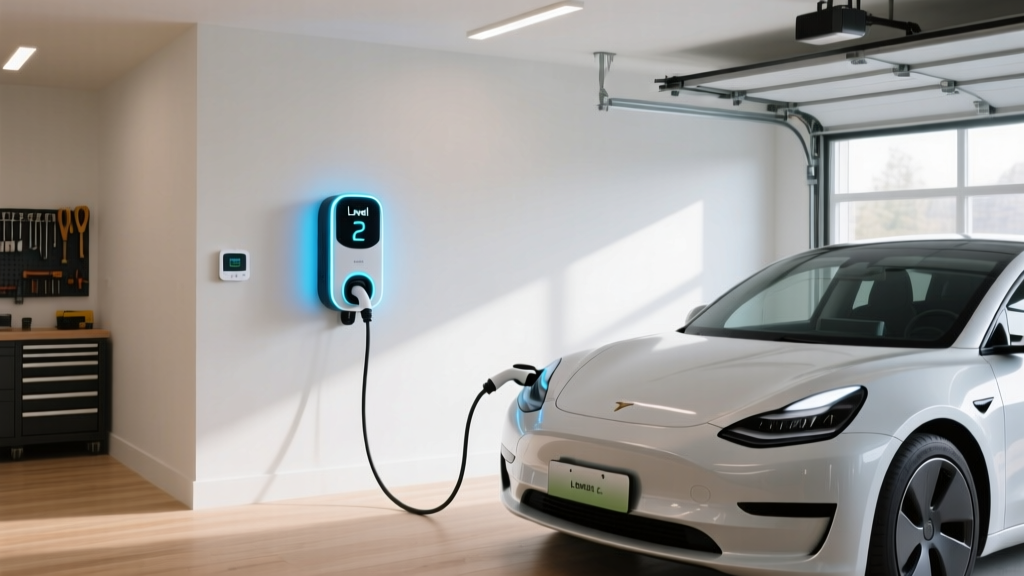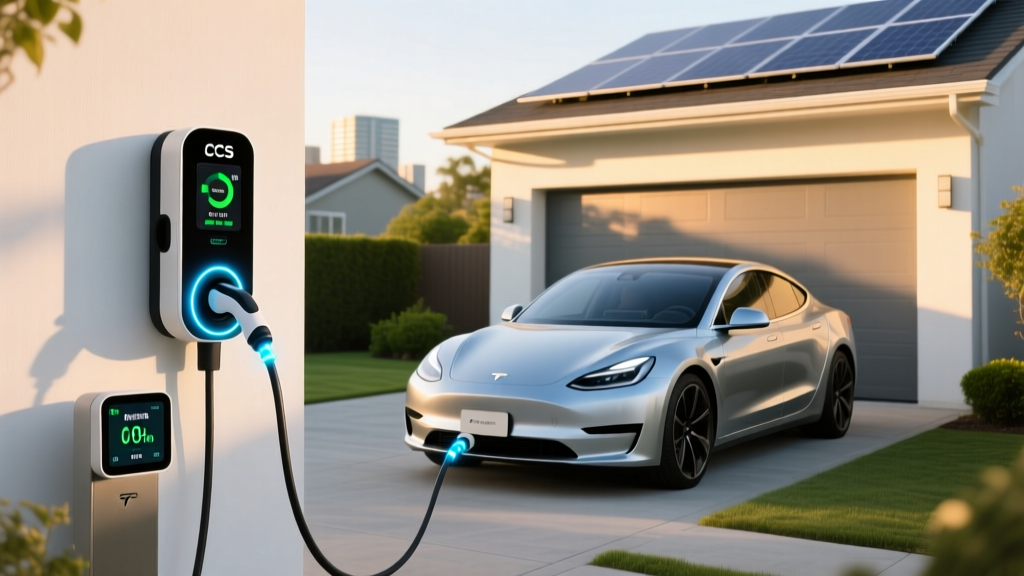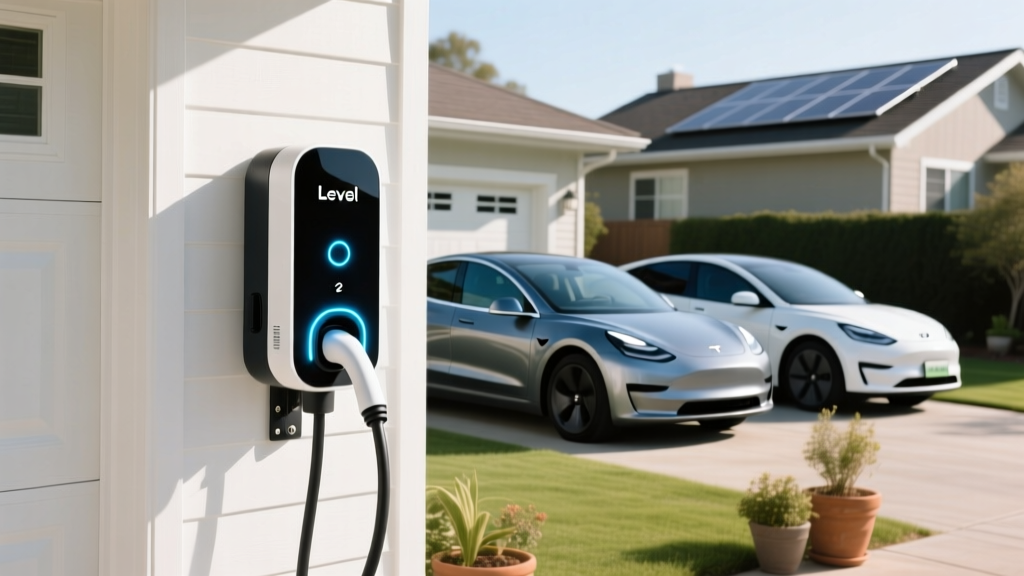
When Ford began offering a complimentary Level 2 home charger to buyers of new Mustang Mach-E and F-150 Lightning models, it sounded like a no-brainer: free hardware, plug it in, and wake up to a full battery. But as any EV owner quickly learns, the charger itself is only a fraction of the equation. Installation, electrical capacity, circuit requirements, and long-term smart features all determine whether that "free" charger actually delivers value — or whether a third-party unit better serves your daily driving.
This guide dissects the Ford-supplied Level 2 charger (the Ford Connected Charge Station and Mobile Charger), maps out real-world installation costs, compares it against top aftermarket alternatives, and gives you the exact numbers to decide what to hang on your garage wall.
The Ford Free Level 2 Charger: What You Actually Get
Ford has offered two primary home-charging solutions with new EV purchases, and the specifics vary by model year and promotional period:
- Ford Mobile Charger (standard inclusion): A dual-voltage cord that ships in the vehicle. On a standard 120V outlet (Level 1), it delivers roughly 1.4 kW — adding about 3–5 miles of range per hour. When plugged into a 240V NEMA 14-50 outlet, it can deliver up to 32 amps (approximately 7.7 kW), adding roughly 20–25 miles per hour depending on the vehicle.
- Ford Connected Charge Station (promotional/eligible buyers): A hardwired, Wi-Fi-enabled wall unit rated at 48 amps on a 60-amp dedicated circuit, delivering up to 11.5 kW. On a Mustang Mach-E Extended Range, that translates to roughly 30–34 miles of range per hour; on an F-150 Lightning Extended Range, about 25–28 miles per hour. This is the unit frequently offered at no additional hardware cost through Ford's home-charging promotions.
The Connected Charge Station is manufactured for Ford by a third party (historically Webasto/Enel X Way) and includes the FordPass app integration for scheduling, charge history, and off-peak optimization. It uses a J1772 connector natively, which is the standard for all non-Tesla EVs sold in North America through the 2024 model year, with the industry now transitioning to NACS.
Charging Levels Explained: Speeds, Power, and What They Mean
Before evaluating any charger, you need clarity on the three charging tiers. Power is measured in kilowatts (kW) — that's the rate of energy delivery. Energy is measured in kilowatt-hours (kWh) — that's what the battery stores. Confusing the two is the single most common mistake in EV ownership research.
| Level | Voltage / Amps | Max Power (kW) | Miles of Range Per Hour | Typical Use Case |
|---|---|---|---|---|
| Level 1 | 120V / 12A | ~1.4 kW | 3–5 mi/hr | Overnight trickle; PHEVs; low daily mileage |
| Level 2 | 240V / 16A–80A | 3.8–19.2 kW | 12–60 mi/hr | Home primary charging; workplace; destinations |
| DC Fast Charge | 400V–800V DC | 50–350 kW | 150–300+ mi in 20 min | Road trips; rapid top-ups; commercial fleets |
For a Mustang Mach-E Extended Range (91 kWh usable battery), Level 2 at 11.5 kW will charge from 10% to 80% in approximately 5.5–6 hours. For an F-150 Lightning Extended Range (131 kWh usable), that same 10–80% session takes roughly 9–10 hours at 11.5 kW. DC fast charging is a different story entirely — the Mach-E peaks at around 150 kW (10–80% in ~45 minutes under ideal conditions), while the Lightning Extended Range can accept up to 150–170 kW depending on model year, reaching 10–80% in roughly 40–50 minutes.
Installation Costs: What "Free" Really Costs
The hardware may be complimentary, but installing a Level 2 charger properly is not free — and the variance is enormous depending on your home's electrical infrastructure. Here's what actually goes into the job:
- Dedicated circuit: A 48-amp charger requires a 60-amp dedicated breaker per National Electrical Code (NEC) continuous-load rules (the circuit must be rated at 125% of the charger's maximum draw).
- Wire gauge: Typically 6 AWG copper for runs up to ~50 feet; 4 AWG for longer runs to reduce voltage drop.
- Conduit and routing: Surface-mounted EMT conduit in a garage is straightforward. Running through finished walls, attics, or crawl spaces adds labor.
- Permit and inspection: Most jurisdictions require an electrical permit ($50–$200) and a post-installation inspection.
- Panel capacity: Your main service panel must have enough spare amperage to accommodate the new 60A breaker. A 200A panel serving a modern all-electric home may already be near capacity.
| Cost Component | Simple Install (Garage, Panel Nearby) | Moderate Install (Long Run, Finished Walls) | Complex Install (Panel Upgrade Required) |
|---|---|---|---|
| Equipment (charger) | $0 (Ford promo) | $0 (Ford promo) | $0 (Ford promo) |
| Electrician labor (2–8 hrs) | $300–$600 | $600–$1,200 | $800–$1,500 |
| Wire, conduit, breaker | $100–$250 | $250–$500 | $300–$600 |
| Permit & inspection | $50–$150 | $50–$200 | $100–$250 |
| Panel upgrade (if needed) | $0 | $0 | $1,500–$4,000 |
| TOTAL ESTIMATE | $450–$1,000 | $900–$1,900 | $2,700–$6,350 |
Connector Compatibility: NACS, CCS, and What Fits Your Ford
The connector landscape has shifted dramatically. Here's where Ford EVs stand as of the 2025–2026 model years:
- 2021–2024 Mustang Mach-E and F-150 Lightning: These shipped with the CCS1 (Combined Charging System) port. For DC fast charging at Tesla Superchargers, Ford provides or authorizes a NACS adapter (Ford has offered this at no cost to eligible owners). At home on Level 2, these vehicles use the J1772 connector — which is what the Ford Connected Charge Station provides.
- 2025+ Ford EVs: Ford has transitioned to the NACS (North American Charging Standard) port natively, matching Tesla's connector. This means the J1772-equipped Ford Connected Charge Station will require a J1772-to-NACS adapter for home use on newer vehicles, or you'll want a NACS-native charger.
| Connector | Level 2 Home Use | DC Fast Charging | Ford Vehicles Affected |
|---|---|---|---|
| J1772 | Standard on most Level 2 chargers | N/A (Level 2 only) | 2021–2024 Mach-E, Lightning (native port) |
| CCS1 | Uses J1772 upper portion | Electrify America, EVgo, non-Tesla networks | 2021–2024 models (native DC port) |
| NACS | Native on NACS chargers; adapter for J1772 units | Tesla Supercharger network + growing third-party | 2025+ Ford EVs (native); 2021–2024 via adapter |
| CHAdeMO | N/A | Legacy standard; nearly discontinued | Not used on Ford EVs |
If you own a 2025+ Ford with a native NACS port and are considering the Ford Connected Charge Station (which ships with a J1772 plug), you'll need a J1772-to-NACS adapter for home Level 2 charging. These adapters typically cost $80–$150 from reputable brands like Lectron or ATESS. Alternatively, buy a NACS-native Level 2 charger from the start and skip the adapter.
Cost to Charge: Home vs. Public vs. Gas
One of the strongest arguments for home Level 2 charging is cost. Here's how it breaks down for a Mustang Mach-E Extended Range (91 kWh usable, EPA-estimated 312 miles range — though expect ~260–280 miles in real-world highway driving, and 20–30% less in freezing temperatures):
| Scenario | Rate | Cost for Full Charge (91 kWh) | Cost Per Mile |
|---|---|---|---|
| Home (off-peak utility rate) | $0.08–$0.14/kWh | $7.28–$12.74 | $0.02–$0.04/mi |
| Home (standard rate, no TOU) | $0.15–$0.22/kWh | $13.65–$20.02 | $0.04–$0.06/mi |
| Public Level 2 (ChargePoint, etc.) | $0.25–$0.49/kWh | $22.75–$44.59 | $0.07–$0.14/mi |
| DC Fast Charge (Electrify America) | $0.35–$0.56/kWh | $31.85–$50.96 | $0.10–$0.16/mi |
| Gasoline equivalent (25 MPG, $3.50/gal) | $3.50/gallon | $43.68 (for 312 mi) | $0.14/mi |
At home off-peak rates, charging a Mach-E costs roughly 70–85% less per mile than fueling a comparable gas vehicle. Even at standard residential rates without time-of-use optimization, home charging is 55–70% cheaper. The economics only fail when you rely exclusively on public DC fast charging — which can approach or exceed gas costs per mile.
For the F-150 Lightning Extended Range (131 kWh usable, EPA-estimated 320 miles), multiply those full-charge costs by roughly 1.44x. A home off-peak full charge runs $10.48–$18.34 — still dramatically cheaper than the $44.80 you'd spend on gas at 25 MPG.
Ford Connected Charge Station vs. Third-Party Alternatives
The Ford unit is competent, but is it the best charger for your garage? Here's a head-to-head look at popular 48-amp Level 2 units available in 2026:
Ford Connected Charge Station
- Power: 11.5 kW (48A / 240V)
- Connector: J1772 (adapter needed for NACS vehicles)
- Cable length: 25 ft
- Smart features: FordPass app, scheduled charging, charge status
- Wi-Fi: Yes
- Outdoor rated: Yes (NEMA 4)
- Hardwired or plug: Hardwired only
- Price: ~$0 (promo) / ~$500–$600 retail
- EnergyStar: Yes
ChargePoint Home Flex (NACS)
- Power: Up to 12 kW (50A / 240V) — adjustable 16A–50A
- Connector: NACS native (J1772 version also available)
- Cable length: 23 ft
- Smart features: ChargePoint app, Alexa, scheduling, usage stats
- Wi-Fi: Yes
- Outdoor rated: Yes (NEMA 4)
- Hardwired or plug: Both (NEMA 14-50 or 6-50 plug options)
- Price: ~$599–$699
- EnergyStar: Yes
Tesla Wall Connector (J1772 version)
- Power: 11.5 kW (48A / 240V)
- Connector: J1772 (also available in NACS native)
- Cable length: 24 ft
- Smart features: Tesla app integration, load sharing with multiple units
- Wi-Fi: Yes (OTA updates)
- Outdoor rated: Yes
- Hardwired or plug: Hardwired only
- Price: ~$450–$550
- EnergyStar: Yes
Emporia Vue Level 2 Charger
- Power: 11.5 kW (48A / 240V)
- Connector: J1772 (NACS adapter compatible)
- Cable length: 24 ft
- Smart features: Emporia app, solar integration, real-time energy monitoring
- Wi-Fi: Yes
- Outdoor rated: Yes
- Hardwired or plug: Both
- Price: ~$399–$449
- EnergyStar: Yes
Our assessment: If your Ford EV has a J1772/CCS port (2021–2024 models) and you received the Connected Charge Station for free, it's a perfectly capable 48A unit — install it and use it. But if you own a 2025+ NACS-equipped Ford, or you value plug-in flexibility (rather than hardwired-only), or you want cross-brand app ecosystems, the ChargePoint Home Flex or Emporia Vue offers more versatility for under $700. The Tesla Wall Connector at its J1772 version is a strong budget pick with excellent build quality.
Safety, Code, and What Your Electrician Will Check
A Level 2 charger draws significant continuous current — hours at a time, every day. This isn't a lamp or a dryer; the NEC treats EV charging as a continuous load, which triggers specific requirements:
- 125% circuit rule: A 48A charger must be on a breaker rated for at least 60A (48 × 1.25 = 60). Never install a 48A charger on a 50A breaker — it will trip and is a fire risk.
- GFCI protection: The 2020 NEC and later require GFCI protection for EV charging outlets in garages. Hardwired units may have built-in ground-fault protection, but confirm with your electrician and local code.
- Outdoor installation: If your charger is outside, it must carry a NEMA 4 (or higher) weather-resistance rating. All four units listed above qualify.
- Cable management: NEC 511.8 and 625.17 address cable strain relief and routing. The cable should not drape across walkways or where vehicles can run over it.
- Load calculation: Your electrician will perform a NEC Article 220 load calculation to verify your panel can handle the new circuit without overloading the service. If you're already running electric heat, an electric oven, and an electric dryer on a 150A panel, a 60A EV circuit may push you over.
Do not attempt a DIY installation unless you are a licensed electrician. Insurance companies have denied claims related to unpermitted EV charger installations, and improper wiring at these amperages is a genuine fire hazard.
Frequently Asked Questions
How much does it cost to install a home EV charger?
With the Ford free Level 2 charger covering hardware, expect $450–$1,000 for a simple garage install near the panel, $900–$1,900 for a longer wire run through finished walls, and $2,700–$6,350 if your home needs a panel upgrade from 100A/150A to 200A service. Get at least two quotes from licensed electricians and confirm the estimate includes permit and inspection.
How fast will each charging level add range?
Level 1 (120V): 3–5 miles per hour. Level 2 at 32A/7.7 kW (Ford Mobile Charger on 240V): 20–25 miles per hour. Level 2 at 48A/11.5 kW (Ford Connected Charge Station): 25–34 miles per hour depending on the vehicle. DC fast charging at 150 kW: can add 150–200 miles in roughly 20 minutes, though the charge curve tapers significantly above 80% SoC.
Which connector and charger is compatible with my Ford EV?
For 2021–2024 Mustang Mach-E and F-150 Lightning: your vehicle has a CCS1/J1772 port, so any J1772 Level 2 charger works natively. For DC fast charging at Tesla Superchargers, you need Ford's authorized NACS adapter. For 2025+ Ford EVs with native NACS ports: you need either a NACS-native Level 2 charger or a J1772-to-NACS adapter for existing J1772 equipment.
How much does charging cost per mile vs. gas?
Home charging at off-peak rates ($0.08–$0.14/kWh) costs $0.02–$0.04 per mile for a Mach-E — roughly 70–85% cheaper than a 25 MPG gas vehicle at $3.50/gallon ($0.14/mile). Standard residential rates bring it to $0.04–$0.06/mile. Public DC fast charging ($0.35–$0.56/kWh) costs $0.10–$0.16/mile, which approaches or exceeds gas costs. The economics strongly favor home charging.
What electrical upgrades might I need?
The most common upgrade is a panel replacement from 100A or 150A to 200A service ($1,500–$4,000). You may also need a new breaker slot if your panel is full — some electricians solve this with a tandem breaker or sub-panel. Older homes with aluminum wiring, knob-and-tube, or ungrounded circuits will need partial rewiring. A licensed electrician's load calculation will identify these issues before work begins.
Is the Ford Connected Charge Station hardwired only?
Yes. The Ford Connected Charge Station must be hardwired by a licensed electrician — it does not come with a NEMA 14-50 plug. If you want plug-in flexibility (useful for renters or if you want to take the charger when you move), consider the ChargePoint Home Flex or Emporia Vue, both of which offer plug-in or hardwired options.
Can I use the IRS §30D credit for home charger installation?
The federal Alternative Fuel Vehicle Refueling Property Credit (IRC §30C, not §30D — that's the vehicle credit) covers up to 30% of home charger equipment and installation costs, capped at $1,000. However, eligibility depends on your property being in a qualifying census tract. Consult a tax professional and reference IRS.gov for current-year rules, as these requirements have been updated multiple times since 2023.
The Ford free Level 2 charger is a genuine value if you're buying a new Mach-E or Lightning and your home's electrical system is ready for it. For many owners, the real cost isn't the hardware — it's the circuit, the wire run, and potentially the panel upgrade. Get a professional assessment, weigh the Ford unit against the alternatives, and choose the setup that matches both your vehicle's connector and your home's capacity.