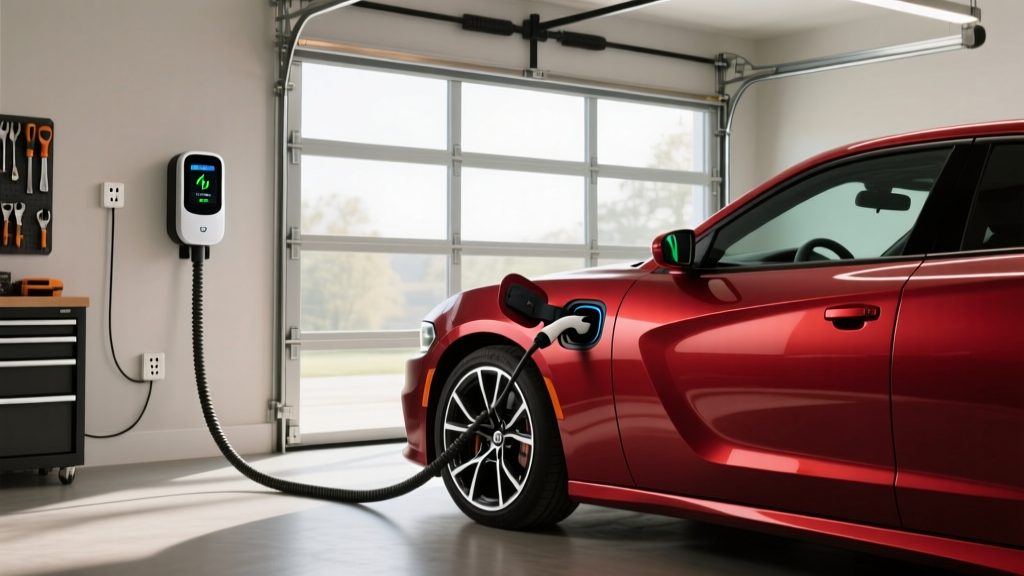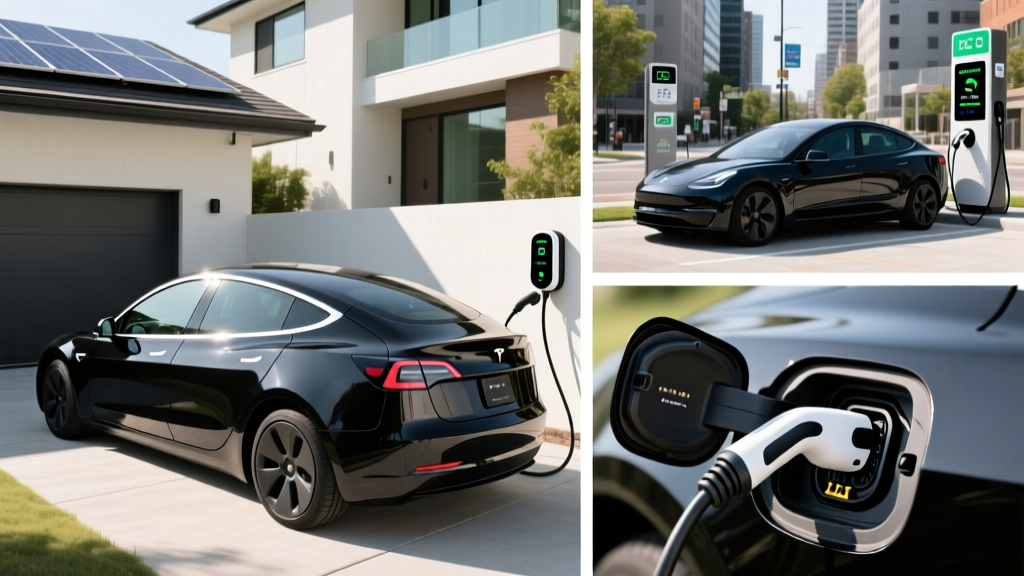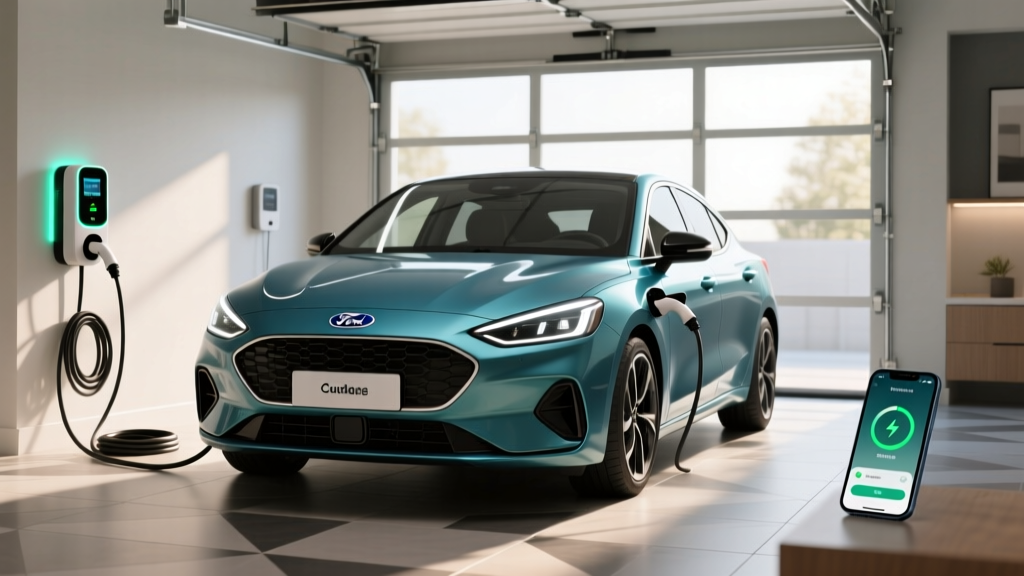
The Ford Focus Electric was Ford's first mass-market battery-electric vehicle, sold from 2012 through 2018. While no longer in production, thousands remain on the road as budget-friendly used EVs. If you're researching the Ford Focus EV range — whether you own one, are considering buying used, or are using it as a baseline for understanding modern EV charging — this guide covers the real-world numbers, charging logistics, and what it takes to set up home charging for an older CHAdeMO-equipped EV in 2026.
Ford Focus EV Range: EPA Sticker vs. Real World
The Focus Electric came in two distinct generations with very different battery capacities, and the EPA range reflects that split:
- 2012–2016 models: 23 kWh usable battery (from a 23 kWh gross pack), EPA-rated at 76 miles.
- 2017–2018 models: 33.5 kWh usable battery, EPA-rated at 115 miles.
Efficiency was competitive for its era: the later 33.5 kWh model achieved roughly 107 MPGe combined (about 31 kWh/100 mi). That's less efficient than a modern Hyundai Ioniq 6 (140 MPGe) but comparable to a first-gen Nissan Leaf.
Charging Levels Explained: kW, Speeds, and Miles Per Hour
Understanding charging starts with the distinction between kW (kilowatts), which measures the rate of power delivery, and kWh (kilowatt-hours), which measures total energy stored. Think of kW as how fast water flows from a hose, and kWh as the size of the bucket. The Focus Electric's battery is measured in kWh; your charger's speed is measured in kW.
| Level | Voltage / Power | Miles of Range Added Per Hour | Typical Use Case |
|---|---|---|---|
| Level 1 | 120V / 1.4 kW | 3–5 mi/hr | Overnight trickle; emergency top-ups |
| Level 2 | 240V / 6.6 kW (Focus EV max) | 20–25 mi/hr | Home daily charging; workplace |
| DC Fast | 50 kW (CHAdeMO) | ~150+ mi/hr (at peak) | Road trips; rapid top-ups |
The Focus Electric's onboard charger is limited to 6.6 kW on Level 2, meaning even if you plug into a 48-amp (11.5 kW) home charger, the car will only draw 6.6 kW. For DC fast charging, the 2017–2018 models support up to 50 kW via CHAdeMO, enabling a roughly 20–80% charge in about 35–45 minutes. The earlier 23 kWh models lacked DC fast charging capability entirely on many trims — a critical detail for used buyers.
Home Charger Installation: Electrical Requirements & Costs
Setting up Level 2 home charging is the single biggest ownership upgrade for any EV, and it's especially impactful for a short-range car like the Focus Electric, where daily replenishment matters.
Electrical Requirements
A Level 2 charger requires a 240-volt dedicated circuit. For a 32-amp charger (the sweet spot for older EVs like the Focus), you need a 40-amp breaker (NEC code requires circuits rated at 125% of continuous load). A 48-amp charger requires a 60-amp breaker.
- Panel capacity: Most modern homes with 200-amp service have room for a 40–60 amp breaker. Older homes with 100-amp service may need a panel upgrade ($1,500–$3,500) or a load-management device.
- Wiring: 6 AWG copper for 40A; 4 AWG for 60A, run in conduit where required.
- Permit: Most jurisdictions require an electrical permit ($50–$200) and a final inspection.
Installation Cost Breakdown
| Item | Simple Install (panel nearby) | Complex Install (long run / panel upgrade) |
|---|---|---|
| Level 2 Charger (hardware) | $300–$600 | $400–$700 |
| Electrician labor | $300–$600 | $800–$2,000 |
| Permit & inspection | $50–$150 | $100–$250 |
| Panel upgrade (if needed) | $0 | $1,500–$3,500 |
| TOTAL | $650–$1,350 | $2,800–$6,450 |
Connector Compatibility: CHAdeMO in a NACS World
The Focus Electric uses two connector standards that require attention in 2026's charging landscape:
- Level 2 (J1772): Universal across all non-Tesla EVs. Every public Level 2 station and home charger with a J1772 plug will work directly.
- DC Fast (CHAdeMO): This is the challenge. The industry has standardized on CCS1 (and increasingly NACS/Tesla) for DC fast charging. CHAdeMO infrastructure is declining as networks prioritize CCS and NACS deployments.
| Connector | Used By | Network Availability (2026) |
|---|---|---|
| J1772 (Level 2) | Focus Electric, all non-Tesla EVs | Universal — ChargePoint, EVgo, public stations |
| CHAdeMO (DCFC) | Focus Electric, older Nissan Leaf, Mitsubishi | Declining — Electrify America removed CHAdeMO from most new stations |
| CCS1 (DCFC) | Most 2019+ EVs (Ford, GM, VW, Hyundai, BMW) | Widespread — dominant standard |
| NACS (DCFC/Level 2) | Tesla; Ford/GM/Rivian (2025+ via adapter or native) | Growing rapidly — Tesla Supercharger network open to NACS-equipped EVs |
For Focus Electric owners: Your Level 2 charging at home and public locations will work fine with J1772. For DC fast charging, you'll need to locate CHAdeMO-equipped stations — PlugShare lets you filter by connector type. There is no reliable CHAdeMO-to-CCS adapter on the consumer market, so plan road trips around CHAdeMO availability. This is a significant practical limitation of the Focus Electric in 2026.
Cost to Charge: Per-Mile Economics vs. Gasoline
The Focus Electric's small battery makes it cheap to fill — one of its strongest ownership arguments. Here's how the math works across charging scenarios:
| Scenario | Rate ($/kWh) | Full Charge Cost | Cost Per Mile (115 mi EPA) |
|---|---|---|---|
| Home off-peak (utility TOU rate) | $0.09 | $3.02 | $0.026 |
| Home average (national avg) | $0.16 | $5.36 | $0.047 |
| Public Level 2 (network pricing) | $0.25–$0.40 | $8.38–$13.40 | $0.073–$0.117 |
| DC Fast Charging (CHAdeMO, public) | $0.35–$0.55 | $11.73–$18.43 | $0.102–$0.160 |
Gas comparison: A comparable 2018 Ford Focus gasoline model gets roughly 30 MPG combined. At $3.40/gallon (2026 national average), that's $0.113 per mile. Home-charged Focus Electric owners pay 60–75% less per mile. Even public DC fast charging roughly matches gas costs — the savings come from consistent home charging.
Recommended Level 2 Chargers for the Focus Electric
Since the Focus Electric caps at 6.6 kW, you don't need the most powerful charger available — but investing in a 48-amp unit future-proofs for your next EV. Here are three strong options across budgets:
Emporia Level 2 Smart Charger
- Power: 48A / 11.5 kW (240V)
- Connector: J1772 (NACS adapter available)
- Cable: 24 ft
- Smart features: Wi-Fi, app scheduling, energy monitoring, solar integration
- Price: ~$399
- Best for: Budget-conscious buyers who want smart scheduling for off-peak TOU rates
ChargePoint Home Flex
- Power: Up to 50A / 12 kW (adjustable via dip switch, 16A–50A)
- Connector: J1772 (NACS version available)
- Cable: 23 ft
- Smart features: Wi-Fi, app, Alexa, detailed session tracking
- Price: ~$599
- Best for: Flexibility — adjustable amperage works for any panel capacity
Grizzl-E Smart
- Power: 40A / 9.6 kW
- Connector: J1772
- Cable: 24 ft
- Smart features: Wi-Fi, OCPP-compatible, load sharing
- Price: ~$449
- Best for: Cold-climate durability (rated to -40°F), simple rugged build
Any of these chargers will fully replenish the Focus Electric's 33.5 kWh battery in approximately 5–5.5 hours at 6.6 kW (the car's onboard limit). That's overnight charging at its best — plug in at 11 PM, wake up to a full battery every morning.
Safety, Code, and Installation Best Practices
EV charging draws sustained high current for hours — this is not like plugging in a dryer that cycles on and off. NEC Article 625 governs EV charging equipment, and your installation must comply:
- Dedicated circuit: Your EV charger must have its own breaker — no sharing with other outlets or appliances.
- GFCI protection: NEC 2020+ requires GFCI protection for all 240V receptacles used for EV charging (625.54). Hardwired installations may have different requirements depending on local code — confirm with your electrician.
- Outdoor rating: If installing outdoors, the charger must carry a NEMA 4 (weatherproof) rating. All three chargers above meet this standard.
- Cable management: A retractable cord organizer prevents tripping hazards and protects the cable from UV and abrasion.
- Receptacle vs. hardwired: NEMA 14-50 receptacles offer portability but require GFCI breakers (~$100+ extra). Hardwired units eliminate the GFCI requirement in many jurisdictions and provide a cleaner install.
Frequently Asked Questions
How much does it cost to install a home EV charger for a Ford Focus Electric?
A straightforward install with a nearby 240V panel runs $650–$1,350 total (charger + electrician + permit). Complex installs requiring long wire runs or a panel upgrade can reach $2,800–$6,450. Get three quotes from licensed electricians — prices vary significantly by region.
How fast will each charging level add range to the Focus Electric?
Level 1 (120V standard outlet) adds about 3–5 miles per hour. Level 2 at the car's 6.6 kW maximum adds roughly 20–25 miles per hour. DC fast charging at 50 kW CHAdeMO can add about 80 miles in 30 minutes (20–80%), though speed tapers significantly above 80% SoC.
Which connector and charger is compatible with my Focus Electric?
For Level 2, you need a J1772 connector — this is universal for all home and public Level 2 stations. For DC fast charging, the Focus Electric uses CHAdeMO, which is increasingly rare at public stations. There is no consumer-available adapter from CHAdeMO to CCS or NACS.
How much does charging cost per mile vs. gas for the Focus Electric?
Home charging at national average electricity rates ($0.16/kWh) costs roughly $0.047 per mile. A gasoline Focus at 30 MPG and $3.40/gallon costs $0.113 per mile. That's a 58% savings per mile with home charging, or roughly $660 saved per year at 10,000 miles driven.
What electrical upgrades might I need for a Level 2 charger?
If your home has a 200-amp panel with available breaker slots, you likely need no upgrade. Homes with 100-amp service (common in pre-1990 construction) may require a panel upgrade ($1,500–$3,500), or you can opt for a lower-amperage circuit (20A breaker / 16A continuous) that still provides adequate overnight charging for the Focus Electric's small battery. A licensed electrician should perform a load calculation before you commit to equipment.