What the Ford F-150 Lobo Supercharger Means for Your Charging Setup
The Ford F-150 Lobo is Ford's street-performance truck, a lowered, sport-tuned variant of the F-150 Lightning platform aimed at buyers who want the instant torque of a dual-motor electric pickup without the off-road pretensions. Because it shares the Lightning's core architecture — including a 131 kWh usable battery pack (extended-range) or a 98 kWh pack (standard-range) — understanding how to charge the Lobo on a Supercharger network, at home, or at third-party DC fast stations is essential before you sign the paperwork.
This guide breaks down every charging scenario a F-150 Lobo owner will face in 2026: Tesla Supercharger access via the native NACS port, home Level 2 installation requirements and real costs, and how the per-mile charging cost stacks up against a comparable gas truck. We'll also cover the electrical upgrades older homes often need and which specific chargers we recommend.
Charging Levels Explained: How Fast Each Adds Range
EV charging happens at three distinct levels. The key metric is kW (kilowatts), which measures the rate of power delivery — think of it as the speed of fuel flowing into your tank. The battery capacity is measured in kWh (kilowatt-hours), which is the total energy stored. Never confuse the two: kW is how fast you charge, kWh is how much the battery holds.
| Level | Voltage / Amps | Max Power (kW) | Miles of Range Added per Hour | Best For |
|---|---|---|---|---|
| Level 1 (120V household outlet) | 120V / 12A | ~1.4 kW | ~2–3 mi/hr | Overnight trickle, emergency top-off |
| Level 2 (240V home / public AC) | 240V / 40–80A | 9.6–19.2 kW | ~14–28 mi/hr | Daily home charging, workplace |
| DC Fast Charging (Supercharger / EA / EVgo) | 400–800V DC | 150–250+ kW | ~150–200+ mi in 20 min | Road trips, rapid top-ups |
For a F-150 Lobo with the extended-range 131 kWh pack and an EPA-estimated 320 miles of range, Level 1 charging is impractical as a daily strategy — it would take well over 4 days to fully recharge a depleted pack. Level 2 at home is the workhorse, and DC fast charging on Superchargers handles road trips.
Ford F-150 Lobo Supercharger Speeds: Real-World DC Fast Charging
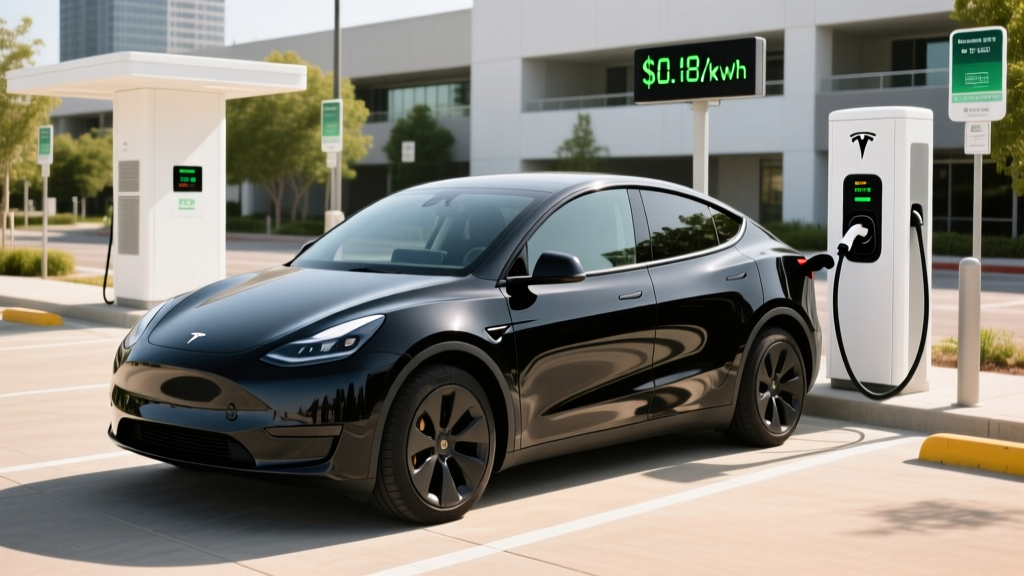
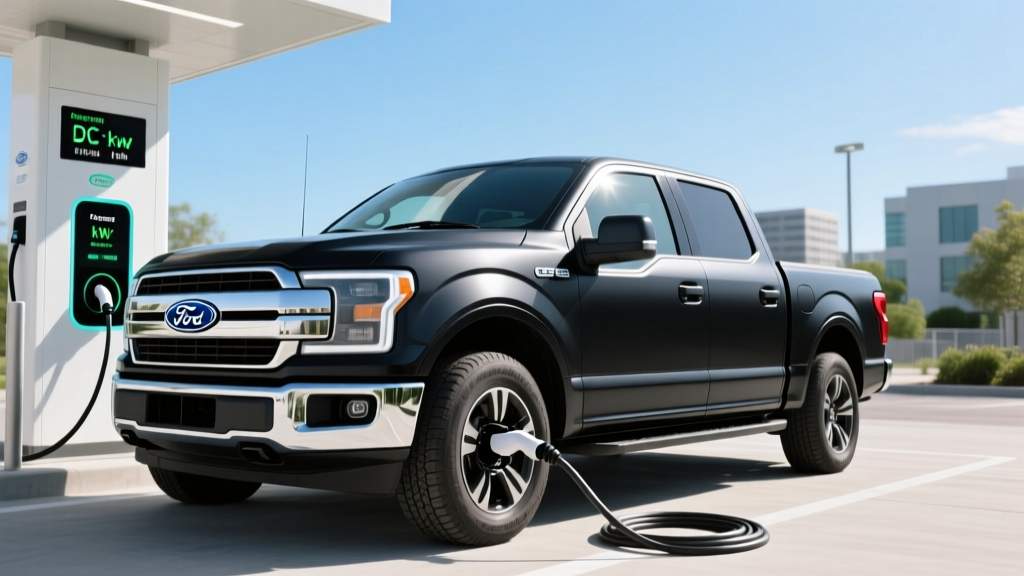
The F-150 Lobo (extended-range) supports DC fast charging at a peak rate of approximately 150 kW via its native NACS connector at Tesla Supercharger V3 and V4 stalls. Ford rates the 10%–80% charge time at roughly 41 minutes under ideal conditions. Here's what that looks like in practice:
| Charging Scenario | Station Type | Peak kW | 10%–80% Time | Miles Added (approx.) |
|---|---|---|---|---|
| Tesla Supercharger V3 | 250 kW stall (NACS) | ~150 kW (vehicle-limited) | ~41 min | ~224 miles (70% of 320) |
| Electrify America 350 kW | CCS1 (with adapter) | ~150 kW (vehicle-limited) | ~41 min | ~224 miles |
| Home Level 2 (48A / 11.5 kW) | 240V wall connector | 11.5 kW | ~8.5 hours (full) | ~16 mi/hr |
| Home Level 2 (80A / 19.2 kW) | 240V high-power | 19.2 kW | ~5.5 hours (full) | ~24 mi/hr |
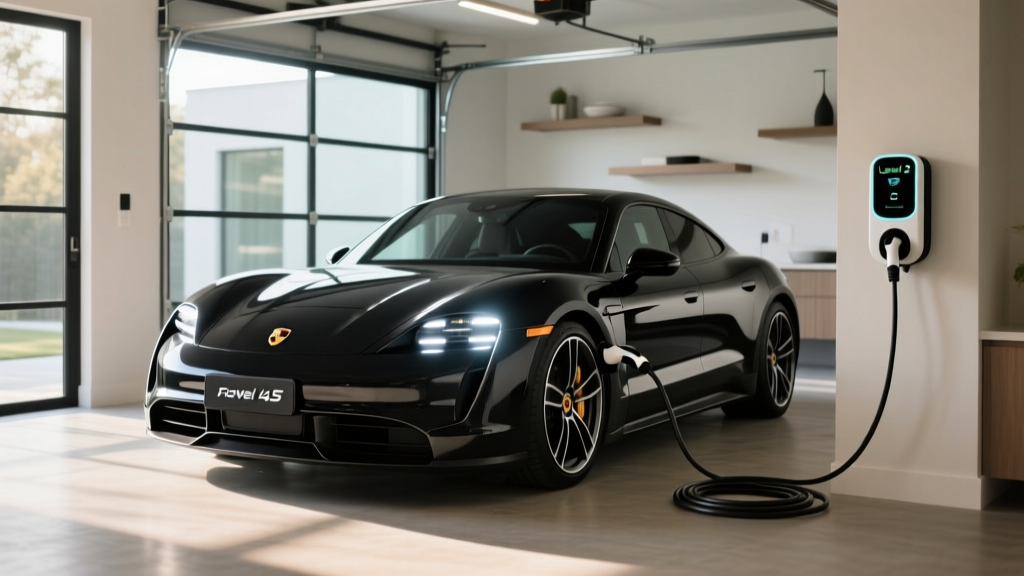
The F-150 Lobo's onboard charger (the component that converts AC power from a Level 2 station to DC for the battery) is rated at 19.2 kW on extended-range models, which is among the fastest in any light-duty EV. This means if you install an 80-amp Level 2 circuit at home, you can actually use the full 19.2 kW — adding about 24 miles of range per hour of charging. Most buyers opt for a 48-amp circuit (11.5 kW), which still refills the pack overnight in roughly 8.5 hours.
Home Charger Installation: Electrical Requirements and Real Costs
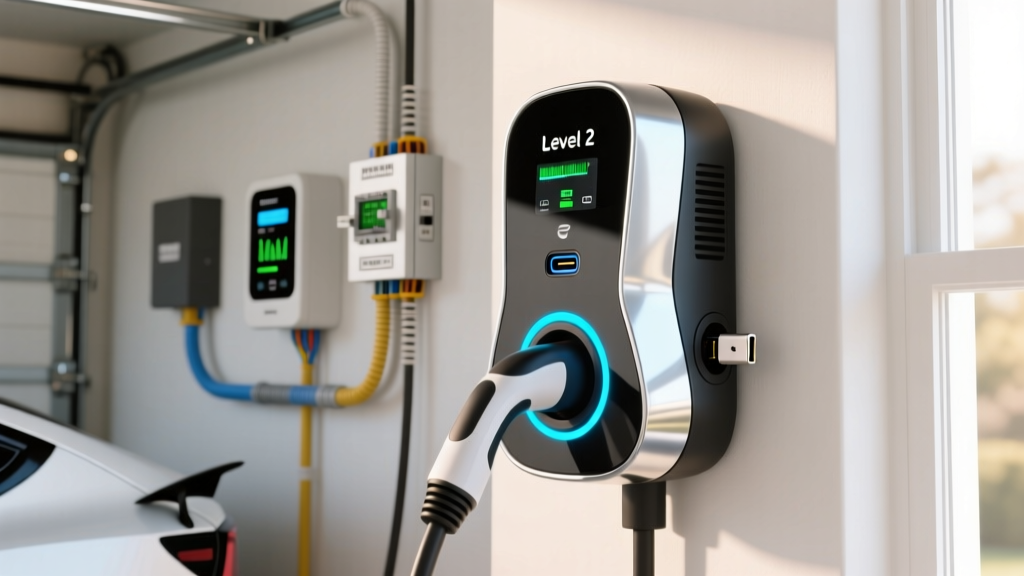
Installing a Level 2 home charger for a F-150 Lobo requires a dedicated 240V circuit, similar to what an electric dryer or oven uses. Here's what you need to know about the electrical requirements:
- 48-amp charger: Requires a 60-amp dedicated breaker (NEC code mandates the circuit be rated 125% of the continuous load — 48A × 1.25 = 60A). Uses 6 AWG copper wire.
- 80-amp charger: Requires a 100-amp dedicated breaker. Uses 3 AWG copper wire. This is the setup needed to unlock the Lobo's full 19.2 kW onboard charging.
- Electrical panel capacity: Your main panel must have enough spare amperage. A 200-amp panel is standard in newer homes and usually accommodates a 60A EV circuit. Older homes with 100-amp or 150-amp panels may need a panel upgrade — this is the single biggest cost variable.
| Cost Component | 48A Setup (Typical) | 80A Setup (Max Power) | With Panel Upgrade |
|---|---|---|---|
| Level 2 charger hardware | $400–$700 | $600–$1,200 | Same as left columns |
| Electrician labor (2–4 hrs) | $500–$1,500 | $800–$2,000 | $1,000–$2,500 |
| Permit & inspection | $100–$300 | $100–$300 | $150–$400 |
| Panel upgrade (if needed) | N/A | N/A | $2,000–$5,000 |
| Total estimated cost | $1,000–$2,500 | $1,500–$3,500 | $3,500–$8,000+ |
The wide cost range is driven by your home's existing electrical infrastructure. If your panel is close to the garage and has spare capacity, expect the lower end. If the panel is on the opposite side of the house, requires a sub-panel, or needs an upgrade from 100A to 200A service, costs climb quickly. Always get at least two quotes from licensed electricians, and ask specifically about the conduit run length and whether a panel upgrade is necessary.
For more details on electrical code requirements, the National Electrical Code (NEC) Article 625 governs EV charging installations. Some utilities also offer rebates that offset $200–$500 of installation costs — check with your local provider.
Connector Compatibility: NACS, CCS1, and Adapter Needs
The 2025+ Ford F-150 Lobo ships with a native NACS (North American Charging Standard) charge port — the same connector used by Tesla vehicles. This is a major advantage because it grants direct access to Tesla's Supercharger network, which is the largest and most reliable DC fast-charging network in North America, with over 25,000 stalls.
| Connector Type | F-150 Lobo Native? | Network Access | Adapter Needed? |
|---|---|---|---|
| NACS (Tesla) | Yes — native port | Tesla Supercharger, many new Electrify America / EVgo stalls | No |
| CCS1 (Combo) | No — requires adapter | Electrify America, EVgo, ChargePoint DC fast (legacy stalls) | Yes — NACS-to-CCS adapter (~$200–$250) |
| CHAdeMO | No | Legacy Nissan/Mitsubishi stations (phasing out) | Not available / not recommended |
| J1772 (Level 2 AC) | Yes — adapter included | Public Level 2, older home chargers | J1772-to-NACS adapter (usually included with vehicle) |
The practical takeaway: with the native NACS port, you can plug directly into any Tesla Supercharger V3 or V4 stall without an adapter. For older CCS1-equipped public chargers (still common at Electrify America and EVgo locations), you'll need a NACS-to-CCS adapter. Ford includes a J1772-to-NACS adapter in the vehicle for Level 2 public charging compatibility.
Cost to Charge: F-150 Lobo Per-Mile Cost vs. Gas Truck
One of the strongest arguments for the electric F-150 Lobo over a gas-powered F-150 is the fuel cost differential. Let's run the numbers using real 2026 electricity and gas prices.
The F-150 Lobo extended-range has a 131 kWh usable battery and an EPA-estimated efficiency of approximately 2.0 kWh/mile (or roughly 70 MPGe combined, per fueleconomy.gov). A comparable gas F-150 with the 3.5L EcoBoost V6 averages about 20 MPG combined.
| Charging Scenario | Price | Cost per Full Charge (131 kWh) | Cost per Mile (320 mi range) |
|---|---|---|---|
| Home — off-peak utility rate | $0.09/kWh | $11.79 | $0.037/mi |
| Home — average US rate | $0.16/kWh | $20.96 | $0.066/mi |
| Public Level 2 (ChargePoint, etc.) | $0.25/kWh | $32.75 | $0.102/mi |
| Tesla Supercharger (avg.) | $0.30/kWh | $39.30 | $0.123/mi |
| Electrify America DC fast | $0.43/kWh | $56.33 | $0.176/mi |
| Gas F-150 EcoBoost (20 MPG) | $3.40/gal | $54.40 (for 320 mi) | $0.170/mi |
At home on an average utility rate, the F-150 Lobo costs roughly $0.07 per mile to "fuel" — less than half the $0.17/mile of a gas F-150. Over 15,000 miles per year, that's a savings of approximately $1,500–$2,000 annually when charging primarily at home. Even at Supercharger prices, the Lobo is competitive with or cheaper than gas. The caveat: frequent use of premium-priced DC fast chargers like Electrify America at $0.43/kWh can actually exceed gas costs per mile. Home charging is where the economics shine.
Recommended Home Chargers for the F-150 Lobo
Given the Lobo's 19.2 kW onboard charger capability, you have two sensible home-charging strategies: install a 48A unit for adequate overnight charging, or invest in an 80A unit to maximize the truck's AC charging speed. Here are our top picks:
Tesla Wall Connector (NACS)
- Power: Up to 11.5 kW (48A on 60A breaker)
- Connector: Native NACS — no adapter needed for Lobo
- Cable length: 24 ft
- Smart features: Wi-Fi, firmware updates, power sharing between two units, access control
- Price: ~$475
- Best for: Budget-conscious buyers who want native NACS compatibility and proven reliability
Ford Charge Station Pro (80A)
- Power: Up to 19.2 kW (80A on 100A breaker)
- Connector: Native NACS (2025+ models)
- Cable length: 25 ft
- Smart features: FordPass integration, scheduled charging, Intelligent Backup Power (V2H capable with Home Integration System)
- Price: ~$1,099 (hardware only)
- Best for: Lobo owners who want max AC charging speed and potential vehicle-to-home backup power
ChargePoint Home Flex (NACS)
- Power: Up to 12 kW (50A, configurable down to 16A for smaller panels)
- Connector: NACS (2025+ model); older versions use J1772 with adapter
- Cable length: 23 ft
- Smart features: Wi-Fi, app-based scheduling, Alexa integration, flexible amperage settings
- Price: ~$649
- Best for: Homes with limited panel capacity — the adjustable amperage lets you match your circuit exactly
Our top pick for the F-150 Lobo is the Ford Charge Station Pro if your electrical panel supports a 100A circuit — it's the only way to unlock the full 19.2 kW onboard charger and achieve roughly 24 miles of range per hour. For most homes with a standard 200A panel, the 48A Tesla Wall Connector offers the best balance of price, native NACS compatibility, and sufficient overnight speed.
Safety and Electrical Code Considerations
EV charging is a continuous electrical load — the NEC defines this as a load expected to run for 3 hours or more. This triggers specific code requirements that your electrician must follow:
- Dedicated circuit: Your Level 2 charger must have its own dedicated breaker — no sharing with other appliances. This prevents overloading and tripping.
- 125% rule: The breaker must be rated at 125% of the charger's maximum amperage. A 48A charger requires a 60A breaker; an 80A charger requires a 100A breaker.
- GFCI protection: NEC 2020 and later require GFCI (ground-fault circuit interrupter) protection for EV charging outlets in garages and outdoor locations. Hardwired chargers may be exempt in some jurisdictions — your electrician will know local code.
- Outdoor rating: If you're installing outside, the charger must carry a NEMA 4 or IP65 weather-resistance rating. All three chargers recommended above are outdoor-rated.
- Permit and inspection: Virtually all jurisdictions require an electrical permit for a new 240V circuit. The inspection ensures the wire gauge, breaker size, and grounding meet code. Never skip this step — unpermitted work can void insurance coverage.
- Wire gauge: 48A circuits require 6 AWG copper wire minimum; 80A circuits require 3 AWG. Aluminum wire may be used at larger gauges for cost savings, but requires larger conduit.
One frequently overlooked issue: if your garage is detached or the run from the panel exceeds 50–60 feet, voltage drop becomes a factor. Your electrician may need to upsized the wire gauge to maintain safe voltage levels at the charger. This adds to the material cost but is non-negotiable for safety.
Frequently Asked Questions
How much does it cost to install a home EV charger for the F-150 Lobo?
A typical 48A Level 2 installation runs $1,000–$2,500 including the charger, electrician labor, and permit. An 80A setup to unlock the Lobo's full 19.2 kW charging costs $1,500–$3,500. If your home needs an electrical panel upgrade (from 100A to 200A service), add $2,000–$5,000 to the total.
How fast will each charging level add range to the F-150 Lobo?
Level 1 (120V): about 2–3 miles per hour — essentially useless for a 131 kWh truck battery. Level 2 at 48A (11.5 kW): about 16 miles per hour, or a full overnight charge in ~8.5 hours. Level 2 at 80A (19.2 kW): about 24 miles per hour, full charge in ~5.5 hours. DC fast charging at a Supercharger: approximately 224 miles (10%–80%) in 41 minutes.
Which connector and charger is compatible with my F-150 Lobo?
The 2025+ F-150 Lobo uses a native NACS port. It plugs directly into Tesla Superchargers and any new NACS-equipped public charger. For CCS1 stations, you'll need a NACS-to-CCS adapter (~$200–$250). For Level 2 public chargers with J1772 connectors, Ford includes a J1772-to-NACS adapter with the vehicle.
How much does charging the F-150 Lobo cost per mile vs. a gas F-150?
Charging at home at the US average rate of $0.16/kWh costs about $0.07 per mile. A gas F-150 EcoBoost at 20 MPG and $3.40/gallon costs $0.17 per mile. That's a 59% savings per mile when charging at home. Over 15,000 miles/year, expect to save $1,500–$2,000 annually on fuel.
What electrical upgrades might I need for a F-150 Lobo home charger?
If your home has a 200-amp electrical panel with spare breaker slots and the garage is close to the panel, you likely need nothing beyond the dedicated circuit. If you have a 100-amp or 150-amp panel (common in homes built before 2000), you may need a panel upgrade to 200A service — a $2,000–$5,000 job. Long wire runs (50+ feet) may also require upsized wire to prevent voltage drop. A licensed electrician can assess your panel during a site visit.
Can I use Tesla Superchargers with the F-150 Lobo without an adapter?
Yes. The 2025+ F-150 Lobo has a native NACS port, which is the same connector Tesla uses. You can pull up to any Tesla Supercharger V3 or V4 stall, plug in directly, and charge. The FordPass app or the truck's built-in navigation will route you to compatible Supercharger locations and show real-time stall availability.
Does the F-150 Lobo qualify for the federal EV tax credit?
Eligibility for the IRS §30D clean vehicle credit depends on several factors that change frequently: the vehicle's MSRP must be at or below $80,000 (for trucks), your modified adjusted gross income must fall under the caps ($300,000 joint / $150,000 single), and the battery must meet critical-mineral and battery-component sourcing requirements. The credit can now be transferred to the dealer at the point of sale as an immediate price reduction. Because sourcing rules tighten each year, confirm eligibility with your dealer and a tax professional before purchasing.