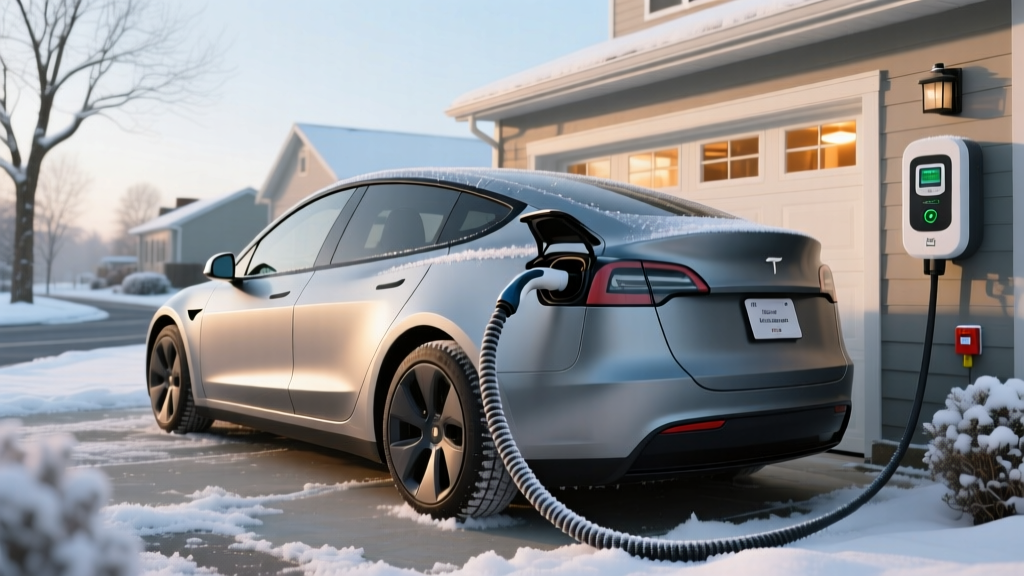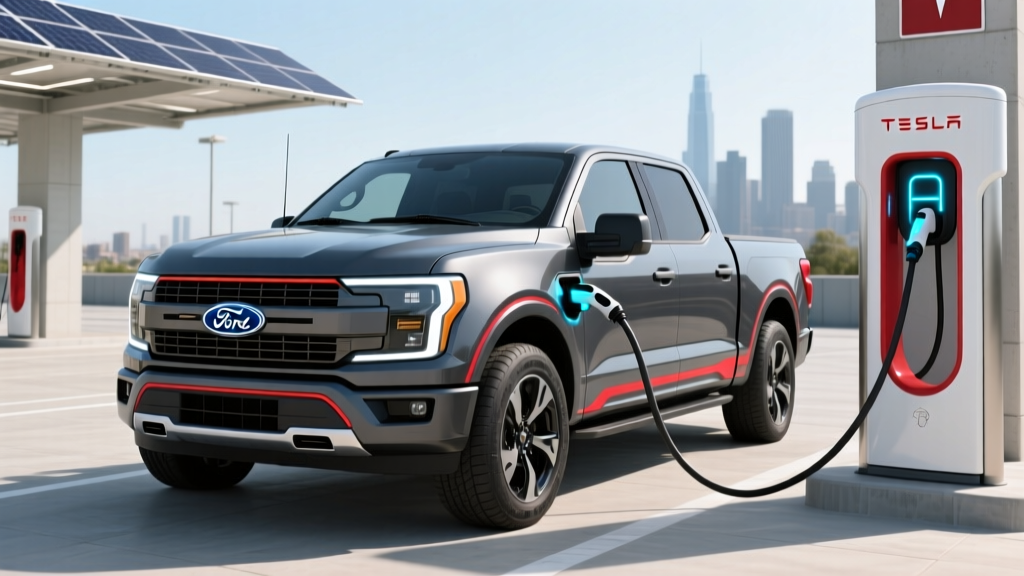
Owners and shoppers searching for a Ford F-150 with Supercharger access are usually asking two related questions: Can Ford's F-150 Lightning use Tesla's Supercharger network, and what does the full charging picture look like at home and on the road? As of the 2025–2026 model years, the answer is yes — but with important adapter requirements, realistic speed expectations, and home-installation math that every Lightning buyer should understand before plugging in.
This guide covers the F-150 Lightning's charging capabilities across all three levels, explains how to access Tesla Superchargers, breaks down real home-installation costs (including panel upgrades), and compares per-mile charging costs against a gas F-150. All figures are based on 2026 model-year specifications and current IRS and utility data.
F-150 Lightning Battery and Charging Specs at a Glance
Before diving into charging logistics, here are the core numbers that determine how fast and how far a Lightning can go. Ford offers two battery packs for the 2026 F-150 Lightning, both using NMC (nickel manganese cobalt) chemistry with liquid thermal management:
| Spec | Standard Range | Extended Range |
|---|---|---|
| Usable Battery Capacity | ~98 kWh | ~131 kWh |
| EPA Range | ~240 miles | ~320 miles |
| Real-World Highway (70 mph, mild) | ~200–220 miles | ~265–290 miles |
| Real-World Cold Weather (20°F) | ~170–190 miles | ~225–250 miles |
| Max DC Fast Charge Rate | ~150 kW peak | ~150 kW peak |
| 10–80% DC Fast Charge Time | ~41 minutes | ~51 minutes |
| Level 2 Onboard Charger | 10.5 kW (single) / 19.2 kW (dual, Pro/Platinum) | 19.2 kW (standard on Extended) |
| Connector (2026 Models) | NACS (native Tesla plug, no adapter needed at Superchargers) | |
| Battery/Powertrain Warranty | 8 years / 100,000 miles (≥70% capacity retention) | |
Charging Levels Explained: How Fast Does Each Level Add Range?
EV charging happens at three distinct levels. The key distinction: kW (kilowatts) measures the rate of power delivery — like water pressure from a hose — while kWh (kilowatt-hours) measures total energy stored in the battery — like the size of the tank. Higher kW means faster filling; higher kWh means a bigger tank to fill.
| Level | Voltage / Amperage | Power (kW) | Miles of Range Added Per Hour | Typical Use Case |
|---|---|---|---|---|
| Level 1 | 120V / 12A | ~1.4 kW | ~3–4 miles/hr | Emergency / overnight trickle; 24+ hrs for full charge |
| Level 2 (single charger) | 240V / 48A | 10.5 kW | ~28–32 miles/hr | Standard home charging; 10–12 hrs for full charge |
| Level 2 (dual charger, 19.2 kW) | 240V / 80A | 19.2 kW | ~50–55 miles/hr | Fast home charging; 6–7 hrs for Extended Range full |
| DC Fast Charging | 400V+ DC | Up to 150 kW peak | ~200+ miles in first 20 min (tapers) | Road trips; 10–80% in ~41–51 min |
The F-150 Lightning's Extended Range models come standard with Ford's dual onboard charger system, which can accept up to 19.2 kW on Level 2 — but only if your home charger and electrical circuit can deliver 80 amps continuously. Most residential Level 2 installations max out at 48A (10.5 kW), which is sufficient for overnight charging of even the 131 kWh pack.
Can a Ford F-150 Lightning Use Tesla Superchargers?
Yes. Starting with 2025 model-year production, Ford transitioned the F-150 Lightning to the NACS (North American Charging Standard) connector — the same physical plug used by Tesla vehicles. This means 2025 and 2026 Lightning owners can pull up to a Tesla Supercharger and plug in directly, no adapter required.
For 2022–2024 F-150 Lightning owners whose trucks were built with the CCS1 connector, Ford provides a Ford-branded NACS adapter (originally offered complimentary to early buyers, now available for purchase at approximately $230). With this adapter, CCS1-equipped Lightnings gain full access to the Tesla Supercharger network — over 25,000 stalls in North America as of early 2026.
| Model Year | Native Connector | Tesla Supercharger Access | Adapter Needed? |
|---|---|---|---|
| 2022–2024 | CCS1 | Yes, with adapter | Ford NACS Adapter (~$230) |
| 2025–2026 | NACS (native) | Yes, direct plug-in | None for Superchargers; CCS adapter needed for legacy non-Tesla DCFC stations |
For non-Tesla public DC fast chargers (Electrify America, EVgo, ChargePoint), 2025–2026 NACS-equipped Lightnings will need a NACS-to-CCS1 adapter to use stations with CCS1 connectors. Ford and third-party manufacturers offer these adapters, typically priced between $150–$250.
How Much Does It Cost to Install a Home EV Charger?
Home Level 2 charging is where most Lightning owners will do 80–90% of their charging. Installation costs vary widely depending on your home's electrical panel capacity, the distance from panel to charger location, and local permit requirements. Here is a realistic breakdown:
| Component | Typical Cost Range | Notes |
|---|---|---|
| Level 2 Charger Equipment (40A–48A) | $350 – $700 | Hardwired or NEMA 14-50 plug; Wi-Fi smart chargers at higher end |
| Level 2 Charger Equipment (80A, for 19.2 kW) | $600 – $1,200 | Requires hardwired install; fewer consumer options available |
| Electrician Labor (standard install, <30 ft run) | $500 – $1,500 | Includes wiring, conduit, breaker, and outlet/hardwire termination |
| Electrical Permit | $50 – $250 | Required in most jurisdictions; varies by municipality |
| Panel Upgrade (if needed: 100A → 200A service) | $1,500 – $4,000 | Older homes with 100A panels often need upgrade for 48A+ circuits |
| Total (no panel upgrade) | $900 – $2,450 | Most common scenario for homes with 200A service |
| Total (with panel upgrade) | $2,400 – $6,450 | Common in pre-2000 homes; get 2–3 electrician quotes |
Electrical requirements for a standard 48A Level 2 circuit: A dedicated 240V/60A breaker (NEC continuous-load rules require the breaker to be rated 125% above the continuous draw — 48A × 1.25 = 60A). For the Lightning's optional 19.2 kW / 80A charge rate, you need a dedicated 240V/100A breaker and 6 AWG or larger copper wire, which is a significant electrical investment. Always have a licensed electrician evaluate your panel's available amperage before committing to an 80A charger.
Recommended Home Chargers for the F-150 Lightning
Given the Lightning's large battery (98–131 kWh usable), a quality 48A Level 2 charger is the practical sweet spot for most owners. Here are three proven options as of 2026:
ChargePoint Home Flex (NACS)
- Power: Up to 12 kW (50A) on NACS connector
- Cable Length: 23 feet
- Smart Features: Wi-Fi, app scheduling, Alexa, utility demand-response integration
- Price: ~$599
- Best For: Most Lightning owners; flexible amperage settings (16A–50A) to match your circuit
Tesla Wall Connector (NACS)
- Power: Up to 11.5 kW (48A) on NACS connector
- Cable Length: 24 feet
- Smart Features: Wi-Fi, OTA updates, power-sharing with second unit, access control
- Price: ~$475
- Best For: Owners who primarily use Superchargers and want one ecosystem; works with all NACS-equipped EVs
Grizzl-E Smart (NACS)
- Power: Up to 10 kW (40A) on NACS connector
- Cable Length: 24 feet
- Smart Features: OCPP-compatible, app control, extreme cold-rated (-40°F)
- Price: ~$549
- Best For: Cold-climate owners; rugged outdoor build; Canadian-made
All three chargers are NACS-native, meaning they plug directly into 2025–2026 F-150 Lightnings without an adapter. For 2022–2024 CCS1-equipped Lightnings, you would use your Ford-provided NACS adapter at the vehicle end, or choose a CCS1-connector version of these chargers (available from ChargePoint and Grizzl-E).
Cost to Charge: F-150 Lightning vs. Gas F-150 Per Mile
The F-150 Lightning Extended Range consumes approximately 48–52 kWh per 100 miles (roughly 2.0–2.1 kWh/mile) in mixed driving, per fueleconomy.gov. Here's how that translates to real dollars:
| Charging / Fueling Scenario | Rate | Cost Per Mile (Lightning) | Cost Per Mile (Gas F-150, 20 MPG) |
|---|---|---|---|
| Home Off-Peak (utility time-of-use) | $0.09/kWh | $0.18 | — |
| Home Standard Rate (national avg.) | $0.16/kWh | $0.33 | — |
| Public Level 2 (ChargePoint, etc.) | $0.30/kWh | $0.62 | — |
| Tesla Supercharger (avg. 2026) | $0.32/kWh | $0.66 | — |
| Electrify America DC Fast | $0.48/kWh | $0.99 | — |
| Gasoline (national avg. $3.40/gal) | $3.40/gal | — | $0.17 |
| Gasoline (national avg. $3.40/gal, 16 MPG towing) | $3.40/gal | — | $0.21 |
At home on standard rates, the Lightning costs roughly $0.33/mile to "fuel" — competitive with a gas F-150 at $0.17/mile only when you factor in the gas truck's lower efficiency in city driving (the gas F-150 4x4 with the 3.5L EcoBoost rates around 18–20 MPG combined). On off-peak utility rates, the Lightning drops to $0.18/mile — effectively tying or beating the gas truck.
The cost gap widens on road trips. DC fast charging at $0.32–$0.48/kWh pushes the Lightning to $0.66–$0.99/mile, making long highway trips significantly more expensive than the gas equivalent. This is the trade-off: cheap home charging vs. expensive public fast charging. Owners who can charge at home 90% of the time see the lowest total fuel costs.
Safety, Electrical Code, and Installation Best Practices
Level 2 EV charging draws continuous high current for hours — this is not like plugging in a dryer. NEC (National Electrical Code) Article 625 governs EV charging installations, and your electrician should follow these requirements:
- Dedicated Circuit: Your Level 2 charger must be on its own dedicated breaker — no sharing with other appliances or outlets.
- GFCI Protection: NEC 2020 and later requires GFCI (Ground Fault Circuit Interrupter) protection for all EV charging outlets. Hardwired chargers may have GFCI built into the unit; outlet-based installs need a GFCI breaker.
- Continuous Load Derating: EV charging is classified as a continuous load (3+ hours). A 48A charger requires a 60A breaker (48 × 1.25 = 60). An 80A charger requires a 100A breaker.
- Outdoor Rating: If your charger is mounted outdoors or in an unsealed garage, ensure the unit carries a NEMA 4 (weatherproof) rating. All three chargers recommended above meet this standard.
- Wire Gauge: 48A circuits typically require 6 AWG copper wire; 80A circuits require 3 AWG or 2 AWG depending on run length and insulation type. Your electrician will calculate this based on your specific installation.
- Permit and Inspection: Most jurisdictions require a permit and final inspection for EV charger installations. Skipping this can void home insurance coverage in the event of an electrical fire.
Frequently Asked Questions
How long does it take to fully charge an F-150 Lightning at home?
On a standard 48A / 10.5 kW Level 2 charger, the Extended Range (131 kWh) pack takes approximately 12–13 hours from near-empty to full. The Standard Range (98 kWh) takes about 9–10 hours. With the optional 80A / 19.2 kW setup, those times drop to roughly 7 hours and 5 hours respectively. Most owners charge from 20–80% overnight, which takes 7–8 hours at 10.5 kW.
Do I need an adapter to use Tesla Superchargers with a 2026 F-150 Lightning?
No. The 2025 and 2026 F-150 Lightning ships with a native NACS connector, which is the same plug used at all Tesla Superchargers. You can plug in directly. However, you may need a CCS1 adapter to use older non-Tesla DC fast charging stations that still use the CCS1 connector.
Will charging at Tesla Superchargers damage my Lightning's battery?
No. DC fast charging is within the Lightning's designed charge envelope. The truck's battery management system (BMS) controls the charge rate, requests only what it can safely accept (~150 kW peak), and tapers charging above 80% State of Charge to protect cell health. Frequent DC fast charging does accelerate degradation slightly compared to Level 2 home charging, but Ford's battery warranty guarantees ≥70% capacity retention for 8 years / 100,000 miles. Real-world data from high-mileage Lightnings shows roughly 8–12% degradation over 100,000 miles with mixed charging habits.
What electrical panel size do I need for a home Level 2 charger?
A 200-amp main service panel is generally sufficient for a 48A Level 2 charger, assuming you don't have many other large simultaneous loads (electric range, electric dryer, electric heat). Homes with 100-amp panels will almost certainly need an upgrade ($1,500–$4,000) to safely add a 60A dedicated breaker. Your electrician will perform a load calculation per NEC Article 220 to determine available capacity.
Is preconditioning the battery important before Supercharger stops?
Yes. The Lightning's navigation system will automatically precondition (warm or cool) the battery when you route to a charging stop. This brings the battery to optimal temperature for fast charging, which can shave 5–10 minutes off a 10–80% session in cold weather. If you're driving to a Supercharger without using the truck's navigation, manually activate preconditioning through the FordPass app or infotainment system 20–30 minutes before arrival.
How does the F-150 Lightning's charging speed compare to rivals?
The Lightning's ~150 kW peak DC charge rate is moderate for a full-size electric truck. The Rivian R1T (with its larger Max Pack) can accept up to ~220 kW at compatible chargers, and the Chevrolet Silverado EV (GM's Ultium platform) peaks at ~200 kW. However, the Lightning's NACS compatibility gives it access to Tesla's vast Supercharger network — the most reliable and widespread DC fast-charging infrastructure in North America — which is a significant practical advantage for road-trip charging regardless of peak kW.
Sources: fueleconomy.gov (EPA range and efficiency data), Ford F-150 Lightning specifications, IRS §30C Alternative Fuel Refueling Credit. All pricing and specifications reflect 2026 model-year data and are subject to change. Consult a licensed electrician for installation specifics and a tax professional for credit eligibility.