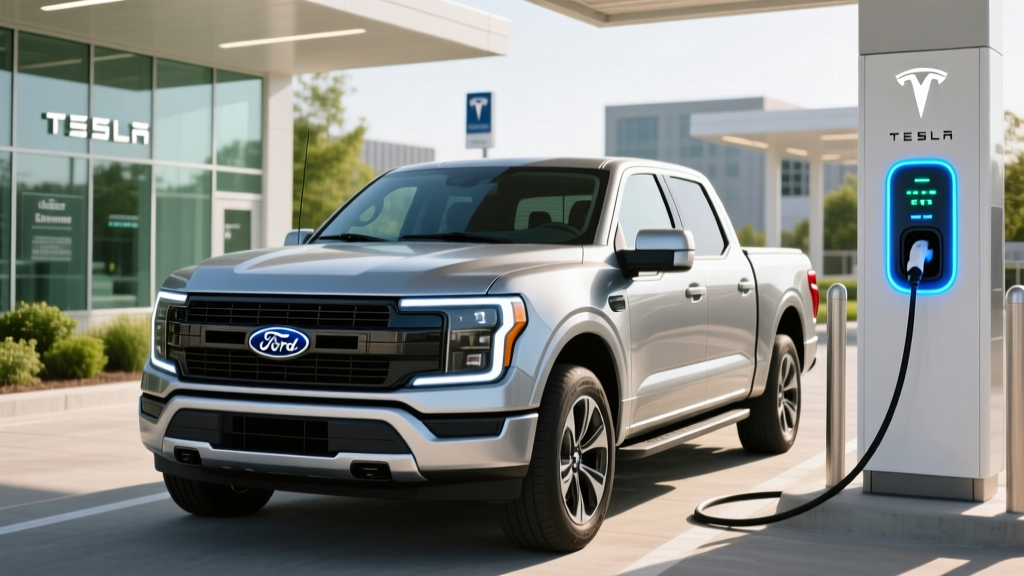
The Ford F-150 Lightning changed the electric truck landscape the moment it launched, but for 2025 and 2026 model-year owners, one of the biggest practical upgrades is network access: Ford has adopted the North American Charging Standard (NACS), meaning you can now charge a Ford F-150 with Supercharger stations across Tesla's massive network. That's over 20,000 additional DC fast-charging stalls in the U.S. and Canada — a significant expansion beyond the Electrify America and EVgo networks Ford originally partnered with.
But plugging into a Supercharger isn't the whole story. Real-world charging speed, adapter requirements, home Level 2 setup, electrical panel capacity, and cost-per-mile all factor into whether owning a Lightning makes financial and logistical sense. This guide walks through every layer, with exact numbers.
Ford F-150 Lightning: Battery, Range, and Charging Specs at a Glance
Before we talk chargers, here are the hard numbers for the current-generation Lightning. Ford offers two battery packs across the lineup:
| Spec | Standard Range (SR) | Extended Range (ER) |
|---|---|---|
| Usable battery capacity | 98 kWh (LFP/NMC blend) | 131 kWh (NMC) |
| EPA range | ~240 miles | ~320 miles |
| Real-world highway range (70 mph, moderate climate) | ~200–220 miles | ~260–290 miles |
| Peak DC fast-charge rate | ~120 kW | ~150 kW |
| 10–80% DC fast charge time | ~44 minutes | ~41 minutes |
| Level 2 onboard charger | 10.5 kW (single) / 19.2 kW (dual) | 19.2 kW (dual, standard) |
| Horsepower | 452 hp | 580 hp |
| 0–60 mph | ~4.5 sec | ~3.8 sec |
| Starting MSRP (Pro trim) | ~$55,000 | ~$70,000+ |
| Battery warranty | 8 years / 100,000 miles (≥70% capacity retention) | |
Charging a Ford F-150 with Supercharger Stations: What You Need to Know
Starting with 2025 model-year vehicles, Ford F-150 Lightnings come equipped with a native NACS charge port — the same connector used on Tesla vehicles. That means you can drive up to any Tesla Supercharger stall, plug in directly, and charge. No adapter required for 2025+ models.
For 2022–2024 Lightning owners whose trucks were built with a CCS1 port, Ford provides an official NACS adapter (sometimes called the "Tesla Supercharger adapter") that enables access to the Supercharger network. This adapter was initially offered as a complimentary item to early adopters and is available for purchase through Ford dealers or the FordPass app ecosystem.
Supercharger Speeds for the Lightning
Tesla Superchargers come in several generations. Here's what a Lightning actually sees at each:
- V2 Supercharger (150 kW max): The Lightning Extended Range will peak around 140–150 kW at low state of charge (SoC), tapering as the battery warms and fills. Expect ~35–45 minutes for a 10–80% session.
- V3 Supercharger (250 kW max): The Lightning's peak acceptance rate (~150 kW ER, ~120 kW SR) means it cannot fully utilize V3's 250 kW ceiling. You'll see the same ~150 kW peak as on V2, but V3 stalls are more likely to deliver that peak consistently because they don't share power with an adjacent stall.
- V4 Supercharger (newer, higher-power architecture): Same bottleneck — the truck's onboard charge curve is the limiting factor, not the stall.
The key insight: the Lightning's battery acceptance rate, not the Supercharger's output, determines your actual charging speed. A 250 kW stall won't charge a Lightning faster than a 150 kW stall in practice.
Supercharger Pricing and Access
As of 2026, Tesla Supercharger pricing for non-Tesla vehicles (accessed via the NACS port or adapter) typically ranges from $0.28 to $0.48 per kWh, depending on location, time of day, and local utility rates. In high-cost markets like California, some urban Superchargers have been metered above $0.50/kWh during peak hours.
Ford F-150 Lightning drivers access Superchargers through the Tesla app (for non-Tesla vehicles) or, increasingly, through FordPass integration that routes payment and session data via Ford's agreement with Tesla. Activation is straightforward: create a Tesla account, add your Lightning as a non-Tesla vehicle, and the app handles billing.
Charging Levels Explained: Speeds, kW, and Miles Per Hour
Understanding the difference between kW (power — the rate of energy flow, like water pressure in a hose) and kWh (energy — the total amount stored in the battery, like the size of the tank) is the single most important concept for EV charging. Here's how each level translates to real range added:
| Level | Power (kW) | Voltage / Amperage | Miles of Range Added per Hour | Typical Use Case |
|---|---|---|---|---|
| Level 1 (120V household outlet) | ~1.4 kW | 120V / 12A | ~2–3 miles/hr | Emergency / overnight trickle |
| Level 2 (240V home charger, single) | ~10.5 kW | 240V / 48A (truck-limited) | ~20–25 miles/hr | Daily home charging |
| Level 2 (240V, dual onboard charger) | ~19.2 kW | 240V / 80A | ~35–42 miles/hr | Fast home / depot charging |
| DC Fast Charge (Supercharger V3) | Up to ~150 kW (truck-limited) | 400V+ DC | ~180–230 miles/hr (at peak) | Road trips, rapid top-ups |
For context: a full charge from 0–100% on a standard 120V outlet for the Extended Range pack would take roughly 90+ hours. Level 2 at home is the practical baseline for daily ownership. DC fast charging is for road trips and emergencies — frequent daily use accelerates battery degradation slightly.
Home Charger Installation: Electrical Requirements, Costs, and Gotchas
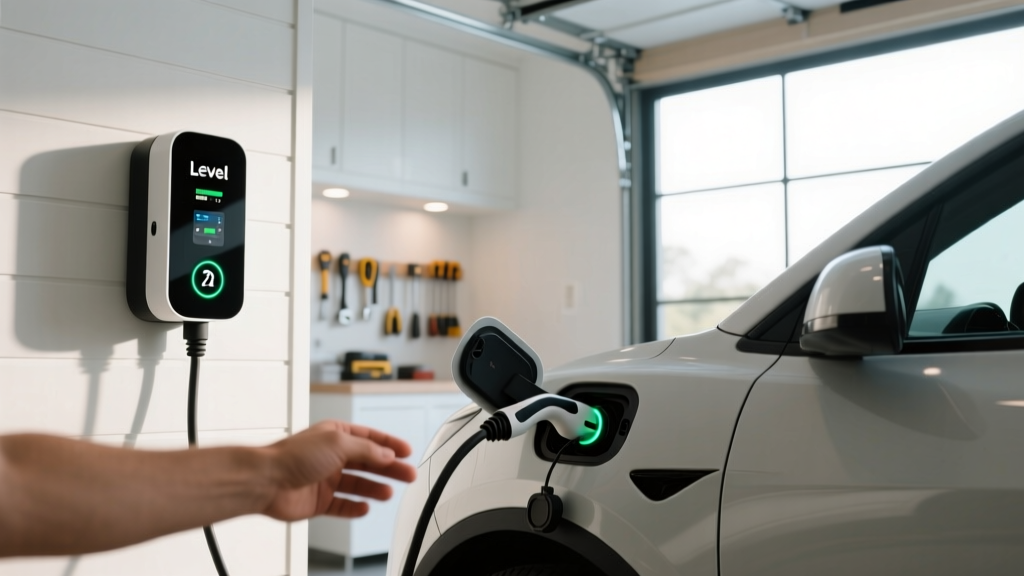
Most Lightning owners will install a Level 2 home charger, and this is where the real variables emerge. The F-150 Lightning's optional dual onboard charger can accept up to 19.2 kW (80 amps at 240V), but that requires a 100-amp dedicated circuit — something most residential electrical panels don't have available.
Typical Home Charging Scenarios
- 40-amp circuit (most common): Delivers up to 9.6 kW (32A continuous). Fully charges the SR pack overnight (~10 hours). Adequate for most daily driving under 100 miles.
- 48-amp circuit: Delivers up to 11.5 kW (40A continuous). A step up for higher-mileage drivers.
- 60-amp circuit: Delivers up to 11.5–14.4 kW depending on charger hardware. Good middle ground for ER pack owners.
- 80–100-amp circuit: Required to unlock the Lightning's full 19.2 kW dual-charger capability. Expensive and panel-dependent.
Installation Cost Breakdown
| Cost Component | Low End | High End | Notes |
|---|---|---|---|
| Level 2 charger hardware | $400 | $750 | 40A–48A Wi-Fi-enabled units |
| Electrician labor (40–60A circuit) | $600 | $1,500 | Depends on run length from panel to garage |
| Electrical permit | $50 | $200 | Required in most jurisdictions |
| Panel upgrade (if needed) | $1,500 | $4,000+ | 100A→200A service upgrade for older homes |
| Total (no panel upgrade) | $1,050 | $2,450 | Most homes with 200A service |
| Total (with panel upgrade) | $2,550 | $6,450+ | Homes with older 100A panels |
Safety and Code Requirements
Per the National Electrical Code (NEC) and most local jurisdictions:
- Dedicated circuit: Your EV charger must have its own breaker — no sharing with other appliances.
- GFCI protection: Required for outdoor installations and in many jurisdictions for garages as well (NEC 2020+).
- NEMA 14-50 receptacle vs. hardwired: A 14-50 outlet gives you portability (take the charger when you move), but hardwired installations are safer for high-amperage circuits (60A+) and avoid the GFCI nuisance-tripping issues some owners report with 14-50 receptacles on 50A+ circuits.
- Outdoor rating: If mounting outside, ensure the charger is NEMA 4 rated (weatherproof) and the connector holster protects the plug from rain and debris.
Connector Compatibility: NACS, CCS1, and Adapters in 2026
The connector landscape has consolidated significantly since Ford's switch to NACS. Here's where things stand for Lightning owners:
| Connector Type | 2022–2024 Lightning (CCS1 port) | 2025+ Lightning (NACS port) |
|---|---|---|
| Tesla Supercharger (NACS) | ✅ Via Ford-provided NACS adapter | ✅ Native — no adapter needed |
| Electrify America / EVgo (CCS1) | ✅ Native | ✅ Via CCS1 adapter (included or available) |
| CHAdeMO | ❌ Not compatible (network largely retired) | ❌ Not compatible |
| Level 2 public (J1772) | ✅ Via J1772-to-NACS adapter (included) | ✅ Via J1772-to-NACS adapter (included) |
The CHAdeMO network is effectively dead in the U.S. — Electrify America removed the last CHAdeMO connectors from new installations years ago. Lightning owners will primarily use NACS (Superchargers) and CCS1 (legacy networks, still widespread at Walmart, highway rest stops, and shopping centers).
For 2025+ NACS-port Lightnings: Ford includes a CCS1 adapter in most trims. Verify with your dealer at purchase. Third-party CCS1-to-NACS adapters from brands like Lectron and A2Z are also available for $150–$250 if you need a backup.
Charging Cost: Home vs. Public vs. Gas — The Per-Mile Math
The economic case for the Lightning hinges on where and when you charge. Here's a realistic comparison using 2026 average energy prices:
| Scenario | Cost per kWh or Gallon | Lightning Cost/Mile (ER, ~2.0 mi/kWh) | Gas F-150 Cost/Mile (19 MPG combined) |
|---|---|---|---|
| Home charging (off-peak utility rate) | $0.12/kWh | $0.06/mile | $0.18/mile ($3.50/gal) |
| Home charging (average blended rate) | $0.16/kWh | $0.08/mile | $0.18/mile |
| Public Level 2 (ChargePoint, etc.) | $0.25/kWh | $0.13/mile | $0.18/mile |
| Tesla Supercharger (DC fast) | $0.38/kWh avg | $0.19/mile | $0.18/mile |
| Electrify America (DC fast, guest rate) | $0.48/kWh | $0.24/mile | $0.18/mile |
The takeaway: home charging is where the Lightning saves you serious money — roughly $0.06–$0.08 per mile versus $0.18 for gas. Over 15,000 miles per year, that's a savings of $1,500–$1,800 annually. But rely exclusively on DC fast chargers at public rates, and you'll actually spend more per mile than the gas truck. This is the core economic argument for home Level 2 installation.
For detailed local electricity rates, check your utility's time-of-use (TOU) plan — many utilities offer off-peak rates as low as $0.07–$0.10/kWh for overnight EV charging, which dramatically improves the economics.
Recommended Home Chargers for the F-150 Lightning
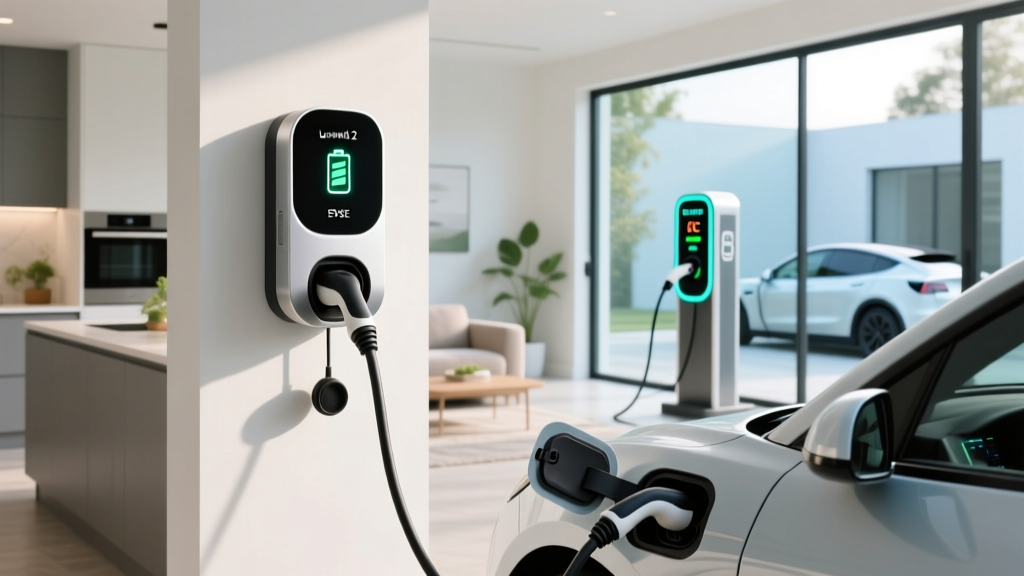
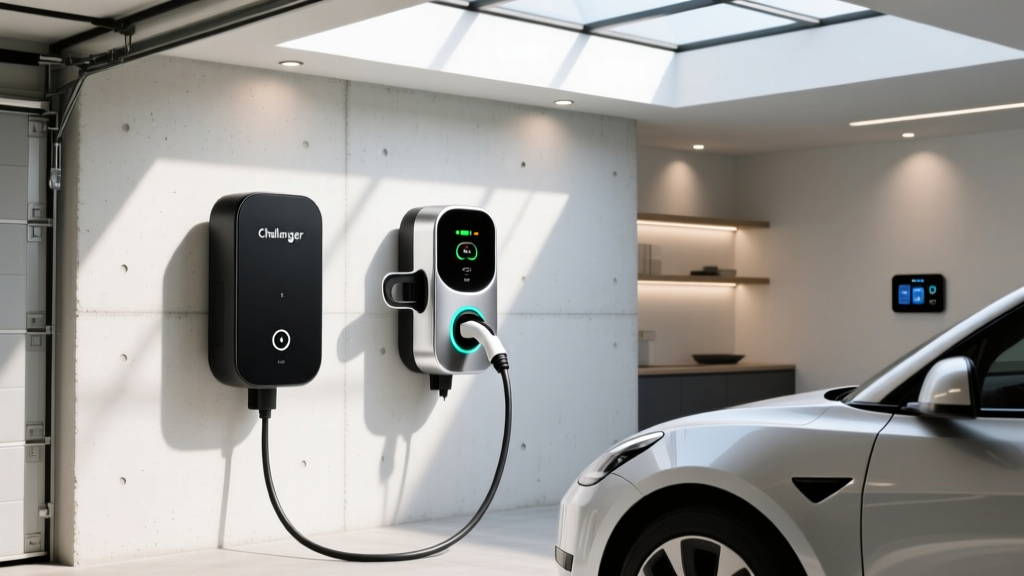
Given the Lightning's large battery (98–131 kWh usable) and its dual onboard charger capability, here are three chargers matched to common installation scenarios:
Tesla Wall Connector (NACS)
- Max output: 11.5 kW (48A)
- Connector: NACS native (2025+ Lightning); CCS1 adapter needed for 2022–2024
- Cable length: 24 ft
- Smart features: Wi-Fi, OTA updates, power sharing (pair two units on one circuit), load management
- Price: ~$475
- Best for: 2025+ NACS-port Lightnings; reliable, no-nonsense daily charging
ChargePoint Home Flex (J1772/NACS)
- Max output: 12 kW (50A) on a 60A circuit
- Connector: Available in J1772 or NACS; NACS version fits 2025+ Lightnings natively
- Cable length: 23 ft
- Smart features: Wi-Fi, app scheduling, Alexa integration, amperage adjustable via DIP switches
- Price: ~$550–$650
- Best for: Flexible amperage settings (dial down for smaller panels); strong app ecosystem
Grizzl-E Smart (J1772/NACS)
- Max output: 11.5 kW (48A)
- Connector: J1772 or NACS options
- Cable length: 24 ft
- Smart features: Wi-Fi, OCPP-compatible (works with utility demand-response programs), adjustable amperage
- Price: ~$500
- Best for: Cold-climate durability (rated to -40°F); utility-program compatible
None of these chargers will unlock the Lightning's full 19.2 kW dual-charger speed — that requires an 80A hardwired charger on a 100A circuit, which is a significant electrical investment. For most owners, a 48A charger on a 60A circuit provides 11.5 kW, which fully recharges the Extended Range pack in roughly 11–12 hours. That's sufficient for overnight replenishment of even a near-empty battery.
Frequently Asked Questions
How much does it cost to install a home EV charger for a Ford F-150 Lightning?
Expect $1,050–$2,450 for a standard 40–60A Level 2 installation in a home with an adequate 200A electrical panel. If your panel needs upgrading from 100A to 200A service, add $1,500–$4,000+. The charger hardware itself runs $400–$750. Always get a load calculation from a licensed electrician before committing to equipment.
How fast will each charging level add range to my Lightning?
Level 1 (120V) adds about 2–3 miles per hour — essentially useless for the Lightning's large battery except as a trickle top-up. Level 2 at 48A (11.5 kW) adds roughly 22–25 miles per hour. DC fast charging at a Supercharger peaks around 150 kW for the Extended Range model, adding up to 3–4 miles per minute at the fastest part of the charge curve, tapering significantly above 80% SoC.
Can I use a Tesla Supercharger with my 2022 or 2023 F-150 Lightning?
Yes. Ford has made a NACS adapter available for CCS1-equipped 2022–2024 Lightnings. With the adapter, you can access Tesla Supercharger stalls. You'll need to set up a Tesla account and add your Lightning as a non-Tesla vehicle in the Tesla app for billing. Starting with 2025 models, the NACS port is built in — no adapter needed.
Does frequent Supercharger DC fast charging hurt the Lightning's battery?
Occasional DC fast charging for road trips has minimal impact. However, daily reliance on high-power DC fast charging (150 kW+) does accelerate battery degradation modestly compared to Level 2 home charging. Ford's battery management system includes robust thermal management and a buffer to mitigate this, but for long-term battery health, Level 2 home charging should be your primary routine. Ford's battery warranty guarantees ≥70% capacity retention for 8 years / 100,000 miles.
What electrical upgrades might I need for home charging?
The most common upgrade is a new 240V dedicated circuit (40–60A) run from your main panel to the garage or driveway. If your home has a 100A main panel, you'll likely need a service upgrade to 200A to accommodate the EV circuit alongside existing loads (HVAC, electric range, dryer). Homes with 200A panels usually have sufficient headroom for a 40–60A EV circuit without an upgrade. An electrician will perform an NEC Article 220 load calculation to confirm.
How much does charging a Lightning cost compared to gas?
At home on off-peak electricity ($0.12/kWh), the Lightning Extended Range costs about $0.06 per mile to drive — roughly one-third the cost of a gas F-150 at $3.50/gallon and 19 MPG combined ($0.18/mile). On public DC fast chargers at $0.38–$0.48/kWh, the Lightning costs $0.19–$0.24 per mile, which equals or exceeds the gas truck. The economic advantage of the Lightning is maximized when you charge at home.
For authoritative reference on the Lightning's official EPA efficiency figures, see fueleconomy.gov. For current federal EV tax credit rules that may apply to new Lightning purchases, refer to the IRS §30D Clean Vehicle Credit page — note that eligibility depends on MSRP caps, buyer income limits, and battery-sourcing requirements that change periodically.