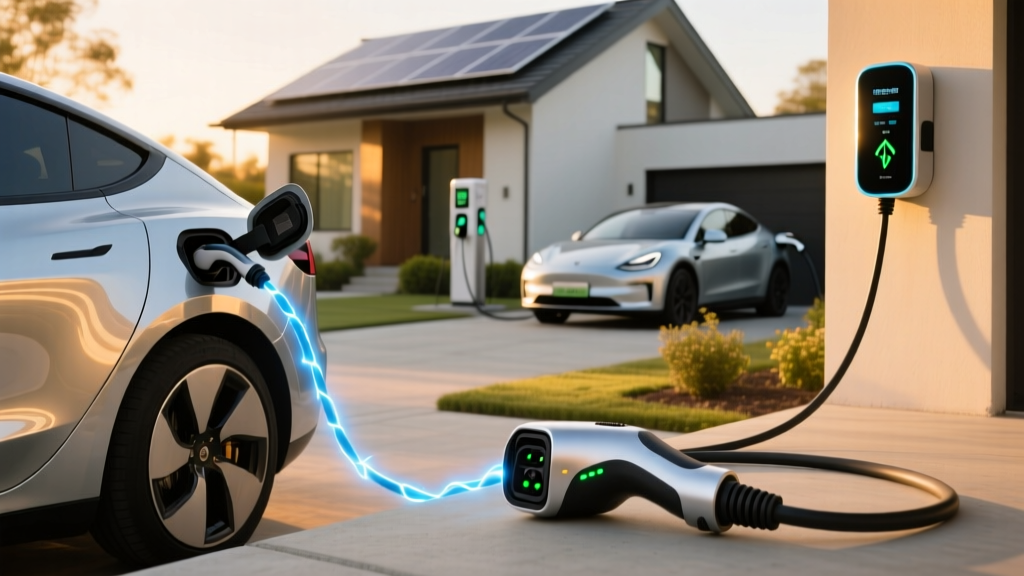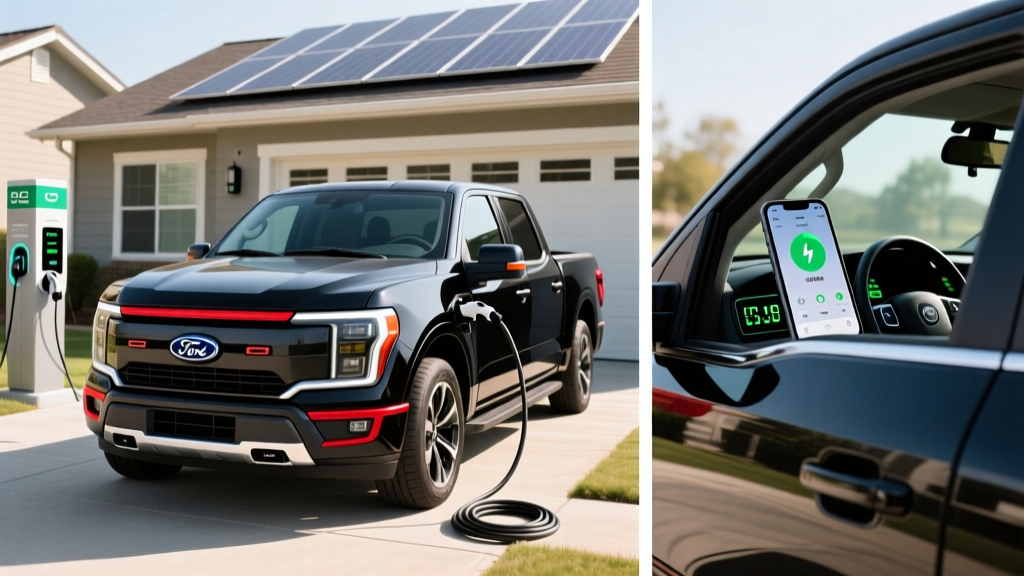
Charging Your Ford F-150 Lightning: What You Need to Know
The Ford F-150 Lightning redefined what an electric pickup can do, but its 98 kWh (Standard Range) and 131 kWh (Extended Range) battery packs demand a serious charging strategy. Whether you're plugging in at home after a job site or pulling up to a DC fast charger on a highway run, understanding the difference between kW (power — how fast energy flows) and kWh (energy — how much your battery holds) is the single most important piece of EV literacy you'll need.
This guide breaks down every charging scenario for the F-150 Lightning — from a standard 120V trickle charge to Tesla Supercharger access via the NACS adapter — with exact speeds, costs, and equipment picks for 2026 buyers.
Charging Levels Explained: Speeds in kW and Miles Per Hour
The F-150 Lightning supports three charging tiers. Here's exactly what each delivers:
| Level | Power (kW) | Miles of Range/Hour | Full Charge Time (131 kWh) | Best For |
|---|---|---|---|---|
| Level 1 (120V) | 1.4 kW | ~3 mi/hr | ~90+ hours | Emergency top-ups only |
| Level 2 (240V) | 11.5–19.2 kW | ~25–42 mi/hr | 7–11 hours | Daily home/workplace charging |
| DC Fast | Up to 150 kW peak | ~150–230 mi in 30 min | 10–80% in ~41 min | Road trips, quick top-ups |
Critical nuance on DC fast charging: The Lightning's peak rate of 150 kW applies only between roughly 15–55% state of charge. Above 80%, the charge curve tapers sharply — expect speeds to drop below 50 kW as the battery management system protects cell health. This is why 10–80% is the standard benchmark rather than 0–100%.
Home Charger Installation: Electrical Requirements and Costs
The F-150 Lightning's onboard charger accepts up to 19.2 kW on Level 2 (Extended Range models equipped with the 80-amp charge option). That requires a hardwired 100-amp circuit — a serious electrical commitment. Most buyers opt for a 48-amp or 60-amp Level 2 unit on a dedicated 60A or 75A breaker, which still delivers a full overnight charge.
Electrical Requirements at a Glance
- 48-amp charger: Requires 240V/60A dedicated circuit (NEMA 14-50 outlet or hardwired)
- 60-amp charger: Requires 240V/75A dedicated circuit (hardwired recommended)
- 80-amp charger (max Lightning capability): Requires 240V/100A dedicated circuit (hardwired only)
- Panel capacity: Most modern 200-amp panels can accommodate a 60A EV circuit. Older 100-amp or 150-amp panels often need a service upgrade ($1,500–$3,500).
| Cost Component | Low End | High End | Notes |
|---|---|---|---|
| Level 2 Charger (Equipment) | $400 | $800 | Smart Wi-Fi units; basic units from $250 |
| Electrician Labor (standard install) | $500 | $1,500 | Depends on run length from panel to garage |
| Permit & Inspection | $50 | $250 | Varies by municipality |
| Panel Upgrade (if needed) | $1,500 | $3,500 | 200A service upgrade for older homes |
| Total (no panel upgrade) | $950 | $2,550 | Most homeowners fall in $1,200–$1,800 |
| Total (with panel upgrade) | $2,450 | $6,050 | Older homes with 100A/150A service |
The IRS Residential Clean Energy Credit (§25D) covers 30% of charger equipment and installation costs (up to $1,000) through 2032 — a meaningful offset. Check with a tax professional to confirm eligibility for your situation.
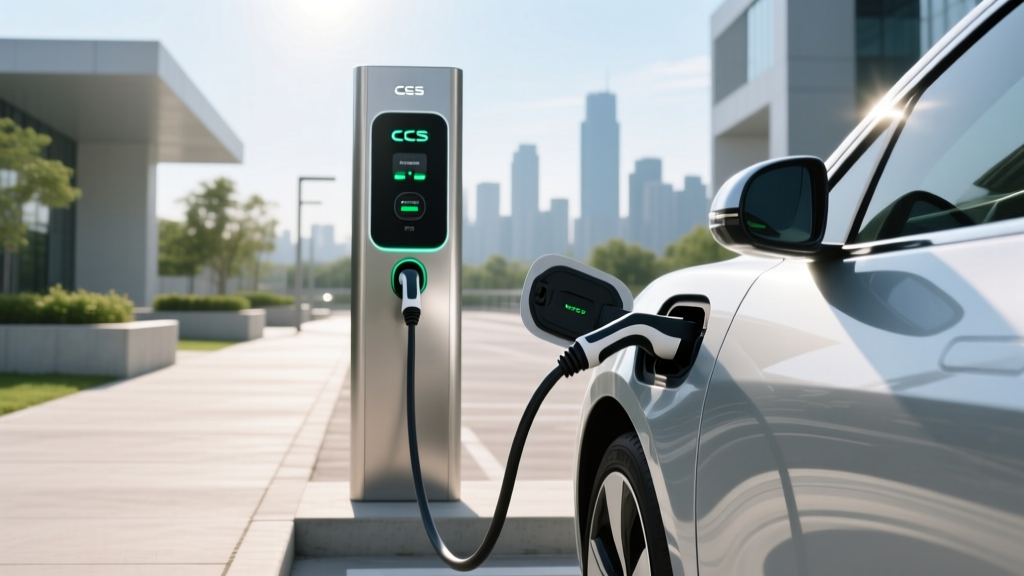
Connector Compatibility: NACS, CCS, and Supercharger Access
The 2024+ Ford F-150 Lightning ships with the NACS (North American Charging Standard) port — the Tesla-designed connector now adopted industry-wide. Earlier 2022–2023 models were built with CCS1 and require a Ford-provided NACS adapter to access Tesla Superchargers.
| Connector | Model Years | Networks | Adapter Needed? |
|---|---|---|---|
| NACS (native) | 2024–present | Tesla Superchargers, Electrify America (new stalls), EVgo | No — native port |
| CCS1 (native) | 2022–2023 | Electrify America, EVgo, ChargePoint | No for CCS; yes for Superchargers |
| NACS adapter (CCS→NACS) | 2022–2023 | Tesla Supercharger network (V3/V4 stalls) | Yes — Ford-supplied adapter |
| CHAdeMO | N/A | Legacy stations (largely retired) | Not compatible; no adapter available |
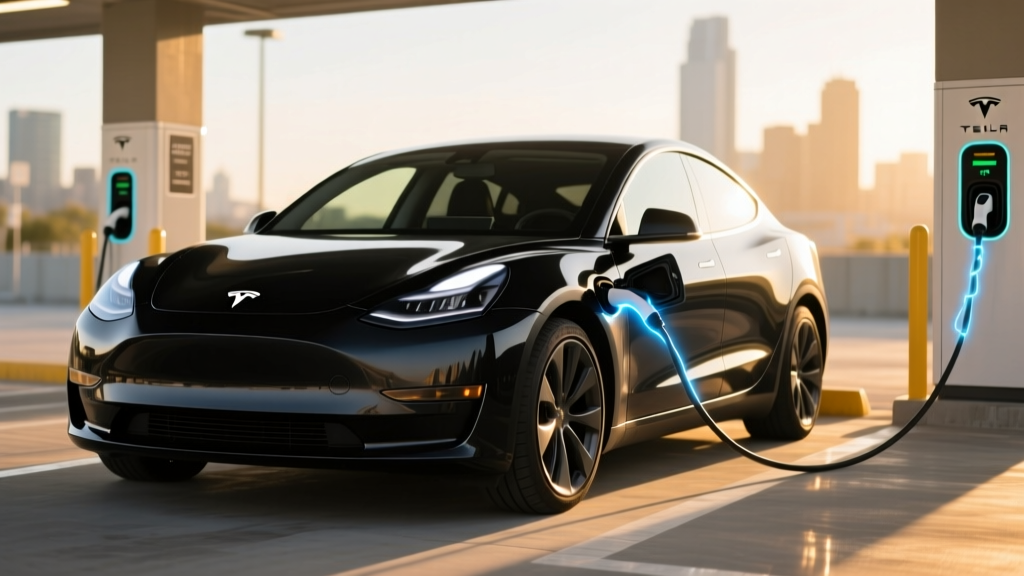
Supercharger access for CCS-equipped Lightnings: Ford distributed NACS adapters to 2022–2023 Lightning owners beginning in early 2024. If you're buying a used early-model Lightning, confirm the adapter is included — replacement units run approximately $200–$250. Once connected, Supercharger V3 stalls deliver up to 150 kW to the Lightning, comparable to Electrify America's 150 kW CCS chargers.
Cost Per Mile: Charging vs. Gas for the F-150
The F-150 Lightning Extended Range consumes roughly 48 kWh per 100 miles (about 2.1 kWh/mi) according to EPA data on fueleconomy.gov. The Standard Range is slightly more efficient at approximately 47 kWh/100mi. Here's how that translates to real cost:
| Charging Scenario | Rate ($/kWh) | Cost Per Mile | Cost for 300 Miles |
|---|---|---|---|
| Home (off-peak utility rate) | $0.08–$0.12 | $0.04–$0.06 | $12–$18 |
| Home (average national rate) | $0.16 | $0.07–$0.08 | $21–$24 |
| Public Level 2 | $0.25–$0.39 | $0.12–$0.19 | $36–$57 |
| DC Fast Charging (public) | $0.35–$0.55 | $0.17–$0.26 | $51–$78 |
| Gas F-150 (18 MPG, $3.40/gal) | — | $0.19 | $57 |
The bottom line: Home charging on an off-peak rate costs roughly one-third what a gas F-150 spends per mile. Even at peak public DC fast-charging rates, the Lightning is cost-competitive with gas — but habitual reliance on expensive public chargers erases the economic advantage. For maximum savings, home Level 2 is non-negotiable.
Best Home Chargers for the F-150 Lightning (2026 Picks)
With the Lightning's large battery, you want a Level 2 unit that can deliver meaningful overnight range recovery. Here are three chargers matched to the truck's capabilities:
ChargePoint Home Flex (NACS or J1772)
- Power Output: Up to 11.5 kW (48A) on a 60A circuit
- Connector: Available in NACS (native for 2024+ Lightnings) or J1772
- Cable Length: 23 feet
- Smart Features: Wi-Fi scheduling, Alexa integration, energy tracking via app
- Price: ~$550–$650
- Verdict: Reliable mid-range pick; 11.5 kW adds ~100 miles overnight (8 hours) — adequate for daily driving but won't fully replenish the Extended Range pack in one night.
Ford Charge Station Pro (NACS)
- Power Output: Up to 19.2 kW (80A) on a 100A circuit
- Connector: NACS (native for 2024+ models)
- Cable Length: 25 feet
- Smart Features: FordPass integration, Pro Power Onboard coordination, intelligent off-peak scheduling
- Price: ~$1,100–$1,300
- Verdict: The only way to unlock the Lightning's full 19.2 kW onboard charging. Adds ~170 miles in 8 hours — can fully recharge the Extended Range overnight. Requires a 100A circuit and hardwired install.
Wallbox Pulsar Max (NACS or J1772)
- Power Output: Up to 11.5 kW (48A) on a 60A circuit
- Connector: Available in NACS or J1772
- Cable Length: 25 feet
- Smart Features: Wi-Fi + Bluetooth, load balancing, Power Sharing for multi-charger setups
- Price: ~$450–$550
- Verdict: Compact, competitively priced, and well-reviewed. A strong value pick for Lightning owners who don't need 19.2 kW speeds.
Safety, Code, and Installation Essentials
A Level 2 charger installation isn't just plugging in an appliance — it's a permanent high-draw electrical circuit that must meet National Electrical Code (NEC) requirements:
- Dedicated circuit: Your EV charger must have its own breaker — no shared circuits with dryers, HVAC, or other heavy loads.
- GFCI protection: NEC 2020 and later requires GFCI (Ground Fault Circuit Interrupter) protection for all EV outlets. Hardwired chargers with built-in ground fault monitoring may satisfy this without a separate GFCI breaker.
- Outdoor rating: If your charger is mounted outside or in an open carport, it must carry a NEMA 4 (weatherproof) rating. All three picks above are outdoor-rated.
- Wire gauge: A 60A circuit typically requires 6 AWG copper wire; a 100A circuit requires 3 AWG or 1/0 AWG depending on run length. Your electrician will calculate voltage drop for long runs.
- Permit and inspection: Most jurisdictions require a permit for EV charger installation. Skipping this can void homeowner's insurance coverage for electrical fires.
Always hire a licensed electrician familiar with EV charger installs. Ask specifically whether your panel has spare capacity for the new circuit — a load calculation (NEC Article 220) determines this, not just counting open breaker slots.
DC Fast Charging Times: 10–80% Benchmarks
When road-tripping in the Lightning, here's what to expect at public DC fast chargers:
| Battery Pack | Charger Power | 10–80% Time | Miles Added in 20 Min |
|---|---|---|---|
| 98 kWh (Standard Range) | 150 kW DC | ~36 minutes | ~75 miles |
| 131 kWh (Extended Range) | 150 kW DC | ~41 minutes | ~80 miles |
| 131 kWh (Extended Range) | 50 kW DC | ~105 minutes | ~30 miles |
Charge-curve reality: The Lightning peaks near 150 kW only in the 15–55% SoC window. From 55–80%, speeds typically taper to 75–100 kW. Above 80%, expect under 40 kW. For road trips, charging to 80% and driving on is almost always faster than waiting for a full charge — the last 20% can take as long as the first 70%.
Frequently Asked Questions
How much does it cost to install a home EV charger for the F-150 Lightning?
Expect $1,200–$1,800 for a standard 48-amp Level 2 install (equipment, electrician labor, and permit) if your panel has spare capacity. If your home needs a 200A panel upgrade, total costs can reach $3,000–$6,000. The federal §25D tax credit covers 30% of costs up to $1,000.
How fast will each charging level add range to my Lightning?
Level 1 (120V) adds about 3 miles per hour — essentially useless for daily use on a 131 kWh pack. Level 2 at 48 amps adds roughly 25 miles per hour. At 80 amps (Ford Charge Station Pro), you get about 42 miles per hour. DC fast charging at 150 kW can add 150+ miles in 30 minutes, but only in the optimal SoC window.
Which connector and charger is compatible with my F-150 Lightning?
2024 and newer Lightnings have a native NACS port — they plug directly into Tesla Superchargers and new NACS-equipped stations. The 2022–2023 models have CCS1 and need Ford's NACS adapter for Supercharger access. For home Level 2, any NACS or J1772 (with adapter) charger works. CHAdeMO is not compatible.
How much does charging the F-150 Lightning cost per mile compared to gas?
At a typical home electricity rate of $0.16/kWh, the Lightning costs about $0.07–$0.08 per mile. A comparable gas F-150 at 18 MPG and $3.40/gallon costs about $0.19 per mile. Home charging saves roughly 60% per mile. Public DC fast charging at $0.48/kWh costs about $0.23/mile — more expensive than gas.
What electrical upgrades might I need for a home charger?
The most common upgrade is a panel service increase from 100A or 150A to 200A ($1,500–$3,500) if your existing panel can't support a dedicated 60A+ EV circuit. You may also need a new conduit run if your panel is far from the garage, or a sub-panel if your main panel is full. A licensed electrician's load calculation will determine what's needed.
Can I use a Tesla Supercharger with my F-150 Lightning?
Yes. The 2024+ Lightning has a native NACS port and connects to Superchargers directly. The 2022–2023 Lightning requires Ford's NACS adapter (provided by Ford to original owners). Supercharger V3 stalls deliver up to 150 kW to the Lightning. Use the FordPass app or Tesla app to locate compatible stalls — not all Supercharger locations have been opened to non-Tesla vehicles.
Editor's note: Electricity rates, charger pricing, and federal tax credit rules are current as of early 2026 and subject to change. Consult the IRS §25D guidance and a licensed electrician before committing to an installation. Real-world range and charging speeds vary with temperature, driving style, and station conditions.