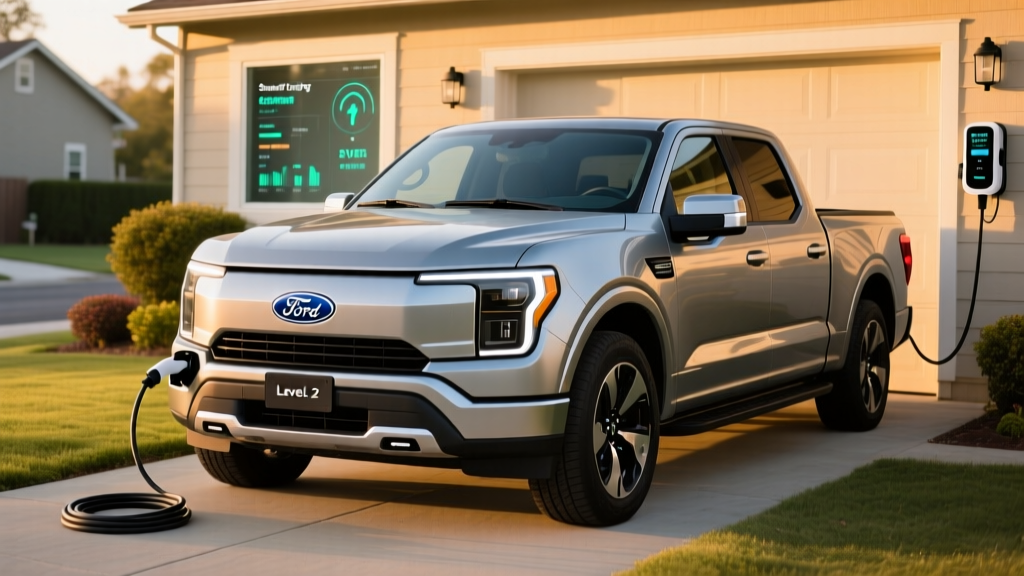
The Ford F-150 Lightning proved that a full-size electric pickup can work — but its real-world usability hinges entirely on how you charge it. Whether you're eyeing the Standard Range or Extended Range battery, understanding the relationship between your truck's EPA-rated miles and the charging hardware you install at home is the difference between a seamless daily driver and a frustrating compromise.
This guide breaks down exactly how to preserve and maximize your Ford F-150 Lightning range through proper charging infrastructure, with hard numbers on speeds, costs, and installation requirements. No fluff, just the data you need to plan your setup.
Ford F-150 Lightning Range: EPA Numbers vs. Real-World Reality
Before sizing your charger, you need to know what you're filling. The F-150 Lightning comes in two battery configurations for the 2025–2026 model years:
| Spec | Standard Range (SR) | Extended Range (ER) |
|---|---|---|
| Usable Battery Capacity | 98 kWh (NMC)131 kWh (NMC) | |
| EPA Range | ~240 miles | ~320 miles |
| Real-World Highway (70 mph) | ~190–210 miles | ~250–280 miles |
| Cold Weather (below 30°F) | ~165–190 miles | ~220–255 miles |
| Max DC Fast Charge Rate | ~150 kW peak | ~150 kW peak |
| 10–80% DCFC Time | ~44 minutes | ~41 minutes |
| Onboard AC Charger (L2) | 11.3 kW (single) / 19.2 kW (dual) | 19.2 kW (dual) |
Charging Levels Explained: Speeds in kW and Miles Per Hour
Understanding charging requires keeping two units straight: kW (kilowatts) measures power — how fast energy flows into your battery at a given moment. kWh (kilowatt-hours) measures energy — the total capacity of your battery, like gallons in a fuel tank. A 131 kWh battery charged at 11.3 kW takes roughly 11.6 hours from empty to full.
| Level | Voltage / Amps | Power (kW) | Miles Added/Hour | Best Use Case |
|---|---|---|---|---|
| Level 1 (120V) | 120V / 12A | ~1.4 kW | ~3–4 mi/hr | Emergency / overnight trickle |
| Level 2 (240V) | 240V / 32–48A | 7.7–11.5 kW | ~20–30 mi/hr | Daily home charging |
| Level 2 (240V High) | 240V / 80A | 19.2 kW | ~45–52 mi/hr | F-150 Lightning dual-charger |
| DC Fast Charge | 400–800V DC | 50–150 kW | ~150–350 mi/hr | Road trips, rapid top-ups |
The F-150 Lightning Extended Range with the available 80-amp Pro Power Onboard dual onboard charger is one of the few EVs that can actually absorb 19.2 kW on Level 2 — but this requires a 100-amp dedicated circuit and the Ford Charge Station Pro. Most Lightning owners on a standard 48-amp Level 2 setup will see roughly 11.5 kW, adding about 30 miles of range per hour of charging.
Home Charger Installation: Electrical Requirements and True Costs
This is where many buyers get blindsided. The charger unit itself is often the cheapest part of the equation. Here's what a professional installation actually involves:
Electrical Requirements by Charger Size
- 32-amp charger (7.7 kW): Requires a 40-amp dedicated breaker, 240V circuit, 6-gauge copper wire
- 48-amp charger (11.5 kW): Requires a 60-amp dedicated breaker, 240V circuit, 4-gauge copper wire
- 80-amp charger (19.2 kW — Ford Charge Station Pro): Requires a 100-amp dedicated breaker, 240V circuit, 1-gauge copper wire or aluminum equivalent
The National Electrical Code (NEC) requires that continuous loads (like EV charging, which runs for 3+ hours) not exceed 80% of the circuit breaker rating. That's why a 48-amp charger needs a 60-amp breaker.
Panel Upgrade Reality Check
If your home has a 100-amp main electrical panel (common in homes built before 1990), adding a 60-amp EV circuit may push your total calculated load beyond the panel's capacity. A licensed electrician will perform a load calculation. If you need a panel upgrade to 200 amps, expect to add $1,500–$3,500 to your project.
| Component | Typical Cost Range | Notes |
|---|---|---|
| Level 2 Charger Unit (32–48A) | $350–$750 | Hardwired units cheaper than NEMA 14-50 plug-in |
| Ford Charge Station Pro (80A) | $1,100–$1,300 | Required for 19.2 kW; includes V2H capability |
| Electrician Labor (standard install) | $500–$1,500 | Depends on run length from panel to garage |
| Electrical Permit | $50–$250 | Varies by municipality; required by code |
| Wire & Conduit Materials | $150–$600 | Longer runs and thicker gauge = higher cost |
| Panel Upgrade (if needed) | $1,500–$3,500 | 100A → 200A service upgrade |
| Total (no panel upgrade) | $1,050–$3,100 | Most homes with 200A panels |
| Total (with panel upgrade) | $2,550–$6,600 | Older homes with 100A service |
The federal Residential Clean Energy Credit (IRS §25D) does not cover EV chargers for most taxpayers after 2022. However, the Alternative Fuel Vehicle Refueling Property Credit (§30C) was updated under the Inflation Reduction Act to offer up to 30% (max $1,000) for home charger equipment and installation — but only if you live in an eligible census tract. Check irs.gov for current eligibility maps before assuming you qualify.
Connector Compatibility: NACS, CCS1, and What Ford Uses
Ford made a pivotal decision for the 2025 model year: all new F-150 Lightnings now ship with the NACS (North American Charging Standard) port — the Tesla-designed connector. This replaces the CCS1 port used on 2022–2024 models.
| Model Year | Native Port | Tesla Supercharger Access | CCS1 Network Access | Adapter Needed? |
|---|---|---|---|---|
| 2022–2024 | CCS1 | Via Ford-provided NACS adapter | Native (no adapter) | NACS adapter for Tesla stations |
| 2025–2026 | NACS | Native (no adapter) | Via CCS1 adapter (sold separately) | CCS1 adapter for Electrify America, etc. |
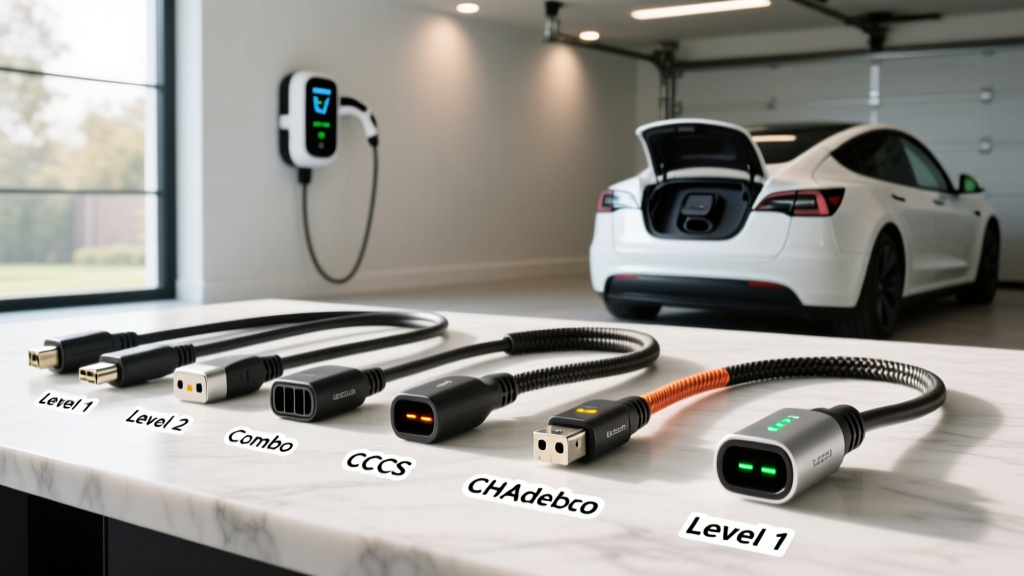
For home charging, the connector situation is simpler: all Level 2 home chargers sold in North America use a J1772 connector (for CCS1-vehicle model years) or a NACS connector (for 2025+ models). The Ford Mobile Power Cord included with the truck handles both 120V and 240V via interchangeable adapters.
Cost to Charge: Per-Mile Economics vs. Gasoline
The F-150 Lightning Extended Range averages about 2.0–2.2 kWh per mile in mixed driving (roughly 48 MPGe combined per fueleconomy.gov). Here's what that translates to in real dollars:
| Scenario | Rate ($/kWh) | Cost Per Mile | Full Charge Cost (131 kWh) |
|---|---|---|---|
| Home Off-Peak (utility time-of-use) | $0.08–$0.12 | $0.16–$0.26 | $10.50–$15.70 |
| Home Standard Rate | $0.14–$0.18 | $0.28–$0.39 | $18.30–$23.60 |
| Public Level 2 (ChargePoint, etc.) | $0.25–$0.40 | $0.50–$0.84 | $32.75–$52.40 |
| DC Fast Charge (Electrify America) | $0.35–$0.55 | $0.70–$1.16 | $45.85–$72.05 |
| Gas F-150 (18 MPG combined, $3.40/gal) | — | $0.19/mile | — |
At home off-peak rates, the Lightning costs less per mile than a gas F-150. But if you rely exclusively on DC fast charging, your per-mile cost can exceed gasoline — a critical consideration for apartment dwellers or those without home charging access.
Recommended Home Chargers for the F-150 Lightning
These are chargers we've evaluated for compatibility, build quality, smart features, and value — specifically matched to the Lightning's onboard charging capabilities.
Ford Charge Station Pro (80A)
- Power: 19.2 kW (requires dual onboard charger)
- Connector: NACS (2025+) / CCS1 (2022–2024)
- Cable Length: 25 ft
- Smart Features: FordPass integration, scheduled charging, V2H backup power (with Home Integration System)
- Price: ~$1,200 + install
- Best For: Maximum Level 2 speed, home backup power
ChargePoint Home Flex (up to 50A)
- Power: Up to 12 kW (adjustable 16–50A)
- Connector: J1772 (NACS adapter available)
- Cable Length: 23 ft
- Smart Features: Wi-Fi, app scheduling, Alexa, amperage DIP-switch adjustable
- Price: ~$550 + install
- Best For: Flexible amperage, excellent app, UL-listed
Tesla Wall Connector (48A)
- Power: Up to 11.5 kW
- Connector: NACS native
- Cable Length: 24 ft
- Smart Features: Wi-Fi updates, power sharing (multiple units), load management
- Price: ~$425 + install
- Best For: 2025+ NACS Lightnings, multi-EV households
Emporia Level 2 Smart Charger (48A)
- Power: Up to 11.5 kW
- Connector: J1772 (NACS version available)
- Cable Length: 24 ft
- Smart Features: Real-time energy monitoring, solar integration, load management with Emporia Vue panel monitor
- Price: ~$400 + install
- Best For: Budget-conscious, solar homes, energy monitoring
Safety, Code, and Installation Best Practices
EV charging is a high-draw, long-duration electrical load. Cutting corners creates fire risk. Here's what code and common sense require:
- Dedicated circuit: Your EV charger must have its own breaker — never share a circuit with other appliances.
- GFCI protection: NEC 2020+ requires GFCI protection for all 125V–250V receptacles used for EV charging in garages. Hardwired units typically don't require an additional GFCI breaker (the unit handles ground-fault detection internally).
- Outdoor rating: If mounting outside, ensure the unit carries a NEMA 4 or IP65 rating. The Ford Charge Station Pro and Tesla Wall Connector are both rated for outdoor installation.
- Permit and inspection: Nearly all jurisdictions require an electrical permit for a new 240V circuit. The inspection ensures wire gauge, breaker size, and grounding meet code — this protects your home insurance coverage in the event of an electrical fire.
- Wire gauge: Use copper wire sized for 125% of the continuous load. A 48-amp charger on a 60-amp breaker needs minimum 4 AWG copper (or 2 AWG aluminum for long runs).
Frequently Asked Questions
How much does it cost to install a home EV charger for the F-150 Lightning?
Expect $1,050–$3,100 for a standard installation (charger + electrician + permit + materials) if your home already has a 200-amp electrical panel. If you need a panel upgrade from 100A to 200A, add $1,500–$3,500. The 80-amp Ford Charge Station Pro pushes costs higher due to the 100-amp circuit requirement and thicker wire.
How fast will each charging level add range to my Lightning?
Level 1 (120V) adds roughly 3–4 miles per hour — impractical for daily use on a truck with a 98–131 kWh battery. Level 2 at 48 amps adds ~30 miles per hour, enough to refill overnight. Level 2 at 80 amps (Ford Charge Station Pro with dual onboard charger) adds ~45–52 miles per hour. DC fast charging peaks around 150 kW, adding 150+ miles in 30 minutes before the charge curve tapers above 80% SoC.
Which connector and charger is compatible with my F-150 Lightning?
2022–2024 Lightnings use CCS1 natively and need a Ford-supplied NACS adapter for Tesla Superchargers. 2025–2026 models use NACS natively and need a CCS1 adapter for Electrify America and other non-Tesla DC networks. For home Level 2 charging, match your charger's connector to your truck's port — or use an adapter.
How much does charging cost per mile compared to gas?
At home off-peak rates ($0.08–$0.12/kWh), the Lightning costs $0.16–$0.26 per mile — comparable to or cheaper than a gas F-150 at $0.19/mile. At standard home rates ($0.14–$0.18/kWh), it's slightly more expensive. DC fast charging at $0.35–$0.55/kWh pushes cost to $0.70–$1.16 per mile, significantly more than gas. Home charging is where the economics work.
What electrical upgrades might I need?
The most common upgrade is a panel replacement from 100A to 200A service ($1,500–$3,500). You may also need a new breaker slot (if your panel is full), a longer wire run from the panel to the garage (increasing material cost), or a sub-panel if your garage is detached. Some utilities offer free or discounted panel upgrades for EV adopters — check with your local provider.