If you've landed here searching for charging specs on an electrified Ford F-150 — or even stumbled in looking for a "Harley Davidson F150 supercharged" and found something quite different — you're in the right place. The Ford F-150 Lightning is Ford's all-electric full-size pickup, and whether you're comparing it to supercharged gas trucks or evaluating it as your first EV, understanding how to charge it is the single most important ownership decision you'll make.
This guide covers everything from home Level 2 installation costs and electrical panel requirements to public DC fast-charging speeds, connector compatibility, and real-world cost-per-mile math. We'll also address why some buyers searching for high-performance gas trucks are cross-shopping the Lightning — and what the charging reality actually looks like in 2026.
Understanding EV Charging Levels: kW vs kWh Explained
Before plugging in anything, you need to understand the two units that cause the most confusion in EV ownership:
- kW (kilowatts) = power, or how fast energy flows into the battery. Think of it as the size of the hose filling a tank.
- kWh (kilowatt-hours) = energy, or how much the battery holds. Think of it as the size of the tank itself.
The Ford F-150 Lightning comes with two battery options: a 98 kWh usable Standard Range pack and a 131 kWh usable Extended Range pack (both NMC chemistry). A charger rated at 19.2 kW can theoretically add 19.2 kWh of energy in one hour — but real-world charging involves losses, thermal management, and charge-curve tapering above 80% state of charge (SoC).
| Level | Voltage | Power (kW) | Miles of Range Added per Hour | Best For |
|---|---|---|---|---|
| Level 1 | 120V AC | 1.2–1.4 kW | ~3–5 mi/hr | Overnight top-ups, emergencies |
| Level 2 | 240V AC | 7.2–19.2 kW | ~20–55 mi/hr | Daily home charging |
| DC Fast Charge | 400V+ DC | 50–250+ kW | ~150–600+ mi/hr (peak) | Road trips, quick top-ups |
For context, the Lightning Extended Range with its EPA-estimated 320 miles of range (expect ~260–285 miles in real-world highway driving or cold weather) would take roughly 6–7 hours on a 19.2 kW Level 2 charger from 10% to full, and approximately 41 minutes for a 10–80% DC fast charge at a 150 kW station, per fueleconomy.gov estimates. Peak charge rate on the Extended Range model reaches approximately 150 kW but tapers significantly above 80% SoC to protect battery health.
How Much Does It Cost to Install a Home EV Charger?
Home charging is where the F-150 Lightning makes the most economic sense. But installation costs vary dramatically based on your home's electrical infrastructure.
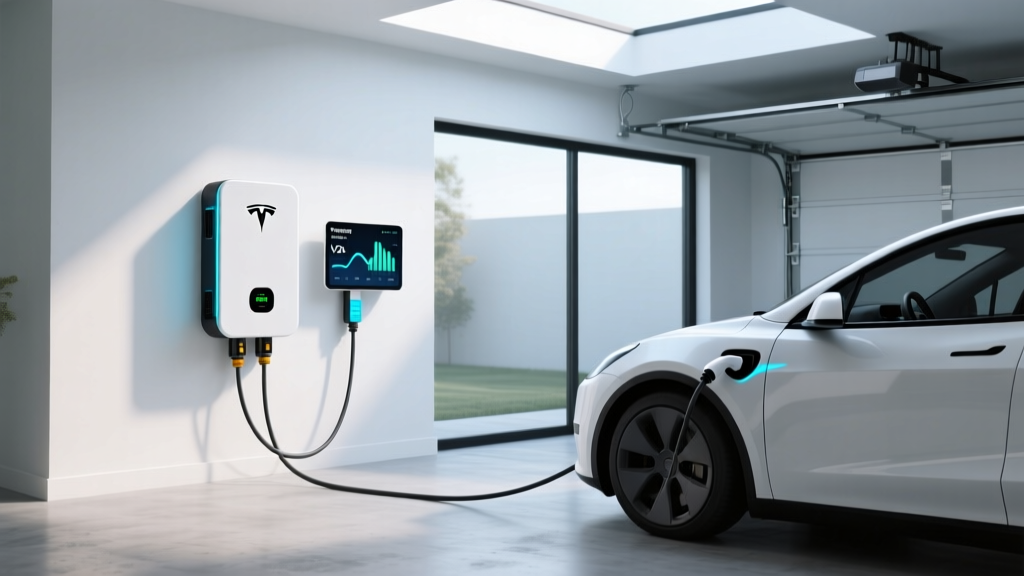
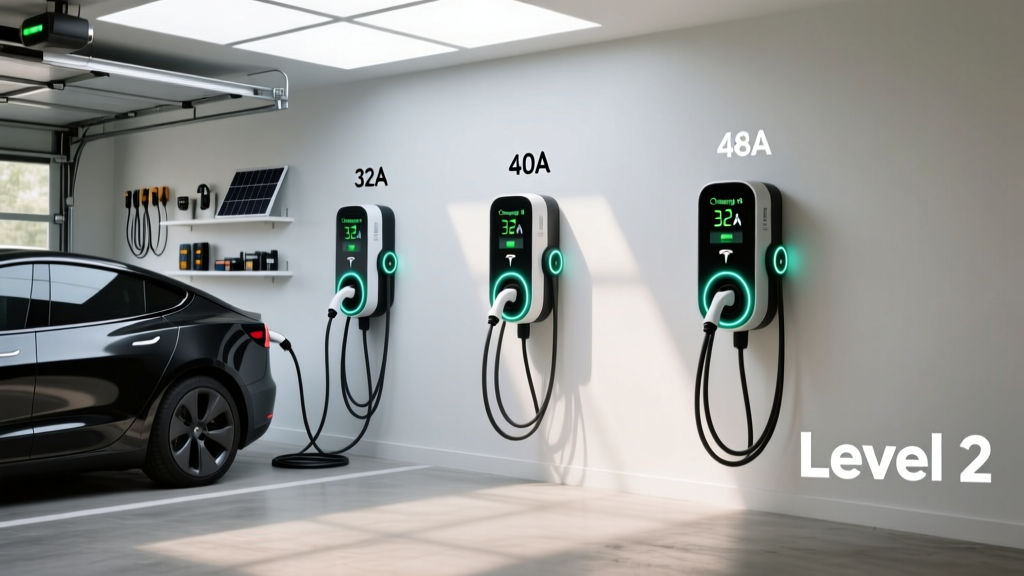
The Lightning's onboard charger accepts up to 19.2 kW on Level 2 AC power (Extended Range trims with the 80A charge option), meaning you'll want a 240V circuit rated at 100 amps to maximize that speed — though a more common 240V/48A circuit (delivering ~11.5 kW) covers most daily needs and is far cheaper to install.
| Component | Standard Install (48A/60A circuit) | High-Power Install (80A/100A circuit) |
|---|---|---|
| EVSE Equipment (Level 2 charger) | $400–$700 | $600–$1,200 |
| Electrician Labor | $600–$1,500 | $1,200–$3,000 |
| Permit & Inspection | $100–$300 | $150–$400 |
| Panel Upgrade (if needed) | $0–$2,500 | $1,500–$4,500 |
| Total Estimated Cost | $1,100–$5,000 | $3,450–$9,100 |
Panel upgrade reality check: If your home has a 100-amp main panel (common in homes built before the 1990s), adding a 60A dedicated EV circuit may exceed your panel's capacity. Upgrading to a 200A panel typically costs $1,500–$3,000. Homes with 200A service usually accommodate a 48A–60A EV circuit without upgrade. Always have a licensed electrician perform a load calculation before committing to equipment.
The federal Alternative Fuel Vehicle Refueling Property Credit (IRS Form 8911) may cover up to 30% of home charging equipment and installation costs (capped at $1,000), subject to income and census-tract eligibility. Check with a tax professional for your specific situation.
What Electrical Upgrades Might I Need?
Beyond the panel itself, here's what your electrician will evaluate:
- Dedicated circuit: Your EVSE must have its own breaker — never share a circuit with appliances. A 48A charger requires a 60A breaker (NEC code requires circuits to be rated at 125% of continuous load).
- Wire gauge: 60A circuits typically require 4 AWG copper wire; 100A circuits need 1 AWG or larger. Longer runs from panel to garage increase wire cost significantly.
- GFCI protection: NEC 2020+ requires GFCI protection for outdoor receptacles; some jurisdictions now require it for indoor EV circuits as well. Your EVSE may have built-in GFCI — confirm with your electrician to avoid nuisance tripping.
- Outdoor rating: If your charger is mounted outside or in an unconditioned garage, ensure the EVSE carries a NEMA 4 or NEMA 4X rating for weather resistance.
- Conduit and routing: Surface-mounted conduit is cheaper; running wire through finished walls or underground to a detached garage adds $500–$2,000+.
Which Connector Is Compatible with the F-150 Lightning?
The connector landscape shifted significantly in 2024–2025. Here's where the Lightning stands in 2026:
| Connector Type | Used By | F-150 Lightning Compatibility |
|---|---|---|
| NACS (North American Charging Standard / Tesla) | Tesla, Ford (2025+ models), GM, Rivian, Volvo, others | 2025+ Lightning: native NACS port. 2022–2024: requires Ford-provided NACS adapter for Supercharger access. |
| CCS1 (Combined Charging System) | Most legacy non-Tesla EVs, Electrify America, EVgo | 2022–2024 Lightning: native CCS1 port. 2025+: CCS1 adapter available for legacy station compatibility. |
| CHAdeMO | Nissan Leaf (legacy), Mitsubishi | Not compatible. CHAdeMO is effectively discontinued for new vehicles. |
Key takeaway for Lightning owners: Ford's transition to NACS means 2025 and newer Lightnings charge natively at Tesla Superchargers (now open to non-Tesla vehicles via the NACS standard). If you own a 2022–2024 Lightning with CCS1, Ford issued a complimentary NACS adapter enabling access to over 20,000 Supercharger stalls. This adapter is essential for road trips — keep it in the truck at all times.
How Much Does Charging Cost per Mile vs Gas?
This is where the Lightning decisively beats any supercharged or turbocharged gas F-150 — including high-performance variants that buyers cross-shopping "Harley Davidson F150 supercharged" trucks might be considering.
| Scenario | Cost per kWh | Lightning Ext. Range (2.0 kWh/mi) | Cost per Mile | |
|---|---|---|---|---|
| Home Off-Peak (utility rate) | $0.08–$0.12 | 2.0 kWh/mi | $0.16–$0.24 | |
| Home Standard Rate | $0.14–$0.18 | 2.0 kWh/mi | $0.28–$0.36 | |
| Public Level 2 (ChargePoint, etc.) | $0.25–$0.45 | 2.0 kWh/mi | $0.50–$0.90 | |
| DC Fast Charge (Electrify America, Supercharger) | $0.32–$0.55 | 2.0 kWh/mi | $0.64–$1.10 | |
| Gas Comparison: F-150 3.5L EcoBoost (18 MPG combined, $3.40/gal) | $1.89/mi... wait — $0.189/mi | |||
| Gas Comparison: Supercharged/Performance F-150 (14 MPG combined, $3.40/gal) | $0.243/mi | |||
At home off-peak rates, the Lightning costs roughly $0.16–$0.24 per mile — comparable to or cheaper than even an efficient gas F-150, and dramatically cheaper than a supercharged or high-output variant getting 12–15 MPG. On DC fast charging alone, costs rise to $0.64–$1.10/mile, which is why home charging is essential for EV economics.
The Lightning Extended Range achieves approximately 2.0 kWh per mile (or roughly 70 MPGe combined, per EPA data). Real-world efficiency worsens to 2.3–2.6 kWh/mile at sustained highway speeds above 75 mph or in sub-40°F temperatures — factor this into road-trip budgeting.
Recommended Home Level 2 Chargers for the F-150 Lightning
Based on the Lightning's charging capabilities and typical garage setups, here are our top equipment picks for 2026:
Best Overall: ChargePoint Home Flex (NACS)
- Power Output: Up to 12 kW (50A circuit) or configurable down to 16A
- Connector: NACS (native for 2025+ Lightning); CCS1 version also available
- Cable Length: 23 feet
- Smart Features: Wi-Fi, app scheduling, utility demand-response integration, Alexa/Google Home
- Price: ~$550–$650
- Why: Flexible amperage lets you match your circuit; UL-listed; excellent app for tracking cost per kWh.
Best High-Power: Ford Charge Station Pro
- Power Output: Up to 19.2 kW (requires 100A/80A continuous circuit)
- Connector: NACS (2025+ models); CCS1 for 2022–2024
- Cable Length: 25 feet
- Smart Features: FordPass integration, scheduled charging, Intelligent Backup Power (V2H with Home Integration System)
- Price: ~$1,000–$1,300 (often discounted or included with Lightning purchase)
- Why: Only way to unlock the Lightning's full 19.2 kW onboard charger; enables vehicle-to-home backup power during outages.
Best Budget: Emporia Vue EV Charger
- Power Output: Up to 11.5 kW (48A on a 60A circuit)
- Connector: J1772 (CCS1-compatible) with NACS adapter available
- Cable Length: 24 feet
- Smart Features: Wi-Fi, app with energy monitoring, solar integration, load management
- Price: ~$350–$400
- Why: Lowest-cost smart charger with robust energy monitoring; pairs well with Emporia's whole-home energy panel for solar owners.
DC Fast Charging: What to Expect on Road Trips
The F-150 Lightning Extended Range peaks at approximately 150 kW on DC fast chargers, while the Standard Range peaks around 120 kW. But peak rate tells only part of the story — the charge curve matters far more:
- 10–30% SoC: Near peak rate (~140–150 kW on Extended Range)
- 30–60% SoC: Sustained ~120–140 kW
- 60–80% SoC: Tapers to ~80–100 kW
- 80–100% SoC: Drops sharply to ~20–40 kW (never fast-charge past 80% unless necessary)
Real-world 10–80% charging times:
- Extended Range (131 kWh): ~41 minutes at a 150+ kW station
- Standard Range (98 kWh): ~36 minutes at a 120+ kW station
Preconditioning tip: Navigate to your charging station using the Lightning's built-in navigation (or FordPass). The truck will automatically precondition the battery — warming it to optimal temperature for faster charge acceptance. In cold weather, preconditioning can shave 10–15 minutes off your charge time by avoiding the cold-battery power restriction.
For road-trip planning, the Lightning's access to the Tesla Supercharger network (via NACS) dramatically improves charging-desert coverage compared to CCS-only trucks. Supercharger V3 stalls deliver up to 250 kW, though the Lightning caps at ~150 kW. Expect reliable 10–80% charges in under 45 minutes at most Supercharger locations.
Frequently Asked Questions
Can I charge the F-150 Lightning on a standard 120V outlet?
Yes, but slowly. Level 1 charging at 120V/12A delivers roughly 1.4 kW, adding about 3–5 miles of range per hour. Fully recharging the Extended Range battery from empty would take approximately 90+ hours. Level 1 is useful for overnight top-ups if you drive under 30 miles daily, but it's not practical as a primary charging strategy for a truck with a 131 kWh battery.
Do I need a permit to install a home EV charger?
In most US jurisdictions, yes. Electrical permits for EVSE installation typically cost $100–$300 and require a post-installation inspection. Skipping the permit risks insurance claim denials if an electrical fire occurs and may violate local code. Your electrician typically handles the permit application — confirm this is included in their quote.
Will charging the Lightning at home trip my breaker or overload my panel?
Not if installed correctly. A licensed electrician will perform a NEC Article 220 load calculation to ensure your panel can handle the EV circuit alongside existing loads (HVAC, electric range, dryer, etc.). If the calculation shows insufficient capacity, options include a panel upgrade, a smart load-management device (like the Emporia Smart Load Center) that throttles EV charging when other loads spike, or simply installing a lower-amperage circuit.
How does the F-150 Lightning's charging cost compare to a supercharged gas F-150?
A supercharged or high-output gas F-150 (such as the Raptor R or aftermarket supercharged builds that buyers sometimes search for alongside "Harley Davidson F150 supercharged" terms) typically achieves 12–15 MPG combined. At $3.40/gallon, that's $0.23–$0.28 per mile in fuel alone. The Lightning on home off-peak electricity costs $0.16–$0.24/mile — a savings that widens further with solar or time-of-use rates. Over 15,000 miles/year, the Lightning saves roughly $600–$1,500 annually in energy costs versus a supercharged gas truck, not including the gas truck's higher maintenance (oil changes, supercharger belt service, etc.).
Is the F-150 Lightning's battery covered under warranty?
Ford covers the Lightning's high-voltage battery for 8 years or 100,000 miles (whichever comes first), guaranteeing a minimum of 70% capacity retention. Based on current NMC degradation data from similar Ford platforms, most Lightning batteries retain 88–93% capacity at 100,000 miles when charged primarily on Level 2 and kept between 20–80% SoC for daily use. Full battery replacement (out of warranty) is estimated at $18,000–$25,000 as of 2026, though prices continue to decline.
Can I use the F-150 Lightning to power my home during an outage?
Yes — with the available Ford Intelligent Backup Power system (consisting of the Charge Station Pro and Home Integration System, ~$3,500–$5,000 installed). The Lightning Extended Range's 131 kWh battery can power an average home for approximately 3–7 days depending on consumption, delivering up to 9.6 kW of continuous output via vehicle-to-home (V2H) technology. This is a significant advantage over any gas truck — you can't plug your house into an F-150 Raptor.
Whether you arrived here researching an electric F-150 or initially searching for a supercharged gas performance truck, the data is clear: the Lightning's charging ecosystem has matured significantly. With NACS Supercharger access, sub-$5,000 home installation (in most homes), and per-mile energy costs that undercut even efficient gas trucks, the infrastructure argument against electric pickups has largely dissolved — provided you can charge at home.