Understanding the Ford Electric Focus Range and Battery Basics
The Ford Focus Electric — Ford's first mass-market battery-electric vehicle — was sold in the U.S. from the 2012 through 2018 model years before being discontinued. While no longer available new, thousands remain on the used market and continue to serve as affordable daily commuters. Understanding the Ford electric Focus range, its charging behavior, and what it takes to keep one powered efficiently at home is essential for current owners and prospective used-EV buyers alike.
The 2017–2018 Focus Electric received a meaningful battery upgrade, moving from a 23 kWh pack to a 33.5 kWh usable lithium-ion battery (liquid-cooled, NMC chemistry). This pushed the EPA-rated range to 115 miles on a full charge. Earlier 2012–2016 models with the 23 kWh pack are rated at roughly 76 miles EPA.
| Spec | 2012–2016 | 2017–2018 |
|---|---|---|
| Battery (usable) | 23 kWh | 33.5 kWh |
| EPA Range | 76 mi | 115 mi |
| EPA Efficiency | 105 MPGe | 107 MPGe |
| Motor Output | 143 hp / 184 lb-ft | 143 hp / 184 lb-ft |
| 0–60 mph | ~8.1 sec | ~7.9 sec |
| DC Fast Charge (max) | 50 kW (CCS) | 50 kW (CCS) |
| Level 2 AC Charge | 6.6 kW | 6.6 kW |
| Connector | CCS1 / J1772 | CCS1 / J1772 |
Source: fueleconomy.gov and Ford Motor Company press archives.
Charging Levels Explained: How Fast Will Each Add Range?
Before plugging in, it's critical to understand the difference between kW (kilowatts) and kWh (kilowatt-hours). kW measures the rate of power delivery — think of it as how fast water flows through a hose. kWh measures the total energy stored in the battery — the size of the tank. A 6.6 kW charger delivers energy at 6.6 kilowatts; the Focus Electric's 33.5 kWh battery holds 33.5 kilowatt-hours of energy when full.
| Level | Voltage / Power | Miles of Range per Hour | Full Charge Time (0–100%) |
|---|---|---|---|
| Level 1 | 120V / 1.4 kW | ~3–4 mi/hr | ~24–30 hours |
| Level 2 | 240V / 6.6 kW (vehicle max) | ~18–22 mi/hr | ~5–5.5 hours |
| DC Fast | 50 kW peak (CCS) | ~120+ mi/hr (to 80%) | 10–80% in ~30 min |
Because the Focus Electric's on-board AC charger maxes out at 6.6 kW, installing a 48-amp (11.5 kW) home charger will not charge it any faster than a 32-amp (7.7 kW) unit. The vehicle simply cannot accept more than 6.6 kW on AC power. This is an important cost-saving insight: you don't need to overspend on a high-power charger for this car.
How Much Does It Cost to Install a Home EV Charger?
Home Level 2 charging is the backbone of practical EV ownership. For Focus Electric owners, a 240V Level 2 station turns overnight into a full recharge — even from near-empty. But installation costs vary widely depending on your home's electrical panel, the distance from the panel to the charging location, and local permit fees.
Electrical Requirements for the Focus Electric
The Focus Electric draws up to 6.6 kW on Level 2. A 240V / 32-amp circuit (delivering 7.7 kW, with headroom above the car's 6.6 kW max) is the ideal dedicated circuit. This requires a double-pole 40A breaker (EV circuits must be rated to 125% of continuous load per NEC Article 625). Key requirements include:
- Dedicated circuit: No shared outlets on the same breaker
- NEMA 14-50 receptacle or hardwired connection (hardwired is preferred for outdoor installs and eliminates GFCI nuisance trips common with some receptacles)
- GFCI protection: Required by NEC 2020+ for receptacle-based EV circuits; hardwired units have internal GFCI
- Panel capacity: Your electrical panel must have room for a 40A double-pole breaker and sufficient total load capacity
Installation Cost Breakdown
| Item | Low-End | High-End | Notes |
|---|---|---|---|
| Level 2 Charger (Equipment) | $250 | $650 | 32A–40A, J1772 connector |
| Electrician Labor | $400 | $1,500 | Depends on run distance, conduit |
| Permit & Inspection | $50 | $250 | Varies by municipality |
| Panel Upgrade (if needed) | $1,500 | $3,500+ | 100A → 200A service upgrade |
| Total (No Panel Upgrade) | $700 | $2,400 | Most common scenario |
| Total (With Panel Upgrade) | $2,200 | $5,900+ | Older homes with 100A service |
Panel upgrade gotcha: Homes built before the 1990s often have 100-amp electrical service. Adding a 40A EV circuit to an already-loaded 100A panel may require a full service upgrade to 200A. Always have a licensed electrician perform a load calculation before committing to equipment purchases.
Which Connector Is Compatible with the Focus Electric?
The Focus Electric uses the CCS1 (Combo) connector for DC fast charging and the standard J1772 connector for Level 1 and Level 2 AC charging. This was the dominant U.S. standard for non-Tesla EVs through 2024.
| Connector Type | Used For | Focus Electric Compatible? | Adapter Needed? |
|---|---|---|---|
| J1772 | Level 1 & Level 2 AC | ✅ Native | No |
| CCS1 (Combo) | DC Fast Charging | ✅ Native | No |
| NACS (Tesla) | Tesla Superchargers | ❌ Not native | CCS-to-NACS adapter (~$200–$250) required for Supercharger access |
| CHAdeMO | Legacy DC Fast (Nissan) | ❌ Not compatible | N/A — different standard |
As of 2026, most major charging networks (Electrify America, EVgo, ChargePoint) still operate CCS1 connectors alongside NACS. However, Tesla Superchargers — now open to non-Tesla EVs at many locations — require a CCS-to-NACS adapter for the Focus Electric. Ford does not provide this adapter for the discontinued Focus Electric, so third-party options (such as those from Lectron or A2Z) are the route. Always verify adapter compatibility with your vehicle's specific CCS inlet before purchasing.
Charging Cost per Mile: EV vs Gas
One of the strongest arguments for owning even a used EV like the Focus Electric is the dramatically lower fuel cost. Here's how the numbers stack up using real 2026 electricity and gasoline rates.
| Scenario | Rate | Cost per Mile (Focus Electric) | Cost per Mile (30 MPG Gas Car @ $3.40/gal) |
|---|---|---|---|
| Home charging (off-peak) | $0.13/kWh | $0.040 | $0.113 |
| Home charging (avg U.S.) | $0.17/kWh | $0.052 | $0.113 |
| Public Level 2 (network) | $0.30/kWh | $0.092 | $0.113 |
| DC Fast Charging (public) | $0.48/kWh | $0.147 | $0.113 |
At home on off-peak rates, the Focus Electric costs roughly $0.04 per mile — about one-third the cost of a 30 MPG gasoline car. Even on public Level 2 networks, the EV is cheaper per mile. The one scenario where gas wins: frequent reliance on expensive DC fast chargers at $0.45–$0.55/kWh. This is why home charging is so critical for EV economics.
The Focus Electric's efficiency of roughly 3.2–3.4 miles per kWh (derived from its 107 MPGe rating per fueleconomy.gov) makes it one of the more efficient EVs on the road — a benefit of its relatively light curb weight and modest powertrain.
Recommended Home Charging Equipment for the Focus Electric
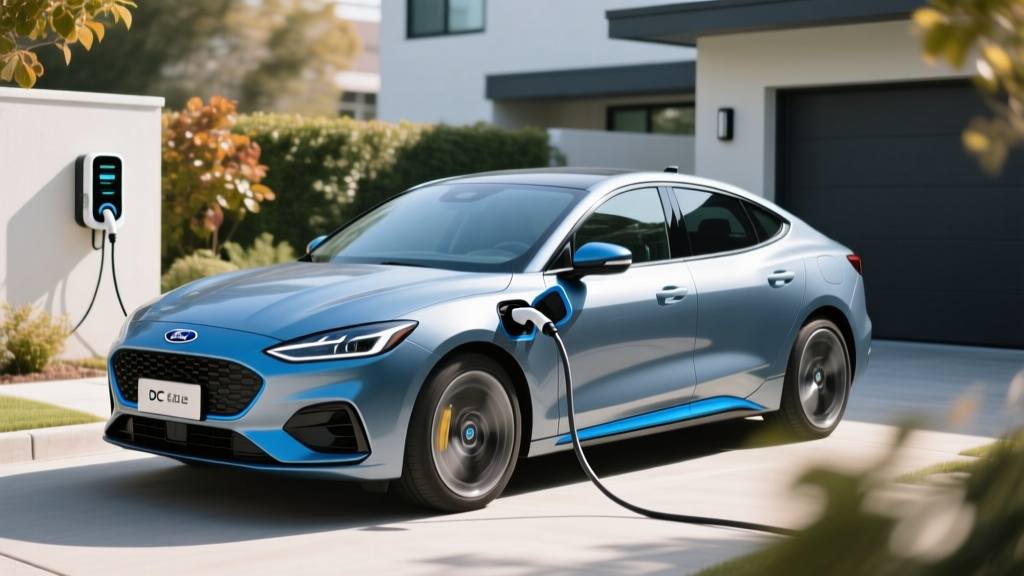
Since the Focus Electric caps AC charging at 6.6 kW, a 32-amp (7.7 kW) charger is the sweet spot — enough headroom for the car's maximum draw without overspending on capacity you'll never use. Here are three proven options:
Emporia Level 2 EV Charger
- Power Output: 48A / 11.5 kW (Focus will draw 6.6 kW max)
- Connector: J1772 (CCS-compatible for DC)
- Cable Length: 24 ft
- Smart Features: Wi-Fi, app scheduling, energy monitoring, solar integration
- Price: ~$350–$400
- Best For: Budget-conscious buyers wanting smart features; future-proof if you upgrade to a higher-kW EV later
ChargePoint Home Flex
- Power Output: Configurable 16A–50A (up to 12 kW)
- Connector: J1772
- Cable Length: 23 ft
- Smart Features: Wi-Fi, app-based scheduling, Alexa, amperage dial adjustment
- Price: ~$550–$700
- Best For: Owners who want adjustable amperage to match their circuit without buying a new unit
Tesla Universal Wall Connector
- Power Output: 48A / 11.5 kW
- Connector: Built-in J1772 + NACS (Magic Dock style)
- Cable Length: 24 ft
- Smart Features: Wi-Fi, OTA updates, power sharing between two units
- Price: ~$600
- Best For: Multi-EV households with both Tesla and non-Tesla vehicles
For a Focus Electric-only household, the Emporia offers the best value. Its 48A capacity means you'll never bottleneck the car, and the energy-monitoring features help track charging costs precisely.
Safety, Code, and Installation Best Practices
EV charging involves sustained high-current draw — often for 5+ hours at a time. This is fundamentally different from typical household loads and demands proper installation to avoid fire risk or nuisance breaker trips.
- Dedicated circuit required: The EV charger must be on its own breaker with no other outlets or appliances sharing the circuit (NEC Article 625).
- Hardwired vs. receptacle: Hardwired installations eliminate the GFCI breaker requirement (the charger has internal ground-fault protection) and reduce the risk of overheated receptacle connections. Many electricians now recommend hardwired for outdoor installs.
- Outdoor-rated equipment: If installing in a garage exterior wall or driveway, ensure the charger carries a NEMA 4 or NEMA 4X rating for weather resistance.
- Wire gauge: A 40A breaker requires minimum 8 AWG copper wire (THHN in conduit) or 6 AWG for NM-B (Romex) cable. Longer runs may need larger gauge to minimize voltage drop.
- Permit and inspection: Most jurisdictions require an electrical permit for EV charger installations. Skipping inspection can void homeowner's insurance coverage in the event of an electrical fire.
DC Fast Charging: What to Expect on Road Trips
The Focus Electric's 50 kW DC fast-charging capability via CCS1 is modest by 2026 standards — many newer EVs accept 150–350 kW — but it remains practical for the car's relatively small 33.5 kWh battery.
On networks like Electrify America or EVgo, expect to pay $0.40–$0.55/kWh for DC fast charging. A 10–80% session adds roughly 22–24 kWh, costing $9–$13 for about 70–80 miles of range.
Frequently Asked Questions
How much does it cost to install a home EV charger for the Focus Electric?
A typical Level 2 home installation runs $700–$2,400 total (equipment, electrician, and permit) if your electrical panel has sufficient capacity. Homes needing a 100A-to-200A panel upgrade should budget an additional $1,500–$3,500. Always get a load calculation from a licensed electrician first.
How fast will each charging level add range to the Focus Electric?
Level 1 (120V) adds about 3–4 miles per hour — too slow for daily use beyond short commutes. Level 2 (240V, 6.6 kW) adds roughly 18–22 miles per hour, fully recharging overnight. DC fast charging at 50 kW can add 70–80 miles in about 30 minutes (10–80% SoC).
Which connector and charger are compatible with the Focus Electric?
The Focus Electric uses J1772 for AC charging and CCS1 for DC fast charging. Any J1772 Level 2 home charger will work. For Tesla Supercharger access, you'll need a CCS-to-NACS adapter (~$200–$250). CHAdeMO stations are not compatible.
How much does charging cost per mile vs. gasoline?
At the U.S. average residential rate of $0.17/kWh, the Focus Electric costs about $0.052 per mile to charge at home — roughly half the $0.113/mile cost of a 30 MPG gas car at $3.40/gallon. Off-peak rates can push the EV cost below $0.04/mile.
What electrical upgrades might I need for a home charger?
The most common upgrade is a panel capacity increase from 100A to 200A service, needed in older homes where the existing panel is near capacity. You'll also need a dedicated 40A double-pole breaker, appropriate wire gauge (8 AWG copper minimum), and a permit. Some utilities offer rebates for panel upgrades paired with EV charger installs — check with your local provider.
Does the Ford Focus Electric qualify for any tax credits in 2026?
The federal §30D clean vehicle credit applies only to new vehicle purchases, so it does not apply to the discontinued Focus Electric. However, the used clean vehicle credit (up to $4,000 or 30% of sale price, whichever is less) may apply if you purchase one from a dealer for $25,000 or less, meet income caps ($75K single / $150K joint), and the vehicle is at least two model years old. Consult a tax professional for eligibility specifics.