What Flash Charging Actually Means for Your EV
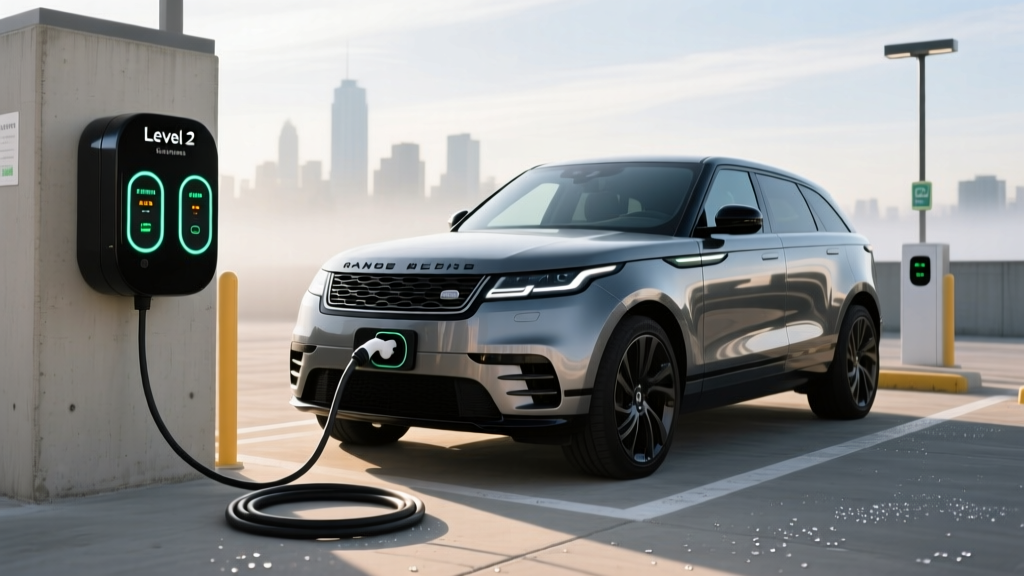
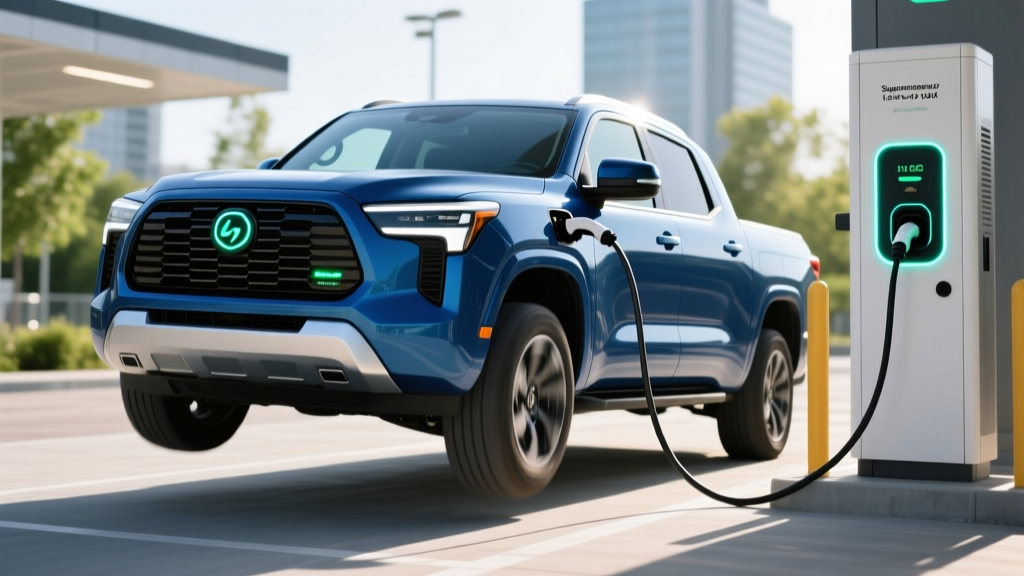
If you've seen the term "flash charging" tossed around in EV marketing or online forums, you're not alone in wondering what it really means. In practical EV ownership terms, flash charging refers to ultra-high-power DC fast charging — typically at rates of 150 kW and above — designed to replenish a significant portion of your battery in the time it takes to grab a coffee and a snack. It's the closest thing to a gas-station pit stop that battery-electric vehicles currently offer.
But flash charging doesn't exist in a vacuum. To make informed decisions about your EV's charging strategy — whether you're road-tripping or setting up a home Level 2 station — you need to understand the full spectrum of charging speeds, what your vehicle can actually accept, and what it costs in both time and money. This guide covers every layer, from the 120V outlet in your garage to the 350 kW chargers popping up along major interstates.
The Three Charging Levels: Speeds, Power, and Real-World Range Added
Every EV owner needs to internalize the distinction between kW (kilowatts, a measure of power — how fast energy flows) and kWh (kilowatt-hours, a measure of energy — how much your battery holds). Confusing the two is the single most common mistake new EV buyers make. Think of kW as the width of a hose and kWh as the size of the bucket.
| Level | Voltage | Power (kW) | Miles of Range Added per Hour | Typical Use Case |
|---|---|---|---|---|
| Level 1 | 120V AC | 1.0–1.4 kW | 3–5 mi/hr | Overnight top-up, PHEVs, emergencies |
| Level 2 | 240V AC | 7.2–19.2 kW | 25–65 mi/hr | Daily home/workplace charging |
| DC Fast (standard) | 400–800V DC | 50–150 kW | 150–400 mi/hr | Road trips, public fast-charging |
| DC Fast (flash/ultra) | 800V DC | 150–350 kW | 400–900+ mi/hr (peak) | Highway corridor rapid stops |
A few real-world caveats: those "miles per hour" figures assume peak power delivery, which never lasts for an entire session. Every EV's charge curve tapers significantly above 80% state of charge (SoC) to protect battery health. A Hyundai Ioniq 5 that peaks at 240 kW on an 800V architecture might sustain that rate from 10–55% SoC, then taper to 100 kW, then 50 kW as it approaches full. The advertised "10–80% in 18 minutes" figure accounts for this taper; a 0–100% session will take considerably longer.
A 350 kW Electrify America or Tesla Supercharger V4 stall can theoretically deliver ~1,000 miles of range per hour at peak. But no current production EV sustains 350 kW for a full session. The Lucid Air (peak ~300 kW) and Porsche Taycan (peak ~270 kW on 800V) come closest. Most mainstream EVs — Tesla Model Y, Ford Mustang Mach-E, Chevrolet Equinox EV — peak between 150–250 kW and will see 10–80% in roughly 18–30 minutes at a capable station.
Flash Charging Times: 10–80% for Common EV Battery Sizes
The table below shows approximate 10–80% charging times for popular EVs when connected to a sufficiently powerful DC fast charger. Your actual time depends on battery temperature (preconditioning matters), ambient weather, and station load.
| Vehicle | Battery (kWh usable) | Peak DC Rate (kW) | 10–80% Time (min) | Architecture |
|---|---|---|---|---|
| Hyundai Ioniq 5 (2025) | 77.4 | 240 | ~18 | 800V |
| Kia EV6 GT-Line | 77.4 | 240 | ~18 | 800V |
| Porsche Taycan (Performance+) | 83.7 | 270 | ~19 | 800V |
| Tesla Model Y Long Range | 75 | 250 | ~22 | 400V |
| Ford Mustang Mach-E Extended | 91 | 150 | ~38 | 400V |
| Chevrolet Equinox EV 3RS | 85 | 190 | ~28 | 400V |
| Lucid Air Pure | 88 | 300 | ~16 | 900V |
| Rivian R1T (Max Pack) | 141 | 220 | ~42 | 400V |
If you're charging at a 50 kW legacy station, multiply those times roughly 3–5x. That's why knowing the charger's power output before you pull up is essential for trip planning. Apps like PlugShare, A Better Routeplanner, and in-dash navigation systems now show real-time stall availability and max power output.
Home Charging Installation: Electrical Requirements, Costs, and Panel Upgrades
Flash charging is a road-trip tool. For 85–95% of your charging, a properly installed home Level 2 station is the backbone of EV ownership. Here's what's involved.
Electrical Requirements
A standard home Level 2 installation requires a 240V dedicated circuit, identical in concept to what your electric dryer or oven uses. The most common configurations:
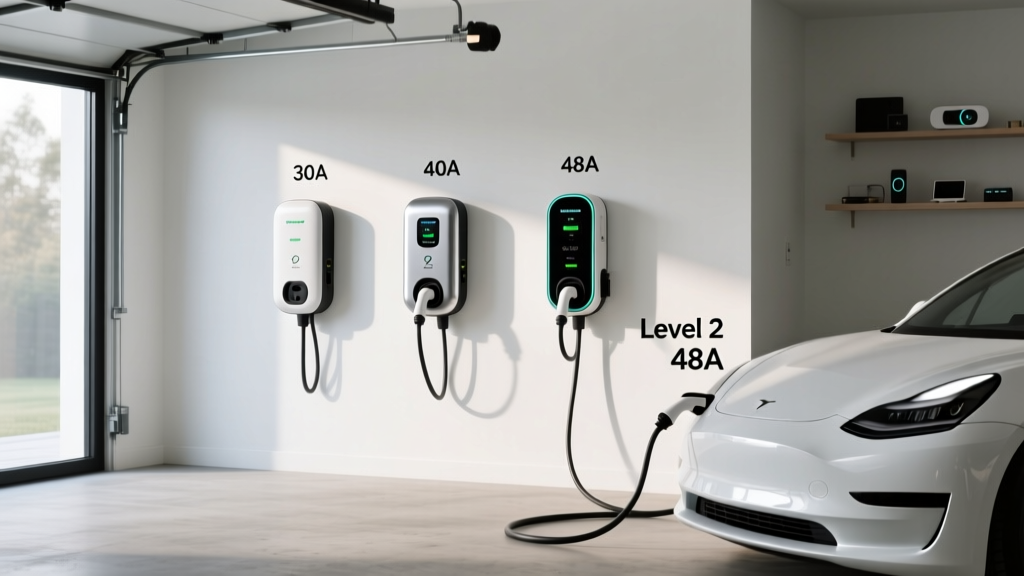
- NEMA 14-50 outlet (50A circuit, 40A continuous): Delivers up to 9.6 kW. Suitable for most EVs. This is the most popular residential setup.
- 60A circuit (48A continuous): Delivers up to 11.5 kW. Needed to max out vehicles like the Tesla Model S/X or Ford F-150 Lightning's larger onboard charger.
- Hardwired 80A circuit (64A continuous): Delivers up to 15.3–19.2 kW. Requires robust electrical panels; common for higher-end installations or multi-EV households.
Do You Need a Panel Upgrade?
This is the question that separates a $1,200 install from a $4,500 install. Most homes built after 1990 have a 200A electrical panel, which usually has enough headroom for a 50A EV circuit. But older homes with 100A service, or homes already running heavy loads (electric heat, hot tub, workshop), may need a panel upgrade to 200A or even 400A.
A licensed electrician will perform a load calculation per NEC Article 220 to determine if your panel can handle the additional draw. Don't skip this step — overloading a panel is a fire hazard and will fail inspection.
| Component | Basic Install (NEMA 14-50, short run) | Standard Install (hardwired, 40–60 ft run) | Complex Install (panel upgrade + long run) |
|---|---|---|---|
| Level 2 Charger Equipment | $350–$600 | $400–$750 | $400–$750 |
| Electrician Labor | $300–$600 | $600–$1,200 | $1,200–$2,500 |
| Permit & Inspection | $50–$150 | $100–$250 | $150–$350 |
| Panel Upgrade (if needed) | — | — | $1,500–$3,500 |
| Conduit, Wire, Misc. | $50–$150 | $150–$400 | $300–$700 |
| Total Estimated Cost | $750–$1,500 | $1,250–$2,600 | $3,550–$7,800 |
Some utilities offer rebates of $250–$1,000 for Level 2 installations, and the federal Alternative Fuel Vehicle Refueling Property Credit (IRS Form 8911) may cover up to 30% of equipment and installation costs (capped at $1,000 for residential), subject to census-tract eligibility. Check your utility and IRS guidance for current-year qualification rules.
Connector Compatibility: NACS, CCS1, CHAdeMO, and Adapter Realities
The connector landscape has consolidated significantly since 2024, when Ford, GM, Rivian, Volvo, and others adopted Tesla's North American Charging Standard (NACS) for their vehicles. Here's where things stand for 2025–2026 models:
| Connector | Brands Using It (Native) | DC Fast Charging Notes |
|---|---|---|
| NACS (J3400) | Tesla, Ford, GM, Rivian, Volvo, Polestar, Mercedes, Nissan (2025+), Honda (upcoming) | Access to Tesla Supercharger network (17,000+ stalls). CCS adapters available for legacy chargers. |
| CCS1 | Hyundai, Kia, BMW, VW, Stellantis, Subaru, Lucid | Standard on Electrify America, EVgo, ChargePoint DC stalls. NACS adapters available from some OEMs. |
| CHAdeMO | Nissan Leaf (legacy, ending) | Largely deprecated in North America. New installations almost exclusively NACS or CCS. |
Adapter reality check: If your EV has a CCS1 port (e.g., Hyundai Ioniq 5, VW ID.4), you can purchase a CCS-to-NACS adapter ($150–$300) from Tesla or third-party brands like Lectron or A2Z to access Supercharger stalls. Conversely, NACS-equipped Ford and GM vehicles can use a NACS-to-CCS adapter for Electrify America stations. Always verify your adapter is rated for the full DC fast-charge power your vehicle can accept — some cheap adapters are limited to 50 kW or less.
Cost to Charge: Per-Mile Economics vs. Gasoline
The economic case for EV charging hinges on where and when you charge. Let's run the numbers for a midsize EV averaging 3.0 miles per kWh (roughly 112 MPGe combined — typical for a Tesla Model Y or Hyundai Ioniq 6).
| Charging Scenario | Avg. $/kWh | Cost per Mile (at 3.0 mi/kWh) | Equivalent Gas MPG at $3.40/gal |
|---|---|---|---|
| Home, off-peak utility rate | $0.08–$0.12 | $0.027–$0.040 | 85–126 MPG |
| Home, standard residential rate | $0.14–$0.18 | $0.047–$0.060 | 57–72 MPG |
| Public Level 2 (workplace, mall) | $0.20–$0.35 | $0.067–$0.117 | 29–51 MPG |
| DC Fast (Electrify America, EVgo) | $0.35–$0.55 | $0.117–$0.183 | 19–29 MPG |
| Tesla Supercharger (avg. 2026) | $0.28–$0.40 | $0.093–$0.133 | 26–37 MPG |
| Comparison: 28 MPG gas car at $3.40/gal = $0.121/mile | |||
The takeaway: home charging on off-peak rates is absurdly cheap — roughly a third to a quarter the per-mile cost of gasoline. Public DC fast charging, however, can approach or even exceed gas-car costs per mile, especially at premium-priced networks in high-cost states. The economic advantage of EVs is maximized when you charge at home. Flash charging on road trips is a convenience, not a cost saver.
- Choose home Level 2 charging if: You have a garage or driveway with 240V access, your daily commute is under 200 miles, and you want the lowest per-mile cost.
- Rely on DC fast/flash charging if: You're road-tripping, live in an apartment without charging access, or need a quick top-up. Budget $0.35–$0.55/kWh and plan stops using A Better Routeplanner.
- Mix both if: You're like most EV owners — home charge daily, DC fast-charge 2–4 times per month on longer trips.
Recommended Home Level 2 Chargers: Power, Features, and Price
You can't flash-charge at home (that requires 480V+ commercial infrastructure), but a quality Level 2 unit will cover virtually all daily needs. Here are top picks for 2025–2026, evaluated on power output, cable length, smart features, connector type, and real-world reliability.
Emporia Vue Level 2 Charger
- Power Output: 48A (11.5 kW) on 60A circuit; configurable down to 32A
- Connector: J1772 (NACS version available)
- Cable Length: 24 ft
- Smart Features: Wi-Fi, app scheduling, solar integration, energy monitoring
- Price: ~$399
- Best For: Budget-conscious buyers wanting full smart features and high amperage
ChargePoint Home Flex
- Power Output: Up to 50A (12 kW) on NEMA 14-50; up to 80A hardwired (19.2 kW)
- Connector: J1772 (NACS adapter included in latest revision)
- Cable Length: 23 ft (NEMA) / 18 ft (hardwired)
- Smart Features: Wi-Fi, Alexa, scheduling, ChargePoint network integration
- Price: ~$599–$699
- Best For: Flexibility between plug-in and hardwired; strong app ecosystem
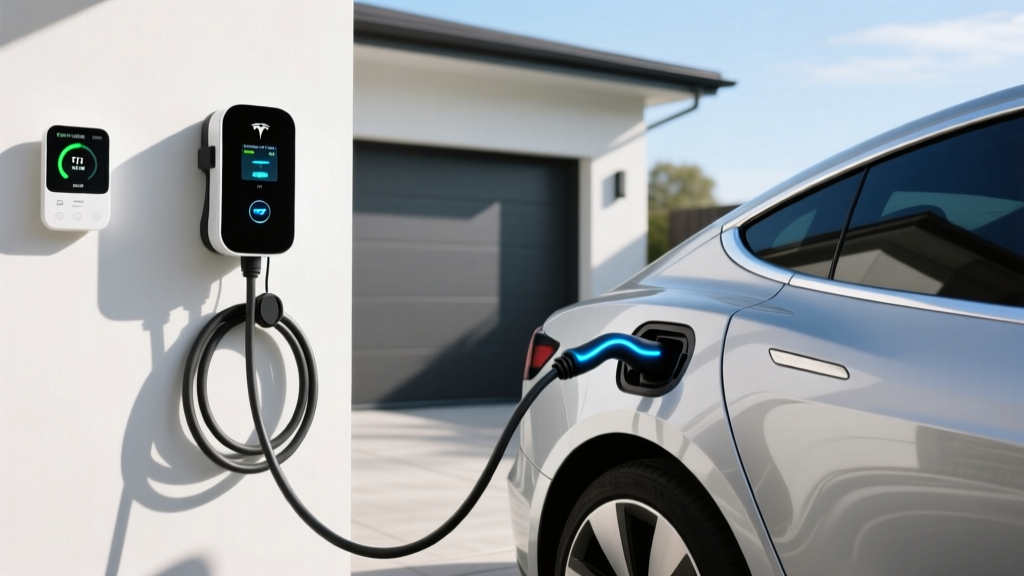
Tesla Wall Connector
- Power Output: 48A (11.5 kW) on 60A circuit
- Connector: NACS native (J1772 adapter available)
- Cable Length: 24 ft
- Smart Features: Wi-Fi, OTA updates, power sharing (up to 6 units on one circuit), Tesla app
- Price: ~$475
- Best For: Tesla owners and NACS-equipped Ford/GM/Rivian owners wanting native fit
Grizzl-E Smart
- Power Output: 40A (9.6 kW) on 50A circuit
- Connector: J1772 or NACS
- Cable Length: 24 ft
- Smart Features: Wi-Fi, OCPP-compatible, works with multiple apps
- Price: ~$449
- Best For: Cold-climate durability (rated to -40°F), outdoor installs, Canadian-made build quality
Safety, Electrical Code, and Installation Best Practices
A Level 2 charger pulls significant current for hours at a time. This is not a DIY extension-cord situation. Here's what proper installation requires:
- Dedicated circuit: Your EV charger must have its own breaker — not shared with other appliances. A 50A charger needs a 50A (or 60A, depending on continuous-load derating) dedicated breaker.
- GFCI protection: NEC 2020 and later require GFCI protection for EV charging outlets (NEMA 14-50). Hardwired chargers with built-in ground-fault protection may satisfy this requirement — your electrician will determine compliance.
- Outdoor rating: If your charger is installed outside (carport, driveway post), the unit must carry a NEMA 4 or NEMA 4X rating for weather resistance. All chargers listed above meet this standard.
- Permit and inspection: Virtually all jurisdictions require an electrical permit for a new 240V circuit. The inspection ensures wire gauge, breaker sizing, and grounding meet National Electrical Code (NEC) standards. Budget $50–$350 depending on your locality.
- Wire gauge: A 50A circuit typically requires 6 AWG copper wire (THHN in conduit or NM-B for indoor runs). A 60A circuit requires 4 AWG. Undersized wire is a fire risk — never cut corners here.
Frequently Asked Questions
How much does it cost to install a home EV charger?
A straightforward Level 2 installation with a NEMA 14-50 outlet and short wire run costs $750–$1,500 all-in (equipment, electrician, permit). A hardwired installation with a longer conduit run typically costs $1,250–$2,600. If your home needs an electrical panel upgrade from 100A to 200A service, total costs can reach $3,500–$7,800. Always get at least two quotes from licensed electricians.
How fast will each charging level add range?
Level 1 (120V) adds 3–5 miles per hour. Level 2 (240V) adds 25–65 miles per hour depending on amperage and your EV's onboard charger capacity. DC fast charging at 150+ kW can add 150–400+ miles of range in 20–30 minutes, though the rate tapers above 80% SoC. Flash charging at 250–350 kW delivers the fastest top-ups but requires a compatible vehicle (800V architecture) and a capable station.
Which connector and charger is compatible with my EV?
For 2025–2026 models: Tesla, Ford, GM, Rivian, Volvo, and Polestar use NACS. Hyundai, Kia, BMW, VW, and most others still use CCS1. CHAdeMO is essentially limited to the legacy Nissan Leaf. For home Level 2 charging, J1772 is the universal AC standard — NACS vehicles use a simple adapter (included with most new EVs). Check your vehicle's charge port or owner's manual to confirm.
How much does charging cost per mile compared to gas?
Home charging at off-peak utility rates ($0.08–$0.12/kWh) costs $0.03–$0.04 per mile for an efficient EV — roughly equivalent to a gasoline car getting 85–126 MPG. Standard residential rates push this to $0.05–$0.06/mile. Public DC fast charging at $0.35–$0.55/kWh costs $0.12–$0.18/mile, which can match or exceed a 28 MPG gas car at $3.40/gallon. The cost advantage of EVs is greatest when you charge at home.
What electrical upgrades might I need for a home charger?
The most common upgrade is a panel capacity increase. Homes with 100A service almost always need an upgrade to 200A (costing $1,500–$3,500). Homes with 200A panels usually have sufficient headroom for a 50A EV circuit, but your electrician must perform a load calculation. Other potential upgrades include adding a sub-panel (if the main panel is full), upgrading the service drop from the utility, or installing a smart load-management system that throttles charger amperage when other heavy appliances are running.
Can I use flash charging every day, or will it damage my battery?
Occasional DC fast charging — even at 250+ kW — will not meaningfully degrade a modern battery with active thermal management. However, studies from Argonne National Laboratory and real-world fleet data suggest that exclusive reliance on DC fast charging (especially in hot climates) can accelerate degradation by 2–5% over 100,000 miles compared to predominantly Level 2 charging. For daily use, home Level 2 is gentler on the battery and dramatically cheaper.
Is the federal tax credit available for home charger installation?
The Alternative Fuel Vehicle Refueling Property Credit (IRS Form 8911) can cover up to 30% of home charging equipment and installation costs, capped at $1,000. However, eligibility depends on your census tract (must be a non-urban or low-income community per IRS guidelines). This is separate from the §30D vehicle purchase credit. Consult IRS guidance or a tax professional to confirm your eligibility.